Waltey
Čebelja kraljica
Grimmove pravljice · Jacob in Wilhelm GrimmO besedilu
Čebelja kraljica
- Vir
- Grimmove pravljice
- Avtor
- Jacob in Wilhelm Grimm
- Jezik branja
- English
- Jezik izvirnika
- Deutsch
- Čas branja
- 4 min branja
- Obseg
- 4 strani
- Naslov izvirnika
- Die Bienenkönigin
O izvirniku
Grimmove pravljice
Gozdovi, čarobni predmeti in ljudska logika evropske pripovedne tradicije. Bralni jezik je English, izvirnik pa prihaja iz vira Grimmove pravljice v jeziku Deutsch.
Besedilo
Čebelja kraljica
Once two princes went out in search of adventure and fell into such a wild, reckless way of life that they never came home again. The youngest, who was called Simpleton, set out to look for his brothers. But when at last he found them, they mocked him for thinking he could make his way in the world with so little wit, when the two of them, who were so much cleverer, could not manage it.
The three went on together and came to an anthill. The two elder brothers wanted to stir it up and watch the little ants scurry about in terror, carrying away their eggs, but Simpleton said, "Leave the creatures in peace. I will not let you disturb them!"
They went farther and came to a lake where a great many ducks were swimming. The two brothers wanted to catch a few and roast them, but Simpleton would not allow it and said, "Leave the creatures in peace. I will not let you kill them!"
At last they came to a bees' nest, so full of honey that it ran down the trunk of the tree. The two wanted to light a fire beneath the tree and suffocate the bees so that they could take the honey. But Simpleton stopped them once again and said, "Leave the creatures in peace. I will not let you burn them!"
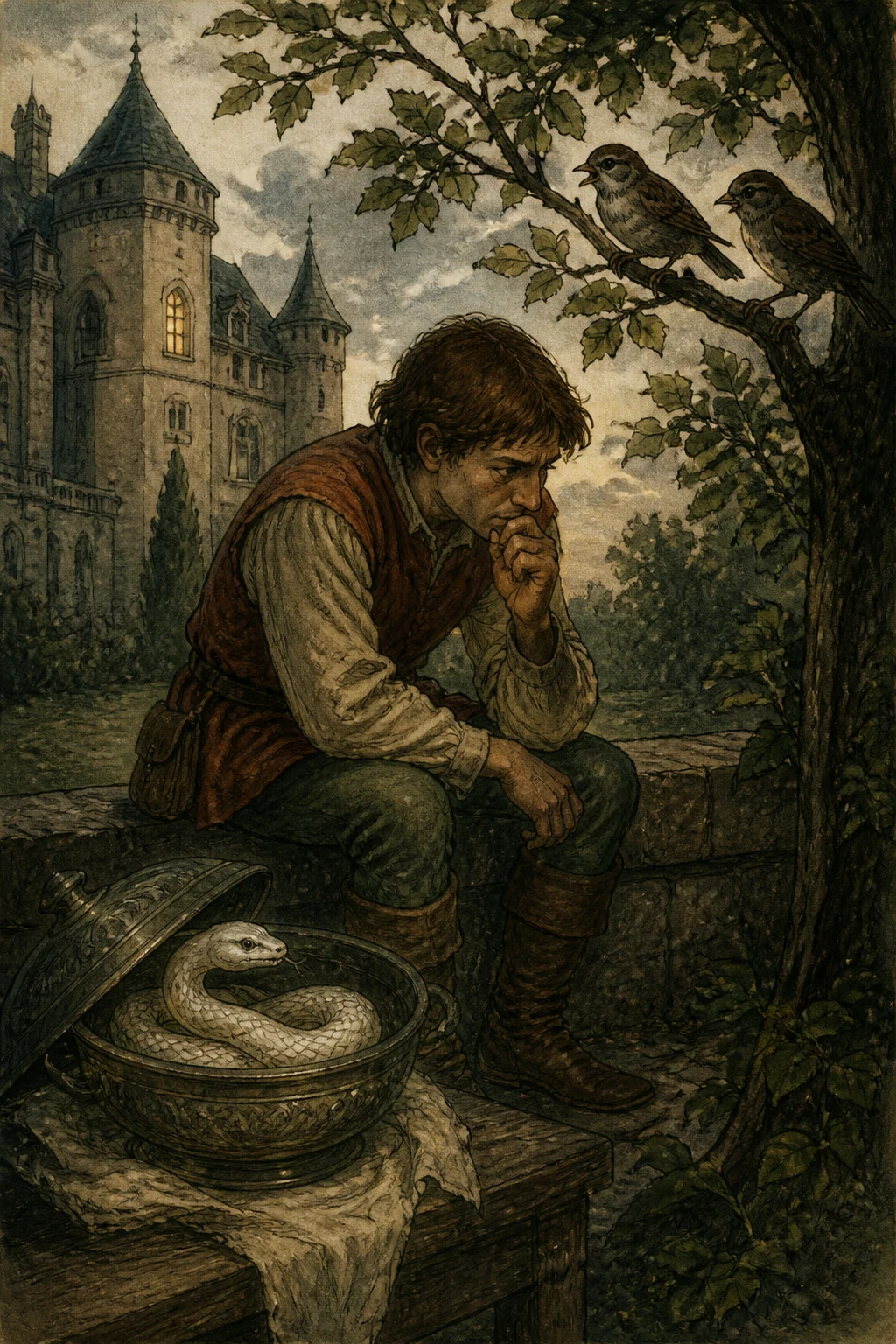
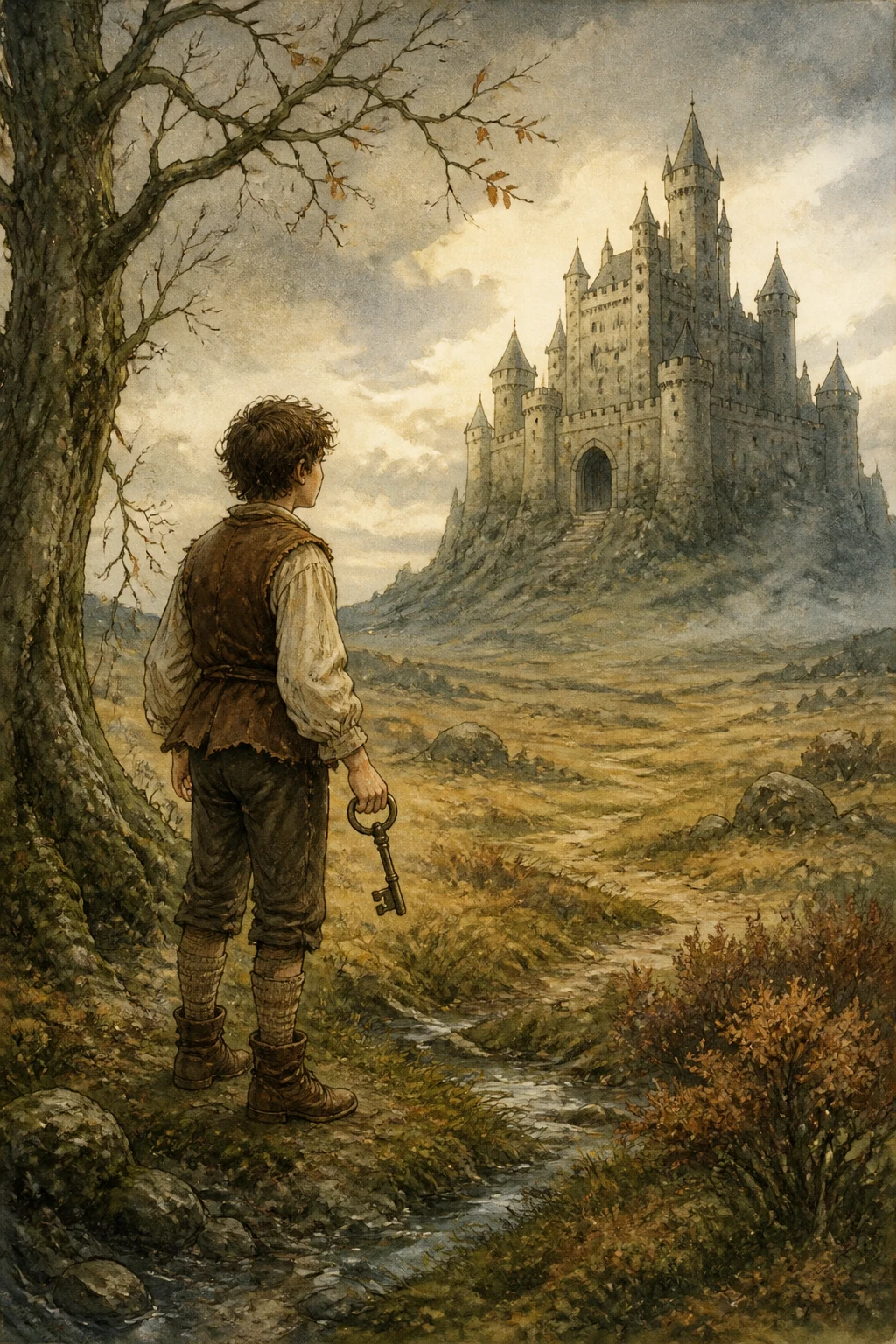
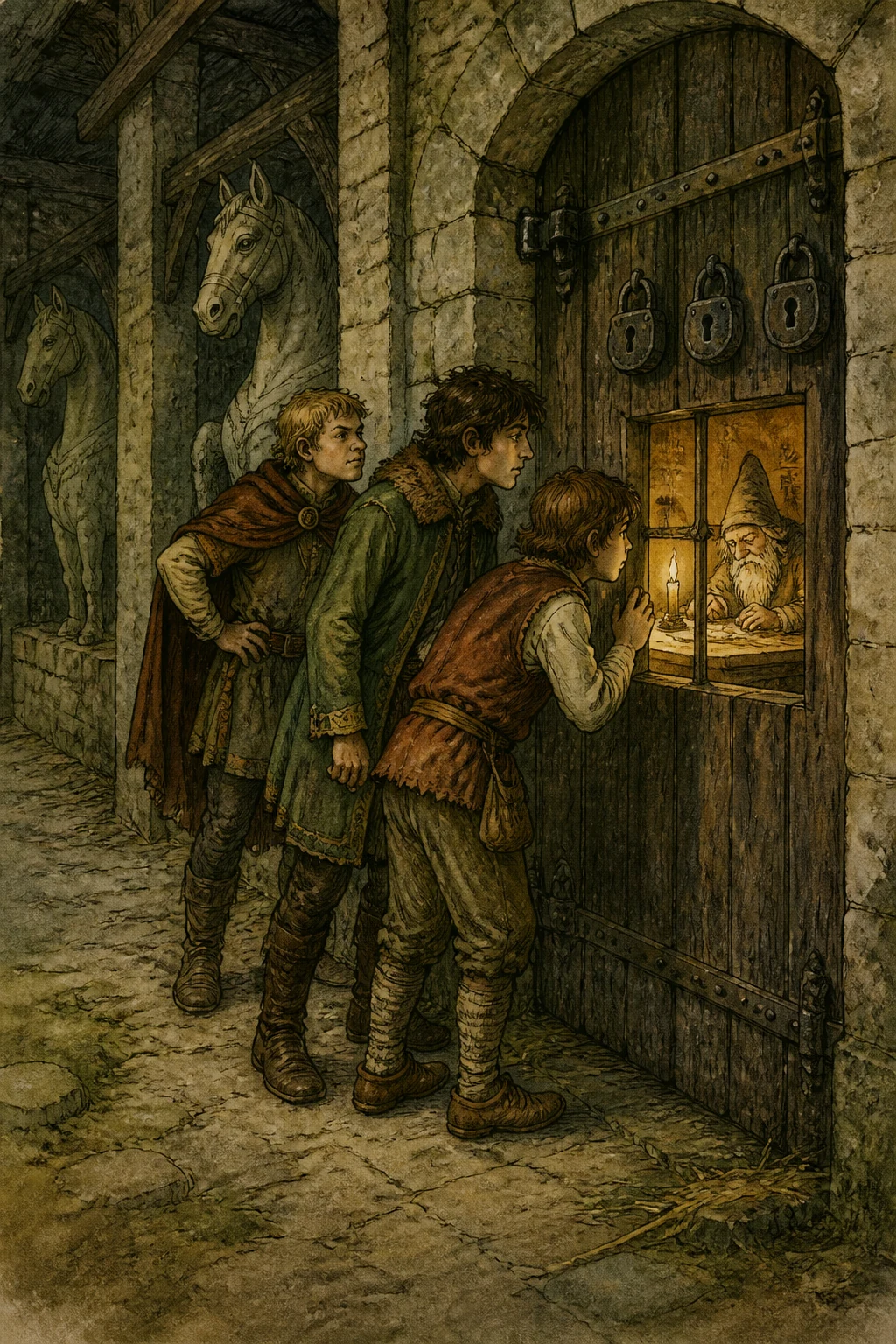
At last the three brothers came to a castle where all the horses in the stables were made of stone, and not a soul was to be seen. They went through all the stables until they came to a door at the very end, fastened with three locks. In the middle of the door was a little shutter through which they could look into the room. There they saw a little gray man sitting at a table. They called to him once, then twice, but he did not hear them. At last they called a third time, and he rose, undid the locks, and came out. He did not say a word, but led them to a richly laden table, and when they had eaten and drunk, he took each of them to a separate bedchamber.
The next morning the little gray man came to the eldest, beckoned to him, and led him to a stone tablet. On it were written three tasks by which the castle could be freed from its enchantment. The first was this: in the forest, beneath the moss, lay the princess's pearls, a thousand in all. They had to be gathered, and if even a single pearl was still missing at sunset, whoever had searched for them would be turned to stone. The eldest went out and searched all day, but when the day was over, he had found only a hundred. What was written on the tablet came to pass: he was turned to stone. The following day the second brother tried his luck, but he fared little better than the eldest. He found no more than two hundred pearls and was turned to stone. At last it was Simpleton's turn, and he searched among the moss, but the pearls were so hard to find, and the work went so slowly, that he sat down on a stone and wept. As he sat there, the king of the ants, whose life he had once saved, came with five thousand ants, and before long the little creatures had found all the pearls together and carried them into a heap.
The second task was to fetch the key to the princess's bedchamber from the lake. When Simpleton came to the lake, the ducks whose lives he had once saved swam up, dived beneath the water, and brought the key up from the depths.
The third task was the hardest: from among the king's three sleeping daughters, he had to choose the youngest and dearest. But they looked exactly alike, and there was no difference between them except that, before falling asleep, they had eaten different sweet things: the eldest a piece of sugar, the second a little syrup, and the youngest a spoonful of honey. Then the queen of the bees whom Simpleton had saved from the fire came and tasted the lips of all three. At last she settled on the lips of the one who had eaten honey, and so the prince knew which was the right one.
Then the spell was broken, everyone awoke from their enchanted sleep, and all who had been turned to stone regained their human form. Simpleton married the youngest and dearest princess and became king after her father's death, while his two brothers married the other two sisters.
Izvirnik
Die Bienenkönigin
Naslednje strani prikazujejo izvirno besedilo za primerjavo.
Ein Märchen der Brüder Grimm
Zwei Königssöhne gingen einmal auf Abenteuer und gerieten in ein wildes, wüstes Leben, so daß sie gar nicht wieder nach Haus kamen. Der jüngste, welcher der Dummling hieß, machte sich auf und suchte seine Brüder. Aber wie er sie endlich fand, verspotteten sie ihn, daß er mit seiner Einfalt sich durch die Welt schlagen wollte, und sie zwei könnten nicht durchkommen und wären doch viel klüger.
Sie zogen alle drei miteinander fort und kamen an einen Ameisenhaufen. Die zwei ältesten wollten ihn aufwühlen und sehen, wie die kleinen Ameisen in der Angst herumkröchen und ihre Eier forttrügen, aber der Dummling sagte: "Laßt die Tiere in Frieden, ich leid's nicht, daß ihr sie stört!"
Da gingen sie weiter und kamen an einen See, auf dem schwammen viele, viele Enten. Die zwei Brüder wollten ein paar fangen und braten, aber der Dummling ließ es nicht zu und sprach: "Laßt die Tiere in Frieden, ich leid's nicht, daß ihr sie tötet!"
Endlich kamen sie an ein Bienennest, darin war so viel Honig, daß er am Stamm herunterlief. Die zwei wollten Feuer unter den Baum legen und die Bienen ersticken, damit sie den Honig wegnehmen könnten. Der Dummling hielt sie aber wieder ab und sprach: "Laßt die Tiere in Frieden, ich leid's nicht, daß ihr sie verbrennt!"
Endlich kamen die drei Brüder in ein Schloß, wo in den Ställen lauter steinerne Pferde standen, auch war kein Mensch zu sehen, und sie gingen durch alle Ställe, bis sie vor eine Türe ganz am Ende kamen, davor hingen drei Schlösser; es war aber mitten in der Türe ein Lädlein, dadurch konnte man in die Stube sehen. Da sahen sie ein graues Männchen, das an einem Tisch saß. Sie riefen es an, einmal, zweimal, aber es hörte nicht. Endlich riefen sie zum drittenmal; da stand es auf, öffnete die Schlösser und kam heraus. Es sprach aber kein Wort, sondern führte sie zu einem reichbesetzten Tisch; und als sie gegessen und getrunken hatten, brachte es einen jeglichen in sein eigenes Schlafgemach.
Am andern Morgen kam das graue Männchen zu dem ältesten, winkte und leitete ihn zu einer steinernen Tafel, darauf standen drei Aufgaben geschrieben, wodurch das Schloß erlöst werden könnte. Die erste war: In dem Wald unter dem Moos lagen die Perlen der Königstochter, tausend an der Zahl; die mußten aufgesucht werden, und wenn vor Sonnenuntergang noch eine einzige fehlte, so ward der, welcher gesucht hatte, zu Stein. Der älteste ging hin und suchte den ganzen Tag, als aber der Tag zu Ende war, hatte er erst hundert gefunden; es geschah, wie auf der Tafel stand: Er ward in Stein verwandelt. Am folgenden Tage unternahm der zweite Bruder das Abenteuer; es ging ihm aber nicht viel besser als dem ältesten, er fand nicht mehr als zweihundert Perlen und ward zu Stein. Endlich kam auch an den Dummling die Reihe, der suchte im Moos; es war aber so schwer, die Perlen zu finden, und ging so langsam. Da setzte er sich auf einen Stein und weinte. Und wie er so saß, kam der Ameisenkönig, dem er einmal das Leben erhalten hatte, mit fünftausend Ameisen, und es währte gar nicht lange, so hatten die kleinen Tiere die Perlen miteinander gefunden und auf einen Haufen getragen.
Die zweite Aufgabe aber war, den Schlüssel zu der Schlafkammer der Königstochter aus dem See zu holen. Wie der Dummling zum See kam, schwammen die Enten, die er einmal gerettet hatte, heran, tauchten unter und holten den Schlüssel aus der Tiefe.
Die dritte Aufgabe aber war die schwerste: Von den drei schlafenden Töchtern des Königs sollte die jüngste und die liebste herausgesucht werden. Sie glichen sich aber vollkommen und waren durch nichts verschieden, als daß sie, bevor sie eingeschlafen waren, verschiedene Süßigkeiten gegessen hatten, die älteste ein Stück Zucker, die zweite ein wenig Sirup, die jüngste einen Löffel Honig. Da kam die Bienenkonigin von den Bienen, die der Dummling vor dem Feuer geschützt hatte, und versuchte den Mund von allen dreien, zuletzt blieb sie auf dem Mund sitzen, der Honig gegessen hatte, und so erkannte der Königssohn die Rechte.
Da war der Zauber vorbei, alles war aus dem Schlaf erlöst, und wer von Stein war, erhielt seine menschliche Gestalt wieder. Und der Dummling vermählte sich mit der jüngsten und liebsten und ward König nach ihres Vaters Tod, seine zwei Bruder aber erhielten die beiden andern Schwestern.
Nadaljuj z branjem