Prevod
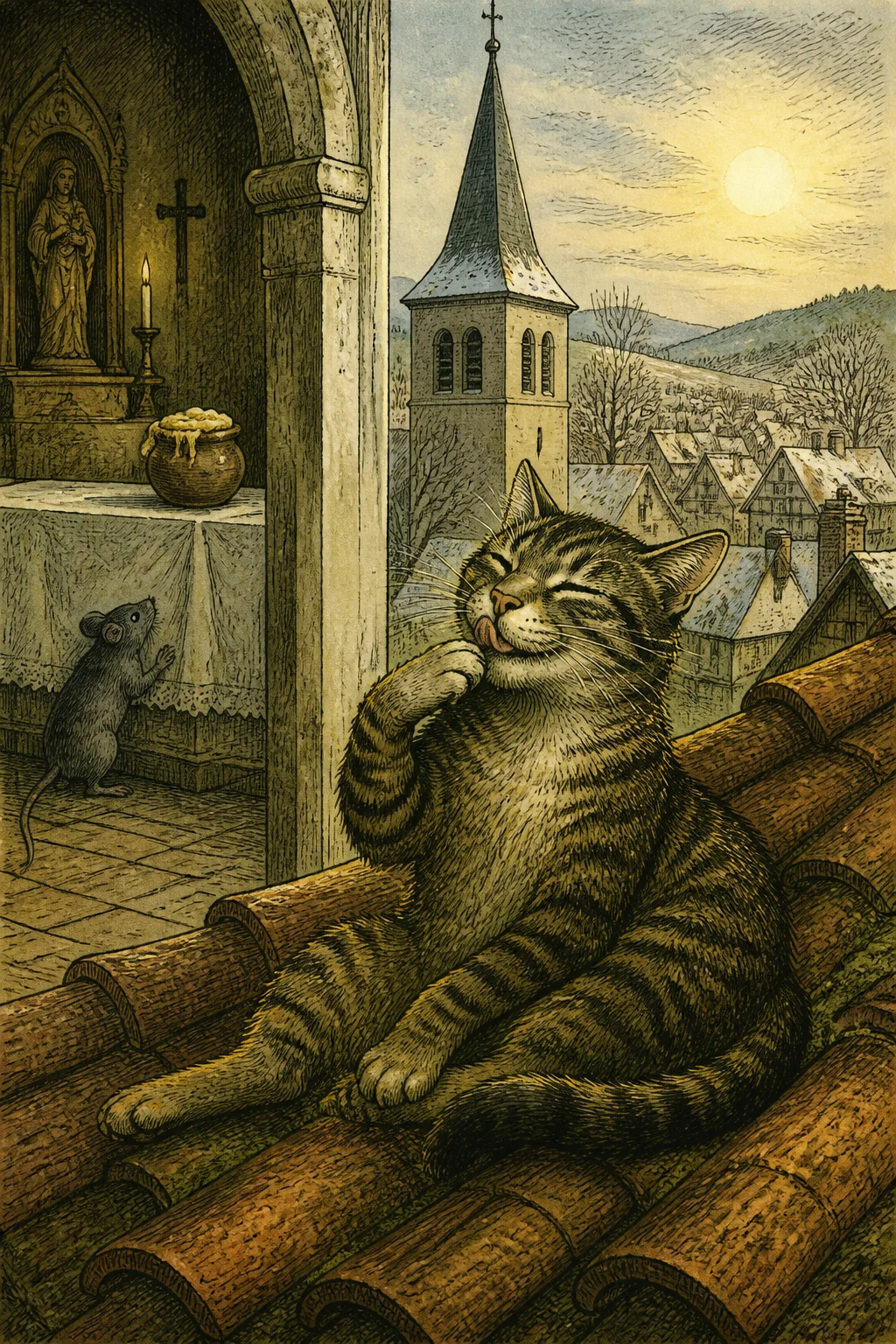
The interpreter said, “May God prolong the king’s life! A tomcat went out one night in search of prey in the fields, but found nothing, and grew weak from the bitter cold and rain of that night. He began casting about for some means of saving himself, and as he wandered in this plight, he saw a burrow at the foot of a tree. He drew near and began sniffing and murmuring until he sensed that there was a mouse inside. He tried to reach it and was about to enter and seize it, but when the mouse became aware of him, it turned its back and crawled on all fours to block the mouth of the burrow. Then the cat spoke in a feeble voice, saying, ‘Why do you do this, my brother, when I have come to you for refuge, hoping you will show me mercy and let me stay in your burrow tonight? I am in a sorry state, worn out with age and bereft of strength, scarcely able to move. Tonight I have strayed deep into this field, and how often I have wished for death, that I might find rest! Here I lie at your door, beaten down by cold and rain. I beg you, in God’s name, to be charitable: lend me a hand, take me in, and shelter me in the passage of your burrow, for I am a poor stranger. It has been said: Whoever shelters a poor stranger in his home shall have Paradise for his dwelling on the Day of Judgment. You, my brother, ought surely to earn the reward for helping me. Let me spend this night with you until morning, and then I shall go my way.’” But morning overtook Shahrazad, and she fell silent, leaving her tale untold.
When it was the nine hundred and first night
She said, “It has reached me, O fortunate king, that the cat said to the mouse, ‘Let me spend this night with you, and then I shall go my way.’ When the mouse heard the cat’s words, it replied, ‘How can you enter my burrow when you are my enemy by nature and live upon my flesh? I fear you will betray me, for treachery is in your nature and you keep no covenant. It has been said: A libertine should not be trusted with a beautiful woman, nor a needy pauper with money, nor fire with firewood. I am under no obligation to entrust my life to you. It has also been said: Natural enmity grows all the stronger as the enemy grows weaker.’ The cat answered in the faintest of voices, looking most wretched, ‘The wise sayings you have quoted are true, and I do not dispute them. But I ask you to forgive the natural enmity that has existed between us, for it has been said: Whoever forgives a fellow creature shall be forgiven by his Creator. Once I was your enemy, but today I seek your friendship. It has been said: If you wish your enemy to become your friend, do him a kindness. My brother, I give you my solemn pledge before God that I shall never harm you. Besides, I have no strength to do so. Trust in God, do a good deed, and accept my covenant and pledge.’ The mouse said, ‘How can I accept the pledge of one whose enmity towards me is deep-rooted, and whose custom is to betray me? If our enmity concerned anything but blood, I might make light of it; but ours is a natural enmity in which our very lives are at stake. It has been said: Whoever entrusts his life to his enemy is like a man who puts his hand into a viper’s mouth.’ The cat, filled with rage, said, ‘My heart is heavy and my spirit is failing. I am at death’s door, and soon I shall die on your threshold. The guilt will rest upon you, for you have the power to save me from my plight. These are my last words to you.’ Then fear of God Most High came upon the mouse, and pity entered its heart. It said to itself, ‘Whoever desires God’s help against his enemy should show that enemy mercy and kindness. I shall put my trust in God in this matter and save this cat from destruction, that I may earn the reward for doing so.’
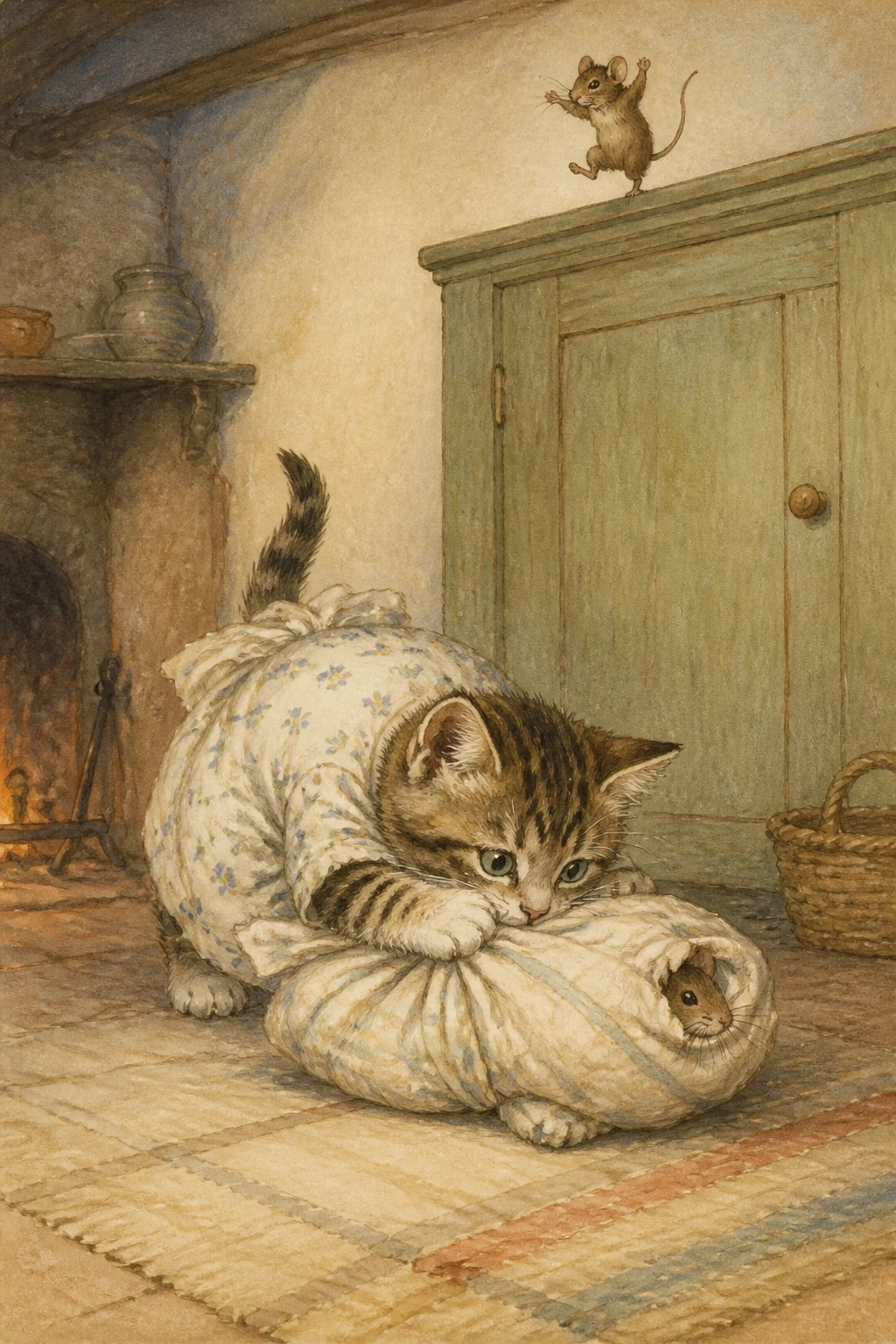
“So the mouse went out to the cat and dragged him into its burrow. The cat stayed there until he had rested, regained his strength, and recovered a little. Then he began lamenting his weakness, his lost strength, and the fewness of his friends. The mouse treated him gently and comforted him, coming close to him and bustling about him. Meanwhile, the cat crept through the burrow until he commanded the exit, lest the mouse escape. When the mouse wished to go out, it approached the cat as usual, but as soon as it came within reach, he seized it in his claws. He began biting it and tossing it about, taking it in his mouth, lifting it from the ground and throwing it down, chasing after it, tearing at it, and tormenting it. Then the mouse cried out for help and begged God to deliver it, reproaching the cat and saying, ‘Where is the pledge you gave me? Where are the oaths you swore? Is this how you repay me for bringing you into my burrow and entrusting my life to you? True indeed are the words: Whoever takes a pledge from his enemy should not hope to escape alive. And likewise: Whoever delivers himself into his enemy’s hands brings destruction upon himself. Yet I have put my trust in my Creator, and He shall save me from you.’
“While the mouse was in this plight with the cat, who was about to fall upon it and devour it, a hunter happened to pass with a pack of hounds trained for the chase. One of the dogs went by the mouth of the burrow and heard a great scuffle within. Thinking there was a fox inside tearing at some prey, it plunged down to catch it, but came upon the cat and dragged him towards it. Once the cat was in the dog’s grasp, he had enough to do to save himself, and released the mouse alive and unwounded. As for the cat, the hound carried him out, tore through his sinews, and flung him down dead. Thus the saying proved true of them both: Whoever shows mercy shall receive mercy in time, and whoever does wrong shall soon be wronged.
“That, O king, is what befell them. Therefore no one should break faith with one who has trusted him. Whoever betrays and deceives will meet the same fate as the cat, for as a man deals with others, so shall he be dealt with; and whoever returns to goodness shall gain his reward. Yet do not grieve, O king, nor let this weigh heavily upon you. After his tyranny and oppression, your son may return to your own virtuous ways. This learned man, your vizier Shamas, wished to conceal nothing from you in the warnings he conveyed through symbols, and in this he acted wisely. For it has been said: Those who fear most are those whose knowledge is widest and whose goodness is most enviable.”
The king then yielded to their counsel and ordered that they be richly rewarded. He dismissed them, rose, and withdrew to his own quarters, where he pondered what the outcome of his affairs might be. When night came, he went to one of his wives, the one he most cherished and loved, and lay with her. After some four months, the child stirred in her womb. She rejoiced exceedingly and told the king, who said, “My dream has come true, and God is our helper.” He lodged her in the finest apartments, treated her with the utmost honour, lavished gifts upon her, and bestowed great wealth on her. Then he summoned one of his pages and sent him to fetch Shamas. When he arrived, the king told him of his wife’s pregnancy, saying joyfully, “My dream has come true, and my hope is within reach. Perhaps this child will be a son and heir to my kingdom. What do you say to that, Shamas?” But Shamas remained silent and made no reply. The king said, “Why do I see that you do not share my joy or answer me? Can it be that this matter displeases you, Shamas?” Then Shamas prostrated himself before the king and said, “O king, may God prolong your life! What benefit does a man find in the shade of a tree if fire breaks out from it? What pleasure does a drinker take in clear wine if he chokes upon it? What good does cool, sweet water do a thirsty man if he drowns in it? I am but a servant of God and of yours, O king. Yet it has been said that there are three things of which a wise man should not speak until they are accomplished: the traveller, until he returns from his journey; the warrior, until he has vanquished his enemy; and the pregnant woman, until she has delivered her child.” But morning overtook Shahrazad, and she fell silent, leaving her tale untold.