Prevod
She said: “It has reached me, O fortunate King, that when the vizier Shammas said to the king, ‘There are three things of which a wise man should not speak until they are accomplished,’ he went on to say, ‘Know, O King, that whoever speaks of a thing before it has come to pass is like the hermit who spilled clarified butter over his own head.’ The king asked, ‘What is the story of the hermit, and what befell him?’ He replied, ‘O King, there was once a hermit who lived under the patronage of a nobleman in a certain city. Every day the nobleman provided him with an allowance of three loaves of bread and a little clarified butter and honey. Clarified butter was dear in that country, so the hermit saved what he received in a jar until he had filled it, then hung it above his head for safekeeping. One night, as he sat on his bed with his staff in his hand, he began to think about the butter and its high price, and said to himself: “I ought to sell all this butter I have and buy a ewe with the proceeds, then enter into a partnership with a farmer to rear her. In the first year she will bear a male and a female, and in the second a female and a male. These sheep will go on bearing males and females until there is a great flock. Then I shall divide off my share, sell as many as I please, and buy such-and-such a piece of land. I shall plant fields there and build a splendid palace, acquire fine clothes and garments, buy slaves and slave girls, and marry the daughter of such-and-such a merchant. I shall hold a wedding the like of which has never been seen, slaughter animals for the feast, and prepare sumptuous dishes, sweetmeats, sugar-coated confections, and more besides. I shall gather entertainers and performers of every art, with instruments of music, and provide flowers, fragrant blossoms, and every kind of sweet herb. I shall invite rich and poor, scholars, chiefs, and officers of state, and whatever anyone asks for, I shall have it brought to him. I shall provide every sort of food and drink, and send out a crier to proclaim: ‘Whoever desires anything shall have it!’ After that I shall go in to my bride, once she has been displayed in all her finery, and delight in her beauty and loveliness. I shall eat, drink, and make merry, and say to myself: ‘You have attained your heart’s desire!’ I shall take my ease from asceticism and worship. Then my wife will conceive and bear a son, and I shall rejoice in him and give feasts in his honor. I shall rear him tenderly and teach him wisdom, letters, and arithmetic. I shall make his name known among the people and boast of him in distinguished company. I shall command him to do right, and he will not disobey me; I shall forbid him indecency and wrongdoing, and enjoin him to fear God and do good. I shall bestow fine and generous gifts upon him. If I find him steadfast in obedience, I shall give him still more; but if I see him inclining toward disobedience, I shall bring this staff down upon him!” He raised it to strike his son, but it struck the jar of butter hanging above his head and broke it. The shards fell upon him, and the butter ran over his head, his clothes, and his beard, and he became a lesson to others.
“‘For this reason, O King, a man should not speak of a thing before it comes to pass.’ The king said to him, ‘You have spoken truly. What an excellent vizier you are, for you have uttered the truth and counseled what is good! Your standing with me is now all you could wish, and you remain in my favor.’ Shammas prostrated himself before God and the king, prayed that the king’s blessings might endure, and said, ‘May God prolong your days and exalt your station! Know that I conceal nothing from you, whether in private or in public. Your pleasure is my pleasure, and your anger is my anger. I have no joy save in your joy, nor could I pass a night while you were displeased with me, for God Most High has granted me every good thing through the honor you have shown me. I therefore ask God Most High to guard you with His angels and grant you a goodly reward when you meet Him.’ The king was delighted at this. Then Shammas rose and withdrew from his presence. Some time afterward, the king’s wife gave birth to a son. The bearers of glad tidings hastened to the king and announced the birth of his boy. He rejoiced exceedingly, gave abundant thanks to God, and said, ‘Praise be to God, who has granted me a child after I had despaired! He is tender and compassionate toward His servants.’ Then the king wrote to the people throughout his kingdom, informing them of the news and inviting them to his palace. The princes, chiefs, scholars, and officers of state under his command came before him.
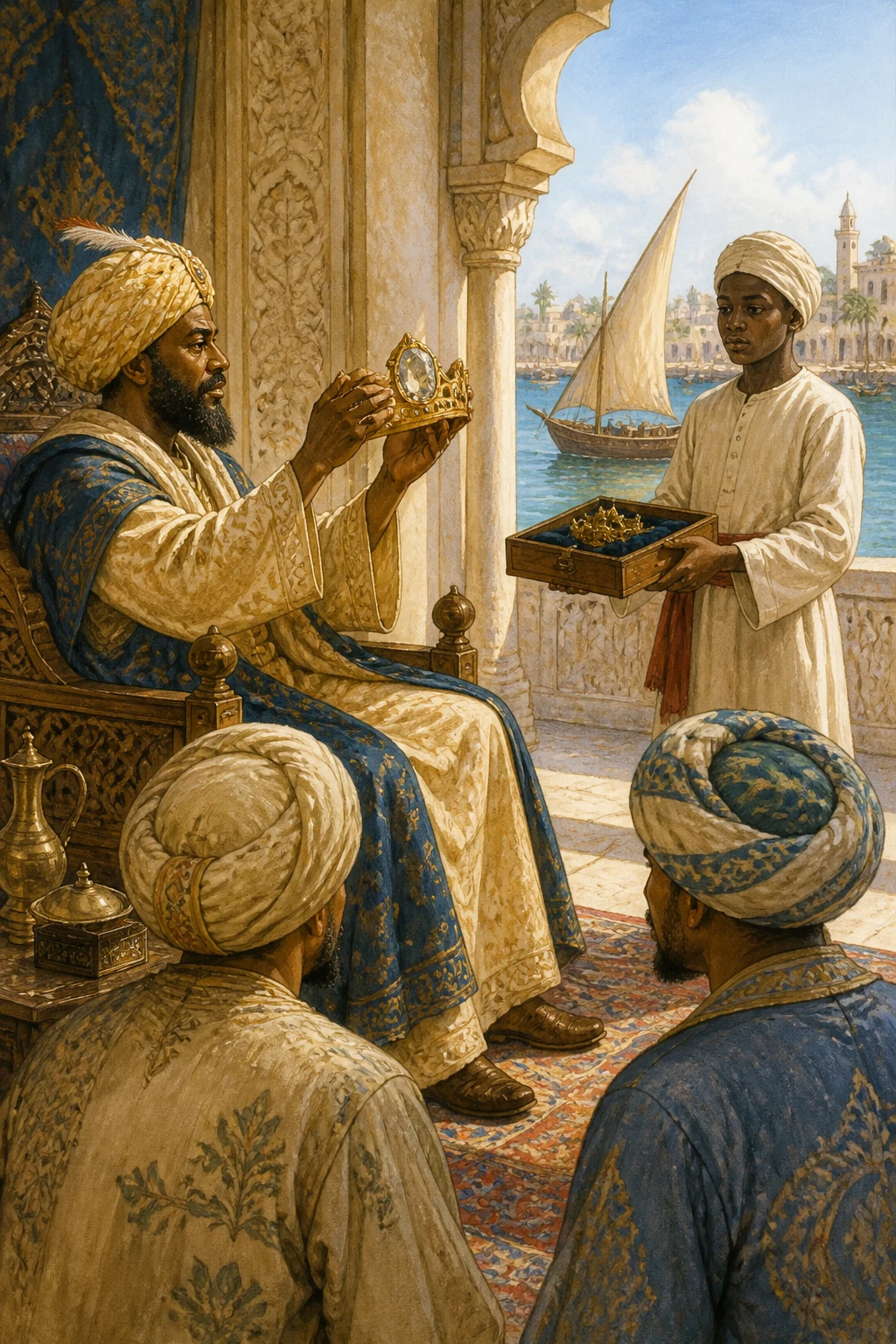
“Such was the king’s case. As for his son, the drums of glad tidings and rejoicing sounded throughout the kingdom, and its people came from every quarter to attend the celebration. Men of learning and philosophy, men of letters, and sages arrived and entered the king’s presence, each taking his place according to his rank. Then the king signaled to the seven great viziers, whose chief was Shammas, that each should speak, according to his wisdom, on the occasion before them. Their chief, the vizier Shammas, was the first to ask leave to speak. Permission being granted, he said, ‘Praise be to God, who brought us out of nothingness into being, who bestows His favor upon His royal servants, the upholders of justice and equity, granting them sovereignty and righteous deeds, and providing sustenance for their subjects through their hands. Above all, praise be to Him for our king, through whom He has brought the lifeless parts of our land to life, bestowing His blessings upon us and granting us, through the king’s well-being, ease of living, security, and justice. What king does for the people of his realm what this king has done for us, attending to our interests, upholding our rights, dealing justly between us, seldom neglecting us, and redressing our wrongs? It is a mark of God’s favor toward a people that their king should watch over their affairs and protect them from their enemies, for an enemy’s utmost aim is to subdue his foe and hold him in his power. Many people offer their children to kings as servants, to live with them as slaves, so that the kings may shield them from their enemies. As for us, no enemy has set foot in our land during our king’s reign. So great is this blessing, so supreme this happiness, that no description can encompass it; it surpasses all that can be said. You, O King, are indeed worthy of this great blessing, while we remain under your protection and in the shadow of your wing. May God reward you richly and prolong your life! Before this, we earnestly besought God Most High to favor us with an answer, to preserve you for us, and to grant you a righteous child in whom your eyes might find delight. Now God, glorified and exalted be He, has accepted our entreaties and answered our prayer.’” And dawn overtook Shahrazad, and she fell silent, leaving her tale untold.