Waltey
Kralj gozda
Tradiciones peruanas
Tradiciones peruanas · Ricardo PalmaO besedilu
Kralj gozda
- Vir
- Tradiciones peruanas
- Avtor
- Ricardo Palma
- Jezik branja
- English
- Jezik izvirnika
- Español
- Čas branja
- 14 min branja
- Obseg
- 11 strani
- Naslov izvirnika
- 026 El Rey del Monte
O izvirniku
Tradiciones peruanas
Šestindvajset Palmovih avtorskih zgodovinskih tradicij iz konkretnega Gutenbergovega zvezka. Bralni jezik je English, izvirnik pa prihaja iz vira Tradiciones peruanas v jeziku Español.
Besedilo
Kralj gozda
WHICH, AMONG OTHER THINGS, TELLS HOW THE QUEEN OF THE TERRANOVAS LOST HONOR, SCEPTER, AND LIFE I Along with Christianity, which is brotherhood, civilized Europe sent us the slave trade, in outright denial of that religious doctrine. The cruel devices employed by traffickers in human flesh to fill their ships along the coast of Africa, and the barbarous treatment subsequently inflicted on the unfortunate Africans, are not subjects for pieces of the lighthearted character of my TRADITIONS.
The slave who worked in the fields lived perpetually under threat of the lash and the fetter, while the one fortunate enough to live in the city also had another sword of Damocles hanging over his head: the threat that, at his first slip, the iron doors of a prison bakery would open to receive him.
Many masters committed the atrocity of branding the skin of their slaves, just as cattle and horses are branded today, until a royal decree arrived from Spain forbidding the practice.
In the last century, the existence of slaves began to grow less harsh. Africans, who in those days were sold in Peru for more or less what is now paid for an Asian laborer’s contract, were granted permission by their masters, once baptized as Christians, to form confraternities according to their respective nations or tribes. We even believe that a royal decree on the matter came from Spain.
As the years passed, many slaves managed, with their little savings and earnings, to purchase their freedom; they would then take up some trade, and not a few acquired a respectable fortune. Indeed, the street called Otárola owes its name to a wealthy Chala, or Mozambican, about whom, since the occasion presents itself, I must tell a little story.
On one occasion, a table was set at the door of a church, with the indispensable tray for the faithful to make their offerings. His Excellency arrived, and the viceroy dropped in a couple of peluconas; the judges, ladies, councilmen, and other people of high standing made the metal tray ring with at least a gold ounce or an escudo. Such was the custom, or the fashion.
Suddenly old father Otárola appeared, followed by two black men, each carrying on his back a sack of a thousand silver dollars. Taking a silver half-real from his pocket, he dropped it into the tray and said:
—This is the alms. Then he ordered the men forward, and, placing the two sacks on the table, added: —This is the flourish. Now make what you please of the business, which certainly has something behind it.
As was only natural, many of the black associations came to possess comfortable treasuries. The Angolas, Caravelís, Mozambicans, Congos, Chalas, and Terranovas bought plots on the outskirts of the city and built the houses known as confraternity halls. On certain feast days, and with their masters’ permission, they gathered there for revels and banquets in the fashion of their native lands.
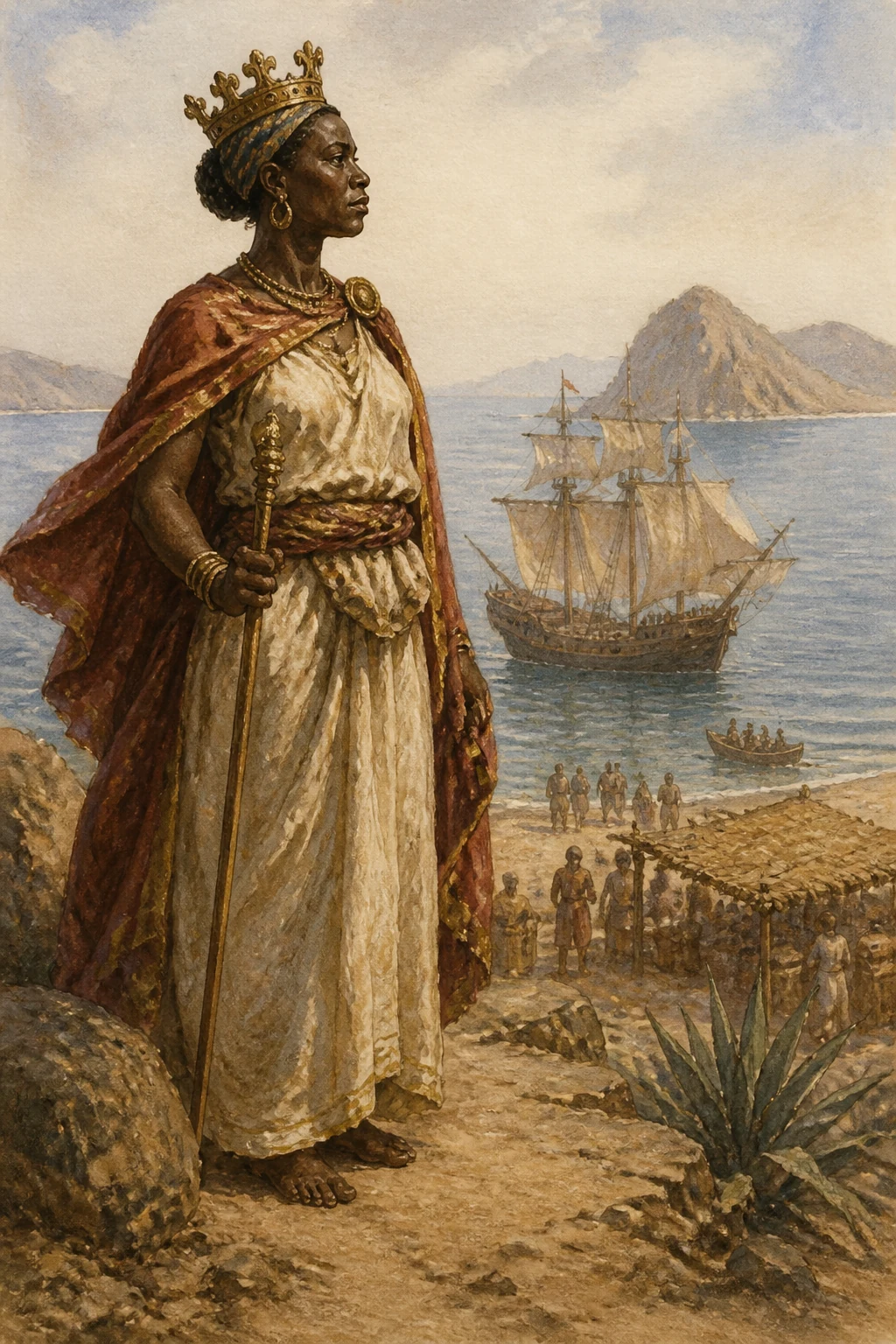
Since all were baptized, they chose Our Lady of the Rosary as patroness of the confraternities, and the splendor they displayed for her feast was a sight to behold. Each tribe had its queen, who was invariably black and rich. In the solemn procession she appeared in a gown of white satin covered with the finest Valencian lace, a sash embroidered with precious stones, a golden belt and scepter, and pearl earrings and necklace. Every one of them, as the saying goes, spared no expense and wore a fortune on her person. Each queen was attended by her ladies-in-waiting, generally young slaves who were the pampered favorites of their aristocratic mistresses, and whom those ladies, out of vanity, adorned that day with their most valuable jewels. Behind the court came the common people of the tribe, the women carrying candles and the men playing African instruments.
Though with less magnificence, the confraternities also attended the feasts of Saint Benedict and Our Lady of Light at the church of San Francisco, as well as the Corpus Christi and Low Sunday processions. In the latter, Africans made up the troupes of dancing devils that accompanied the dragon effigy, the great bobbing figures, and the giants.
In 1799, the queen of the Terranovas was a black woman of more than fifty winters, known as mama Salomé. Having bought her freedom, she had opened a shop selling mazamorra pudding; and the fact is that, as sales of her wares increased, she acquired such a fortune that, when the throne fell vacant, her compatriots acclaimed her, nemine discrepante, as their queen and sovereign.
The people of Lima in the last century must have had a sweet tooth for mazamorra, since provincials applied the epithet “mazamorra-eaters” to them by way of insult. May all the insults they fling at us be like that! There is as much disgrace in it as in chewing bread or coca leaves.
Thank God, we are now civilized to the very marrow, and need have no fear of being saddled with that nickname, which used to make us blush to the whites of our eyes. We have consigned harmless mazamorra to oblivion, and, as my unforgettable friend, the witty and popular poet Manuel Segura, put it:
I know a certain lady, quite in keeping with this age, who says she never called her mama “mama”; and another, sallow-faced, who, to show her English taste, declares: “I do not know what mazamorra de cochino is.”
What reigns supreme today is Bass beer, T brand, and the Broggi brothers’ bitters. Hurrah for a free-for-all! Mazamorra never stirred in anyone the urge to swing a cudgel; it gave no one the spirit to go seeking duels, or to forget good manners toward a woman, monk, or old man. Whereas today, with a glass of beer aboard, or a furtive glass of Turin bitters, we will slice the head off the giant Goliath himself, address Christ as an old familiar, and the lowest stableboy will toss a saucy compliment at a lady. A trifling difference, indeed! Have we gained or lost, my friend?
Enough digression; onward with the lanterns. For years our dear black woman had peacefully occupied a throne as real as that of Queen Pintiquiniestra. But just look at what envy can do!
Since no one could compete with mama Salomé’s celebrated mazamorra shop, another woman in the trade spread the story that the Terranova was a witch and that, to make her pudding appetizing, she stirred the pot—how disgusting!—with a dead man’s shinbone, and a Jew’s shinbone at that.
A witch, did you say? Off to the Inquisition with her! And the poor black woman, convicted of witchcraft and brought to confess it—with the aid of the strappado—was exposed to public shame, half naked on a scrawny donkey, with a crier before her and a flogger behind.
And they say that, as for cold or heat, she may well have felt them; but as for shame, not so much as a fingernail’s worth, for not the slightest sign of a blush could be seen on her skin.
It goes without saying that the Inquisition seized the pudding seller’s last maravedí, and that the Terranovas withdrew their allegiance and deposed her. I suspect that among them an accusation of witchcraft was grounds for declaring the throne vacant. I am unfamiliar with that article of the Terranova constitution, but I like it, and would gladly see it embedded in the political code of my own country, where worse failings have never been grounds for so great a slight.
Mama Salomé, a queen of pageantry or make-believe, was not like real sovereigns, who, when their subjects drive them from the throne practically at the point of a boot, go swaggering off to eat the bread of foreign lands, grow wondrously fat, and prattle on about how God permits such things, but not forever, and how, as surely as vineyards exist, they will one day be calling the tune again.
Mama Salomé did not so much as attempt a wretched little revolution. She fell to brooding endlessly over the ingratitude and treachery of her people, and her spirits grew so melancholy that, without further ado, Old Nick carried her off.
II HOW THE DEATH OF A QUEEN INFLUENCED THE LIFE OF A KING Mama Salomé left a son, free like herself and a strapping lad of fifteen, who swore that, once he was old enough, he would avenge upon society the outrage done to his mother in making her wear a witch’s penitential cap, and at the same time punish the Terranovas for rebelling against their queen.
They tell how one day, though no galleon had arrived from Cádiz with news of the death of the king or a prince of the blood, and no great personage, civil or ecclesiastical, had died in Lima, the Cathedral bells began tolling solemnly, followed by those of the city’s countless towers. People poured into the streets, asking who had died, and even the authorities did not know what to answer.
When questioned, the bell-ringers replied, quite reasonably, that they had no business making inquiries, since their instructions were to repeat in every particular the tolling of the mother church. Summoned before the archbishop, the Cathedral bell-ringer said:
—Most illustrious sir, the commandments say, “Honor thy father and thy mother.” The woman who brought me into this world died in the hospital this morning, and since I have no benefice but my tower, I honor my mother by making my bells lament.
Mutatis mutandis, one might say that Salomé’s son thought like the bell-ringer in question, proposing to honor his mother’s memory with crimes.
Lima was enjoying an outward calm, though a whiff of revolutionary burning was already in the air, when grave alarm suddenly spread through the city, and in truth there was more than enough cause for it. Nothing less was afoot than the appearance of a powerful band of brigands who, not content with committing a thousand outrages in the countryside, entered the city by night, carried out robberies, and withdrew as coolly as though butter would not melt in their mouths. On several occasions mounted patrols went out with orders to exterminate them; but the bandits fought with such discipline that their pursuers were forced to turn tail, returning to the city battered and with several casualties.
Rare was the bandits’ raid on the capital in which they did not carry off some Terranova captive, returning him a few days later thoroughly flogged and with his head shaven. They did the same to Terranova women, and something more besides. One night the queen was making merry in the confraternity hall when the band suddenly appeared, whipped Her Majesty, and committed such outrages upon her that in a very few days they sent her flying to the graveyard. The throne remained vacant, for no one coveted it for fear of the consequences; this brought the tribe into disrepute and gave the upper hand to the other confraternities, enthusiastic partisans of the Rey del Monte, the King of the Wilds—the title by which mama Salomé’s black son, captain of that accursed host, was known.
The truths and falsehoods told about the Rey del Monte helped lend him a certain popularity. Only the rich fell victim to his robberies, and he distributed his share of the booty among the poor; no horseman could surpass him, and so many stories were told of his courage and exploits that the people eventually began to regard him as a figure of legend.
So great was the terror the famous bandit came to inspire that the most powerful landowners, to spare themselves an attack, became his tributaries, paying him a monthly contribution in money and provisions to maintain the band.
In vain did the viceroy order notices posted along the roads offering four thousand pesos for the head of the Rey del Monte. Months passed and years rolled by, and the authorities, convinced that force could never capture the rogue, who always slipped out of the most carefully laid ambush, resolved to resort to treachery.
Nothing is more treacherous than love. A jet-black Delilah undertook to deliver the new Samson and his chief Philistines bound hand and foot. Passing over details of no interest, we shall say that one night, when the Rey del Monte was deep in a forest with his mistress and four or six of his men, Delilah took care to make them drunk, and at a prearranged hour the soldiers entered the woods.
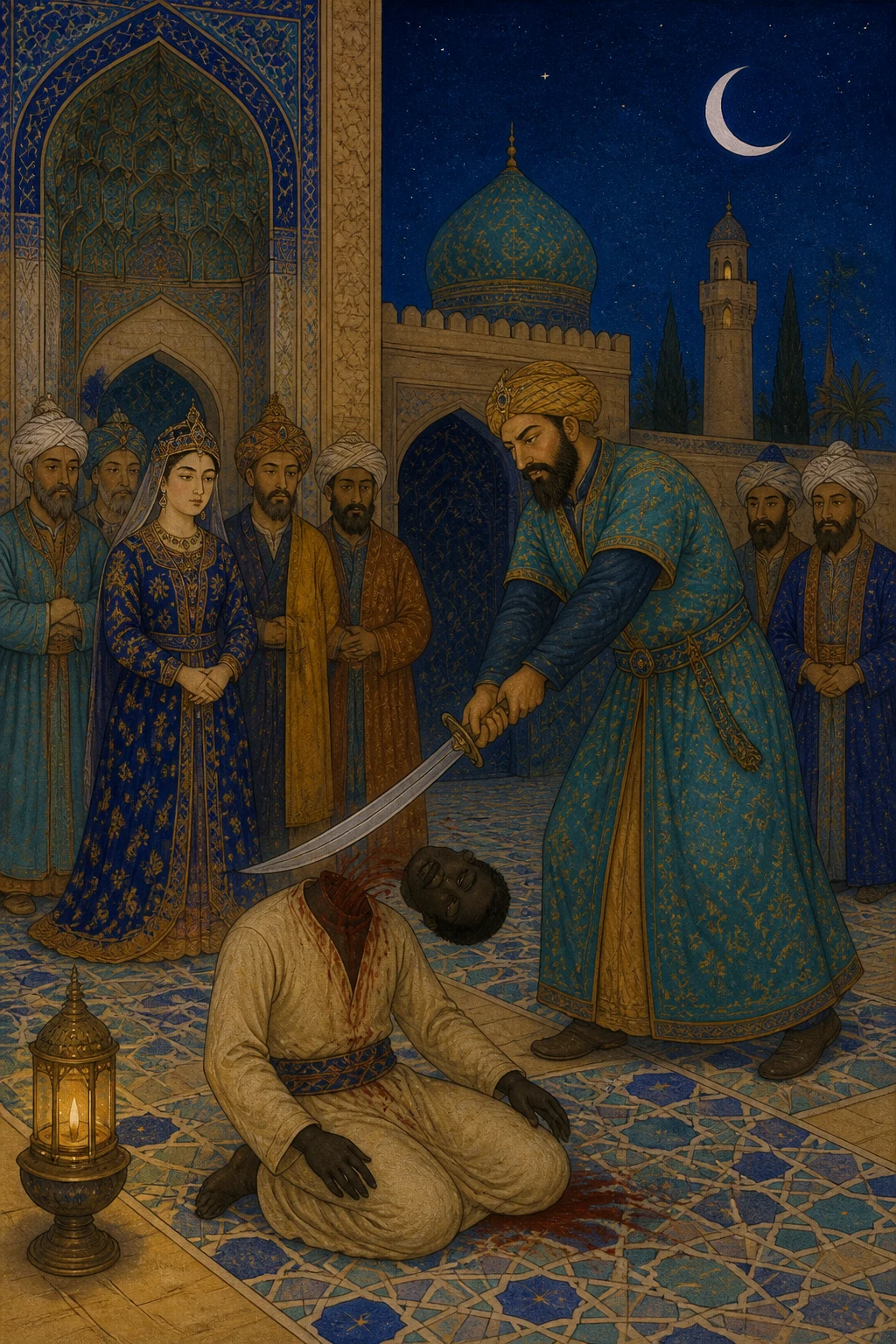
The Rey del Monte awoke at the noise, sprang for his blunderbuss, and took aim, but the weapon failed to fire. Then, instinctively realizing that the woman had betrayed him, he seized the blunderbuss by the barrel and brought it down heavily upon the wretch, who collapsed with her skull shattered.
III MAÑUCO THE PARLAMPÁN If ever a man in Lima had a reputation as a bonus vir, or a harmless poor devil, it was unquestionably the black man Mañuco. They called him the Parlampán because at bullfights he appeared dressed as a buffoon in the comic troupe, or company of parlampanes, and performed with such drollery that he had won no small following among the common people.
One afternoon he appeared in the ring with more brandy inside him than usual; the bull caught him, and he was carried to the hospital on a stretcher.
The surgeon came, examined the wound, and shook his head, murmuring malorum; after the surgeon, the chaplain approached his little cubicle and heard Mañuco’s confession.
The unfortunate fellow lived another forty-eight hours, and as long as he had breath he never ceased crying: —Gentlemen, take my advice: bars and bolts… no locks… the best of them isn’t worth a cigarette butt… there’s a key for every lock… bars and bolts, and then sleep as soundly as you please…
He repeated this advice so often that the steward of San Andrés Hospital began to think it was not born of delirium but was the cry of a guilty conscience, and went off to tell the neighborhood magistrate. The latter dug far enough to discover that Mañuco the Parlampán had been a thorough rogue, so skilled with a picklock that no lock was safe from him, even if it had a hundred bolts. Item, the authorities discovered that honest Mañuco was the Rey del Monte’s right-hand man in housebreaking.
Now you know, my readers: bars and bolts. Let us now finish with His Majesty the King. IV WHEREIN IT IS SEEN THAT FOR EVERY ACHILLES THERE IS A HOMER An immense crowd filled Lima’s Plaza Mayor on the morning of October 13, 1815.
Everyone wanted to see a bandit who robbed for the love of the art, distributing among the poor what he stripped from the rich. The Rey del Monte and three of his companions had been sentenced to death by hanging.
The wooden N stood ominously in its customary place, opposite the alley of Petateros. Viceroy Abascal, who had received several warnings that groups among the people were preparing to stage a riot to free the condemned man, surrounded the square with royal troops and civic militia.
The excitement went no further than surges and grumbling, and the executioner Pancho Sales calmly carried out his duties. The next day a crude ballad was on sale for a silver real, recounting the hanged man’s exploits with Gongorine exaggeration. This fragment will suffice to give some idea of the merits of that song of praise:
More than a King, a Cid of the wilds was he in his fearsome daring, in his good fortune in battle, in his generosity and cunning; a Roland of African complexion, defier of a thousand perils, not by valor was he conquered, but by guile they brought him low.
Needless to say, the poet sold out his edition and pocketed a tidy sum.
Izvirnik
026 El Rey del Monte
Naslednje strani prikazujejo izvirno besedilo za primerjavo.
QUE, ENTRE OTRAS COSAS, TRATA DE CÓMO LA REINA DE LOS TERRANOVAS PERDIÓ HONRA, CETRO Y VIDA
I
Con el cristianismo, que es fraternidad, nos vino desde la civilizada Europa, y como una negación de la doctrina religiosa, la trata de esclavos. Los crueles expedientes de que se valían los traficantes en carne humana para completar en las costas de África el cargamento de sus buques, y la manera bárbara como después eran tratados los infelices negros, no son asuntos para artículos del carácter ligero de mis TRADICIONES.
El esclavo que trabajaba en el campo vivía perennemente amagado del látigo y el grillete, y el que lograba la buena suerte de residir en la ciudad tenía también, como otra espada de Damocles, suspendida sobre su cabeza la amenaza de que, al primer renuncio, se abrirían para él las puertas de hierro de un amasijo.
Muchos amos cometían la atrocidad de carimbar o poner marca sobre la piel de los negros, como se práctica actualmente con el ganado vacuno o caballar, hasta que vino de España real cédula prohibiendo la carimba.
En el siglo anterior empezó a ser menos ruda la existencia de los esclavos. Los africanos, que por aquel tiempo se vendían en el Perú a precio más o menos igual al que hoy se paga por la contrata de un colono asiático, merecieron de sus amos la gracia de que, después de cristianados, pudieran, según sus respectivas nacionalidades o tribus, asociarse en cofradías. Aun creemos que vino de España una real cédula sobre el particular.
Andando los años, y con sus ahorrillos y gajes, llegaban muchos esclavos a pagar su carta de libertad; y entonces se consagraban al ejercicio de alguna industria, no siendo pocos los que lograron adquirir una decente fortuna. Precisamente la calle que se llama de Otárola debió su nombre a un acaudalado chala o mozambique, del cual, pues viene a cuento, he de referir una ocurrencia.
Colocóse en cierta ocasión en la puerta de un templo una mesa con la indispensable bandeja para que los fieles oblasen limosnas. Llegó su excelencia y el virrey echó un par de peluconas, y los oidores, y damas, y cabildantes, y gente de alto coturno hicieron resonar la metálica bandeja con una onza o un escudo por lo menos. Tal era la costumbre o la moda.
De repente presentóse taita Otárola, seguido de dos negros, cada uno de los cuales traía a cuestas un talego de a mil duros, y sacando del bolsillo medio real de plata lo echó en la bandeja, diciendo:
--Esta es la limosna.
Luego mandó avanzar a los negros, y colocando sobre la mesa los dos talegos añadió:
--Esta es la fantasía.
Ahora comenten ustedes a sus anchas la cosa, que no deja de tener entripado.
Como era consiguiente, muchas de las asociaciones de negros llegaron a poner su tesorería en situación holgada. Los angolas, caravelís, mozambiques, congos, chalas y terranovas compraron solares en las calles extremas de la ciudad, y edificaron las casas llamadas de cofradías. En festividades determinadas, y con venia de sus amos, se reunían allí para celebrar jolgorios y comilonas a la usanza de sus países nativos.
Estando todos bautizados, eligieron por patrona de las cofradías a la Virgen del Rosario, y era de ver el boato que desplegaban para la fiesta. Cada tribu tenía su reina, que era siempre negra y rica. En la procesión solemne salía ésta con traje de raso blanco, cubierto de finísimas blondas valencianas, banda bordada de piedras preciosas, cinturón y cetro de oro, arracadas y gargantilla de perlas. Todas echaban, como se dice, la casa por la ventana y llevaban un caudal encima. Cada reina iba acompañada de sus damas de honor, que por lo regular eran esclavas jóvenes, mimadas de sus aristocráticas señoras, y a quienes éstas por vanidad engalanaban ese día con sus joyas más valiosas. Seguía a la corte el populacho de la tribu, con cirio en mano las mujeres y los hombres tocando instrumentos africanos.
Aunque con menos lujo, concurrían también las cofradías a las fiestas de San Benito y Nuestra Señora de la Luz, en el templo de San Francisco, y a las procesiones de Corpus y Cuasimodo. En estas últimas eran africanos los que formaban las cuadrillas de diablos danzantes que acompañaban a la tarasca, papahuevos y gigantones.
La reina de los terranovas, en 1799, era una negra de más de cincuenta inviernos, conocida con el nombre de mama Salomé, la que habiendo comprado su libertad, puso una mazamorrería; y el hecho es que cundiendo la venta del artículo adquirió un fortunón tal que sus compatriotas, cuando vacó el trono, la aclamaron, nemine discrepante, por reina y señora.
Probablemente los limeños del siglo anterior se engolosinarían con la mazamorra, cuando los provincianos les aplicaban a guisa de injuria el epíteto de mazamorreros. ¡Ahí nos las den todas! Tanta deshonra hay en ello como en mascar pan o chacchar coca.
A Dios gracias, hoy estamos archicivilizados, y no hay miedo de que nos endilguen aquel mote que nos ruborizaba hasta el blanco de los ojos. A la inofensiva mazamorra la tenemos relegada al olvido, y como dijo mi inolvidable amigo el festivo y popular poeta Manuel Segura:
Yo conozco cierta dama que con este siglo irá, que dice que a su mama no la llamó nunca mama, y otra de aspecto cetrino que, por mostrar gusto inglés, dice: yo no se lo que es mazamorra de cochino.
Lo que hoy triunfa es la cerveza de Bass, marca T y el bitter de los hermanos Broggi. ¡Viva mi Pepa!
Impulso de blandir cachiporra nunca a nadie inspiró la mazamorra, que ella no daba bríos para andarse buscando desafíos, ni faltar al respeto cortesano a la mujer, al monje o al anciano. Mientras hoy, con un vaso de cerveza a cuestas, o una copa vergonzante de bitter de Torino, hasta al gigante Goliath le rebanamos la cabeza hablamos de tú a Cristo, y un piropo le echa a una dama el último galopo. ¡La diferencia es nada! ¿Ganamos o perdemos, camarada?
Basta de digresión y adelante con los faroles.
Años llevaba ya nuestra macuita en pacífica posesión de un trono tan real como el de la reina Pintiquiniestra. Pero ¡mire usted lo que es la envidia!
Como nadie alcanzaba a hacer competencia a la acreditada mazamorrería de mama Salomé, otra del gremio levantó la especie de que la terranova era bruja, y que para hacer apetitoso su manjar meneaba la olla, ¡qué asco!, con una canilla de muerto, canilla de judío, por añadidura.
¿Bruja dijiste? ¡A la Inquisición con ella! Y la pobre negra, convicta y confesa (con auxilio de la polea) de malas artes, fué sacada a la vergüenza pública, con pregonero delante y zurrador detrás, medio desnuda y montada en un burro flaco.
Y diz que lo es frío o calor bien pudo tener; pero lo que es vergüenza, ni el canto de una uña, pues en la piel no se le notó la menor señal de sonrojo.
Entendido está que la Inquisición se echó sobre el último maravedí de la mazamorrera, y que los terranovas la negaron obediencia y la destituyeron. Barrunto que entre ellos sería caso de vacancia la acusación de brujería. No conozco el artículo constitucional de los terranovas; pero me gusta, y ya lo quisiera ver incrustado en el código político de mi tierra, en que tachas peores no fueron nunca pretexto para tamaño desaire.
Mama Salomé, reina de mojiganga o de mentirijillas, no se parecía a los soberanos de verdad, que cuando sus vasallos los echan del trono poco menos que a puntapiés, se van orondos a comer el pan del extranjero y engordan que es una maravilla, y hablan a tontas y locas de que Dios consiente, pero no para siempre, y que como hay viñas, han de volver a empuñar el pandero.
Mama Salomé no intentó siquiera una revolucioncilla de mala muerte; se echó a dar y cavar en la ingratitud y felonía de los suyos, y a tal grado se le melancolizó el ánimo, que sin más ni más se la llevó Pateta.
II
DE CÓMO LA MUERTE DE UNA REINA INFLUYÓ EN LA VIDA DE UN REY
Mama Salomé dejaba un hijo, libre como ella y mocetón de quince años, el cual se juró a sí mismo, para cuando tuviese edad, vengar en la sociedad el ultraje hecho a su madre encorozándola por bruja, y a la vez castigar a los terranovas por la rebeldía contra su reina.
Cuentan que un día, sin que hubiese llegado el galeón de Cádiz trayendo noticia de la muerte del rey o de un príncipe de la sangre, ni fallecido en Lima magnate alguno, civil o eclesiástico, las campanas de la Catedral principiaron a doblar solemnemente, siguiendo su ejemplo las de las infinitas torres que tiene la ciudad. Las gentes se echaban a las calles preguntando quién era el muerto, y la autoridad misma no sabía qué responder.
Interrogados los campaneros, contestaban, y con razón, que ellos no tenían para qué meterse en averiguaciones, estándoles prevenido que repitiesen todo y por todo el toque de la matriz. Llamado ante el arzobispo el campanero de la Catedral, dijo:
--Ilustrísimo señor: los mandamientos rezan «honrar padre y madre». La que me envió al mundo murió en el hospital esta mañana, y yo, que no tengo más prebenda que la torre, honro a mi madre haciendo gemir a mis camparas.
Mutatis mutandis, puede decirse que el hijo de Salomé pensaba como el campanero de marras, proponiéndose honrar con crímenes la memoria de su madre.
Gozaba Lima de aparente tranquilidad, pues ya se empezaba a sentir en la atmósfera olor a chamusquina revolucionaria, cuando de pronto cundió grave alarma, y a fe que había sobrado motivo para ella. Tratábase nada menos que de la aparición de una fuerte cuadrilla de bandoleros, que, no contentos con cometer en despoblado mil y un estropicios, penetraban de noche en la ciudad, realizaban robos y se retiraban tan frescos como quien no quiebra un plato ni cosa que lo valga. En diversas ocasiones salieron las partidas de campo con orden de exterminarlos; pero los bandidos se batían tan en regla, que sus perseguidores se veían forzados a volver grupas, regresando maltrechos y con algunas bajas a la ciudad.
Rara era la incursión de los bandoleros a la capital en que no se llevasen cautivo algún terranova, que pocos días después devolvían bien azotado y con la cabeza al rape. Con las mujeres terranovas hacían también lo mismo, y algo más. Una noche hallábase la reina de regodeo en la casa de la cofradía, cuando de improviso se presentaron los de la cuadrilla, azotaron a su majestad, y cometieron con ella desaguisados tales que volando, volando y en pocos días la llevaron al panteón. El trono quedó vacante, no habiendo quien lo codiciase por miedo a las consecuencias; lo que ocasionó el desprestigio de la tribu y dió preponderancia a las otras cofradías, partidarias entusiastas del Rey del Monte, título con que era conocido el negro hijo de mama Salomé, capitán de la falange maldita.
Contribuían a dar cierta popularidad al Rey del Monte las mentiras y verdades que sobre él se contaban. Sólo los ricos eran víctimas de sus robos, y su parte de botín la repartía entre los pobres; no había jinete que lo superase, y en cuanto a su valor y hazañas, referíanse de él tantas historias que a la postre el pueblo empezó a mirarlo como a personaje de leyenda.
Tan grande fué el terror que el famoso bandido llegó a inspirar, que los más poderosos hacendados, para verse libres de un ataque, se hicieron sus feudatarios, pagándole cada mes una contribución en dinero y víveres para sostenimiento de la banda.
En vano mandó el virrey colocar en los caminos postes con carteles ofreciendo cuatro mil pesos por la cabeza del Rey del Monte. Y pasaban meses y corrían años, y convencida la autoridad de que empleando la fuerza no podría atrapar al muy pícaro, que siempre se escabullía de la celada mejor dispuesta, resolvió recurrir a la traición.
Nada más traicionero que el amor. Una Dalila de azabache se comprometió a entregar maniatados al nuevo Sansón y a sus principales filisteos.
Pasando por alto detalles desnudos de interés, diremos que una noche, hallándose el Rey del Monte entre la espesura de un bosque, acompañado de su coima y de cuatro o seis de los suyos, Dalila cuidó de embriagarlos, y a una hora concertada de antemano penetraron en el bosque los soldados.
El Rey del Monte despertó al ruido, se lanzó sobre su trabuco, apuntó y el arma no dio fuego. Entonces, adivinando instintivamente que la mujer lo había traicionado, tomó el trabuco por el cañón y lo dejó caer pesadamente sobre la infeliz, que se desplomó con el cráneo destrozado.
III
MAÑUCO EL PARLAMPÁN
Si hubo hombre en Lima con reputación de bonus vir o de pobre diablo, ése fué sin disputa el negro Mañuco.
Llamábanlo el Parlampán porque en las corridas de toros se presentaba vestido de monigote en la mojiganga o cuadrilla de parlampanes, y desempeñábase con tanto gracejo que se había conquistado no poca populachería.
Una tarde se exhibió en el redondel llevando dentro del cuerpo más aguardiente del acostumbrado, cogiólo el toro, y en una camilla lleváronle al hospital.
Vino el cirujano, reconoció la herida, meneó la cabeza murmurando malorum, y tras el cirujano se acercó a la covacha el capellán, y oyó en confesión a Mañuco.
Vivió aún el infeliz cuarenta y ocho horas, y mientras tuvo alientos no cesaba de gritar:
--Señores, llévense de mi consejo: tranca y cerrojo..., nada de cerraduras..., la mejor no vale un pucho..., para toda chapa hay llave..., tranca y cerrojo, y echarse a dormir a pierna suelta...
Tanto repetía el consejo, que el ecónomo del hospital de San Andrés pensó que aquello no era hijo del delirio, sino grito de la conciencia, y fuése al alcalde del barrio con el cuento. Este hurgó lo suficiente para sacar en claro que Mañuco el Parlampán había sido pájaro de cuenta, y tan diestro en el manejo de la ganzúa que con él no había chapa segura, siquiera tuviese cien pestillos. Item, descubrió la autoridad que el honrado Mañuco era el brazo derecho del Rey del Monte para los robos domésticos.
Ya lo saben ustedes, lectores míos: tranca cerrojo.
Concluyamos ahora con su majestad el Rey.
IV
DONDE SE VE QUE PARA TODO AQUILES HAY UN HOMERO
Inmenso era el gentío que ocupaba la Plaza mayor de Lima en la mañana del 13 de octubre de 1815.
Todos querían conocer a un bandido que robaba por amor al arte, repartiendo entre los pobres aquello de que despojaba a los ricos.
El Rey del Monte y tres de sus compañeros estaban condenados a muerte de horca.
La ene de palo se alzaba fatídica en el sitio de costumbre, frente al callejón de Petateros.
El virrey Abascal, que había recibido varios avisos de que grupos del pueblo se preparaban a armar un motín para libertar al sentenciado, rodeó la plaza con tropas reales y milicias cívicas.
La excitación no pasó de oleadas y refunfuños, y el verdugo Pancho Sales llenó tranquilamente sus funciones.
Al día siguiente se vendía al precio de un real de plata un chabacano romance, en que se relataban con exageración gongorina las proezas del ahorcado. Del mérito del romance encomiástico bastará a dar una idea este fragmento:
Más que Rey, Cid de los montes fué por su arrojo tremendo, por fortunado en la lidia, por generoso y mañero; Roldan de tez africana, desafiador de mil riesgos, no le rindieron bravuras, sino a dides le rindieron.
Por supuesto, que el poeta agotó la edición y pescó buenos cuartos.
Nadaljuj z branjem