Waltey
Smrt pretkane starke
Tisoč in ena noč · arabska pripovedna tradicijaO besedilu
Smrt pretkane starke
- Vir
- Tisoč in ena noč
- Avtor
- arabska pripovedna tradicija
- Jezik branja
- English
- Jezik izvirnika
- Arabic
- Čas branja
- 6 min branja
- Obseg
- 5 strani
- Naslov izvirnika
- مقتل العجوز ذات الدواهي - الليلة ١٤٥
O izvirniku
Tisoč in ena noč
Zgodbe v zgodbah, polne trgovcev, dvorov, preoblek in nočnih zapletov. Bralni jezik je English, izvirnik pa prihaja iz vira Tisoč in ena noč v jeziku Arabic.
Besedilo
Smrt pretkane starke
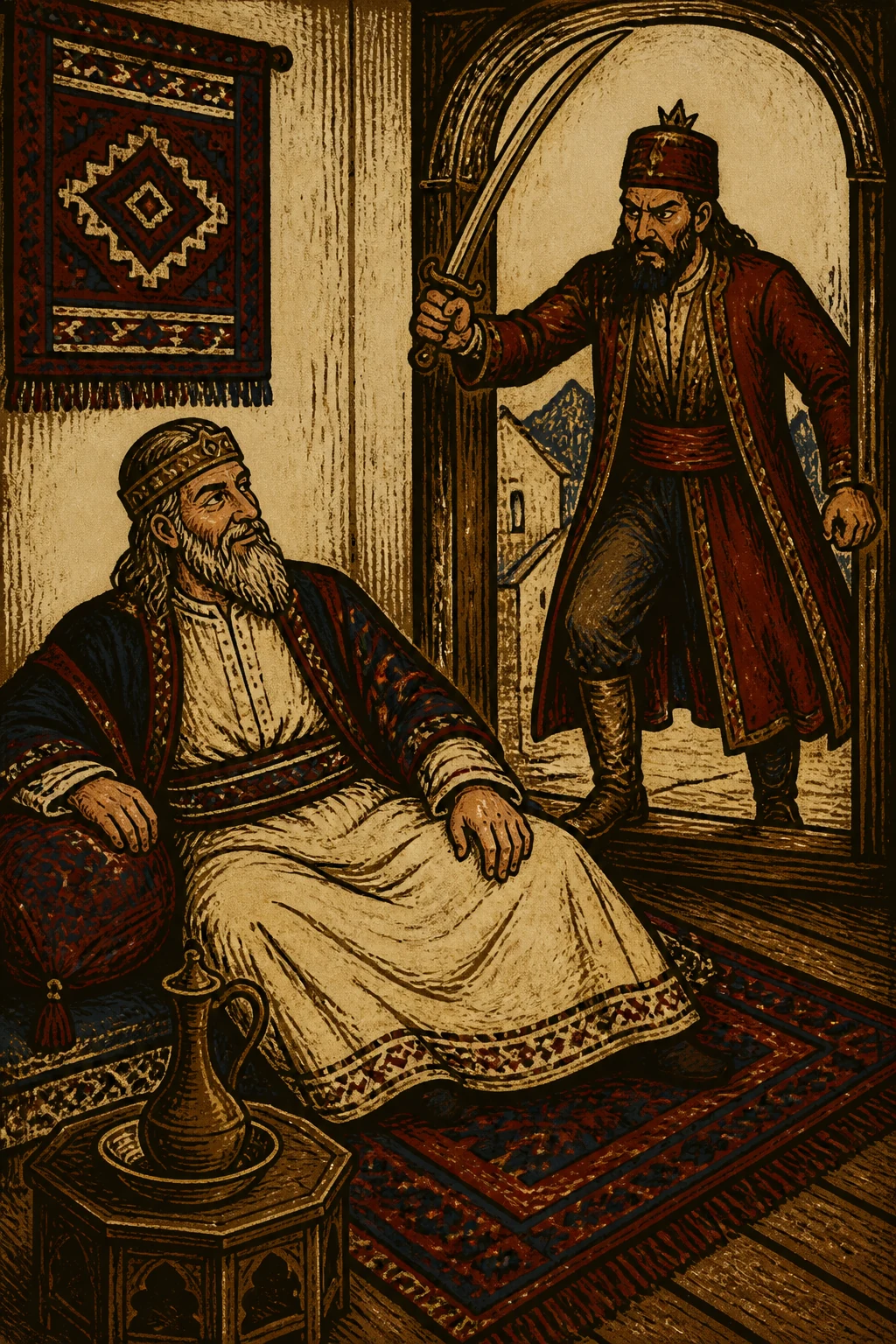
She said: It has reached me, O fortunate king, that when Nuzhat al-Zaman heard these words from the Bedouin, the light in her eyes turned to darkness. She rose, drew her sword, and struck the Bedouin Hammad upon the shoulder, cutting clean through him. Those present said to her, “Why were you so hasty to kill him?” She replied, “Praise be to God, who has prolonged my life until I could take my vengeance with my own hand!” Then she ordered the slaves to drag him away by his feet and throw him to the dogs.
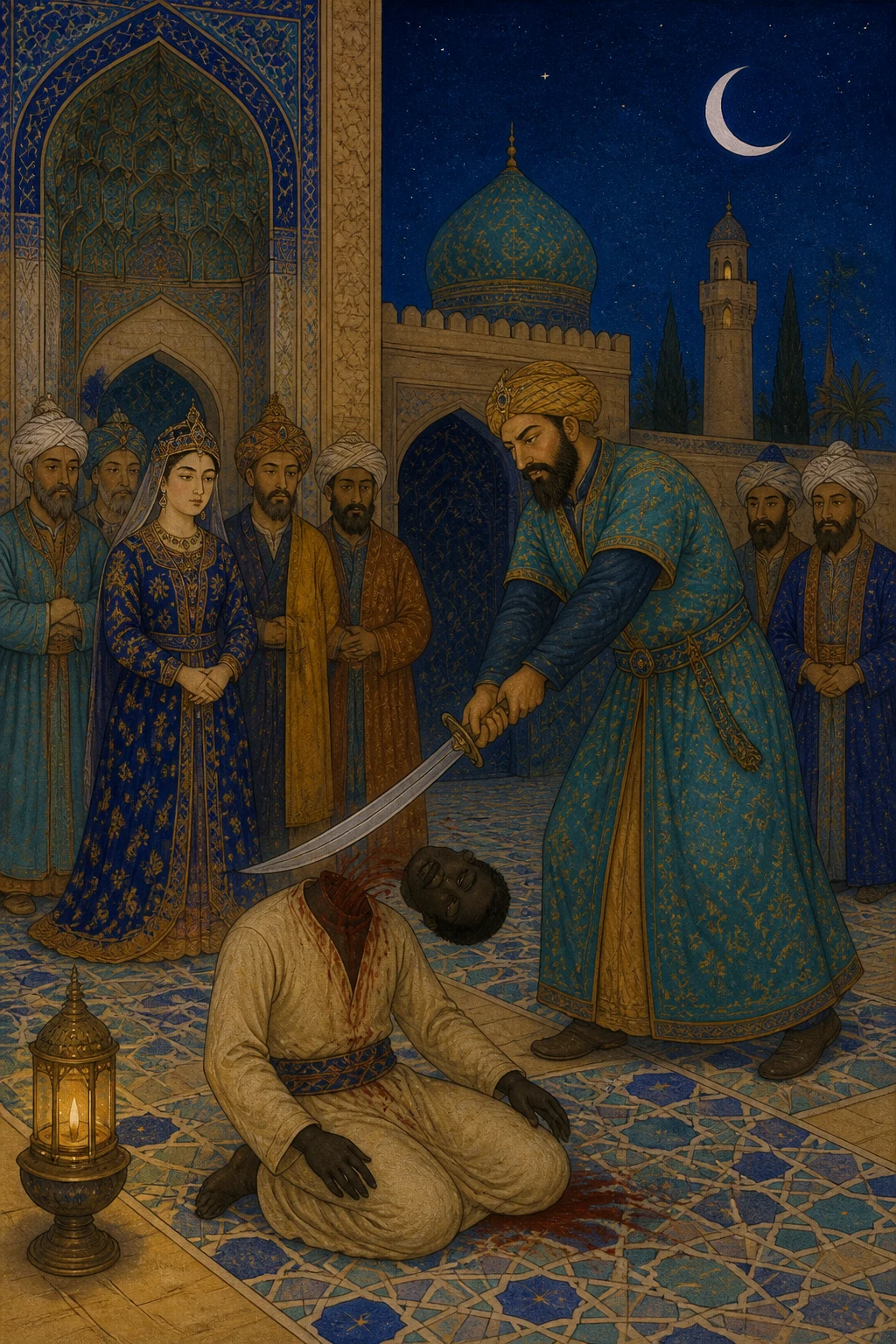
After this they turned to the two who remained of the three. One was a black slave, and they asked him, “What is your name? Tell us the truth.” He answered, “My name is al-Ghadban.” He told them what had passed between him and Queen Ibriza, daughter of King Hardub, king of the Greeks, and how he had killed her and fled. Before the slave could finish speaking, King Rumzan struck off his head with his sword, saying, “Praise be to God, who has kept me alive to avenge my mother with my own hand!” He told them that his nurse Marjana had spoken to him of this slave named al-Ghadban.
Then they turned to the third man. He was the camel driver whom the people of Jerusalem had hired to carry Daw al-Makan to the hospital in Damascus in Syria, but who had taken him and cast him into the furnace room before going on his way. They said to him, “Tell us your story, and speak the truth.” He related everything that had happened between him and Sultan Daw al-Makan: how he had carried him from Jerusalem in his weakened state, having undertaken to convey him to Damascus and leave him at the hospital; how the people of Jerusalem had brought him money; and how he had taken it and fled after throwing Daw al-Makan into the furnace room of the bathhouse. When he had finished speaking, Sultan Kan ma Kan took up a sword and struck off his head, saying, “Praise be to God, who has kept me alive until I could repay this traitor for what he did to my father! For I heard this very tale from my father, Sultan Daw al-Makan.”
The kings said to one another, “There remains only the old woman Shawahi, known as Dhat al-Dawahi, the Mistress of Calamities. She is the cause of all these afflictions, for it was she who brought these disasters upon us. Who will deliver her into our hands, that we may take our vengeance upon her and wipe away our shame?” King Rumzan, the uncle of King Kan ma Kan, said to them, “She must be brought here.” At once King Rumzan wrote a letter and sent it to his grandmother, the old woman Shawahi, known as Dhat al-Dawahi. In it he told her that he had conquered the kingdoms of Damascus, Mosul, and Iraq, routed the Muslim army, and taken their kings captive. He wrote, “You must come to me without fail, bringing Queen Safiyya, daughter of King Afridun, king of Constantinople, and whichever of the Christian nobles you please, but no troops. The country is safe, for it is now in our hands.” When the letter reached her, she read it and recognized King Rumzan’s handwriting. She rejoiced exceedingly and at once made ready to travel, together with Queen Safiyya, the mother of Nuzhat al-Zaman, and their companions. They journeyed on until they reached Baghdad, where the messenger went ahead and announced her arrival. Rumzan said, “It would be wise for us to dress as Franks and go out to meet the old woman, so that we may be safe from her deceit and cunning.” They answered, “We hear and obey.” So they put on Frankish dress, and when Qudiya Fakan saw them, she said, “By the Lord who is worshipped, if I did not know you, I should say you were Franks!” Then Rumzan went before them, and they rode out with a thousand horsemen to meet the old woman. When they caught sight of one another, Rumzan dismounted and hurried toward her. When she saw and recognized him, she too dismounted and embraced him, but he gripped her ribs so hard that he nearly crushed them. “What is this?” she cried. Before she could finish speaking, Kan ma Kan and the vizier Dandan had dismounted beside them, while the horsemen charged with a shout upon her serving girls and slave boys. They seized them all and returned to Baghdad. Rumzan ordered the city to be decorated, and for three days it was decked in finery. Then they brought out Shawahi, known as Dhat al-Dawahi, wearing a tall red cap crowned with donkey dung. A crier walked before her, proclaiming, “This is the reward of anyone who dares assail kings and the children of kings!” Then they crucified her at the gate of Baghdad, and when her companions saw what had befallen her, every one of them embraced Islam.
Then Kan ma Kan, his uncle Rumzan, Nuzhat al-Zaman, and the vizier Dandan marvelled at this wondrous history, and commanded the scribes to record it in books so that it might be read by those who came after them. They passed the rest of their days in the sweetest and most delightful life, until there came to them the Destroyer of Pleasures and the Sunderer of Companies. Such is the last that has reached us of the turns of fortune that befell King Umar al-Numan, his son Sharrkan, his son Daw al-Makan, his grandson Kan ma Kan, Nuzhat al-Zaman, and Qudiya Fakan.
Then the king said to Shahrazad, “I should like you to tell me a tale of birds.” She replied, “With love and pleasure.” Her sister said to her, “In all this time I have never seen the king so light of heart as he is tonight, and I hope that your fate will be a happy one.” But morning overtook Shahrazad, and she fell silent, leaving her permitted tale untold.
Izvirnik
مقتل العجوز ذات الدواهي - الليلة ١٤٥
Naslednje strani prikazujejo izvirno besedilo za primerjavo.
فلما كانت الليلة ١٤٥
قالت: بلغني أيها الملك السعيد، أن نزهة الزمان لما سمعت من البدوي هذا الكلام، تبدَّل الضياء في عينها بالظلام، وقامت جرَّدت السيف وضربت به البدوي حمَّادًا على عاتقه فأطلعته من علائقه، فقال لها الحاضرون: لأيِّ شيء استعجلت على قتله؟ فقالت: الحمد لله الذي فسح في أجلي حتى أخذتُ ثأري بيدي. ثم إنها أمرت العبيد أن يجروه من رجليه، ويرموه للكلاب.
وبعد ذلك أقبلوا على الاثنين الباقيَيْن من الثلاثة، وكان أحدهما عبدًا أسود، فقالوا له: ما اسمك أنت؟ فاصدقنا في حديثك. قال: أنا اسمي الغضبان. وأخبرهم بما وقع له مع الملكة إبريزة بنت الملك حردوب ملك الروم، وكيف قتلها وهرب، فلم يتم العبد كلامه حتى رمى الملك رومزان رقبته بالحسام، وقال: الحمد لله الذي أحياني وأخذت ثأر أمي بيدي. وأخبرهم أن دايته مرجانة حكت له عن هذا العبد الذي اسمه الغضبان.
وبعد ذلك أقبلوا على الثالث، وكان هو الجمَّال الذي اكتروه أهل بيت المقدس لحمل ضوء المكان وتوصيله إلى المارستان الذي في دمشق الشام، فذهب به وألقاه في المستوقد، وذهب إلى حال سبيله، ثم قالوا له: أخبرنا أنت بخبرك، واصدق في حديثك. فحكى لهم جميع ما وقع له مع السلطان ضوء المكان، وكيف حمله من بيت المقدس وهو ضعيف، على أن يوصله إلى الشام ويرميه في المارستان، وكيف جاء له أهل بيت المقدس بالدراهم، فأخذها وهرب بعد أن رماه في مستوقد الحمَّام، فلما تمَّ كلامه أخذ السلطان «كان ما كان» السيفَ وضربه فرمى عنقه، وقال: الحمد لله الذي أحياني حتى جازيت هذا الخائن بما فعل مع أبي، فإنني قد سمعت هذه الحكاية بعينها من والدي السلطان ضوء المكان.
فقال الملوك لبعضهم: ما بقي علينا إلَّا العجوز شواهي الملقَّبة بذات الدواهي، فإنها سبب هذه البلايا؛ حيث أوقعتنا في الرزايا، ومن لنا بها حتى نأخذ منها الثأر، ونكشف العار. فقال لهم الملك رومزان عم الملك كان ما كان: لا بد من إحضارها. ثم إن الملك رومزان كتب كتابًا من وقته وساعته، وأرسله إلى جدته العجوز شواهي الملقَّبة بذات الدواهي، وذكر لها فيه أنه غلب على مملكة دمشق والموصل والعراق، وكسر عسكر المسلمين وأسر ملوكهم، وقال: أريد أن تحضري عندي من كل بد، أنتِ والملكة صفيَّة بنت الملك أفريدون ملك القسطنطينية، ومَن شئتم من أكابر النصارى من غير عسكر، فإن البلاد أمان؛ لأنها صارت تحت أيدينا. فلما وصل الكتاب إليها وقرأته وعرفت خط الملك رومزان، فرحت فرحًا شديدًا، وتجهَّزت من وقتها وساعتها للسفر هي والملكة صفية أم نزهة الزمان ومَن صَحِبهم، ولم يزالوا مسافرين حتى وصلوا إلى بغداد، فتقدَّم الرسول وأخبرهم بحضورها، فقال رومزان: المصلحة تقتضي أن نلبس اللبس الإفرنجي، ونقابل العجوز حتى نأمن من خداعها وحِيَلها. فقالوا: سمعًا وطاعة. ثم إنهم لبسوا لباس الإفرنج، فلما رأت ذلك «قضى فكان» قالت: وحق الرب المعبود، لولا أني أعرفكم لَقلتُ إنكم إفرنج. ثم إن رومزان تقدَّم أمامهم، وخرجوا يقابلون العجوز في ألف فارس، فلما وقعت العين في العين، ترجَّلَ رومزان عن جواده وسعى إليها، فلما رأته وعرفته ترجَّلت إليه وعانقته، فقرط بيده على أضلاعها حتى كاد أن يقصفها، فقالت: ما هذا؟ فلم تتم كلامها حتى نزل إليهما «كان ما كان»، والوزير دندان، وزعقت الفرسان على مَن معها من الجواري والغلمان، وأخذوهم جميعهم ورجعوا إلى بغداد، وأمرهم رومزان أن يزيِّنوا بغداد، فزيَّنوها ثلاثةَ أيام، ثم أخرجوا شواهي الملقَّبة بذات الدواهي، وعلى رأسها طرطور أحمر مكلَّل بروث الحمير، وقُدَّامها منادٍ ينادي: هذا جزاء مَن يتجرَّأ على الملوك، وعلى أولاد الملوك. ثم صلبوها على باب بغداد، ولما رأى أصحابها ما جرى لها أسلموا كلهم جميعًا.
ثم إن كان ما كان، وعمه رومزان، ونزهة الزمان، والوزير دندان تعجَّبوا لهذه السيرة العجيبة، وأمروا الكُتَّاب أن يؤرخوها في الكتب حتى تُقرَأ من بعدهم، وأقاموا بقية الزمان في ألذ عيش وأهناه، إلى أن أتاهم هادم اللذات، ومفرق الجماعات. وهذا آخر ما انتهى إلينا من تصاريف الزمان بالملك عمر النعمان، وولده شركان، وولده ضوء المكان، وولد ولده كان ما كان، ونزهة الزمان، وقضى فكان.
ثم إن الملك قال لشهرزاد: أشتهي أن تحكي لي شيئًا من حكاية الطيور. فقالت: حبًّا وكرامة. فقالت لها أختها: لم أرَ الملك في طول هذه المدة انشرح صدره غير هذه الليلة، وأرجو أن تكون عاقبتك محمودة. وأدرك شهرزاد الصباح فسكتَتْ عن الكلام المباح.
Nadaljuj z branjem