Prevod
WHICH, AMONG OTHER THINGS, TELLS HOW THE QUEEN OF THE TERRANOVAS LOST HONOR, SCEPTER, AND LIFE I Along with Christianity, which is brotherhood, civilized Europe sent us the slave trade, in outright denial of that religious doctrine. The cruel devices employed by traffickers in human flesh to fill their ships along the coast of Africa, and the barbarous treatment subsequently inflicted on the unfortunate Africans, are not subjects for pieces of the lighthearted character of my TRADITIONS.
The slave who worked in the fields lived perpetually under threat of the lash and the fetter, while the one fortunate enough to live in the city also had another sword of Damocles hanging over his head: the threat that, at his first slip, the iron doors of a prison bakery would open to receive him.
Many masters committed the atrocity of branding the skin of their slaves, just as cattle and horses are branded today, until a royal decree arrived from Spain forbidding the practice.
In the last century, the existence of slaves began to grow less harsh. Africans, who in those days were sold in Peru for more or less what is now paid for an Asian laborer’s contract, were granted permission by their masters, once baptized as Christians, to form confraternities according to their respective nations or tribes. We even believe that a royal decree on the matter came from Spain.
As the years passed, many slaves managed, with their little savings and earnings, to purchase their freedom; they would then take up some trade, and not a few acquired a respectable fortune. Indeed, the street called Otárola owes its name to a wealthy Chala, or Mozambican, about whom, since the occasion presents itself, I must tell a little story.
On one occasion, a table was set at the door of a church, with the indispensable tray for the faithful to make their offerings. His Excellency arrived, and the viceroy dropped in a couple of peluconas; the judges, ladies, councilmen, and other people of high standing made the metal tray ring with at least a gold ounce or an escudo. Such was the custom, or the fashion.
Suddenly old father Otárola appeared, followed by two black men, each carrying on his back a sack of a thousand silver dollars. Taking a silver half-real from his pocket, he dropped it into the tray and said:
—This is the alms. Then he ordered the men forward, and, placing the two sacks on the table, added: —This is the flourish. Now make what you please of the business, which certainly has something behind it.
As was only natural, many of the black associations came to possess comfortable treasuries. The Angolas, Caravelís, Mozambicans, Congos, Chalas, and Terranovas bought plots on the outskirts of the city and built the houses known as confraternity halls. On certain feast days, and with their masters’ permission, they gathered there for revels and banquets in the fashion of their native lands.
Since all were baptized, they chose Our Lady of the Rosary as patroness of the confraternities, and the splendor they displayed for her feast was a sight to behold. Each tribe had its queen, who was invariably black and rich. In the solemn procession she appeared in a gown of white satin covered with the finest Valencian lace, a sash embroidered with precious stones, a golden belt and scepter, and pearl earrings and necklace. Every one of them, as the saying goes, spared no expense and wore a fortune on her person. Each queen was attended by her ladies-in-waiting, generally young slaves who were the pampered favorites of their aristocratic mistresses, and whom those ladies, out of vanity, adorned that day with their most valuable jewels. Behind the court came the common people of the tribe, the women carrying candles and the men playing African instruments.
Though with less magnificence, the confraternities also attended the feasts of Saint Benedict and Our Lady of Light at the church of San Francisco, as well as the Corpus Christi and Low Sunday processions. In the latter, Africans made up the troupes of dancing devils that accompanied the dragon effigy, the great bobbing figures, and the giants.
In 1799, the queen of the Terranovas was a black woman of more than fifty winters, known as mama Salomé. Having bought her freedom, she had opened a shop selling mazamorra pudding; and the fact is that, as sales of her wares increased, she acquired such a fortune that, when the throne fell vacant, her compatriots acclaimed her, nemine discrepante, as their queen and sovereign.
The people of Lima in the last century must have had a sweet tooth for mazamorra, since provincials applied the epithet “mazamorra-eaters” to them by way of insult. May all the insults they fling at us be like that! There is as much disgrace in it as in chewing bread or coca leaves.
Thank God, we are now civilized to the very marrow, and need have no fear of being saddled with that nickname, which used to make us blush to the whites of our eyes. We have consigned harmless mazamorra to oblivion, and, as my unforgettable friend, the witty and popular poet Manuel Segura, put it:
I know a certain lady, quite in keeping with this age, who says she never called her mama “mama”; and another, sallow-faced, who, to show her English taste, declares: “I do not know what mazamorra de cochino is.”
What reigns supreme today is Bass beer, T brand, and the Broggi brothers’ bitters. Hurrah for a free-for-all! Mazamorra never stirred in anyone the urge to swing a cudgel; it gave no one the spirit to go seeking duels, or to forget good manners toward a woman, monk, or old man. Whereas today, with a glass of beer aboard, or a furtive glass of Turin bitters, we will slice the head off the giant Goliath himself, address Christ as an old familiar, and the lowest stableboy will toss a saucy compliment at a lady. A trifling difference, indeed! Have we gained or lost, my friend?
Enough digression; onward with the lanterns. For years our dear black woman had peacefully occupied a throne as real as that of Queen Pintiquiniestra. But just look at what envy can do!
Since no one could compete with mama Salomé’s celebrated mazamorra shop, another woman in the trade spread the story that the Terranova was a witch and that, to make her pudding appetizing, she stirred the pot—how disgusting!—with a dead man’s shinbone, and a Jew’s shinbone at that.
A witch, did you say? Off to the Inquisition with her! And the poor black woman, convicted of witchcraft and brought to confess it—with the aid of the strappado—was exposed to public shame, half naked on a scrawny donkey, with a crier before her and a flogger behind.
And they say that, as for cold or heat, she may well have felt them; but as for shame, not so much as a fingernail’s worth, for not the slightest sign of a blush could be seen on her skin.
It goes without saying that the Inquisition seized the pudding seller’s last maravedí, and that the Terranovas withdrew their allegiance and deposed her. I suspect that among them an accusation of witchcraft was grounds for declaring the throne vacant. I am unfamiliar with that article of the Terranova constitution, but I like it, and would gladly see it embedded in the political code of my own country, where worse failings have never been grounds for so great a slight.
Mama Salomé, a queen of pageantry or make-believe, was not like real sovereigns, who, when their subjects drive them from the throne practically at the point of a boot, go swaggering off to eat the bread of foreign lands, grow wondrously fat, and prattle on about how God permits such things, but not forever, and how, as surely as vineyards exist, they will one day be calling the tune again.
Mama Salomé did not so much as attempt a wretched little revolution. She fell to brooding endlessly over the ingratitude and treachery of her people, and her spirits grew so melancholy that, without further ado, Old Nick carried her off.
II HOW THE DEATH OF A QUEEN INFLUENCED THE LIFE OF A KING Mama Salomé left a son, free like herself and a strapping lad of fifteen, who swore that, once he was old enough, he would avenge upon society the outrage done to his mother in making her wear a witch’s penitential cap, and at the same time punish the Terranovas for rebelling against their queen.
They tell how one day, though no galleon had arrived from Cádiz with news of the death of the king or a prince of the blood, and no great personage, civil or ecclesiastical, had died in Lima, the Cathedral bells began tolling solemnly, followed by those of the city’s countless towers. People poured into the streets, asking who had died, and even the authorities did not know what to answer.
When questioned, the bell-ringers replied, quite reasonably, that they had no business making inquiries, since their instructions were to repeat in every particular the tolling of the mother church. Summoned before the archbishop, the Cathedral bell-ringer said:
—Most illustrious sir, the commandments say, “Honor thy father and thy mother.” The woman who brought me into this world died in the hospital this morning, and since I have no benefice but my tower, I honor my mother by making my bells lament.
Mutatis mutandis, one might say that Salomé’s son thought like the bell-ringer in question, proposing to honor his mother’s memory with crimes.
Lima was enjoying an outward calm, though a whiff of revolutionary burning was already in the air, when grave alarm suddenly spread through the city, and in truth there was more than enough cause for it. Nothing less was afoot than the appearance of a powerful band of brigands who, not content with committing a thousand outrages in the countryside, entered the city by night, carried out robberies, and withdrew as coolly as though butter would not melt in their mouths. On several occasions mounted patrols went out with orders to exterminate them; but the bandits fought with such discipline that their pursuers were forced to turn tail, returning to the city battered and with several casualties.
Rare was the bandits’ raid on the capital in which they did not carry off some Terranova captive, returning him a few days later thoroughly flogged and with his head shaven. They did the same to Terranova women, and something more besides. One night the queen was making merry in the confraternity hall when the band suddenly appeared, whipped Her Majesty, and committed such outrages upon her that in a very few days they sent her flying to the graveyard. The throne remained vacant, for no one coveted it for fear of the consequences; this brought the tribe into disrepute and gave the upper hand to the other confraternities, enthusiastic partisans of the Rey del Monte, the King of the Wilds—the title by which mama Salomé’s black son, captain of that accursed host, was known.
The truths and falsehoods told about the Rey del Monte helped lend him a certain popularity. Only the rich fell victim to his robberies, and he distributed his share of the booty among the poor; no horseman could surpass him, and so many stories were told of his courage and exploits that the people eventually began to regard him as a figure of legend.
So great was the terror the famous bandit came to inspire that the most powerful landowners, to spare themselves an attack, became his tributaries, paying him a monthly contribution in money and provisions to maintain the band.
In vain did the viceroy order notices posted along the roads offering four thousand pesos for the head of the Rey del Monte. Months passed and years rolled by, and the authorities, convinced that force could never capture the rogue, who always slipped out of the most carefully laid ambush, resolved to resort to treachery.
Nothing is more treacherous than love. A jet-black Delilah undertook to deliver the new Samson and his chief Philistines bound hand and foot. Passing over details of no interest, we shall say that one night, when the Rey del Monte was deep in a forest with his mistress and four or six of his men, Delilah took care to make them drunk, and at a prearranged hour the soldiers entered the woods.
The Rey del Monte awoke at the noise, sprang for his blunderbuss, and took aim, but the weapon failed to fire. Then, instinctively realizing that the woman had betrayed him, he seized the blunderbuss by the barrel and brought it down heavily upon the wretch, who collapsed with her skull shattered.
III MAÑUCO THE PARLAMPÁN If ever a man in Lima had a reputation as a bonus vir, or a harmless poor devil, it was unquestionably the black man Mañuco. They called him the Parlampán because at bullfights he appeared dressed as a buffoon in the comic troupe, or company of parlampanes, and performed with such drollery that he had won no small following among the common people.
One afternoon he appeared in the ring with more brandy inside him than usual; the bull caught him, and he was carried to the hospital on a stretcher.
The surgeon came, examined the wound, and shook his head, murmuring malorum; after the surgeon, the chaplain approached his little cubicle and heard Mañuco’s confession.
The unfortunate fellow lived another forty-eight hours, and as long as he had breath he never ceased crying: —Gentlemen, take my advice: bars and bolts… no locks… the best of them isn’t worth a cigarette butt… there’s a key for every lock… bars and bolts, and then sleep as soundly as you please…
He repeated this advice so often that the steward of San Andrés Hospital began to think it was not born of delirium but was the cry of a guilty conscience, and went off to tell the neighborhood magistrate. The latter dug far enough to discover that Mañuco the Parlampán had been a thorough rogue, so skilled with a picklock that no lock was safe from him, even if it had a hundred bolts. Item, the authorities discovered that honest Mañuco was the Rey del Monte’s right-hand man in housebreaking.
Now you know, my readers: bars and bolts. Let us now finish with His Majesty the King. IV WHEREIN IT IS SEEN THAT FOR EVERY ACHILLES THERE IS A HOMER An immense crowd filled Lima’s Plaza Mayor on the morning of October 13, 1815.
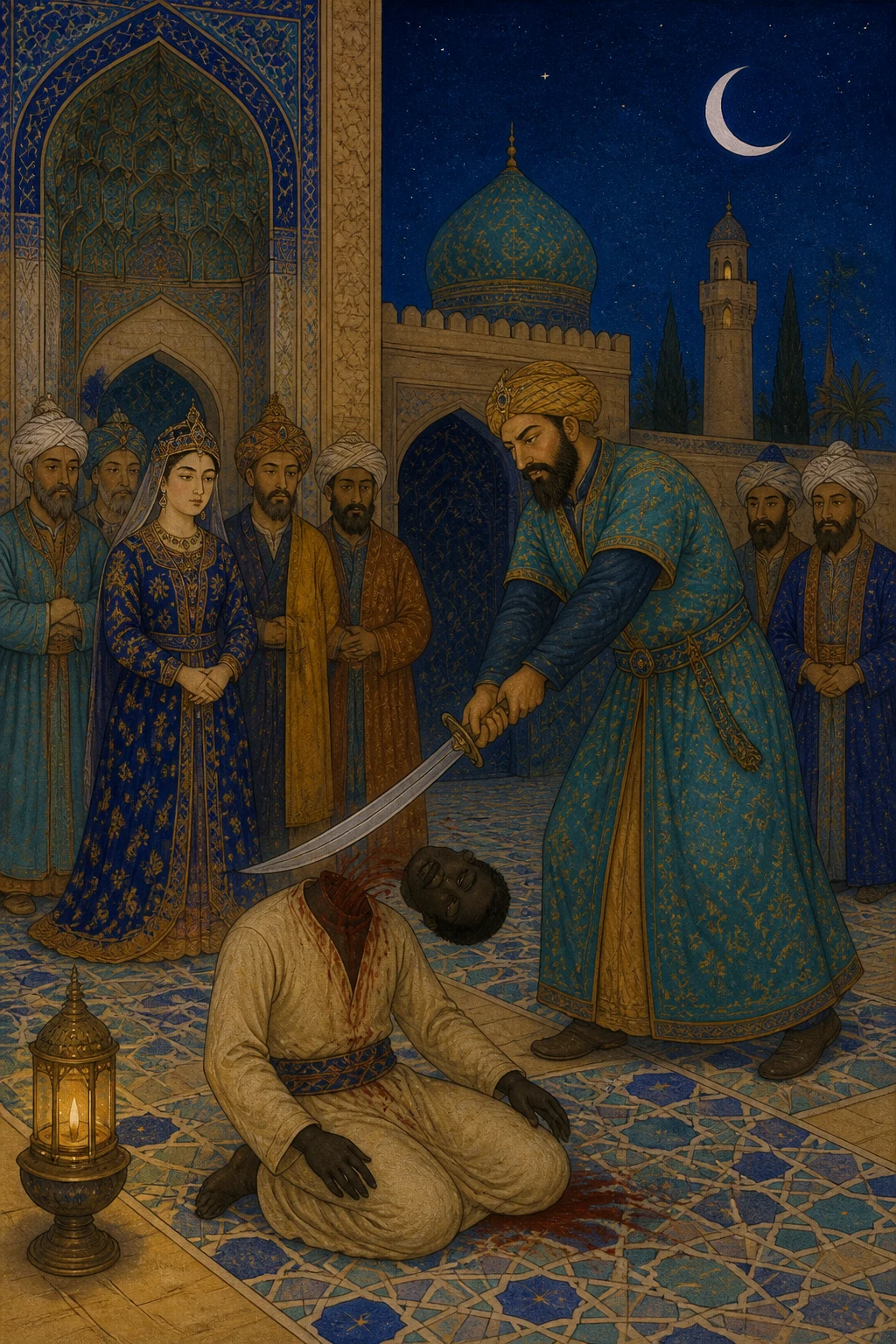
Everyone wanted to see a bandit who robbed for the love of the art, distributing among the poor what he stripped from the rich. The Rey del Monte and three of his companions had been sentenced to death by hanging.
The wooden N stood ominously in its customary place, opposite the alley of Petateros. Viceroy Abascal, who had received several warnings that groups among the people were preparing to stage a riot to free the condemned man, surrounded the square with royal troops and civic militia.
The excitement went no further than surges and grumbling, and the executioner Pancho Sales calmly carried out his duties. The next day a crude ballad was on sale for a silver real, recounting the hanged man’s exploits with Gongorine exaggeration. This fragment will suffice to give some idea of the merits of that song of praise:
More than a King, a Cid of the wilds was he in his fearsome daring, in his good fortune in battle, in his generosity and cunning; a Roland of African complexion, defier of a thousand perils, not by valor was he conquered, but by guile they brought him low.
Needless to say, the poet sold out his edition and pocketed a tidy sum.