Prevod
Once upon a time there was a clever, wily little peasant whose pranks would fill many a tale, but the best of all is the story of how he once got the better of the devil and made a fool of him.
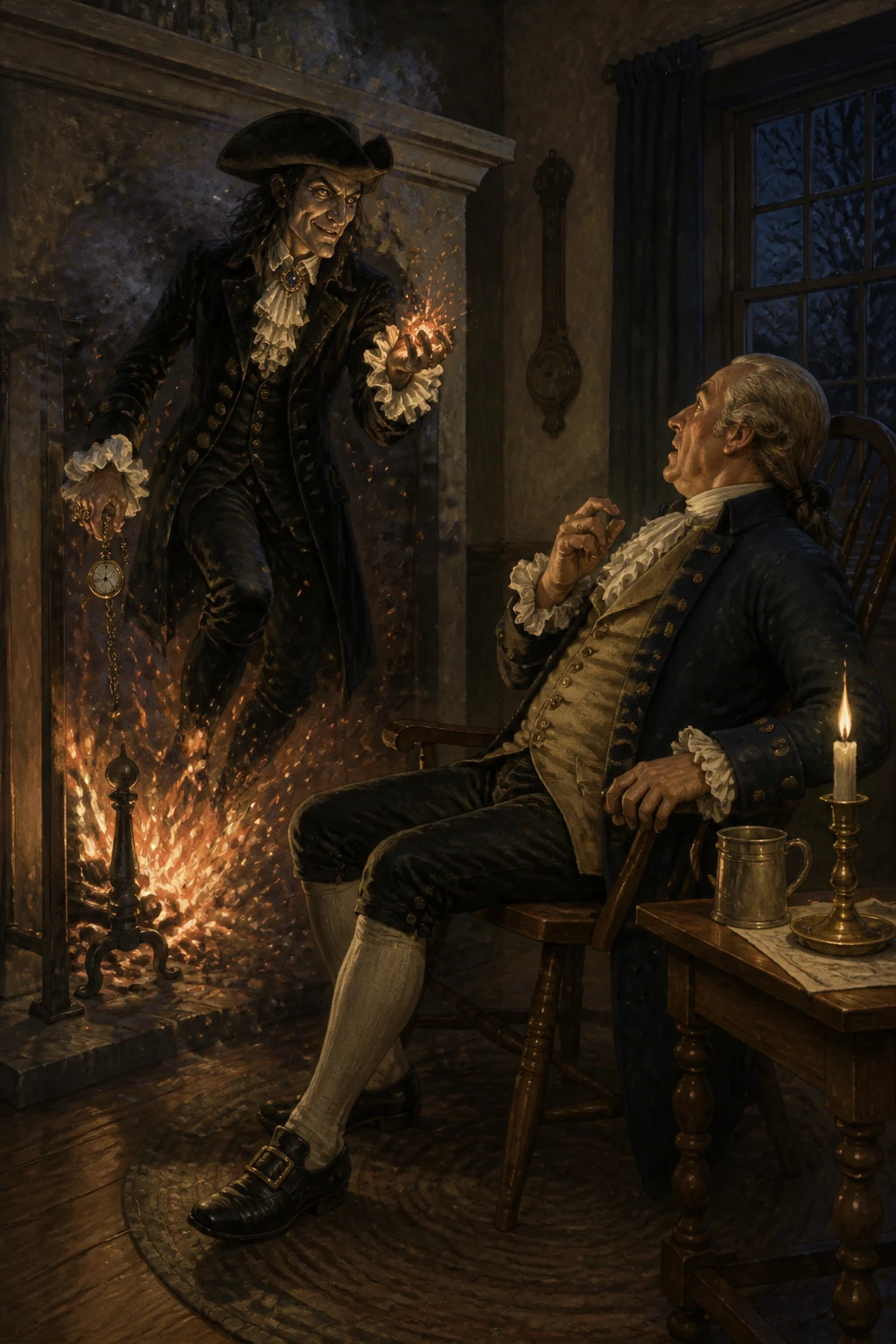
One day the little peasant had been working his field and was getting ready to drive home, for dusk had already fallen. Then he caught sight of a heap of glowing coals in the middle of his field, and when he went over in amazement, he found a little black devil sitting on top of the embers. "You must be sitting on a treasure," said the little peasant. "Indeed I am," answered the devil, "a treasure containing more gold and silver than you have seen in all your life." — "The treasure lies in my field and belongs to me," said the little peasant. "It is yours," answered the devil, "if for two years you give me half of everything your field produces. I have money enough, but I have a craving for the fruits of the earth." The little peasant agreed to the bargain. "But so that there is no quarrel when we divide the crop," he said, "you shall have whatever is above the ground, and I shall have whatever is below it." This pleased the devil well enough, but the cunning little peasant had sown turnips. When harvest time came, the devil appeared to collect his crop, but he found nothing but yellow, withered leaves, while the little peasant happily dug up his turnips. "You have had the advantage this once," said the devil, "but next time we shall do it differently. Yours shall be whatever grows above the ground, and mine whatever lies beneath it." — "That suits me too," answered the little peasant. But when sowing time came, the little peasant sowed not turnips again, but wheat. The crop ripened, and the little peasant went out into the field and cut the laden stalks right down to the ground. When the devil came, he found nothing but stubble and plunged in a fury into a rocky ravine. "That's how to outfox a fox," said the little peasant, and he went and fetched the treasure.
Izvirnik
Ein Märchen der Brüder Grimm
Es war einmal ein kluges und verschmitztes Bäuerlein, von dessen Streichen viel zu erzählen wäre, die schönste Geschichte ist aber doch, wie er den Teufel einmal dran gekriegt und zum Narren gehabt hat.
Das Bäuerlein hatte eines Tages seinen Acker bestellt und rüstete sich zur Heimfahrt, als die Dämmerung schon ein getreten war. Da erblickte er mitten auf seinem Acker einen Haufen feuriger Kohlen, und als er voll Verwunderung hinzuging, so saß oben auf der Glut ein kleiner schwarzer Teufel. "Du sitzest wohl auf einem Schatz," sprach das Bäuerlein. "Jawohl," antwortete der Teufel, "auf einem Schatz, der mehr Gold und Silber enthält, als du dein Lebtag gesehen hast." - "Der Schatz liegt auf meinem Feld und gehört mir," sprach das Bäuerlein. "Er ist dein," antwortete der Teufel, "wenn du mir zwei Jahre lang die Hälfte von dem gibst, was dein Acker hervorbringt: Geld habe ich genug, aber ich trage Verlangen nach den Früchten der Erde." Das Bäuerlein ging auf den Handel ein. "Damit aber kein Streit bei der Teilung entsteht," sprach es, "so soll dir gehören, was über der Erde ist und mir, was unter der Erde ist." Dem Teufel gefiel das wohl, aber das listige Bäuerlein hatte Rüben gesät. Als nun die Zeit der Ernte kam, so erschien der Teufel und wollte seine Frucht holen, er fand aber nichts als die gelben welken Blätter, und das Bäuerlein, ganz vergnügt, grub seine Rüben aus. "Einmal hast du den Vorteil gehabt," sprach der Teufel, "aber für das nächstemal soll das nicht gelten. Dein ist, was über der Erde wächst und mein, was darunter ist." - "Mir auch recht," antwortete das Bäuerlein. Als aber die Zeit zur Aussaat kam, säte das Bäuerlein nicht wieder Rüben, sondern Weizen. Die Frucht ward reif, das Bäuerlein ging auf den Acker und schnitt die vollen Halme bis zur Erde ab. Als der Teufel kam, fand er nichts als die Stoppeln und fuhr wütend in eine Felsenschlucht hinab. "So muß man die Füchse prellen," sprach das Bäuerlein, ging hin und holte sich den Schatz.