O besedilu
Kmet, deček in kavke
- Vir
- Ezopove basni
- Avtor
- Ezop / Karl Halm
- Jezik branja
- English
- Jezik izvirnika
- Ancient Greek
- Čas branja
- 2 min branja
- Obseg
- 1 stran
- Naslov izvirnika
- 99. Γωργὸς καὶ Παῖς καὶ Κολοιοί. (F.374. C. p.271. B. 33.)
O izvirniku
Ezopove basni
Kratke basni, kjer živali v nekaj potezah razkrijejo človeške slabosti. Bralni jezik je English, izvirnik pa prihaja iz vira Ezopove basni v jeziku Ancient Greek.
Besedilo
Kmet, deček in kavke
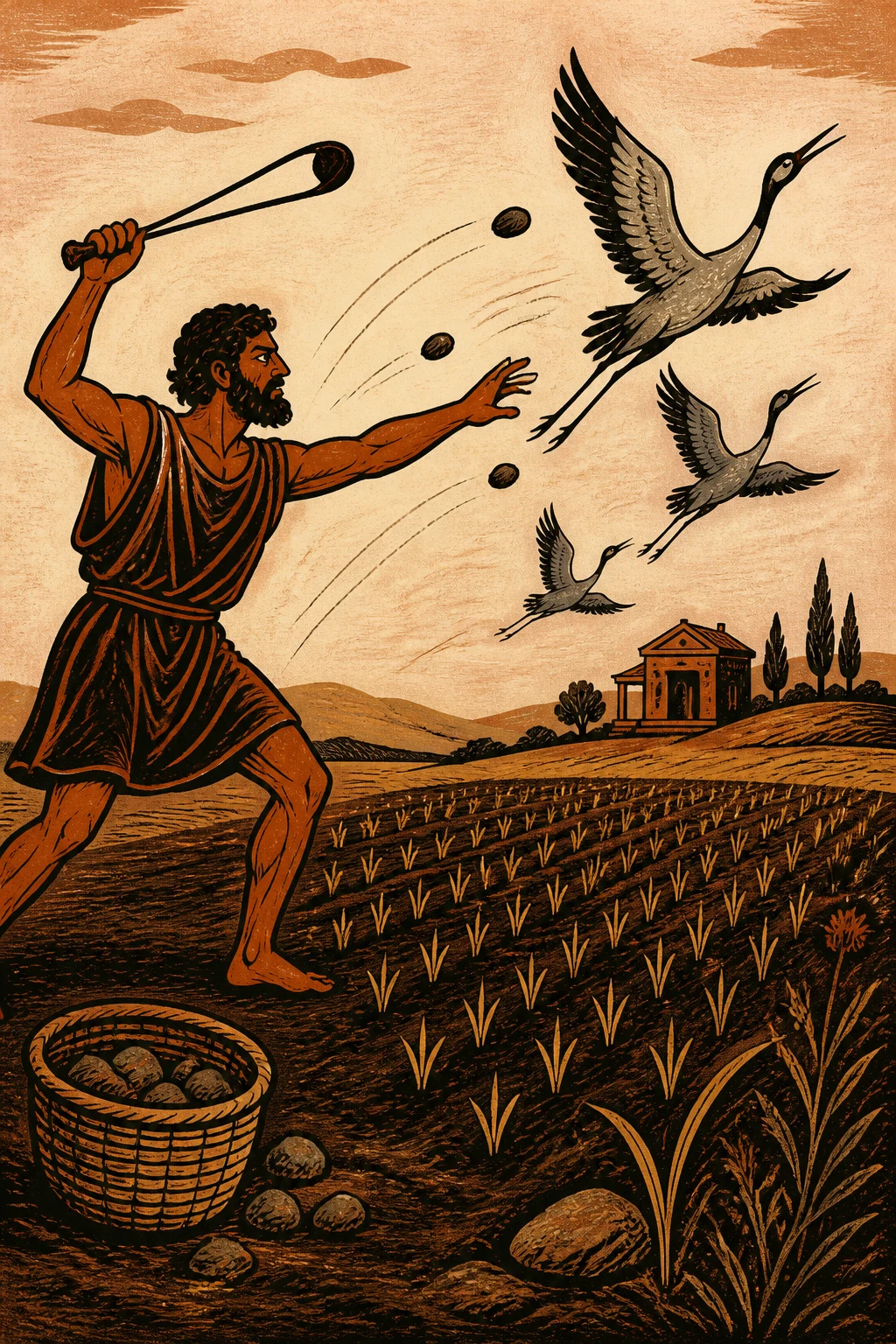
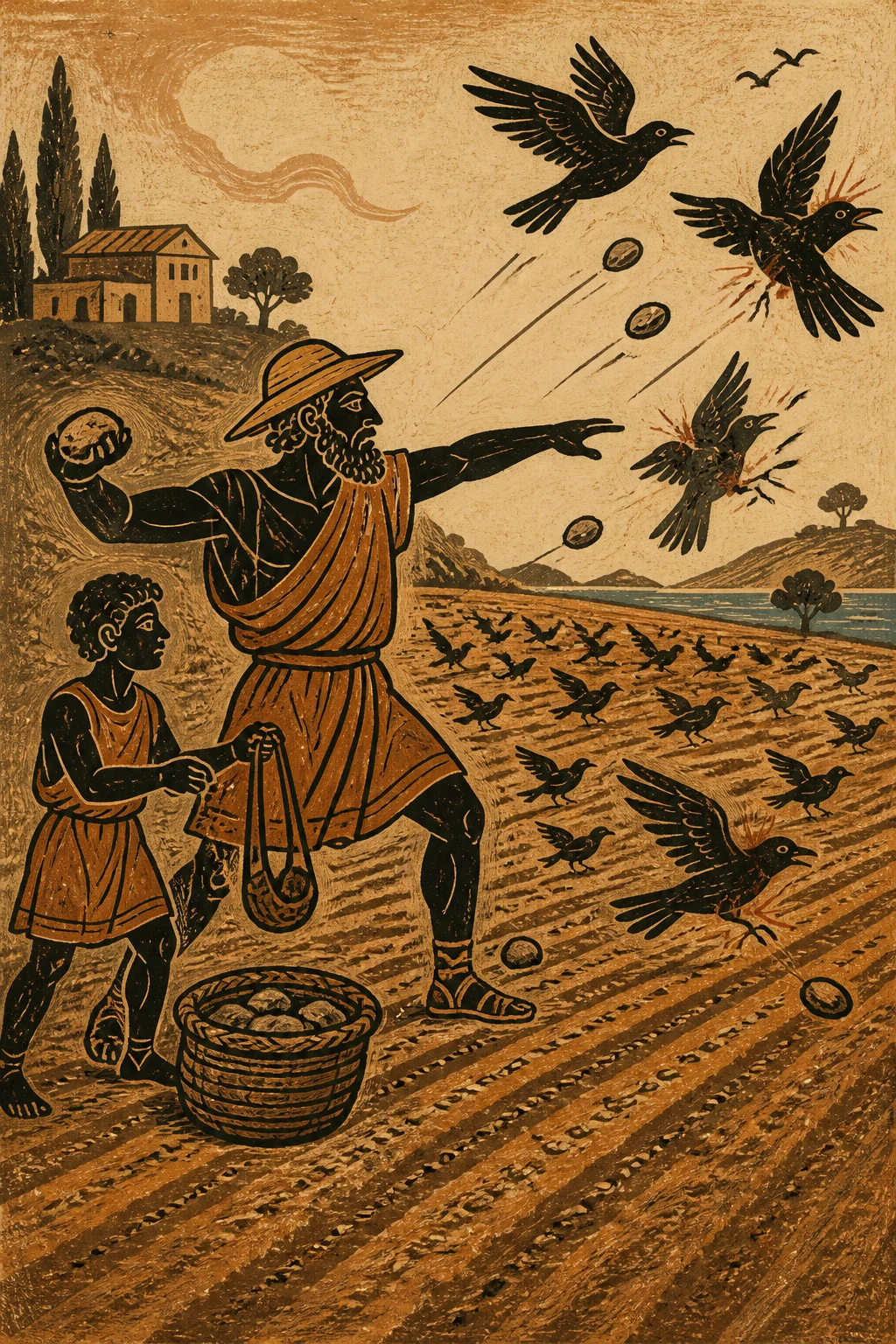
The Pleiades were setting, and it was sowing time. A farmer had scattered wheat on his newly ploughed land and stood guard over it, for a vast black flock of harsh-voiced jackdaws had come, along with starlings that dug up the seed in the fields. A boy followed him, carrying a sling with a hollow pouch. From experience, the starlings knew to listen for him asking for the sling, and flew away before he could take it. So the farmer devised another trick. Calling the boy to him, he explained: “My boy, we must outwit these clever birds. When they come, I shall ask for bread, but you must give me the sling instead of bread.” The starlings came and began feeding in the field. The farmer asked for bread, as they had agreed, and the birds did not fly away. The boy handed him the sling, its pouch full of stones. The old man let fly, striking one bird on the crown, another on the leg, and a third on the shoulder. Away they fled from the field. Some cranes met them and asked what had happened. One of the jackdaws said: “Keep clear of humankind, that wicked race who have learned to say one thing to one another and do another.” Fearsome is the breed that acts by deceit.
Izvirnik
99. Γωργὸς καὶ Παῖς καὶ Κολοιοί. (F.374. C. p.271. B. 33.)
Naslednje strani prikazujejo izvirno besedilo za primerjavo.
Δυσμαὶ μὲν ἦσαν Πλειάδων, σπόρου δʼ ὥρη· καί τις γεωργὸς πυρὸν εἰς νεὸν ῥίψας ἐφύλασσεν ἑστώς· καὶ γὰρ ἄκριτον πλήθει μέλαν κολοιῶν ἔθνος ἦλθε δυσφώνων, ψᾶρές τʼ ὀρύκται σπερμάτων ἀρουραίων. τῷ δʼ ἠκολούθει σφενδόνην ἔχων κοίλην παιδίσκος. οἱ δὲ ψᾶρες ἐκ συνηθείης ἤκουον, εἰ τὴν σφενδόνην πότʼ ᾐτήκει, καὶ πρὶν λαβεῖν ἔφευγον. εὗρε δὴ τέχνην ὁ γεωργὸς ἄλλην, τόν τε παῖδα φωνήσας ἐδίδασκεν· ,, ὦ παῖ, χρὴ γὰρ ὀρνέων ἡμᾶς σοφὸν δολῶσαι φῦλον· ἡνίκʼ ἂν τοίνυν ἔλθωσ’, ἐγὼ μὲν“ εἶπεν ,,ἄρτον αἰτήσω, σὺ δʼ οὐ τὸν ἄρτον, σφενδόνην δέ μοι δώσεις.“ οἱ ψᾶρες ἦλθον κἀνέμοντο τὴν χώρην. ὁ δʼ ἄρτον ᾔτει, καθάπερ εἶχε συνθήκην· οἱ δʼ οὐκ ἔφευγον. τῷ δʼ ὁ παῖς λίθων πλήρη τὴν σφενδόνην ἔδωκεν· ὁ δὲ γέρων ῥίψας τοῦ μὲν τὸ βρέγμα, τοῦ δʼ ἔτυψε τὴν κνήμην, ἑτέρου τὸν ὦμον· οἱ δʼ ἔφευγον ἐκ χώρης. γέρανοι συνήντων καὶ τὸ συμβὰν ἠρώτων. καί τις κολοιῶν εἶπε· ,,φεύγετʼ ἀνθρώπων γένος πονηρὸν, ἄλλα μὲν πρὸς ἀλλήλους λαλεῖν μαθόντων, ἄλλα δʼ ἔργα ποιούντων.“
Δεινὸν τὸ φῦλον τῶν δόλῳ τι πραττόντων.]
Nadaljuj z branjem