Prevod
"What lovely roses!" said the sunshine. "And every bud will open and become just as beautiful. They are my children! I have kissed them into life!"
"They are my children!" said the dew. "I have nursed them with my tears." "Surely I am their mother!" said the rosebush. "The rest of you are only godparents, who gave christening gifts according to your means and goodwill."
"My lovely rose children!" all three said, wishing every flower the greatest happiness; but only one could be the happiest, and one would have to be the least happy. But which of them?
"I shall find out!" said the wind. "I roam far and wide, slip through the narrowest crack, and know what goes on indoors and out." Every open rose heard what was said; every swelling bud sensed it.
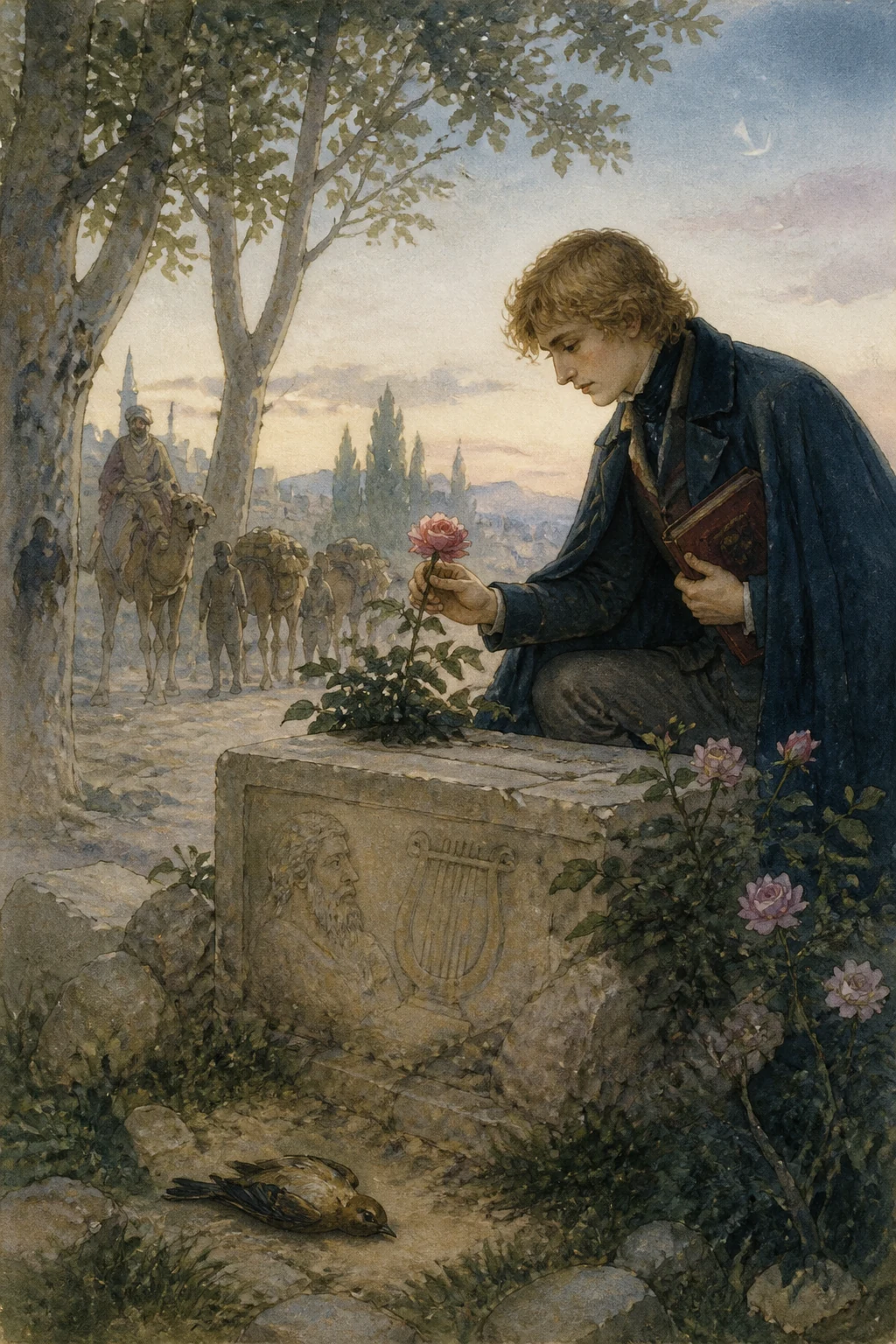
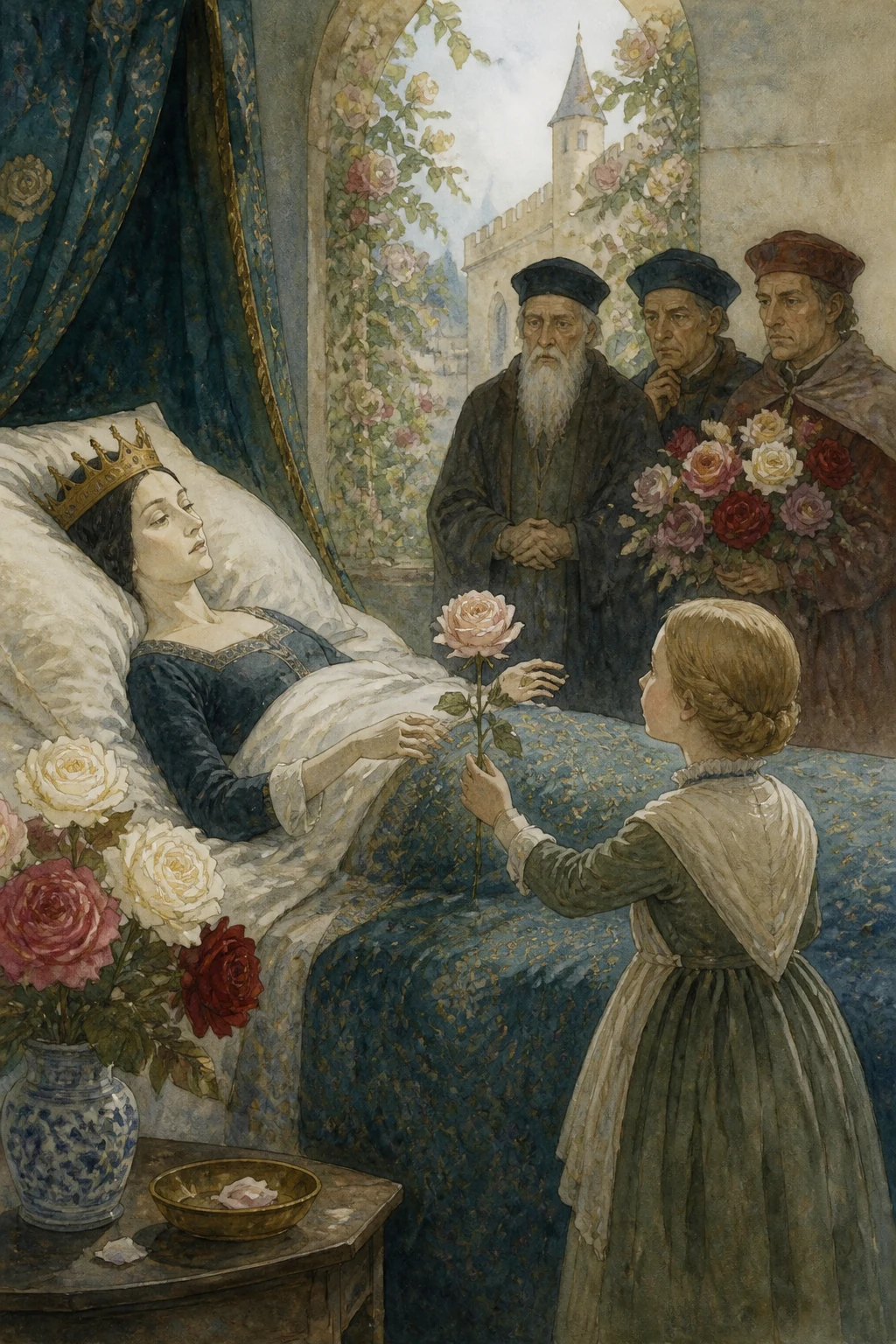
Then a sorrowful, loving mother came through the garden, dressed in black. She picked one of the roses, half-open, fresh and full, which seemed to her the most beautiful of them all. She carried the flower into the still, silent room where, only a few days before, her young daughter, so full of joy in life, had romped about, but now lay stretched out like a sleeping marble figure in the black coffin. The mother kissed the dead girl, then kissed the half-open rose and laid it on the young girl's breast, as though its freshness and a mother's kiss might set the heart beating again.
The rose seemed to swell; every petal trembled with thought and joy. "What a path of love has been granted me! I become like a human child, receive a mother's kiss and words of blessing, and enter the unknown kingdom, dreaming on the dead girl's breast! Surely I have become the happiest of all my sisters!"
In the garden where the rosebush stood, the old woman who did the weeding was walking about. She too gazed at the bush in all its glory, and her eyes settled on the largest, fully opened rose. One more dewdrop and one warm day, and its petals would fall. The old woman saw this and decided that it had served its purpose as a thing of beauty; now it must serve a useful purpose too. So she picked it and put it in a newspaper. It was to go home with her to join other rose petals and be preserved with them as potpourri, mingled with the little blue fellows called lavender and embalmed in salt. Only roses and kings are embalmed.
"I shall be the most honoured!" said the rose as the old woman picked it. "I shall be the happiest! I am to be embalmed." Two young men came into the garden; one was a painter, the other a poet. Each picked a rose, lovely to behold.
And the painter made a picture of the blooming rose on canvas, so that it thought it was looking at its own reflection. "In this way," said the painter, "it will live for many generations, while millions upon millions of roses wither and die!"
"I have been the most favoured!" said the rose. "I have won the greatest happiness!" The poet gazed at his rose and wrote a poem about it, a whole mystery, all that he read in the rose, petal by petal: "Love's Picture Book." It was an immortal poem.
"I am immortal with it!" said the rose. "I am the happiest!" Yet among all those splendid roses there was one almost hidden by the others. By chance—or perhaps good fortune—it had a flaw: it sat crookedly on its stem, and the petals on one side did not match those on the other. Indeed, from the very heart of the flower there grew what looked like a small, stunted green leaf. Such things happen with roses.
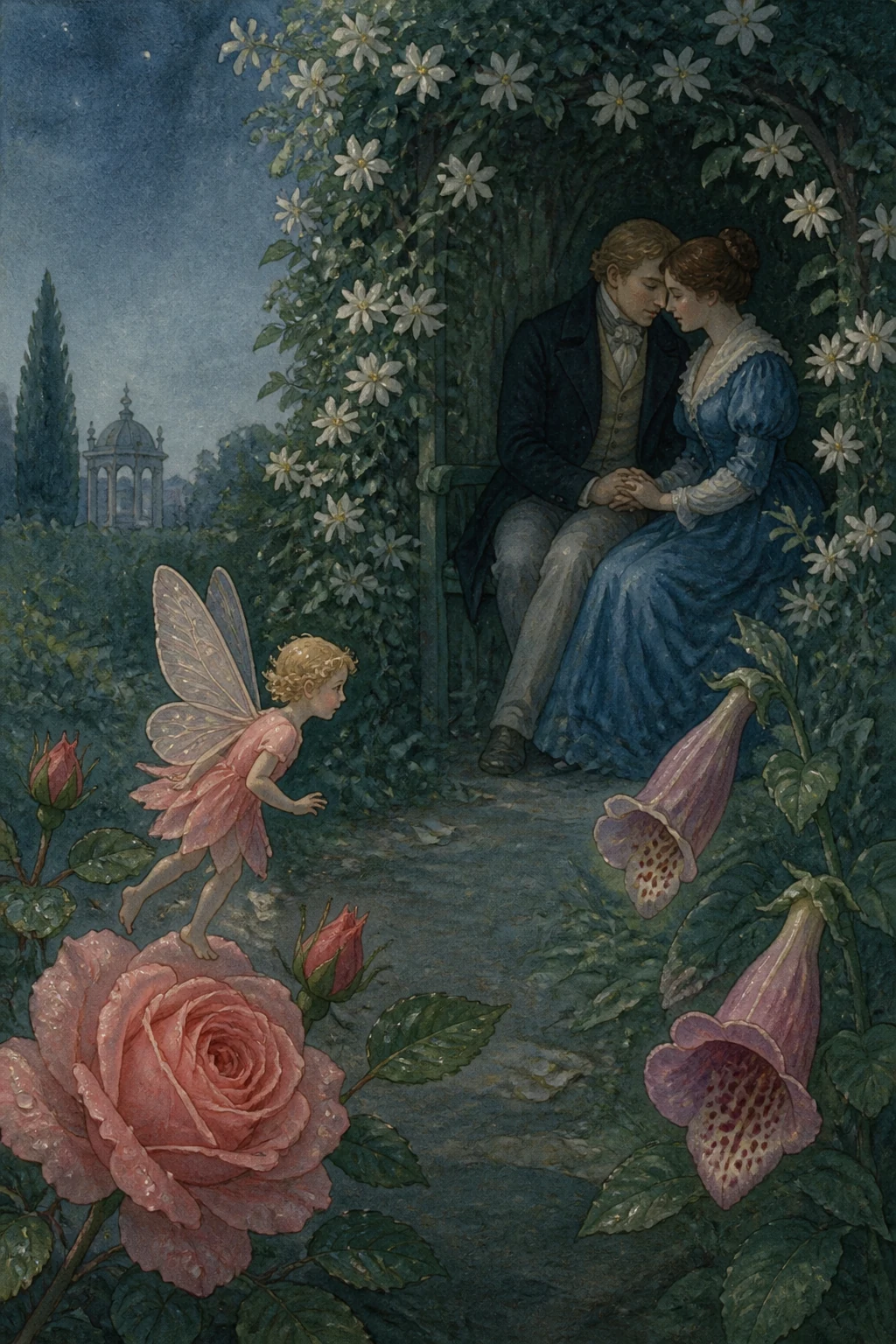
"Poor child!" said the wind, kissing it on the cheek. The rose took this for a greeting, a tribute. It had a feeling that it was made a little differently from the other roses, and that a green leaf was growing out of its heart, and it regarded this as a mark of distinction. A butterfly flew down onto it and kissed its petals; he was a suitor, but she let him fly away again. An enormous grasshopper came along. True, he settled on another rose and rubbed his shin in amorous delight, which is the sign of love among grasshoppers. The rose he sat on did not understand, but the rose with the mark of distinction, the stunted green leaf, understood perfectly, for the grasshopper looked at her with eyes that said, "I could eat you up for sheer love!" And love can go no further than that: one becomes part of the other! But the rose had no wish to become part of that jumping jack. The nightingale sang in the starry night.
"It is all for me!" said the rose with the flaw, or mark of distinction. "Why should I be singled out above all my sisters in everything? Why was I given this special feature that makes me the happiest?"
Then two gentlemen smoking cigars came into the garden. They talked about roses and tobacco: roses were said to be unable to bear the smoke; they changed colour and turned green. They would put it to the test. They could not bring themselves to take one of the very finest roses, so they took the one with the flaw.
"What a new distinction!" it said. "I am happy beyond measure! The happiest of all!" And it turned green with self-importance and tobacco smoke. One rose, still half a bud, perhaps the loveliest on the bush, was given pride of place in the gardener's artfully arranged bouquet. It was brought to the young master of the house and rode with him in his carriage. It sat like beauty's own flower among other flowers and lovely greenery, and came to a scene of festivity and splendour. Men and women sat in their finery, lit by a thousand lamps; music rang out. It was the theatre, flooded with light. And when the celebrated young dancer floated onto the stage amid thunderous applause, bouquet after bouquet flew down like a shower of flowers at her feet. Down fell the bouquet in which the lovely rose sat like a jewel. It felt all its inexpressible happiness, all the honour and splendour into which it was floating; and as it touched the floor, it too began to dance. It leapt and sped across the boards, having broken from its stem as it fell. It did not reach the hands of the woman they were honouring, but rolled behind the scenery, where a stagehand picked it up. He saw how beautiful it was, how full of fragrance, but it had no stem. So he put it in his pocket, and when he came home that evening, it was given a place in a little spirits glass, where it floated on the water all night. Early in the morning it was set before Grandmother, who sat old and feeble in her armchair. She looked at the lovely, broken rose and took pleasure in it and its fragrance.
"Yes, you did not come to the rich, fine young lady's table, but to the poor old woman. Yet here you are like a whole rosebush. How lovely you are!" And she gazed at the flower with a child's delight, surely thinking too of her own fresh youth, so long since gone.
"There was a hole in the windowpane," said the wind. "I slipped in easily and saw the old woman's eyes shining with youth, and the lovely, broken rose in the little spirits glass. The happiest of all! I know it! I can tell the tale!"
Every rose on the bush in the garden had its own story. Every rose thought and believed itself the happiest, and faith brings bliss. Yet the last rose was the happiest of all—or so it thought.
"I have outlived them all! I am the last, the only one, Mother's dearest child!" "And I am their mother!" said the rosebush. "I am!" said the sunshine.
"And I!" said wind and weather. "Everyone has a share in them!" said the wind. "And everyone shall have a share of them!" And the wind scattered its petals over the hedge, where the dewdrops lay and the sun was shining. "I too have had my share," said the wind. "I have had the stories of all the roses, which I shall tell throughout the wide world! Now tell me, which of them all was the happiest? Yes, you must tell me that. I have said enough!"