Prevod
_The King of Bellopajese, scorned by Cintiella, daughter of the King of Surco-luongo, takes a thorough revenge on her, reducing her to wretched circumstances, and afterward marries her._ _Had Ciommetella not brought the magician on the scene quickly to throw water on the fire, everyone’s spirits would have dwindled away with pity for Liviella, until they scarcely had breath left. But the poor girl’s consolation consoled them all, and, their spirits revived, they waited for Jacova to take the field in the livery of her own tale. She came charging with this lance at the broad target of their desire._ Pull too hard, and the cord snaps; seek trouble, and trouble and misfortune will find you. Whoever walks along the mountain peaks has only himself to blame if he falls, as you shall hear in the story of a woman who, scorning crowns and sceptres, was brought to the straits of living in a stable. Yet the blows that come from heaven always bring their healing plasters, for heaven never dealt out punishment without caresses, nor cudgels without bread.
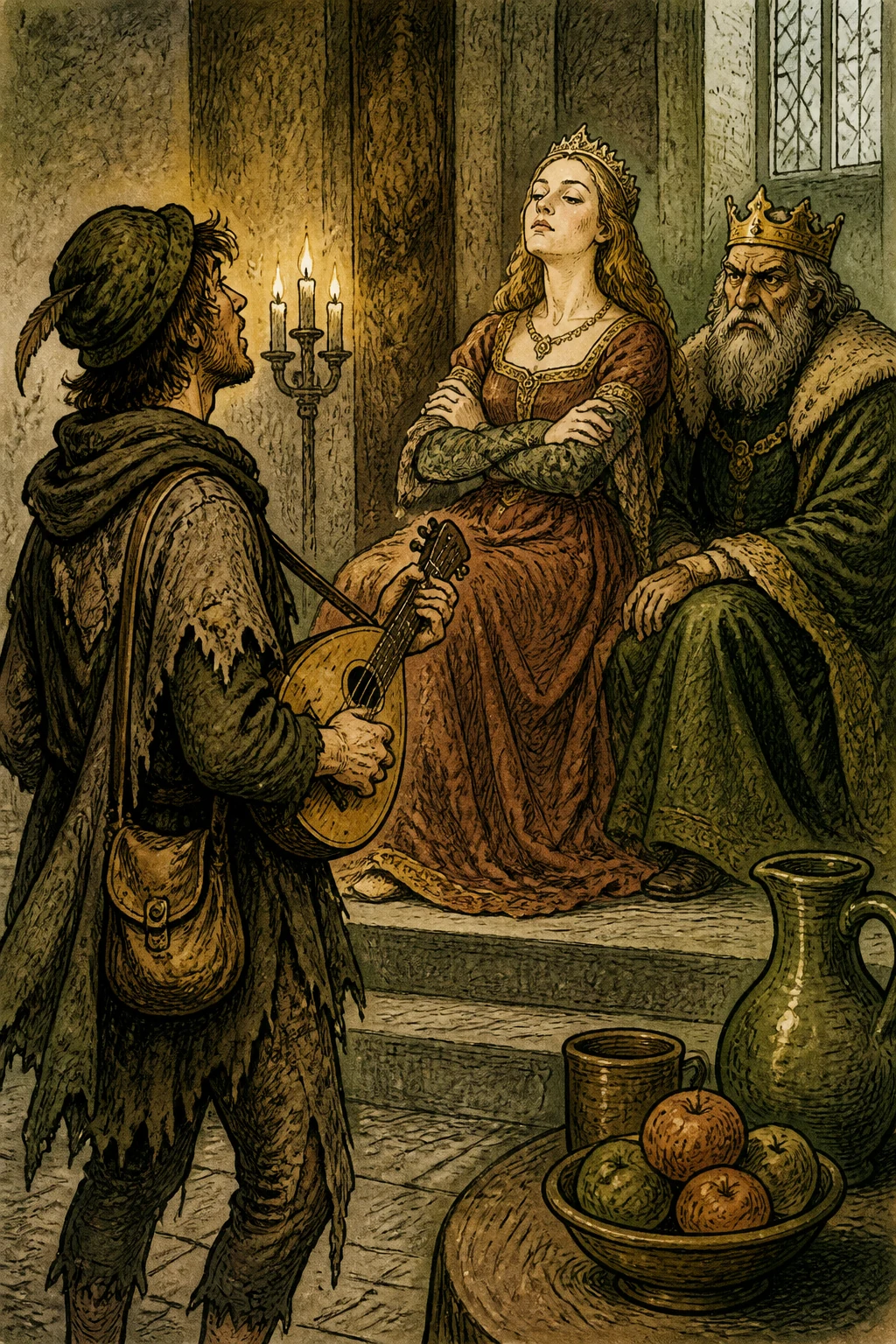
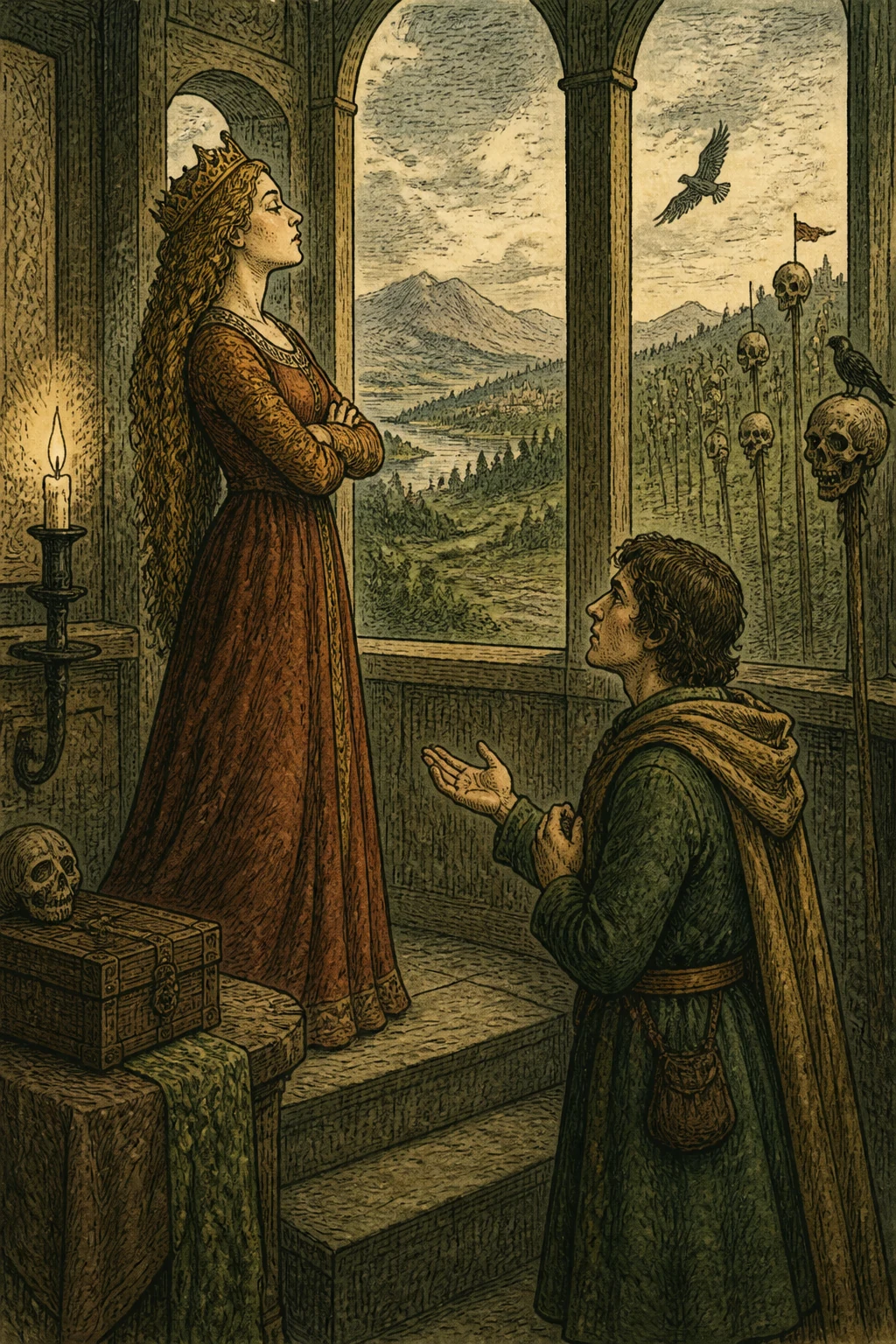
Once upon a time, they say, there was a King of Surco-luongo who had a daughter named Cintiella, as lovely as the moon. But every dram of beauty in her was outweighed by a pound of pride. She thought so little of anyone that her poor father, who longed to see her settled, could find no husband, however worthy or great, who pleased her. Among the many princes who came to ask for her hand was the King of Bellopajese, who left nothing undone to win Cintiella’s affection. Yet the more generously he offered his devotion, the more grudgingly she rewarded it; the more cheaply he offered his love, the dearer she made her favour; the more freely he gave his soul, the more tightly she withheld her heart. Not a day passed without the poor man saying to her, “When, cruel girl, among these thousands of hopeful melons that have all turned out to be pumpkins, shall I find one that proves red and ripe? When, you she-dog, will the storms of your cruelty cease, so that a fair wind may let me steer my designs into that lovely harbour? When, after so many assaults of pleading and entreaty, shall I plant the standard of my loving desires upon the walls of that fair fortress?” But all these words were cast to the winds. She had eyes that could pierce stone, but no ears to hear the lamentations of the wounded man who moaned before her. Indeed, she looked as sourly at him as though he had cut down her vineyard. At last the poor lord, seeing Cintiella’s cruelty, and that she valued him no more than a magistrate values rogues, withdrew with his resources intact and a full cargo of indignation, saying, “I call myself out of Love’s game.” But he solemnly swore to take such vengeance on this Saracen beauty that she would rue having tormented him so. He left that country, grew his beard, and stained his face with some colour or other. After a few months he returned to Surco-luongo disguised as a peasant, and by means of bribes secured a place as the King’s gardener. There he worked as best he could, until one day he spread beneath Cintiella’s windows an imperial robe covered with golden ornaments and diamonds. The ladies-in-waiting saw it and at once told their mistress, who sent to ask the gardener whether he would sell it. He replied that he was neither a merchant nor a dealer in old clothes, but would gladly give it away if they would let him sleep one night in the Princess’s hall. Hearing this, the ladies said to Cintiella, “What have you to lose, my lady, by granting the gardener this little pleasure and snapping up a robe fit for a queen?”
Cintiella allowed herself to be hooked by this man, who knew how to catch bigger fish than she, and consented. She took the robe and granted him his wish. The next morning he spread a skirt of the same workmanship in the same place. When Cintiella saw it, she sent to ask whether he would sell it, saying she would give him whatever he wanted. The gardener replied that it was not for sale, but he would freely give it to her if they would let him sleep in the Princess’s antechamber. To complete her outfit, Cintiella let herself be led by the nose into granting him this satisfaction. On the third morning, before the Sun had struck his flint against the tinder of the fields, he laid out in the same spot a beautiful bodice to match the dress. Cintiella saw it, as she had the other things, and said, “Unless I have that bodice, I shall never be content.” She summoned the gardener and told him, “My good fellow, you must sell me that bodice I saw in the garden. Take my very heart for it.” “I do not sell it, my lady. But if you please, I will give you the bodice and a diamond necklace besides, if you let me sleep one night in your chamber.” “Now you show yourself a peasant indeed,” said Cintiella. “Was it not enough to sleep in the hall, then in the antechamber? Now you want the chamber, and little by little you will be wanting to sleep in my bed as well.” The gardener answered, “My lady, I shall keep my bodice, and you may keep your chamber. If you want to bargain, you know where to find me. I am content to sleep on the floor, something you would not refuse even a Turk. And if you saw the necklace I mean to give you, perhaps you would judge me a little more kindly.” The Princess, partly consumed by greed and partly urged on by her ladies, who were helping the dogs uphill, let herself be persuaded to satisfy him. Evening came, when Night, like a tanner, pours her steeping liquor over the hide of heaven and turns it black. The gardener took the necklace and bodice to the Princess’s apartments, and after he had given them to her, she admitted him to her chamber. Making him sit in a corner, she said, “Now stay there, motionless, and do not stir if you value my favour.” She drew a line on the floor with a piece of charcoal and added, “Cross this line, and you leave your backside behind.” With that she had the curtains drawn around her bed and lay down.
When the gardener-king saw that she was asleep, he thought it time to cultivate the soil of love. He lay down beside her and, before the mistress of the place awoke, gathered love’s fruit. When she woke and saw what had happened, she would not make two evils out of one, nor ruin the garden itself in order to ruin the gardener. Making a vice of necessity, she accepted the disorder and found pleasure in the offence. She who had scorned crowned heads now made no difficulty about submitting to a hairy-footed rustic, for that was what the King appeared to be, and what Cintiella believed him. Their dealings continued, and she became pregnant. Seeing her belly grow from day to day, she told the gardener that she was ruined if her father discovered this disgrace, and that they must think of some way out of the danger. The King replied that he could see no remedy for their trouble but to go away: he would take her to the house of a former mistress of his, who would give her some comfort for her confinement. Cintiella, finding herself in such a plight, dragged by the sin of pride from rock to rock, let herself be persuaded by the King’s words. She left her own home and put herself at Fortune’s mercy. After a long journey, however, the King brought her to his own house. He explained everything to his mother and begged her to conceal the truth, for he meant to make Cintiella pay for her haughtiness. He lodged her in a little stable at the palace and kept her in miserable poverty, making bread as hard to reach as if it lay a crossbow shot away. One day, when the King’s serving girls were baking, he ordered them to call Cintiella to help, and at the same time told her to see whether she could filch a little ring-shaped loaf to ease their hunger. Poor Cintiella, while taking the bread from the oven, snatched a loaf when no one was looking and slipped it into her pocket. At that very moment the King arrived, dressed as his true self, and said to the girls, “Who told you to let this miserable little hussy into the house? Can you not see from her face that she is a thief? To prove it, put your hand in her pocket and you will find the crime itself.” They searched her, found the thing, and gave her such a scolding that the barking and shouting went on all day. But the Prince changed back into his disguise and, finding her ashamed and downcast at the insult she had received, told her not to be so distressed by what had happened, for necessity was mankind’s tyrant, and, as that Tuscan poet said:
_The starving poor man comes_ _At times to deeds that, in a happier state,_ _He would have blamed in others._ Thus, since hunger drives the wolf out of the wood, she was excused for doing what would be wrong in another. She should therefore go upstairs, where the lady was cutting some linen, offer to help, and see whether she could snatch a piece, since her time was near and she needed a thousand things. Cintiella, who could refuse nothing to the man she took for her husband, went upstairs and joined the ladies in cutting little sheets, swaddling bands, caps, and baby clothes. She rolled up a swaddling cloth and hid it beneath her dress. But the King arrived, flew into another rage just as he had over the bread, and had her searched. When the stolen thing was found on her, she received another dose of abuse and went down to the stable as though she had been caught with a whole stolen wash beneath her skirts. The King changed his clothes and hurried down. Finding her in despair, he told her not to let sorrow master her, for everything in this world was a matter of opinion. She should try a third time to see whether she could pick up some little thing, since she was about to give birth, and an excellent opportunity for a good haul was at hand. “My mistress has married her son to a lady from another country,” he said, “and wants to send her a quantity of ready-made dresses in brocade and cloth of gold. She says the bride is exactly your height, and wants them cut to your measurements. It will be easy enough for some fine remnant to pass through your hands. Put it by, and we shall sell it and keep ourselves alive.” Cintiella did as her husband told her, and had laid a good span of raised brocade in her lap when the King arrived. He made a great uproar, had Cintiella searched, and, finding her booty, drove her out in disgrace. But he immediately disguised himself as the gardener and ran downstairs to console her; for if he pricked her with one hand, with the other, out of the love he bore her, he was glad to soothe the wound, so as not to drive her to despair.
But poor Cintiella was so anguished by what had happened that she thought it all a punishment from heaven for her arrogance and pride. She had treated so many princes and kings like rags beneath her feet, and now she was treated like a filthy little drab; she had hardened her heart against her father’s counsels, and now her face burned red beneath the serving maids’ barking. Such was her distress at this disgrace that her labour pains began. When the Queen was told, she had Cintiella brought upstairs and, showing compassion for her condition, laid her in a bed embroidered all over with gold and pearls, in a room hung with cloth of gold. Cintiella was astonished to find herself taken from a stable to a royal chamber, from the dungheap to so precious a bed, and could not understand what had happened to her. They at once gave her nourishing broths and pies to strengthen her for the birth. As heaven willed it, she was delivered without much suffering of two beautiful boys, as pretty as painted pictures. But scarcely had she given birth when the King came in, saying, “Where have you put your wits, to drape an ass in such trappings? Is this a bed for a filthy, worthless slut? Quick, cudgel her out of it, and fumigate the room with rosemary to rid it of this stench!” Hearing this, the Queen said, “No more, my son, no more! Enough, enough of the torment you have given this poor girl. Surely you ought to be satisfied by now. You have worn her to a rag with all these afflictions. If you are not yet repaid for the scorn she showed you at her father’s court, let these two beautiful jewels she has given you settle the debt.” So saying, she had the babies brought in, the loveliest little things in the world. At the sight of such beautiful peacemakers, the King’s heart softened. He embraced Cintiella and revealed who he was, telling her that everything he had done had sprung from his anger at seeing her make so little of a king of his standing;
but from that moment on he would cherish her above his own head. The Queen, for her part, embraced her as both daughter-in-law and daughter, and together they gave her such a handsome reward for bearing sons that this moment of consolation seemed far sweeter than all her past sufferings had been bitter. Yet she always remembered to keep her sails lowered, bearing in mind that _Ruin is the daughter of pride._ When the tales allotted to that day were finished, the Prince, to dispel the sadness Cintiella’s sufferings had left in his heart, called on Cicco Antuono and Narduccio to perform their part. Wearing flat caps, black breeches with knee-pieces, and slashed jackets trimmed with lace, they came out from a garden plot to recite the following eclogue.
THE GRAPPLING HOOK. AN ECLOGUE. _Narduccio and Cicc’Antuono._ _Nar._ Lend me a patacca, Cicc’Antuono, And take this pledge. _Cic._ Upon my word, I gladly would, Had I not made, this very morning, A handsome purchase.
_Nar._ Just my bad luck! What did you buy? _Cic._ I found a splendid bargain: A brand-new grappling hook. Had he asked a hundred thousand scudi, I would have paid as much.
_Nar._ You are a reckless spender! A grappling hook, at most, Is worth no more than two carlini. _Cic._ Now, my Narduccio, you know nothing of it; My dear fellow, think again.
Do you not know that hooks have risen in price? They fish no longer for squid, but scudi. _Nar._ How do they fish for scudi? I do not understand. _Cic._ Forgive me, but you are an ass:
You seem but newly come into the world. Do you not know there is no man Who does not keep a grappling hook to hand? With it he lives and revels, With it he swaggers and grows fat; It puts good straw beneath him, It brings his pigs home to the sty, With it he shines and fills his pockets deep; With it, in short, he rules the world.
_Nar._ You astonish me and leave me dazed. What shall we wager That you have set your heart on making me believe The moon is down the well? Must I swallow the notion that this hook Is some rare philosopher’s stone?
_Cic._ Precisely: it is the stone Distilled in the alembic of ingenuity. _Nar._ Brother, to tell you plainly, I have eaten Bread from more than one oven, Yet never heard it mentioned. Either I am a fool, or you mean to befuddle me.
_Cic._ Open your ears and learn, For you are a simpleton. Few people call it a grappling hook, Because, from earliest childhood, The name has something ugly in its face; And so the clever fellows Have given it another name.
For in this age of ours Everything goes masked. The prince bestows on it The title of a present or donation; The judge has named it A welcome fee, a softening-up, A greasing of the palm, a tasty morsel.
The clerk calls it his due—and heaven knows He is more crooked than a dog’s hind leg; The merchant calls it profit, The craftsman business, The shopkeeper enterprise, The thief ingenuity or sleight of hand, The constable a little touch, The outlaw a settlement, The soldier foraging, The spy his business, The whore a gift, The pimp a little earning or a pair of gloves, The broker calls it a gratuity, The commissioner an extra gain; In short, each gives it colour: The pirate calls it plunder, The captain peaceful living— Fine peace it brings, I tell you!
It brings destruction and disaster; And on my word, he makes more war With his hook than with his sword. Want more? The poet, Who strips ideas and words From every book that falls into his hands— Aratus, Ovid, Maffeo, Naso—
Gives it the name of imitation. _Nar._ I understand: you say garlic, I hear dominus! By heaven, you prove a clever fellow, A master of the art of refining, A fine dragnet, a cunning decoy:
You are a shrewd one, sly and quick. You mean they all haul things in with a hook. _Cic._ A hook and a grapnel Are one and the same thing. Enough that there is no man Who does not always wear one at his belt: One of gold, another silver, another copper, Another iron or wood, According to the person’s rank. For instance, that great man Who conquered all the world, To fish for kingdoms Had his made of gold, Set with carbuncles and diamonds.
And he who gave Cicero So many bitter mouthfuls Had his made of silver. The others, each in turn, According to their wit and means, Have theirs made as they can.
Enough that everyone goes fishing; And therefore this same fishing Has many different names: Raking in, snatching up, bundling away, Lightening, lifting, pilfering, Stripping bare and clipping close;
Blowing away, whipping off, picking clean, Plucking, clearing out, clawing up, Pinching and playing sleight of hand, Bundling it all up for Cosimo, Sweeping the platter clean, Playing the prior, sounding the bagpipes, Shaking out the purse, And giving the crab a turn.
_Nar._ All that you can express In a single word: Playing at little triumphs— Robbing and murdering. _Cic._ You have a poor memory. I told you That nowadays the world Gives evil the name of good;
And wit is sharpened for no other purpose Than to put this grappling hook to use: It pulls unseen, It clutches unheard, It seizes untouched, And always takes and snatches up and hooks.
_Nar._ Brother, without wishing anyone ill, It all goes down the drain at last. Of wealth ill-gotten The third heir never has enjoyment. The deeply wealthy sink into the depths; You see their houses fallen down, Their families destroyed and beggared, Forever scattered and forlorn.
A schoolmaster spoke truly when he said, “All crooked gains the millstone grinds away.” _Cic._ Nowadays the pious, with their downcast heads, Are hanged by hunger. Who steals no goods has no goods; Who takes no gain has no grain;
Who never grabs has anguish in his soul, And who never fishes never feasts. _Nar._ When restitution comes, Offer me three farthings for the lot! Besides, how often Some triple-dyed gallows bird, Greedy for coins, Is set by public order Astride an ass, a baboon on its back, And given a paper mitre by the court! In the marketplace he finds himself well marked; To escape hunger, he remains in shame; For one hour’s revelry he loses honour.
For a little copper He wins himself an oar; The juice of sour grapes Turns to seawater in his mouth. To fatten himself with his claws He earns three beams of timber; His fine feathers turn into a yardarm.
What use are so many coins and ducats, So much brass and petty cash, Small change and plumes, Coppers and silver pieces, When countless proofs and instances all show That he with most cash is never content?
_Cic._ Try this grappling hook just once And you will never leave it off. It is like the itch: The more you scratch, the more it makes you itch. Let us take a turn Through the trades and offices of this world, And you will see that everyone employs it. Let us begin at the very beginning With a lord who has his vassals.
He spies a farmer and fixes him in his sights, A man whose pigs are safely in the sty. Today he asks him for so many scudi on loan, To be repaid When raisins and dried figs rain from the sky;
Tomorrow he sends for so much barley, To be returned at harvest; Now he requisitions his ass or oxen On the pretext that the court requires them. This harassment lasts so long, This bitter siege continues so relentlessly, That the desperate fellow Insults the bailiff Or strikes him with his hand. Poor wretch! Would his mother had never shat him out, Would he had broken The bone of his neck! There, he is arrested,
And flung bodily into a dungeon, His feet put into stocks, An iron collar round his neck, And handcuffs on his hands, With this proclamation posted at the gate:
“By order and command! Stand back, all you! Whoever speaks to him pays six ducats.” In short, shout all you like, Send petitions, find intermediaries: He is never freed Until, after so many sour draughts Of suffering and torment, Of expense and tribulation, He makes some settlement.
And in the end, when he has filled And satisfied a wolf’s desire, The wolf calls it mercy while he murders. _Nar._ Accursed grappling hook! A plague upon the shameless forge Where you were hammered out and tempered!
_Cic._ Consider the magistrate and court clerk: Since the calf learns how to plough From the full-grown ox, He tampers with witnesses, muddles papers, Drags out judgments, Impounds documents, Imprisons without cause; There the grappling hook does seven men’s work.
And where he ought himself To be dragged off, he wins a name As experienced in his office, A man of enterprise and judgment. _Nar._ That is truer than true. And if an honest man comes home As clean of money As he is clean of conscience— Something that has happened to me A dozen times, perhaps—everyone says He would do better to stay home, That this is not his trade, That it is a shame to entrust him with clients: He is a blockhead and brings in no profit.
_Cic._ The doctor, if he is a rogue, Prolongs the illness And shares the profits with the apothecary. If he is honest, still he shows That among his many prescriptions He knows this secret too: How to hold his hand out behind his back.
_Nar._ You cannot blame that grappling hook; It is modest and honourable, Indeed a well-earned recompense, You might call it: Pay behind the man who makes you empty your behind.
_Cic._ The merchant does not lose His cap in a crowd. He sells you stale goods, Linen stiffened with paste To give it weight; He swears, protests, insists That rotten stuff is new, That worn-out goods are fresh and sound. With fine words and foul deeds He befuddles you and shows you White for black; and always you discover Some flaw within the merchandise. Then, when he measures, With an elegant flourish He stretches the cloth so you will find it short.
_Nar._ So it is no wonder When heaven turns its face away from them And for one fault they lose the whole pursuit. _Cic._ The butcher sells you An old and sickly billy goat For a wether or a gelded ram;
An old bull for a heifer, Decking it all out With tinsel and flowers To tempt your appetite. He sells you bones for flesh, above the lawful price, And the makeweight always outweighs the pound.
Then at the weighing—God preserve you!— He plays his fingers and brings down the scale. _Nar._ Enough to make your lungs swell up with rage! No wonder they look like barons on feast days. _Cic._ The oil seller cheats you in the measure, And to make it seem he gives you oil Brimming over to the mark, He presses up the bottom of the measuring pot, Which rises as far as he makes it bulge.
He always mixes bran into the oil To give it body and colour. You see a golden froth Fill a handsome oil jar, Then find sediment instead— Indeed, a mixture of water and lees That in a lamp burns black and bitter, Whining, farting, spitting.
_Nar._ Not a handspan left untainted! All goodness has departed. Corrupt world, how greatly you have changed! _Cic._ The tavern keeper’s jugs are short of measure; All night long he busies himself, And if he finds a barrel With a sharp or feeble tang, He patches it up with egg white.
Above all, he stretches Good wine with bad, Turns vinegar into Asprinio, Indeed turns water into wine; And with his fingers hides the jug’s neck, So cleverly deceiving your sight That you never see the short measure.
_Nar._ Wretched is the man who falls among them! To deal with them you need A stomach of iron and a purse of gold. _Cic._ The tailor flies his banner, And at every cut looks for a cut of his own.
He charges thread at the price of silk. If you take him shopping, He goes with his needle at his breast, Makes you a generous bargain, Then returns to the merchant for his share.
But this is the least of it: he cheats you in the reckoning, till you curse, as you read the bill, the black moment when you first set your mind on it. _Nar._ Oh, blessed, happy beasts, who can go naked through woods and valleys, plains and hillsides, and need not live subject to such ruin!
_Cic._ Listen: among the old-clothes dealers in the Giudecca, if the fancy takes you to sell something, you will find such a pack of rogues that they have you by the throat.
If you buy a suit, no sooner have you put it on than you find it torn: it lasts from Christmas to Saint Stephen’s Day, and, with loss to your purse and shame to your name, you find yourself both tricked out and tricked in a single day.
But why go striking so many keys? It would take a ream of paper to tell of all the trades that do honour to this Grappling Hook, and all the lean, dried-up creatures it has made fat and rich.
_Nar._ Accursed invention, poison to honour, through which truth is darkened and good faith blackened! _Cic._ Say what you like: everyone makes use of it.
May I die with a rope around my neck if I do not buy myself one before this day is out! _Nar._ Better it should strike you through the heart! If you use the Grappling Hook in this world, by the Grappling Hook you will be dragged to the bottom.
_I could not say whether the head or the tail of this day’s fine jelly pleased them more, for if the one was tasty, the other slipped down into the very marrow of their bones. The Prince enjoyed it so much that, to show himself courteous and generous, as a true lord should, he called his Keeper of the Wardrobe and ordered that the performers be given the lining of an old hat that had belonged to his grandfather. And since the Sun had been summoned in haste to the other pole, to succour his dominions, which the shadows had occupied, they rose from their seats and each took the road to her own little hut, with orders to return next morning at the same hour to the same place._ END OF THE FOURTH DAY.
THE FIFTH DAY OF ENTERTAINMENT FOR THE LITTLE ONES. Already the birds were reporting to the Sun’s ambassadress all the intrigues and tricks that had been played during the night, when Prince Taddeo and Princess Lucia arrived very early indeed at the usual place, where nine of the ten women had come at the summons. Seeing this, the Prince asked why Jacova had not come; and when he was told that a sudden illness had struck her down, Taddeo ordered another woman to be found to take the absent one’s place. And so, without looking too far afield, they sent for Zoza, who lived opposite the royal palace. Taddeo received her with great ceremony, both because of the obligation he was under to her and because of the inclination and affection he had conceived for her.
She and the others had gathered herbs and flowers: one flowering catmint, another lavender, another five-leaved rue, each something different. One made herself a garland, as though she were to act in a farce; another a little nosegay; one tucked a full-blown rose into her bosom, another put a striped carnation between her lips. But since perhaps four hours still had to be whittled away before noon, when the time would be ripe for eating, the Prince ordered some game to be devised for his wife’s amusement. He entrusted the matter to Cola Jacovo, the steward, a man of great ingenuity, who, as though he carried inventions ready-made in his pocket, immediately hit upon one and said: “My lords and ladies, pleasure that has not some sprig of usefulness has always been insipid. Entertainments and diversions were therefore invented not for idle enjoyment alone, but also for enjoyable profit, since games of this kind not only pass the time but awaken and sharpen our wits, teaching us to make quick decisions and answer whatever we are asked. That is precisely the purpose of the game of games I have thought of playing, which will go as follows. I shall propose a kind of game to one of these ladies, and without stopping to think she must tell me at once that she does not like it, and why it does not suit her. Whoever is slow to answer, or gives an answer beside the point, must pay a forfeit by performing whatever penance Her Highness the Princess commands. To begin, I should like to stake half a patacca on a game of Little Triumphs with Mistress Zeza.” And Zeza answered at once, “I will not play, because I am no thief.” “Bravo!” said Taddeo.
“For it is the robbers and murderers who triumph.” “In that case,” replied Cola Jacovo, “I have a four-and-a-half piece here to stake on Bankrupt with Mistress Cecca.” “You will not catch me at that,” answered Cecca, “for I am no merchant.” “She is right,” said Taddeo, “for that game was made for them.” “At least, Mistress Meneca,” Cola Jacovo went on, “let us pass a couple of hours at Malcontent.” “Forgive me, but that is a courtiers’ game,” Meneca replied. “She has hit the nail on the head,” said Taddeo, “for that breed is never content.” “I know,” Cola Jacovo resumed, “that Mistress Tolla will play Four Heaps with me for a handful of plums.” “Heaven preserve me!” answered Tolla. “That is a game for husbands with wicked wives.” “You could not have answered better,” said Taddeo, “for the game was made for them: they are forever knocking their horns together.” “At least, Mistress Popa,” replied Cola Jacovo, “let us play Twenty Faces, and I shall give you the first turn.” “Do not even speak of it,” answered Popa, “for that is a flatterer’s game.” “She has spoken like a paladin,” said Taddeo, “for those fellows put on twenty or thirty faces, changing themselves whenever they please, to get some poor prince into their bag.”
And Cola Jacovo continued: “Mistress Antonella, for your life, let us not waste our time! Let us play Tax-Farm for a fine plate of fritters.” “A fine notion you have had!” answered Antonella. “You might as well treat me as a woman for hire.” “She is not wrong,” said Taddeo, “for women of that sort are often let out on lease.” “The devil take it!” Cola Jacovo went on. “I can see it now: the hour will pass without my having any fun, unless Mistress Ciulla will play Calling with me for a measure of lupins.” “What, have I turned constable?” answered Ciulla, and Taddeo immediately replied, “She has truly spoken with a voice of thunder, for it is the business of bailiffs and beadles to summon people to court.” “Come along, Mistress Paola,” Cola Jacovo began again, “and let us stake a three-and-five piece on Piquet.”
“You have missed your mark,” answered Paola, “for I am no court backbiter.” “This one is a learned doctor,” replied the Prince, “for nowhere are people’s reputations more sharply pricked than in our own houses.” “Surely,” Cola Jacovo resumed, “Mistress Ciommetella will agree to play Cartload with me.” “Miaow!” answered Ciommetella. “What a fine schoolmaster’s game you have found for me!” “She must pay the forfeit,” said Cola Jacovo, “for her answer has nothing to do with the proposal.” “Go and ask your schoolmaster for your money back,” replied the Prince, “for her answer fits as neatly as a Seville box: schoolmasters play Cartload so well that, though they lose five, they still mark up the score.” But Cola Jacovo turned to the last of the women and said, “I cannot believe that Mistress
Zoza will refuse an invitation like all the others, so she will oblige me by staking a cianfrone on Bare Breeches.” “Mind your leg!” answered Zoza. “That is a children’s game.” “Now this one really must do penance,” Taddeo concluded, “for even old men play that game. And so, Mistress Lucia, it is for you to assign her forfeit.” Zoza rose and went to kneel before the Princess, who ordered her, as her penance, to sing a Neapolitan villanella. She had a tambourine brought, and, while the Prince’s coachman played a cittern, she sang this song.
If you think to make me jealous, and set my heart a-spinning, by playing the grand lady and turning up your nose, go on, my girl: March has shorn you close. Gone are the days when Betty spun, and when the bird went ploughing; I feel no more Love’s arrow or his flame: Patria is plucked bare, and Mother is no more.
Since the kittens opened their eyes, the crickets have awakened. If you place any hope in those pretty looks, go on: you have as far to fall as you have run and climbed.
I have cut my wisdom teeth; no nod can move me now. I know a fig from a clove of garlic: think no more of it, for you have no chance. The song ended at just the right moment, to everyone’s delight, as the tables were being laid; and if there was plenty there to chew, there was still more to swill. But when their stomachs had been sealed and the tablecloths removed, Zeza was commanded to skim the cream of her tales. And though the poor creature had a very thick tongue and very little ears, she nevertheless did her duty, speaking as follows.