Waltey
Kako je menihova molitev pregnala demone
Uji Shūi Monogatari · anonimna srednjeveška zbirkaO besedilu
Kako je menihova molitev pregnala demone
- Vir
- Uji Shūi Monogatari
- Avtor
- anonimna srednjeveška zbirka
- Jezik branja
- English
- Jezik izvirnika
- 日本語
- Čas branja
- 4 min branja
- Obseg
- 3 strani
- Naslov izvirnika
- 191 極楽寺僧施仁王経験事
O izvirniku
Uji Shūi Monogatari
Srednjeveške japonske pripovedi o menihih, duhovih, čudežih, prevarah in vsakdanjih presenečenjih. Bralni jezik je English, izvirnik pa prihaja iz vira Uji Shūi Monogatari v jeziku 日本語.
Besedilo
Kako je menihova molitev pregnala demone
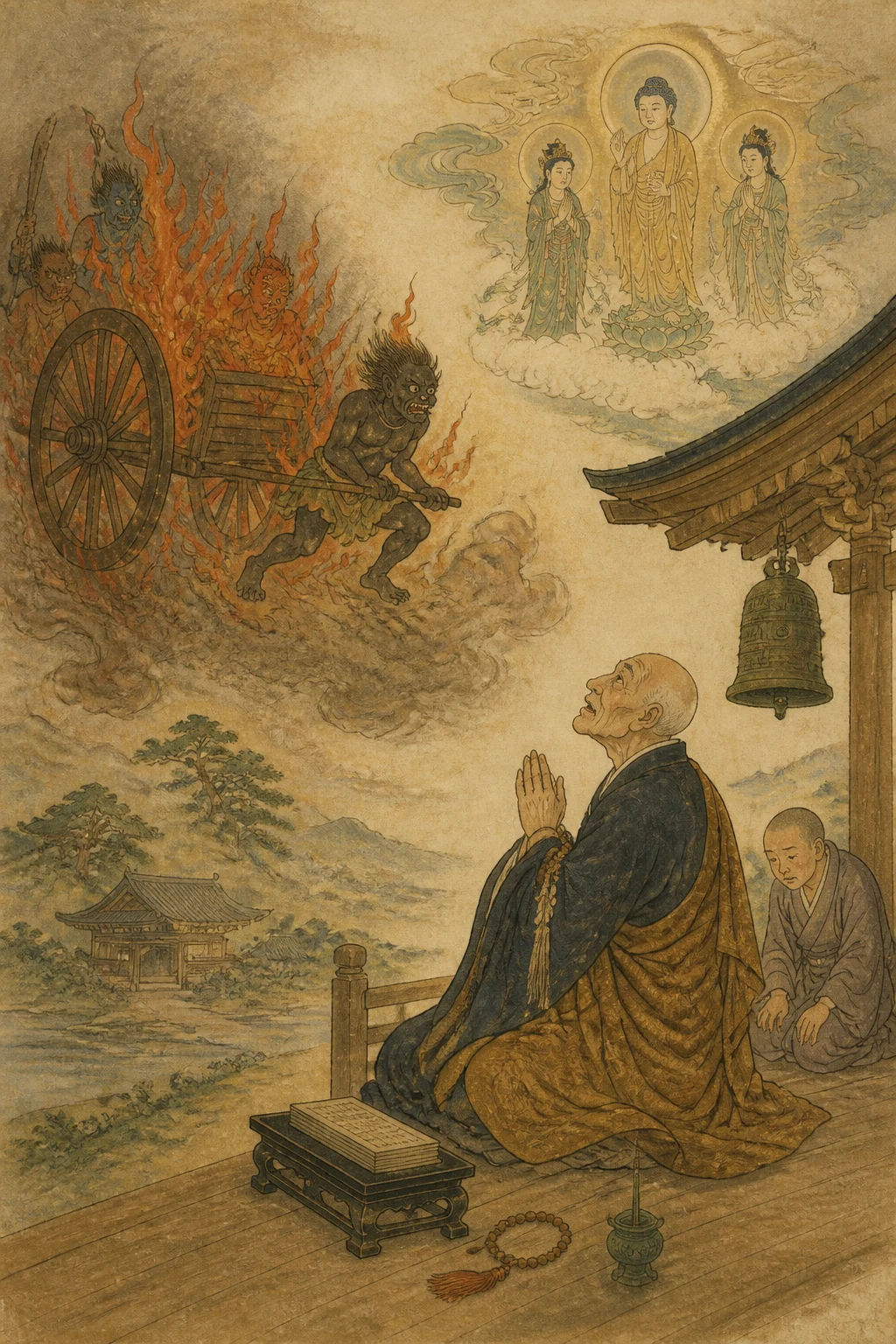
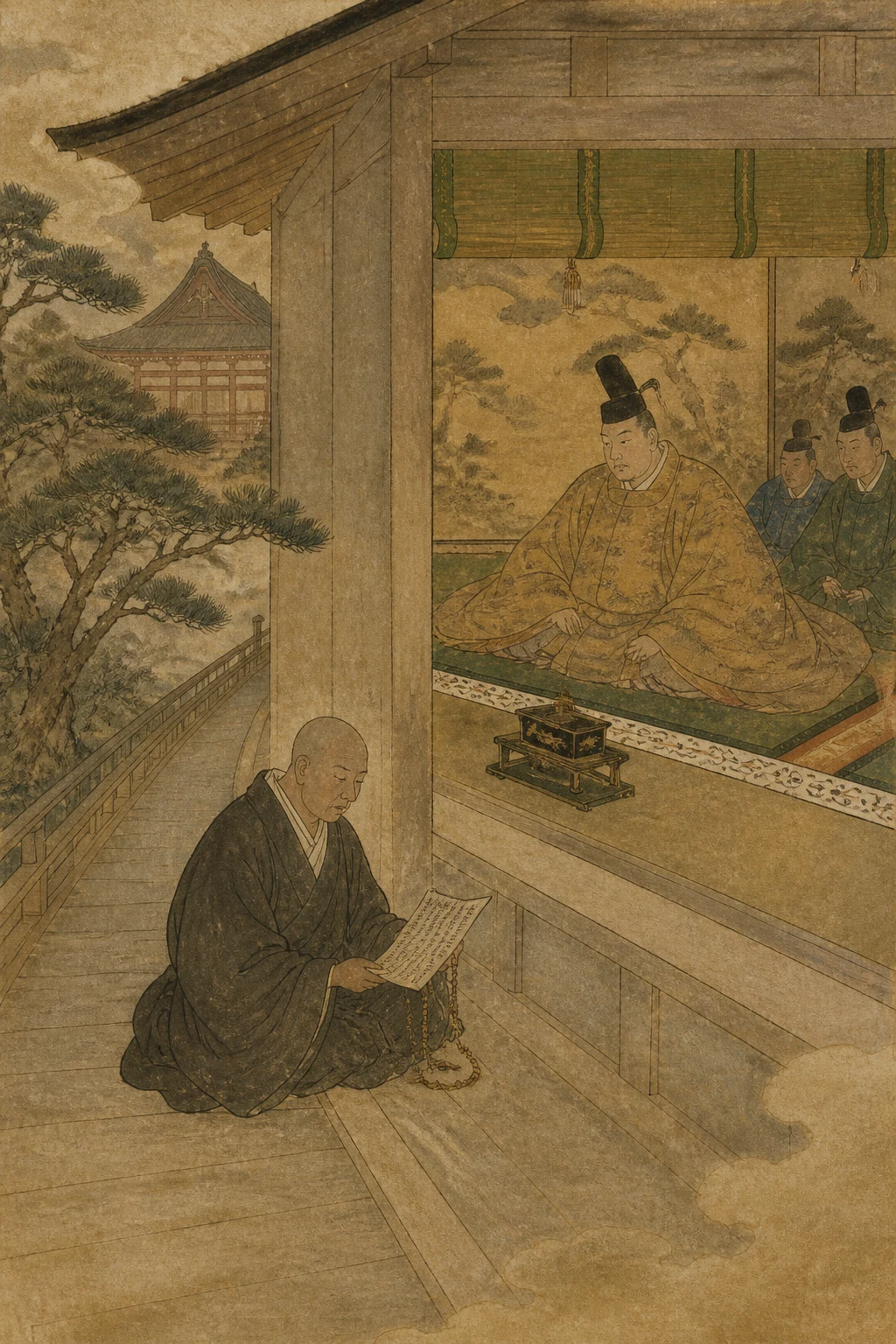
This, too, is a tale of long ago. The Horikawa Grand Minister, Lord Kanemichi, fell gravely ill, and all manner of prayers were offered for his recovery. There was scarcely a monk in the land who did not come; they gathered to perform their rites, and the commotion throughout the mansion knew no bounds. Now, Gokurakuji was a temple the lord himself had founded. Yet no command had been given for the monks living there to offer prayers, and none of them had been summoned. One of those monks thought, “It is thanks to our lord’s generosity that I live at ease in this temple. If he should die, I shall have no means of making my way in the world. Summoned or not, I shall go.” Taking the Sutra of the Benevolent Kings with him, he went to the mansion. Finding everything in an uproar, he crouched in a corner of the corridor north of the middle gate and devoted himself wholly to reciting the sutra, though not a soul paid him the slightest heed. A few hours later, the lord asked, “Is the reverend so-and-so of Gokurakuji here?” Someone replied, “He is in the corridor beside the middle gate.” “Then call him here,” the lord commanded. Everyone was astonished. He had not summoned any of the many eminent monks present, yet now he was calling for this fellow, whose very arrival they had regarded as presumptuous. Puzzled though they were, someone went and told the monk that he was wanted. He came and crouched on the veranda behind the rows of high-ranking priests. When the lord asked whether he had arrived, they reported that he was on the southern veranda. “Bring him inside,” he said, and the monk was shown into the room where he lay. Until then the lord had been so desperately ill that he could scarcely speak, but while summoning this monk he had seemed so much better that everyone marveled. He said, “As I slept, I dreamed that terrifying demons were seizing me and tormenting me, each taking his turn. Then a boy with his hair bound in loops at the temples came in from the direction of the middle gate, carrying a switch. He struck at the demons with it and drove them all away. When I asked, ‘Why are you doing this, child?’ he replied, ‘The monk so-and-so of Gokurakuji is deeply grieved by your illness. Since this morning he has been beside the middle gate, praying for you and reciting with undivided attention the Sutra of the Benevolent Kings, which he has recited for many years. I am a guardian spirit of that sutra, and I am driving away the evil demons that have made you ill.’ Then I awoke, and ever since, I have felt so much better, as though my sickness had been wiped away. I called you here to thank you for it.” Rubbing his palms together, the lord bowed in reverence to the monk, then asked for a robe hanging on a clothes rack and bestowed it upon him. “Return to your temple,” he said, “and continue to pray earnestly for me.” The monk withdrew in delight, and the looks he received from monks and laymen alike were now full of respect. He who had crouched all day beside the middle gate, without the slightest standing in anyone’s eyes, departed in extraordinary splendor. Thus the efficacy of prayers does not depend upon whether the monk who offers them is pure or impure. It is wholehearted devotion that makes them effective. This, too, is the meaning of the saying handed down from old: “Have your own mother, if she is a nun, pray for you.”
Izvirnik
191 極楽寺僧施仁王経験事
Naslednje strani prikazujejo izvirno besedilo za primerjavo.
これも今はむかし堀川太政大臣(兼通公)申人世心地大事にわつらひ給ふ御祈ともさまさまにせらる世にある僧とものまいらぬはなし参つとひて御祈ともす殿中さはく事かきりなし爰に極楽寺は殿の造給へる寺也其寺に住ける僧とも御祈せよといふ仰もなかりけれは人もめさす此時に或僧の思けるは此寺にやすく住事は殿の御とくにてこそあれ殿うせ給なは世にあるへきやうなしめさすともまいらんとて仁王経をもちたてまつりて殿にまいりて物さはかしかりけれは中門の北の廊のすみにかかまりゐてつゆ
めもみかくる人もなきに仁王経を他念なくよみたてまつる二時斗ありて殿仰らるるやう極楽寺の僧なにかしの大とこやこれにあると尋給に或人中門の脇の廊に候と申けれはそれ此方へよへと仰らるるに人々あやしと思そこはくのやんことなき僧をはめさすしてかくまいりたるをたによしなしと見ゐたるをしもめしあれは心もえす思へとも行てめすよしをいへはまいる高僧とものつきならひたるうしろのゑんにかかまりゐたりさてまいりたるかととはせ給へは南の簀子に候よし申せは内へよひ入よとて臥給へる所へめし入らるむけに物も仰られすをもくおはしつるにこの僧めすほとの御気色のこよなくよろしくみえけれは人々あやしく思けるにの給やうねたりつる夢におそろしけなる鬼ともの我身をとりとりに打れうしつるにひんつらゆひたる童子のすはえ持たるか中門のかたより入きてすはえして此鬼ともを打はらへは鬼ともみな
逃ちりぬ何その童のかくはするそといひしかは極楽寺のそれかしかかくわつらはせ給事いみしう歎申て年来よみたてまつる仁王経を今朝より中門のわきにさふらひて他念なくよみ奉て祈申侍るその経の護法のかくやませたてまつる悪鬼ともを追払侍る也と申とみて夢さめてより心ちのかいのこふやうによけれはその悦いはんとてよひつる也とて手をすりておかませ給て棹にかかりたる御衣をめしてかつけ給寺に帰て猶々御祈よく申せと仰らるれは悦てまかりいつる程に僧俗の見思へるけしきやんことなし中門の腋に日めもすにかかみゐたりつるおほえなかりしにことの外ひひしくてそ罷出にけるされは人の祈は僧の浄不浄にはよらぬ事也只心に入たるか験あるもの也母の尼して祈をはすへしとむかしよりいひつたへたるもこの心なり
Nadaljuj z branjem