Waltey
Kako je morski razbojnik postal menih
Uji Shūi Monogatari · anonimna srednjeveška zbirkaO besedilu
Kako je morski razbojnik postal menih
- Vir
- Uji Shūi Monogatari
- Avtor
- anonimna srednjeveška zbirka
- Jezik branja
- English
- Jezik izvirnika
- 日本語
- Čas branja
- 8 min branja
- Obseg
- 7 strani
- Naslov izvirnika
- 123 海賊発心出家事
O izvirniku
Uji Shūi Monogatari
Srednjeveške japonske pripovedi o menihih, duhovih, čudežih, prevarah in vsakdanjih presenečenjih. Bralni jezik je English, izvirnik pa prihaja iz vira Uji Shūi Monogatari v jeziku 日本語.
Besedilo
Kako je morski razbojnik postal menih
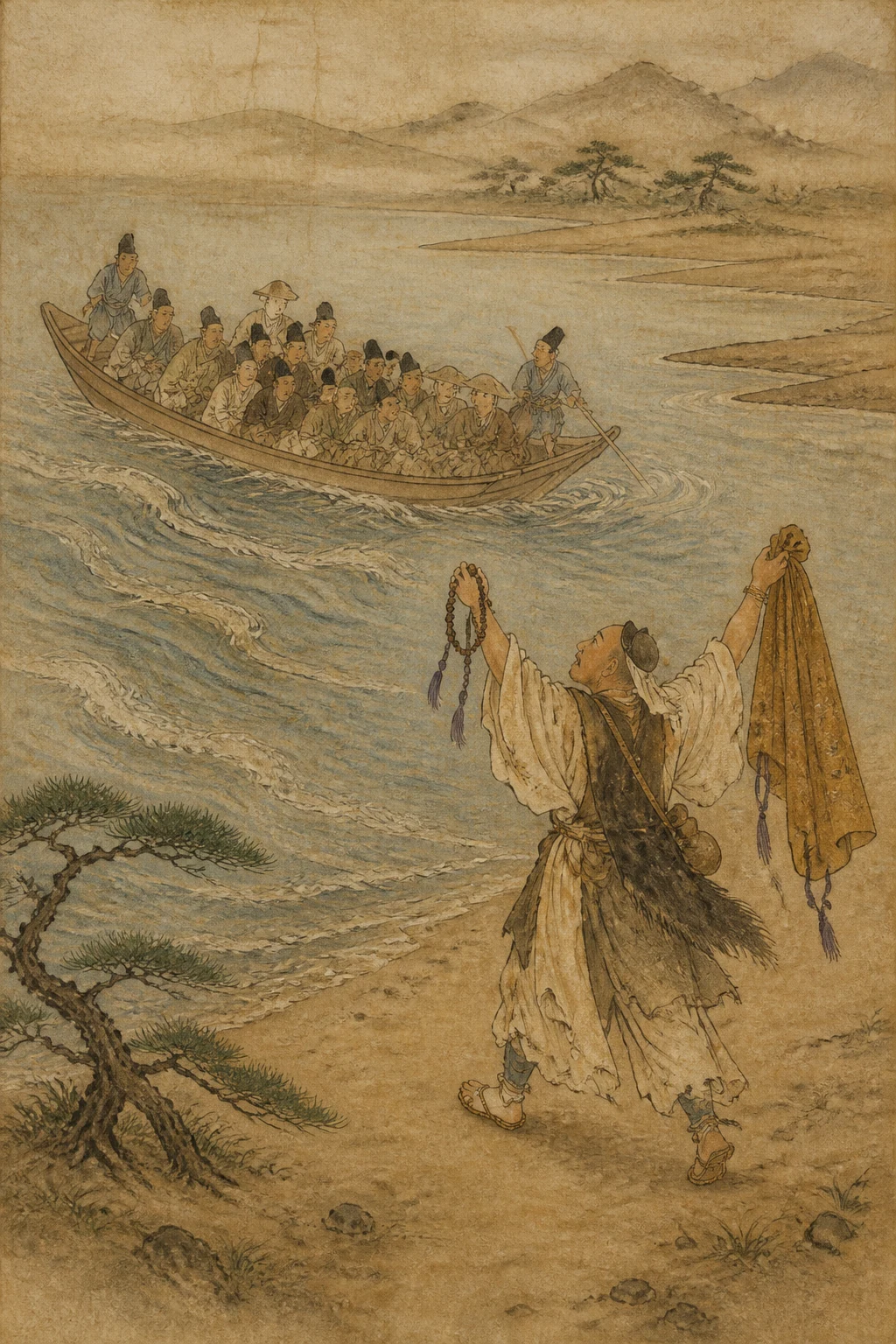
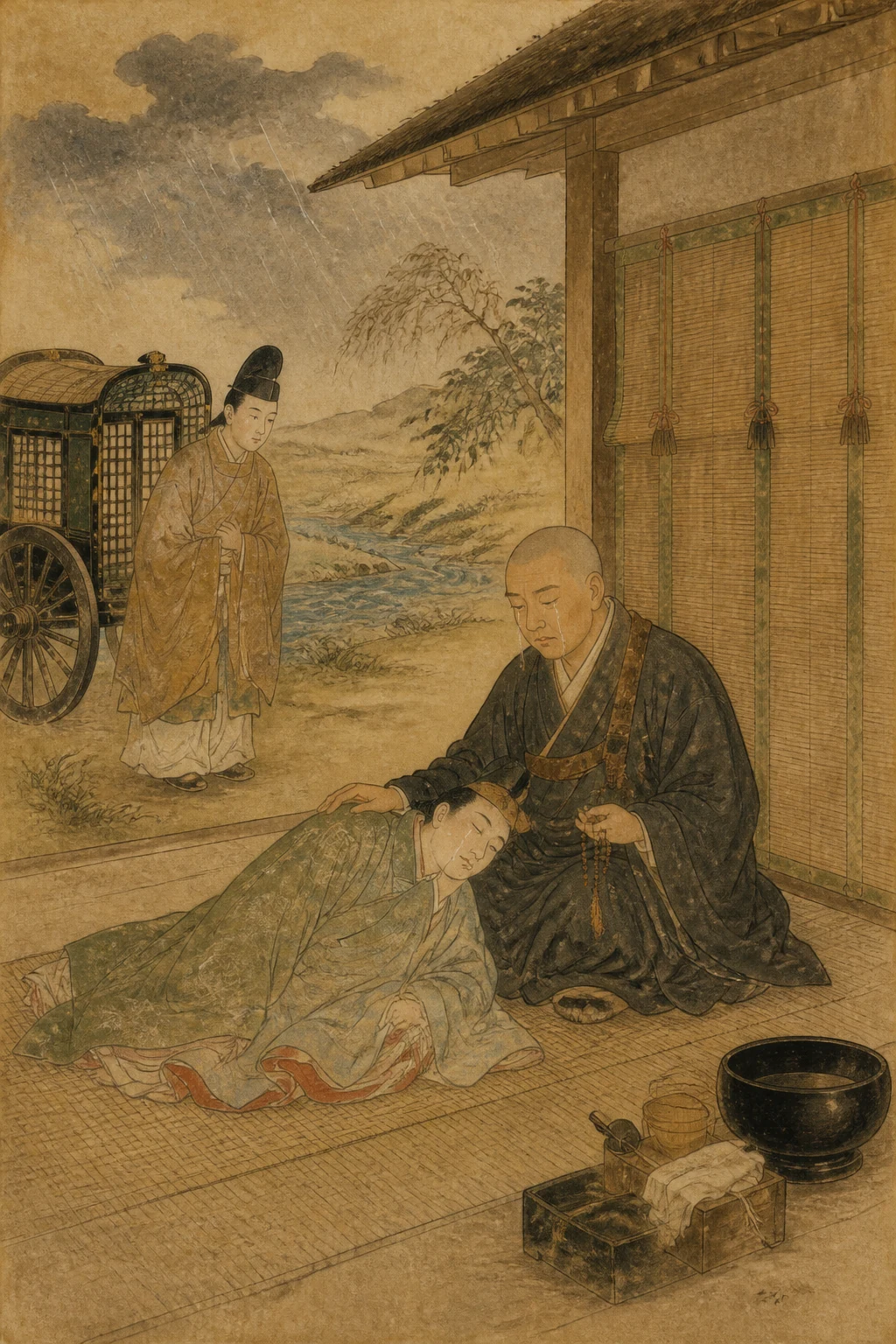
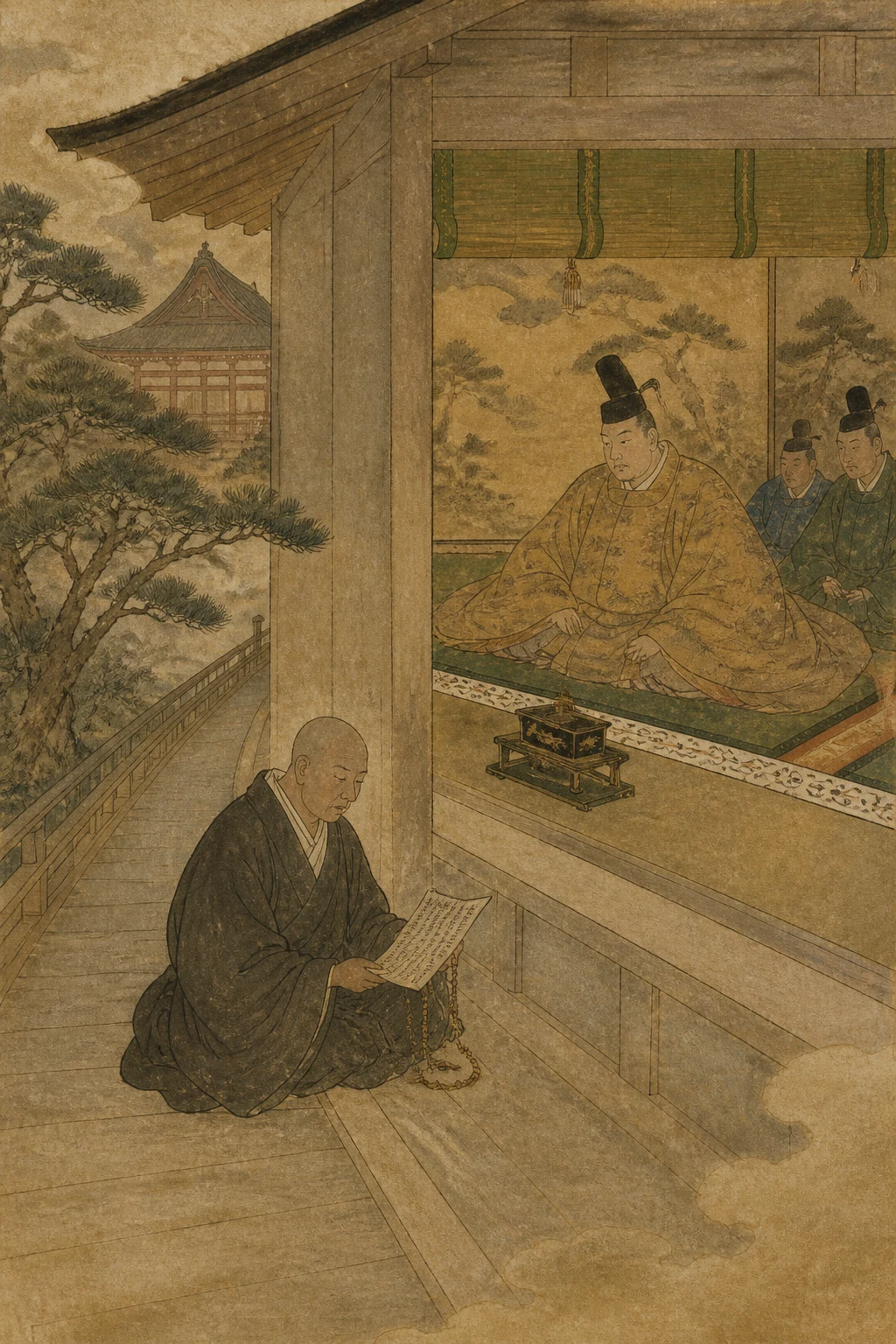
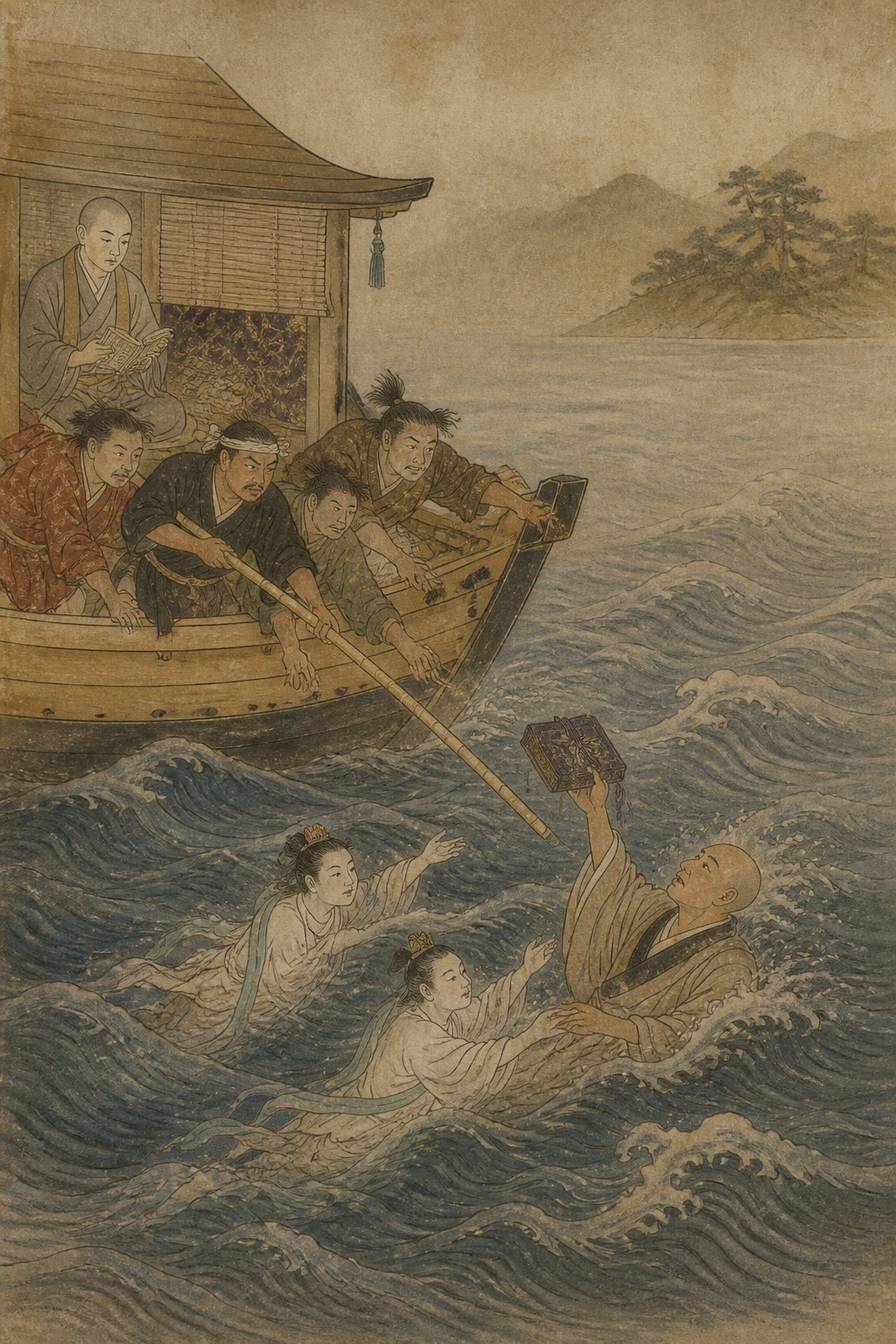
Long ago, in the province of Settsu, there lived a very old lay monk who devoted himself to religious practice. One day, when someone was telling a story about an encounter with pirates, he said, “In my younger days, I led a very comfortable life. I had all the clothing and food I could wish for, and spent my days and nights afloat upon the sea. I was known as Rokurō, the Constable of Awaji. Once, among the islands of Aki, when there were scarcely any other vessels about, a single boat came rowing up beside us. A well-dressed man of about twenty-five or twenty-six seemed to be its master, but there were only two or three young men with him, and they looked a rather feeble company. There seemed to be women of good family aboard as well. Through gaps in the blinds, I caught sight of many leather-covered traveling chests. The boat was well laden with goods, yet there was no one aboard who looked capable of putting up a fight. It simply followed wherever our boat went. A young monk sat on top of the cabin, reciting a sutra. When we sailed down the coast, they did likewise; when we drew in toward an island, they followed; and when we stopped, they stopped too. Plainly they had no idea what sort of boat ours was. Finding this strange, I decided to ask them. ‘Who are you, that you keep following our boat like this? Where do you come from?’ The master replied, ‘I am traveling from Suō on urgent business. I have no trustworthy companion to protect me, and I was afraid, so I have been following your boat, relying on your kindness.’ I thought him a great fool. ‘We are not going to the capital,’ I said. ‘We are waiting here for someone. Once he arrives, we mean to sail down toward Suō. Why should you come with us? You ought to find a boat bound for the capital and go with that.’ ‘Then tomorrow I shall see what can be done,’ he said. ‘But tonight, at least, let me stay with your boat.’ So we anchored together in a place hidden among the islands. My men said, ‘Now is our chance. Come, let us empty that boat.’ We all boarded it, and the people aboard were so bewildered with terror that they could scarcely think. We carried everything they had into our own boat. Then we began throwing them all into the sea, men and women alike. The master rubbed his hands together in supplication, tears spilling down his face like crystal beads from a broken rosary. ‘Take everything I have,’ he pleaded. ‘Only spare my life. My aged parent in the capital is desperately ill and has asked to see me once more. A messenger traveled night and day to bring me the news, and I am hurrying to the capital—’ He could not even finish. The sight of him looking into my eyes and rubbing his hands was dreadful. ‘Do not let him go on like this,’ I said. ‘Do what you always do, and be quick about it.’ He kept looking into my eyes, weeping in utter desperation. I felt terribly sorry for him, and a great pity stirred in me, but I thought there was nothing to be done now that I had given the order, and we threw him into the sea. On the cabin roof was the thin young monk, about twenty years old, who had been reciting a sutra day and night, with his sutra bag hanging from his neck. When we seized him and cast him into the sea, he fumbled for the bag, took it in his hands, and raised it high above the water. Again and again he came to the surface, holding up the sutra. ‘This wretched priest is still alive!’ the men said. They struck him hard on the head with an oar and thrust him down by the back, but still he surfaced again and again, holding up the sutra. I thought this strange, and when I looked closely, I saw two or three lovely children at his head, their hair tied in loops at either side, carrying white switches. They laid their hands on the monk’s head, and one seemed to be supporting the arm with which he held up the sutra. ‘Look there,’ I said to the men beside me. ‘Who are those children attending the monk?’ ‘Where? Where?’ they asked. ‘There is no one there at all.’ Yet I could see them plainly. With those children beside him, the monk did not sink beneath the sea, but remained afloat. Wondering at this, I decided to see for myself. ‘Catch hold of this,’ I called, and pushed a pole out to him. When he grasped it, I drew him toward us. ‘What are you doing?’ the men said. ‘There is no sense in this.’ ‘Never mind,’ I replied. ‘I shall let this one monk live.’ And I brought him aboard. As he came closer, the children vanished from sight. I questioned him. ‘Are you from the capital? Where are you going?’ ‘I am from the country,’ he answered. ‘Although I became a monk some time ago, I have never been able to receive the precepts. I had been saying how much I wished to go to the capital and receive them, and this gentleman told me, “Come with me. I know someone on the mountain, and I shall ask him to arrange it for you.” That is why I was traveling to the capital.’ ‘Who were those children clinging to your head and arm?’ I asked. ‘What were they?’ ‘When were there any such beings?’ he said. ‘I knew nothing of them.’ ‘But there was even a child beside the arm with which you held up the sutra. Tell me, why did you keep raising that sutra bag when you were about to die?’ ‘I had already resigned myself to death,’ he replied, ‘and no longer begrudged my life. But I thought that, even if I died, I must not let the sutra become wet, not even for a little while. So I held it up reverently. Yet my arms did not grow weary. On the contrary, they felt strangely light, as though they had grown longer, and I could hold it high above me. Even when I thought I must surely die, I felt that this was a sign of the sutra’s power. How happy I am that you have spared my life!’ As he wept, even a heart like mine, the heart of an unbelieving Brahmin, was moved to pity and reverence. ‘Do you wish to go home now?’ I asked. ‘Or, if you still mean to go to the capital and receive the precepts, I shall take you there.’ ‘I no longer have any thought of receiving the precepts,’ he answered. ‘I only wish to return home.’ So I made up my mind to send him back. ‘But what were those beautiful children?’ I asked, and told him just how they had appeared. The monk was filled with awe and gratitude, and tears streamed down his face. ‘Since I was seven, I have reverently recited the Lotus Sutra,’ he said. ‘I do so every day without fail, and whenever I am frightened, I recite it all the more. Surely those must have been the Ten Rākṣasī Goddesses.’ When I heard this, even with my unbelieving Brahmin’s heart, I thought, ‘Then the Buddha’s sutras truly are wondrous and holy things.’ I began to long to go with this monk to some mountain temple. In the end, I took a little food for the two of us and left all the rest of my possessions in my men’s keeping, without caring what became of them. When I set out with the monk, they said, ‘Have you gone mad? What is this? Surely no one could suddenly become so devout. Has some spirit possessed you?’ They tried to restrain me and stop me, but I would not listen. I cast aside my bow, arrows, quiver, sword, and dagger, and went with the monk to the mountain temple where his teacher lived. There I became a monk myself, learned to recite the whole sutra, and have lived in religious practice ever since. I had done nothing but commit such sins, yet pity stirred in me when that man rubbed his hands together and wept in despair. From the moment we threw him into the sea, a little longing for the Buddhist path began to awaken in me. Then, when I realized that the Ten Rākṣasī Goddesses had been attending this monk, I felt all the more keenly how wondrous the Lotus Sutra was, and longed to recite it myself. That is how I came so suddenly to live as I do now.” Such was the story he told.
Izvirnik
123 海賊発心出家事
Naslednje strani prikazujejo izvirno besedilo za primerjavo.
今はむかし摂津国にいみしく老たる入道のおこなひうちしてありけるか人の海賊にあひたりといふ物語するついてにいふやう我は若かりしおりはまことにたのしくてありし身也きる物食物に
あきみちて明くれ海にうかひて世をは過しなり淡路の六郎ついふくしとなんいひしそれに安芸の島にてこと船もことになかりしに舟一艘ちかくこきよすみれは廿五六斗の男のきよけなるそしうとおほくしてあるさてはわかき男二三はかりにてわつかにみゆさては女とものよきなとあるへしをのつから簾のひまよりみれは皮子なとあまたみゆ物はよくつみたるにはかはかしき人もなくてたたこの我舟につきてありく屋形のうへに若き僧一人ゐて経よみてありくたれはおなしやうにくたり島へよれはおなしやうによるとまれはまたとまりなとすれは此舟をえ見もしらぬなりけりあやしと思てとひてんとおもひてこはいかなる人のかくこの舟にのみくしてはおはするそいつくにおはする人にかととへは周防国よりいそく事ありてまかるかさるへきたのもしき人もくせねはおそろしくて此御舟をたのみて
かくつき申たるなりといへはいとをこかましと思てこれは京にまかるにもあらすここに人待なり待つけてすはうのかたへくたらんするはいかてくしてとはあるそ京にのほらん舟にくしてこそおはせめといへはさらはあすこそはさもいかにもせめこよひは猶も舟にくしてあらんとてしまかくれなる所にくしてとまりぬ人ともたたいまこそよき時なめれいさこの舟うつしてんとてこの舟にみなのる時に物もおほえすあきれまとひたり物のあるかきり我舟にとり入つ人ともはみな男女海にとりいるるに主人手をこそこそとすりて水精のすすの緒きれたらんやうなる涙をはらはらとこほしていはくよろつの物はみな取給へたた我命のかきりはたすけ給へ京に老たる親のかきりにわつらひて今一度みんと申たれはよるをひるにてつけにつかはしたれはいそき罷のほる也ともえいひやらて我に目を見あはせて手をするさまい
みしこれかくないはせそれいのことくとくといふに目を見合てなきまとふさまいといといみしあはれにむさうにおほえしかともさいひていかかせんと思なして海に入つ屋形の上に廿斗にてひわつなる僧の経袋くひにかけてよるひる経よみつるをとりて海にうち入つ時に手まとひして経袋をとりて水のうへにうかひなから手をささけて此経をささけてうき出うき出する時にけうの法師のいままて死なぬとて舟のかいして頭をはたとうちせなかをつきいれなとすれとうき出うき出しつつ此経をささくあやしと思てよくみれは此僧の水にうかひたる跡枕にうつくしけなる童のひつらゆひたるかしろきすはへを持たる二三人はかりみゆ僧の頭に手をかけ一人は経をささけたるかひなをとらへたりとみゆかたへの者ともにあれみよこの僧につきたる童部はなにそといへはいつらいつら更に人なしと
いふ我目にはたしかにみゆ此童部そひてあへて海にしつむ事なしうかひてありあやしけれはみんと思てこれにとりつきてことて棹をさしやりたれはとりつきたるを引よせたれは人々なとかくはするそよしなきわさするといへはさはれ此僧ひとりはいけんとて舟にのせつちかくなれは此わらはへはみえす此僧にとふ我は京の人かいつこへおはするそととへはゐ中の人に候法師になりて久しく受戒をえ仕らねはいかて京にのほりて受戒せんと申しかはいさ我にくして山にしりたる人のあるに申つけてせさせんと候しかはまかりのほりつる也といふわ僧の頭やかひなに取付たりつる児共はたそなにそととへはいつかさるもの候つる更におほえすといへはさて経ささけつるかひなにも童そひたりつるは抑なにと思て只今しなんとするに此経袋をはささけつるそととへは死なんするは思まうけたれは
命は惜くもあらす我はしぬとも経をしはしか程もぬらしたてまつらしと思てささけ奉しにかひなたゆくもあらすあやまりてかろくてかいなもなかくなるやうにてたかくささけられさふらひつれは御経のしるしとこそしぬへき心ちにもおほえ候つれ命いけさせ給はんはうれしき事とてなくに此婆羅門のやうなる心にもあはれにたうとくおほえてこれより国へ帰らんとやおもふ又京に上て受戒とけんの心あらはをくらんといへは更に受戒の心も今は候はすたた帰りさふらひなんといへはこれより返しやりてんとすさてもうつくしかりつる童部は何にかかくみえつるとかたれはこの僧あはれにたうとくおほえてほろほろとなかる七より法花経をよみ奉て日比もことことなく物のおそろしきままにもよみ奉りたれは十羅刹のおはしましけるにこそといふに此婆羅門のやうなるものの心にさは仏経は目出くたう
とくおはします物なりけりと思て此僧にくして山寺なとへいなんとおもふ心つきぬさて此僧と二人くしてかてすこしをくしてのこりの物ともはしらすみなこの人々にあつけてゆけは人々物にくるふかこはいかに俄の道心よにあらしもののつきたるかとてせいしととむれともきかて弓やなくひ太刀刀もみな捨て此僧にくしてこれか師の山寺なる所にいきて法師に成てそこにて経一部よみまいらせておこなひありくなりかかる罪をのみつくりしかむさうにおほえて此男の手をすりてはらはらと泣まとひしを海に入しよりすこし道心おこりにきそれにいとと此僧に十羅刹のそひておはしましけるとおもふに法花経のめてたく読たてまつらまほしくおほえて俄にかく成てあるなりとかたり侍けり
Nadaljuj z branjem