Waltey
Blagoslov v templju Hasedera
Uji Shūi Monogatari · anonimna srednjeveška zbirkaO besedilu
Blagoslov v templju Hasedera
- Vir
- Uji Shūi Monogatari
- Avtor
- anonimna srednjeveška zbirka
- Jezik branja
- English
- Jezik izvirnika
- 日本語
- Čas branja
- 13 min branja
- Obseg
- 10 strani
- Naslov izvirnika
- 096 長谷寺参籠男預利生事
O izvirniku
Uji Shūi Monogatari
Srednjeveške japonske pripovedi o menihih, duhovih, čudežih, prevarah in vsakdanjih presenečenjih. Bralni jezik je English, izvirnik pa prihaja iz vira Uji Shūi Monogatari v jeziku 日本語.
Besedilo
Blagoslov v templju Hasedera
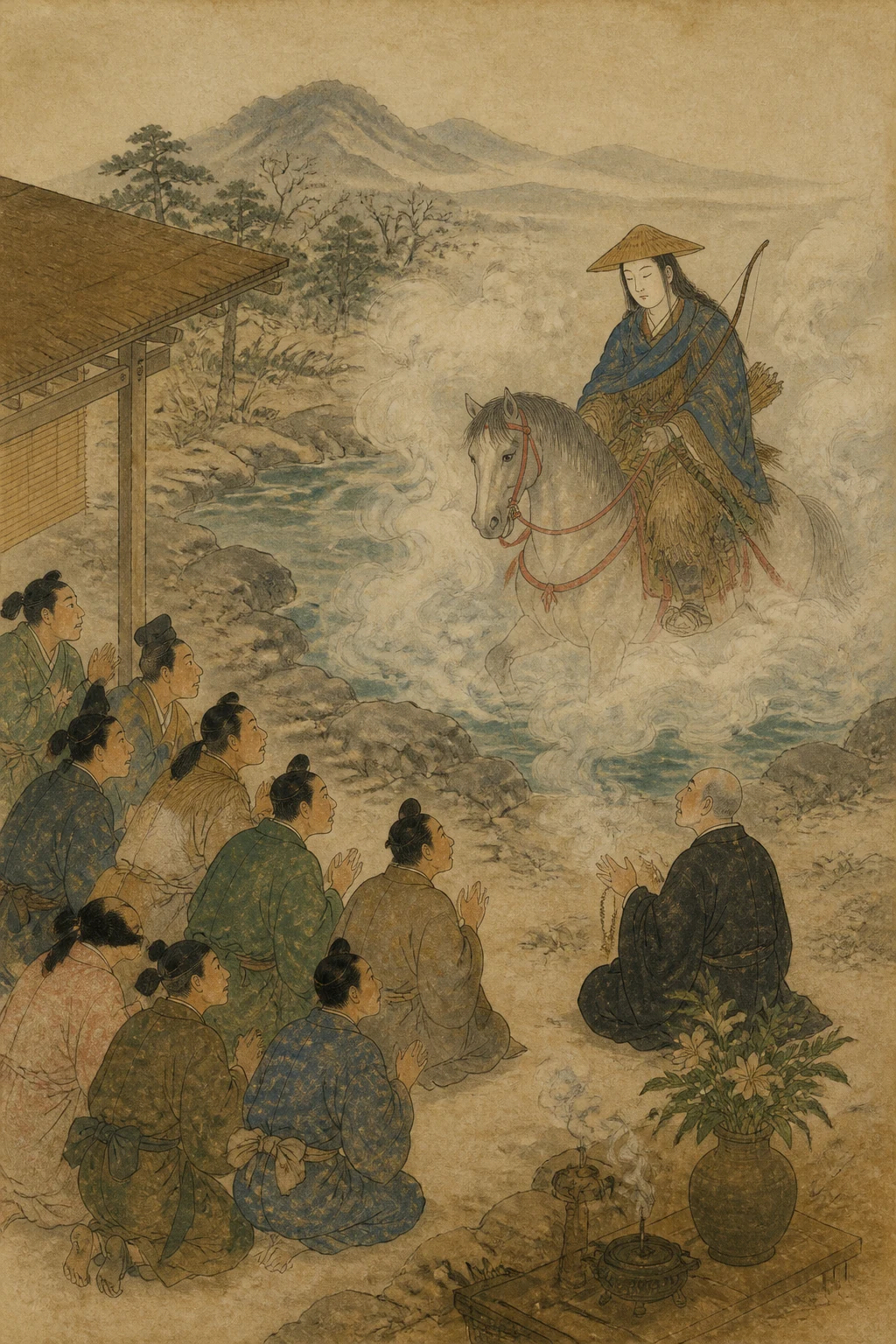
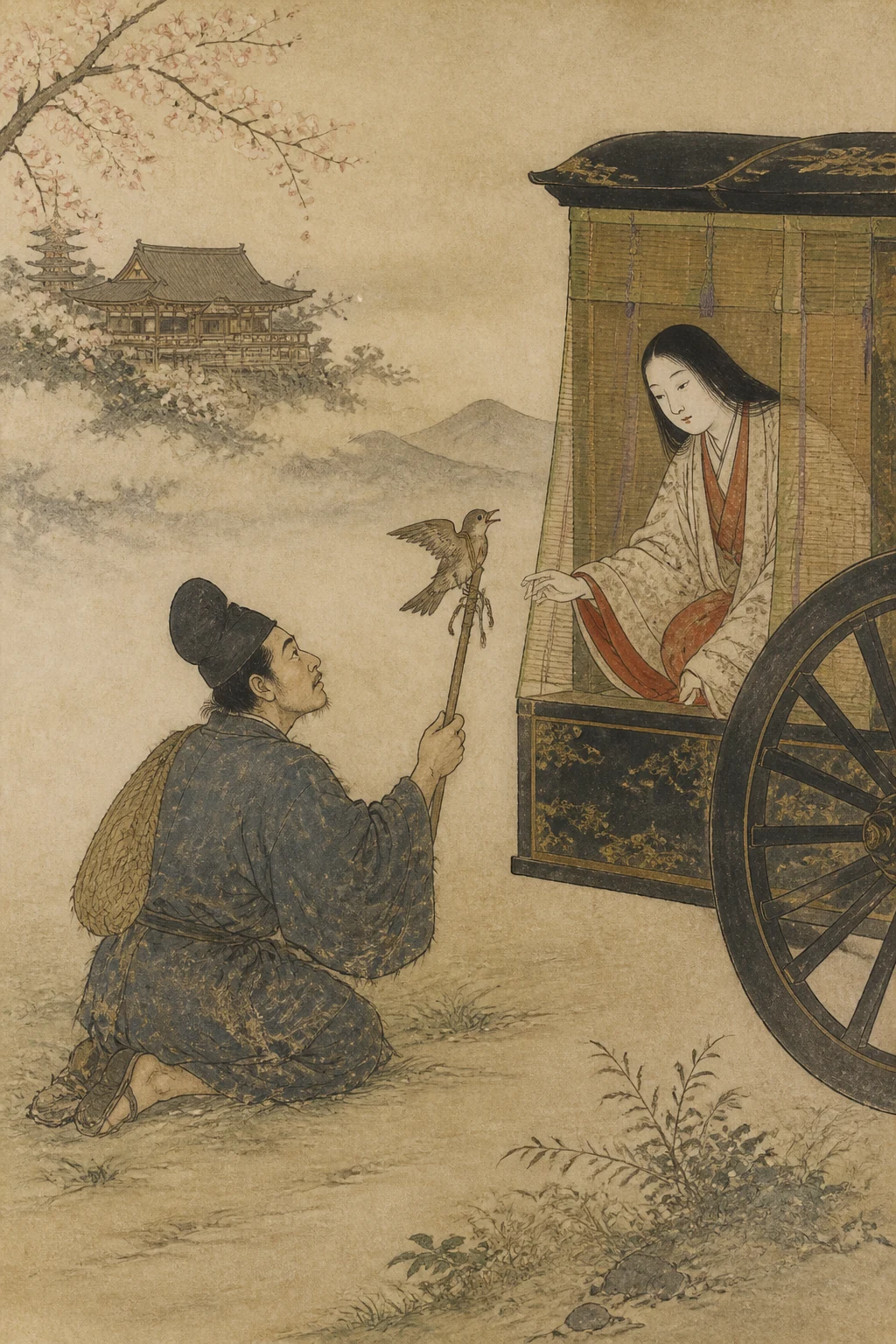
Long ago, there lived a young samurai who had neither parents nor master, neither wife nor children, but was entirely alone. Having no means of making his way in the world, he went to Hase to pray to Kannon for help. Prostrating himself before the sacred image, he said, “If I am to go on living in such misery, I shall starve to death here before you. But if there is any hope of better things for me, I will not leave until I have received a dream to tell me so.” And there he remained, lying face down. A priest of the temple saw him and asked, “Who are you, to remain here like this? You seem to have nowhere to get food. If you go on lying here, you will bring the pollution of death upon the temple and cause us grave trouble. Who is your religious teacher? Where do you take your meals?” The man answered, “How should someone as helpless as I have a teacher? I have nowhere to eat, and no one to take pity on me. I shall eat whatever the Buddha gives me, and I look to the Buddha as my teacher.” The priests gathered to discuss him. “This is a most pitiful business,” they said. “And it may turn out badly for the temple. The man seems determined to lay his troubles at Kannon’s door. Let us all contribute to feeding him.” So they took turns bringing him food, and he ate what they brought without ever leaving the sacred image. In this way, three weeks passed. On the night when those three weeks were to end at dawn, he dreamed that someone came out from behind the curtains of the shrine and said, “You do not understand that your sufferings are the reward for sins committed in a former life, yet you blame Kannon and remain here like this. It is a very strange thing to do. Nevertheless, your entreaties are so pitiful that a little provision has been made for you. Now leave at once. As you go, take whatever comes into your hand, and keep it without throwing it away. Hurry, hurry, and be gone!” Seeing himself driven out in this manner, he scrambled awake. He went to the priest whose turn it was to feed him, ate something, and set off. At the great gate, he stumbled and fell flat on his face. When he got up, he found, quite without intending it, that he had grasped something in his hand. Looking down, he saw that it was a single stalk of straw. “Can this be the gift the Buddha has given me?” he wondered, feeling it a very poor thing indeed. Still, he thought there must be some purpose in the Buddha’s design, and walked on, turning the straw about in his fingers. Presently a horsefly began buzzing around his face. Annoyed, he broke off a twig and brushed it away, but it kept returning and buzzing just as before. So he caught it, tied the straw around its middle, and fastened the other end to the tip of the twig. He carried it in his hand, and the fly, tethered about the waist and unable to escape, flew buzzing round and round. Just then, a lady’s carriage came along on its way to Hase. A very pretty child, sitting with the front blind thrown over his head, saw it and said to a mounted samurai among the attendants, “What is that man carrying? Ask him for it and give it to me.” The samurai called out, “Give us what you are carrying. Our young master wants it.” “It is something the Buddha has given me,” the man replied, “but since you ask, I shall gladly offer it to him.” And he handed it over. “What a good-hearted fellow,” someone in the carriage said. “He has so readily given our young master what he wanted. Give him these to quench his thirst.” Three large oranges were wrapped in wonderfully fragrant Michinoku paper and passed out. The samurai took them and handed them to the man. “One stalk of straw has become three large oranges,” he thought. He tied the bundle to his twig, slung it over his shoulder, and went on. Before long, he came upon a lady who seemed to be making a pilgrimage in secret, for she was accompanied by many samurai and other attendants, though she herself was traveling on foot. Exhausted by walking, she had sunk helplessly to the ground. “I am thirsty. Give me some water,” she said, and seemed about to faint away. Her attendants were thrown into confusion. They ran about searching for water nearby, but there was none. “What are we to do? Might there be some on the baggage horse?” they asked, but were told that it had fallen far behind, and there was no sign of it. The lady appeared to be in a dangerous state, and they were at their wits’ end, not knowing how to help her. Seeing their distress, the man thought, “Here is someone suffering from thirst,” and quietly drew near. “That fellow there may know where to find water,” one of the attendants said. “Is there a place nearby where we can get clean water?” “There is no clean water within four or five chō of here,” he answered. “What has happened?” “Our lady is exhausted from walking and terribly thirsty. She wants water, and we are in great difficulty because we cannot find any. That is why we are looking.” “How distressing for her,” he said. “It is a long way to water, and it would take some time to fetch it. But might these be of use?” And he gave them all three of his oranges, still in their wrapping. Delighted, the attendants hurried to feed them to her. She ate them, and little by little opened her eyes. “What has happened to me?” she asked. “You were thirsty, my lady, and asked us to give you water. Then you lost consciousness. We searched, but could find no clean water. Quite unexpectedly, this man here understood our need and gave us these three oranges, which we offered to you.” “Then I must have fainted from thirst,” she said. “I remember asking for water, but nothing at all after that. Had it not been for these oranges, I should have died out here in the fields. What a welcome man he is! Is he still here?” “He is over there, my lady.” “Tell him to wait a little. Whatever fine things I might possess, if I had died, they would all have been of no use to me. Yet how can I reward him as he deserves while I am on a journey like this? Have we brought food? Give him something to eat.” An attendant called to him, “Wait here a little. When the baggage horses arrive, have something to eat before you go.” “Very well,” he answered, and sat down to wait. At length the baggage horses and the horses carrying the chests caught up with them. “Why have you fallen so far behind?” the attendants demanded. “The horses carrying our provisions should always go ahead. An emergency may arise at any moment. Is it right for you to lag so far behind?” They put up a curtain at once and spread mats. “The water seems to be a long way off, but our lady is exhausted, and we must serve her meal here.” They sent men to fetch water and prepared the food, giving the man a neatly served meal as well. As he ate, he wondered, “What will those oranges turn into? Since this is all Kannon’s doing, surely it will not come to nothing.” Presently the lady brought out three lengths of fine white cloth. “Give these to that man,” she said. “There is no way to express my gratitude for his oranges, but here on the road I cannot reward him as I would wish. These are merely the first token of my feelings. My residence in the capital is in such-and-such a place. He must be sure to come there, and I shall reward him properly for the oranges.” They gave him the three lengths of cloth, and he received them joyfully. “One stalk of straw has become three lengths of cloth,” he thought. Tucking them under his arm, he went on his way. By then the day was drawing to a close, so he spent the night at a house beside the road. At dawn he rose with the birds and set out. The sun had climbed into the sky, and it was about the hour of the dragon, when he saw a man riding an extraordinarily fine horse. So proud was the rider of his mount that, instead of making progress along the road, he kept putting it through its paces. “What a truly magnificent horse,” the man thought as he watched. “Is this what they call a horse worth a thousand kan?” Just then, the horse suddenly collapsed and died where it fell. Its owner dismounted in utter dismay, now standing, now crouching beside it, quite beside himself. The servants took off the saddle and did what they could, asking one another what was to be done, but it was no use: the horse was dead. The owner wrung his hands in despair and was all but weeping, yet there was nothing he could do. He mounted an inferior horse that was at hand. “There is no point in our remaining here,” he said. “We shall go on. Dispose of it somehow and get it out of sight.” Leaving a single lowly servant behind, he departed. The man had watched all this. “Surely this horse has died so that it may become mine,” he thought. “One stalk of straw became three oranges, and three oranges became three lengths of cloth. This cloth must be meant to become a horse.” He approached the servant and asked, “What sort of horse was this?” “A horse my master obtained from Michinoku,” the servant replied. “Everyone wanted it, and people offered to buy it at whatever price he named. But he was too fond of it to let it go. Now it has died like this, and he has not recovered even a small part of its worth. I thought I might at least skin it, but what could I do with the hide while we are traveling? So here I stand, looking at it.” “Quite so,” said the man. “I was just admiring what a splendid horse it was. How pitiful that it should die so suddenly! Such is the fate of living things. And indeed, even if you skinned it, you could hardly dry the hide on a journey. I live nearby, so I could skin it and make use of it. Give it to me and go on your way.” He offered the servant one length of cloth. The fellow, delighted at this unexpected profit, took the cloth and ran off without so much as looking back, perhaps fearing that the man would change his mind. Once he was sure the servant was well away, the man washed his hands, turned toward Hase, and prayed, “Please restore this horse to life and give it to me.” While he sat praying, the horse opened its eyes, raised its head, and tried to get up. He gently lent a hand and helped it to its feet. His joy knew no bounds. But then he grew anxious. Someone following the party might come along, or the servant might return. He led the horse quietly into a sheltered place and let it rest until some time had passed. When it seemed as well as ever, he took it to someone’s house and exchanged another length of cloth for a bridle and a rough saddle. Then he mounted and rode toward the capital. Night overtook him near Uji, so he stayed at a house there, trading his last length of cloth for fodder for the horse and food for himself. Early the next morning he set out again for the capital. Near Ninth Avenue, he came upon a house where everyone was bustling about as if preparing for a journey. “If I ride this horse into the capital,” he thought, “someone may recognize it and accuse me of stealing it. That would never do. I should sell it quietly while I can. People at a house like this are likely to need a horse.” He dismounted, approached, and asked whether they might wish to buy one. They had indeed been thinking that they needed a horse, and at the sight of his they began eagerly discussing what could be done. “We have no silk or anything else to exchange for it just now,” they said. “Would you take fields at Toba, or rice?” “Why, that is better than silk,” he thought. But aloud he said, “Silk or money would be more useful to me. Since I am a traveler, I wonder what I should do with fields. Still, if you have need of the horse, I shall agree to whatever you propose.” They mounted it, tried its gait, and said, “It is exactly what we wanted.” In return they gave him three chō of rice fields nearby at Toba, together with some rice in the ear and some threshed rice. The master entrusted his house to him as well. “If I live to return to the capital, you must give it back to me then,” he said. “Until I return, stay here as you are. And if I should die, make it your own home and live in it. I have no children, so there should be no one to raise objections.” Having placed the house in his care, the master departed for the provinces. The man moved in, stored away the rice he had received, and settled down. Though he was alone, he now had food, and humble people from the neighborhood began coming to offer their services, so that before long he was comfortably established. It was about the second month. Of the fields he had acquired, he let others cultivate half, and had the remaining half worked for his own account. Those cultivated by others yielded well enough, but no better than usual; the fields worked for himself produced a quite extraordinary crop. He harvested and stored a great quantity of rice, and from that time onward wealth came pouring in as though the wind itself were blowing it to his door, until he became a very rich man indeed. No word ever came from the former owner of the house, so he made it his own. In time he had children and descendants, and his family prospered exceedingly, or so the story goes.
Izvirnik
096 長谷寺参籠男預利生事
Naslednje strani prikazujejo izvirno besedilo za primerjavo.
いまはむかし父母しうもなく妻も子もなくて只一人ある青侍ありけりすへき方もなかりけれは観音たすけ給へとて長谷にまいりて御前にうつふし伏て申けるやう此世にかくてあるへくはやかて此御前にてひしにに死なんもし又をのつからなる便もあるへくはそのよしの夢をみさらんかきりは出ましとてうつふしふしたりけるを寺の僧みてこはいかなるもののかくては候そ物食所もみえすかくうつふしふしたれは寺のためけからひいてきて大事に成なん誰を師にはしたるそいつくにてか物はくふなととひけれはかくたよりなき物は師もいかて侍らん物たふる所もなくあはれと申人もなけれは仏の給はん物をたへて仏を師とたのみ奉て候也とこたへけれは寺の僧ともあつまりて此事いとと不便の事也寺のためにあしかりなん観音をかこち申人にこそあんなれ是あつまりてやしなひさふらはせんとてかはるかはる物をくはせけれは
もてくる物をくひつつ御前を立さらす候ける程に三七日に成にけり三七日はてて明んとする夜の夢に御帳より人のいてて此おのこ前世の罪のむくひをはしらて観音をかこち申てかくて候事いとあやしき事也さはあれとも申事のいとおしけれはいささかの事はからひ給りぬ先すみやかにまかりいてよまかり出んになににもあれ手にあたらん物を取て捨すしてもちたれとくとくまかり出よとをはるると見てはいおきてやくそくの僧のかりゆきて物うち食てまかり出ける程に大門にてけつまつきてうつふしにたをれにけりおきあかりたるにあるにもあらす手ににきられたる物をみれはわらすへといふ物をたた一筋にきられたり仏のたふ物にて有にやあらんといとはかなく思へとも仏のはからはせ給やうあらんと思てこれを手まさくりにしつつ行程に蜟一ふめきてかほのめくりに有をうるさけれは木の枝をおりて払すつれとも
猶たたおなしやうにうるさくふめきけれはとらへて腰をこのわらすちにてひきくくりて枝のさきにつけてもたりけれは腰をくくられてほかへはえいかてふめき飛まはりけるを長谷にまいりける女車の前の簾をうちかつきてゐたるちこのいとうつくしけなるかあの男のもちたる物はなにそかれこひて我にたへと馬に乗てともにあるさふらひにいひけれはその侍その持たる物若公のめすにまいらせよといひけれは仏のたひたる物に候へとかく仰事候へはまいらせ候はんとてとらせたりけれは此男いとあはれなる男也若公のめす物をやすくまいらせたる事といひて大柑子をこれのとかはくらんたへよとて三いとかうはしきみちのくに紙に包てとらせたりけれは侍とりつたへてとらす藁一筋か大柑子三になりぬる事と思て木の枝にゆい付てかたにうちてかけて行ほとにゆへある人の忍てまいるよとみえて侍なとあまたくして
かちよりまいる女房のあゆみこうしてたたたりにたりゐたるか喉のかはけは水のませよとてきえ入やうにすれはともの人々手まとひをしてちかく水やあると走さはきもとむれと水もなしこはいかかせんする御はたこ馬にやもしあるととへとはるかにをくれたりとてみえすほとほとしきさまにみゆれはまことにさはきまとひてしあつかふをみてのとかはきてさはく人よとみけれはやはらあゆみよりたるにここなる男こそ水のあり所はしりたるらめ此辺ちかく水のきよき所やあると問けれは此四五町かうちにはきよき水候はしいかなる事の候にかととひけれはあゆみこうせさせ給て御喉のかはかせ給て水ほしからせ給に水のなきか大事なれはたつぬるそといひけれは不便に候御事かな水の所は遠て汲てまいらは程へ候なんこれはいかかとてつつみたる柑子を三なからとらせたりけれは悦さはきてくはせたれはそれを食てやうやう目を
見あけてこはいかなりつる事そといふ御のとかはかせ給て水のませよとおほせられつるままに御とのこもりいらせ給つれは水もとめ候つれとも清き水も候はさりつるにここに候男の思かけぬにその心をえてこの柑子を三たてまつりたりつれはまいらせたるなりといふに此女房我はさはのとかはきて絶入たりけるにこそ有けれ水のませよといひつる斗はおほゆれと其後の事は露おほえす此柑子えさらましかは此野中にてきえ入なましうれしかりける男かな此おとこいまたあるかととへはかしこに候と申その男しはしあれといへいみしからん事ありともたえ入はてなはかひなくてこそやみなまし男のうれしとおもふはかりの事はかかる旅にてはいかかせんするそくひ物はもちてきたるかくはせてやれといへはあの男しはし候へ御はたこ馬なとまいりたらんに物なと食てまかれといへはうけ給ぬとてゐたるほとにはたこ馬かはこ馬
なときつきたりなとかくはるかにをくれてはまいるそ御はたこ馬なとはつねにさきたつこそよけれとみの事なともあるにかくをくるるはよき事かはなといひてやかてまんひきたたみなとしきて水遠かんなれとこうせさせ給たれはめし物はここにてまいらすへき也とて夫ともやりなとして水くませ食物しいたしたれは此男にきよけにしてくはせたり物をくふくふありつる柑子なににかならんすらん観音はからせ給事なれはよもむなしくはやましと思ゐたる程にしろくよき布を三むらとりいててこれあの男にとらせよ此柑子の喜はいひつくすへき方もなけれともかかる旅の道にてはうれしとおもふ斗の事はいかかせんこれはたた心さしのはしめをみする也京のおはしまし所はそこそこになんかならすまいれ此柑子の喜をはせんするそといひて布三むらとらせたれは悦て布をとりてわらすち一筋か布三むらになりぬる事と
思て腋にはさみてまかる程に其日は暮にけり道つらなる人の家にととまりて明ぬれは鳥と友におきて行く程に日さしあかりて辰の時はかりにえもいはすよき馬にのりたる人此馬を愛しつつ道もゆきやらすふるまはするほとにまことにえもいはぬ馬かなこれをそ千貫かけなとはいふにやあらんとみるほとに此馬にはかにたうれてたたしににしぬれは主我にもあらぬけしきにておりて立ゐたりてまとひして従者ともも鞍おろしなとしていかかせんするといへともかひなくしにはてぬれは手をうちあさましかり泣ぬはかりに思ひたれとすへき方なくてあやしの馬のあるに乗ぬかくてここにありともすへきやうもなし我等はいなんこれともかくもしてひきかくせとて下すおとこを一人ととめていぬれは此男みて此馬わか馬にならんとて死ぬるにこそあんめれ藁一すちか
柑子三になりぬ柑子三か布三むらになりたり此ぬのの馬になるへきなめりと思てあゆみよりて此下す男にいふやうこはいかなりつる馬そととひけれはみちのくによりえさせ給へる馬なりよろつの人のほしかりてあたいもかきらす買んと申つるをもおしみてはなち給はすしてけふかくしぬれはそのあたい少分をもとらせ給はすなりぬおのれも皮をたにはかはやと思へと旅にてはいかかすへきと思てまもり立て侍なりといひけれはその事也いみしき御馬かなと見侍りつるにはかなくかくしぬる事命ある物はあさましき事也まことに旅にては皮はき給たりともえほし給はしおのれは此辺に侍れは皮はきてつかひ侍らんえさせておはしねとて此布を一むらとらせたれは男思はすなる所得したりと思ておもひもそかへすとやおもふらん布をとるままに見たにもかへらすはしりいぬ男よくやりはてて
後手かきあらひてはせの御方にむかひて此馬いけて給はらんと念しゐたる程にこの馬目を見あくるままに頭をもたけておきんとしけれはやはら手をかけておこしぬうれしき事限なしをくれてくる人もそある又ありつる男もそくるなとあやうくおほえけれはやうやうかくれのかたに引入て時うつるまてやすめてもとのやうに心ちもなりにけれは人のもとに引もて行てその布一むらして轡やあやしの鞍にかへて馬に乗ぬ京さまにのほる程に宇治わたりにて日くれにけれはその夜は人のもとにとまりて今一むらの布して馬の草わか食物なとにかへて其の夜はとまりてつとめていととく京さまにのほりけれは九条わたりなる人の家に物へいかんするやうにて立さはく所あり此馬京にいて行たらんに見しりたる人ありてぬすみたるかなといはれんもよしなしやはらこれを売てはやと思てかやうの所に
馬なと用なる物そかしとており立てよりてもし馬なとや買せ給ふととひけれは馬かなと思けるほとにて此馬をみていかかせんとさはきて只今かはりきぬなとはなきをこの鳥羽の田や米なとにはかへてんやといひけれは中々きぬよりは第一の事也と思てきぬや銭なとこそ用には侍れおのれは旅なれは田ならは何にかはせんすると思給ふれと馬の御用あるへくはたた仰にこそしたかはめといへは此馬にのり心みはせなとしてたた思つるさま也といひて此鳥羽のちかき田三町稲すこし米なととらせてやかて此家をあつけておのれもし命ありて帰のほりたらはその時返しえさせ給へのほらさらんかきりはかくてゐ給へれもし又命たえてなくもなりなはやかてわか家にして居給へ子も侍らねはとかく申人もよも侍らしといひてあつけてやかてくたりにけれはその家に入居てみたりける米稲なと取をきてたたひとりなり
けれと食物ありけれはかたはらそのへんなりける下すなといてきてつかはれなとしてたたありつきに居つきにけり二月斗の事なりけれはそのえたりける田をなからは人に作らせ今なからは我れうにつくらせたりけるか人のかたのもよけれともそれはよのつねにておのれかふんとて作たるはことのほかにおほくいてきたりけれは稲おほく刈をきてそれよりうちはしめ風の吹つくるやうに徳つきていみしきとく人にてそありけるその家あるしもをとせすなりにけれは其家も我物にして子孫なといてきてことのほかにさかへたりけるとか
Nadaljuj z branjem