Prevod
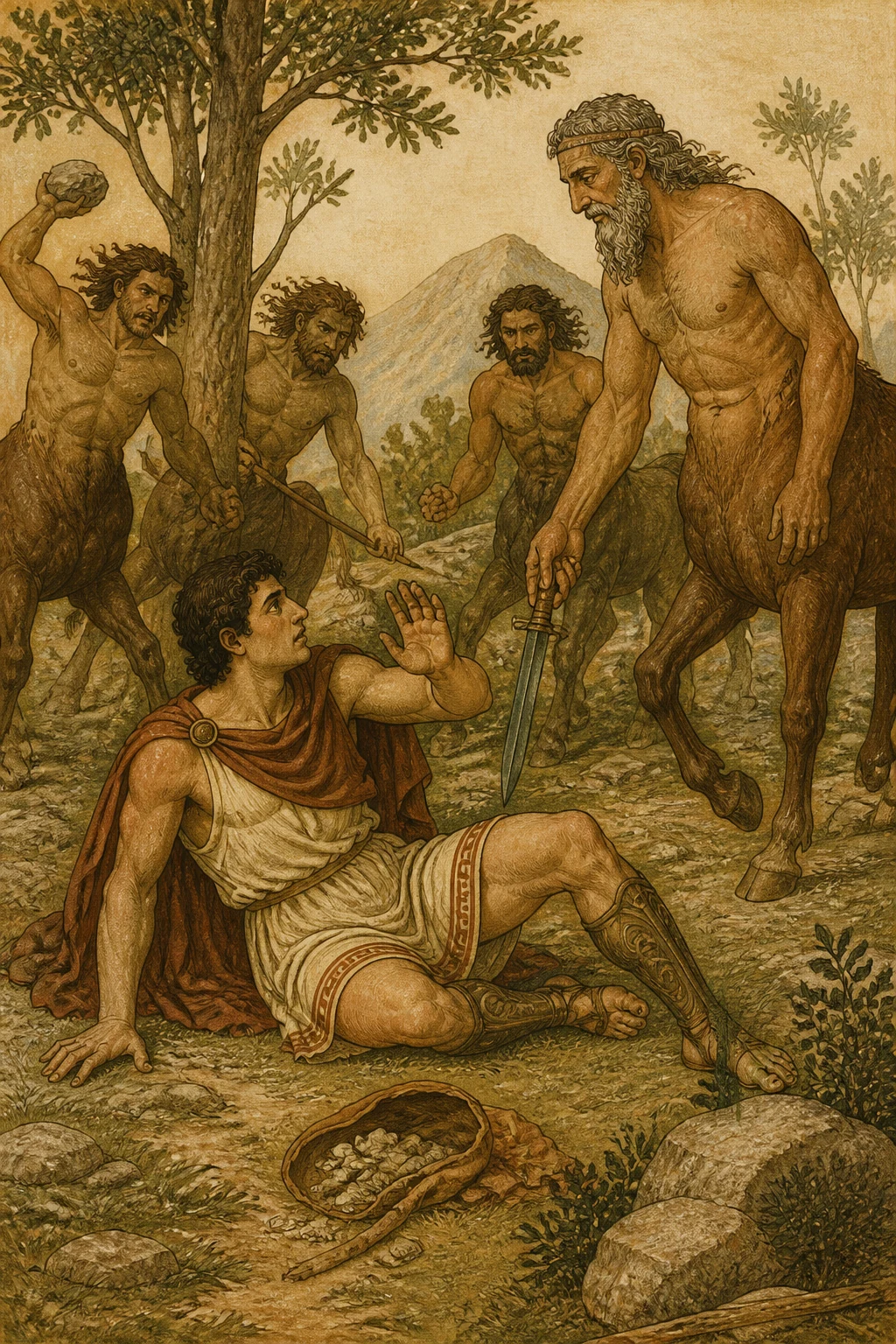
As the man of Pylos recounted these battles between the Lapiths and the half-human Centaurs, Tlepolemus could not endure in silence his grief that Hercules had been passed over, and said: “It is strange, old man, that you have forgotten the glory of Hercules! My father, at least, often used to tell me that he himself had subdued those cloud-born creatures.” Saddened, the man of Pylos replied: “Why force me to remember my sorrows, to tear open griefs long veiled from sight, and confess my hatred of your father and the wrongs he did me?
He did indeed—gods!—perform deeds beyond belief and fill the world with his services: I wish I could deny it. But we do not praise Deiphobus or Polydamas, or even Hector himself—for who would praise an enemy? That father of yours once leveled the walls of Messenia, destroyed the innocent cities of Elis and Pylos, and brought fire and sword upon my household gods. To say nothing of the others he killed, we were twelve sons of Neleus, a splendid band of young men: all twelve, save me alone, fell to Hercules’ might. That the others could be defeated, I can bear; but the death of Periclymenus was extraordinary. Neptune,
the forefather of Neleus’ line, had granted him the power to assume whatever shapes he wished, and cast them off again. When he had changed in vain into every form, he took the shape of the bird most dear to the king of the gods, which carries his thunderbolts in its curved talons. Using the bird’s strength, its wings, its hooked beak, and its crooked claws, he tore the hero’s face.
The Tirynthian aimed his all-too-unerring bow at him and, as he soared aloft among the clouds, struck him where the wing joins the side. The wound was not deep, but the sinews it had severed failed him, denying him movement and the strength to fly. He fell to earth, his weakened wings unable to catch the air, and the arrow, which had lodged lightly in his wing, was driven inward by the weight of his impaled body, passing through his upper side and out through the left of his neck.
Do you think I now owe praise to the deeds of your Hercules, most noble commander of the Rhodian fleet? Yet I avenge my brothers no further than by keeping silent about his brave deeds: my friendship with you remains unshaken.” When the son of Neleus had spoken these words in his gentle voice, they drank again of Bacchus’ gift after the old man’s tale, then rose from their couches. The rest of the night was given to sleep.
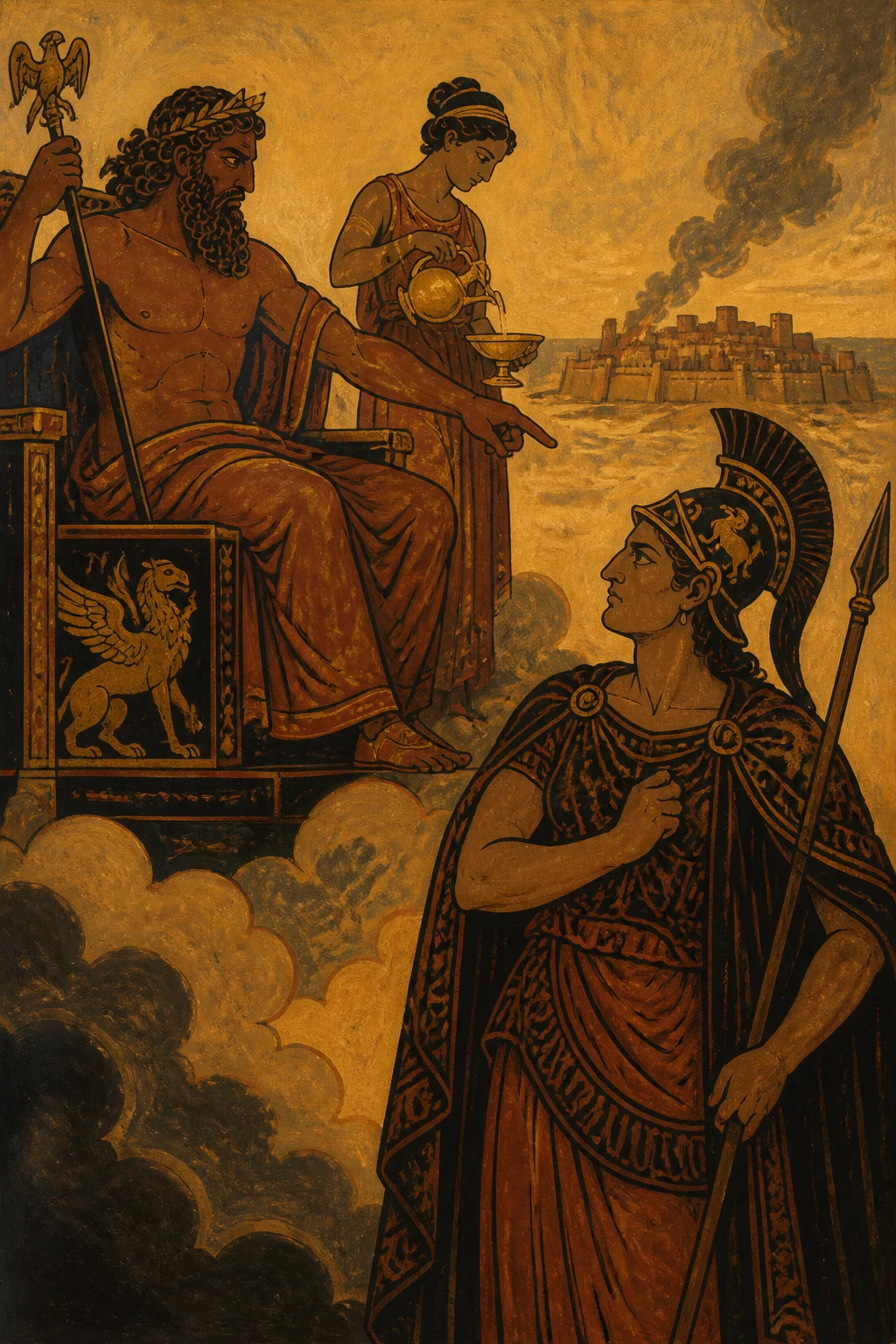
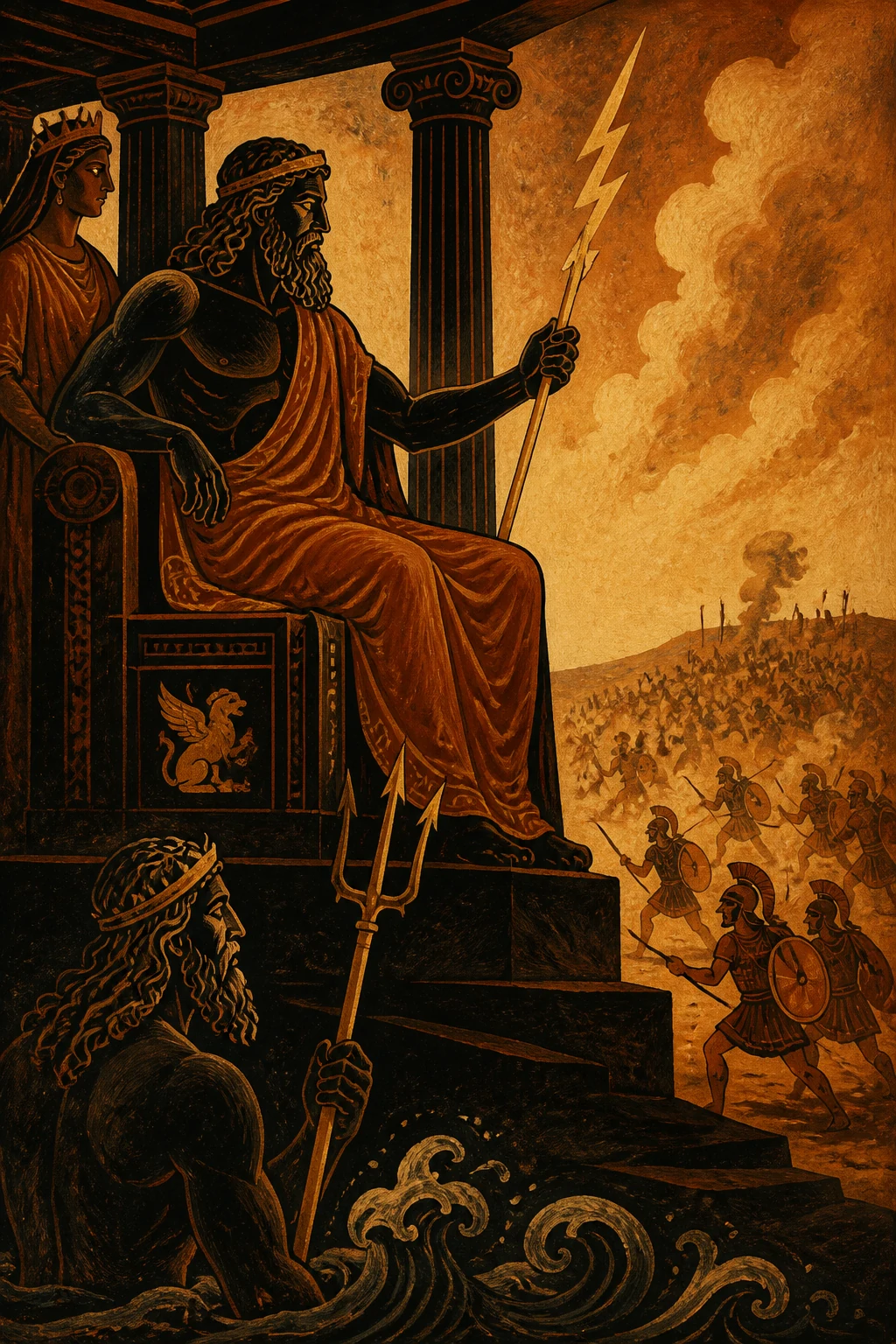
But the god who rules the sea’s waves with his trident grieved with a father’s heart that his son’s body had been changed into Phaethon’s bird, and, hating the savage Achilles, nursed his unforgetting anger with more than mortal fury. Now, when the war had dragged on for nearly ten years, he addressed the unshorn Smintheus in these words: “You who are by far the dearest to me of all my brother’s sons, who built with me the walls of Troy to no avail, do you not groan to see these towers on the brink of ruin?
Do you not grieve for the thousands slain defending these walls? To pass over all the rest, does not Hector’s ghost haunt you, dragged around his own citadel? Yet that savage Achilles, bloodier than war itself, still lives, the destroyer of our work. Let him face me! I will make him feel the power of my three-pronged spear. But since I am not allowed to meet the enemy at close quarters, kill him unawares with a hidden arrow!”
The Delian god assented, and, indulging both his uncle’s anger and his own, came veiled in mist among the ranks of Troy. There, amid the slaughter of men, he saw Paris scattering occasional arrows at nameless Greeks. Revealing himself as a god, he said: “Why waste your shafts on the blood of common soldiers? If you care at all for your people, turn against Achilles and avenge your slaughtered brothers!”
He spoke, and, pointing out the son of Peleus as he felled Trojan bodies with his sword, turned the bow toward him and guided the deadly arrow with an unerring hand. This was the one thing that could bring old Priam joy after Hector’s death: so you, Achilles, conqueror of so many, were conquered by the coward who stole a Greek man’s wife! Yet if you were destined to fall to a woman’s warfare, you would rather have fallen to an Amazon’s double-bladed axe!
Now that terror of the Phrygians, the glory and guardian of the Greek name, the descendant of Aeacus, invincible in war, had burned upon the pyre: the same god had armed him and consumed him. Now he is ashes, and of Achilles, once so great, there remains some little thing that scarcely fills a tiny urn. But his glory lives, enough to fill the whole world! This is the measure that befits the man; in this the son of Peleus is still his own equal, and knows nothing of empty Tartarus.
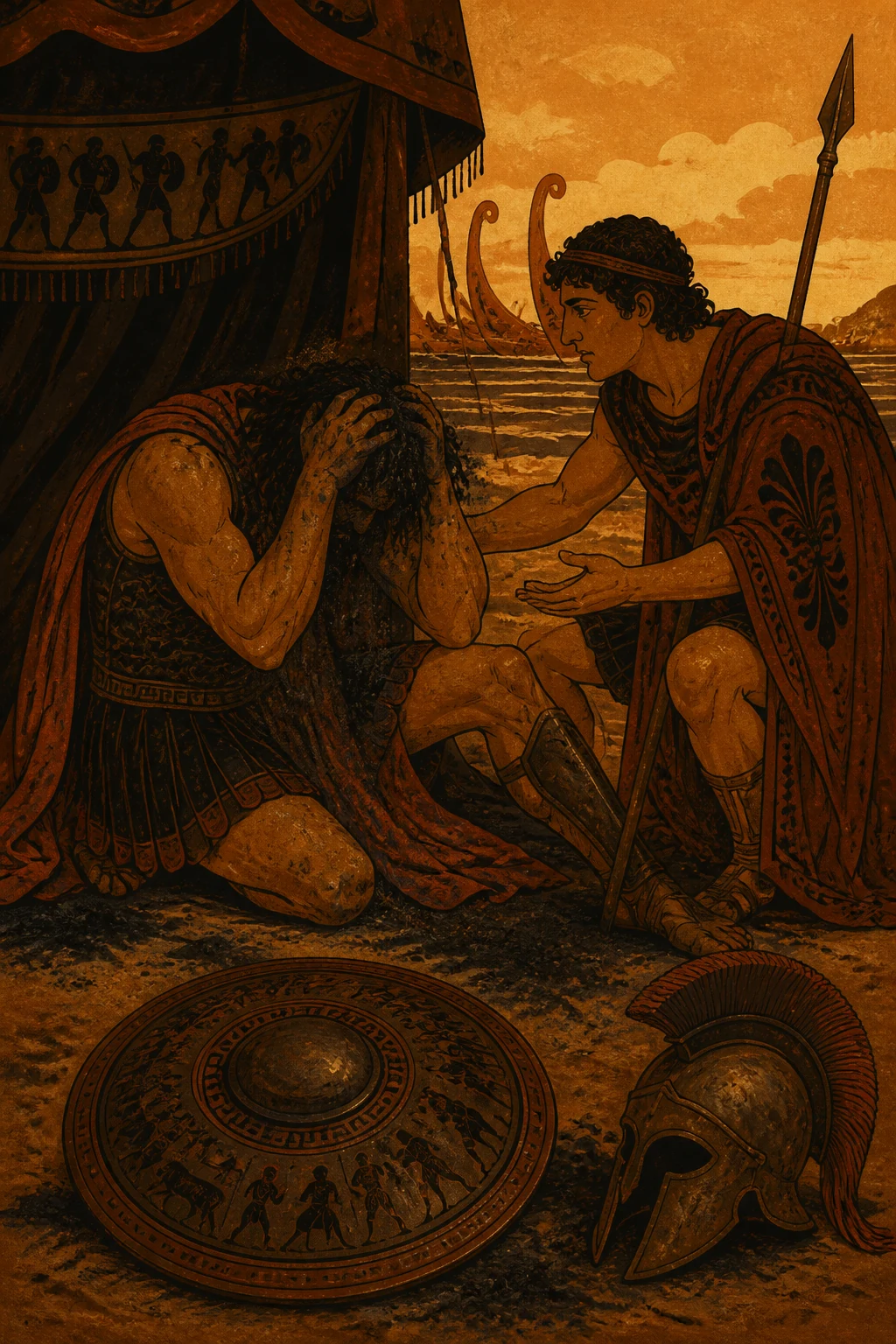
Even his shield, so that you might know whose it had been, stirs up war, and arms are taken up for the sake of arms. Neither the son of Tydeus nor Ajax, son of Oileus, dares to claim them, nor the younger son of Atreus, nor his brother, greater in war and years, nor any other: only the sons of Telamon and Laertes had the confidence to seek so great a prize. The descendant of Tantalus put aside the burden and the ill will it would bring, and ordered the Greek leaders to sit together in the midst of the camp, entrusting the judgment of the dispute to them all.