Prevod
The leaders took their seats, and with the people standing in a ring, Ajax, lord of the sevenfold shield, rose before them. Unable to master his anger, he turned a scowling gaze toward the Sigean shore and the fleet drawn up along it, and, stretching out his hands, cried, “Great Jupiter! We plead our case before the ships, and Ulysses rivals me! Yet he did not hesitate to yield to Hector’s flames, which I withstood, which I drove back from this fleet.
So it is safer to contend with lying words than fight with your hands! But I am no more ready at speaking than he at deeds: as great as my strength in savage war, as great as my power in battle, so great is his in speech. Yet I do not think my deeds need recounting to you, Greeks: you saw them. Let Ulysses tell his own, performed without a witness, with night alone to know them.
I seek a great prize, I admit; but my rival lessens its glory: Ajax has no cause for pride in winning, however grand the prize, anything Ulysses hoped to gain. He has already won the reward for this attempt: when he is beaten, people will say he competed with me. And even if my courage could be doubted, my noble birth would give me strength: I am Telamon’s son, who took the walls of Troy beneath brave Hercules and sailed to Colchis in the ship from Pagasae.
His father is Aeacus, who judges the silent dead in that place where the heavy stone oppresses Sisyphus, Aeolus’s son. Supreme Jupiter acknowledges Aeacus and owns him as his son: thus Ajax is third in descent from Jupiter. Yet let this lineage count for nothing in my case, Greeks, unless I share it with great Achilles: he was my cousin; I seek my kinsman’s arms! Why do you, born of Sisyphus’s blood and so like him in theft and fraud, thrust a stranger’s family name among Aeacus’s descendants?
Or must I be denied the arms because I came to war first, with no one to expose me? Must he seem more deserving, who was the last to take up arms and shirked the fighting by feigning madness, until one cleverer than he, though less mindful of his own good, exposed the coward’s tricks— Nauplius’s son—and dragged him to the war he sought to escape? Should he have the finest arms because he wanted none?
Must we go dishonored, robbed of our cousin’s gifts, because we offered ourselves to the first dangers? If only that madness had been real, or had been believed, and he had never come with us to the Phrygian citadel, that counselor of evil! Then you, son of Poeas, would not lie abandoned on Lemnos, a reproach to us! Now, they say, hidden in woodland caves, you move the rocks with your groans and call down on Laertes’ son the curses he deserves—curses not vain, if there are gods!
And now that man, sworn to the same cause as ourselves, alas, one of our leaders, heir to the arrows of Hercules, broken by sickness and hunger, is clothed and fed by birds, and, hunting winged creatures, plies the shafts destined by fate for the Trojans. Yet he lives, because he did not go with Ulysses; unhappy Palamedes too would rather have been left behind: he would be alive, or at least have died without disgrace!
Too mindful of how his feigned madness had been exposed, this man falsely charged him with betraying the Greek cause, then proved the fiction by revealing gold he himself had buried. Thus, by exile or by death, he robbed the Greeks of their strength: this is how Ulysses fights, this makes him fearsome. Though in eloquence he outdo even faithful Nestor, he will never make me think it was no crime to abandon Nestor. When the old man implored Ulysses, delayed by his wounded horse and weary with age, his companion betrayed him. Tydeus’s son knows well that I invent no charge: he called him by name again and again, rebuking his frightened friend and reproaching him for flight.
The gods above look on mortal deeds with justice! See, the man who gave no help now needs it; as he abandoned another, so he should have been abandoned: he made his own law. He cries out to his comrades. I come, and see him trembling, pale with terror, afraid of the death approaching. I thrust my massive shield before him, covered him as he lay, and saved his worthless life—small credit in that!
If you persist in competing, let us go back to that place: bring back the enemy, your wound, your usual terror, hide behind my shield, and challenge me beneath it! Yet once I rescued him, whose wounds had left him no strength to stand, he fled, no wound hindering him at all. Hector advances and brings the gods to battle with him; wherever he charges, it is not you alone, Ulysses, who tremble, but brave men too: such terror follows him.
As he exulted in the success of his bloody slaughter, I hurled a great stone from afar and laid him on his back. When he demanded a man to meet him, I alone stood against him; you prayed my lot would be drawn, Greeks, and your prayers prevailed! If you ask the outcome of that fight, I was not defeated by him. Look, the Trojans bring sword and fire and Jupiter himself against the Greek fleet: where now is eloquent Ulysses?
It was I who shielded a thousand ships with my own breast, your hope of returning home: give me the arms for all those ships! And if I may speak the truth, the honor sought is greater for the arms than for me, and our glory is shared: it is Ajax who is sought for the arms, not the arms for Ajax. Let the Ithacan match these deeds with Rhesus and unwarlike Dolon, and Priam’s son Helenus, captured, and Pallas’s stolen image: nothing was done by daylight, nothing without Diomedes.
If you grant these arms for such paltry services, divide them, and let Diomedes have the greater share! But what use are they to the Ithacan, who works in secret, always unarmed, deceiving an unwary enemy by stealth? The very gleam of the helmet, radiant with bright gold, will betray his ambush and reveal him in hiding. Nor will his Dulichian head beneath Achilles’ helmet bear such weight; the spear of Pelion, too, must be heavy and burdensome to unwarlike arms; nor will the shield, embossed with the vast world’s image, suit a coward’s left hand, born for theft: why seek a gift that will cripple you, shameless man?
If the misguided Greeks should grant it to you, it will give the enemy cause to strip you, not to fear you; and flight, in which alone you surpass us all, you coward, will be slow work as you drag such a load. Besides, that shield of yours, so seldom tried in battle, is whole: mine, gaping with a thousand blows from bearing weapons, needs a new successor. Finally—what need of words?—let us be judged by deeds!
Let the brave man’s arms be thrown among the enemy: order us to fetch them, and reward the man who brings them back!” Telamon’s son had finished, and a murmur from the crowd followed his last words, until the hero, Laertes’ son, stood up, kept his eyes a moment on the ground, then raised them to the leaders and opened his lips for the awaited speech; grace accompanied his eloquence.
“If my prayers and yours had prevailed, Greeks, there would be no dispute over the heir to so great a prize: you would still have your arms, Achilles, and we would still have you. But since unjust fate has denied him to you and me”— and with his hand he wiped his eyes as though they held tears—“who better to succeed great Achilles than the man through whom great Achilles joined the Greeks?
Only let it not help this man that he seems as dull as he is, nor harm me that my intelligence has always served you, Greeks; and let this eloquence of mine, if I have any, which speaks now for its master, as often it has spoken for you, rouse no envy: let no man disown his own gifts. For lineage and ancestors and things we have not done ourselves I scarcely call our own. But since Ajax has declared that he is Jupiter’s great-grandson, Jupiter is the founder of my bloodline too, and we stand equally far from him.
For Laertes is my father, Arcesius his, and Jupiter his; not one of them was condemned and exiled. Through my mother, the god of Cyllene adds another nobility: there is a god in either line. Yet neither because my mother’s birth is nobler, nor because my father is innocent of a brother’s blood, do I claim these arms: weigh our merits in this case, provided that Telamon and Peleus being brothers counts as no merit in Ajax, and that these spoils are sought as a reward for valor, not for nearness of blood!
Or, if kinship and the closest heir are what you seek, Achilles has a father, Peleus, and a son, Pyrrhus. Where does Ajax stand? Let the arms go to Phthia or Scyros! Teucer is no less Achilles’ cousin than this man: yet does he claim them? If he did, would he win them? Since, then, our deeds alone are in contention, I have indeed done more than I could readily embrace in words; yet I shall follow their order.
His Nereid mother, foreknowing his coming death, disguised her son in women’s clothes; that deceptive dress had fooled everyone, Ajax among them. I mingled weapons with women’s wares, to stir a man’s heart; and before the hero had thrown aside his maiden’s clothes, as he held the shield and spear, I said, ‘Son of a goddess, Troy reserves its destined fall for you! Why hesitate to overthrow great Troy?’ I laid my hand on him and sent the brave man to brave deeds.
His achievements, therefore, are mine: I overcame Telephus with the spear in battle, and healed him when, defeated, he begged; the fall of Thebes is mine; believe that I took Lesbos, Tenedos, Chryse and Cilla, Apollo’s cities, and Scyros; consider that the walls of Lyrnesus were shaken by my hand and toppled to the ground; and, to pass over others, I gave you the man who could destroy savage Hector: through me illustrious Hector lies dead.
For the arms by which Achilles was revealed, I claim these arms: I gave them to him living; after death I ask them back. When one man’s grief had reached all the Greeks, and a thousand ships had filled Euboean Aulis, long we waited, but the winds were still or contrary to the fleet; a harsh oracle commanded Agamemnon to sacrifice his innocent daughter to cruel Diana.
The father refused and raged against the gods themselves: even in the king, the father lived. With my words I turned that father’s tender heart toward the common good. I confess—and may Atreus’s son forgive the confession!— I pleaded a hard case before a prejudiced judge. Yet the people’s welfare, his brother, and the sovereign power of the scepter he had been given moved him to weigh glory against his own blood.
I was sent to the mother, who had to be deceived by cunning, not persuaded: had Telamon’s son gone, our sails would still be waiting for their winds. I was sent too, a bold envoy, to the citadel of Ilium; I saw and entered the council hall of lofty Troy, still full of men, and fearlessly pleaded the case that all Greece had entrusted to me. I accused Paris, demanded back Helen and the plunder, and moved Priam, and Antenor, who stood beside him.
But Paris, his brothers, and the men who plundered with him barely restrained their wicked hands—you know this, Menelaus— and that was the first day of the danger you and I shared. It would take too long to recount what my counsel and my hand have usefully achieved through the long years of war. After the first battles, the enemy kept within the city walls for a long time, with no opportunity for open warfare: only in the tenth year did we fight.
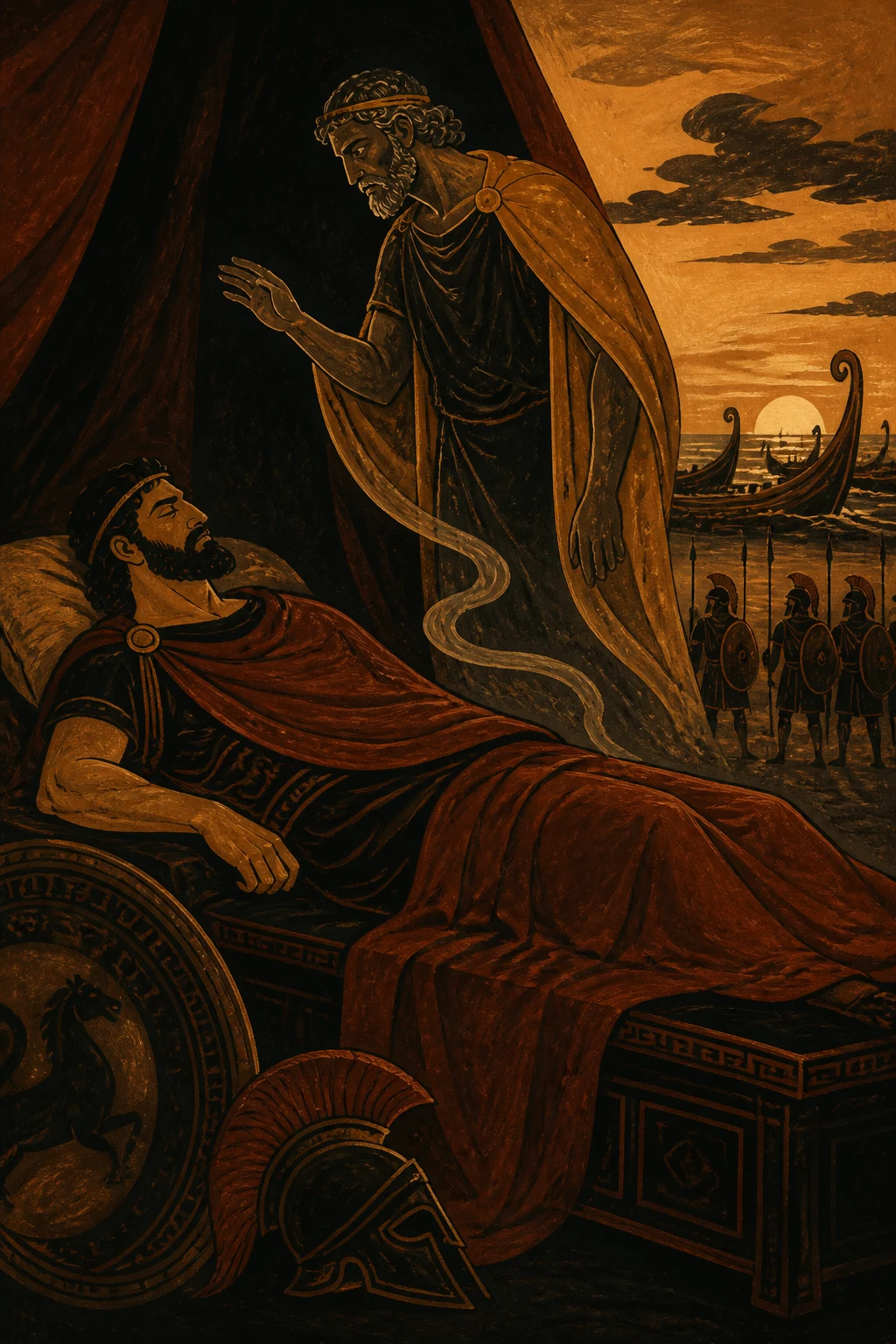
What were you doing meanwhile, who know nothing but battle? What use were you? If you ask about my deeds, I laid traps for the enemy, fortified our trenches, comforted our comrades, teaching them to endure the weariness of a long war with steady hearts; I showed how to feed and arm us, went wherever need required. Then, at Jupiter’s prompting, deceived by a dream’s appearance, the king ordered us to abandon the war we had begun.
He can defend his words by naming their author: Ajax should have opposed this, demanded Troy’s destruction, and done what he can do—fought! Why did he not halt their departure? Why did he not take up arms, give the wavering crowd a lead? That was not too much for one whose words are always grand. But what of his own flight? I saw you—and was ashamed to see— turn your back and make ready your dishonorable sails.
At once I cried, ‘What are you doing? What madness drives you, comrades? Will you abandon Troy, already won? What will you carry home in the tenth year but disgrace?’ With these and other words, which grief itself made eloquent, I brought them back from the fleet preparing flight. Atreus’s son called together his comrades, trembling with fear; even then Telamon’s son did not dare open his mouth, though even Thersites had dared assail the kings with words—not with impunity, thanks to me!
I rose and urged our frightened people against the enemy, and with my voice called back their lost courage. From that time on, whatever brave deeds this man may seem to have done are mine: I brought him back from flight. Finally, who among the Greeks praises you or seeks your company? But Tydeus’s son shares his achievements with me, approves of me, and always trusts Ulysses as his comrade.
It means something, out of so many thousand Greeks, to be the one Diomedes chose—and no lot compelled me to go! Yet, scorning the danger of night and the enemy, I killed the Phrygian Dolon, who had dared the same task as we had—but not before I forced him to reveal everything, and learned what treacherous Troy was planning. I knew it all; there was nothing left to spy out, and I could have returned to the glory I had been promised.
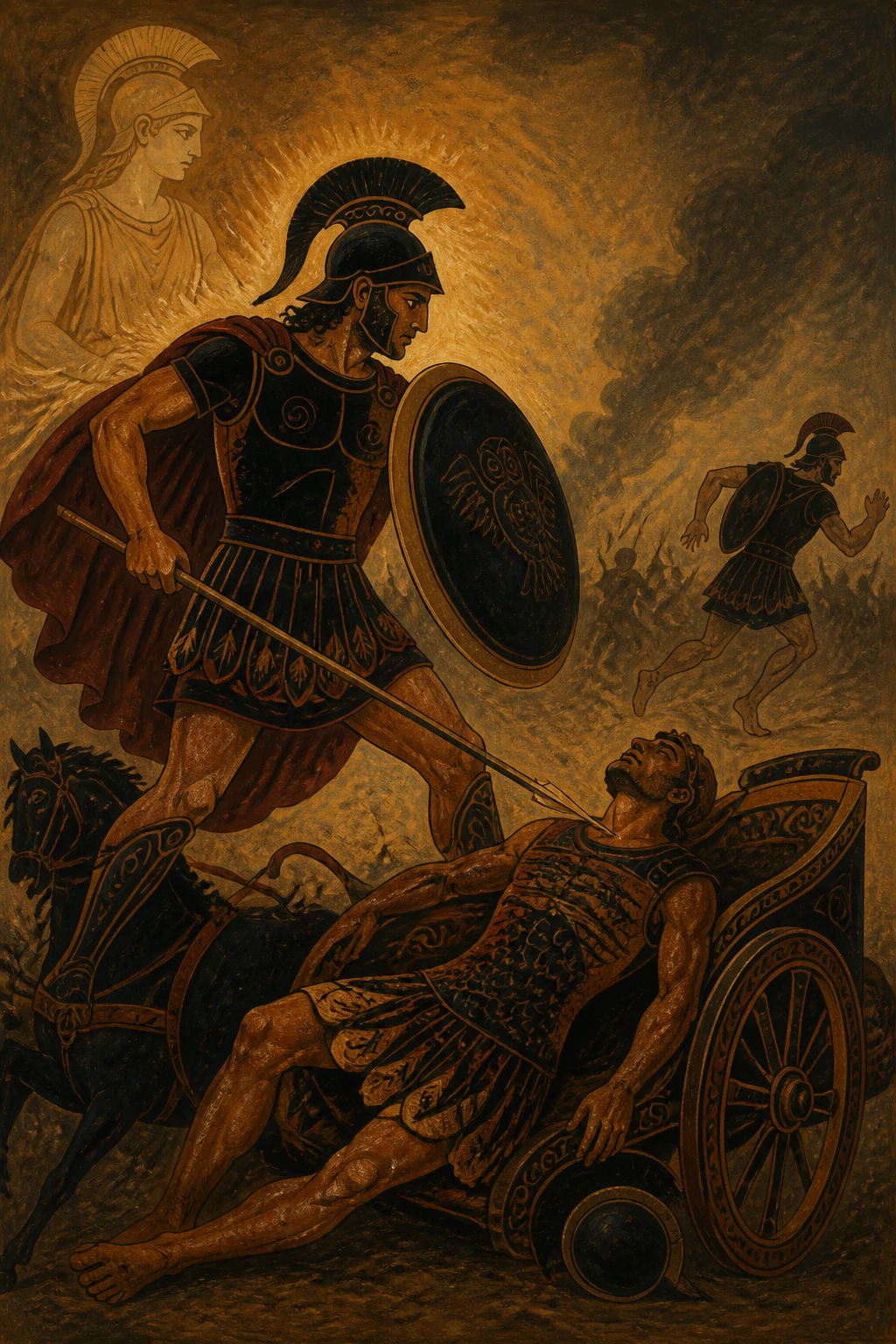
Not content with that, I sought the tents of Rhesus and killed him and his companions in their own camp. Then, victorious, my wishes fulfilled, I rode back in a captured chariot, in the likeness of a joyful triumph. That enemy had demanded its horses as his reward for the night: deny me the arms, and Ajax will have been more generous! Why recount how my sword laid waste the ranks of Lycian Sarpedon? In streams of blood I struck down Coeranus, Iphitus’s son, and Alastor and Chromius, Alcander, Halius, Noemon and Prytanis; I dealt destruction to Thoon and Chersidamas, to Charops and Ennomus, driven by pitiless fate,
and others of less renown who fell beneath the city walls at my hand. I too have wounds, countrymen, honorable in their very place; do not trust empty words: look here!” He drew aside his robe with his hand and said, “This is the breast that has always labored in your cause. Yet Telamon’s son, through all these years, has shed no blood for his comrades; his body bears no wound!
But what does that matter, if he claims to have borne arms for the Greek fleet against the Trojans and Jupiter himself? I admit he did—for it is not my way maliciously to belittle good deeds—but let him not claim alone the glory shared by all; let him give you some honor too. Actor’s grandson, safe in Achilles’ likeness, drove the Trojans and their champion from the ships about to burn.
He also thinks that he alone dared meet Hector’s weapons, forgetting the king, the leaders, and myself: he was the ninth to offer, chosen only by the favor of the lot. But what, bravest of men, was the outcome of your encounter? Hector left without a wound! Ah, with what grief I am forced to remember that time when Achilles, the rampart of the Greeks, fell! Yet neither tears nor grief nor fear kept me from lifting his body from the ground and bringing it back.
On these shoulders—these shoulders, I say—I carried Achilles’ body, and his arms as well, the arms I strive to carry now! I have the strength to bear such burdens; I have a heart, at least, that will appreciate your honors. Was this why his sea-blue mother was so eager on her son’s behalf: so that heaven’s gifts, the work of such great art, should clothe a rough, unthinking soldier? He cannot even understand the shield’s engravings: Ocean and the earth, the stars in the high heavens, the Pleiades and Hyades, the Bear that never bathes in the sea, the different cities, and Orion’s shining sword.
He demands to take up arms he does not comprehend! And what of his charge that, shirking the hardships of cruel war, I came late to the struggle once begun? Does he not see that he slanders great-hearted Achilles too? If you call pretense a crime, we both pretended; if delay is a fault, I came earlier than he. A loving wife held me back, a loving mother Achilles; our first days were given to them, the rest to you.
I do not fear a charge, even if I could not refute it, that I share with so great a man. Yet he was discovered by Ulysses’ wit, while Ulysses was not discovered by Ajax! Nor need we wonder that his foolish tongue pours abuse on me: he brings shameful charges against you too. Was it disgraceful for me to accuse Palamedes falsely, but honorable for you to condemn him?
Yet Nauplius’s son could not defend so great and evident a crime; you did not merely hear the charges: you saw them, made plain by the bribe discovered. Nor do I deserve blame because Vulcan’s Lemnos holds the son of Poeas: defend your own act, for you consented. I shall not deny advising him to withdraw from the hardships of war and the journey, and try through rest to soothe his savage pain.
He obeyed, and lives! That counsel was not only well meant but fortunate, though good intent should be enough. Since the prophets now demand him for Troy’s destruction, do not entrust the task to me: Telamon’s son will go better, and with his eloquence soften a man maddened by sickness and anger, or cleverly bring him out by some device. Simois will flow backward first, and Ida stand leafless, and Greece promise aid to Troy, before, if my mind ceases to serve your cause, the ingenuity of stupid Ajax helps the Greeks!
Though you rage against our comrades, the king, and me, unyielding Philoctetes, though you curse and endlessly damn my head, and long for chance to deliver me into your suffering hands, to drink my blood; though you may have your chance at me, as I at you, still I shall approach you and strive to bring you back with me. And I shall gain your arrows—may Fortune favor me!— as surely as I gained the Trojan prophet whom I captured, as surely as I revealed the gods’ answers and Troy’s fate, as surely as I stole Phrygian Minerva’s sacred image from the enemy’s midst. And Ajax compares himself with me?
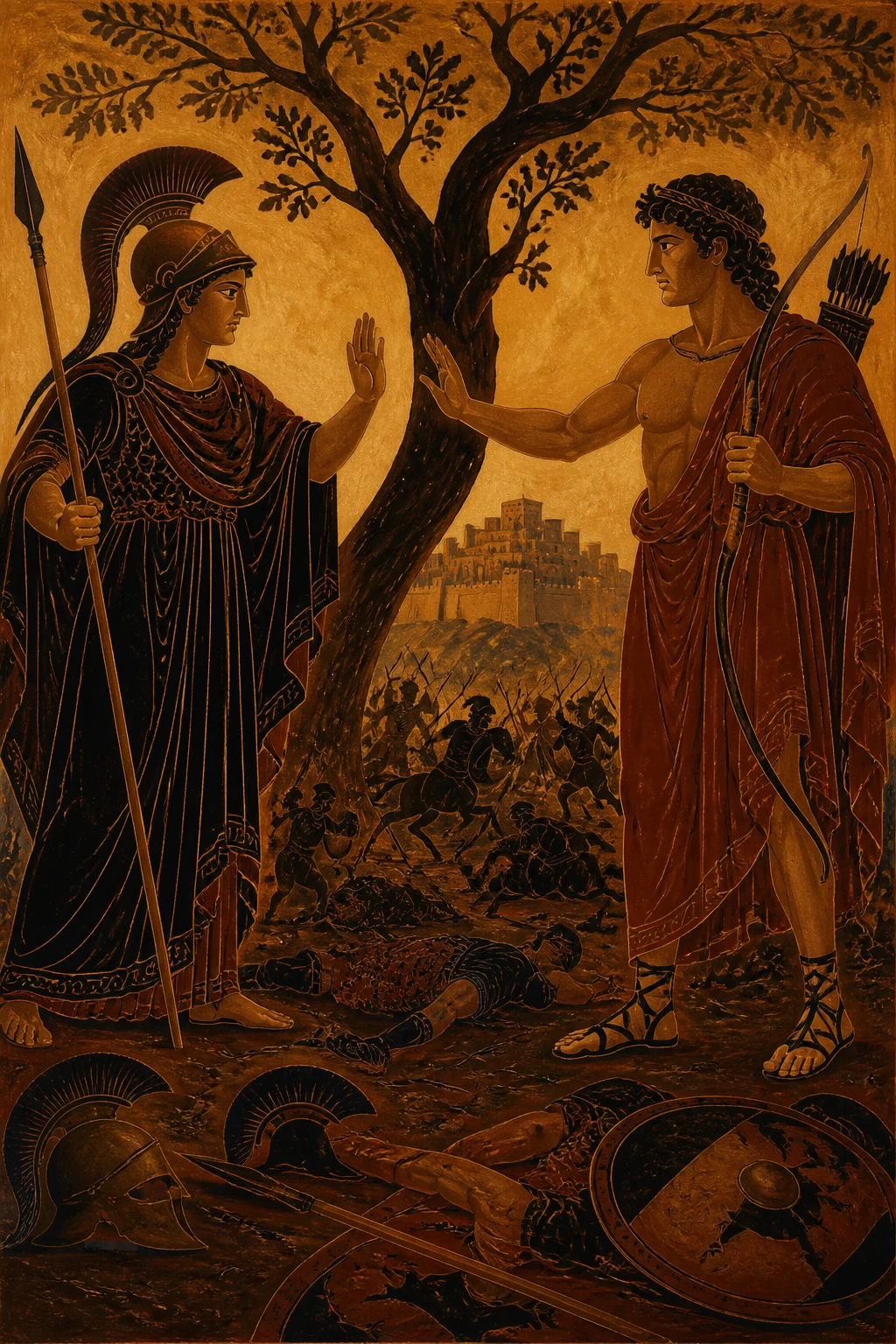
Fate forbade Troy’s capture without that image: where was brave Ajax? Where were the mighty words of that great man? Why were you afraid then? Why did Ulysses dare to pass the sentries, trust himself to night, and through savage swords enter not only the Trojan walls but their highest citadel, snatch the goddess from her own shrine, and carry her through the enemy?
Had I not done so, Telamon’s son would have borne his seven oxhides on his left arm in vain. That night I won the victory over Troy; I conquered its citadel when I made it possible to conquer! Stop pointing out my Diomedes with your looks and muttering: he has his own share of the praise. You were not alone either, when you held your shield before our allied fleet: you had a host beside you, I had one.
And if he did not know that the fighter ranks below the thinker, and that prizes are not owed to untamed strength, he too would claim these arms; so would the more restrained Ajax, fierce Eurypylus, and illustrious Andraemon’s son, Idomeneus, and Meriones, born in the same land, and the brother of the elder son of Atreus. Brave in action, they are no less your equals in war, but they have yielded to my counsel. Your right arm is useful in battle; your mind needs my direction.
You have strength without thought; I care for what is to come. You can fight; the time for fighting is chosen by Atreus’s son and me. You serve only with your body, I with my mind; and as the helmsman surpasses the rower in his task, as the commander is greater than the soldier, so far do I surpass you. In our own bodies too, the heart is worth more than the hand: all their vigor lies there.
But you, leaders, reward your watchful guardian; for the care of all these years spent in anxiety, grant this honor as the recompense my services deserve. Our toil is almost over: I have removed the obstacles of fate, and, by making lofty Troy conquerable, have conquered it. By our shared hopes, by the Trojan walls soon to fall, by the gods I lately took from the enemy, I beg you: if anything remains to be done with wisdom, if any bold deed must still be attempted at the brink of danger, if you believe anything remains to fulfill Troy’s fate, remember me! Or, if you do not give the arms to me, give them to her!” And he pointed to Minerva’s fateful image.
The assembled leaders were moved; what eloquence could do was proved in fact, and the eloquent man won the brave man’s arms. He who alone had withstood Hector, who had so often withstood sword and fire and Jupiter, could not withstand his own anger; grief conquered the unconquered man. He seized his sword and cried, “This, at least, is mine! Or does Ulysses claim this too?
I must use this against myself: the blade so often drenched in Phrygian blood shall now be drenched in its master’s, so that none but Ajax may conquer Ajax.” He spoke, and into his breast, only now to suffer a wound, where it lay open to the blade, he plunged the deadly sword. His hands lacked strength to draw the embedded weapon out: the blood itself expelled it, and the earth, reddened with blood, brought forth from the green turf a purple flower, the same that had sprung before from the wounded Oebalian boy.
Letters shared by boy and man were written amid its petals: for one, his name; for the other, a cry of grief.