Prevod
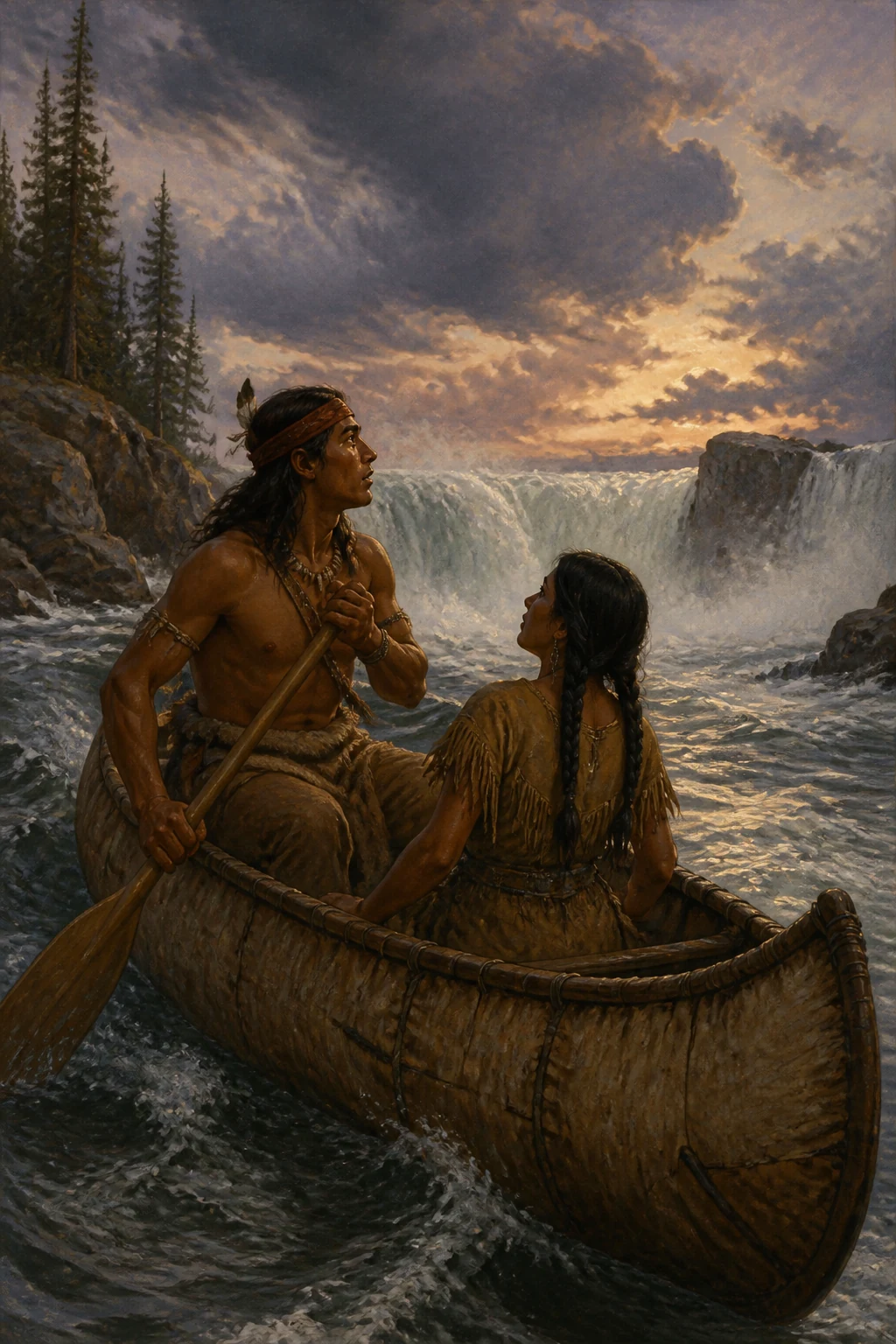
This, too, is a tale of long ago. The land of Hu, they say, lies far to the north of China, and may perhaps adjoin the northern reaches of Ōshū. So told the monk Munetō, who lived in Tsukushi. Munetō’s father, Yoritoki, was an Emishi of Michinoku. Because he would not submit to the imperial court, troops were sent against him. “From ancient times down to the present,” Yoritoki said, “no one has ever prevailed against the court. Though I believe I have done no wrong, I am subjected to one attack after another, and have nowhere to escape. Yet there is said to be land visible to the north from the farthest reaches of our country. I shall cross over and see what it is like. If it proves a place where we might live, I shall take all my followers across and settle there.” First he made ready a single boat. Aboard it went Yoritoki, Kuriyagawa no Jirō, Toriumi no Saburō, and some twenty trusted retainers. They loaded it with plentiful food and wine and set out. The crossing was short, and before long they reached the other shore. Vast reed beds stretched away on either side. Finding the mouth of a great river, they steered into it. They looked about for people, but there was no sign of anyone. They searched for somewhere to go ashore, but there were only reeds, with not so much as a trodden path. Hoping to find some inhabited place, they made their way upriver for seven days. Still the country looked just the same. “What a strange business this is,” they said, and continued upstream for some twenty days, yet found no trace of human life. When they had been traveling upriver for about thirty days, they heard what seemed to be the rumbling of the earth. Frightened and wondering what it could be, they hid among the reeds and peered toward the sound. Out rode a band of men on horseback, their hair bound with red cloth, looking just like the people of Hu depicted in paintings. As the travelers watched, wondering who these men might be, more and more riders appeared, until there was no counting them. They gathered along the riverbank, chattering to one another in a language the travelers had never heard. Then they rode into the river in scattered groups and began to cross. There seemed to be a thousand horsemen. It was the pounding of their horses’ hooves that had carried so far. Each rider drew a man on foot close beside him as they crossed, so the travelers supposed this must be a place where one could simply wade over. In all their thirty days upriver they had not found a single shallow stretch, and they thought, “So that is the ford.” Once the men had passed, they brought their boat closer to look, but the water there was just as deep as elsewhere, with no bottom to be seen. The riders must have made a raft of their swimming horses, while the men on foot clung to them to get across. The travelers felt that there was no telling how much farther the river might lead them. Afraid, they turned back from that place. Not long afterward, Yoritoki died. “And so,” Munetō said, “the land of Hu must indeed adjoin the remote northern lands of Japan.”