Prevod
At last the couple’s wishes were fulfilled: their little girl came into the world on the twenty-fourth of December, a circumstance that seemed a sign of divine favor. At the font they gave her the sweet name of Jesusa, and lavished on her all the tenderness that two wealthy, middle-aged parents could offer their only child, having asked of fortune nothing more than someone to inherit their wealth and name. Her cradle was cushioned with rose petals, and even the air was made warm and fragrant to caress the newborn’s tender face...
We have all told, at one time or another, the sad story of the poor, forsaken little girl who, ragged and frozen, dizzy with hunger and anguished by abandonment, wanders the streets begging for charity until she sinks down exhausted and the snow enfolds her in a white shroud. The cry of poverty, the clamor of an empty belly, is piercing and human... Yet the rich suffer too, and their sorrows, beyond the easy consolation a handful of coins can provide, find relief only in the mercy of God... Whoever compares the little girl without bread or shelter to the little girl wrapped in cotton wool and surfeited with pleasures and toys; the child who has never received a kiss to the one an adoring mother cherishes at her breast, will rise in indignation against social injustice and appeal from it to infallible justice.
Cross the street, slip some alms into the beggar girl’s emaciated hand, and then enter the home of Jesusa’s family. At first the contrast will strike you as almost sacrilegious. Any trinket adorning the sitting room, any bauble of golden tortoiseshell and chased silver among the thousand scattered over the little dressing tables, is worth more than it would cost to provide a whole year’s bread, light, and warmth for the wretched child shivering outside, at the corner of the block, standing against a gate less hard than certain hearts.
Step across the threshold of the silk-hung bedroom; approach the little maiden’s bed, enameled in white and gold, and contemplate the head resting on the cambric pillow... Look at that face, translucent as alabaster, those violet eyes, so infinitely melancholy. If you could lift the sheet without offending the modesty of the girl—who is eleven now—you would see something without name or shape, one of those sights that make the heart recoil: a sort of wretched insect, with legs like twisted threads, hands seemingly contracted by fire, a double hump on chest and back, flesh wasted, withered, and consumed by suffering. And if only the illness had been content to disfigure her! But her torments are so unceasing, so varied, so horrible, that there are dark hours when her father whispers in her mother’s ear, his voice hollow:
“Wouldn’t it be better to send all these doctors away... stop all these remedies... not burden her... let her...!” And her mother answers in a voice trembling with tears that cannot be stanched:
“No, no... While there’s life...” Within that tortured body, the mind keeps watch, awakened very early. At six, Jesusa was already saying things that cut one to the soul. Those early intuitions, those signs of precocity that delight us in a healthy child, afflict us in a sick one with a grief as deep as the abyss of human suffering.
“Mama, am I bad?” the innocent child would moan. “No, you’re very good, very good.” “Then why is God punishing me?” “It isn’t punishment...” her mother would sob. “It’s that afterward, when you get better, you’ll have so much pleasure... And now, though it’s true you’re ill, you also have more pretty things than other little girls, more dolls, more toys, more flowers, such lovely boxes...” The sick child would fall silent for a moment, closing her faded violet eyes, then open them again to exclaim, “Then give all those things to the children who have none... and let them give me one day without being ill... Mama, just one day!”
As time passed and the symptoms of Jesusa’s strange nervous ailment multiplied, the idea of an exchange took root in her mind, and she believed it possible—or rather, certain. Why would her parents not indulge her? Could anything be simpler or more natural? Let them give her jewels and expensive dolls to the street children and beggars; let them send them sweets by the basketful; let them hand over her lace sheets and swansdown quilt... and let those children, in return, come to her aid with a few crumbs of health, that laughing health which gladdens the world, warms the blood, shines like the sun, and makes life beautiful. To rise from that bed, to walk, to go out into the street, to breathe the open air, free of pain, lively, nimble, happy!
By speaking so often of this exchange, Jesusa at last infected her father with the notion. The unfortunate always have their arms open to embrace a chimera. Hope is ingenious and superstitious. “You’ll see, my little girl... I’m going to do as you ask; I’m going to help the poor little children... Once I’ve done them a great deal of good, you’ll get well...” And he began his career as a philanthropist, discovering each day fresh veins to work in the inexhaustible mine of poverty, and dreaming at every discovery that here might lie the cure for his sick child. He climbed to many a garret, his purse full and a doctor at the ready; late at night he gathered into his arms and carried home some street child sleeping numb with cold and faint with hunger on a bench or across a doorway, and delighted in the magical effect of the child’s awakening before a hearty supper, with the prospect of a soft bed to follow. He rescued from degradation little girls who had as yet no understanding of sin, and took them to charitable institutions where they would be taught industry and honesty; he paid wet nurses for helpless orphans; he poured out a river of cod-liver oil for scrofulous little children, and in summer sent workers’ children, wasted by anemia, to the seashore... Yet Jesusa, hearing of these saintly deeds, kept shaking her wan head and painfully closing the languid violets of her eyes. It was not enough; God was still not satisfied.
Surely He demanded a greater sacrifice... The proof that these efforts were fruitless was that Jesusa grew worse, her sufferings redoubled, fever consumed her, and her skin clung to her bones, scorched by disease. During the attacks, which grew ever more frequent, she felt now a burning coal in her entrails, now an enormous block of ice in her heart, which seemed about to stop beating. Was that hellish torture to last forever? Would God not take pity? Would He not suddenly make her wholly well, allowing her to rise, strong and joyful in the vigor of youth, to enjoy life, to laugh, to run, to leap like the happy birds?
Christmas Eve came, Jesusa’s birthday. On that day her parents overwhelmed her with presents, inventing whims for the pleasure of gratifying them. The Nativity scene was set up, renewed each year, ever more sumptuous, with finer figures and a more elaborate landscape; but that year, supposing the sick child must be weary of so many little shepherds and sheep and camels, her mother thought of placing a beautiful, life-sized Christ Child, a masterpiece of sculpture, in a manger on a bundle of straw. The simple image drew the dispirited child’s attention. It looked like a living baby, lying there naked. And as she gazed at it and thought how cold it must be, Jesusa believed she had divined why God would not make her well... It was not enough to give other children alms and assistance: she must be like them, accept their condition, embrace humility and want, imitating Jesus as He lay among the straw on rough boards... Eagerly she called her mother and begged, trembling with hope and longing:
“Mama, for God’s sake... Do what I ask, and see if I don’t get well... Put me the way the poor little children are... Spread straw on the floor and lay me there... Don’t cover me with anything; let me shiver...”
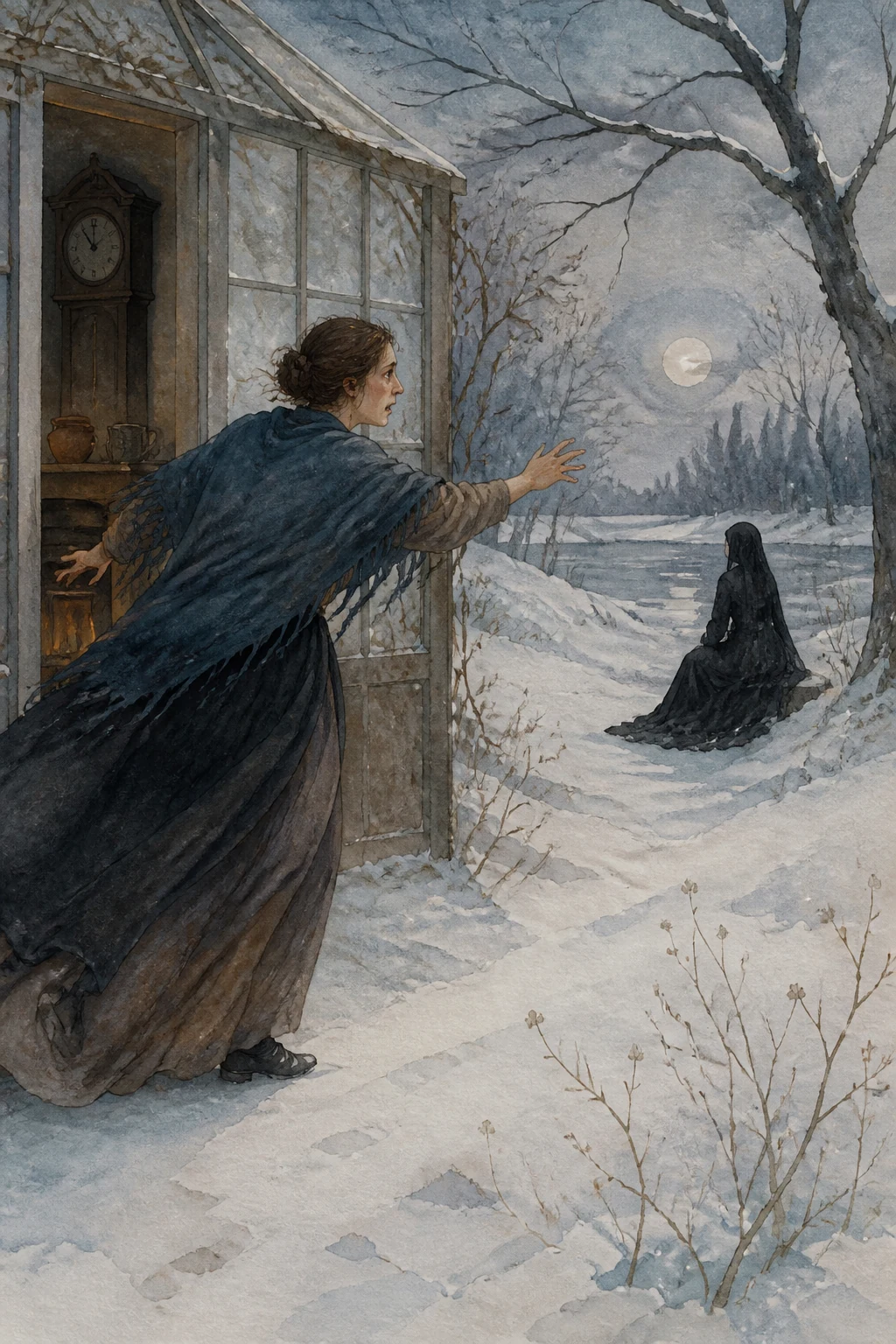
Her mother resisted, trembling with fear at the thought of her daughter cold and lying on bare boards; yet despite herself, that wild dream was taking possession of her mind too. Who could tell? Who could tell?... The wings of the chimera beat mysteriously in the air around her... She sent the servants away, looked to see that no one was coming... and, lifting the sick child’s slight weight, laid her on the scattered straw in the very manger where the Christ Child smiled and bestowed His blessing. Jesusa opened her eyes, gazed anxiously at the image, then slowly closed them. Her little face, wasted and contorted, suddenly took on the deepest serenity; a kind of beatitude bathed her features and lit her brow; a faint sigh escaped her purplish lips... Her mother, terrified, bent over her, called her by name, felt her body... She did not answer; the dream was coming true; Jesusa’s pains had ceased; she would suffer no more.