Prevod
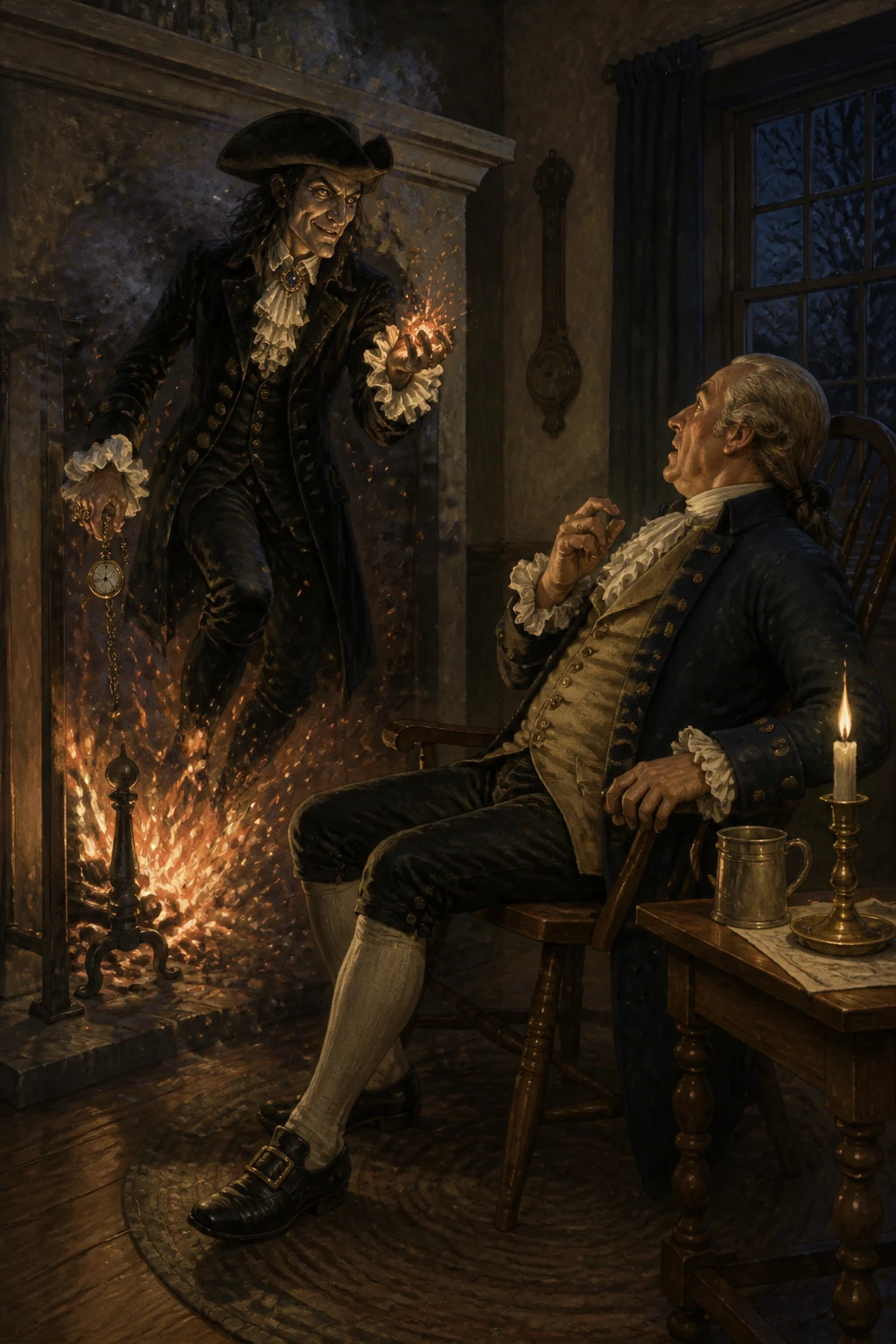
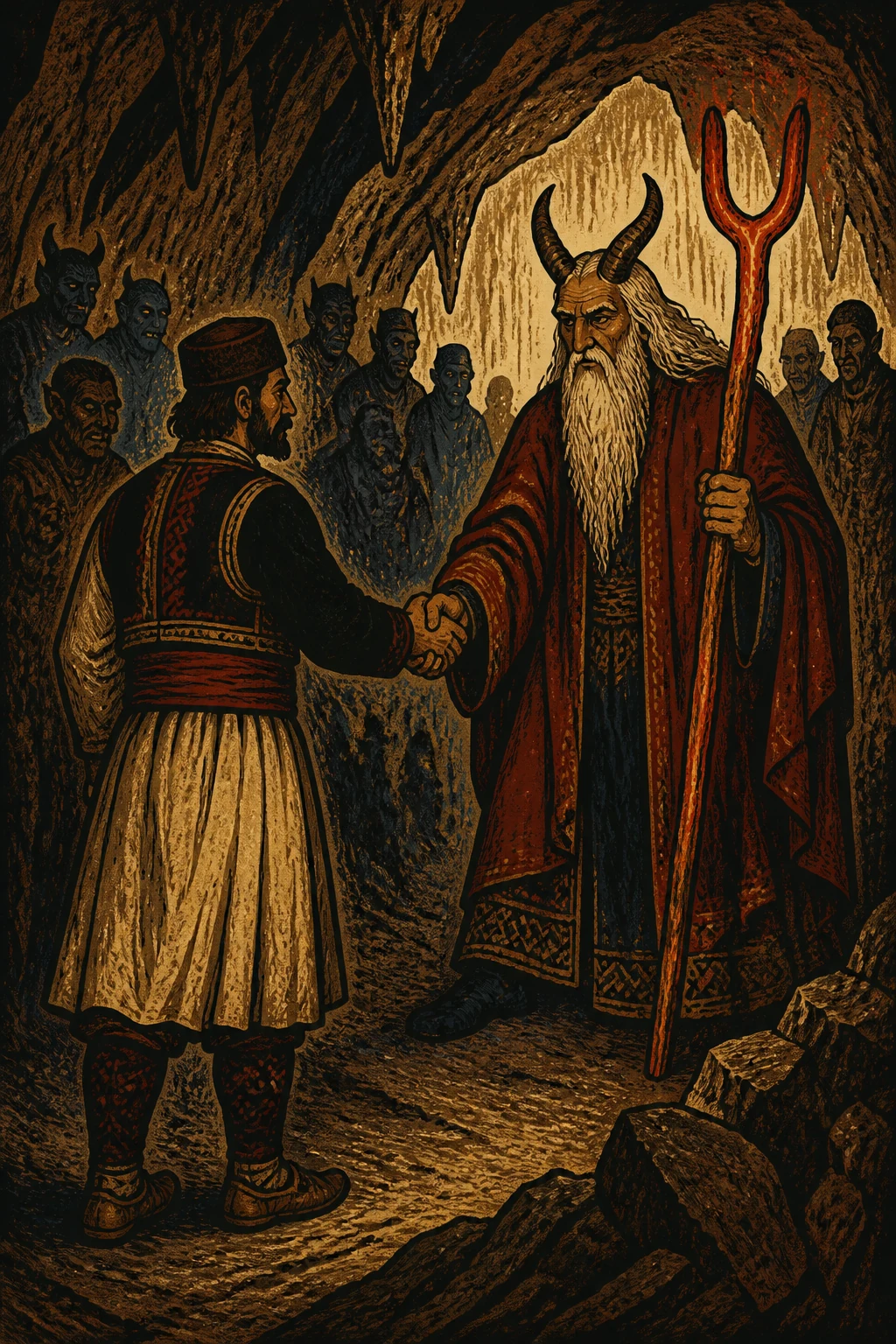
There was a great war, and the king had many soldiers, but he paid them so little that they could not live on their wages. So three of them joined together and decided to desert. One said to the others, “If we are caught, they will hang us from the gallows. How shall we go about it?” Another said, “Look at that great cornfield over there. If we hide in it, no one will find us. The army is not allowed to enter it, and tomorrow they must march on.” They crept into the corn, but the army did not march on; instead, it remained encamped all around them. They sat in the corn for two days and two nights and grew so hungry that they nearly died, yet if they came out, death was certain. Then they said, “What good has deserting done us? We shall have to die miserably here.” Just then a fiery dragon came flying through the air, swooped down to them, and asked why they were hiding there. They answered, “We are three soldiers, and we deserted because our pay was so poor. Now we must either starve to death if we stay here, or swing from the gallows if we come out.” “Will you serve me for seven years?” said the dragon. “If you will, I shall carry you straight through the army, and no one shall catch you.” “We have no choice and must accept,” they answered. Then the dragon seized them in his claws, carried them through the air over the army, and set them down on the ground far away. But the dragon was none other than the devil. He gave them a little whip and said, “Whenever you crack this whip, as much money as you wish for will come tumbling out before you. Then you can live like great lords, keep horses, and ride in carriages. But when the seven years are over, you belong to me.” Then he held out a book, and all three had to sign their names in it. “Yet before then,” he said, “I shall give you a riddle. If you can solve it, you shall be free and released from my power.” Then the dragon flew away, and they set off with their little whips, had money in abundance, had fine gentlemen’s clothes made for themselves, and travelled about the world. Wherever they went, they lived in joy and splendour, rode in horse-drawn carriages, ate and drank, but did no evil. Time passed swiftly for them, and as the seven years drew to a close, two of them grew terribly fearful and anxious. The third, however, took it lightly and said, “Brothers, have no fear. I am no fool; I shall solve the riddle.” They went out into the fields and sat down, the two wearing sorrowful faces. An old woman came along and asked why they were so sad. “Ah, what does it matter to you? You cannot help us.” “Who knows?” she answered. “Only tell me your trouble.” So they told her that they had been the devil’s servants for nearly seven years, and that he had given them money like hay, but they had signed themselves over to him and would fall into his hands unless they could solve a riddle when the seven years were up. The old woman said, “If you are to be helped, one of you must go into the forest. There he will come to a fallen rock face that looks like a little house. He must go inside, and there he will find help.” The two sorrowful soldiers thought, “That will never save us,” and remained sitting where they were. But the third, the cheerful one, set off and went deep into the forest until he found the little stone house. Inside sat an ancient woman, who was the devil’s grandmother. She asked him where he had come from and what he wanted there. He told her all that had happened, and because she took a liking to him, she felt pity for him and said she would help him. She lifted a large stone that covered a cellar and said, “Hide down there. You can hear everything that is said here; only sit still and do not stir. When the dragon comes, I shall ask him about the riddle. He tells me everything. Then pay close attention to his answer.” At midnight the dragon came flying home and demanded his supper. His grandmother laid the table and brought out food and drink to put him in a good humour, and they ate and drank together. As they talked, she asked him how his day had gone and how many souls he had gained. “I had little luck today,” he answered, “but I have got hold of three soldiers, and they are safely mine.” “Yes, three soldiers,” she said. “There is something about them. They may yet escape you.” The devil said scornfully, “They are mine. I shall give them a riddle that they will never be able to solve.” “What sort of riddle is it?” she asked. “I shall tell you. In the great North Sea lies a dead monkey: that shall be their roast. A whale’s rib shall be their silver spoon, and an old hollow horse’s hoof shall be their wineglass.” When the devil had gone to bed, his old grandmother lifted the stone and let the soldier out. “Did you pay close attention to everything?” “Yes,” he said. “I know enough, and I shall manage now.” Then he had to leave by another way, through the window, and hurry back to his companions in secret. He told them how the devil had been outwitted by his old grandmother and how he had heard the answer to the riddle from the devil himself. Then they were all merry and in good spirits, took the whip, and cracked out so much money that it went tumbling over the ground. When the seven years were finally over, the devil came with the book, showed them their signatures, and said, “I shall take you to hell with me, and there you shall have a meal. If you can guess what sort of roast you will be given to eat, you shall be free and released, and you may even keep the little whip.” Then the first soldier began, “In the great North Sea lies a dead monkey. That will surely be the roast.” The devil grew angry, went “Hm! Hm! Hm!” and asked the second, “But what shall your spoon be?” “A whale’s rib shall be our silver spoon.” The devil pulled a face, growled three times again, “Hm! Hm! Hm!” and said to the third, “Do you also know what your wineglass shall be?” “An old horse’s hoof shall be our wineglass.” Then the devil flew away with a loud scream and no longer had any power over them. But the three kept the little whip, cracked out as much money as they wished, and lived happily to the end of their days.