Prevod
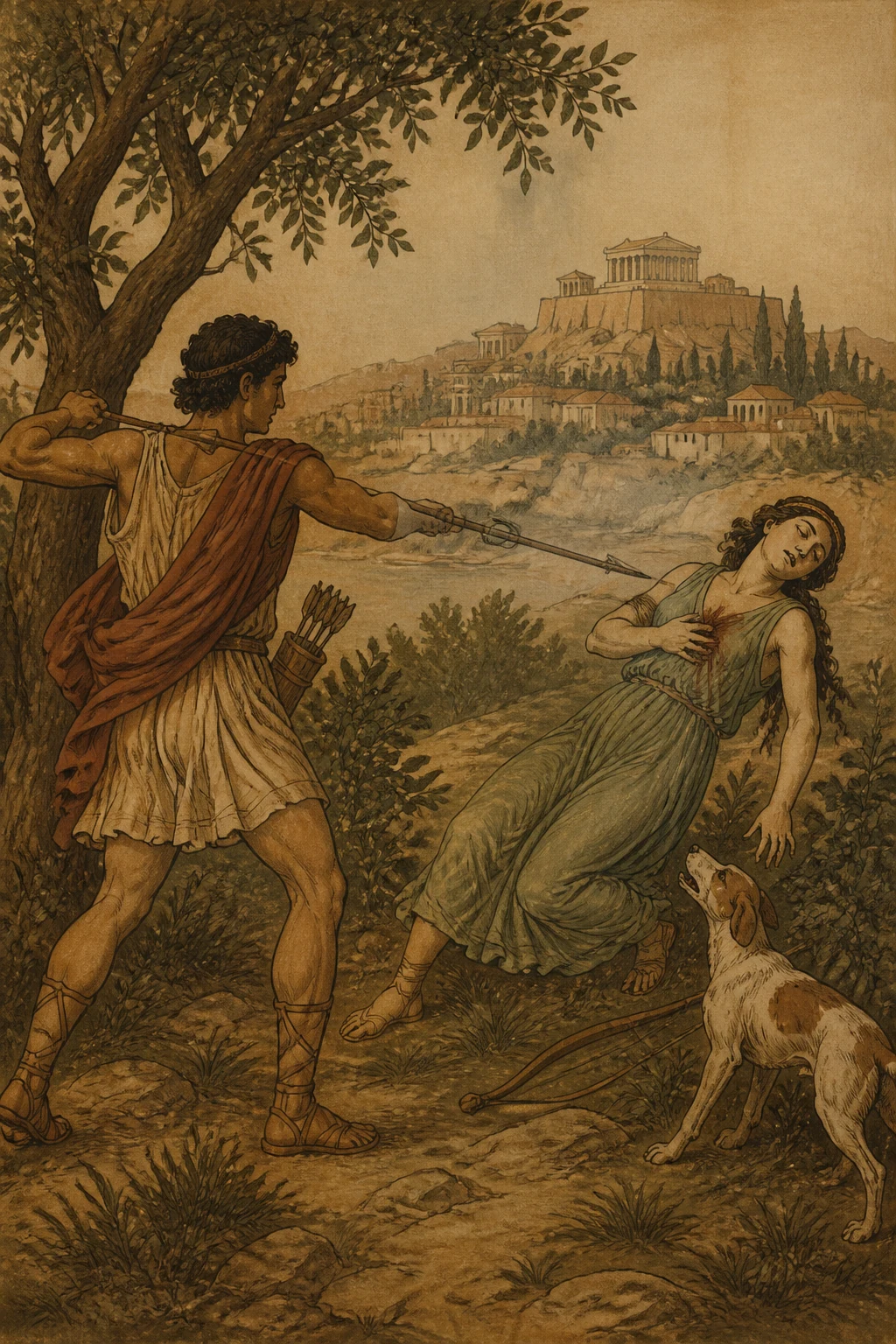
The victor sets sail for the homeland of Hypsipyle and famous Thoas, the land infamous for the slaughter of its men of old, to bring back the Tirynthian hero’s weapons, his arrows. When he had brought them back to the Greeks, their master with them, and the last hand had finally been laid upon the savage war, Troy and Priam fell together. Priam’s unhappy wife, after losing everything, lost even her human form and startled foreign skies with her strange new barking, where the long Hellespont narrows to a strait.
Ilium was burning, and the flames had not yet subsided; Jupiter’s altar had drunk the scant blood of aged Priam, and Phoebus’ priestess, dragged by her hair, stretched her hands to heaven, all in vain. The Trojan mothers clung to the images of their ancestral gods while they still could, and held fast to the burning temples, but the victorious Greeks dragged them away, an enviable prize.
Astyanax was hurled from the very towers from which he had often watched his father, pointed out by his mother, fighting for him and defending his forefathers’ kingdom. And now the north wind urged departure; the sails filled and rustled in the following breeze, and the sailors called for them to seize it. “Farewell, Troy! We are torn away!” cried the Trojan women, kissing the earth and leaving their homeland’s smoking roofs.
Last to board the fleet—a pitiful sight!— was Hecuba, found among the tombs of her children. As she clasped their graves and kissed their bones, Dulichian hands dragged her away. Yet she gathered the ashes of one son, Hector, and carried them with her in her bosom. On Hector’s tomb she left a lock of her gray hair, a poor offering to the dead: her hair and tears. Opposite the place where Troy once stood lies a land inhabited by Bistonian men. There stood the wealthy palace of Polymestor, to whom your father secretly entrusted you, Polydorus, to be reared far from the fighting in Phrygia: a wise plan, had he not added great riches, a reward
for murder, a spur to an avaricious heart. When the fortunes of the Phrygians fell, the godless king of Thrace took up his sword and plunged it into his foster child’s throat, then, as though the crime could be disposed of with the body, hurled the lifeless boy from a cliff into the waves below. The son of Atreus had moored his fleet on the Thracian shore, waiting for calmer seas and a friendlier wind.
Here suddenly, as tall as he had been in life, Achilles rose from the earth as it split wide open, his threatening face recalling the look he had worn when he fiercely drew his sword against unjust Agamemnon. “Do you sail away forgetful of me, Greeks?” he said. “Has all gratitude for my courage been buried with me? Do not let it be so! That my tomb may not go unhonored, let Polyxena be slaughtered to appease Achilles’ shade!”
He spoke, and his companions obeyed the merciless ghost. Torn from her mother’s arms, whose almost sole comfort she now was, the brave, ill-fated maiden, with courage beyond a woman’s, was led to the mound and made a victim at that dreadful tomb. True to herself, when she was brought to the cruel altar and understood the savage rite prepared for her, when she saw Neoptolemus standing there, sword in hand, his eyes fixed upon her face, “Take my noble blood at once!” she said.
“There is no need to wait. Plunge your blade into my throat or breast!” And she bared both throat and breast. “Surely I, Polyxena, would never wish to serve anyone. Yet no divinity will you appease with such a sacrifice! I only wish my death could be hidden from my mother! The thought of her hinders me and lessens my joy in death, though it is not my death she should lament, but her own life.
Only stand back, so that I may go free to the shades of Styx, if my request is just, and keep your manly hands from touching a maiden! Free blood will be more welcome to him, whoever he may be, whom you mean to appease by killing me. Yet if these last words of mine move any of you—the daughter of King Priam, now a captive, begs you—return my body to my mother without ransom.
Let her buy the sorrowful right of burial not with gold, but with tears! Once, when she could, she paid in gold as well.” She finished, but the people could not hold back the tears she held back herself. Even the priest wept as, unwillingly, he drove the blade into her offered breast. Her knees gave way, and she sank to the earth, keeping her expression fearless to the very end.
Even then, as she fell, she took care to cover what should be hidden, preserving the grace of her maiden modesty. The Trojan women received her and counted again the children of Priam they had mourned, and all the blood one house had shed. They lamented you, maiden, and you, who so lately were a king’s wife, called the mother of kings, the image of flourishing Asia, now a poor portion even among the spoils, whom victorious Ulysses would not have wanted for his own, except that you had borne Hector: scarcely could Hector find his mother a master!
She clasped the body, emptied of so brave a soul, and the tears she had so often shed for homeland, sons, and husband she shed for this child too, pouring them into her wounds. She covered her face with kisses and beat her breast as she had so often done, trailing her gray hair in the clotted blood, and, tearing at her breast, said these words among many others: “Daughter, your mother’s last sorrow—for what else remains?— daughter, you lie dead, and I see your wounded breast, my own wound.
So that I should lose none of my children without bloodshed, you too bear a wound! Yet I thought that, being a woman, you were safe from the sword. A woman, you too have fallen by the sword, and the same man who destroyed so many of your brothers has destroyed you: Achilles, the ruin of Troy, who robbed me of my children. But when he fell to the arrows of Paris and Phoebus, I said, ‘Now surely Achilles need no longer be feared!’ Even now I still had cause to fear him: the very ashes of the buried man rage against our family; even in his tomb we have felt our enemy.
It was for the grandson of Aeacus that I bore so many children! Mighty Ilium lies fallen, and our people’s suffering has ended in terrible disaster— but it has ended. For me alone Troy still stands, and my grief runs on. Only lately supreme in all things, strong in so many sons-in-law, children, daughters-in-law, and my husband, now I am dragged away, an exile, destitute, torn from my loved ones’ tombs, a gift for Penelope. As I draw out the wool she sets me, she will point me out to the women of Ithaca and say, ‘This is Hector’s famous mother; this is Priam’s wife!’ And now, after so many losses, you, who alone relieved your mother’s grief, have appeased an enemy’s tomb!
I have borne an offering for my enemy’s dead! Why do I endure, hard as iron? Why do I linger? For what do you preserve me, lingering old age? Why, cruel gods, do you prolong an old woman’s stubborn life, unless to make her see fresh deaths? Who could have thought that Priam might be called happy after Troy’s destruction? Happy in his death, he does not see you murdered, my daughter, and he left life and kingdom together.
But you, royal maiden, will surely be endowed with funeral honors, and your body laid within your ancestors’ tomb. Such is not our house’s fortune! Your mother’s gifts will be tears and a handful of foreign sand! We have lost everything. One reason remains for me to endure life a little longer: his mother’s dearest child, now my only son, once the youngest of my boys, Polydorus, entrusted to the Thracian king upon this coast.
Meanwhile, why do I delay washing these cruel wounds with water, and this face spattered with pitiless blood?” She spoke and went down to the shore with an old woman’s steps, tearing her white hair. “Trojan women, give me a jar,” the unhappy mother had said, so that she could draw clear water. Then she saw Polydorus’ body washed up on the shore, and the dreadful wounds that Thracian weapons had made!
The Trojan women cried out. She was struck dumb with grief; grief itself swallowed both her voice and the tears that welled within her. Like a block of solid stone she stood numb, now fixing her eyes on the ground before her, now raising her fierce gaze to the sky, now looking at her dead son’s face, now at his wounds— his wounds above all—and armed herself, marshaling her anger.
As soon as it blazed up, as though she were still a queen, she resolved on vengeance, wholly absorbed in imagining his punishment. As a lioness rages when robbed of her suckling cub and, finding tracks, pursues the enemy she cannot see, so Hecuba, once she had mingled anger with grief, remembering her courage and forgetting her years, went to Polymestor, the author of that dreadful murder, and asked to speak with him: she wished, she said, to show him a hidden store of gold left behind, for him to give her son.
The Thracian believed her and, driven by his accustomed greed, came to a secluded place. Then, with deceitful words of kindness, “Do not delay, Hecuba,” he said. “Give your son your gifts! Everything you give, and all you gave before, shall be his: I swear it by the gods above.” Fiercely she watched him speaking and swearing falsely, and seethed with swelling rage.
Then she seized him, called upon the band of captive mothers, and plunged her fingers into his treacherous eyes, tearing them from their sockets—anger made her ruthless. She thrust her hands within and, stained with his guilty blood, scooped out not his eyes, for they were gone, but the hollows where his eyes had been. Enraged by their king’s calamity, the Thracians began to assail the Trojan woman with showers of stones and weapons. But she chased a stone they threw with a hoarse growl, snapping at it, and when she opened her jaws to speak, she barked instead. The place still stands and takes its name from what occurred; and long remembering her former sorrows, she howled mournfully even then through the Sithonian fields.
Her fate had moved her own Trojans and her Greek enemies; it had moved all the gods as well, all so deeply that even Jupiter’s wife and sister herself denied that Hecuba deserved such suffering.