Prevod
Among the tales that are told is this: the Caliph Harun al-Rashid loved Lady Zubayda dearly, and built her a pleasure garden. In it he made a pool, enclosed it with trees, and brought water into it from every side. The trees grew so thickly around it that anyone who went into the pool to bathe could not be seen through the dense foliage. Now it happened that Lady Zubayda entered the garden one day and went to the pool. But morning overtook Shahrazad, and she fell silent, leaving her tale untold.
When it was the three hundred and eighty-sixth night
She said: It has reached me, O fortunate King, that Lady Zubayda entered the garden one day and went to the pool. She gazed at its beauty, delighted by its loveliness and the trees that clustered around it. It was a day of fierce heat, so she took off her clothes, stepped into the pool, and stood there. The water was not deep enough to conceal anyone standing in it, and she began filling a silver ewer and pouring water over her body. When the Caliph learned of this, he came down from his palace and peered at her from behind the leaves. He saw her naked, with all that had been hidden laid bare. Sensing the Commander of the Faithful behind the foliage and realizing that he had seen her naked, she turned and looked at him. Ashamed before him, she covered her privy parts with her hands, but they bulged out between them, so great were their size and fullness. He turned away at once, marvelling at the sight and reciting this verse:
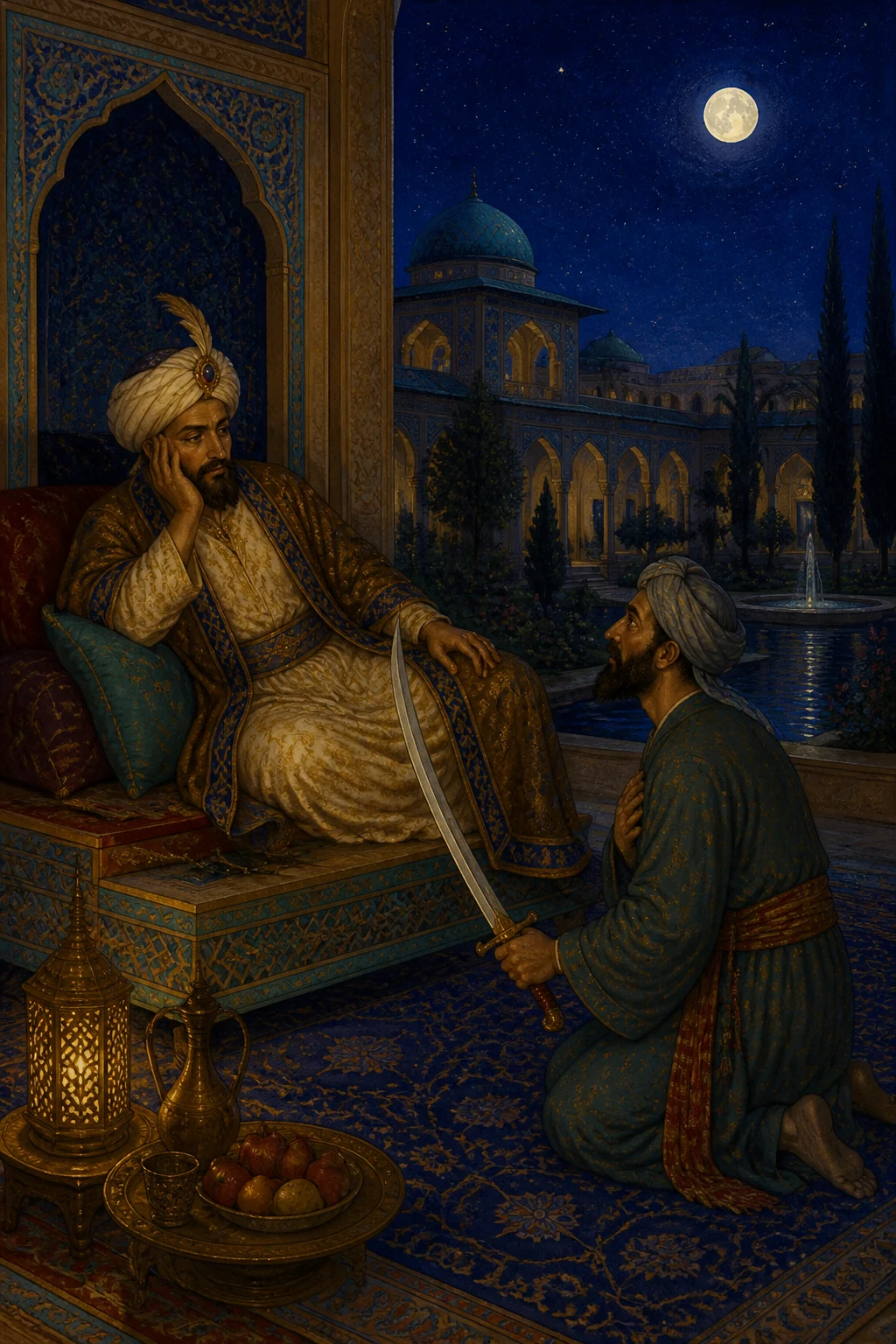
“My eyes beheld my own undoing; at parting, longing burned within me.” But he could think of nothing to say after that, so he sent for Abu Nuwas. When the poet appeared before him, the Caliph said, “Compose a poem for me whose opening is: ‘My eyes beheld my own undoing; at parting, longing burned within me.’” Abu Nuwas replied, “I hear and obey.” In scarcely a moment he improvised and recited these verses:
“My eyes beheld my own undoing; at parting, longing burned within me. A gazelle had taken me captive beneath the shade of two lote trees. Water poured over her body from ewers of gleaming silver. She saw me and tried to conceal it, but it bulged between her hands. Would that I might lie upon it for an hour—or even two!” The Commander of the Faithful smiled at his words and rewarded him generously, and Abu Nuwas left his presence rejoicing.