Waltey
Harun al Rašid in beduinsko dekle
Tisoč in ena noč · arabska pripovedna tradicijaO besedilu
Harun al Rašid in beduinsko dekle
- Vir
- Tisoč in ena noč
- Avtor
- arabska pripovedna tradicija
- Jezik branja
- English
- Jezik izvirnika
- Arabic
- Čas branja
- 5 min branja
- Obseg
- 4 strani
- Naslov izvirnika
- حكاية هارون الرشيد والبنت البدوية - الليالي ٦٨٥ إلى ٦٨٦
O izvirniku
Tisoč in ena noč
Zgodbe v zgodbah, polne trgovcev, dvorov, preoblek in nočnih zapletov. Bralni jezik je English, izvirnik pa prihaja iz vira Tisoč in ena noč v jeziku Arabic.
Besedilo
Harun al Rašid in beduinsko dekle
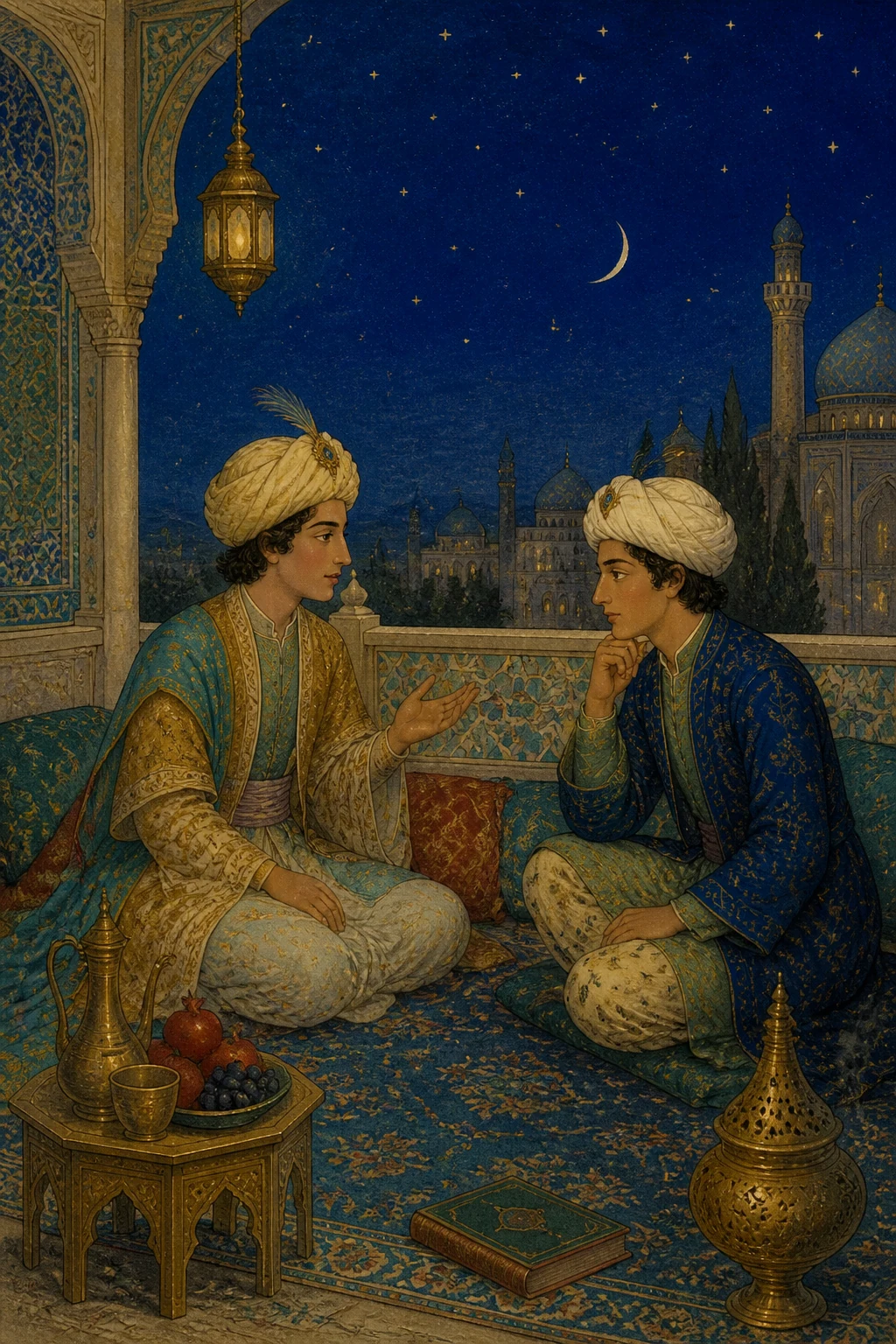
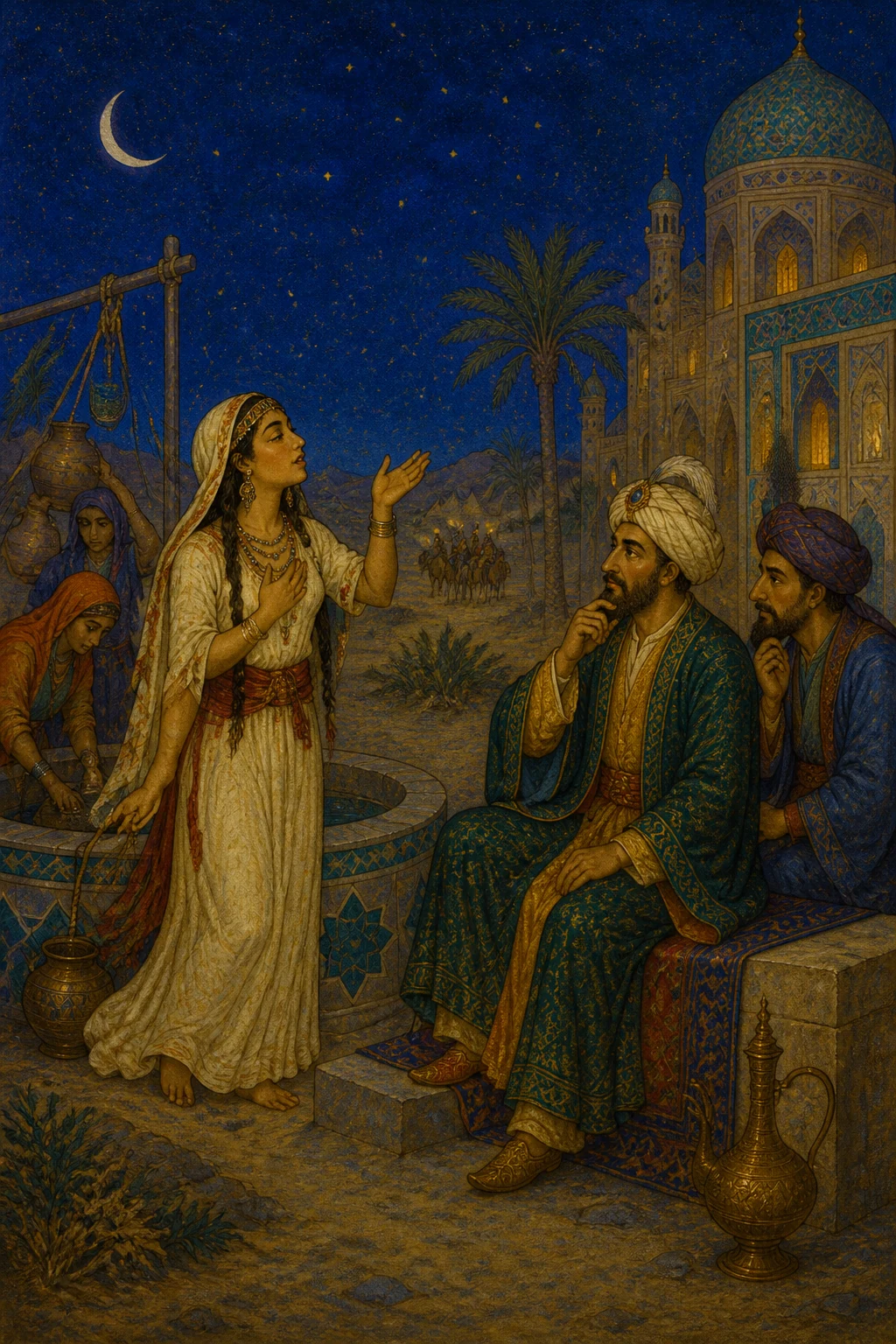
It is also related that one day the Commander of the Faithful, Harun al-Rashid, was passing by with Ja‘far al-Barmaki when he came upon several girls drawing water. He turned aside to ask them for a drink, and one of them looked towards him and recited these verses:
Tell your phantom to turn away from my bed at the hour of sleep, that I may rest, and the fire blazing in my bones be quenched. Wasted with love, I am turned by others’ hands upon a bed of sickness. As for me, I am as you know me; but will union with you endure? The Commander of the Faithful was charmed by her beauty and eloquence. But morning overtook Shahrazad, and she fell silent, leaving her tale untold.
When it was the six hundred and eighty-sixth night,
She said: It has reached me, O fortunate King, that when the Commander of the Faithful heard these verses from the girl, he was charmed by her beauty and eloquence. He said to her, “O daughter of noble folk, are these verses your own, or are you quoting another?” “They are my own,” she replied. “If what you say is true,” he said, “keep the meaning and change the rhyme.” So she recited:
Tell your phantom to turn away from my bed at the hour of slumber, that I may rest, and the fire blazing in my body be quenched. Wasted with love, I am turned by others’ hands upon a bed of sorrow. As for me, I am as you know me; but is there a price for union with you? He said to her, “Then were the other verses stolen?” “No, they too are mine,” she replied. “If these are also your own,” he said, “keep the meaning and change the rhyme.” So she began:
Tell your phantom to turn away from my bed at the hour of repose, that I may rest, and the fire blazing in my heart be quenched. Wasted with love, I am turned by others’ hands upon a bed of sleeplessness. As for me, I am as you know me; but is there a way to attain union with you? He said to her, “Then were the other verses stolen?” “No, they are mine,” she replied. “If they are your own,” he said, “keep the meaning and change the rhyme.” She recited:
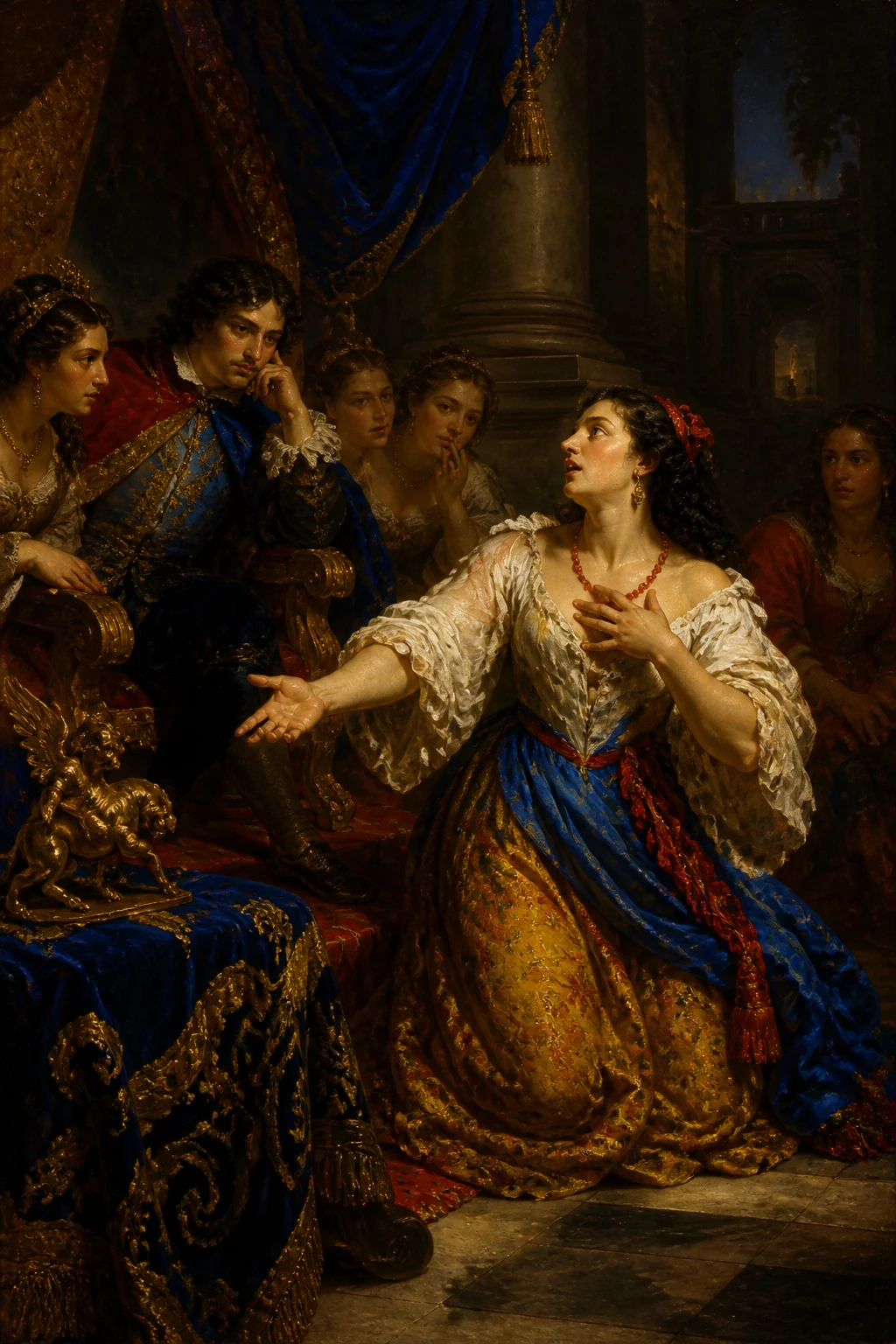
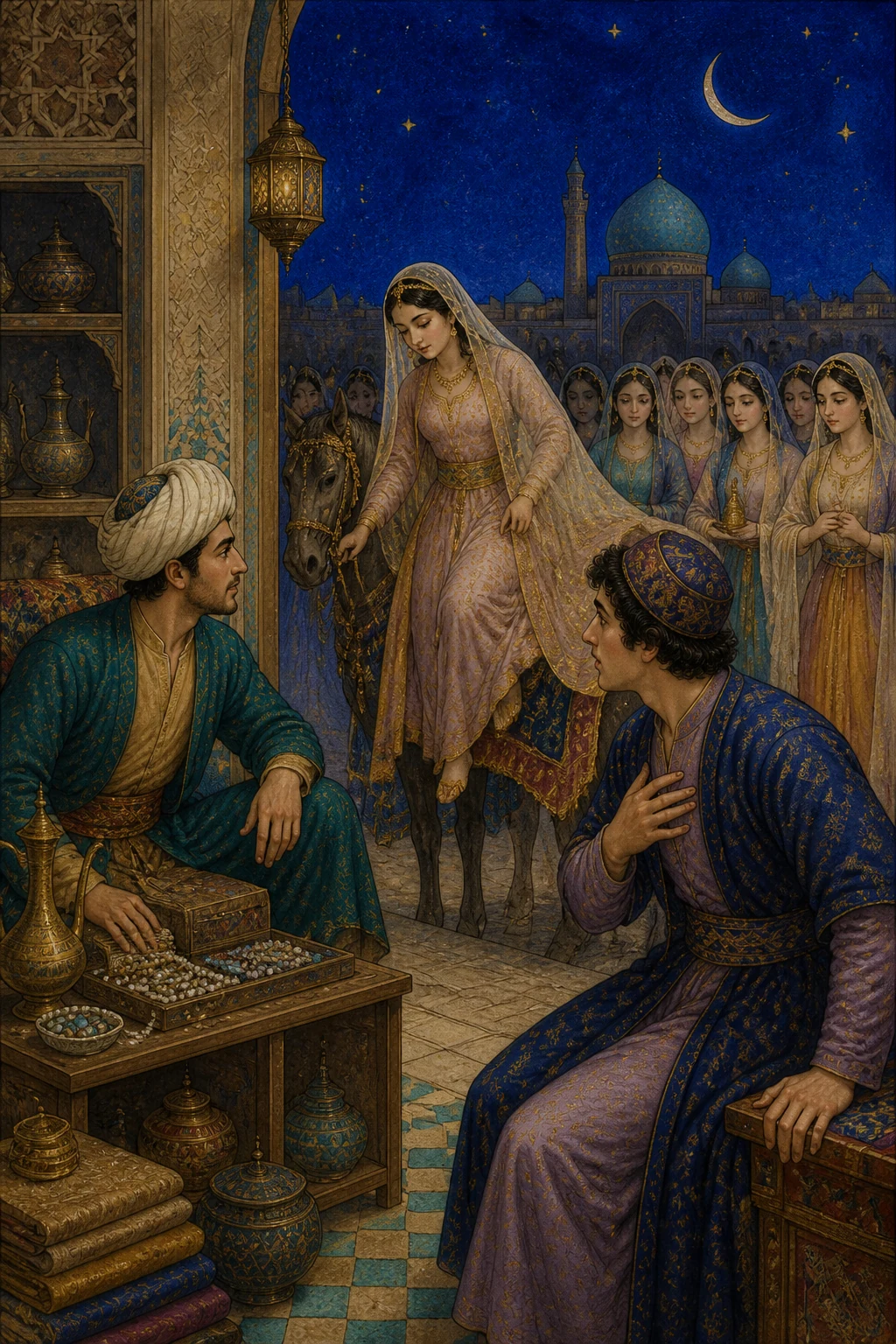
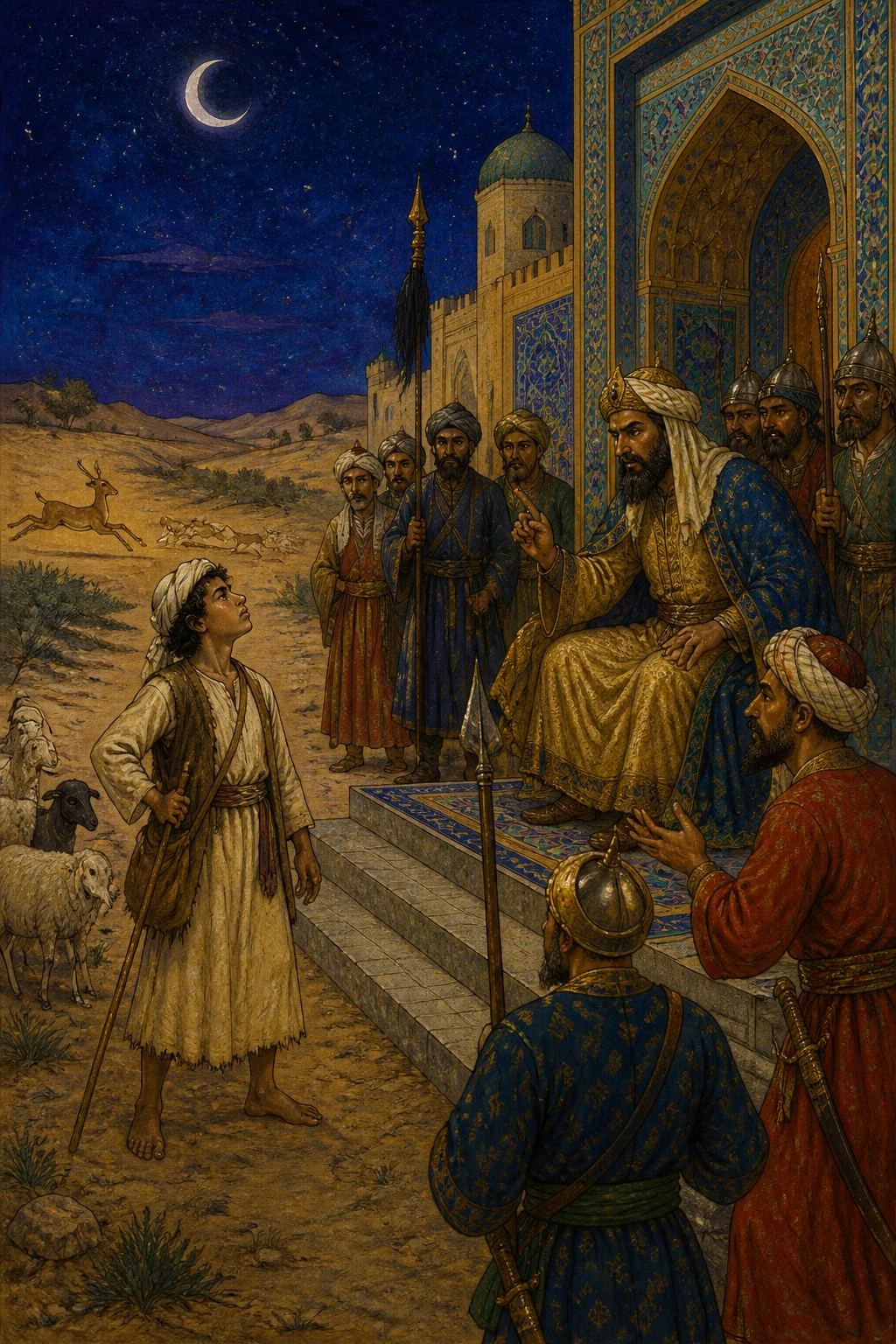
Tell your phantom to turn away from my bed at the hour of deep sleep, that I may rest, and the fire blazing in my ribs be quenched. Wasted with love, I am turned by others’ hands upon a bed of tears. As for me, I am as you know me; but will the days of union with you return? The Commander of the Faithful asked her, “To which household of this tribe do you belong?” She replied, “To the one whose tent stands at its heart, and whose tent-pole rises highest.” Then the Commander of the Faithful knew that she was the daughter of the chief of the tribe. She in turn asked him, “And to which of the keepers of horses do you belong?” He replied, “To those whose tree is loftiest and whose fruit is ripest.” At this she kissed the ground and said, “May God strengthen you, O Commander of the Faithful!” She prayed for him, then went away with the Arab girls. The caliph said to Ja‘far, “I must marry her.” So Ja‘far went to her father and said, “The Commander of the Faithful desires your daughter.” He replied, “Gladly and with all honour shall the maiden be offered to our lord the Commander of the Faithful.” He then prepared her for marriage and brought her to him. The caliph married her and consummated the marriage, and she became one of his most cherished wives. He gave her father enough livestock to maintain his dignity among the Arabs. Some time later, her father passed into the mercy of God Most High. When news of his death reached the caliph, he went in to her looking sorrowful. Seeing his grief, she rose and went into her chamber, took off all her fine clothes, put on mourning, and began to lament her father. When asked, “Why are you doing this?” she replied, “My father is dead.” They went to the caliph and told him, whereupon he rose, came to her, and asked, “Who brought you this news?” “Your face, O Commander of the Faithful,” she replied. “How so?” he asked. She said, “Since I first came to live with you, I have never seen you look as you did just now. And there was no one whose life I feared for except my father, on account of his great age. May your own life be long, O Commander of the Faithful.” His eyes filled with tears, and he offered her his condolences. She remained in mourning for her father for a time, then followed him to the grave. May God have mercy upon them all.
Izvirnik
حكاية هارون الرشيد والبنت البدوية - الليالي ٦٨٥ إلى ٦٨٦
Naslednje strani prikazujejo izvirno besedilo za primerjavo.
فلما كانت الليلة ٦٨٥
وحُكِي أيضًا أن أمير المؤمنين هارون الرشيد مرَّ في بعض الأيام، وصحبته جعفر البرمكي، وإذا هو بعدة بنات يسقين الماء، فعرَّج عليهن يريد الشرب، وإذا إحداهن التفتَتْ إليه، وأنشدت هذه الأبيات:
قُولِي لِطَيْفِكِ يَنْثَنِي عَنْ مَضْجَعِي وَقْتَ الْمَنَامْ
كَيْ أَسْتَرِيحَ وَتَنْطَفِي نَارٌ تَأَجَّجُ فِي الْعِظَامْ
دَنِفٌ تُقَلِّبُهُ الْأَكُـ ـفُّ عَلَى بِسَاطٍ مِنْ سَقَامْ
أَمَّا أَنَا فَكَمَا عَلِمْـ ـتِ فَهَلْ لِوَصْلِكِ مِنْ دَوَامْ
فأعجب أميرَ المؤمنين ملاحتُها وفصاحتُها. وأدرك شهرزاد الصباح فسكتَتْ عن الكلام المباح.
فلما كانت الليلة ٦٨٦
قالت: بلغني أيها الملك السعيد، أن أمير المؤمنين لما سمع هذه الأبيات من البنت أعجبته ملاحتها وفصاحتها، فقال لها: يا بنت الكرام، أهذا من مقولك أم من منقولك؟ قالت: من مقولي. قال: إذا كان كلامك صحيحًا، فأمسكي المعنى وغيِّرِي القافية. فأنشدت تقول:
قُولِي لِطَيْفِكِ يَنْثَنِي عَنْ مَضْجَعِي وَقْتَ الْوَسَنْ
كَيْ أَسْتَرِيحَ وَتَنْطَفِي نَارٌ تَأَجَّجُ فِي الْبَدَنْ
دَنِفٌ تُقَلِّبُهُ الْأَكُـ ـفُّ عَلَى بِسَاطٍ مِنْ شَجَنْ
أَمَّا أَنَا فَكَمَا عَلِمْـ ـتِ فَهَلْ لِوَصْلِكِ مِنْ ثَمَنْ
فقال لها: والآخَر مسروق؟ قالت: بل كلامي. فقال: إن كان كلامك أيضًا، فأمسكي المعنى وغيِّري القافية. فجعلت تقول:
قُولِي لِطَيْفِكِ يَنْثَنِي عَنْ مَضْجَعِي وَقْتَ الرُّقَادْ
كَيْ أَسْتَرِيحَ وَتَنْطَفِي نَارٌ تَأَجَّجُ فِي الْفُؤَادْ
دَنِفٌ تُقَلِّبُهُ الْأَكُـ ـفُّ عَلَى بِسَاطٍ مِنْ سُهَادْ
أَمَّا أَنَا فَكَمَا عَلِمْـ ـتِ فَهَلْ لِوَصْلِكِ مِنْ سَدَادْ
فقال لها: والآخر مسروق؟ فقالت: بل كلامي. فقال لها: إن كان كلامك فأمسكي المعنى وغيِّري القافية. فقالت:
قُولِي لِطَيْفِكِ يَنْثَنِي عَنْ مَضْجَعِي وَقْتَ الْهُجُوعْ
كَيْ أَسْتَرِيحَ وَتَنْطَفِي نَارٌ تَأجَّجُ فِي الضُّلُوعْ
دَنِفٌ تُقَلِّبُهُ الْأَكُـ ـفُّ عَلَى بِسَاطٍ مِنْ دُمُوعْ
أَمَّا أَنَا فَكَمَا عَلِمْـ ـتِ فَهَلْ لِوَصْلِكِ مِنْ رُجُوعْ
فقال لها أمير المؤمنين: من أي هذا الحي؟ قالت: من أوسطه بيتًا وأعلاه عمودًا. فعلم أمير المؤمنين أنها بنت كبير الحي، ثم قالت له: وأنت من أي رعاة الخيل؟ فقال: من أعلاها شجرة وأينعها ثمرةً. فقبَّلَتِ الأرض وقالت: أيَّدَك الله يا أمير المؤمنين. ودعت له، ثم انصرفت مع بنات العرب، فقال الخليفة لجعفر: لا بد من زواجها. فتوجَّهَ جعفر إلى أبيها وقال له: إن أمير المؤمنين يريد ابنتك. فقال: حبًّا وكرامةً تُهدَى جارية إلى حضرة مولانا أمير المؤمنين. ثم جهَّزَها وحملها إليه وتزوَّجها، ودخل بها، فكانت عنده من أعز نسائه، وأعطى والدها ما يستره بين العرب من الأنعام، ثم بعد ذلك انتقل والدها إلى رحمة الله تعالى، فورد على الخليفة خبر وفاة أبيها، فدخل عليها وهو كئيب، فلما شاهدته وعليه الكآبة نهضت، ودخلت إلى حجرتها، وخلعت كل ما كان عليها من الثياب الفاخرة، ولبست الحداد وأقامت النعي عليه، فقيل لها: ما سبب هذا؟ فقالت: مات والدي. فمضوا إلى الخليفة، فأخبروه فقام وأتى إليها وسألها مَن أخبرك بهذا الخبر؟ قالت: وجهك يا أمير المؤمنين. قال: وكيف ذلك؟ قالت: لأني منذ استقررْتُ عندك ما رأيتُك هكذا إلا في هذه المرة، ولم يكن لي مَن أخاف عليه إلا والدي لكِبَره، وتعيش رأسك يا أمير المؤمنين. فتغرغرتْ عيناه بالدموع، وعزَّاها فيه، وأقامت مدة حزينة على والدها، ثم لحقت به رحمة الله عليهم أجمعين.
Nadaljuj z branjem