Prevod
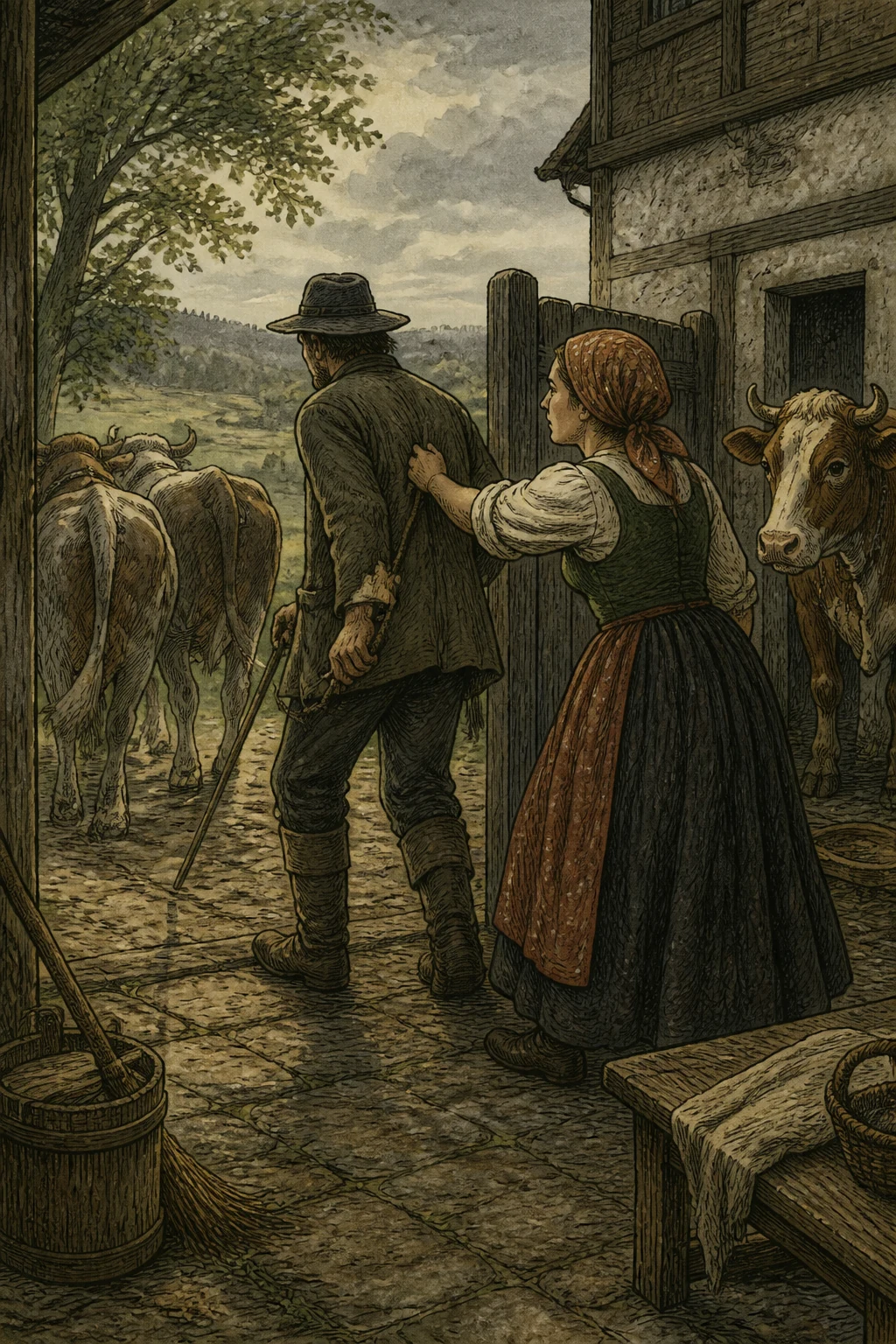
Once upon a time there was a man named Gudbrand. He had a farm far away on a wooded hillside, and so people called him Gudbrand i Lien. He and his wife lived so happily together and were so well agreed that whatever her husband did, she thought it so well done that no one could ever have done it better. Whatever he might do, she was just as pleased. They owned their own land, had a hundred dalers lying at the bottom of their chest, and kept two cows tethered in the byre. But one day his wife said to Gudbrand, “I think we ought to take one of the cows to town and sell her, so we can have a little ready money;
we’re respectable folk, and we ought to have a few coins to spend, just like other people. We mustn’t break into the hundred dalers at the bottom of the chest, but I don’t know what we need more than one cow for. And we’ll gain a little by it too, since I shall only have one cow to tend, instead of having to muck out and fetch water for two.” Yes, Gudbrand thought that was both right and sensible. He took the cow at once and set off for town to sell her, but when he got there, no one would buy her. Well, well, thought Gudbrand, I can always go home again with my cow. I know I have both a stall and a tether for her, and it’s no farther back than it was here. And with that he began to amble home again.
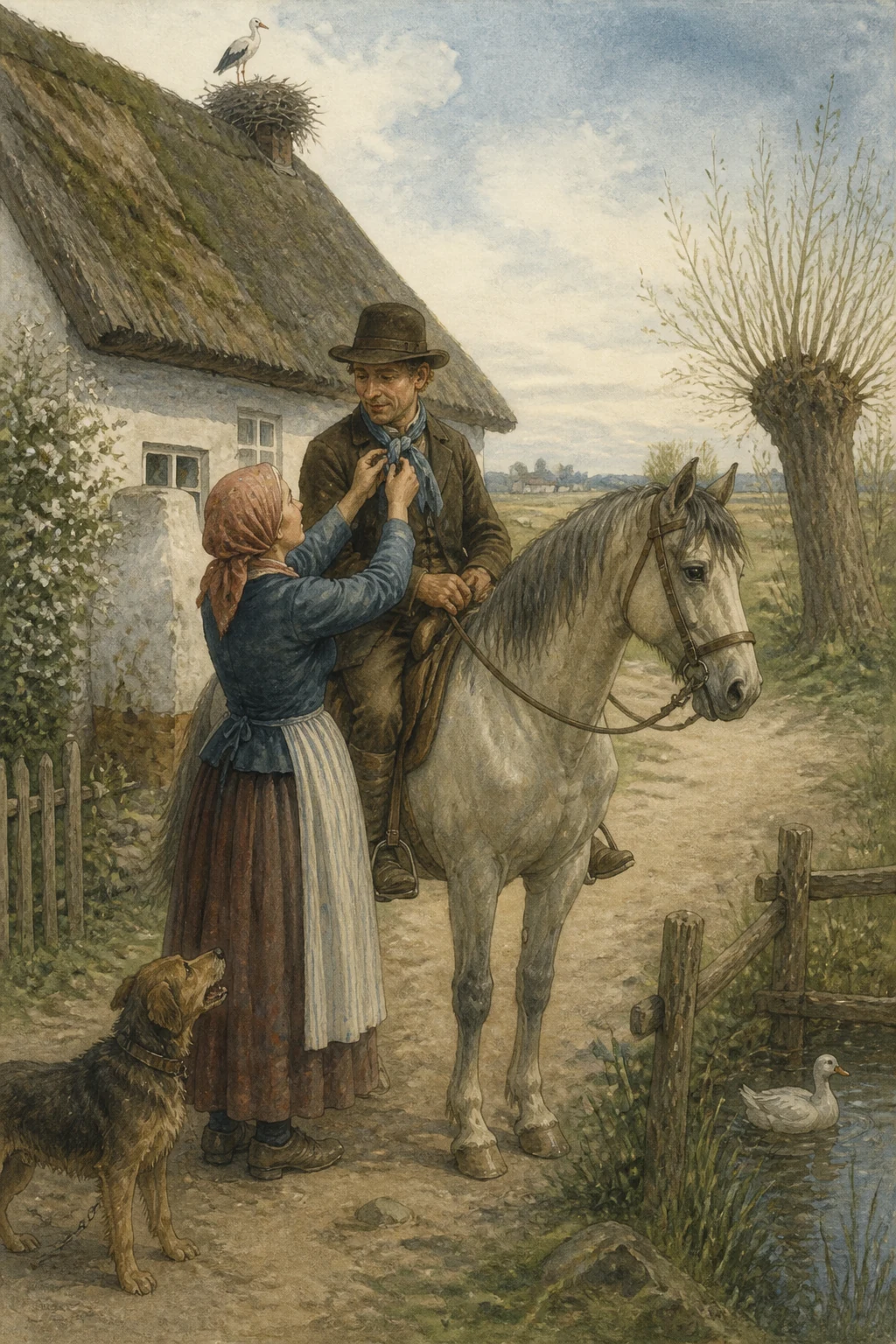
But when he had gone a little way, he met a man with a horse he wanted to sell. Gudbrand thought it was better to have a horse than a cow, so he traded with him. When he had gone a little farther, he met a man driving a fat pig before him, and he thought it was better to have a fat pig than a horse, so he traded with that man;
then he went a little farther and met a man with a goat. He thought it must surely be better to have a goat than a cow, and so he traded with the goat’s owner. Then he walked a long way until he met a man with a sheep, and with him he traded, for he thought: It’s always better to have a sheep than a goat. When he had walked on for a while, he met a man with a goose, so he traded the sheep for the goose. And when he had gone a long, long way, he met a man with a cock, and traded with him, for he thought to himself: Surely it’s better to have a cock than a goose. He walked on until it was late in the day, but then he began to feel hungry, so he sold the cock for twelve skillings and bought himself food with the money, for it’s always better to save one’s life than to have a cock, thought Gudbrand i Lien. Then he went on towards home until he came to his nearest neighbour’s farm;
there he stopped in. “How did you fare in town?” the people asked. “Oh, so-so,” said Gudbrand. “I can’t praise my luck, but I can’t blame it either.” And with that he told them the whole story of what had happened to him, from beginning to end. “Well, you’ll certainly get a fine welcome when you come home to your wife,” said the farmer. “Heaven help you! I wouldn’t be in your shoes.” “I think things could have gone a good deal worse,” said Gudbrand i Lien. “But whether they’ve gone badly or well, I have such a kind wife that she never says a word against anything I do.” “Oh, of course, but that doesn’t mean I believe it,” said the neighbour. “Shall we wager on it?” said Gudbrand i Lien. “I have a hundred dalers lying at the bottom of my chest at home. Dare you stake as much?” Yes, they made the wager, and Gudbrand stayed there until evening, when it began to grow dark. Then they went together to his farm. The neighbour stood outside the door to listen, while Gudbrand himself went in to his wife. “Good evening!” said Gudbrand i Lien as he came in. “Good evening,” said his wife. “Oh, thank God, is that you?” Yes, indeed it was. Then she asked how he had fared in town. “Oh, so-so!” answered Gudbrand. “There’s not much to boast of. When I got to town, no one would buy the cow, so I traded her for a horse.” “Well, you have my thanks for that,” said his wife. “We’re respectable folk, and we can drive to church just as well as anyone else. And since we can afford to keep a horse, we may as well have one. Go down and put the horse in the stable, children!” “Well,” said Gudbrand, “I haven’t got the horse either. When I’d gone a little way along the road, I traded it for a pig.” “Well, well!” cried his wife. “That’s just what I would have done myself, and you have my heartfelt thanks! Now I shall have pork in the house, and something to offer people when they come to visit me, too.
What did we want with a horse? People would have said we’d grown so grand that we couldn’t walk to church any longer, as we used to. Go down and put the pig in the sty, children!” “But I haven’t got the pig here either,” said Gudbrand. “When I’d gone a little farther, I traded it for a milch goat.” “My goodness, how well you do everything!” cried his wife. “What should I want with a pig, when I come to think of it? People would only have said:
they eat up everything they own over there. No, now I have a goat, I shall have both milk and cheese, and still have the goat into the bargain. Let the goat in, children!” said his wife. “No, I haven’t got the goat either,” said Gudbrand. “When I’d gone a little way along the road, I traded the goat for a fine sheep.” “Well!” cried his wife. “You’ve done everything just as I could have wished, exactly as if I’d been there myself.
What did we want with a goat? I’d have had to scramble over hill and dale to bring her down again every evening. No, with a sheep I can have wool and clothes for the household, and food as well. Go down and let the sheep in, children!” “But I haven’t got the sheep any longer,” said Gudbrand, “for after I’d walked a while, I traded it for a goose.” “Thank you for that!” said his wife. “And many thanks, too! What should I want with a sheep? I have neither spinning wheel nor spindle, and I’ve no wish to toil and slave at making cloth either. We can buy our clothes as we always have. Now I shall have roast goose, which I’ve been longing for this many a day, and now I can have down for my little pillow.
Go down and let the goose in, children!” “Well, I haven’t got the goose either,” said Gudbrand. “When I’d gone a little farther along the road, I traded it for a cock.” “Heaven knows how you thought of it all!” cried his wife;
“it’s all just as I would have done myself. A cock! That’s as good as buying an eight-day clock, for every morning the cock crows at four, and then we can be up and about at the proper time. What did we want with a goose?
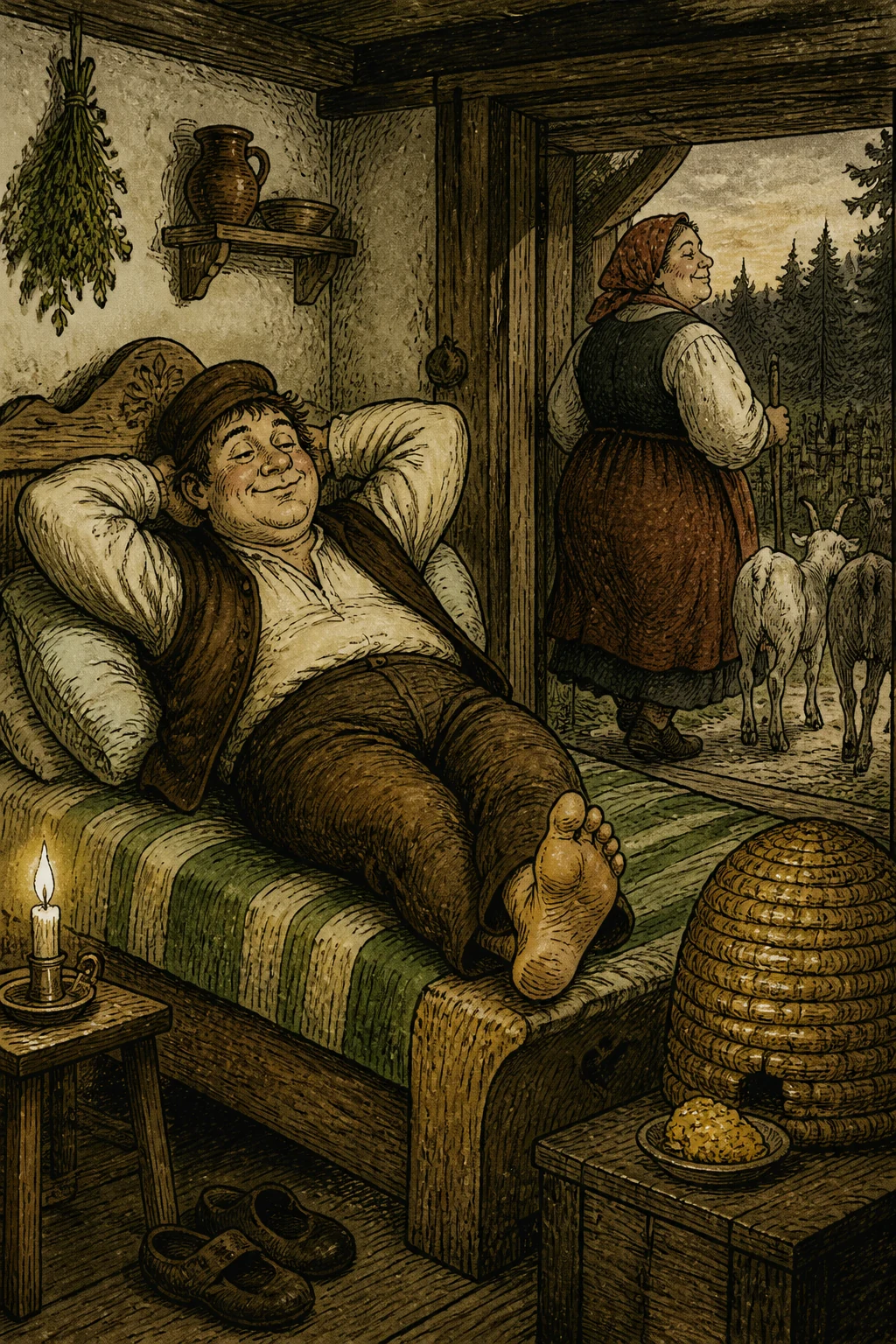
I don’t know how to prepare roast goose, and I can always stuff my pillow with sedge. Go down and let the cock in, children!” “But I haven’t got the cock either,” said Gudbrand. “When I’d gone a little farther still, I was so ravenously hungry that I had to sell the cock for twelve skillings to save my life.” “Well, thank God you did!” cried his wife. “Whatever you do, you do everything just as I could wish. What did we want with a cock, anyway? We’re our own masters, and we can lie in bed as long as we please in the morning.
Thank God, so long as I have you back, who manage everything so well, I need neither cock nor goose, neither pigs nor cows.” Then Gudbrand opened the door. “Have I won the hundred dalers now?” he said, and the neighbour had to admit that he had.