Prevod
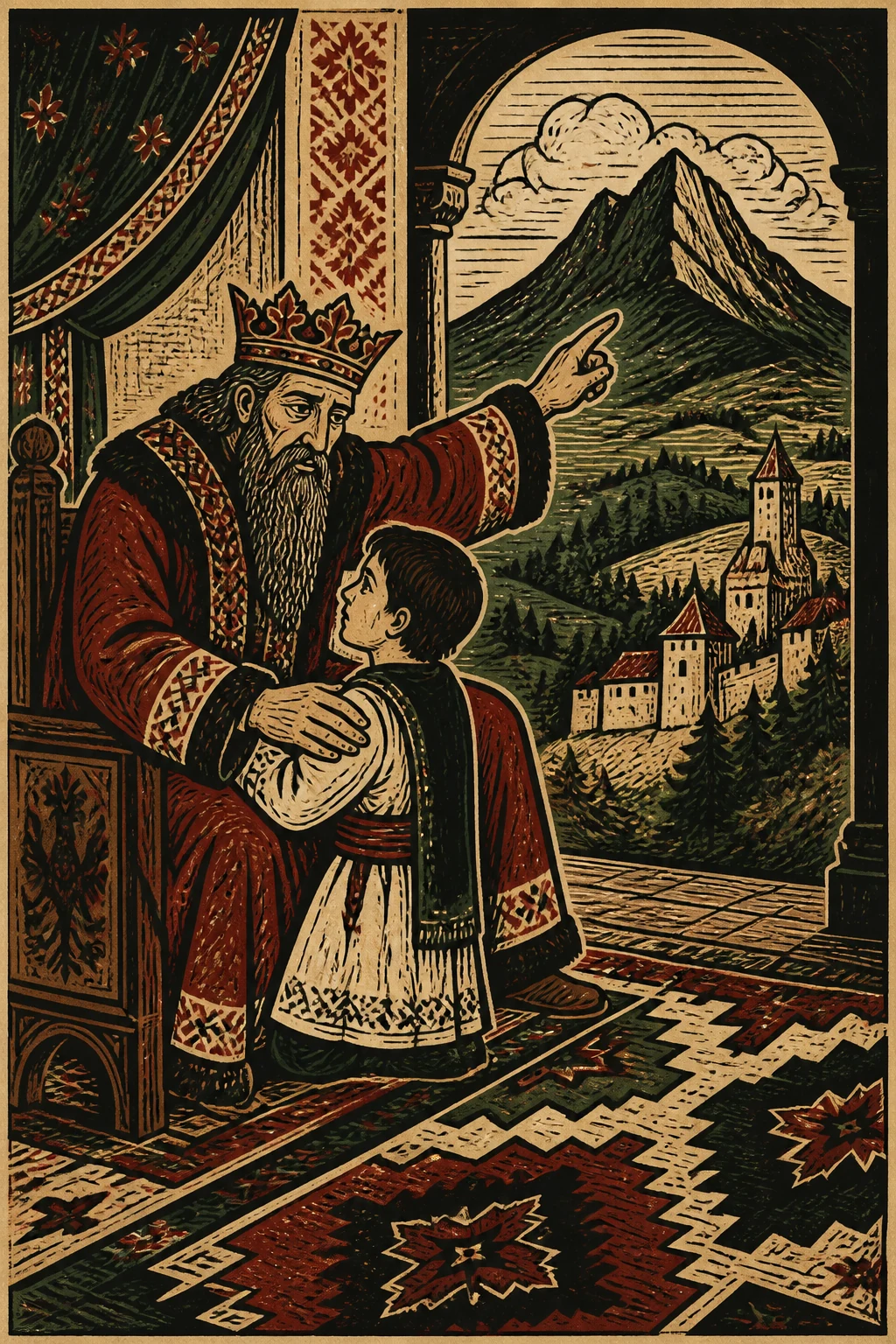
Once upon a time there was a king who had lost his wife. By his queen he had a daughter who was so kind and so beautiful that no one could have been kinder or more beautiful. For a long time he mourned the queen, whom he had loved dearly, but at last he grew weary of living alone and married a widowed queen who also had a daughter. But this girl was as ugly and wicked as the other was kind and fair.
The stepmother and her daughter were jealous of the princess because she was so beautiful, but as long as the king was at home they dared not harm her, for he loved her dearly.
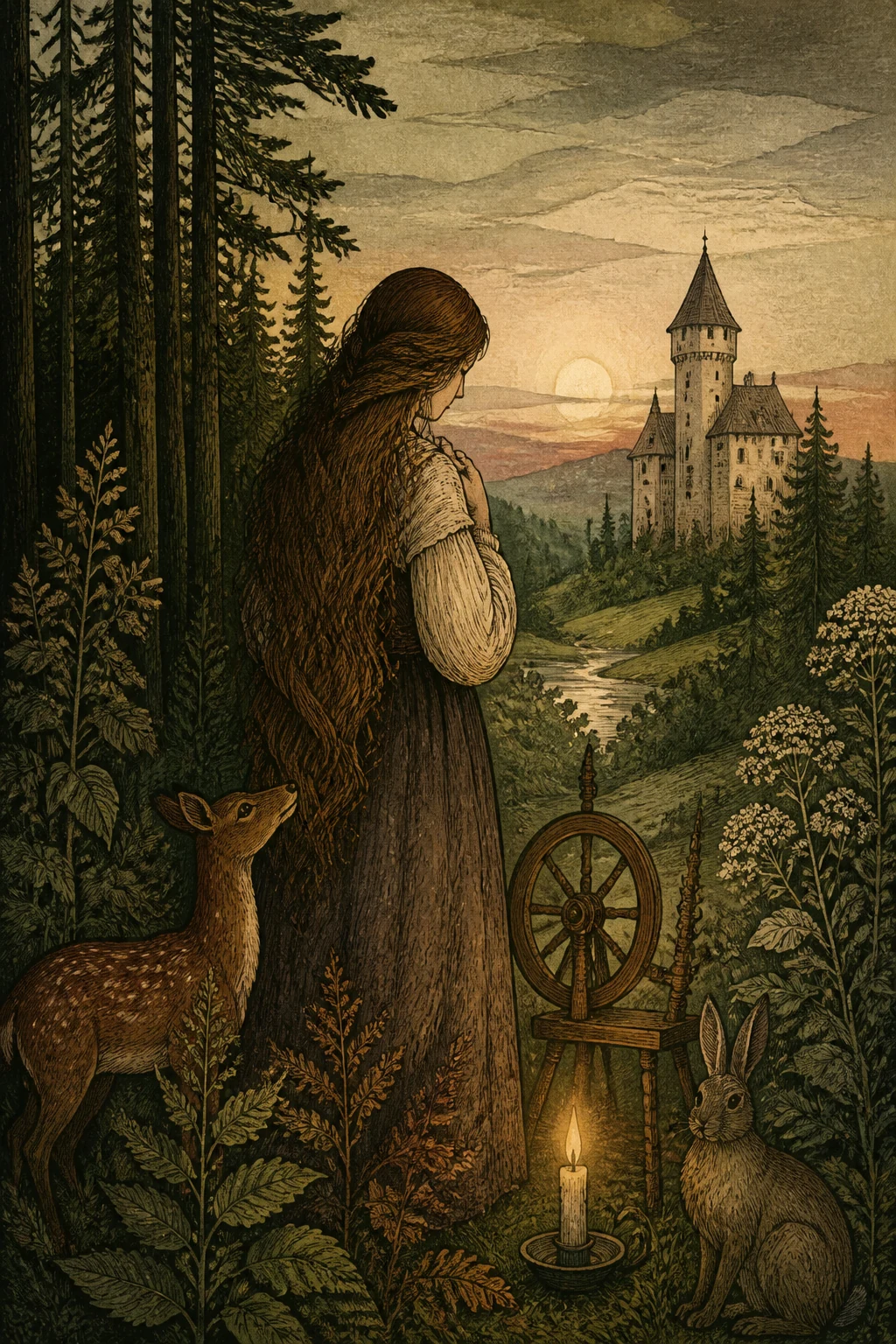
Some time passed, and then the king went to war with another king and set off on campaign. Now the queen thought she could do as she pleased, and she starved the princess and beat her and gave her no peace wherever she went. At last she thought everything too good for her, and set her to mind the cattle. So the princess went with the cattle and herded them in the woods and on the mountains. She was given little or nothing to eat, and grew pale and thin, and nearly all the time she wept and was sorrowful.
Among the cattle was a great blue ox, whose coat was always sleek and shining. He often came up to the princess and let her stroke him. Once, when she was sitting weeping and sorrowing again, he came over and asked why she was always so sad. She said nothing, but went on crying. “Yes,” said the ox, “I know well enough, even if you will not tell me. You are crying because the queen is cruel to you and is all but starving you to death.
“But you need not worry about food, for in my left ear there is a cloth, and if you take it out and spread it open, you may have as many dishes as you wish.” She did so, taking the cloth and spreading it on the grass, and it laid itself with the finest dishes anyone could wish for: there was wine and mead and sweet cake as well. She soon grew plump again, with rosy cheeks and a fair complexion, so that the queen and her scrawny daughter turned all manner of colours with vexation. The queen could not understand how her stepdaughter could come to look so well on such poor fare;
so she told a maid to follow her into the woods and watch her, to find out how it came about, for she believed one of the servants was giving her food. The maid followed her into the woods and kept watch, and saw the stepdaughter take the cloth from the blue ox’s ear and spread it out, and saw it lay itself with the finest dishes, which the stepdaughter ate and enjoyed. The maid went home and told the queen. Now the king returned, having defeated the other king against whom he had gone to war. There was great rejoicing throughout the palace, and no one was happier than the king’s daughter. But the queen took to her bed and paid the doctor a great deal of money to say that she could not recover unless she had some meat from the blue ox to eat. Both the princess and the servants asked the doctor whether nothing else would help, and pleaded for the ox, for everyone was fond of him, and they said there was not his equal in the whole kingdom. But no, he must be slaughtered and he would be slaughtered; there was no other remedy. When the princess heard this, she was deeply distressed and went down to the byre to see the ox. He too stood with his head hanging, looking so sorrowful that she began to cry. “What are you crying for?” asked the ox. Then she told him that the king had come home again, and that the queen had taken to her bed, and had made the doctor say she could not recover unless she had some meat from the blue ox to eat, and now he was to be slaughtered. “Once they have killed me, they will soon take your life as well,” said the ox;
“if you agree with me, we shall leave tonight.” The princess thought it a dreadful thing to leave her father, but it was worse still to live under the same roof as the queen, and so she promised the ox that she would come.
That evening, when everyone else had gone to bed, the princess stole down to the byre to the ox, and he took her on his back and hurried away as fast as he could. When the servants got up at dawn to slaughter the ox, he was gone, and when the king rose and asked for his daughter, she too was missing. He sent messengers in every direction to search for them and had inquiries made outside the churches, but no one had seen anything of them. Meanwhile the ox travelled through many lands with the princess on his back, until they came to a great copper forest, where the trees and branches and leaves and flowers and everything else were made of copper.
But before they entered the forest, the ox said to the princess, “Once we are in the forest, you must take great care not to touch so much as a leaf, or it will be the end of both you and me, for a troll with three heads lives here, and the forest belongs to him.” Oh, goodness, she would take great care and touch nothing at all. She was very careful, bending aside to avoid the branches and pushing them away with her hands, but the forest was so thick that it was almost impossible to get through, and for all her care she could not help tearing off a leaf, which remained in her hand.
“Oh, oh, what have you done?” said the ox. “Now I must fight for our lives; but keep the leaf safe.” Soon afterwards they reached the end of the forest, and a troll with three heads came rushing towards them. “Who is touching my forest?” said the troll. “It is as much mine as yours,” said the ox. “Then we shall fight for it!” screamed the troll. “So be it,” said the ox. They charged at one another and fought, and the ox gored and kicked with all his might, but the troll fought back just as fiercely, and it took the whole day before the ox overcame him. By then he was so covered in wounds and so weak that he could scarcely walk.
So they had to rest for a day, and the ox told the princess to take the horn of ointment hanging from the troll’s belt and rub him with it. Then he recovered, and the next day they went on their way again. They travelled for many, many days, until at last they came to a silver forest, where the trees and branches and leaves and flowers and everything else were made of silver.
Before the ox entered it, he said to the princess, “Once we are in this forest, for God’s sake take great care. You must touch nothing at all, nor tear off so much as a leaf, or it will be the end of both you and me. A troll with six heads owns this forest, and I do not think I can master him.” “No,” said the princess, “I shall take care and touch nothing you do not want me to touch.” But when they entered the forest, it was so thick and close that they could scarcely get through. She was as careful as she could be, bending aside to avoid the branches and pushing them away with her hands, but every moment the branches struck her in the eyes, and for all her care she could not help tearing off a leaf.
“Oh, oh, what have you done?” said the ox. “Now I must fight for our lives, for this troll has six heads and is twice as strong as the other. But look after the leaf and keep it safe.” All at once the troll appeared. “Who is touching my forest?” he said. “It is as much mine as yours,” said the ox. “Then we shall fight for it!” screamed the troll. “So be it,” said the ox, and rushed at the troll, goring out his eyes and driving his horns right through him, so that his guts spilled out. But the troll fought back just as fiercely, and it took three whole days before the ox killed him. By then he was so weak and wretched that he could scarcely move, and so covered in wounds that blood streamed from him. He told the princess to take the horn of ointment hanging from the troll’s belt and rub him with it. She did so, and he recovered;
but they had to stay there and rest for a week before he was strong enough to go any farther. At last they set out again, but the ox was still weak, and at first they made slow progress. To spare him, the princess said that she was young and light on her feet and could easily walk, but he would not hear of it: she had to sit on his back again. They travelled for a long time and through many lands, and the princess had no idea where they were going, but at last they came to a golden forest. It was so splendid that gold dripped from it, and the trees and branches and flowers and leaves were all of pure gold.
Here it was just as it had been in the copper forest and the silver forest. The ox told the princess that she must on no account touch anything, for a troll with nine heads owned the forest. He was much bigger and stronger than the other two together, and the ox did not think he could overcome him.
No, she would be sure to take care and touch nothing at all; he could depend upon it. But when they entered the forest, it was even thicker than the silver forest, and the farther they went, the worse it became. The trees grew thicker and thicker and closer and closer, until at last she thought they could not possibly get through. She was so terribly afraid of tearing anything off that she twisted and bent this way and that to avoid the branches and pushed them away with her hands. But every moment they struck her in the eyes, so that she could not see where she was reaching, and before she knew it she had a golden apple in her hand. She was so frightened that she wept and wanted to throw it away, but the ox told her to keep it and put it safely by. He comforted her as best he could, but he thought it would be a hard battle, and doubted whether it would end well.
All at once the troll with nine heads appeared, and he was so hideous that the princess scarcely dared look at him. “Who is touching my forest?” he screamed. “It is as much mine as yours,” said the ox. “Then we shall fight for it!” screamed the troll. “So be it,” said the ox. They charged at one another and fought, and it was so dreadful to see that the princess almost fainted. The ox gored out the troll’s eyes and drove his horns right through him, so that his entrails spilled out, but the troll fought back just as fiercely, for whenever the ox gored one head to death, the others breathed life into it again. It took a whole week before he managed to kill him. By then he was so utterly weak and wretched that he could not move at all. He had wounds all over him, and could not even tell the princess to take the horn of ointment from the troll’s belt and rub him with it. But she did so all the same, and he recovered, though they had to stay there and rest for three weeks before he could walk again.
Then they set off slowly, for the ox said they had a little farther to go, and they crossed many great ridges covered with thick forest. They went on like this for some time, and then climbed into the mountains. “Can you see anything?” asked the ox. “No, I see nothing but the sky and the wild mountains,” said the princess.
When they climbed higher, the mountains grew more level, so that they could see farther around them. “Can you see anything now?” asked the ox. “Yes, I can see a little castle, far, far away,” said the princess. “It is not so little as you think,” said the ox. At last they came to a great hill with a sheer rock face.
“Can you see anything now?” asked the ox. “Yes, now I can see the castle close by, and now it is much, much bigger!” said the princess. “That is where you must go,” said the ox. “Just below the castle there is a pigsty, and that is where you must stay. When you get there, you will find a wooden skirt. Put it on and go up to the castle, and say your name is Kari Woodenskirt and ask for work.
“But now you must take your penknife and cut off my head. Then you must skin me, roll up the hide, and lay it beneath that rock face, with the copper leaf and the silver leaf and the golden apple inside it. There is a stick standing over by the rock; whenever you want anything from me, just knock on the rock face with it.” At first she would not do it at all, but when the ox said it was the only thanks he wanted for what he had done for her, she had no choice. Bitterly though it grieved her, she toiled and cut away at the great beast with her knife until she had taken off his head and hide. Then she folded the hide beneath the rock face and put the copper leaf, the silver leaf, and the golden apple inside it.
When she had done this, she went over to the pigsty, weeping and sorrowing all the way. There she put on the wooden skirt and went up to the royal palace;
when she came into the kitchen, she asked for work and said her name was Kari Woodenskirt. Yes, said the cook, she could certainly have work; she could stay and wash the dishes, for the one who had done it before had just gone away. “But when you grow tired of being here, I suppose you will go your way too.” No, she certainly would not.
She proved quite a good hand at washing dishes. On Sunday there were to be visitors at the palace, and Kari asked if she might take washing water up to the prince. But the others laughed at her and said, “What would you want up there?
“Do you think the prince will have anything to do with you, looking as you do?” But she would not give in, and kept asking until at last they gave her leave. As she went up the stairs, her wooden skirt made such a dreadful clatter that the prince came out and asked, “What sort of creature are you?” “I was to bring you some washing water,” said Kari. “Do you think I would use washing water you had brought?” said the prince, and threw the water over her. She had to put up with that, but afterwards she asked leave to go to church. This too was granted, for the church was close by.
But first she went to the rock and knocked with the stick that stood there, just as the ox had told her. At once a man came out and asked what she wanted. The princess said that she had been given leave to go to church and hear the sermon, but had no clothes to wear.
Then he brought her a dress that shone like the copper forest, and she was given a horse and saddle as well. When she came to church, she was so beautiful and so splendidly dressed that everyone wondered who she was, and scarcely anyone listened to what the parson said, for they were looking at her instead. The prince himself fell so deeply in love that he did not take his eyes off her for a moment.
Just as she was leaving the church, the prince ran after her and drew the church door shut behind her, catching one of her gloves in his hand. As she went to mount her horse, the prince came after her again and asked where she was from. “I am from Washingwaterland,” said Kari, and while the prince took out the glove to return it to her, she said:
“Light before and dark behind, let the prince no longer see where today my ride takes me.” The prince had never seen the like of that glove, and he travelled far and wide, asking after the land from which the noble lady who had left her glove behind had said she came. But no one could tell him where it lay.
The next Sunday someone had to take a towel up to the prince. “Oh, may I take it up?” said Kari. “What good would that do?” said the others in the kitchen. “You saw how you fared last time.” Kari would not give in, but kept asking until they gave her leave, and then she ran up the stairs with her wooden skirt clattering. The prince rushed out, and when he saw that it was Kari, he snatched the towel from her and flung it straight in her face. “Be off with you, you ugly troll!” he said. “Do you think I would use a towel you have touched with those black fingers of yours?” Afterwards the prince went to church, and Kari also asked leave to go. They asked what she wanted at church, when she had nothing to wear but that wooden skirt and was so black and ugly. But Kari said the parson preached so beautifully, and what he said did her so much good, that at last they gave her leave. She went to the rock and knocked, and the man came out and gave her a dress much finer than the first. It was covered in silver and shone like the silver forest, and she was also given a magnificent horse with a silver-embroidered cloth and a silver bridle.
When the princess reached the church, the congregation were still standing outside on the slope. Everyone wondered who she could be, and the prince was there at once, offering to hold her horse while she dismounted. But she sprang down and said there was no need, for the horse was so well trained that it stood still when she commanded it and came when she called. Then they all went into church, but scarcely anyone listened to what the parson said, for they were looking at her instead, and the prince fell even more deeply in love than before. When the sermon was over and she had left the church and was about to mount her horse, the prince came up again and asked where she was from. “I am from Towelland,” said the princess, and just then she dropped her riding whip. As the prince stooped to pick it up, she said:
“Light before and dark behind, let the prince no longer see where today my ride takes me!” Away she went again, and the prince could not tell what had become of her. He travelled far and wide, asking after the land she had said she came from, but no one could tell him where it lay, and once again the prince had to make the best of it.
The next Sunday someone had to take a comb up to the prince. Kari asked leave to take it, but the others reminded her of what had happened last time, and scolded her for wanting to show herself to the prince, black and ugly as she was in her wooden skirt. But she would not stop asking until they let her take the comb up to him. When she came clattering up the stairs again, the prince rushed out, took the comb and threw it after her, and told her to be off. Afterwards the prince went to church, and Kari asked leave to go too. Again they asked what she wanted there, when she was so ugly and black and had no clothes fit to be seen in. The prince or someone else might catch sight of her, they said, and then there would be trouble for her and for them as well. But Kari said they would have other things to look at, and she would not stop asking until she was allowed to go.
Now it happened just as it had the other two times. She went to the rock and knocked with the stick, and the man came out and gave her a dress even more magnificent than the others. It was almost entirely of pure gold and studded with diamonds, and she was also given a magnificent horse with a gold-embroidered cloth and a golden bridle.
When the princess reached the church, the parson and the congregation were still standing on the slope, waiting for her. The prince came running to hold her horse, but she sprang down and said:
“No, thank you, there is no need, for my horse is so well trained that it stands still when I command it.” Then they all hurried into church, and the parson climbed into the pulpit, but no one listened to what he said, for they were looking at her instead and wondering where she came from. The prince was even more deeply in love than on either of the two previous Sundays; he noticed nothing, but only gazed at her.
When the sermon was over and the princess was about to leave the church, the prince had spread a patch of raw tar in the church porch, meaning to offer her his help in crossing it. But she paid it no heed, set her foot right in the middle of the tar, and sprang across, leaving one of her golden shoes stuck fast. When she had mounted her horse, the prince came rushing out of the church and asked where she was from. “From Combland,” said Kari; but when the prince tried to hand her the golden shoe, she said:
“Light before me, dark behind, let the prince no longer see where today my ride takes me.” This time too the prince could not tell what had become of her, and for a long time he travelled about the world asking after Combland. But as no one could tell him where it was, he had it proclaimed that he would marry whoever could wear the golden shoe. Women both fair and ugly came from far and wide, but none had a foot small enough to put on the golden shoe. At last Kari Woodenskirt’s wicked stepmother came with her daughter, and the shoe fitted her. But she was ugly and looked so ill-tempered that the prince was very reluctant to keep his promise. Nevertheless, preparations were made for the wedding, and she was dressed as a bride. But as they rode to church, a little bird sat in a tree and sang:
“A piece of heel and a piece of toe; Kari Woodenskirt’s shoe is full of blood!” When they looked, they found the bird had spoken the truth, for blood was trickling out of the shoe. Then all the serving girls and all the women in the palace had to come forward and try on the shoe, but it would fit none of them. “But where is Kari Woodenskirt?” asked the prince, when all the others had tried it, for he understood birdsong well and remembered what the bird had said. “Oh, her!” said the others. “There is no use in her coming forward, for she has feet as big as a horse’s.” “That may be,” said the prince, “but since all the others have tried it, Kari may as well have a turn too!” “Kari!” he called through the door, and Kari came up the stairs, her wooden skirt clattering as though a whole regiment of dragoons were charging up. “Now you shall try on the golden shoe and become a princess too!” said the other girls, laughing and mocking her. Kari picked up the shoe and slipped her foot into it with perfect ease, cast off her wooden skirt, and there she stood in her golden dress, shining all over, with the matching golden shoe on her other foot.
When the prince recognised her, he was so happy that he ran to embrace and kiss her, and when he learned that she was a king’s daughter, he was happier still. Then they held the wedding, and snip, snap, snout, this tale is told out.