Prevod
My good friend and magistrate, Don Rodrigo de Odría: I have been informed that Juan de Villegas, an employee of this Royal Treasury of Lima, has committed a grievous offense against His Majesty’s service and the honor God has bestowed upon me. You shall therefore proceed with all haste to arrest the aforesaid Villegas, taking every precaution and allowing no opportunity for a serious scandal; and once this has been accomplished and he has been lodged in the court prison, you shall inform me immediately.
May God preserve Your Worship for many years. THE COUNT OF CASTELLAR. This tenth day of September, 1676. The criminal magistrate Don Rodrigo de Odría was sitting down to table just as the bells, summoning the canons to choir, rang out their great peal for three o’clock. He had barely finished blessing the bread when a constable appeared and handed him a dispatch, saying:
“From His Excellency the Viceroy, and urgent.” The worthy magistrate perched his spectacles on his nose and, after rereading the order transcribed above to weigh its meaning more carefully, rose abruptly and said to the constable, a young fellow as sharp as a wasp:
“Ho there, Güerequeque! Have your comrades ready this instant. There is work for us, and delicate work at that.” While the constables made their preparations, the magistrate paced the dining room, quite forgetting that the soup, the boiled dinner, and the salad were waiting for him to do them their daily honors. As we see, good Don Rodrigo was no slave to the sin of gluttony, for his meal consisted of the same three plain courses, seasoned with Saint Bernard’s sauce: hunger.
“I had already caught a whiff of something amiss with this Don Juan. He was not walking quite as straight a path as God commands and the king requires. To be sure, there is a roguish air about him that is nothing to envy, and I never took to him, for all his honeyed words and fancy airs. And when the viceroy, who has been his bosom friend, orders me to clap a hand on him, there must be reason enough and to spare! To your duty, Rodrigo, and make what you can of it. Orders are orders, and His Excellency has a prickly temper. Onward, then! Be bold as a lad of eleven, and never mind what tomorrow may bring.”
And putting on his cloak and hat and taking up his staff of office, he went out into the street, followed by a rabble of bailiffs, and headed for the corner of the Royal College.
Once there, he gave orders to his hounds, who scattered in different directions to cover every approach and prevent the culprit’s escape; judging by these preparations, he must have been a dangerous bird indeed.
Don Rodrigo, accompanied by four constables, entered a house on Ildefonso Street whose luxurious appearance proclaimed it the dwelling of a person of quality.
Don Juan de Villegas was a Biscayan nearing thirty-five who had arrived in Lima in 1674, appointed to a post worth sixty duros a month—a scant enough income even to keep the pot boiling for a wife and four children, who ate more than a cancer in the stomach. Suddenly, without winning a lottery or inheriting a millionaire uncle’s fortune in America, he had begun to live in great splendor, providing ample food for the gossip of the neighborhood women and all those other people whose business is prying into other people’s lives. Beware, little mice: not everything white is flour.
That afternoon Don Juan lay asleep on a sofa in the drawing room, enjoying the obligatory siesta of an old-fashioned Spaniard. He awoke to find himself surrounded by officers and to hear the magistrate’s command.
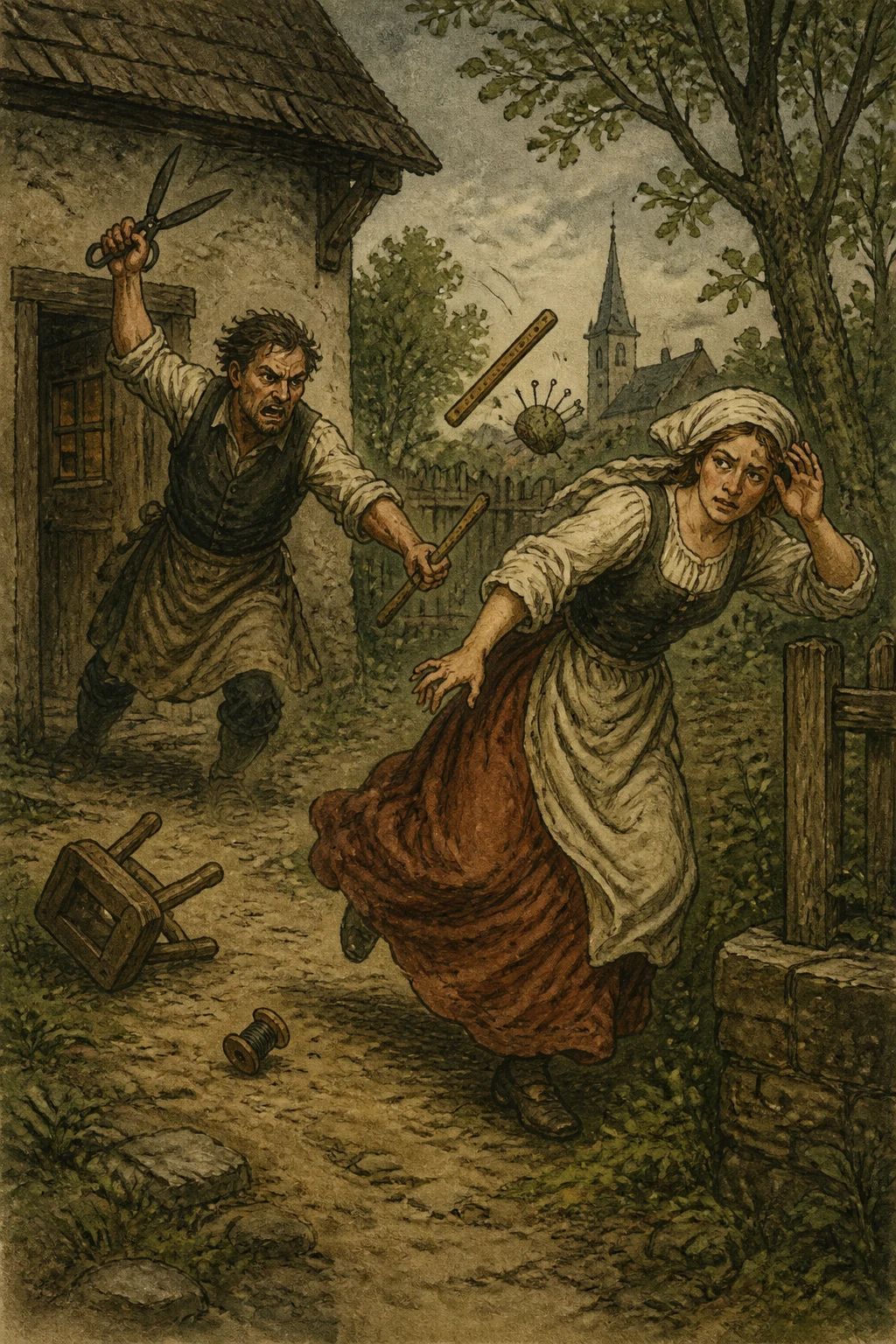
“In the king’s name! Surrender yourself.” The Biscayan snatched an Albacete dagger from his belt and rushed at the magistrate and his party, who drew back in terror and let him reach the courtyard. But Güerequeque, who had remained on watch at the street door, saw his comrades frightened and battered, slipped off his cloak, and with astonishing speed flung it over the criminal’s head. Villegas stumbled and fell; whereupon the whole pack sprang upon the fallen man, as has long been the custom of the world, and, binding him securely, hauled him off to the court prison on Pescadería Street.
“What fine sights,” Don Rodrigo muttered along the way, “we shall see on Judgment Day in the valley of Jehoshaphat! Sages without wisdom, honorable men without honor, every peso going back into its rightful owner’s pocket, and many a child discovering the true father who begot him. Some will go from sorry nags to sorry rogues. What a foul muddle, Lord, what a foul muddle! I always suspected this Don Juan had the face of a saint and the claws of a cat… Well, then! If a capon starts playing the cock, pluck his feathers. As the verse says:
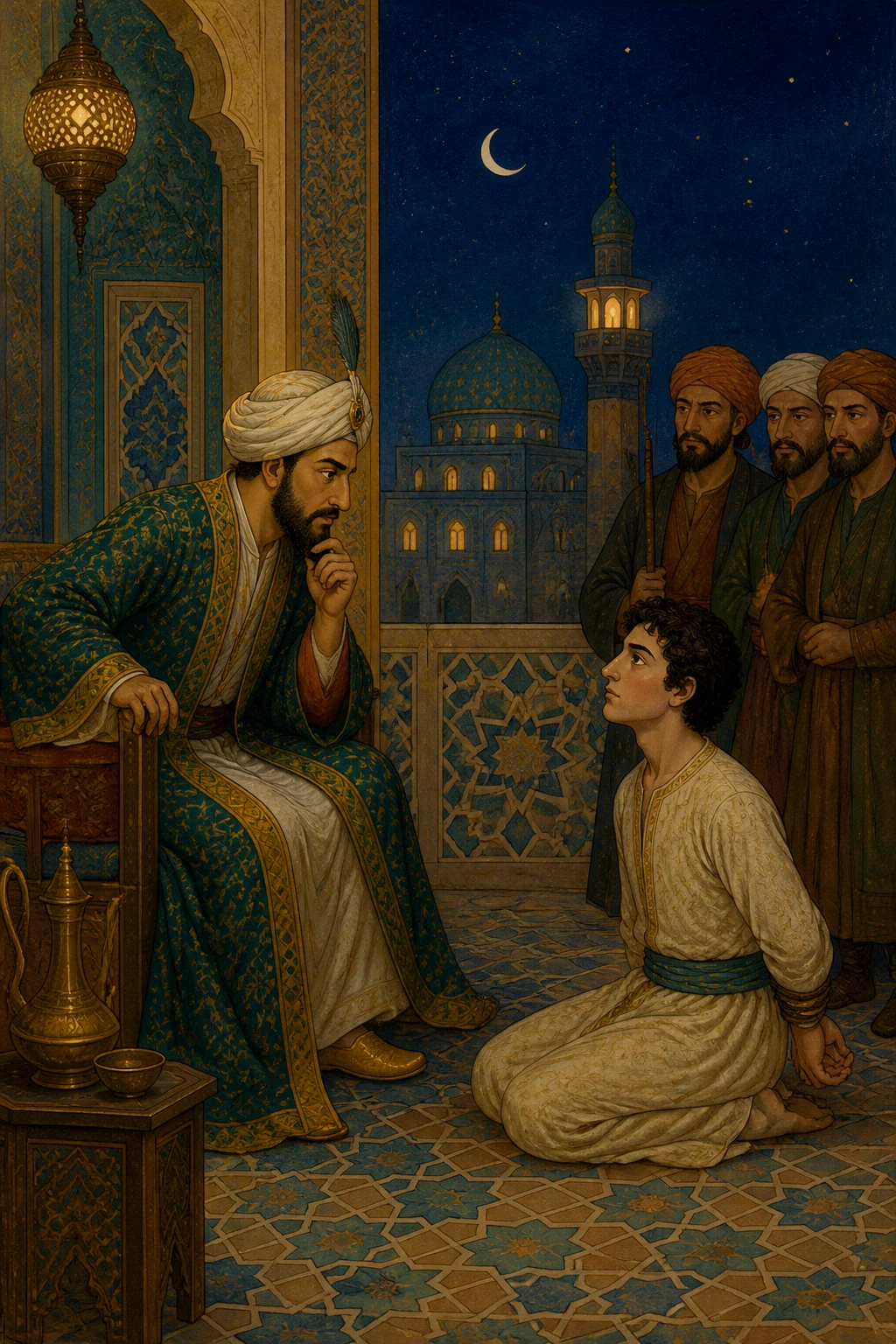
A tender tree, though bent awry, may still be straightened as it grows; but once its strength has hardened, why, no human power can change its pose. Three months later, Juan de Villega, after first receiving two hundred lashes at the executioner’s hands, was marched off in a chain gang with other criminals to the penal colony of Chagres, convicted upon his own confession of defrauding the royal treasury, with the aggravating offenses of forging the viceroy’s signature and resisting the officers of the law.
When the viceroy, the Count of Castellar, then forty-six years old, came to Lima, he brought Don Juan de Villegas in his retinue, along with other officials who had purchased their posts at court. During the voyage Villegas had frequent opportunities to converse with the viceroy, who grew somewhat fond of him and occasionally invited him to dine at the palace… But I suddenly realize that I am speaking of the viceroy without having properly introduced him to my readers. Let us, then, make His Excellency’s acquaintance.
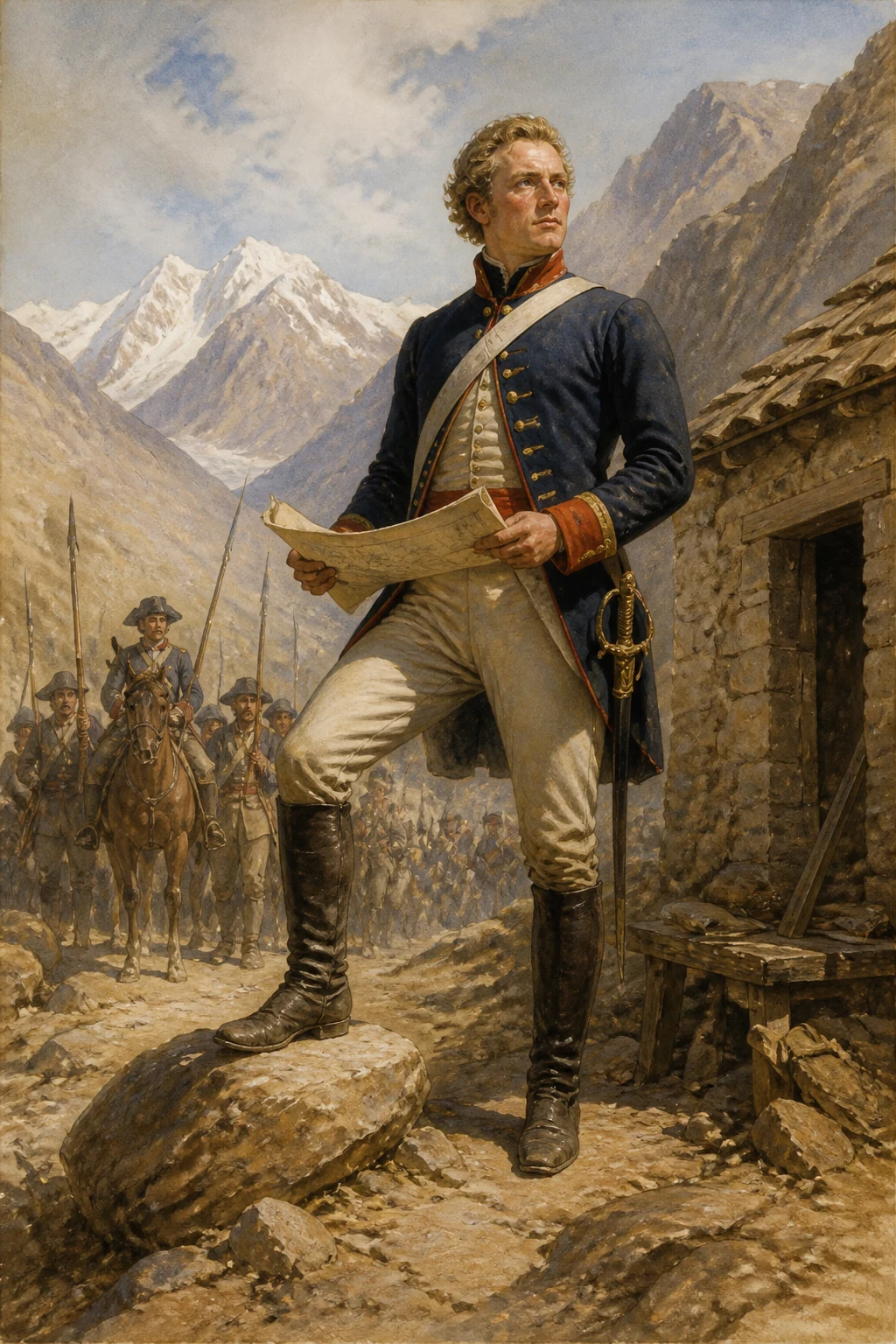
II Don Baltasar de la Cueva, Count of Castellar and Villa-Alonso, Marquis of Malagón, lord of the towns of Viso, Paracuellos, Fuente el Fresno, Porcuna, and Benarfases, a native of Madrid, second son of the Duke of Alburquerque, Knight of Santiago, hereditary high sheriff of the city of Toro, ransomer of captives for Castile, and twentieth viceroy of Peru, entered Lima on August 15, 1674, displaying—as one historian puts it—on richly caparisoned pack mules the wealth that other viceroys were accustomed to take away with them. The people concluded, and rightly so, that Don Baltasar had come not in pursuit of profit and private gain but in search of honor, and they welcomed him with lively enthusiasm.
His first administrative acts were to organize the fleet against possible pirate attacks, equip Valparaíso with artillery, fortify Arica, Guayaquil, and Panamá, and repair the walls of Callao while increasing its garrison.
In civil and religious affairs alike, he enacted the wisest measures. He restored dignity to the courts; zealously defended the Crown’s rights of ecclesiastical patronage, engaging in bitter disputes with the archbishop; reformed the university; established funds for the support of the hospital of Santa Ana; and issued ordinances to curb extravagance in carriages and public disturbances, prevent dueling, and improve other branches of public order.
In financial matters he made various economies in public expenditure, punished the abuses of district governors with the utmost severity, and conducted a painstaking inspection of the royal treasuries. As a result, several treasury officials were sent to the penal colony of Valdivia, the treasurer of Chuquiavo was hanged, and, through the confiscation of the culprits’ property, the treasury recovered a few coins. No payment warrant was honored unless it bore the authorization in the viceroy’s own handwriting, with his signature beneath. Many of these documents were forged by Villegas.
Speaking of this illustrious viceroy, Lorente says: “He heard everyone in public and private audiences, with neither reserved hours nor doorkeepers to prevent people from speaking to him, and he issued decrees and orders himself, to the admiration of the people of Lima, who declared that they had never seen such diligence at work, nor such a manner of government, in any previous viceroy.
A few years ago a conjurer named Paraff offered to extract gold in abundance from copper. He established himself in Chile, where he organized a company whose shareholders sowed gold, which disappeared into Paraff’s coffers, and reaped copper of inferior quality.
Something similar happened in the time of the Count of Castellar, except that in this case there was no rogue of a swindler, but an innocent visionary. Let us follow Mendiburu’s account of the affair.
Don Juan del Corro, one of the leading mercury refiners of Potosí, informed the government that he had discovered a new method for processing silver ores, increasing the yield of some by half, of others by a third or a quarter, and reducing mercury consumption in every case by fifty percent. In return for his discovery, he requested rewards from the Crown. The president of Charcas, the district governor, the royal officials of Potosí, and many miners and refiners reported favorably upon it. The viceroy doubted this marvel and sent commissioners in whom he had complete confidence to Potosí to conduct further practical experiments.
Three or four months later, one afternoon, a special messenger arrived in Lima bearing letters and dispatches from the commissioners. They reported that Don Juan del Corro’s discovery was no humbug but a wondrous reality.
Delighted, the viceroy took the gold chain from his neck and gave it to the bearer of the dispatches as a reward for his good news. He then ordered the bells to be rung and the city illuminated.
This brought general excitement, a Te Deum in the cathedral, a solemn Mass of thanksgiving celebrated by Archbishop Almoguera, splendid troupes of masqueraders, and other public festivities. Nor did it end there. Castellar ordered that the images of Our Lady of the Rosary, Saint Dominic, and Saint Rose be carried to the cathedral in a solemn procession through many streets, richly decorated and furnished with costly altars and arches. A magnificent novena was held, the devout vicereine Doña Teresa María Arias de Saavedra paying for these splendid celebrations from her own purse.
The viceroy had the inventor’s instructions for the new method printed and distributed among the miners of Peru. Everywhere it underwent painstaking trials, which turned out badly and showed that the gains were so small, and indeed so uncertain, as not to be worth the trouble. The viceroy felt that this outcome dealt something of a blow to his pride, while Don Juan del Corro refused to admit defeat, attributing his misfortune to the machinations of enemies and envious rivals. At last Castellar, accompanied by all the officials and leading citizens of Lima, witnessed a trial himself and was convinced that the advantages were nonexistent and the profits of the new system, which had dazzled so many, were mere dreams. Yet the memory remained—a decidedly laughable one—of the enthusiasm and festivities with which it had been welcomed.
His refusal to tolerate deep-rooted abuses raised exceedingly powerful enemies against him. They exerted all their influence and spared no means of undermining the viceroy in the sovereign’s esteem.
On July 7, 1678, while a procession of supplication was taking place in Lima after a terrible earthquake that had left the city almost in ruins the previous month, the Count of Castellar received a royal order from Charles II commanding him to surrender authority immediately to the proud and arbitrary archbishop, Don Melchor de Liñán y Cisneros. The latter subjected him to a rigorous judicial review of his administration and, while it proceeded, had the pettiness to keep him banished to Paita for nearly two years.
When the excellent Duke of la Palata replaced Archbishop Cisneros in 1681, Don Baltasar de la Cueva, having been acquitted at the inquiry, presented his Account of His Administration, dated in the little village of Surco, near Chorrillos. It is among the most notable of the viceregal memoirs known to us.
The Count of Castellar brought a great fortune to Peru, most of it belonging to the dowry of his wife, a Spanish lady who won much affection in Lima through her charity toward the poor and the valuable gifts she bestowed upon the churches. It was said of him that he entered office rich and left it almost poor.
The arms of the house of de la Cueva were: a shield divided into three by an inverted V; the first and second fields gold, each with a red baton; the third silver, with a green dragon or griffin in the act of emerging from a cave; a silver border bearing eight gold saltires.
In 1682 Charles II, to make amends for the affront he had so unjustly inflicted upon him, appointed him to the Council of the Indies. Don Baltasar died in Spain three or four years later, while holding that office.
III The Count of Castellar was accustomed to take a walk through the city every afternoon, accompanied by his secretary and one of the captains on duty. Before returning to the palace, however, when the bells rang the Angelus, he would enter the church of Santo Domingo to say the rosary devoutly.
It was the evening of February 10, 1678. His Excellency was kneeling on the prayer stool that a lay brother of the convent always took care to set out for him before the altar of the Virgin. A few paces away, the secretary and the captain of the escort stood beside a bench.
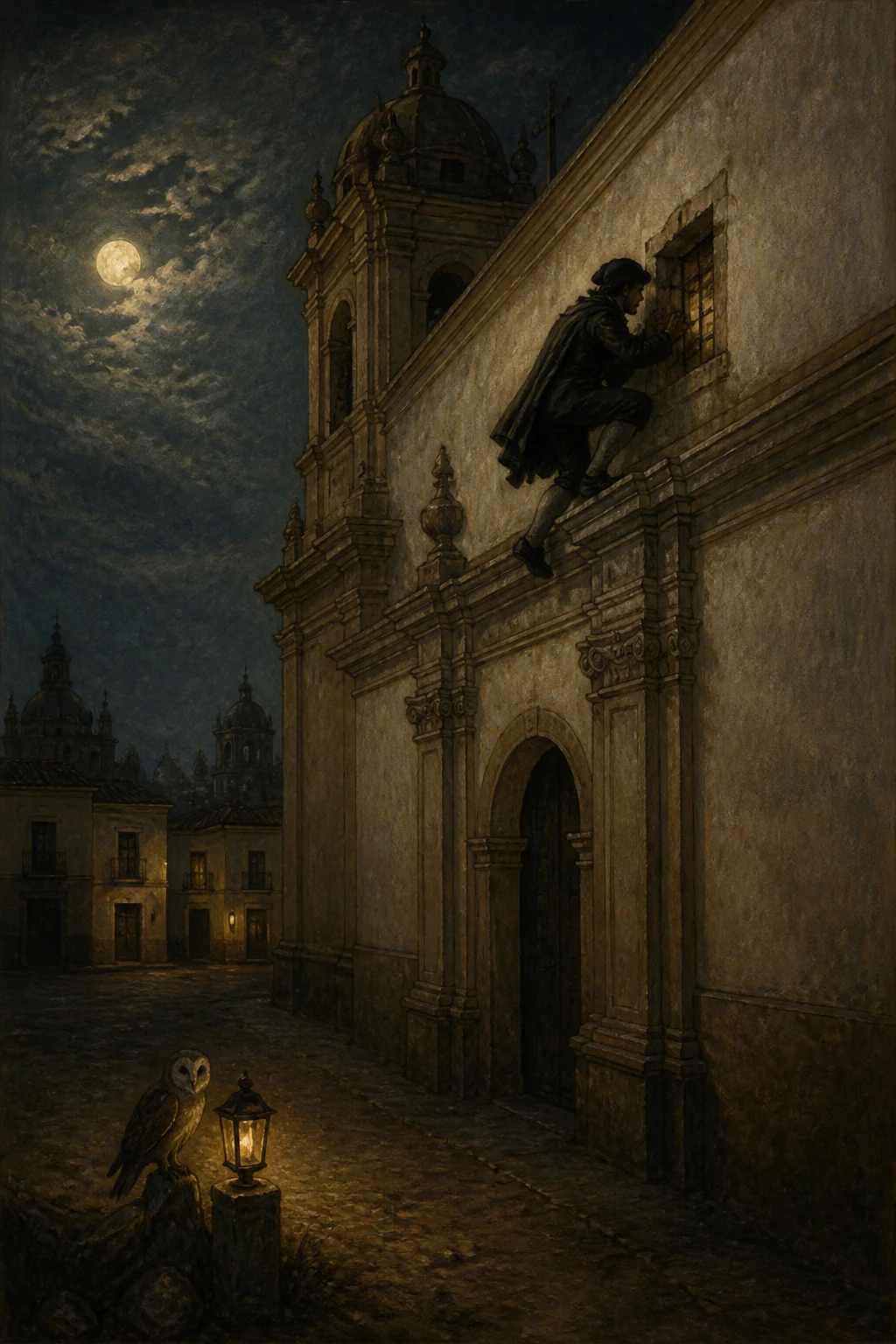
Despite the half-darkness of the church, a figure lurking behind the columns of the vast nave caught the captain’s attention. Suddenly the mysterious shadow approached the viceroy’s prayer stool with stealthy steps and, seizing him by the neck with his left hand, flung him to the ground, while a dagger gleamed in his right.
Fortunately for the viceroy, the captain was an agile, powerful young man who sprang at the assassin with the utmost speed and caught him by the wrist. The sacrilegious wretch struggled desperately against the young man’s iron grip until the friars and worshippers in the church crowded around and managed to disarm him.
The man was Juan de Villegas. A fugitive from the penal colony, he had been in Lima for a week, and ever since his return he had kept watch for the viceroy in the church, seeking a favorable opportunity to murder him.
That very night the case was entrusted to the magistrate Don Rodrigo de Odría, who pursued it with such diligence that eight days later Villegas’s body was swinging like a bunch of grapes from the gallows.
“A pity about the rogue!” Don Rodrigo said to his constable at the foot of the scaffold. “Is it not true, Güerequeque, that I always maintained this scoundrel would end up very high indeed?”
“With Your Worship’s pardon,” replied the man addressed, “that beam is not nearly high enough for what the rascal deserves.”