Waltey
Gozdna kovačnica
121 The Forest Smithy
Myths and Legends of Our Own Land · Charles M. SkinnerO besedilu
Gozdna kovačnica
- Vir
- Myths and Legends of Our Own Land
- Avtor
- Charles M. Skinner
- Jezik branja
- Slovenščina
- Jezik izvirnika
- English
- Čas branja
- 3 min branja
- Obseg
- 3 strani
- Naslov izvirnika
- 121 The Forest Smithy
O izvirniku
Myths and Legends of Our Own Land
Obsežna zgodovinska zbirka ameriških legend, ki jih je Skinner zbral in avtorsko rekonstruiral. Bralni jezik je Slovenščina, izvirnik pa prihaja iz vira Myths and Legends of Our Own Land v jeziku English.
Besedilo
Gozdna kovačnica
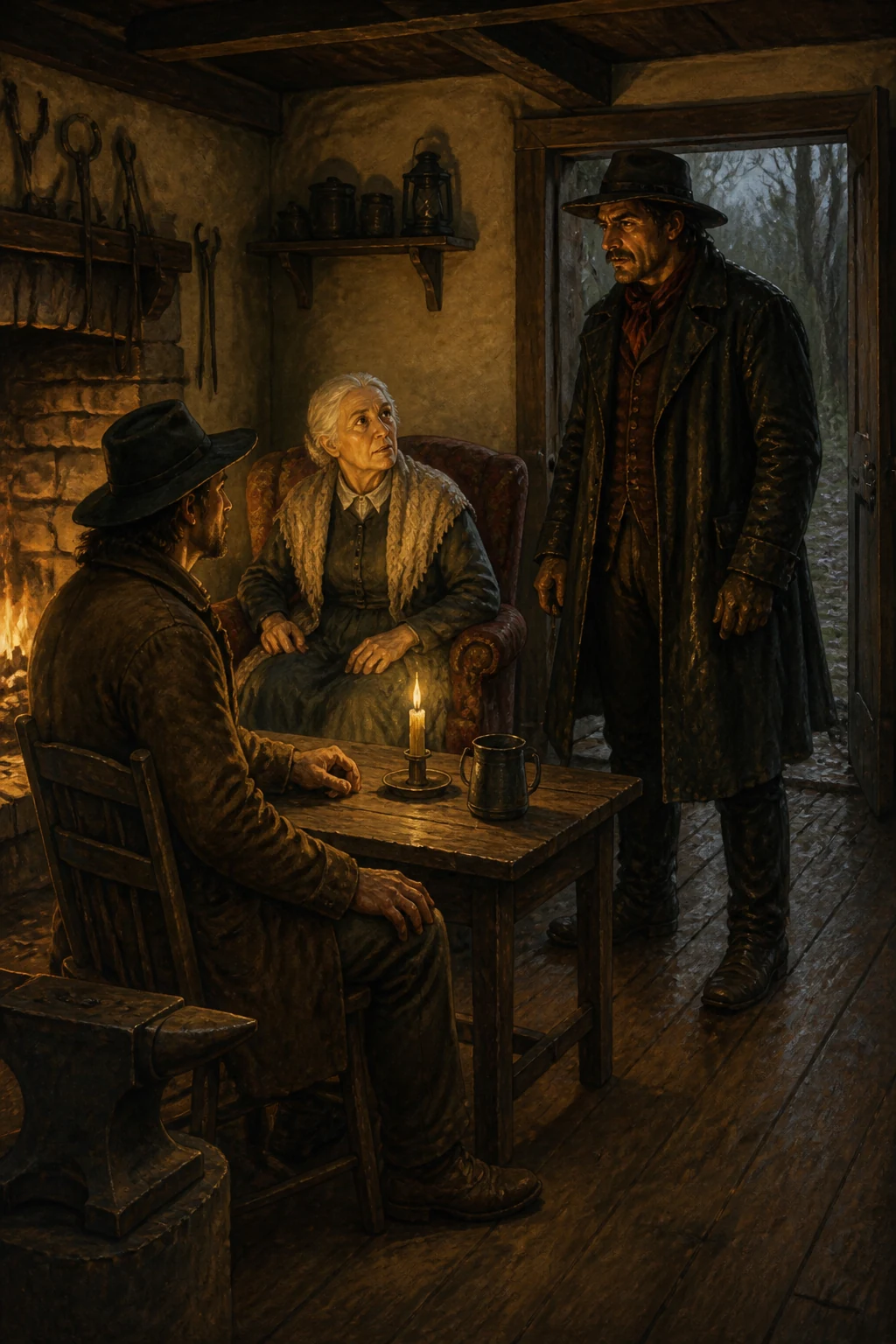
V začetku tega stoletja se je v Holyoku v Massachusettsu pojavil mož po imenu Ainsley in si v gozdu na robu vasi postavil kovačnico ter hišico z dvema sobama. Nekoč se je pri njem pred nevihto zatekel potujoči trgovec, Jenkij, in ker je dež iz ure v uro bolj lil, ga je prosil, ali bi smel v hiši prenočiti, ter obljubil, da bo zjutraj plačal za nastanitev. Kovač, ki je bil videti blag in obziren človek, je dejal, da nima nič proti, vendar bi bilo spričo majhnih sob dobro vprašati še njegovo ženo. Ko je trgovec stopil v hišo, je žena — utrujenega videza in belih las — nemudoma sedla v naslanjač z debelo blazino in mu, kakor da ga nerada zapušča, povedala, da je dobrodošel, če se bo zadovoljil s preprosto hrano in ozkim ležiščem. Ko so prižgali svečo, so nekaj časa sedeli skupaj in se pogovarjali o pridelku in trgovini, tedaj pa je zunaj zadonel topot kopit in v hišo je brez trkanja vstopil mož trdega videza, ki je pred vrati razjahal. Kovač je prebledel, na ženinem obrazu pa se je pokazala huda tesnoba.
»Kaj vas je prineslo sem?« je vprašal kovač. »Tukaj moram prenočiti,« je odvrnil mož. »Toda, tujec, ne morem vas sprejeti. Imava samo eno prosto sobo in to je že zasedel mož, ki sedi tamle.«
»Potem pa mi dajte kaj jesti.« »Prinesi tujcu kaj za pod zob,« je žena rekla možu, ne da bi vstala. »Ste mar hromi, da ne prinesete sami?«
Žena je za hip obmolknila, nato pa rekla: »Mož, utrujen si. Sedi sem, jaz pa bom postregla tujcu.« Kovač je sedel na njeno mesto, tujec pa je spet zadirčno dejal: »Vljudno bi bilo, če bi ta naslanjač ponudili meni, ko sem tako utrujen. Morda ne veste, da sem predstavnik zakona?«
Ko je bila večerja pripravljena, so sedli na svoja mesta, žena pa je naslanjač primaknila k mizi zase. Toda po tedanji navadi so vsi pokleknili k molitvi pred jedjo, in medtem ko so imeli obraze skrite v dlaneh, je nekdo upihnil svečo. Tujec je planil pokonci in začel hoditi po sobi. Ko jim je uspelo spet prižgati luč, ga ni bilo več, z naslanjača pa je izginila blazina. »Oh! Po vseh teh letih!« je zatarnala žena, padla na kolena in zaihtela kakor otrok, mož pa jo je zaman skušal potolažiti. Trgovec, ki je že legel, vendar je skozi odprta vrata videl del te zagonetne drame, ni vedel, kaj naj stori. Ker pa ga je nekoliko zaskrbelo za varnost lastnega imetja, je svojo krošnjo potegnil k sebi v posteljo in utrujen zaspal, medtem ko mu je v ušesih še odzvanjalo ženino ihtenje.
Ko se je prebudil, je bil že beli dan in zemlja je bila po deževni kopeli sveža in svetla. Oblekel se je in stopil v drugo sobo, kjer je našel še vedno pogrnjeno mizo, pred njo naslanjač brez blazine in ugaslo ognjišče, v hiši in okoli nje pa ni bilo nikogar. Kovačnica je bila zapuščena in na njegov klic se ni odzvalo nič razen šoj, ki so vreščale v drevju; zato si je oprtal krošnjo in nadaljeval pot. Pri neki kmetiji jo je odprl, da bi popravil uro, in odkril, da so njegove žepne ure izginile. Nemudoma je podal prijavo pri šerifu, toda Ainsleyja, njegove žene in grobega tujca ni nihče nikoli več videl. Kdo je bil tat? Kaj je bilo v blazini? In kaj je tujca privedlo v hišo?
Izvirnik
121 The Forest Smithy
Naslednje strani prikazujejo izvirno besedilo za primerjavo.
Early in this century a man named Ainsley appeared at Holyoke, Massachusetts, and set up a forge in a wood at the edge of the village, with a two-room cottage to live in. A Yankee peddler once put up at his place for shelter from a storm, and as the rain increased with every hour he begged to remain in the house over night, promising to pay for his accommodation in the morning. The blacksmith, who seemed a mild, considerate man, said that he was willing, but that, as the rooms were small, it would be well to refer the matter to his wife. As the peddler entered the house the wife--a weary-looking woman with white hair--seated herself at once in a thickly-cushioned arm-chair, and, as if loath to leave it, told the peddler that if he would put up with simple fare and a narrow berth he was welcome. After a candle had been lighted the three sat together for some time, talking of crops and trade, when there came a rush of hoofs without and a hard-looking man, who had dismounted at the door, entered without knocking. The blacksmith turned pale and the wife's face expressed sore anxiety.
“What brings you here?” asked the smith.
“I must pass the night here,” answered the man.
“But, stranger, I can't accommodate you. We have but one spare room, and that has been taken by the man who is sitting there.”
“Then give me a bit to eat.”
“Get the stranger something,” said the woman to her husband, without rising.
“Are you lame, that you don't get it yourself?”
The woman paused; then said, “Husband, you are tired. Sit here and I will wait on the stranger.”
The blacksmith took the seat, when the stranger again blustered, “It would be courtesy to offer me that chair, tired as I am. Perhaps you don't know that I am an officer of the law?”
When supper was ready they took their places, the woman drawing up the arm-chair for her own use, but, as the custom was, they all knelt to say grace, and while their faces were buried in their hands the candle was blown out. The stranger jumped up and began walking around the room. When a light could be found he had gone and the cushion had disappeared from the chair. “Oh! After all these years!” wailed the woman, and falling on her knees she sobbed like a child, while her husband in vain tried to comfort her. The peddler, who had already gone to bed, but who had seen a part of this puzzling drama through the open door, knew not what to do, but, feeling some concern for the safety of his own possessions, he drew his pack into bed with him, and, being tired, fell asleep with the sobs of the woman sounding in his ears.
When he awoke it was broad day and the earth was fresh and bright from its bath. After dressing he passed into the other room, finding the table still set, the chair before it without its cushion, the fire out, and nobody in or about the house. The smithy was deserted, and to his call there was no response but the chattering of jays in the trees; so, shouldering his pack, he resumed his journey. He opened his pack at a farm-house to repair a clock, when he discovered that his watches were gone, and immediately lodged complaint with the sheriff, but nothing was ever seen again of Ainsley, his wife, or the rough stranger. Who was the thief? What was in the cushion? And what brought the stranger to the house?
Nadaljuj z branjem