O besedilu
Eros med ljudmi
- Vir
- Ezopove basni
- Avtor
- Ezop / Karl Halm
- Jezik branja
- English
- Jezik izvirnika
- Ancient Greek
- Čas branja
- 2 min branja
- Obseg
- 1 stran
- Naslov izvirnika
- 142. Ἔρως ἐν ἀνθρώποις. (C. 396. F. 406. ex Himerii Soph. X, c. 6.)
O izvirniku
Ezopove basni
Kratke basni, kjer živali v nekaj potezah razkrijejo človeške slabosti. Bralni jezik je English, izvirnik pa prihaja iz vira Ezopove basni v jeziku Ancient Greek.
Besedilo
Eros med ljudmi
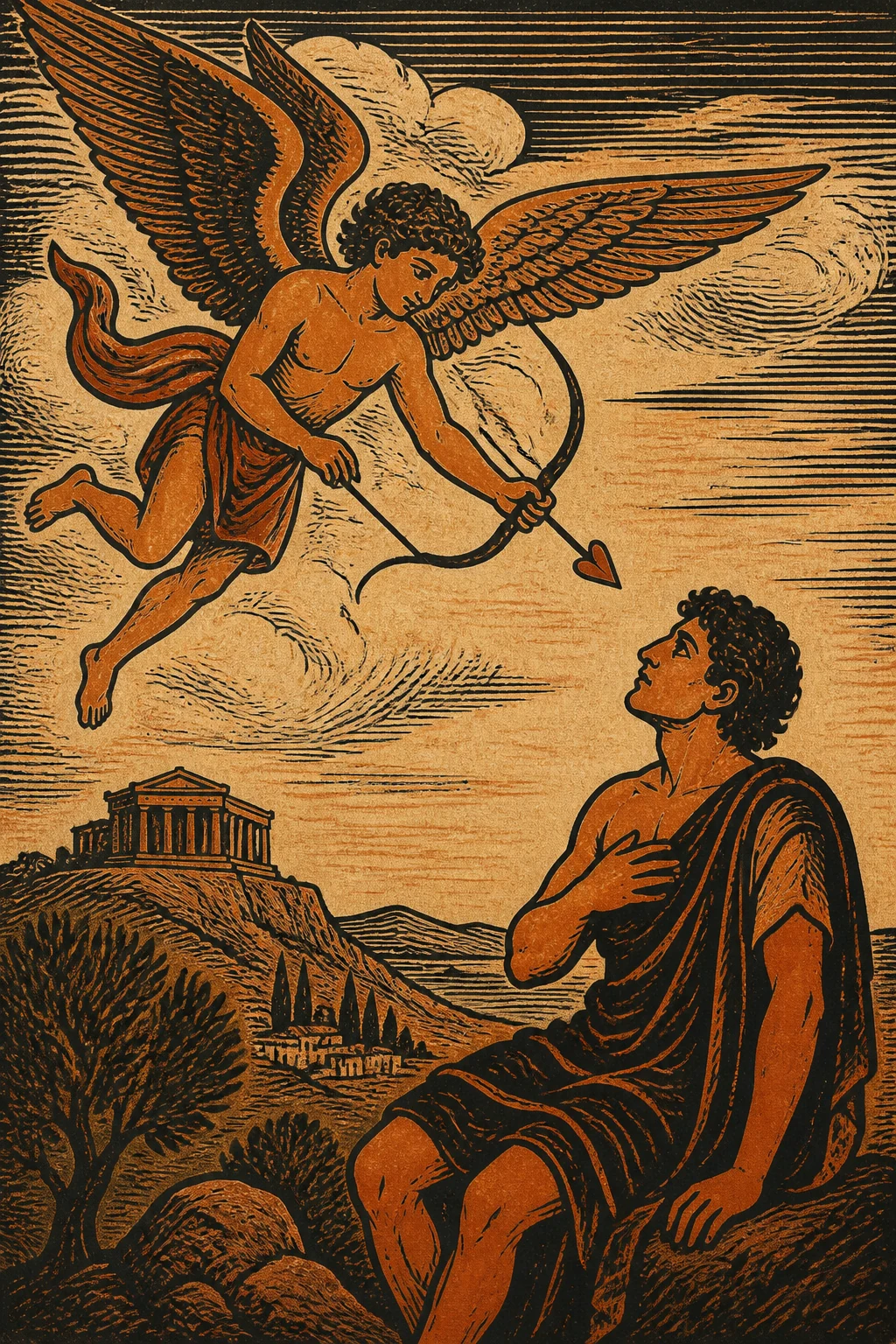
When Zeus brought humankind into being, people possessed all the other gifts that adorn them now, but Eros had not yet made his home in their souls. This god still kept his wings aloft, dwelling in heaven and shooting his arrows at the gods alone. But Zeus, fearing that the fairest of his creations might perish, sent Eros to be the guardian of the human race. Having received this charge from Zeus, Eros did not think it fitting to dwell in every soul, or to make every character alike his sanctuary, the uninitiated no less than the profane. Instead, he entrusted the common multitude of souls to the care of the lesser Loves, the children of the nymphs, while he himself took up his abode in divine and heavenly souls. By stirring these to a Bacchic frenzy of love, he bestowed countless blessings upon humankind. Whenever, then, you see someone sluggish by nature and slow to be moved to friendship, understand that this person has in no way been deemed worthy of the gifts that Eros brings as a guest. But when you see someone keen and ardent in spirit, rushing like a flame toward loving friendship, understand that this is a gift brought by that Eros.
Izvirnik
142. Ἔρως ἐν ἀνθρώποις. (C. 396. F. 406. ex Himerii Soph. X, c. 6.)
Naslednje strani prikazujejo izvirno besedilo za primerjavo.
Ὅτε τοὺς ἀνθρώπους ὁ Ζεὺς ἐγέννησεν, τά μεν ἄλλα πάντα εἶχον, ὡς νῦν κεκόσμηνται, Ἔρως δὲ οὔπω ταῖς ψυχαῖς τῶν ἀνθρώπων ἐγκατῳκίζετο, ἀλλʼ ἔχων ἔτι τὸ πτερὸν ὁ θεὸς οὗτος μετάρσιον, οὐρανῷ τε ἐνωμίλει καὶ εἰς θεοὺς μόνους ἐτόξευεν. Δείσας δὲ μὴ αὐτῷ ἀφοανισθῇ τῶν ποιημάτων τὸ κάλλιστον, Ἔρωτα πέμπει τοῦ τῶν ἀνθρώπων γένους ἐσόμενον φύλακα. Ὁ δὲ ταύτην ἐκ Διὸς τὴν ἐπιτροπὴν λαβὼν, τὸ μὲν ἀπάσαις ψυχαῖς ἐγκατοικίζεσθαι, ἢ πᾶν ἐπίσης ἦθος νεοτελές τε καὶ βέβηλον ἔχειν τέμενος, οὐκ ἐδοκίμαζεν· ἀλλὰ τὰς μὲν πολλὰς καὶ ἀγελαίους ψυχὰς ταῖς πανδήμοις Ἔρωσι, τοῖς τῶν νυμφῶν παισὶ, ποιμαίνειν ἀπένεμεν, αὐτὸς δὲ ταῖς θείαις καὶ οὐρανίαις ψυχαῖς ἐνῳκίσατο, καὶ ταύτας ἀναβακχεύων ἐπὶ μανίαν ἐρωτικὴν, μυρία ἀγαθὰ τὸ τῶν ἀνθρώπων γένος εἰργάσατο. Ὅἴαν μὲν οὖν ἴδῃς τινὰ βραδύν τε τὴν φύσιν καὶ πρὸς φιλίαν δυσκίνητον, νόησον, ὅτι τῶν Ἔρωτος ἐκείνου ξενίων οὐδαμῶς οὗτος ἠξίωται· ὅταν δὲ ὀξύν καὶ θερμὸν τὴν γνώμην, καὶ φλογὸς δίκην ἐπʼ ἐρωτικὴν φιλίαν ᾄττοντα, νόησον τοῦτο εἶναι ἐκείνου ξένιον τοῦ Ἔρωτος.
Nadaljuj z branjem