Waltey
Kadmos in ustanovitev Teb
Apolodorjeva knjižnica · ApolodorO besedilu
Kadmos in ustanovitev Teb
- Vir
- Apolodorjeva knjižnica
- Avtor
- Apolodor
- Jezik branja
- English
- Jezik izvirnika
- Ancient Greek
- Čas branja
- 5 min branja
- Obseg
- 4 strani
- Naslov izvirnika
- Book 3 chapter 4
O izvirniku
Apolodorjeva knjižnica
Strnjen zemljevid grških mitov, rodov, junakov in pošasti. Bralni jezik je English, izvirnik pa prihaja iz vira Apolodorjeva knjižnica v jeziku Ancient Greek.
Besedilo
Kadmos in ustanovitev Teb
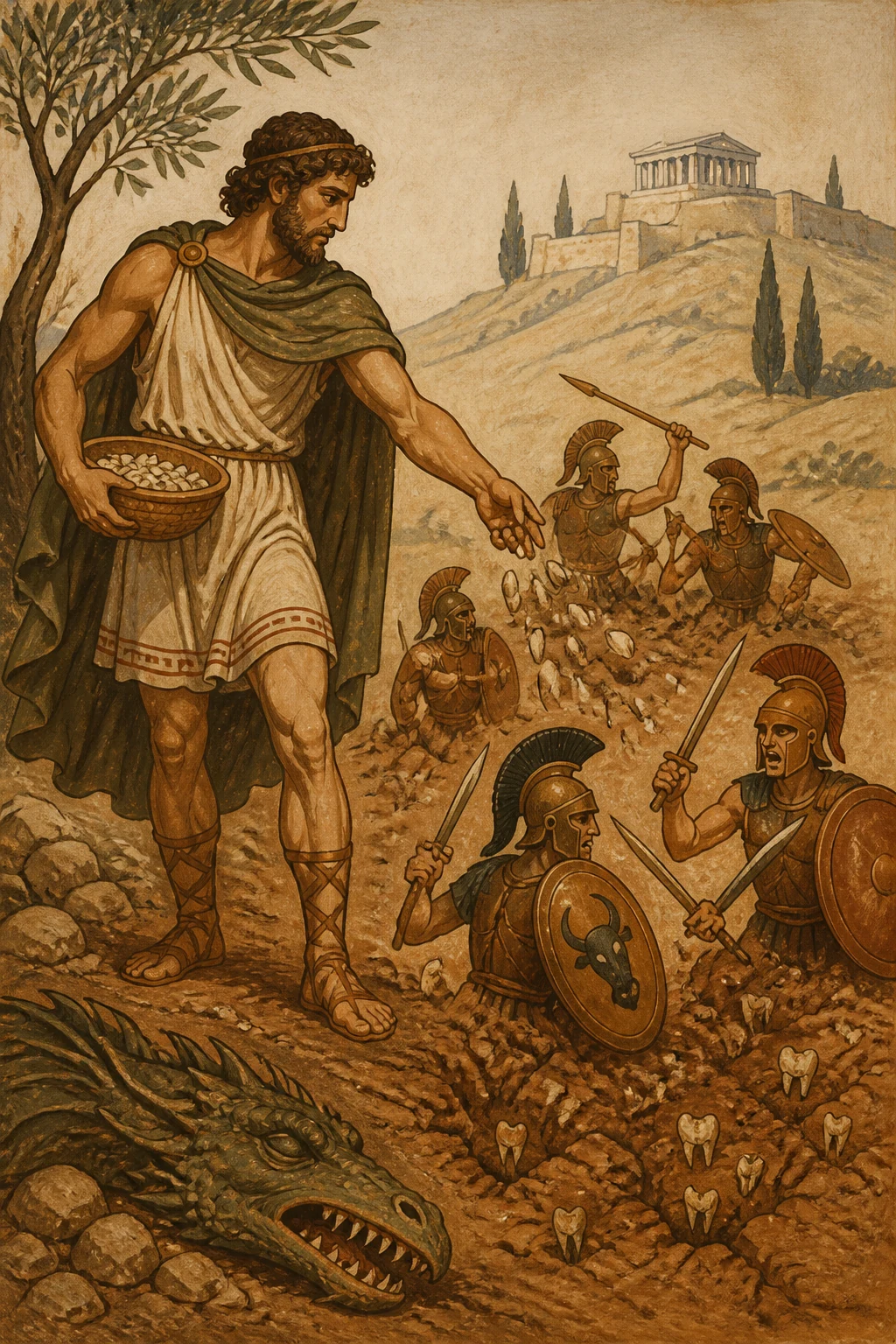
1. After burying Telephassa, who had died, Cadmus was received as a guest by the Thracians, and then went to Delphi to inquire about Europa. The god told him not to trouble himself further about Europa, but to take a cow as his guide and found a city wherever she sank down in weariness. Having received this oracle, he journeyed through Phocis, and, coming upon a cow among the herds of Pelagon, followed behind her. After passing through Boeotia, she lay down where the city of Thebes now stands. Wishing to sacrifice the cow to Athena, he sent some of his companions to draw water from the spring of Ares. But a dragon guarded the spring, said by some to be a son of Ares, and it killed most of those who had been sent. In his anger, Cadmus killed the dragon and, at Athena’s suggestion, sowed its teeth.
Once these were sown, armed men sprang up from the earth, and they were called the Spartoi, the Sown Men. They killed one another, some drawn into the quarrel against their will, others unaware of what they were doing.
Pherecydes says that when Cadmus saw armed men springing from the earth, he threw stones at them, and they, believing that they were being pelted by one another, fell to fighting. Five survived: Echion, Udaeus, Chthonius, Hyperenor, and Pelorus.
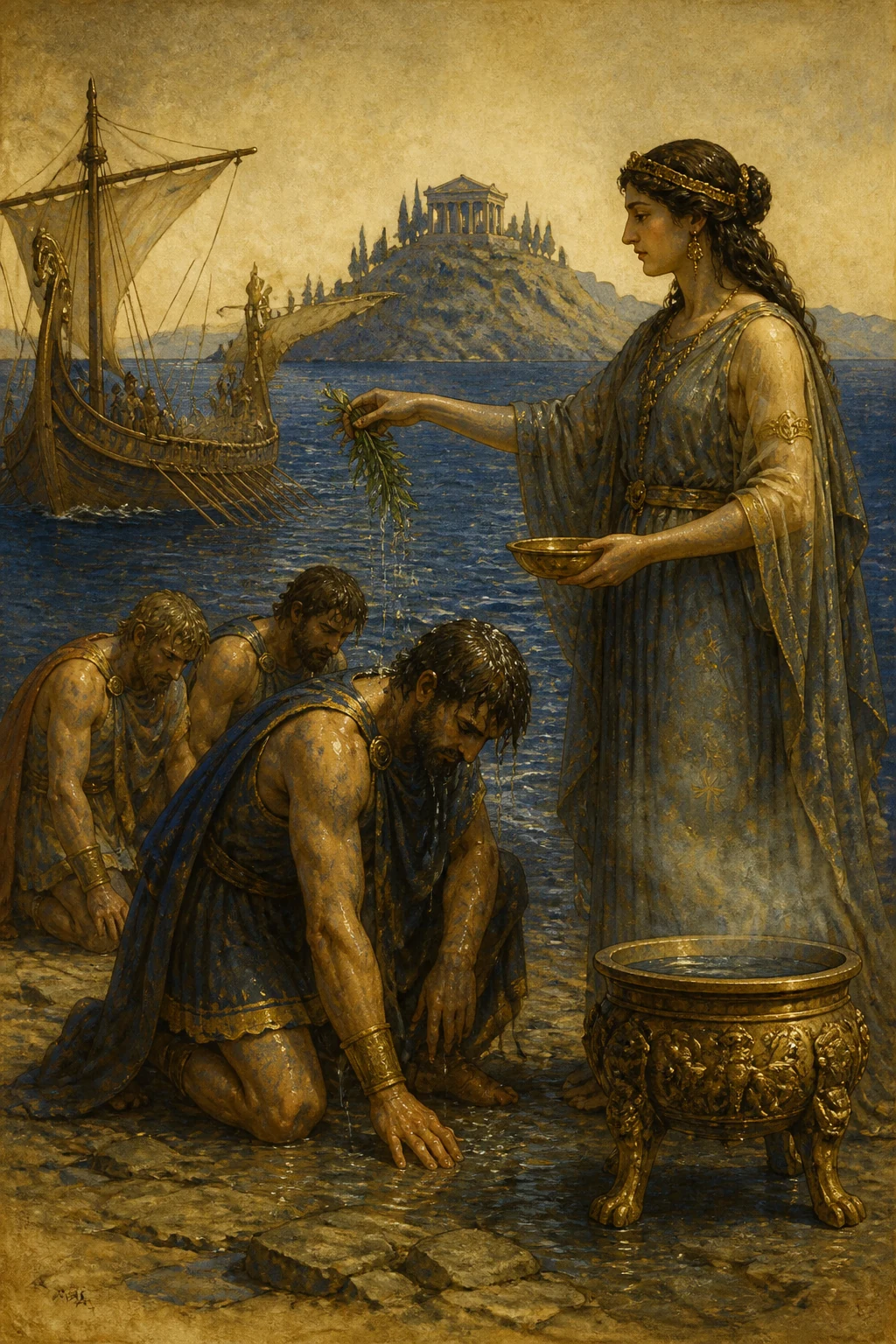
2. To atone for the killing, Cadmus served Ares for an eternal year; a year of that kind was then eight years long. After his servitude, Athena secured the kingdom for him, and Zeus gave him Harmonia, daughter of Aphrodite and Ares, as his wife.
All the gods left heaven and celebrated the wedding with feasting and song in the Cadmea. Cadmus gave her a robe and a necklace wrought by Hephaestus. Some say that Hephaestus had given the necklace to Cadmus, but Pherecydes says that Europa gave it to him, having received it herself from Zeus. Cadmus had four daughters, Autonoe, Ino, Semele, and Agave, and a son, Polydorus. Ino married Athamas, Autonoe married Aristaeus, and Agave married Echion.
3. Zeus fell in love with Semele and lay with her in secret from Hera. But Semele was deceived by Hera, and, after Zeus had promised to do whatever she asked, she asked him to come to her as he had come when courting Hera. Unable to refuse, Zeus arrived in her chamber in a chariot, amid lightning and thunder, and hurled a thunderbolt. Semele died of fright, and Zeus snatched her six-month-old child, born prematurely, from the fire and sewed him into his thigh. After Semele’s death, the other daughters of Cadmus spread the story that she had slept with a mortal man and falsely claimed Zeus as her lover, and that this was why she had been struck by lightning. When the proper time came, Zeus undid the stitches, gave birth to Dionysus, and entrusted him to Hermes.
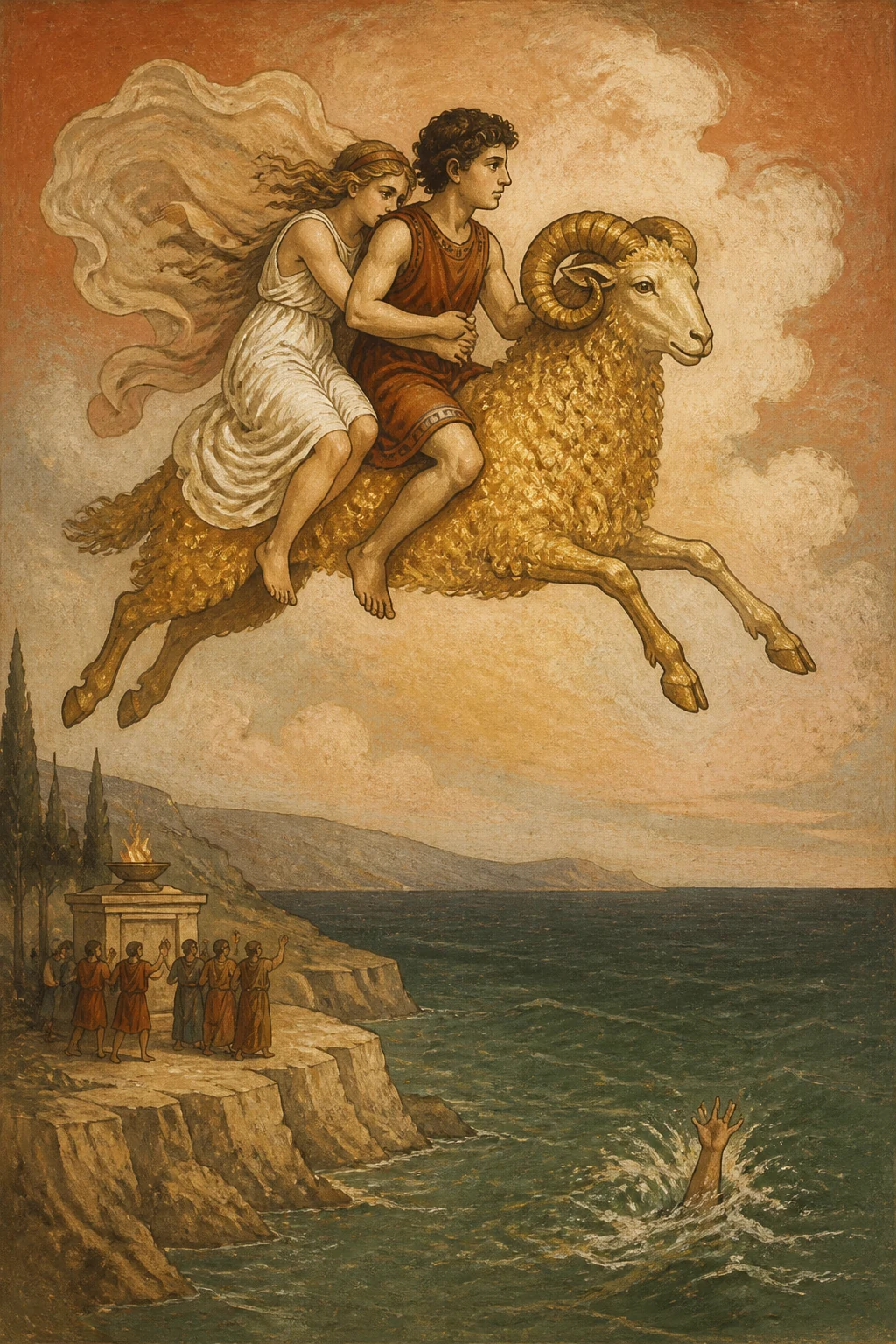
Hermes brought him to Ino and Athamas and persuaded them to raise him as a girl. Enraged, Hera drove them mad. Athamas hunted down his elder son Learchus as though he were a deer and killed him, while Ino threw Melicertes into a boiling cauldron, then took up the dead child and leapt with him into the sea. She is called Leucothea, and the boy Palaemon, names given them by sailors, for they help those caught in storms. The Isthmian Games were established in honour of Melicertes by Sisyphus. Zeus, meanwhile, changed Dionysus into a kid and so concealed him from Hera’s wrath. Hermes took him to the nymphs who lived at Nysa in Asia; later Zeus set these nymphs among the stars and called them the Hyades.
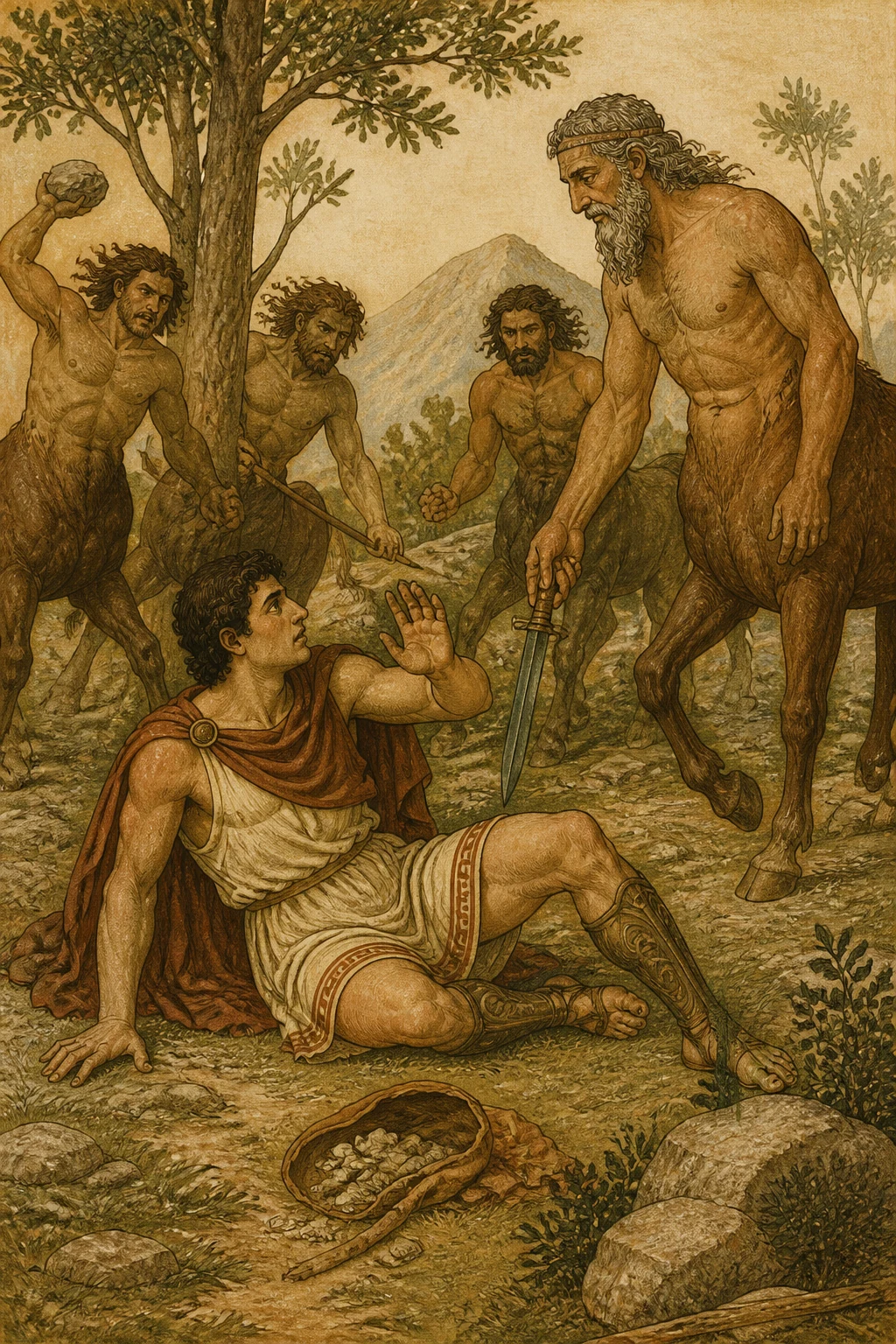
4. Autonoe and Aristaeus had a son, Actaeon, who was brought up by Chiron and taught to hunt. Later he was devoured on Cithaeron by his own dogs. According to Acusilaus, he met this end because Zeus was angered that he had courted Semele; but most say it was because he saw Artemis bathing. They say that the goddess at once changed him into a deer and drove the fifty dogs following him mad, so that they devoured him without knowing who he was.
After Actaeon’s death, the dogs howled as they searched for their master. In their search they came to Chiron’s cave, and he made an image of Actaeon that brought their grief to an end. The names of Actaeon’s dogs, from the following: Thus now, standing round his fair body as though it were a beast’s, the mighty dogs tore it apart. Close by † Arkena first. After her came her valiant offspring, Lynceus and Balius, famed for his speed, and Amarynthus.—And he named them all in an unbroken list; and then Actaeon died by the will of Zeus. For the first to drink their master’s dark blood were Spartus and Omargus and swift-running Bores. These first fed on Actaeon and lapped his blood. After them all the others rushed on eagerly.—To be a remedy for grievous pains among mortals.
Izvirnik
Book 3 chapter 4
Naslednje strani prikazujejo izvirno besedilo za primerjavo.
Source ID: apollodorus_bib_3_4 Citation: Apollodorus, Bibliotheca 3.4 1. Κάδμος δὲ ἀποθανοῦσαν θάψας Τηλέφασσαν, ὑπὸ Θρακῶν ξενισθείς, ἦλθεν εἰς Δελφοὺς περὶ τῆς Εὐρώπης πυνθανόμενος. ὁ δὲ θεὸς εἶπε περὶ μὲν Εὐρώπης μὴ πολυπραγμονεῖν, χρῆσθαι δὲ καθοδηγῷ βοΐ, καὶ πόλιν κτίζειν ἔνθα ἂν αὕτη πέσῃ καμοῦσα. τοιοῦτον λαβὼν χρησμὸν διὰ Φωκέων ἐπορεύετο, εἶτα βοῒ συντυχὼν ἐν τοῖς Πελάγοντος βουκολίοις ταύτῃ κατόπισθεν εἵπετο. ἡ δὲ διεξιοῦσα Βοιωτίαν ἐκλίθη, πόλις ἔνθα νῦν εἰσι Θῆβαι. βουλόμενος δὲ Ἀθηνᾷ καταθῦσαι τὴν βοῦν, πέμπει τινὰς τῶν μεθʼ ἑαυτοῦ ληψομένους ἀπὸ τῆς Ἀρείας κρήνης ὕδωρ· φρουρῶν δὲ τὴν κρήνην δράκων, ὃν ἐξ Ἄρεος εἶπόν τινες γεγονέναι, τοὺς πλείονας τῶν πεμφθέντων διέφθειρεν. ἀγανακτήσας δὲ Κάδμος κτείνει τὸν δράκοντα, καὶ τῆς Ἀθηνᾶς ὑποθεμένης τοὺς ὀδόντας αὐτοῦ σπείρει.
τούτων δὲ σπαρέντων ἀνέτειλαν ἐκ γῆς ἄνδρες ἔνοπλοι, οὓς ἐκάλεσαν Σπαρτούς. οὗτοι δὲ ἀπέκτειναν ἀλλήλους, οἱ μὲν εἰς ἔριν ἀκούσιον ἐλθόντες, οἱ δὲ ἀγνοοῦντες. Φερεκύδης δέ φησιν ὅτι Κάδμος, ἰδὼν ἐκ γῆς ἀναφυομένους ἄνδρας ἐνόπλους, ἐπʼ αὐτοὺς ἔβαλε λίθους, οἱ δὲ ὑπʼ ἀλλήλων νομίζοντες βάλλεσθαι εἰς μάχην κατέστησαν. περιεσώθησαν δὲ πέντε, Ἐχίων Οὐδαῖος Χθονίος Ὑπερήνωρ Πέλωρος.
2. Κάδμος δὲ ἀνθʼ ὧν ἔκτεινεν ἀίδιον ἐνιαυτὸν ἐθήτευσεν Ἄρει· ἦν δὲ ὁ ἐνιαυτὸς τότε ὀκτὼ ἔτη. μετὰ δὲ τὴν θητείαν Ἀθηνᾶ αὐτῷ τὴν βασιλείαν κατεσκεύασε, Ζεὺς δὲ ἔδωκεν αὐτῷ γυναῖκα Ἁρμονίαν, Ἀφροδίτης καὶ Ἄρεος θυγατέρα. καὶ πάντες θεοὶ καταλιπόντες τὸν οὐρανόν, ἐν τῇ Καδμείᾳ τὸν γάμον εὐωχούμενοι καθύμνησαν. ἔδωκε δὲ αὐτῇ Κάδμος πέπλον καὶ τὸν ἡφαιστότευκτον ὅρμον, ὃν ὑπὸ Ἡφαίστου λέγουσί τινες δοθῆναι Κάδμῳ, Φερεκύδης δὲ ὑπὸ Εὐρώπης· ὃν παρὰ Διὸς αὐτὴν λαβεῖν. γίνονται δὲ Κάδμῳ θυγατέρες μὲν Αὐτονόη Ἰνὼ Σεμέλη Ἀγαυή, παῖς δὲ Πολύδωρος. Ἰνὼ μὲν οὖν Ἀθάμας ἔγημεν, Αὐτονόην δὲ Ἀρισταῖος, Ἀγαυὴν δὲ Ἐχίων.
3. Σεμέλης δὲ Ζεὺς ἐρασθεὶς Ἥρας κρύφα συνευνάζεται. ἡ δὲ ἐξαπατηθεῖσα ὑπὸ Ἥρας, κατανεύσαντος αὐτῇ Διὸς πᾶν τὸ αἰτηθὲν ποιήσειν, αἰτεῖται τοιοῦτον αὐτὸν ἐλθεῖν οἷος ἦλθε μνηστευόμενος Ἥραν. Ζεὺς δὲ μὴ δυνάμενος ἀνανεῦσαι παραγίνεται εἰς τὸν θάλαμον αὐτῆς ἐφʼ ἅρματος ἀστραπαῖς ὁμοῦ καὶ βρονταῖς, καὶ κεραυνὸν ἵησιν. Σεμέλης δὲ διὰ τὸν φόβον ἐκλιπούσης, ἑξαμηνιαῖον τὸ βρέφος ἐξαμβλωθὲν ἐκ τοῦ πυρὸς ἁρπάσας ἐνέρραψε τῷ μηρῷ. ἀποθανούσης δὲ Σεμέλης, αἱ λοιπαὶ Κάδμου θυγατέρες διήνεγκαν λόγον, συνηυνῆσθαι θνητῷ τινι Σεμέλην καὶ καταψεύσασθαι Διός, καὶ ὅτι διὰ τοῦτο ἐκεραυνώθη. κατὰ δὲ τὸν χρόνον τὸν καθήκοντα Διόνυσον γεννᾷ Ζεὺς λύσας τὰ ῥάμματα, καὶ δίδωσιν Ἑρμῇ.
ὁ δὲ κομίζει πρὸς Ἰνὼ καὶ Ἀθάμαντα καὶ πείθει τρέφειν ὡς κόρην. ἀγανακτήσασα δὲ Ἥρα μανίαν αὐτοῖς ἐνέβαλε, καὶ Ἀθάμας μὲν τὸν πρεσβύτερον παῖδα Λέαρχον ὡς ἔλαφον θηρεύσας ἀπέκτεινεν, Ἰνὼ δὲ τὸν Μελικέρτην εἰς πεπυρωμένον λέβητα ῥίψασα, εἶτα βαστάσασα μετὰ νεκροῦ τοῦ παιδὸς ἥλατο κατὰ βυθοῦ. καὶ Λευκοθέα μὲν αὐτὴν καλεῖται, Παλαίμων δὲ ὁ παῖς, οὕτως ὀνομασθέντες ὑπὸ τῶν πλεόντων· τοῖς χειμαζομένοις γὰρ βοηθοῦσιν. ἐτέθη δὲ ἐπὶ Μελικέρτῃ ὁ ἀγὼν τῶν Ἰσθμίων, Σισύφου θέντος. Διόνυσον δὲ Ζεὺς εἰς ἔριφον ἀλλάξας τὸν Ἥρας θυμὸν ἔκλεψε, καὶ λαβὼν αὐτὸν Ἑρμῆς πρὸς νύμφας ἐκόμισεν ἐν Νύσῃ κατοικούσας τῆς Ἀσίας, ἃς ὕστερον Ζεὺς καταστερίσας ὠνόμασεν Ὑάδας.
4. Αὐτονόης δὲ καὶ Ἀρισταίου παῖς Ἀκταίων ἐγένετο, ὃς τραφεὶς παρὰ Χείρωνι κυνηγὸς ἐδιδάχθη, καὶ ἔπειτα ὕστερον ἐν τῷ Κιθαιρῶνι κατεβρώθη ὑπὸ τῶν ἰδίων κυνῶν. καὶ τοῦτον ἐτελεύτησε τὸν τρόπον, ὡς μὲν Ἀκουσίλαος λέγει, μηνίσαντος τοῦ Διὸς ὅτι ἐμνηστεύσατο Σεμέλην, ὡς δὲ οἱ πλείονες, ὅτι τὴν Ἄρτεμιν λουομένην εἶδε. καί φασι τὴν θεὸν παραχρῆμα αὐτοῦ τὴν μορφὴν εἰς ἔλαφον ἀλλάξαι, καὶ τοῖς ἑπομένοις αὐτῷ πεντήκοντα κυσὶν ἐμβαλεῖν λύσσαν, ὑφʼ ὧν κατὰ ἄγνοιαν ἐβρώθη.
ἀπολομένου δὲ Ἀκταίωνος οἱ κύνες ἐπιζητοῦντες τὸν δεσπότην κατωρύοντο, καὶ ζήτησιν ποιούμενοι παρεγένοντο ἐπὶ τὸ τοῦ Χείρωνος ἄντρον, ὃς εἴδωλον κατεσκεύασεν Ἀκταίωνος, ὃ καὶ τὴν λύπην αὐτῶν ἔπαυσε. τὰ ὀνόματα τῶν Ἀκταίωνος κυνῶν ἐκ τῶν οὕτω δὴ νῦν καλὸν σῶμα περισταδόν, ἠύτε θῆρος, τοῦδε δάσαντο κύνες κρατεροί. πέλας † Ἄρκενα πρώτη. μετὰ ταύτην ἄλκιμα τέκνα, Λυγκεὺς καὶ Βαλίος πόδας αἰνετός, ἠδʼ Ἀμάρυνθος.— καὶ τούτους ὀνομαστὶ διηνεκέως κατέλεξε· καὶ τότε Ἀκταίων ἔθανεν Διὸς ἐννεσίῃσι. πρῶτοι
γὰρ μέλαν αἷμα πίον σφετέροιο ἄνακτος Σπαρτός τʼ Ὤμαργός τε Βορῆς τʼ αἰψηροκέλευθος. οὗτοι δʼ Ἀκταίου πρῶτοι φάγον αἷμα τʼ ἔλαψαν. τοὺς δὲ μέτʼ ἄλλοι πάντες ἐπέσσυθεν ἐμμεμαῶτες.— ἀργαλέων ὀδυνῶν ἄκος ἔμμεναι ἀνθρώποισιν .
Nadaljuj z branjem