Prevod
And now Aeneas’s valor had compelled all the gods, even Juno herself, to lay their ancient anger to rest, when, with the fortunes of the growing Iulus firmly established, the time had come for the Cytherean hero to enter heaven. Venus had pleaded with the gods and, throwing her arms around her father’s neck, had said, “Father, never harsh to me at any time, be gentlest now, I pray, and grant my Aeneas, who through our blood has made you a grandfather, some divinity, however slight, kindest of fathers, so long as you grant him any at all. It is enough to have seen that loveless kingdom once, once to have crossed the rivers of Styx.”
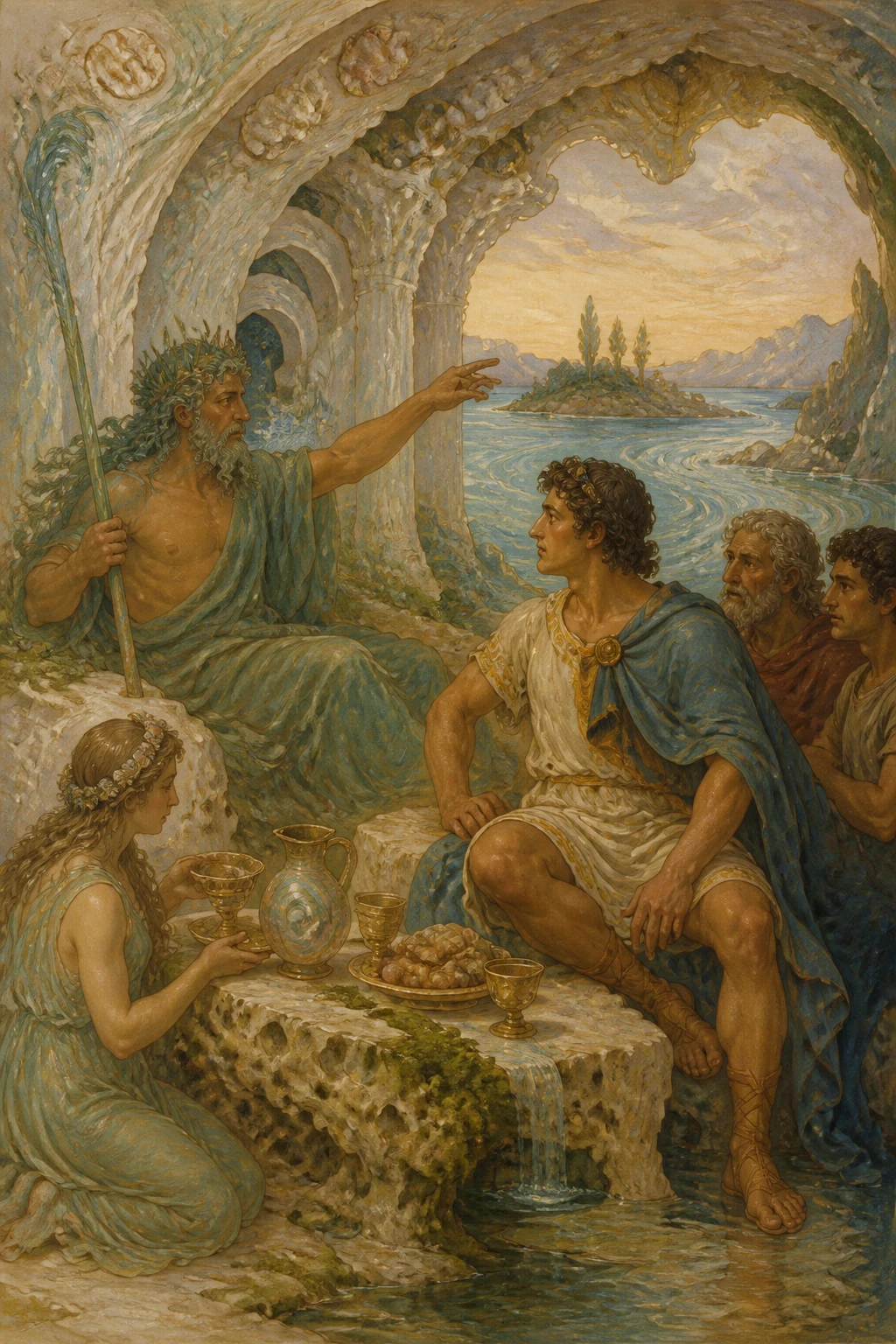
The gods assented, and his queenly consort no longer kept her face unmoved, but nodded with a softened expression. Then the father said, “You both deserve a place among the gods, you who ask and he for whom you ask. Take what you desire, my daughter!” He had spoken. She rejoiced and thanked her father, then, borne through the light air by her yoked doves, came to the Laurentian shore, where, screened by reeds, Numicius winds his river waters toward the neighboring sea.
She commanded him to wash away from Aeneas all that was subject to death and carry it beneath the sea in his silent current. The horned river god obeyed Venus’s command, and with his waters cleansed away whatever had been mortal in Aeneas, washing it off: his noblest part remained. His mother anointed his purified body with divine fragrance and, mixing ambrosia with sweet nectar, touched his lips and made him a god, whom the people of Quirinus call Indiges and have honored with a temple and altars.
Izvirnik
Source ID: ovid_metamorphoses_story_096 Citation: Ovid, Metamorphoses 14.581-14.608 Original language: Latin Source: PerseusDL canonical-latinLit Source URL: https://github.com/PerseusDL/canonical-latinLit/blob/master/data/phi0959/phi006/phi0959.phi006.perseus-lat2.xml Segmentation certainty: medium 581: Iamque deos omnes ipsamque Aeneia virtus 582: Iunonem veteres finire coegerat iras, 583: cum, bene fundatis opibus crescentis Iuli, 584: tempestivus erat caelo Cythereius heros: 585: ambieratque Venus superos, colloque parentis 586: circumfusa sui “numquam mihi” dixerat “ullo
587: tempore dure pater, nunc sis mitissimus, opto, 588: Aeneaeque meo, qui te de sanguine nostro 589: fecit avum, quamvis parvum des, optime, numen, 590: dummodo des aliquod: satis est inamabile regnum 591: adspexisse semel, Stygios semel isse per amnes.” 592: Adsensere dei, nec coniunx regia vultus 593: immotos tenuit placatoque adnuit ore; 594: tum pater “estis” ait “caelesti numine digni, 595: quaeque petis, pro quoque petis: cape, nata, quod optas!”
596: Fatus erat: gaudet gratesque agit illa parenti, 597: perque leves auras iunctis invecta columbis 598: litus adit Laurens, ubi tectus harundine serpit 599: in freta flumineis vicina Numicius undis. 600: Hunc iubet Aeneae, quaecumque obnoxia morti, 601: abluere et tacito deferre sub aequora cursu; 602: corniger exsequitur Veneris mandata suisque, 603: quidquid in Aenea fuerat mortale, repurgat 604: et respergit aquis: pars optima restitit illi.
605: Lustratum genetrix divino corpus odore 606: unxit et ambrosia cum dulci nectare mixta 607: contigit os fecitque deum, quem turba Quirini 608: nuncupat Indigetem temploque arisque recepit.