O besedilu
Aheloj gosti Tezeja
- Vir
- Ovidove preobrazbe
- Avtor
- Ovid
- Jezik branja
- English
- Jezik izvirnika
- Latin
- Čas branja
- 4 min branja
- Obseg
- 3 strani
- Naslov izvirnika
- Achelous Hosts Theseus
O izvirniku
Ovidove preobrazbe
Pesniški tok antičnih preobrazb, kjer bogovi, ljudje in narava stalno menjavajo obliko. Bralni jezik je English, izvirnik pa prihaja iz vira Ovidove preobrazbe v jeziku Latin.
Besedilo
Aheloj gosti Tezeja
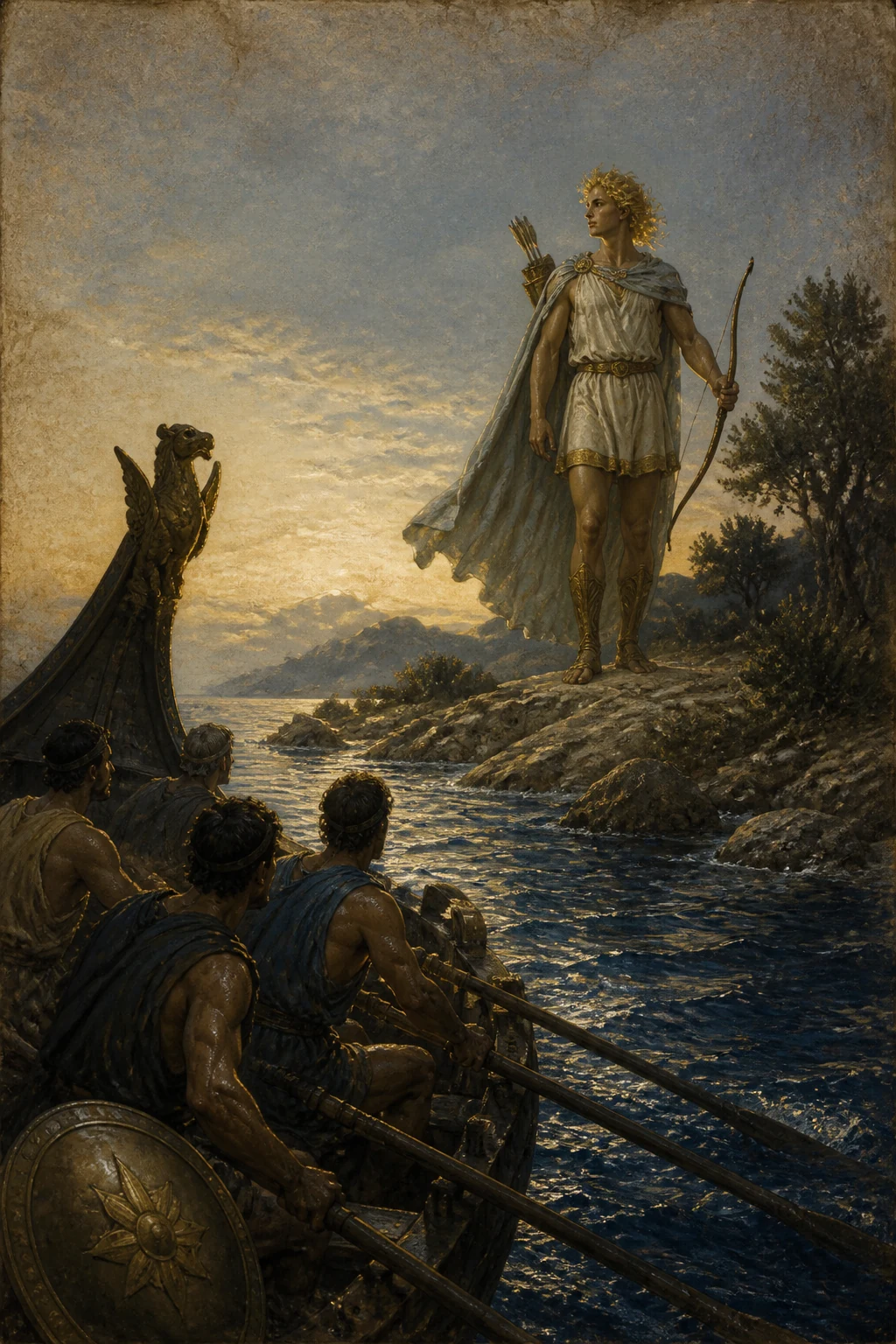
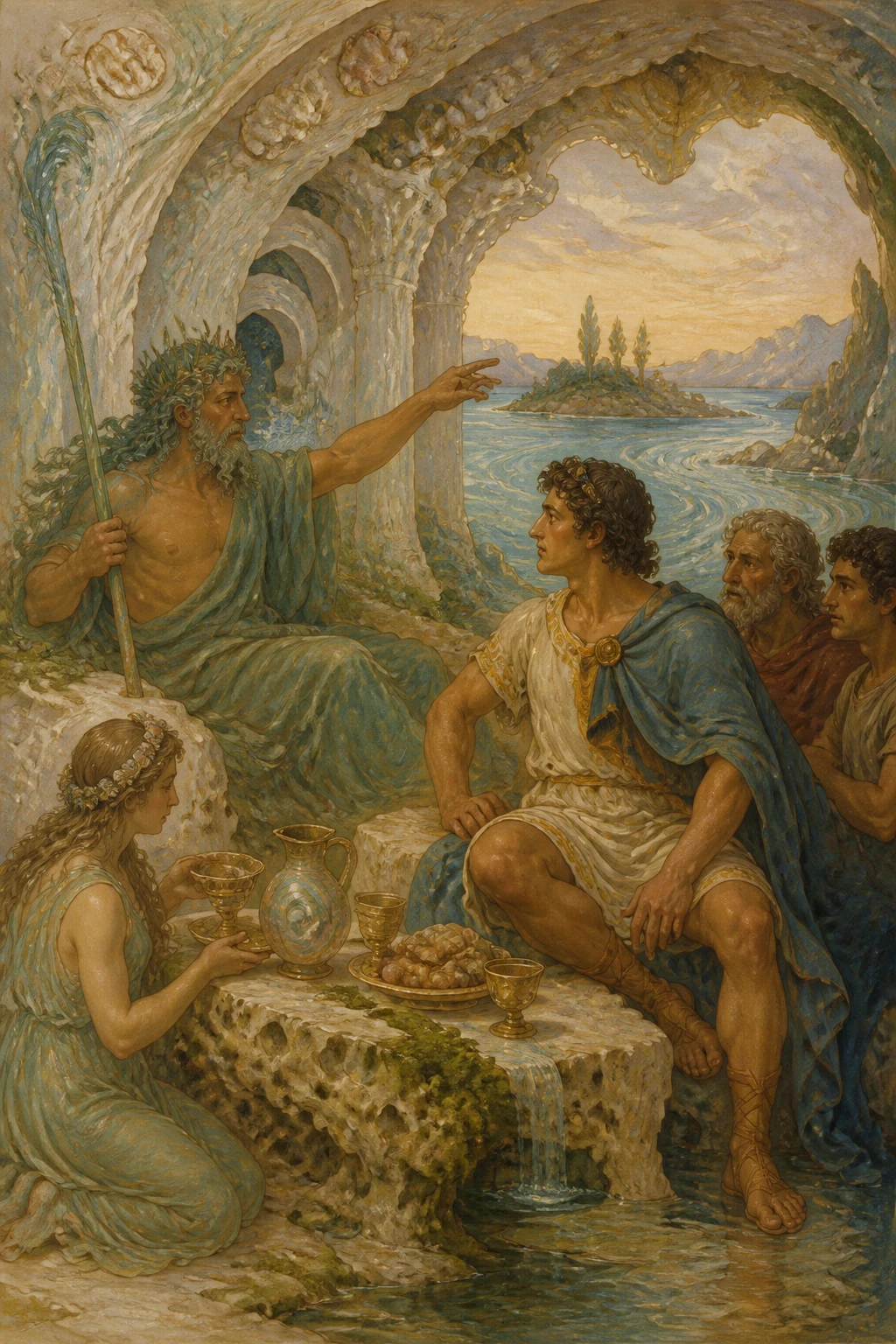
Meanwhile Theseus, having done his share of their common labour, was making his way to the Erechthean citadel of Pallas. Achelous, swollen with rain, barred his passage and delayed his journey. “Come beneath my roof,” he said, “illustrious son of Cecrops, and do not trust yourself to these ravening waters: they often carry off solid beams and roll great boulders headlong with a mighty roar. I have seen lofty cattle sheds along the banks swept away, herds and all: there strength was no help to the cattle, nor speed to the horses.
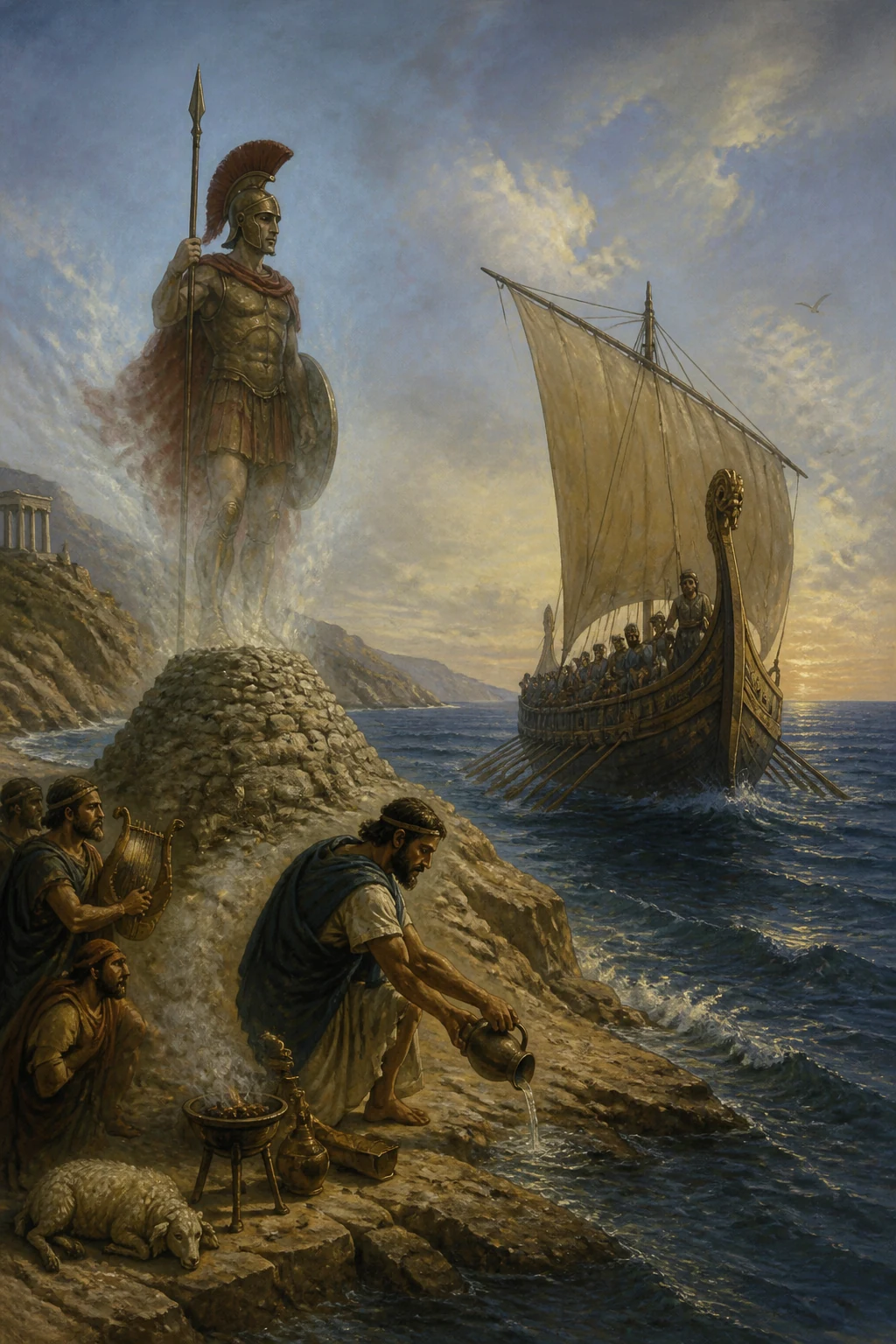
Here too this torrent, swollen by melting mountain snows, has drowned many young bodies in its swirling flood. It is safer to rest until the river runs within its accustomed bounds, until its own bed can hold the dwindling waters.” The son of Aegeus nodded. “Achelous,” he replied, “I shall accept both your house and your advice.” And he availed himself of both. He entered halls built of porous pumice and rough tufa: the ground was damp with soft moss, and shells, alternating with purple murex, panelled the ceiling.
Now Hyperion had measured out two-thirds of the daylight, and Theseus and his companions in labour reclined upon couches: on one side sat Ixion’s son, on the other the hero of Troezen, Lelex, whose temples were already sprinkled with a few grey hairs, with others whom the river god of Acarnania had deemed worthy of equal honour, overjoyed to entertain so great a guest.
At once barefoot nymphs furnished the tables with a feast, and when the food was cleared away, served unmixed wine in jewelled cups. Then the greatest of heroes, gazing out over the sea below, said, “What is that place?” He pointed with his finger. “Tell me the name of that island—though it seems there is more than one.” The river god replied, “What you see is not a single island: there are five; distance conceals the channels between them.
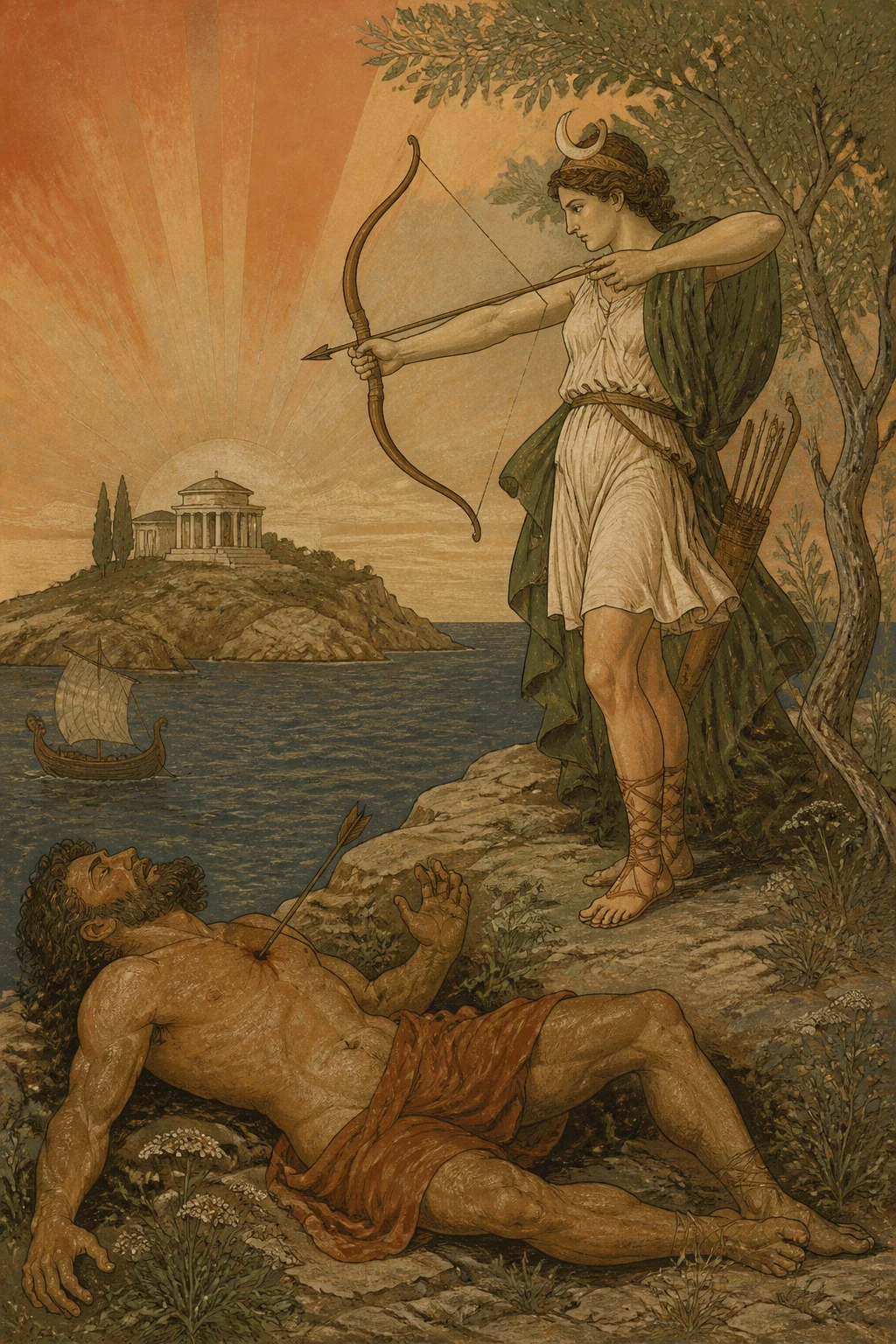
And so you may marvel less at what Diana did when slighted, these islands were once naiads. After slaughtering ten young bulls and inviting the country gods to their sacred rites, they led their festive dances, forgetting me. I swelled, and rose as high as I have ever risen at my fullest flood; monstrous alike in anger and in waters, I tore woodland from woodland and field from field, and swept the nymphs, who at last remembered me, with their land into the sea. My waters and the sea’s split the once-unbroken ground, dividing it into as many parts as the Echinades you see amid the waves.
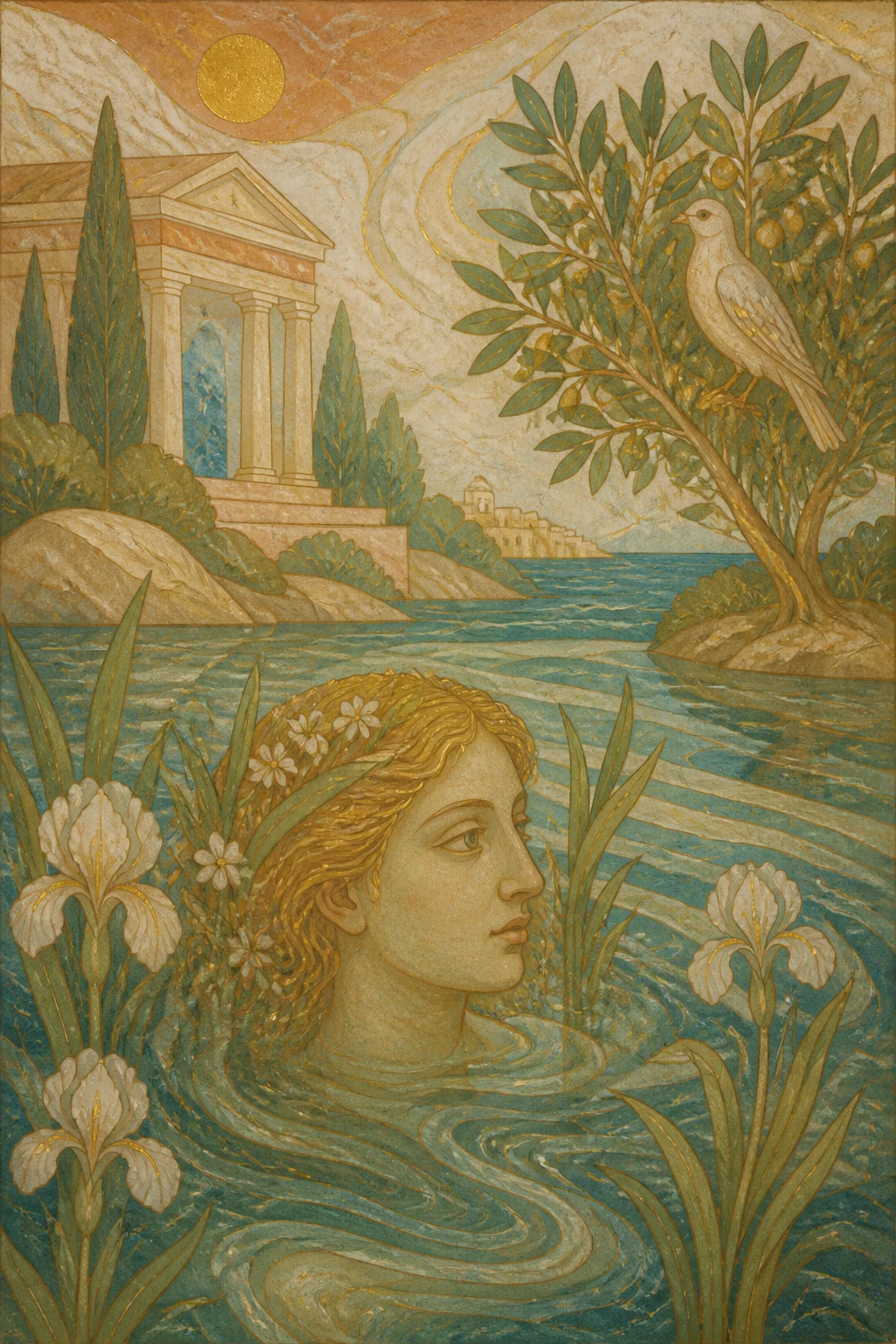
Yet, as you yourself can see, one island lies far, far apart, dear to me; sailors call it Perimele. I loved her and robbed her of her maidenhood. Her father Hippodamas took this bitterly, and from a cliff hurled his daughter’s body into the deep to die. I caught her, and as I bore her afloat, I said, ‘O trident-bearer, to whom the restless waters, the realm next to earth, fell by lot, in whom we sacred rivers end, toward whom we run, come here, Neptune, and graciously hear my prayer.
I have wronged this girl whom I bear. Had Hippodamas been gentle and just, had he been a father, or merely less cruel, he ought to have pitied her and forgiven us. This too I shall embrace.’ The king of the sea nodded and shook all his waters with his assent. The nymph was frightened, yet still she floated. As she floated, I touched her breast, her heart beating in terror.
And while I touched her, I felt her whole body harden, and her breast become buried beneath gathering earth. Bring her help, I pray, and, drowned through her father’s cruelty, grant her a place, Neptune; or let her herself become a place.’ As I spoke, new earth enfolded her floating limbs, and from her transformed body a solid island grew.
Izvirnik
Achelous Hosts Theseus
Naslednje strani prikazujejo izvirno besedilo za primerjavo.
Source ID: ovid_metamorphoses_story_057 Citation: Ovid, Metamorphoses 8.547-8.610 Original language: Latin Source: PerseusDL canonical-latinLit Source URL: https://github.com/PerseusDL/canonical-latinLit/blob/master/data/phi0959/phi006/phi0959.phi006.perseus-lat2.xml Segmentation certainty: medium 547: Interea Theseus sociati parte laboris 548: functus Erechtheas Tritonidos ibat ad arces.
549: Clausit iter fecitque moras Achelous eunti 550: imbre tumens. “Succede meis,” ait “inclite, tectis, 551: Cecropida, nec te committe rapacibus undis: 552: ferre trabes solidas obliquaque volvere magno 553: murmure saxa solent. Vidi contermina ripae 554: cum gregibus stabula alta trahi: nec fortibus illic 555: profuit armentis, nec equis velocibus esse. 556: Multa quoque hic torrens nivibus de monte solutis 557: corpora turbineo iuvenalia flumine mersit.
558: Tutior est requies, solito dum flumina currant 559: limite, dum tenues capiat suus alveus undas.” 560: Adnuit Aegides, “utar” que “Acheloe, domoque 561: consilioque tuo” respondit; et usus utroque est. 562: Pumice multicavo nec levibus atria tophis 563: structa subit: molli tellus erat umida musco, 564: summa lacunabant alterno murice conchae. 565: Iamque duas lucis partes Hyperione menso 566: discubuere toris Theseus comitesque laborum: 567: hac Ixionides, illa Troezenius heros 568: parte Lelex, raris iam sparsus tempora canis, 569: quosque alios parili fuerat dignatus honore
570: amnis Acarnanum, laetissimus hospite tanto. 571: Protinus adpositas nudae vestigia nymphae 572: instruxere epulis mensas dapibusque remotis 573: in gemma posuere merum. Tum maximus heros, 574: aequora prospiciens oculis subiecta, “quis” inquit 575: “ille locus?” digitoque ostendit, “et insula nomen 576: quod gerit illa, doce: quamquam non una videtur.” 577: Amnis ad haec “non est” inquit “quod cernitis, unum: 578: quinque iacent terrae: spatium discrimina fallit.
579: Quoque minus spretae factum mirere Dianae, 580: naides hae fuerant. Quae cum bis quinque iuvencos 581: mactassent rurisque deos ad sacra vocassent, 582: inmemores nostri festas duxere choreas. 583: Intumui, quantusque feror, cum plurimus umquam, 584: tantus eram, pariterque animis inmanis et undis 585: a silvis silvas et ab arvis arva revelli 586: cumque loco nymphas, memores tum denique nostri, 587: in freta provolvi. Fluctus nosterque marisque 588: continuam diduxit humum partesque resolvit 589: in totidem, mediis quot cernis Echinadas undis.
590: Ut tamen ipse vides, procul en procul una recessit 591: insula, grata mihi; Perimelen navita dicit. 592: Huic ego virgineum dilectae nomen ademi. 593: Quod pater Hippodamas aegre tulit inque profundum 594: propulit e scopulo periturae corpora natae. 595: Excepi nantemque ferens “o proxima mundi 596: regna vagae” dixi “sortite, tridentifer, undae, 597: In quo desinimus, quo sacri currimus amnes 598: huc ades atque audi placidus, Neptune, precantem.
599: Huic ego, quam porto, nocui. Si mitis et aequus, 600: si pater Hippodamas, aut si minus impius esset, 601: debuit illius misereri, ignoscere nobis. 602: hunc quoque complectar.” Movit caput aequoreus rex 603: concussitque suis omnes adsensibus undas. 604: Extimuit nymphe, nabat tamen. Ipse natantis 605: pectora tangebam trepido salientia motu. 606: Dumque ea contrecto, totum durescere sensi 607: corpus et inducta condi praecordia terra.
601: adfer opem mersaeque precor, feritate paterna 602: da, Neptune, locum; vel sit locus ipsa licebit.” 609: Dum loquor, amplexa est artus nova terra natantes, 610: et gravis increvit mutatis insula membris.
Nadaljuj z branjem