O besedilu
Cesar tat
- Vir
- Legende sau basmele românilor
- Avtor
- Petre Ispirescu
- Jezik branja
- English
- Jezik izvirnika
- Română
- Čas branja
- 24 min branja
- Obseg
- 20 strani
- Naslov izvirnika
- 034 Hoțu împărat
O izvirniku
Legende sau basmele românilor
Romunske ljudske pravljice o začaranih kraljestvih, preizkušnjah in junakih, zapisane iz ustnega izročila. Bralni jezik je English, izvirnik pa prihaja iz vira Legende sau basmele românilor v jeziku Română.
Besedilo
Cesar tat
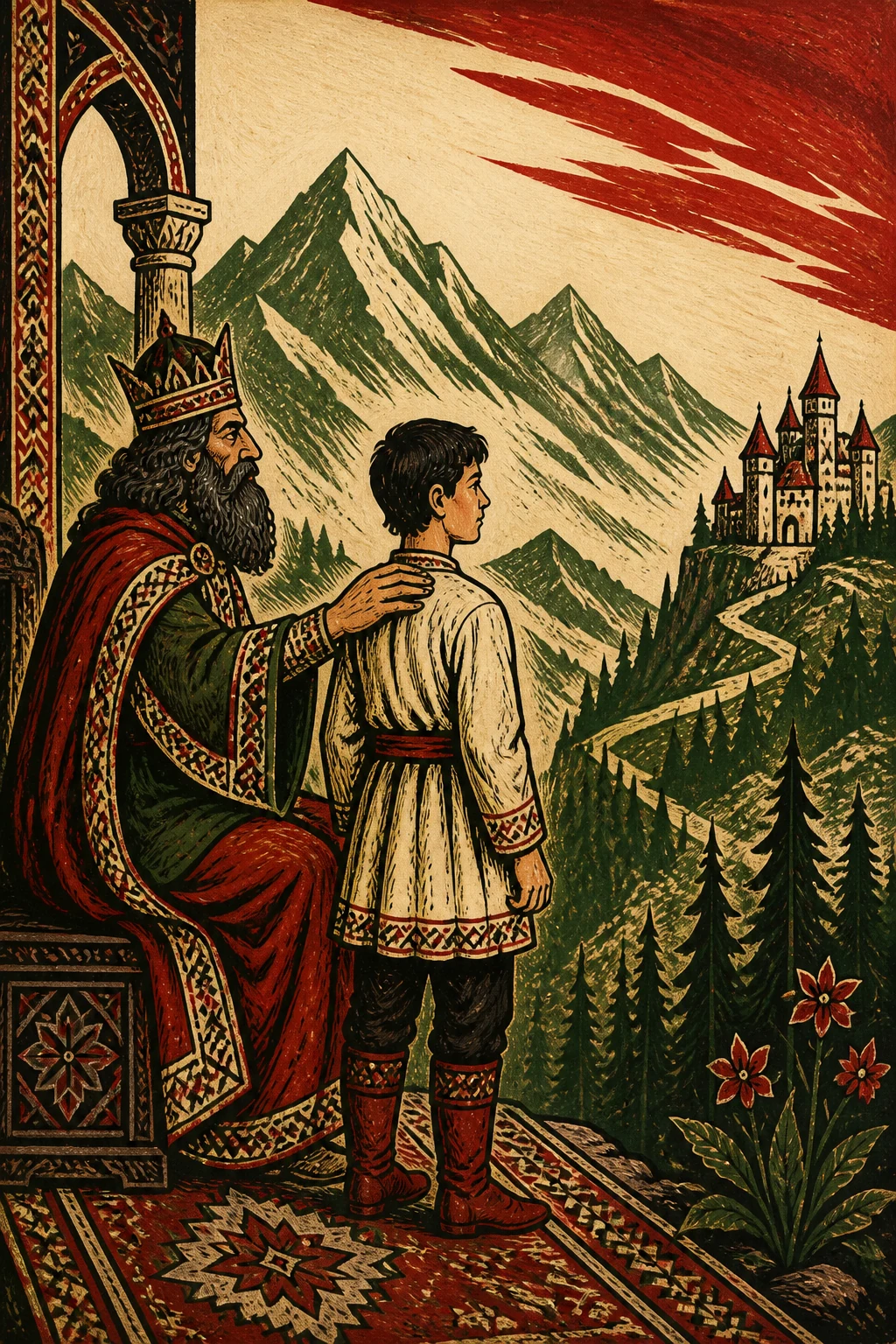
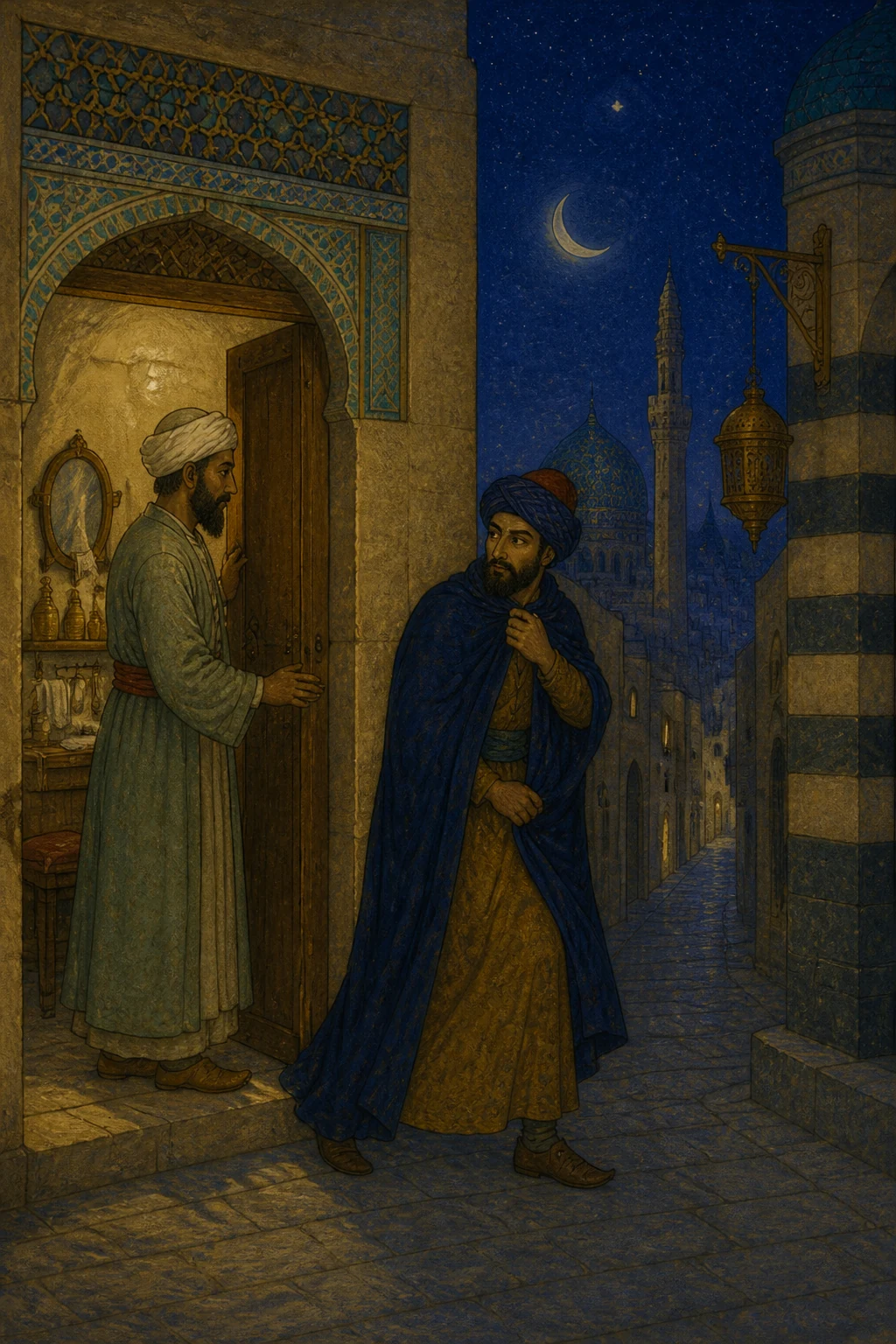
In his grey-haired years, he too was blessed with a child. His joy knew no bounds when he found himself a father at last, and his whole empire rejoiced with him, for this emperor was good and just and God-fearing. He had therefore done much good for his people. And all, with one heart and one voice, gave glory to the Lord for having deigned to grant them an heir to the empire. The emperor resolved that his son should learn every trade and acquire all the learning of scholars. The emperor’s son grew as much in a month as other children did in a year. When he was eight, he looked eighteen. Seeing this, his father, the emperor, set him to his books. After the boy had learned philosophy and the reading of the stars from the most accomplished masters, his father sent him to the most skilful physician to learn the art of healing as well. When the emperor saw that his son had a prodigious memory and readily grasped whatever he was shown, his heart swelled with contentment, for God had given him a child after his own heart. Once the boy had mastered all book-learning, the emperor began sending him from town to town to learn every trade. Whenever he heard that some town possessed an especially gifted craftsman whose trade was not practised in his own dominions, he sent his son there at once to learn it. Thus the emperor’s son wandered from land to land like an exile, until he had learned every trade upon the earth. And when he returned to his father’s palace, he thought his wandering days were over and he could settle down at last. Delighted to have so accomplished and skilful a son, his father gave a great feast, inviting all the neighbouring emperors so that he might show them the young man’s learning. The emperor’s son himself gave the cooks their orders and showed them how to prepare the dishes. The guests could not praise the food highly enough. Then the emperor’s son came to join them at the table. They made merry, and, as the saying goes, one word led to another. The emperors began telling of the judgments they had passed and the justice each had done in his own realm. Among other things, one said that he would regret to his dying day having condemned an innocent man accused of stealing certain goods, when the thief had been someone else, as was later proved. On hearing this, the emperor who was giving the feast turned to his son and said, “You know that if an emperor wishes to be just and a true ruler of his subjects, he must understand every trade, so that he may see each man’s troubles with his own eyes. That is why, my boy, I had you taught every craft. It never occurred to me that thieving was a craft as well. That alone remains for you to learn, after which you will become an emperor like Solomon, and there will be no other like you in the world.” “Why, Father!” answered the emperor’s son, who was so ashamed that he blushed red as a beetroot. “How can you sentence me as though I were a common brigand?” And rising from the table, he went off somewhere or other and returned almost at once, to everyone’s surprise, with a faithful servant, bringing planks, slats, poles, ropes and canvas. With these, and with his servant’s help, he began building a sort of pavilion. When it was finished, he climbed inside and turned certain screws and cranks belonging to its machinery, and the pavilion began to float in the air. As it rose higher and higher, he bade farewell to everyone below, leaving them open-mouthed and staring after him. His mother very nearly fainted with grief, but she mastered herself. Once he had disappeared from sight, the guests rose and scattered like a brood of partridges, unwilling to add to the emperor’s sorrow, which was all too plainly written on his face. After travelling through the air for some time, the emperor’s son began to descend. And what do you think happened? His ill fortune brought him down right before a miserable little sunken hut. It was evening. He knocked at the door. The people inside, a gaunt and ragged couple, asked, “Who is there?” “An honest man,” replied the emperor’s son. “Open the door, for I am a traveller.” They let him in. As he entered the hut, he noticed the woman slipping something beneath the bed. “What wind has blown you our way?” they asked. “I am a stranger. I have just arrived from other realms. I beg you to give me shelter.” “Gladly, such as we can offer.” “Thank you kindly,” he said. “You shall not go unrewarded. But why have you stopped your work? Go on; do not let me hinder you. I noticed you were doing something when I arrived.” The woman was about to spin a few lies, but her husband took the words out of her mouth. “Let us tell the truth. You are our guest, sir, and I trust you will not hand us over to the authorities. I am a thief. There is little to be made at the trade nowadays, since the emperor appointed some devilishly strict and harsh officers to keep the likes of us in check. We barely keep body and soul together with a hen or some other bird we can pilfer here and there. My wife was just plucking a goose when you came.” “That is precisely what I was looking for. God has brought me to you. Take the goose out from under the bed and get on with your work. From this day forward I am one of you. I will be your apprentice, if you will teach me your craft.”
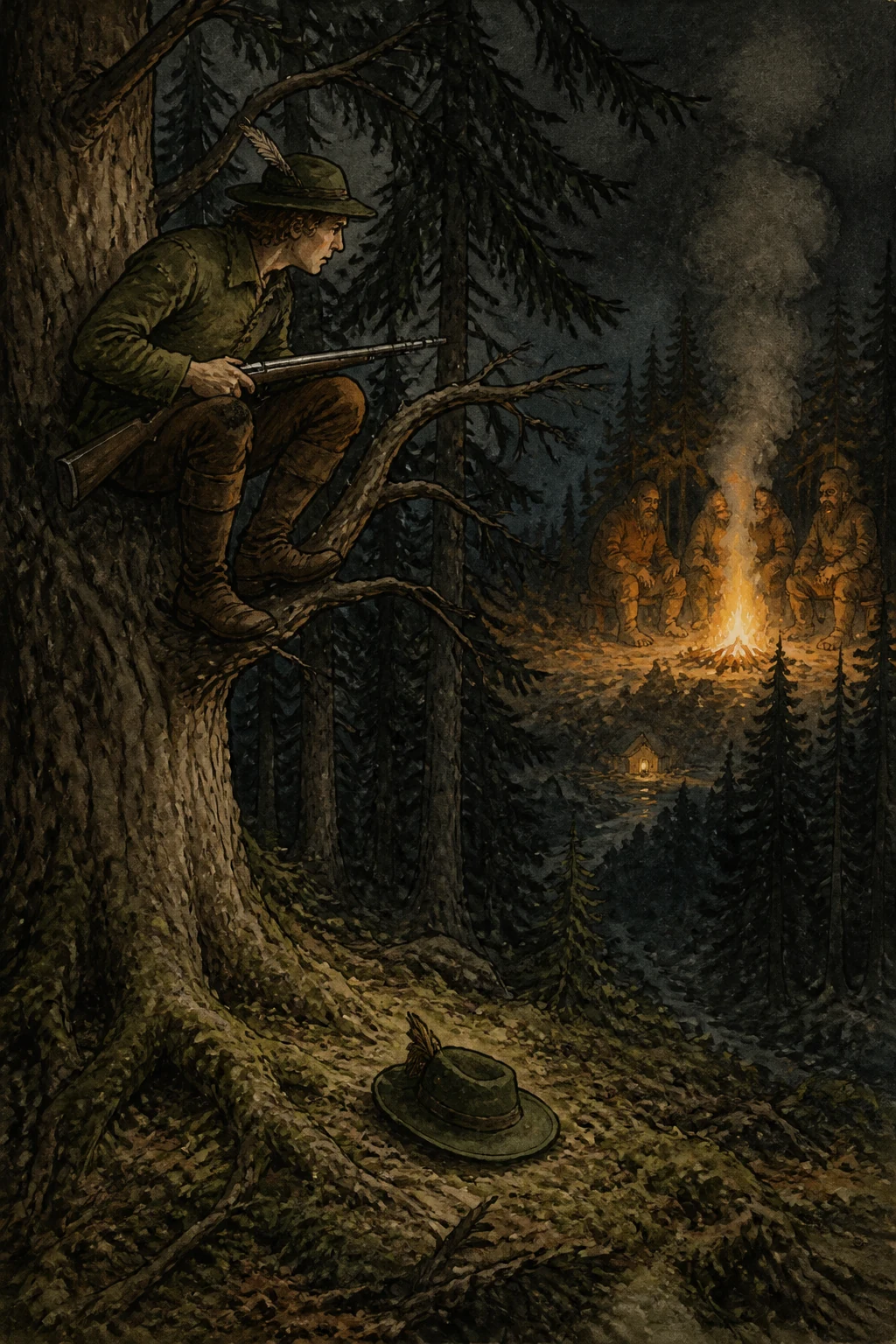
While the goose was being plucked and cooked, the emperor’s son went outside, took his pavilion apart at all its joints and stowed it safely where no one would find it. Then they sat down to eat and made merry until the cocks began announcing the coming dawn. The next day they came to an agreement, and the emperor’s son remained under the thief’s direction to learn his craft. “The whole art,” the thief told him one day, “is to steal without anyone catching you. You must pick the devil’s own pocket without a living soul or any other creature seeing you. Before a thing has time to fall, you must have found it. Whatever you think another man has not put safely away, take into your own keeping. Cunning, deceit, daring, quick wits, trickery and all their kin must be your tools.” The emperor’s son listened and took it all to heart. After some time spent practising the thief’s trade, finding that everything was going smoothly, he said, “Master, when do you mean to make me a journeyman?” “When you steal my cloak from under me.” Some time later they went hunting. There in the forest they stopped to rest, each stretching out on whatever he had brought, beneath the shady trees and in the cool air, to doze a little. The thief had spread his cloak beneath him. Suddenly he heard the squealing of a hare, as though a hound had caught it. He got up and looked about, but saw nothing. His servant, the emperor’s son, had fallen asleep and was snoring like a herd of pigs. The thief lay down again. Before long, just as sleep was about to steal over him too, he heard the same squealing, this time very close at hand. He sprang straight up. “What the devil? There must be something there. I’ll just run over and see what devilry this is.” No sooner said than done. There was a little thicket a stone’s throw away, and he went towards it, for that was where the hare’s squealing seemed to come from. While the thief was walking away, the emperor’s son rose softly and, on tiptoe, whisked away the cloak, folded it neatly, hid it in a hollow tree and lay down again. He did it all quicker than thought. Finding nothing in the thicket, the thief cursed the hare and all the rest of it and came back to rest. But where was his cloak? Nowhere to be found. He looked all around; not so much as a leaf stirred. The emperor’s son was snoring loudly enough to wake the dead. The poor thief stood as though thunderstruck. He knew there was no one who could have played this trick on him but his apprentice. He turned this way and that, prowled all around, but the cloak was gone. At last, swallowing his vexation, he went to wake his apprentice. The young man was dead to the world. He shook and jostled him for as long as I have been telling you this tale, and only with the greatest difficulty did he wake him. Drowsy and rubbing his eyes, the lad began complaining that he could not get so much as a little sleep, and that he would leave a master who would not give him time even to close his eyes. The thief saw that his apprentice would outstrip him. “Enough of such talk,” he said. “Give me my cloak, for you are a journeyman now, and your apprenticeship is over.” At these words, the emperor’s son darted off and brought him the cloak, and the two bound themselves as partners, for better or worse. Once they became partners, their trade began to prosper handsomely. For the emperor’s son had the quicker hands and the greater daring. One day the young prince went hunting, merely to while away the hours, for he had nothing else to do. As he wandered through the forest, he suddenly heard a boar grunting nearby. He looked about and, quicker than thought, was there. And what should he see before him? An enormous wild boar had knocked a young lad to the ground and was struggling to free its tusks from his bow so that it could tear him apart. The emperor’s son drew his hunting knife and, with extraordinary courage, rushed at the boar, drove the blade straight into its eye and sent it tumbling head over heels. A couple more good blows to the head, and he killed it on the spot. Somehow he fetched a little water in his cap and sprinkled the young man, who had fainted, until he began to revive. When the lad came to and saw his rescuer, he said, “Ask me for as much as you please, and I shall give it to you in return for this kindness.” “Even the Gypsies have money,” replied the emperor’s son, “but not honour. Do not imagine that I did what I have just done for you for the sake of money.” The young fellow was somewhat taken aback, but, finding his tongue again, he told the whole story: how he had come hunting with several companions, how the boar had appeared and he had pursued it, how he had failed to strike it properly, and how it had charged him and knocked him down, all but sending him into the next world. As it happened, he too was an emperor’s son, and indeed the son of the emperor who ruled that very land. They became friends and went together to the imperial palace. The emperor did not know how to thank the stranger enough for saving his child from death. Since he would accept no other reward, he gave him leave to come to the palace whenever he pleased. Every time the stranger went to visit the emperor, he examined and took careful note of everything about the place. After a while he said to his partner one day, “Partner, I have grown tired of petty pilfering. Let us carry out a theft that will really be felt.” “What do you want us to do?” “Why, let us pay a visit to the imperial treasury. Surely it will not burn us.” “What are you saying, man? Good heavens, do you know how many guards there are?” “We shall go where there are no guards.” They agreed, and one night they set out, taking the tools they needed. Since the emperor’s son knew every craft, he understood masonry as well. He set to work, and with only a couple of blows of his pick loosened enough bricks to let a man through. This was on the street side, where no one was passing. He went inside, filled two caps with gold coins and came out again. Then he fitted the bricks back into place so that no one could tell where they had entered. There is no describing their joy at finding themselves with such a heap of money. They went home and slept as innocently as though they had never eaten garlic and their breath did not smell of it. The next day there was a great uproar in the town when word spread that the emperor’s treasury had been robbed. Everyone marvelled and crossed themselves, unable to fathom how the thieves had got in. The emperor himself was no less puzzled and began considering how he might catch these daring robbers. The emperor’s son who had played the trick went to the palace as usual, pretended to share everyone’s astonishment at such audacity, and said, “Whoever carried out so bold a robbery is bound to return at least once more.” The emperor of that land set guards of every kind about the treasury and waited. A few days later, when the uproar had died down, the thieves returned, for they had acquired a taste for it, like a dog for bran. The emperor’s son took out the bricks again and said to his partner, “Last time I went in; now it is your turn. That seems only fair.” His partner could say nothing, for it was true. So he went into the treasury, and, being the greedier of the two, took as many gold coins as he could carry and brought them to his companion at the opening. The latter took them. But when the thief tried to get out, he tugged upwards and tugged downwards, only to discover that he had been caught in a snare and could not escape. The emperor’s son had no time to lose. What was he to do? He cut off his partner’s head, took it with him, put the bricks back into place, and away he went. But when he reached home—oh, dear! Where was God to hear the woman’s weeping and wailing when he showed her her husband’s head? She screamed as though she were being impaled. The emperor’s son clapped a hand over her mouth. “Hush, foolish woman! Let no one hear you, or we shall be in trouble.” After telling her the whole story, he soothed her by saying that he would leave her all the money they had stolen. He also promised to bring her husband’s body so that she could bury him decently, with all the proper rites. When day came, the emperor’s servants found the headless body and brought it to their master. The emperor was beside himself with fury that they had not caught the robber alive and unharmed. The emperor’s son went to the palace too, and, hearing what was being planned, prepared to keep the promise he had made to his partner’s wife. The twelve boyars took counsel together and reasoned that there must be at least two thieves, and that the living one was certain to come for the dead man’s body. They therefore thought it best to place the headless corpse in the middle of the market square, on a platform with three steps, and station the emperor’s men all around it to keep watch throughout the night. This they did. The thieving emperor’s son went and bought a broken-down, mangy, sore-covered horse, so lean that it was nothing but skin and bone, together with a rickety cart and a barrel of brandy. After loading the cart and harnessing his wretched nag to it, he set off towards the place where the corpse lay on display. There was a muddy lane nearby, and that was the way he chose to go. And what do you think happened, my worthy boyars? The poor wreck of a horse became so deeply bogged down that it could not even move its legs, let alone drag the cart and its barrel of brandy. He cried to it, he pulled at it, but would the horse budge? Not an inch. Then he raised such a din that you would have thought the place was on fire. The captain of the guards sent one of his men to see what fresh misfortune had befallen that wretched fellow, who seemed bent on deafening everyone with his shouting. Seeing how he struggled to pull the horse and cart out of the mire, the guard took pity on him. As soon as the emperor’s son saw him, he said, “Go, my good fellow, and fetch a few more men to help me out of this mud, and I shall treat you as the good men you are.” Several guards soon came, lifted horse, cart, barrel and all, and hauled them out of the mud in which they had sunk. He did not know how to thank them enough. He wrung his hands with delight and began tapping the barrel. He gave them as much to drink as they wished, and took some to those who had remained on watch beside the headless corpse. Before long all the guards were overcome by a sleep as deep as death. How our gallant watchmen snored! You would have thought a great herd of swine was lying there. For the brandy in the barrel had been laced with opium. When the emperor’s son saw them all stretched out and sprawled about like so many logs, he stripped off their clothes and dressed them in monks’ habits. Then he took the dead man’s body and went about his business. At the sight of the body, the woman began wailing again. Once more he put his hand over her mouth and stopped her making a noise, for if anyone found out, it would go badly with them. Seeing that he was in earnest, she fell silent and accepted the greater part of the stolen money. That very night they buried the dead man. When the guards awoke and saw themselves dressed in monks’ habits, they could not believe their eyes. They rubbed them and looked again, but there was no mistaking it.
The first to wake went over to the companion beside him, nudged him and said, “Father monk! Father monk! What are you doing here?” “And what are you doing here, monk?” the other answered. Then all at once they began shouting at one another, “What are you doing here, monk?” and pointing their fingers. Such a commotion and uproar arose among them that no one could have made head or tail of it. Only much later did they recover their senses and understand that there had been something very wrong about the fellow with the brandy the night before. But when they saw that the body was missing—then, indeed, the quarrelling and bickering began in earnest, until they were almost out of their minds. They blamed one another like so many devils. “It is your fault!” “You were the one who made us drink!” “You were the one who urged us to go and help him!” “You were the first to drink!” All that was bad enough. But how and when had they become monks? And how were they to show themselves before the emperor? There was nothing for it: they went just as they were. The emperor seized his beard with both hands when he saw a whole troop of monks coming towards him. For, you see, he had no idea who they were or what they wanted. When he learned that they were his guards, he burst into such gales of laughter that the tears streamed down his face, and he laughed until his sides ached. The poor guards fell to their knees and begged forgiveness. They told him the whole story. The emperor spared them punishment, but he himself grew more troubled than ever. He feared that so skilful a thief might even steal his throne. He no longer summoned his council, for he had begun to suspect them too, but racked his own brains for some means of laying hands on the thief and putting an end to him. At last he resolved to make inquiries among high and low alike, to test both the boyars and the common people, and see whether he might catch this notorious robber who had filled his mind with such dark misgivings. To this end he ordered a magnificent feast to be prepared, to which he invited only the nobility. The foreign emperor’s son was, of course, among the guests. On the appointed day they all assembled. The merrymaking continued far into the night, for after rising from the table they began to dance. They danced their round dances and their girdle dances with such zest that, before they knew it, the cocks were crowing for midnight. Just as the gathering was about to break up, the emperor stepped into their midst and said in a rather commanding voice, “My lords, the night is far advanced, and lest any of you come to harm through some unclean spirit or evildoer, I have thought it best that you should remain here until daybreak. The chamber is large enough to hold you all. My daughter’s room is next door. Have no fear, but rest from the exertions of tonight’s dancing and leaping. May the Lord watch over you all.” Thus spoke the emperor, and thus it had to be. Murmur and protest as they might, there was no help for it: the emperor would not take back his word. “Oh, Father! How can I sleep with my door unlocked, beside a room where so many strange men are to spend the night?” his daughter asked him. “Not only that, my daughter, but you must put out your candle as well, and keep a little candle grease at hand. If anyone comes to you, stroke his face and beg him to stay a little longer; and as you caress him, smear a little of the candle grease on him. You must do this, my dear child, all the more willingly because it is for the salvation of the empire.” For the emperor meant to catch the thief by a trick. That was why he had invited the boyars to the feast. For he said to himself that if so clever a fellow was to be found among the boyars, he must also be daring. And if he was not among the boyars, then he would seek him among the common people, using stratagems of the same kind.
The emperor’s orders were carried out to the letter. Everyone went to bed and fell asleep. Only the emperor’s daughter could not close her eyes, try as she might. Nor did the prince who was a thief sleep so much as a wink. He kept twisting his moustache and wondering whether he should venture forth or not. Then, some time after midnight, when even the waters sleep, he rose quietly and looked about at his companions, who were all sound asleep. Stealing along without a sound, he slipped into the princess’s chamber, kissed her, and went back to bed. The emperor’s daughter had played her part just as her father had taught her. Before lying down, the prince went to the water pail for a drink, for he was thirsty. Looking into the water, he saw black marks on his left cheek. A candle burned all night in the room where the emperor’s guests were sleeping. “So that was your little game!” he whispered. “Very well, my fine fellow, I shall show you whom you are dealing with.” With his heart pounding, and treading more softly than a cat stalking mice, he took the charred end of the candlewick and smeared the cheeks of all the sleeping guests to match the marks on his own face. Then he went to bed. The emperor rose earlier than anyone else. At the first light of dawn he came into the room where the guests lay sleeping, to see whether any of them bore the marks he had instructed his daughter to make. And what should he see? Every one of them was marked! Dismayed, he hurried breathlessly to his daughter’s chamber and asked in an anxious voice, “Why, my dear child, did they all kiss you?” “No, Father. Only one came, and I marked him just as you told me.” “Would you know him again?” “No, for it was dark.” The emperor bit his lips. Then he ordered the guards not to let any of the guests leave. When it was broad daylight, he came once more among them and said in a loud voice, “My lords, the thief who has unsettled an entire country with his skill, cunning, and cleverness, and who has robbed me of my peace of mind, is here among you. I ask him to reveal himself, upon my imperial pledge that I shall do him no harm.” All the noblemen began shaking out their clothes and disavowing such an accusation as though renouncing the devil himself. “Far be such a suspicion from us!” they cried. “We know of no dishonourable deed upon our consciences, whether committed knowingly or unknowingly.” “There is no question now of disgrace or punishment. All I ask is that he reveal himself. I swear by the living God and by my imperial crown that not only shall I do him no harm, but I shall give him my daughter’s hand in marriage.” Then the prince from the foreign land stepped forward and said, “I am the man.” The emperor was greatly pleased when he saw him. The prince asked permission to go out, pledging his word as a brave and honourable man that he would return before noon. The emperor believed him and gave him leave. He returned with several men carrying the pieces of his pavilion. There, before them all, he fitted each little piece of wood into its proper joint and built the pavilion anew. Then he came before the emperor, kissed his hand, and asked that his bride, the emperor’s daughter, might go up into the pavilion with him, so that from there he could declare who he was and what he had done. The emperor consented. As soon as they were inside, the prince began turning the cranks; and as the pavilion rose into the heavens and floated through the air, he called out, “Know that I am an emperor’s son, that it was my appointed task to steal myself a wife, which I have now done, and that I am going home to my father’s kingdom.” As he spoke, the pavilion rose higher and higher until it vanished from the sight of all those who stood staring after it, open-mouthed. When he alighted at his father’s palace and showed him his certificate as a master thief, together with the wife he too had won by stealing, his father rejoiced. Stepping down from the throne, he raised his son to it, saying, “Now the fame of my son’s reign will spread throughout the land. Now the people, too, will learn what justice is, for to be a good and just ruler, one must also understand the ways of thieves.” After taking the throne, the prince sent a messenger to his father-in-law with a letter telling him that he had succeeded his father as emperor. And the emperor rejoiced greatly at his daughter’s good fortune. And I mounted a saddle, and told you this tale.
Izvirnik
034 Hoțu împărat
Naslednje strani prikazujejo izvirno besedilo za primerjavo.
la vremea carunteteI dobandi si elf' unit copila. Bucuria lui fu nespusa cand se vedu si elf' tats, si tOta imperatia lui fu vesela dim preuna cu densul: caci acestil im- &rata era bunt'', drepta si tematora de Dumnedeti. Pentru a testa elf' facu multi' bine poporului sea. i top inteunti &Ida si intr'o glasuire dete marire. Domnului di s'a indurata a le da lulu mostena all imperaliei. Acesta imperatii pu.se de ganda ca pe fiula sAti sa-la dea sä invete Vote meseriile si tea procopsela carturarilorti. Fiulti Imperatului crescea intr'o luna cat altii inteunil anti. Cand fu de opta anl, 'Area ca este de opta-spre-doce. Daca vec,lu asa, tats -seil, imperatulti, ill dete la carte ; dupa ce inveta filosofia 0 citirea pe stele, de la eel mai iscusiti dascall, flu dete la cell mai mestera vracia de inveta si mestesugula lecurilora. Veclenda tats -seti, imperatula, ca fiu-sea are tinere de minte grozava, si is in capti u;orti cele ce i se arfita, se umplu de multumire sufletesca, cici Dumnedeti 11 dase unii copilu tocmai dupa gandulu sea. Invetanda elf' tots cartea, impAratula a inceputti a trimite pe fiu-sAti din_ cetate in cetate sfi Inv* tote meseriile. Cum audea ca in cutare cetate este cite veunii mestera mai dibaciti, si a acea meserie nu se afla pe la dAnsula, indata flu trimetea Si invete si acea meserie. Astir -fela umbra fiula Imperatului din tern in pa, ca si una
pribegu, pane ce inveta tote meseriile de pre paminta. Si intorcendu-se la palaturile tatalui sea, socotea ca acum s'a stir- ; are sa se stranga de pre drumuri. De bucurie ca are unii flu aa de pro' opsitti ;i de iscusitA, tatela seu facu o masa mare, unde chema pe toti imperatil vecinii lui, ca sa le arate fiulu seu procopseta. Insu;1 fiulu iniperatului porunci la bucatari ti le arata cum sa face bucatele. Mesenil nu sciaii cum sa mai laude gustulil acestorii bucate. Cand eta, ca vine ;i fluid imperatului la masa. Se chefuira, deci, si scii, vorba aluia, vorba vorba aduce. Incepura imperatil a povesti despre judecatile si dreptatile ce facuse fie-care In imperatia sa. Intre altele unulit spuse cal se va cdi cats va trai elu, pentru ca a osindiiii pe unu omit dreptil invinovatita fiinda ce ard fi furatd nisce lucruri; pe tend altult a fostii hotuld, precumtl se dovedi mai in urma. Cum atuji imperatula care dedese ospetulit, se interse catre 'lulu sell si clise: Sciii ca, data unu imperatii voesce sä fie dreptii, ;i deveratil stapanitort supu;ilorii se', trebue sa scie tote meseriile, ca sä cunosca prin insug ochii sel pasurile fie-caruia. De aceea, fetuhl met, to -am data sa inveti tote me;te;ugurile. Nu mi-a venita in gandd ca si hotia este unii me;te;ugii. Acosta 41 remane sa mai inveti dupe care to vei face unil imperatil ca Solomomi imperatii ;i cum altulii nu va mai fl pe lume. Ii ! tats, respunse flulil de imperatii carele se rosins si se ro;ise ca o sfecla, cum de me osandesci ca pe unit vinovatii de codru. Si sculandu-se de la masa, se duse, unde se duse elu, ;i se intorse numai-de-cats, peste a;teptarea tutulorii, cu o sluga a lui credinciesa, aducendii nisce scanduri, stinghii, drugi, odgone si pane. Cu aceste se apuca, ajutatu de sluga lui, de cladi Lulu felt de foi;orii. Gatindu-se foi;orula, se urea intr'ensulil si invartindii nisce ;urupurif ;i nisce vartejurI la nisce me;te;ugiri ce avea acestd foi;orti, incepu a pluti in vintd ; si pe cand se tau urea, elu 1;1 lua clioa buns de la top ce-1 de lap, care remaseserd cu aastd-feld
gurile caseate si cu ochil bleojditi la densulii. Mums -sa catti p' aci era sa-i vie I'M de inima rea ; dard ki firm firea. Dui a ce flu perdura din ochi, naesenii se sculara si se irnpratiara ca pull de potirniche, ne .mai voindil a adaoga mahnirea imperatului, care se vede de pe fats ca era prea mare. Fiulu imperatului, dupd ce calotori cattl-va prin vesduhii, prinse a se cobori. Ce sa vedi Dumneata ? Osanda flu duse a sa lasa tocmai dinaintea unel cociobe de bordeiti saracaciosti. Era sera. Batu la use. Cei din nauntru, o pereche de omen! jigariti, in treba : Gine e acolo ? Omit bunti, le respunse fiula de imperatil. Deschideli ca suntti unti caletorti. Ii deschisera. and infra in bordeiti, elii 'Aga de sand cg muerea aruncase ce-va sub path. Dard ce vintri le aduce pe la noi ? Suntil streinfi. Acura am sositu din alte imperatii. Rogu-ve sa me gasduiti. Bucurosti, cu ce vomit putea. Forte ve multumscil, to mai dise elh. Nu ve va fi de geba. Dar de ce ye stinghiriti din lucru ? Lucrati, nu Ye oprig pentru mine. Anati bagatti de serna ca face* ce-va cand amti venitu ! Muerea vru sa indruge cate-va minciuni. Dara barbatulii II lua vorba din gura si Elise : spunemil dreptii. Dumneata esti ospetele nostru, ci credit ca nu ne vei da pe mana stapanirei. Eu suntil hop. Meseria acesta nu mai are cautare, de cand imperatulti a push nisce slujba0 al draculul de strasnici si de aspri pentru unil canoi. A bea ne mai tinemu dilele, cu Cale o gains sah alts pasere ce putemii sä clordimil de pe id, de colo. Si tocmai jumulea o gasca nevasta-mea cand ai venitu D-ta. Tocmai ce cautam §i eu. Dumnecleil m'a adusti la voi. Scetell gasca de sub path si face-ve-ti meOeugulii. De adi in colo suntil alit vostru. Me bagu menial la D-ta s me inyeti acestil meOeFigii.
Si pans jumuli si ggti Oscar fiulti imperatului esi afara, 41 stranse foisorulti, desfacendu-lii din tote incheeturile, puse bine, unde sä nu dea nimeni peste densulti. Se pusera deci, la masa si se chefuira ping ce cocosii incepurd a vesti ca vine alba in sate. A doua di se intelesera el la cuvinte, si fiulti de imperate remase sub ascultarea hotului, ca sä Inv* mestesugulti de la densubl. Totil mestesugule este, clise houle inteuna din dile, O. ciordesci, fard sä te princja cine-va. Sa buzundresci si pe. draculti, fard sd te vajd nici puiii de ome sail de alts gadind; Sa n'apuce sg cacla si tu sd gasesci ; Ori ce ti s'o parea ca nu este puse bine de altule, tu sd ei pdstrecli; Marghiolia, viclesugule, indrdsnela, istetimea, sotia si cu tote nemule lore, sd fie uneltele tale. EWA de imperatti asculta si bap la cape.. Pupa trecere de timpe, in care fiulti imperatului se indeletnicise la mestesugulii hope', veclendii ele ca lucrurile ii mergii strung, clise; Mestere, cand ai de gandil sa me scoll calla? Cand mi-oi fura ipangeoa de pe mine. Dupd ce mai trecu, merserd intro cli la vinate. Acolo in padure, stande sa faca popase, se toldnira fie-care pe ce avea, la umbra de copacie. si la r&ore, ca sa si aromeze ore-cum. Hotule isi asternuse ipangeoa. De °data hotulii audi miercaitule unui epure, ca si °and ile apucase ogarule. Se scold, se uita prin prejmii, si nu vede nimice. Squill see, fiule imperatului, adormise, si-i da nisce sfordell de parea ca mars porcii. Se culcd erdsi. Nu se4u multe, si tocmai &and era sa -le fure si pe ele somnule, audi dna °data acelasi miercaitti si cu totuld p'aprope. Odata sari dreptil in susti. Ce naiba, trebue sä fie ce-va. Me repechl sä vecie ce dracovenie sd fie aceea. si-lii si sa
Si hindu unti crangulelil intr'o departare catii arunci cu piatra, se duse intr'acolo, de uncle i se Orli lui a vine miercaitulil epureIuT. Pe cand se ducea hotulii, fiulit imOratului se sada binipril, si p41 pis ! ii ia ipangeoa frumuplit, o indoesce §i o ascunde intr'o scorburA de copaciii, §i erg§1 se culca. Acestea le facu elfi mai iute de call al gandi. Hotulii, data velju ca nu este nimicii in crangil, dete tutur6iloril si epure §i totii, si se intOrse sA se odihnesca. Cand, ia ipangeoa de uncle nu e. Se MIA prin prejuril, §i nici o frunclulitA macar nu se tniFa. Fiulil imperatului horcaia de socoteai ca o sA deqtepte qi pe mortl. Bietulit hop remase ca lovitil de trasnetil. Simi a anti n'are tine sA-I fi jucatii renghiulil acesta, de catil uceniculii lui. Se suci, se inverti, dete tarcole prejmeteloril; ipangeoa nu e. In cele din urmg, dupa ce flu inecase necazulit, se duse destepte uceniculii. Acesta dormea mortil. flu sgudui, flit scuturA, ca de cand incepuiil sA v povestescii, si abia, abia se detepta. Somnorosil cumii era, §i totil frecandu-se la ochl incepu sa se jeluiasca ca n'are parte sA clormA §i elu macar unit somnii, §i ca din pricina asta o sA se dud de la unit asemenea stapinii, care nu-i dA rAgazil cata aril aromi cine-va. Hotulu veclu ca ucenicula lui are sg-lit intrecA, ci ;1ise: Ia lass astil-felil de vorbe, ci dd-ml ipangeoa, ca acumil qt1 calfd, al scApatil de ucenicie. Cand at* fiulil imperatului de unele ca acestea, se duse intermit suffetii de-i aduse ipangeoa, §i legara amandoi towirkie pe bine si pe reit. Incepuse a mica biniprit la meseria Torii, de cand se fAcurA tovar4i. Vecli cA flulit imperatulul era mai agerti de mans, mu mai indrastietil. Intfuna din ;file feciorulil de imperatil se duse la venatil, ia a§a caret In doru leli, fiindit ca n'avea alts trebA. Umblandii elit prin padure, °data aude unit grobaitil de porcii p'aprOpe de densubi ; cauta, §i mai iute de catil al gandi, In §i acolo, lora sa-el ei
Ganda, ce sa-i vacla ochii ? Unti noistretti call tote clilele de mare pravalise pe unit flecal tineru la fats, §i se silea descurca coltii din arcula flecaului spre sfa§ia. Fiulu imperatului fsi scOse cutitulti de vInatore, §i cu unit curajiii ne mai auclita se repede asupra mistretului, fi infige cutitulti dreptu in ochia, i ilti da tumba peste capti, ii mai da vr'o do5 lovituri bune in capil morta acolo locului. Facu ce facu si aduse nitica apa in caciula, stropi pe flecaula care leinase, si flu mai inviora. Acesta cand se detepta si veclu pe isbavitorulit sea, elise : Cere-mi orti catit vei voi §i-ti voia da, pentru aceasta facere de bine. Bani ail si tiganii, ii respunse fiula de imperatii, darn cinste nu. Sa nu socotesci ca pentru bani amit fAcutil ce amii facuta eft acuma pentru tine. Se ri*Lna ore-cumit flAcaulit cu pricina ; dara mai princiendti limbs, II spuse §iretenia, cum venise in vinatore cu mai multi tovaro0', cum 'Arise mistretula §i se luase dupa densulti, §i cum nu-la lovise bine. §i ela se napustise asupra lui §i-la pravalise de era saga trimita pe lumea cea-l-alts. Pass -mi-te si acesta era fill de imp5rata, si inca fluid imperatului locului aceluia. Se imprietinira si se dusera la palaturile imperatesci. /mperatulit nu scia cum sa multumesca streinului ca i-a scapatu copilula de la morte. Ii Clete voe ca sa vie in palata oru cand va 'oi, Rind ca era nu priimi nici o alts resplatire. Streinulti fill de imperata, de cate on merges pe la imperatulii, de atatea on ela cerceta si baga de semi la tail ce era pe acolo. DuiJA cats -va vreme, ela clise odata tovaroplui sea : Tovarov, mi s'a urita cu borf4ia, sa facema si not o hotie, care sa se mai simta. Ce vrei sä facemii ? Eaca, sa mai mergemit §i pe la hasnaoa imperatesca, ca dora n'o fi focii. a-0 alt. §i-lil lass
Da ce staff D-ta de vorbesci, omule ? D'apoi acolo, aoleo I ce de pAzitori mai suntil. Nol sä mergemil pe unde nu suntii pazitori. Se hotarira, si intr'o nopte si plecara. ET isi luarA si uneltele trebuinciose. Si fiinclti ca fiulti de imperatti scia tote mestesugurile, elu cunoscea si didaria. Se apuca si numai din do6 casmale, scdse cate-va caramicli cabu pute.. omulu, sa intre. Acesta pe de la ulitA pre uncle nu rhea nitneni. flu infra, umplu do6 caciuli cu galbehi si esi. Apoi potrivi CAramiclile la loco, ca sa nu. se curn5sca pe unde ail intratti. Nu se Fite spune bucuria ce avura cand se veclura cu atita cacaldti d' bani. Venird acas5 si dormira, ca si cand usturoiii nu mancase si gurile nu le miroseati. doa di mare valva se facu in orasil cand se alts ca s'a spartil visteria imperatului. Toti se minunati si se cruceati nedomirindu-se pe unde sa fi intratit talharii. Nu mai putinta si imperatulti infra la chibzuiri, cum arti face sa princld -pe acesti hop, cutezatori. Fiulu inaperatului. cela ce Meuse bosmaoa, se duse ca tottid'auna pe la Imperatulti, se Mau si elu a se mill de atata cutezare, si clise Cell ce a fAcutil o asemenea hotie indrAsnetA, .nu se pote sa nu mai vie macarti Inca °data. Imperatulu locului puse totti felult1 de pasnici la visteria si astepta. Hopi, dupa cate-va elile, cand se mai potoli valva, venirA ca se dedulcisera ca cialulti la Write, scose si fiulu impAratului clise toverosului sUi : De randulti trecutti amu intratil eti ; acum infra tu. Asa mi se pare ca cere dreptatea. Tovarosulti it'avu ce dice, caci asa era, Intr.& deci in hasna, si fiindii mai lacomil, luA cati galbeni putu elu duce aduse tovarosului la gura. Acesta ii priimi. Cand sa iasa hit I in susti, hit I in josti, se situp a este prima in lap, si ca nu pate esi. Multi imperatului n'avea timpti de perdutti, ce A. luT, erAsi, fiindu caramichle, si-i si elu
sa fad? Se apuca si elu de-i Lae capulu, flu lea cu dOnsulu si p'aci ti-e arumulti. Darn dud ajunse acasa? aoleo ! Uncle era Dumnedeil sa vada bocetele si vaetele muerii, dud ii arata capulfi barbatulul ei ? Tipa de aocoteal ca o pune in tepa. Fiulit Imperatului ii puse maim la aura dise : St ! ca topita. Sa nu to auda tine -va ca nu e bine de noi. 5i dupa ce ii spuse -Iota siretenia pricinii, o impaca spuindu -i ca-1 last' el toti banii ce au furatii, si II mai fagadui ca-1 va aduce si trupulti barbatului, ca sa-hl ingrOpe ca menil si cu tots renduiala. Earn dad se facu dioa, slujiloril imperatesci gasira trupulti fa'ra capfi. si-111 dusera la imperatulil. Acesta se da de cesulti mortil si mai multe nu, cum de sa nu prinda pe talbara viu nevatamatil. Fiulu imperatului se duse si elu pe ]a palatii si audindfi cele ce se planuiatii, se pregati si elti all tine fagaduiala ce dace nevestei tovarasului Sfatuindit eel doi-spre-dece boeri, socotira cu mintea lore ca talharii trebue sa fie celfi putinu del, ca celfi viu este peste pets sa nu vie a lua si trupulti mortului. Gasira, deci, cu tale a pune trupuld edit fad capii in mijloculu pietei, pe s schela cu trei trepte, si de juril Imprejuril slujitori imperatesci, cari sa pazesca tots noptea. Asa si facura. Fiulti imperatului, hotulti, se duse si all de cumpera o mar toga de calti rapcigosu si bubosti, si slabti, de era numai pielea si osula, mai cumpera o odoroga de drug si unit butoiu de rachifi. 5i dupa ce incarca caruta, inhama la densa rabla lui de mitt si o porni in spre local unde era pusti trupulti mortului spre vedere. P'aci prin prejuril era o ulita noroiosa. P'acolo avu pofta elu a trece. Cand ce sa vedeti Dumnevostra, cinstiti boeri ? Unde mi se nomoli otopina de calti, de nu mai putea nic piciOrele le misce, necum sa mai tarasca si carutulfi cu si -! ne-amit dsdii. sail
butoiulii de racial. Hi in susii, hatil1 In josil; sA se misce din locil calulu, ba. Si unde mi-ti incepu a face o gala,gie, de credeai ca s'a aprinsu Capetenia pazitorilord trimise pe unulti sa vec.la ce pacoste a mai data peste nevoinulii Ala de oma, carele are de gandu sA stole totil ornulil in gura lul. pAzitorulii cum se nevoia scete calulu §i cArula din noroiii, i se facu milA de Fiulu imperatului, cum fill veclu, ii clise : Du-te, neiculita, de mai ado vr'o cati-va Omeni de-mi ajutati sA est din acestil noroiu, §i ve volt cinsti ca pe nisce Omeni de treba. IndatA venirA mai multi pazitori, II luara §i gala, §i teleguta, §i butold si totu pe susil, de-b1 scesera din glodula unde se nomolise. Eli' nu scia cum sA le multumesca mai bine ; ig framanta mainele de bucurie §i prinse a da cepa butoiului. Le dete de bell QUA poftirA, §i duse §i celorii ce capii. remasesera de paza pe langa trupulii mortului cell fara Nu trecu multii si toti pazitorii furs copri4i de mill somnii sore cu mortea. Unde Imi mai sforAia voinicii no.gri de pr.znici, de pare ca era cine scie ce"mare turmA de rimatori PasA-mi-te rachiulii din butoiti era cu afionA. Muhl imperatului cum fi veclu lungiti si trantiti ca cine scie ce blende, se apucA de -i desbraca de hainele tort II imbraca in baine calugaresci. Apol luandt trupulii mortului se duse in treba Jul. and veclu femeea trupula, era incepu a se boci. Eli era ii puse maim la gura si o opri de a face sgomotii, caci, de se va afla, nu va fi bine de ei. Ea tacu dupA ce veclu cA nu e gluma, si priimi si cea mai mare parte din suma furatA. In chiar aceeni nepte, ei se puserA §i ingropara Cand se dqteptara pAzitorii, ri se vedura imbracati in haine calugeresci, nu puteau crede celorii ce li arata. Se mai frecarA la ochi, se mai uitara, si vOura cA ap. este. Cell ce se detargulii. Veclendu-lii ail elii. §i mortulti.
teptase mai intaiti, se duse la tovar4uld de langa densulti si incependti a-111 inghioldi, ii ;Use : Mos calugarW, mo§ calugarapI, ce cap: tu aci ? Dara tu, calugare, ce co tiff ? II respunse. Atunci top de odata incepurd a racni unulti la altuld : Ce cauti aci, cilugare ardtandu-se cu degetulti. Si se facu o tulburare §i o rescold intre den§ii de nu-I putea da nimenl de cdpetiiii. El ! tocmal tarcjiii se desmeticird §i se domirira, ca °multi cu rachiuld de asta n6pte, n'a fostil lucru curate. Dard and inii veclurd ea trupulti lipsesce ? atund, atund : uncle imi incepurd o certd §i o Ulnae intre derqii venea ei campii. Se invinovateati ca dracil unit pe Ba ca tu esti de pricing. Ba ca tu ne-al facutd sa bemil Ba ca tu ne-al indemnatti sa ne ducemii sä-1 Ba ca tu al fostti edit d'intiiii care aT Muhl. Tote erall cum erati. Dark cum si and s'aii alugdritil. el §i cum sa se infati§eze el la imperatulti. N'avu incotro. Asa se duserd. imperatulti se lug cu amandou6 mainele de barbs and veclu a vine la densuld o ceta de cdlugari. Elti no scia, vecli,. tine sunlit §i ce vred. Cand afla ca suntii pasnicil lei, unde mi-111 umfla unu rise d'alea cu lacrami, §i rise pans ce se stramba. Pasnicil, bietu, deters in genuchi cerurd ertare. El spusera tots §iritenia. IT ertd imperatubide vr'o osandd, chipuld ; dara infra la. mai mare grije. Elti se temea ca no care cum-va acestd bort atatti de iscusitil sa nu-i is qi domma. Nu mai theme sfatulti fiindd ca incepuse a-ld cam bacilli si pe densuld, ci isi framAnta cugetulti, ca ce art face sa pue mina pe hotu spre a-I face de petrecanie. Hotari dal* cid cu mintea 1W, ca sa iscodesca si pe marl si pe mid, sa ispitesca si prin boerime 5i prin prostime, ca ? de-11 sa-fl mink ajutimit. imp6rAtiei, altii. ? si-si
dor', dere va ajunge sa pue mana pe unu ace talharii yestilt, care i1u pusese pe asa ganduri negre. Pentru acesta puse se se gatesca unu ospete infricoptu, la care pofti numai boerime nose. La acestil ospetu fu fare der' si Fite, §i fiulil de imperatil edit streinii. La clioa hotarata se adunare top espetil. Veseliile se Intinsera pane noptea tardiu. Caci, dupe ce se sculara de la mask se pusere. pe jocu. i tragei la danturi, la hori, la brauri, pane ce, cand se deteptara, ajunsera pe la cantatulii cocoOlorti din inieclulil Cand sa se sparga adunarea, imperatula veni la mijlocti si Oise cu grain' cam poruncitord : aBoeri, durrinevestra, noptea este inaintate, §i ca sa nu se intample cu! -va vre -o metehna de la niscal -va duhuri necurate, ori facetori-de-rele, amu gasitu cu tale in mintea mea sa lamp aci pans la dioa. Camara este mare ; ye incape pe toti. Maturi de aci este cemara flee! mele. Fiji fare grije 0 ye repausati de ostenelele dantului Yi saltariloril din asta nopte. Domnulti sa privegheze asupra yestra a tutulorilo) Asa clise imperatulit, si asa trebuea se se fug. Ce hir, ca ink, pace ; visa imperatulii nu se putea desclice. Val, de mine 1 tats; cum sa me culcu eft cu use descuiata, aleturi cu cemara unde are sa derma atatea berbati streini, clise fata, tatalui Nu numai atatu, fata inea, dare Inca sa cu luminarea stinsa §i sa ai la indemana nitelu mucil de luminare. De va veui tine -va la tine, to sa-lil mangai cu mana pe Tugandu-lii sa mai stea ; si mangaindu-lii sa-lii manjesci nitelu cu mucii de luirnanare, si acesta, draga mea copila, cu .atatu mai multii trebue se o faci, cu dbl. ea este pentru mantuirea lmperatiei. Pasa-mi-te imperatulii umbla se princle pe hop, prin viclenie. Asta fu chemarea boeriloril la ospert. CAci, isi clicea imperatule, de va fi dintre hoer! unit asemenea omu istetu, trebue se fie 0 Indrasnetd. De nu va fi dintre hoer!, apol totil cu tertipuri prin tagma prostimei poftitil, noptli. ell sett. flu °brazil, se-lii saute.
Hot Ararea imperatului se puse in lucrare intomai. Se cultoti cu totulii si adormira. NurriaI pleopele fetel de imperatii nu putura da in gene, catu0 de &it". Fiulil de imperatil celti hotu, nici elii iiu adormi macar eau al da in cremene. Elu 1§I totil rasucea must* §i se incumetea, ducese-va ortl ba? EarA thud fu cam pe dupa miedulil noptil, sand si apele dormil se scula binisorii, se uita tie la sop sei, carii toll dormea bumbeni, si l.is ! pis ! trecu in samara letel de imperatii, o seruta si se intorse apoi sä se culca §i Fata imperatului isi facu dresurile cum o invetase tatalu imperatulti. pana a nu se culca, se duse la donita sä bea nitica apa, cad it era sete. Ultandu-se in donita, elu vedil ca pe obrazubl lui din stanga suntti nisce pete negre. Yn camara uude dormeati ospetii imperatului luminarea arse tots noptea. E a§a mi ti-a fostil povestea ? dise elii incetisoru, staff mei, dara, aratti eil cu tine al a face. Si cu inima tacainda, §i umblandil mai upru de call o pisica sand pAndesce la §oreci, luA muc de luminare manji pe toff ospetii sari dormeall, pe obraz, la fell cu manjitura lui de pe fatA, apoi se culca Imperatulti se sculA mai de dirnineta de dal top. Si in reversatil de 4iori vine prin camara unde dormeati ósi spre a se uita densii, nu care-cum-va este vre-unulil din el manjitti dupd cum 41 povatuise fats. Gaud colo, ce sa -1 vacla ocbii ? Toff eraU manjiti. Speriatil, se duse suflettl in camara unde dormea fie-sa ; §i cu graiil neliniscitu dise fie-sei : Bine, irate- drags, top to -ail. sarutatil ? Ba nu, tats, unulti numai a venitil, pe care l'amti mandup5. cum miai poruncitil dumneata. cunosci? Ba nu, cad era intunerecii. Imperatulil isi mu§ca buzele. Apoi porunci pAzitoriloril sa nu lase pe nici unult1 din Ospeti care aril voi sä piece. call elfi. seil, Hotel ?, ! §i jitu, sa-pi sj el?. etri, da
Dupg ce se facu dioa bine, veni imperatuld eras! in mijloculii Ospetilorii si clise cu glaser mare : Boeri dumnevostrA, hotuld care a tulburatil o tern prin iscusinla, maiestria siistetimea lui, si care mi-a rapiter odihna sufletului meir, se and in mijlocula Domniei-voqre, si ilel roger sa se dea de fatä, pe faggduiala mea de imperatil cg nti7i void face nimicii. Tog boeril incepurA scutura haTirele si a se lepada ca de satana de o astir-Lela de napaste, clicendir : Departe de nol o astir -felii de banuiala. Nol nu sciatna la sufletuld nostru nicio fapta neomenosa sg fi saversitii, nici cu sciiuta, nici cu nesciintA. Acuma nu este vorba nici de ocarg, nici de pedepsd. Totultit este sty se dea pe fatty, si me jurii pe viola Dumnecleit si pe sterna mea de imperatii, ca nu numal nu-1 void face nimicil reel, darn Inca IT void da pe fata mea dupg densulii. Mundt esi in fag streinulii flu de imperatd si ,use : Ed suntil. Paru multi" bine imperatulul dud iIu veclu. Earn elf" ceru. voe sa iasg afarg, si se jury pe cuvintulfi lul de truce de voinic ca se va IntOrce inainte de namiecli. 1mperatulii creclu dete voe. Elii se intorse, cu mai multi omenT insaxanall cu bucatelele foisorulul seer. Si acolo de fag cu top, asecla fie-care lemnisoret la imbucatura lul si cladi foisoruler din nod. ApoT,Aviinder inaintea imperatului, IT sena mans, si ceru ca sofia lul, fata imperatului, sA se urce cu densuld in foisord, ca de acolo sty marturisesca, tine este si ce a fAcutil. Imperatuld priimi. Gum se suird in folsoril, fiutil imperatuTui prinse a intorce virtejele; si, pe egad foisorulii incepu a se sui in slava, si a pluti In aerir, el vise cu Sa scifi ca suntil Ur de imperatiz, ca mi-a foster date sä-mi Writ nevasta, ceea ce si facuiri, si ca acum me clued la imperAtia tatalui Astir -fell vorbinder, foisoruler se urca merefi pang egad se graid med. a-si ltmurild
perdu din ochil tutulord, ce remasera cu gurile caseate uttand.u-§e la densulit Earl data se cobori la palaturile tatalut arata cartea de mesterd de hope, precum si nevasta ce-St aduce totA prin furtipgil, se Inveseli tatalii seu, §i coborandu-se din scaunil, Ynaltl pe fiulu sau, ilicendd acum ca are sa se (lima pomina de domnia fiulut meil peste tern. &id ca popdrele au sa scie §i- ele acum ce este dreptatea, cad a fl bun ii domnitord §i dreptil, trebue sa soil DupA ce se inscauna, trimise solu la socruld sisu cu carte prin care II spunea ca s'a urcatil In scaunulii Mane-set, §i multA se bucura imperatil de noroculd ce da-se peste fie-sa. Earl eu Yucalecaiu p'o sea §i v'o spuseid dumnevostra
Nadaljuj z branjem