Prevod
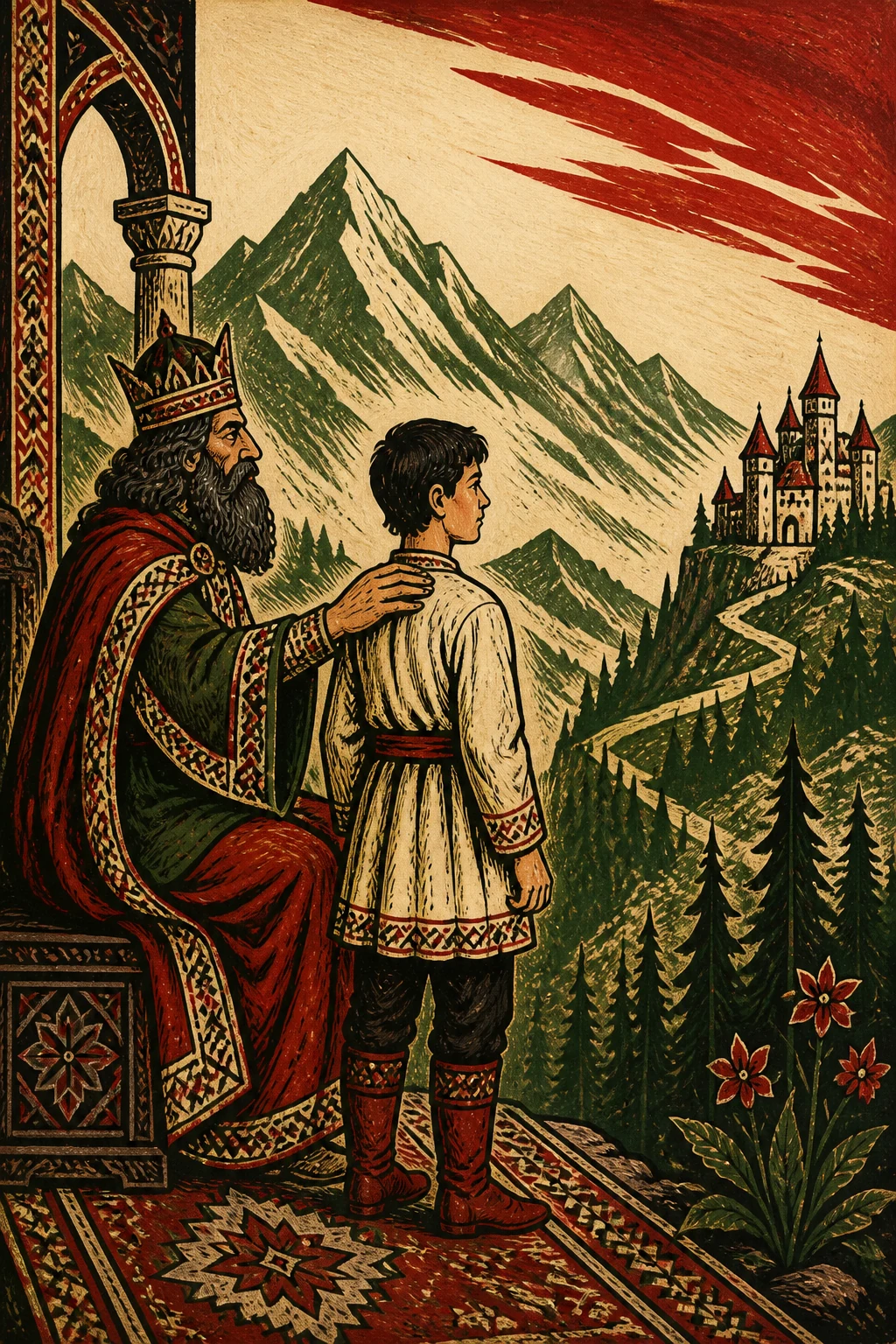
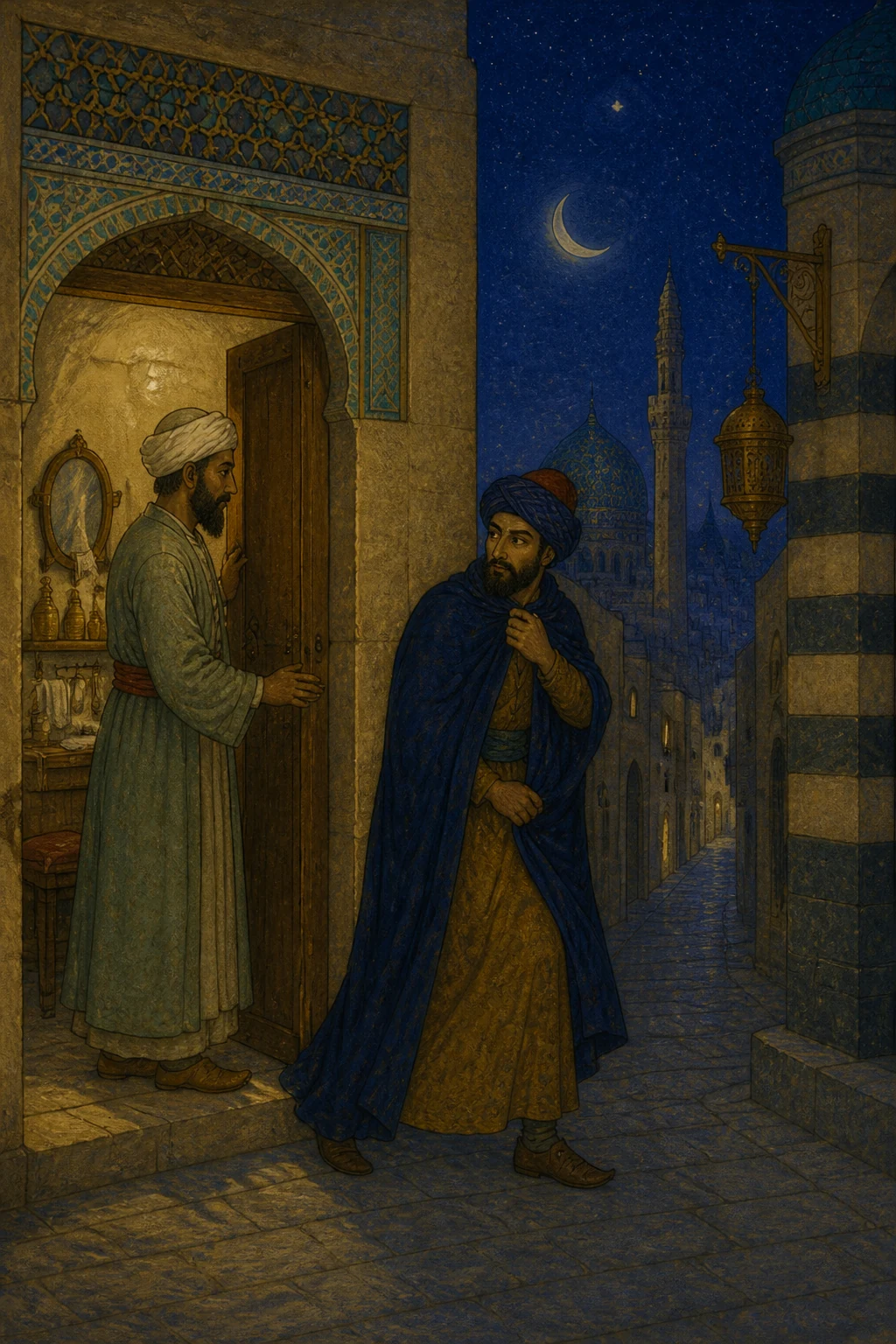
In his grey-haired years, he too was blessed with a child. His joy knew no bounds when he found himself a father at last, and his whole empire rejoiced with him, for this emperor was good and just and God-fearing. He had therefore done much good for his people. And all, with one heart and one voice, gave glory to the Lord for having deigned to grant them an heir to the empire. The emperor resolved that his son should learn every trade and acquire all the learning of scholars. The emperor’s son grew as much in a month as other children did in a year. When he was eight, he looked eighteen. Seeing this, his father, the emperor, set him to his books. After the boy had learned philosophy and the reading of the stars from the most accomplished masters, his father sent him to the most skilful physician to learn the art of healing as well. When the emperor saw that his son had a prodigious memory and readily grasped whatever he was shown, his heart swelled with contentment, for God had given him a child after his own heart. Once the boy had mastered all book-learning, the emperor began sending him from town to town to learn every trade. Whenever he heard that some town possessed an especially gifted craftsman whose trade was not practised in his own dominions, he sent his son there at once to learn it. Thus the emperor’s son wandered from land to land like an exile, until he had learned every trade upon the earth. And when he returned to his father’s palace, he thought his wandering days were over and he could settle down at last. Delighted to have so accomplished and skilful a son, his father gave a great feast, inviting all the neighbouring emperors so that he might show them the young man’s learning. The emperor’s son himself gave the cooks their orders and showed them how to prepare the dishes. The guests could not praise the food highly enough. Then the emperor’s son came to join them at the table. They made merry, and, as the saying goes, one word led to another. The emperors began telling of the judgments they had passed and the justice each had done in his own realm. Among other things, one said that he would regret to his dying day having condemned an innocent man accused of stealing certain goods, when the thief had been someone else, as was later proved. On hearing this, the emperor who was giving the feast turned to his son and said, “You know that if an emperor wishes to be just and a true ruler of his subjects, he must understand every trade, so that he may see each man’s troubles with his own eyes. That is why, my boy, I had you taught every craft. It never occurred to me that thieving was a craft as well. That alone remains for you to learn, after which you will become an emperor like Solomon, and there will be no other like you in the world.” “Why, Father!” answered the emperor’s son, who was so ashamed that he blushed red as a beetroot. “How can you sentence me as though I were a common brigand?” And rising from the table, he went off somewhere or other and returned almost at once, to everyone’s surprise, with a faithful servant, bringing planks, slats, poles, ropes and canvas. With these, and with his servant’s help, he began building a sort of pavilion. When it was finished, he climbed inside and turned certain screws and cranks belonging to its machinery, and the pavilion began to float in the air. As it rose higher and higher, he bade farewell to everyone below, leaving them open-mouthed and staring after him. His mother very nearly fainted with grief, but she mastered herself. Once he had disappeared from sight, the guests rose and scattered like a brood of partridges, unwilling to add to the emperor’s sorrow, which was all too plainly written on his face. After travelling through the air for some time, the emperor’s son began to descend. And what do you think happened? His ill fortune brought him down right before a miserable little sunken hut. It was evening. He knocked at the door. The people inside, a gaunt and ragged couple, asked, “Who is there?” “An honest man,” replied the emperor’s son. “Open the door, for I am a traveller.” They let him in. As he entered the hut, he noticed the woman slipping something beneath the bed. “What wind has blown you our way?” they asked. “I am a stranger. I have just arrived from other realms. I beg you to give me shelter.” “Gladly, such as we can offer.” “Thank you kindly,” he said. “You shall not go unrewarded. But why have you stopped your work? Go on; do not let me hinder you. I noticed you were doing something when I arrived.” The woman was about to spin a few lies, but her husband took the words out of her mouth. “Let us tell the truth. You are our guest, sir, and I trust you will not hand us over to the authorities. I am a thief. There is little to be made at the trade nowadays, since the emperor appointed some devilishly strict and harsh officers to keep the likes of us in check. We barely keep body and soul together with a hen or some other bird we can pilfer here and there. My wife was just plucking a goose when you came.” “That is precisely what I was looking for. God has brought me to you. Take the goose out from under the bed and get on with your work. From this day forward I am one of you. I will be your apprentice, if you will teach me your craft.”
While the goose was being plucked and cooked, the emperor’s son went outside, took his pavilion apart at all its joints and stowed it safely where no one would find it. Then they sat down to eat and made merry until the cocks began announcing the coming dawn. The next day they came to an agreement, and the emperor’s son remained under the thief’s direction to learn his craft. “The whole art,” the thief told him one day, “is to steal without anyone catching you. You must pick the devil’s own pocket without a living soul or any other creature seeing you. Before a thing has time to fall, you must have found it. Whatever you think another man has not put safely away, take into your own keeping. Cunning, deceit, daring, quick wits, trickery and all their kin must be your tools.” The emperor’s son listened and took it all to heart. After some time spent practising the thief’s trade, finding that everything was going smoothly, he said, “Master, when do you mean to make me a journeyman?” “When you steal my cloak from under me.” Some time later they went hunting. There in the forest they stopped to rest, each stretching out on whatever he had brought, beneath the shady trees and in the cool air, to doze a little. The thief had spread his cloak beneath him. Suddenly he heard the squealing of a hare, as though a hound had caught it. He got up and looked about, but saw nothing. His servant, the emperor’s son, had fallen asleep and was snoring like a herd of pigs. The thief lay down again. Before long, just as sleep was about to steal over him too, he heard the same squealing, this time very close at hand. He sprang straight up. “What the devil? There must be something there. I’ll just run over and see what devilry this is.” No sooner said than done. There was a little thicket a stone’s throw away, and he went towards it, for that was where the hare’s squealing seemed to come from. While the thief was walking away, the emperor’s son rose softly and, on tiptoe, whisked away the cloak, folded it neatly, hid it in a hollow tree and lay down again. He did it all quicker than thought. Finding nothing in the thicket, the thief cursed the hare and all the rest of it and came back to rest. But where was his cloak? Nowhere to be found. He looked all around; not so much as a leaf stirred. The emperor’s son was snoring loudly enough to wake the dead. The poor thief stood as though thunderstruck. He knew there was no one who could have played this trick on him but his apprentice. He turned this way and that, prowled all around, but the cloak was gone. At last, swallowing his vexation, he went to wake his apprentice. The young man was dead to the world. He shook and jostled him for as long as I have been telling you this tale, and only with the greatest difficulty did he wake him. Drowsy and rubbing his eyes, the lad began complaining that he could not get so much as a little sleep, and that he would leave a master who would not give him time even to close his eyes. The thief saw that his apprentice would outstrip him. “Enough of such talk,” he said. “Give me my cloak, for you are a journeyman now, and your apprenticeship is over.” At these words, the emperor’s son darted off and brought him the cloak, and the two bound themselves as partners, for better or worse. Once they became partners, their trade began to prosper handsomely. For the emperor’s son had the quicker hands and the greater daring. One day the young prince went hunting, merely to while away the hours, for he had nothing else to do. As he wandered through the forest, he suddenly heard a boar grunting nearby. He looked about and, quicker than thought, was there. And what should he see before him? An enormous wild boar had knocked a young lad to the ground and was struggling to free its tusks from his bow so that it could tear him apart. The emperor’s son drew his hunting knife and, with extraordinary courage, rushed at the boar, drove the blade straight into its eye and sent it tumbling head over heels. A couple more good blows to the head, and he killed it on the spot. Somehow he fetched a little water in his cap and sprinkled the young man, who had fainted, until he began to revive. When the lad came to and saw his rescuer, he said, “Ask me for as much as you please, and I shall give it to you in return for this kindness.” “Even the Gypsies have money,” replied the emperor’s son, “but not honour. Do not imagine that I did what I have just done for you for the sake of money.” The young fellow was somewhat taken aback, but, finding his tongue again, he told the whole story: how he had come hunting with several companions, how the boar had appeared and he had pursued it, how he had failed to strike it properly, and how it had charged him and knocked him down, all but sending him into the next world. As it happened, he too was an emperor’s son, and indeed the son of the emperor who ruled that very land. They became friends and went together to the imperial palace. The emperor did not know how to thank the stranger enough for saving his child from death. Since he would accept no other reward, he gave him leave to come to the palace whenever he pleased. Every time the stranger went to visit the emperor, he examined and took careful note of everything about the place. After a while he said to his partner one day, “Partner, I have grown tired of petty pilfering. Let us carry out a theft that will really be felt.” “What do you want us to do?” “Why, let us pay a visit to the imperial treasury. Surely it will not burn us.” “What are you saying, man? Good heavens, do you know how many guards there are?” “We shall go where there are no guards.” They agreed, and one night they set out, taking the tools they needed. Since the emperor’s son knew every craft, he understood masonry as well. He set to work, and with only a couple of blows of his pick loosened enough bricks to let a man through. This was on the street side, where no one was passing. He went inside, filled two caps with gold coins and came out again. Then he fitted the bricks back into place so that no one could tell where they had entered. There is no describing their joy at finding themselves with such a heap of money. They went home and slept as innocently as though they had never eaten garlic and their breath did not smell of it. The next day there was a great uproar in the town when word spread that the emperor’s treasury had been robbed. Everyone marvelled and crossed themselves, unable to fathom how the thieves had got in. The emperor himself was no less puzzled and began considering how he might catch these daring robbers. The emperor’s son who had played the trick went to the palace as usual, pretended to share everyone’s astonishment at such audacity, and said, “Whoever carried out so bold a robbery is bound to return at least once more.” The emperor of that land set guards of every kind about the treasury and waited. A few days later, when the uproar had died down, the thieves returned, for they had acquired a taste for it, like a dog for bran. The emperor’s son took out the bricks again and said to his partner, “Last time I went in; now it is your turn. That seems only fair.” His partner could say nothing, for it was true. So he went into the treasury, and, being the greedier of the two, took as many gold coins as he could carry and brought them to his companion at the opening. The latter took them. But when the thief tried to get out, he tugged upwards and tugged downwards, only to discover that he had been caught in a snare and could not escape. The emperor’s son had no time to lose. What was he to do? He cut off his partner’s head, took it with him, put the bricks back into place, and away he went. But when he reached home—oh, dear! Where was God to hear the woman’s weeping and wailing when he showed her her husband’s head? She screamed as though she were being impaled. The emperor’s son clapped a hand over her mouth. “Hush, foolish woman! Let no one hear you, or we shall be in trouble.” After telling her the whole story, he soothed her by saying that he would leave her all the money they had stolen. He also promised to bring her husband’s body so that she could bury him decently, with all the proper rites. When day came, the emperor’s servants found the headless body and brought it to their master. The emperor was beside himself with fury that they had not caught the robber alive and unharmed. The emperor’s son went to the palace too, and, hearing what was being planned, prepared to keep the promise he had made to his partner’s wife. The twelve boyars took counsel together and reasoned that there must be at least two thieves, and that the living one was certain to come for the dead man’s body. They therefore thought it best to place the headless corpse in the middle of the market square, on a platform with three steps, and station the emperor’s men all around it to keep watch throughout the night. This they did. The thieving emperor’s son went and bought a broken-down, mangy, sore-covered horse, so lean that it was nothing but skin and bone, together with a rickety cart and a barrel of brandy. After loading the cart and harnessing his wretched nag to it, he set off towards the place where the corpse lay on display. There was a muddy lane nearby, and that was the way he chose to go. And what do you think happened, my worthy boyars? The poor wreck of a horse became so deeply bogged down that it could not even move its legs, let alone drag the cart and its barrel of brandy. He cried to it, he pulled at it, but would the horse budge? Not an inch. Then he raised such a din that you would have thought the place was on fire. The captain of the guards sent one of his men to see what fresh misfortune had befallen that wretched fellow, who seemed bent on deafening everyone with his shouting. Seeing how he struggled to pull the horse and cart out of the mire, the guard took pity on him. As soon as the emperor’s son saw him, he said, “Go, my good fellow, and fetch a few more men to help me out of this mud, and I shall treat you as the good men you are.” Several guards soon came, lifted horse, cart, barrel and all, and hauled them out of the mud in which they had sunk. He did not know how to thank them enough. He wrung his hands with delight and began tapping the barrel. He gave them as much to drink as they wished, and took some to those who had remained on watch beside the headless corpse. Before long all the guards were overcome by a sleep as deep as death. How our gallant watchmen snored! You would have thought a great herd of swine was lying there. For the brandy in the barrel had been laced with opium. When the emperor’s son saw them all stretched out and sprawled about like so many logs, he stripped off their clothes and dressed them in monks’ habits. Then he took the dead man’s body and went about his business. At the sight of the body, the woman began wailing again. Once more he put his hand over her mouth and stopped her making a noise, for if anyone found out, it would go badly with them. Seeing that he was in earnest, she fell silent and accepted the greater part of the stolen money. That very night they buried the dead man. When the guards awoke and saw themselves dressed in monks’ habits, they could not believe their eyes. They rubbed them and looked again, but there was no mistaking it.
The first to wake went over to the companion beside him, nudged him and said, “Father monk! Father monk! What are you doing here?” “And what are you doing here, monk?” the other answered. Then all at once they began shouting at one another, “What are you doing here, monk?” and pointing their fingers. Such a commotion and uproar arose among them that no one could have made head or tail of it. Only much later did they recover their senses and understand that there had been something very wrong about the fellow with the brandy the night before. But when they saw that the body was missing—then, indeed, the quarrelling and bickering began in earnest, until they were almost out of their minds. They blamed one another like so many devils. “It is your fault!” “You were the one who made us drink!” “You were the one who urged us to go and help him!” “You were the first to drink!” All that was bad enough. But how and when had they become monks? And how were they to show themselves before the emperor? There was nothing for it: they went just as they were. The emperor seized his beard with both hands when he saw a whole troop of monks coming towards him. For, you see, he had no idea who they were or what they wanted. When he learned that they were his guards, he burst into such gales of laughter that the tears streamed down his face, and he laughed until his sides ached. The poor guards fell to their knees and begged forgiveness. They told him the whole story. The emperor spared them punishment, but he himself grew more troubled than ever. He feared that so skilful a thief might even steal his throne. He no longer summoned his council, for he had begun to suspect them too, but racked his own brains for some means of laying hands on the thief and putting an end to him. At last he resolved to make inquiries among high and low alike, to test both the boyars and the common people, and see whether he might catch this notorious robber who had filled his mind with such dark misgivings. To this end he ordered a magnificent feast to be prepared, to which he invited only the nobility. The foreign emperor’s son was, of course, among the guests. On the appointed day they all assembled. The merrymaking continued far into the night, for after rising from the table they began to dance. They danced their round dances and their girdle dances with such zest that, before they knew it, the cocks were crowing for midnight. Just as the gathering was about to break up, the emperor stepped into their midst and said in a rather commanding voice, “My lords, the night is far advanced, and lest any of you come to harm through some unclean spirit or evildoer, I have thought it best that you should remain here until daybreak. The chamber is large enough to hold you all. My daughter’s room is next door. Have no fear, but rest from the exertions of tonight’s dancing and leaping. May the Lord watch over you all.” Thus spoke the emperor, and thus it had to be. Murmur and protest as they might, there was no help for it: the emperor would not take back his word. “Oh, Father! How can I sleep with my door unlocked, beside a room where so many strange men are to spend the night?” his daughter asked him. “Not only that, my daughter, but you must put out your candle as well, and keep a little candle grease at hand. If anyone comes to you, stroke his face and beg him to stay a little longer; and as you caress him, smear a little of the candle grease on him. You must do this, my dear child, all the more willingly because it is for the salvation of the empire.” For the emperor meant to catch the thief by a trick. That was why he had invited the boyars to the feast. For he said to himself that if so clever a fellow was to be found among the boyars, he must also be daring. And if he was not among the boyars, then he would seek him among the common people, using stratagems of the same kind.
The emperor’s orders were carried out to the letter. Everyone went to bed and fell asleep. Only the emperor’s daughter could not close her eyes, try as she might. Nor did the prince who was a thief sleep so much as a wink. He kept twisting his moustache and wondering whether he should venture forth or not. Then, some time after midnight, when even the waters sleep, he rose quietly and looked about at his companions, who were all sound asleep. Stealing along without a sound, he slipped into the princess’s chamber, kissed her, and went back to bed. The emperor’s daughter had played her part just as her father had taught her. Before lying down, the prince went to the water pail for a drink, for he was thirsty. Looking into the water, he saw black marks on his left cheek. A candle burned all night in the room where the emperor’s guests were sleeping. “So that was your little game!” he whispered. “Very well, my fine fellow, I shall show you whom you are dealing with.” With his heart pounding, and treading more softly than a cat stalking mice, he took the charred end of the candlewick and smeared the cheeks of all the sleeping guests to match the marks on his own face. Then he went to bed. The emperor rose earlier than anyone else. At the first light of dawn he came into the room where the guests lay sleeping, to see whether any of them bore the marks he had instructed his daughter to make. And what should he see? Every one of them was marked! Dismayed, he hurried breathlessly to his daughter’s chamber and asked in an anxious voice, “Why, my dear child, did they all kiss you?” “No, Father. Only one came, and I marked him just as you told me.” “Would you know him again?” “No, for it was dark.” The emperor bit his lips. Then he ordered the guards not to let any of the guests leave. When it was broad daylight, he came once more among them and said in a loud voice, “My lords, the thief who has unsettled an entire country with his skill, cunning, and cleverness, and who has robbed me of my peace of mind, is here among you. I ask him to reveal himself, upon my imperial pledge that I shall do him no harm.” All the noblemen began shaking out their clothes and disavowing such an accusation as though renouncing the devil himself. “Far be such a suspicion from us!” they cried. “We know of no dishonourable deed upon our consciences, whether committed knowingly or unknowingly.” “There is no question now of disgrace or punishment. All I ask is that he reveal himself. I swear by the living God and by my imperial crown that not only shall I do him no harm, but I shall give him my daughter’s hand in marriage.” Then the prince from the foreign land stepped forward and said, “I am the man.” The emperor was greatly pleased when he saw him. The prince asked permission to go out, pledging his word as a brave and honourable man that he would return before noon. The emperor believed him and gave him leave. He returned with several men carrying the pieces of his pavilion. There, before them all, he fitted each little piece of wood into its proper joint and built the pavilion anew. Then he came before the emperor, kissed his hand, and asked that his bride, the emperor’s daughter, might go up into the pavilion with him, so that from there he could declare who he was and what he had done. The emperor consented. As soon as they were inside, the prince began turning the cranks; and as the pavilion rose into the heavens and floated through the air, he called out, “Know that I am an emperor’s son, that it was my appointed task to steal myself a wife, which I have now done, and that I am going home to my father’s kingdom.” As he spoke, the pavilion rose higher and higher until it vanished from the sight of all those who stood staring after it, open-mouthed. When he alighted at his father’s palace and showed him his certificate as a master thief, together with the wife he too had won by stealing, his father rejoiced. Stepping down from the throne, he raised his son to it, saying, “Now the fame of my son’s reign will spread throughout the land. Now the people, too, will learn what justice is, for to be a good and just ruler, one must also understand the ways of thieves.” After taking the throne, the prince sent a messenger to his father-in-law with a letter telling him that he had succeeded his father as emperor. And the emperor rejoiced greatly at his daughter’s good fortune. And I mounted a saddle, and told you this tale.