Prevod
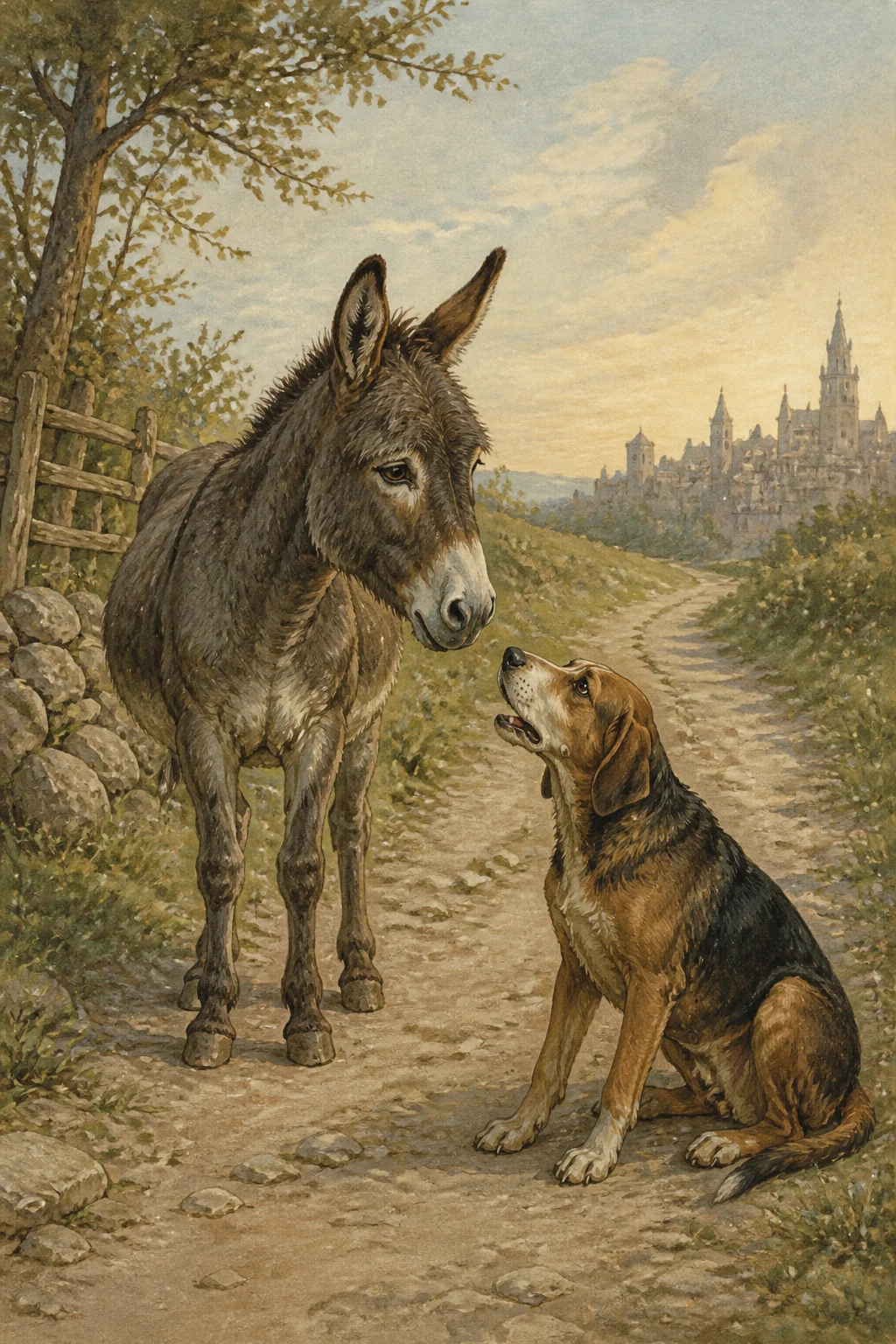
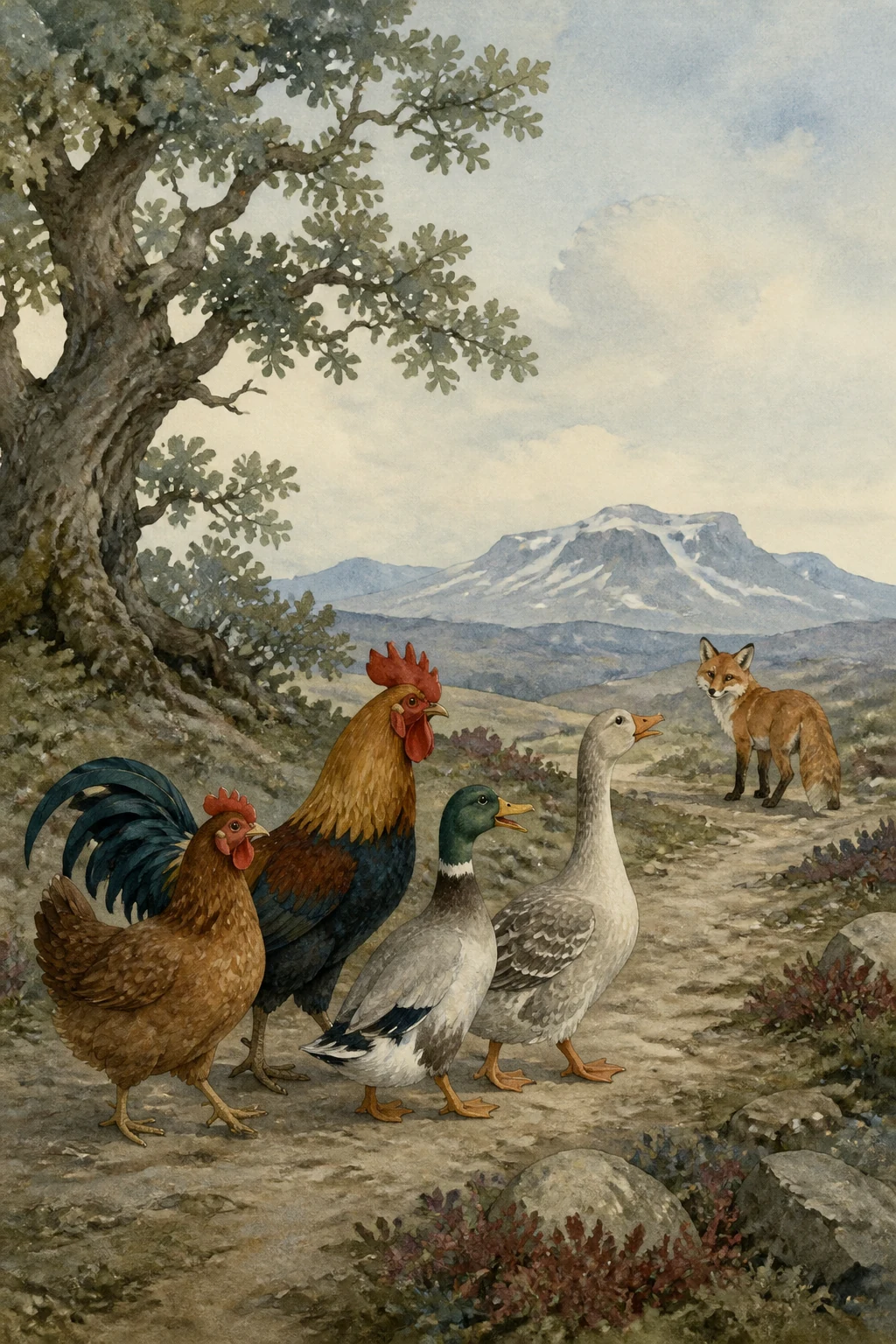
A man once had a donkey that for many long years had patiently carried sacks to the mill, but whose strength was now failing, so that he grew less and less fit for work. His master began to think of getting rid of him to save his feed, but the donkey sensed that an ill wind was blowing, ran away, and set off for Bremen. There, he thought, he could become a town musician. After he had gone a little way, he found a hunting dog lying in the road, panting as though he had run himself weary. “Well, what are you panting so hard for, Catch ’em?” asked the donkey. “Ah,” said the dog, “because I’m old and grow weaker every day, and can no longer keep up with the hunt, my master meant to kill me, so I ran away. But how am I to earn my bread now?” “Do you know what?” said the donkey. “I’m going to Bremen to become a town musician. Come along and join the band too. I’ll play the lute, and you can beat the kettledrums.” The dog was happy with that, and they went on together. Before long they came upon a cat sitting by the roadside with a face as gloomy as three days of rain. “Well, what has gone wrong for you, old Whisker-washer?” said the donkey. “Who can be merry when their life is at stake?” answered the cat. “Now that I’m getting on in years and my teeth are growing blunt, and I would rather sit behind the stove and purr than chase after mice, my mistress meant to drown me. I did manage to escape, but now I’m at my wits’ end. Where am I to go?” “Come with us to Bremen. You know all about night music, so you can become a town musician.” The cat thought this a fine idea and went along. Then the three fugitives passed a farmyard, where a rooster was perched on the gate, crowing at the top of his lungs. “Your cries go right through flesh and bone,” said the donkey. “What are you up to?” “I’ve been foretelling fine weather,” said the rooster, “because today is Our Lady’s Day, when she has washed the little Christ Child’s shirts and wants to dry them. But because guests are coming tomorrow for Sunday, the mistress has no mercy and has told the cook she means to eat me in the soup, so I’m to have my head cut off this evening. Now I’m crowing as loud as I can, for as long as I can.” “Oh, come now, Redhead,” said the donkey, “you’d do better to come away with us. We’re going to Bremen. You can find something better than death anywhere. You have a fine voice, and if we all make music together, it’s bound to amount to something.” The rooster liked the proposal, and all four set off together.
But they could not reach Bremen in a single day, and that evening they came to a wood where they meant to spend the night. The donkey and the dog lay down beneath a large tree, while the cat and the rooster settled among its branches. The rooster flew right to the top, where he would be safest. Before falling asleep, he looked about once more in all four directions and thought he saw a little spark of light burning in the distance. He called down to his companions that there must be a house not far away, for he could see a light. “Then we must get up and go there,” said the donkey, “for these are poor lodgings.” The dog thought a few bones with a little meat on them would do him good too. So they set off toward the light, which soon shone more brightly and grew larger and larger, until they stood before a brightly lit robbers’ house. The donkey, being the tallest, went up to the window and looked in. “What do you see, Greycoat?” asked the rooster. “What do I see?” answered the donkey. “A table laid with good food and drink, and robbers sitting round it, enjoying themselves.” “That would suit us nicely,” said the rooster. “Yes, indeed! Oh, if only we were in there!” said the donkey. Then the animals took counsel together about how to drive the robbers out, and at last they hit upon a plan. The donkey was to put his forefeet on the windowsill, the dog was to jump onto the donkey’s back, the cat was to climb onto the dog, and finally the rooster flew up and perched on the cat’s head. Once they were ready, they all began making music at a signal: the donkey brayed, the dog barked, the cat mewed, and the rooster crowed. Then they burst through the window into the room, with a great crash of breaking glass. At the dreadful din, the robbers sprang up, certain that a ghost was coming in, and fled into the wood in terror. Now the four companions sat down at the table, made do with what was left, and ate to their hearts’ content.
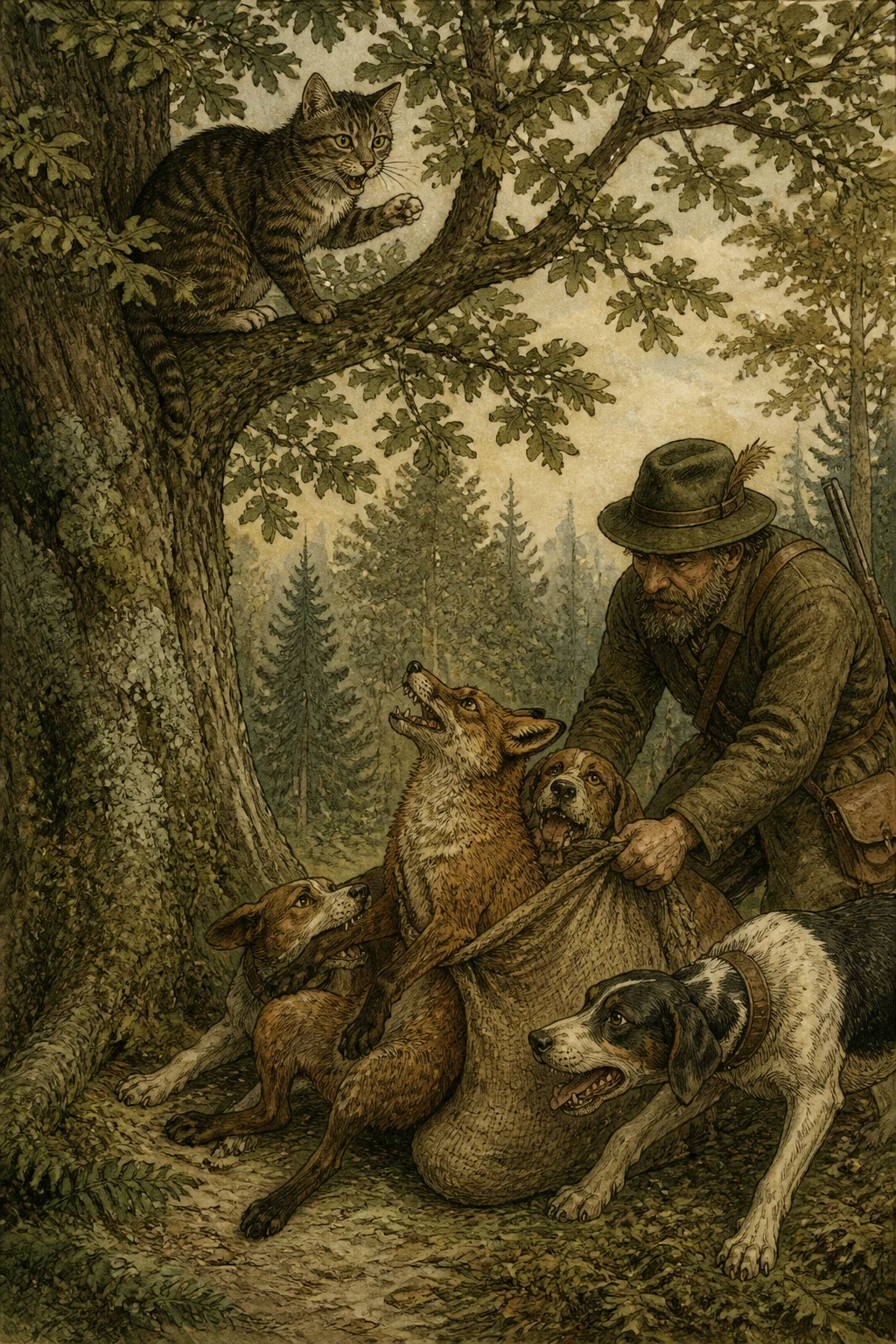
When the four musicians had finished, they put out the light and each sought a sleeping place to suit his own nature and comfort. The donkey lay down on the dung heap, the dog behind the door, and the cat on the hearth beside the warm ashes, while the rooster perched on a roof beam. Tired from their long journey, they soon fell asleep. After midnight, when the robbers saw from a distance that no light was burning in the house and all seemed quiet, their captain said, “We ought not to have let ourselves be frightened off,” and sent one of his men to inspect the house. The man found everything still and went into the kitchen to light a candle. Mistaking the cat’s glowing, fiery eyes for live coals, he held a sulphur match to them to make it catch fire. But the cat was in no mood for such tricks and sprang into his face, spitting and scratching. Terribly frightened, he ran for the back door, but the dog lying there jumped up and bit his leg. As he crossed the yard past the dung heap, the donkey gave him a mighty kick with his hind foot. The rooster, roused from sleep by the noise and now wide awake, called down from the beam, “Cock-a-doodle-doo!” Then the robber ran back to his captain as fast as he could and said, “Oh, there’s a horrible witch in the house! She hissed at me and scratched my face with her long fingers. And by the door stands a man with a knife who stabbed me in the leg. And out in the yard lies a black monster that struck at me with a wooden club. And up on the roof sits the judge, who shouted, ‘Bring the scoundrel to me!’ So I got away as fast as I could.” From that time on, the robbers never dared go near the house again, but the four musicians of Bremen liked it so well that they never wanted to leave.