Prevod
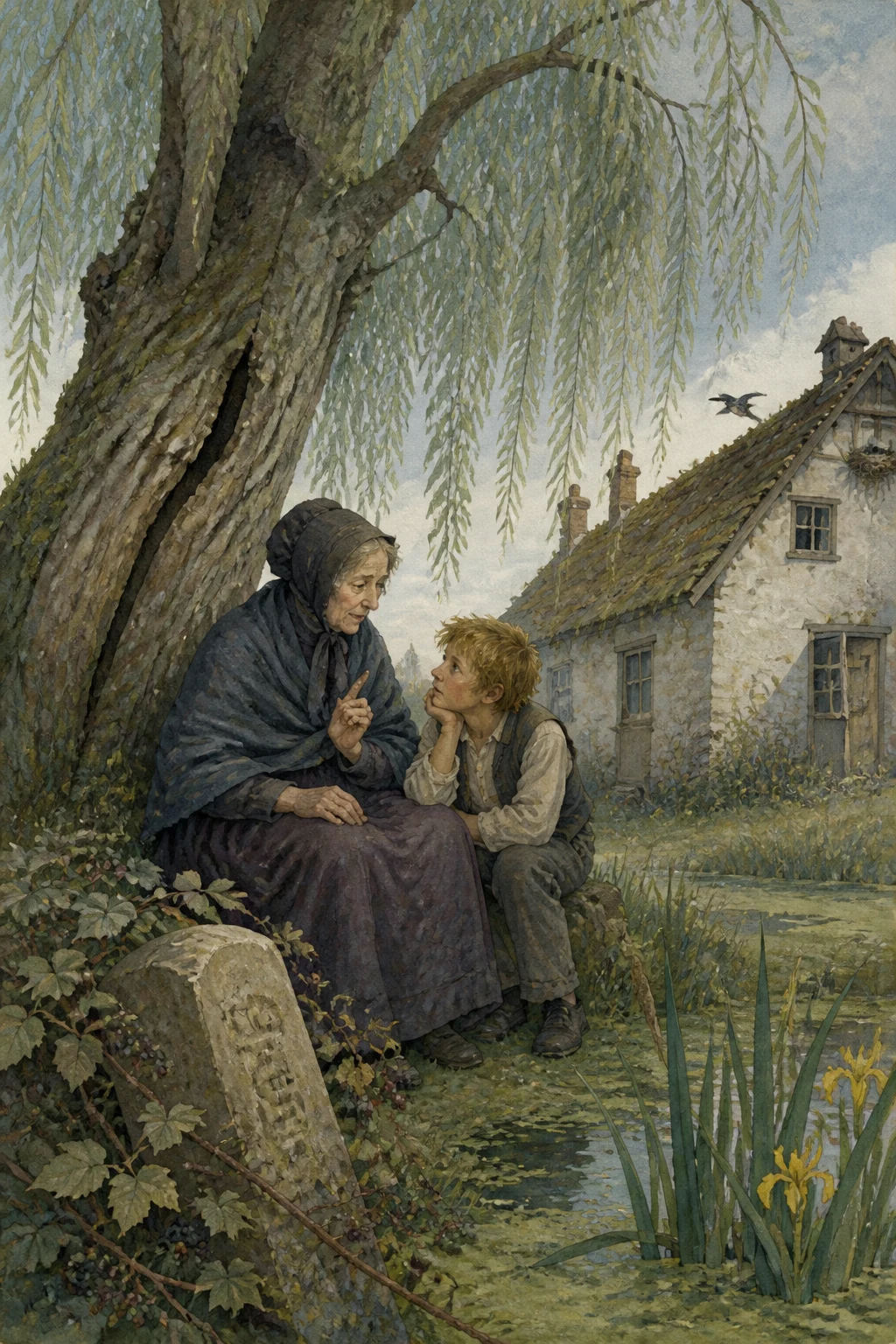
Anne Lisbeth was all milk and roses, young and merry, lovely to look upon, with teeth that shone so white and eyes so bright; her feet were light in the dance, and her heart lighter still! And what came of it?—“The horrid brat!”—No, he was not lovely! He was put out to nurse with the ditch-digger’s wife, while Anne Lisbeth went to the count’s castle and sat in a splendid room, dressed in silk and velvet; not a breath of wind must blow upon her, no one must speak a harsh word to her, for it would do her harm, and that must not be allowed. She nursed the count’s child, who was as delicate as a prince and as beautiful as an angel. How she loved that child! Her own—well, he was in the ditch-digger’s house, where it was not the pot that boiled over, but people’s tempers, and more often than not there was no one at home. The boy cried, but what no one hears touches no one; he cried himself to sleep, and in sleep one feels neither hunger nor thirst. Sleep is such a good invention! Over the years—yes, as time goes by, weeds shoot up, they say—Anne Lisbeth’s boy shot up, though his growth was stunted, so they said; but he had grown quite into the family here. They had been paid for it, and Anne Lisbeth was rid of him altogether. She was a respectable townswoman, snug and comfortable indoors, and wore a bonnet when she went out; but she never went to the ditch-digger’s. It was so far from town, and she had nothing to do there, either. The boy was theirs, and he could certainly eat his keep, they said; he must work for his food. So he tended Mads Jensen’s red cow; he was quite capable of looking after cattle and making himself useful.
The chained watchdog at the manor’s bleaching ground sits proudly on top of his kennel in the sunshine and barks at everyone who passes; in rainy weather he creeps inside and lies warm and dry. Anne Lisbeth’s boy sat by the ditch in the sunshine, whittling a tethering stake. In spring he knew of three strawberry plants in flower; surely they would bear fruit—that was his happiest thought, but no berries came. He sat in rain and foul weather, soaked to the skin, and afterward the sharp wind dried his clothes upon his body. When he came to the farm, he was shoved and knocked about; he was nasty and ugly, the maids and farmhands said. He was used to it—never loved!
What became of Anne Lisbeth’s boy? What was to become of him? Such was his lot: “Never loved.” He was cast off from the land and sent to sea in a wretched little vessel, where he sat at the helm while the skipper drank. He was filthy and repulsive, chilled to the bone and ravenously hungry; one might have thought he had never had enough to eat, and indeed he never had.
It was late in the year, with raw, wet, windy weather. The wind cut cold through thick clothes, especially at sea, and there sailed a wretched little vessel under a single sail, with only two men aboard—or rather, one and a half, one might say: the skipper and his boy. It had been twilight all day; now it was growing blacker, and the cold was biting. The skipper took a dram; that would warm him inside! Out came the bottle, and the glass as well. Its bowl was whole, but the foot had broken off, and in its place was a carved block of wood, painted blue, for it to stand on.—One dram did good; two did better, the skipper thought. The boy sat at the helm, gripping it with his hard, tar-stained hands. Ugly he was, with bristling hair, cowed and stunted; he was the ditch-digger’s boy, but in the parish register he was Anne Lisbeth’s.
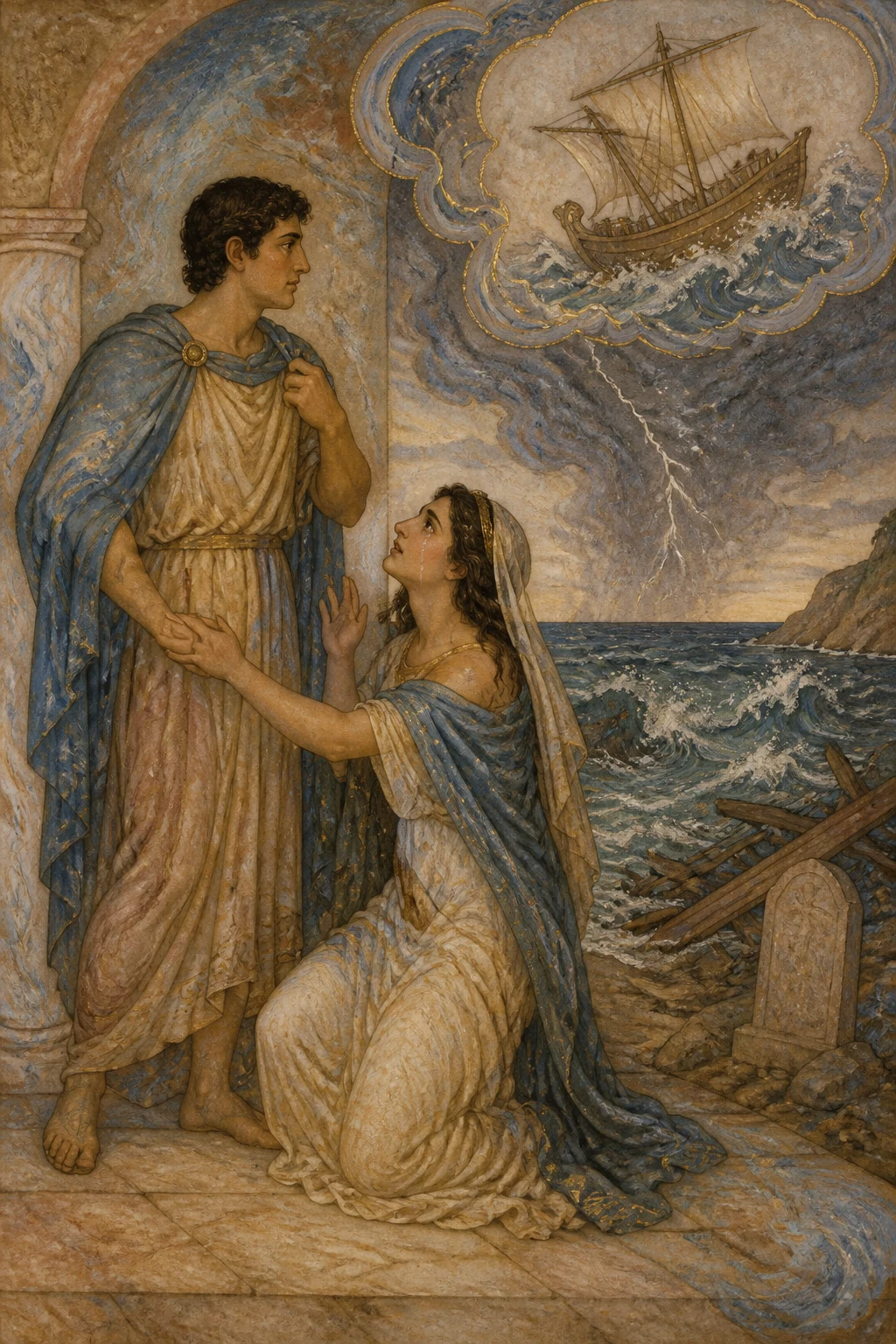
The wind cut along in its fashion, and the vessel in hers! The sail bellied, the wind had hold of it, and they flew along—raw and wet all around them, but worse might yet come.—Stop!—What was that? What struck, what split, what seized the vessel? She swung about! Was it a cloudburst, was a breaking wave rising over them?—The boy at the helm cried aloud, “In Jesus’ name!” The vessel had struck a great rock on the seabed and sank like an old shoe in the village pond; she went down with all hands, man and mouse, as the saying goes. And there were mice, but only a man and a half: the skipper and the ditch-digger’s boy. No one saw it but the screaming gulls and the fish below; and even they did not see it properly, for they darted aside in fright as the water thundered into the sinking vessel. She lay scarcely a fathom beneath the water; the two were hidden away—hidden, forgotten! Only the glass with its blue-painted wooden foot did not sink; the block of wood kept it afloat. The glass drifted away, to be broken and washed ashore—but where and when? Well, that hardly mattered! Its service was over now, and it had been loved; Anne Lisbeth’s boy had not! Yet in the kingdom of heaven no soul will ever again be able to say, “Never loved!”
* Anne Lisbeth lived in the town, and had done so for many years. She was called Madam, and held her head especially high when she spoke of old memories, of her days at the count’s, when she rode in a carriage and could converse with countesses and baronesses. Her sweet little count was God’s loveliest angel, the most loving soul; he had loved her, and she had loved him. They had kissed and fondled one another; he was her joy, half her life. Now he was grown, fourteen years old, learned and handsome; she had not seen him since she had carried him in her arms. For many years she had not been to the count’s castle; it was quite a journey there.
“I must make the effort one day!” said Anne Lisbeth. “I must go to my darling, my sweet little count! Yes, surely he longs for me too, thinks of me, loves me as he did when he put his angel arms around my neck and said, ‘An-Lis!’ It was like the sound of a violin! Yes, I must make the effort and see him again!”
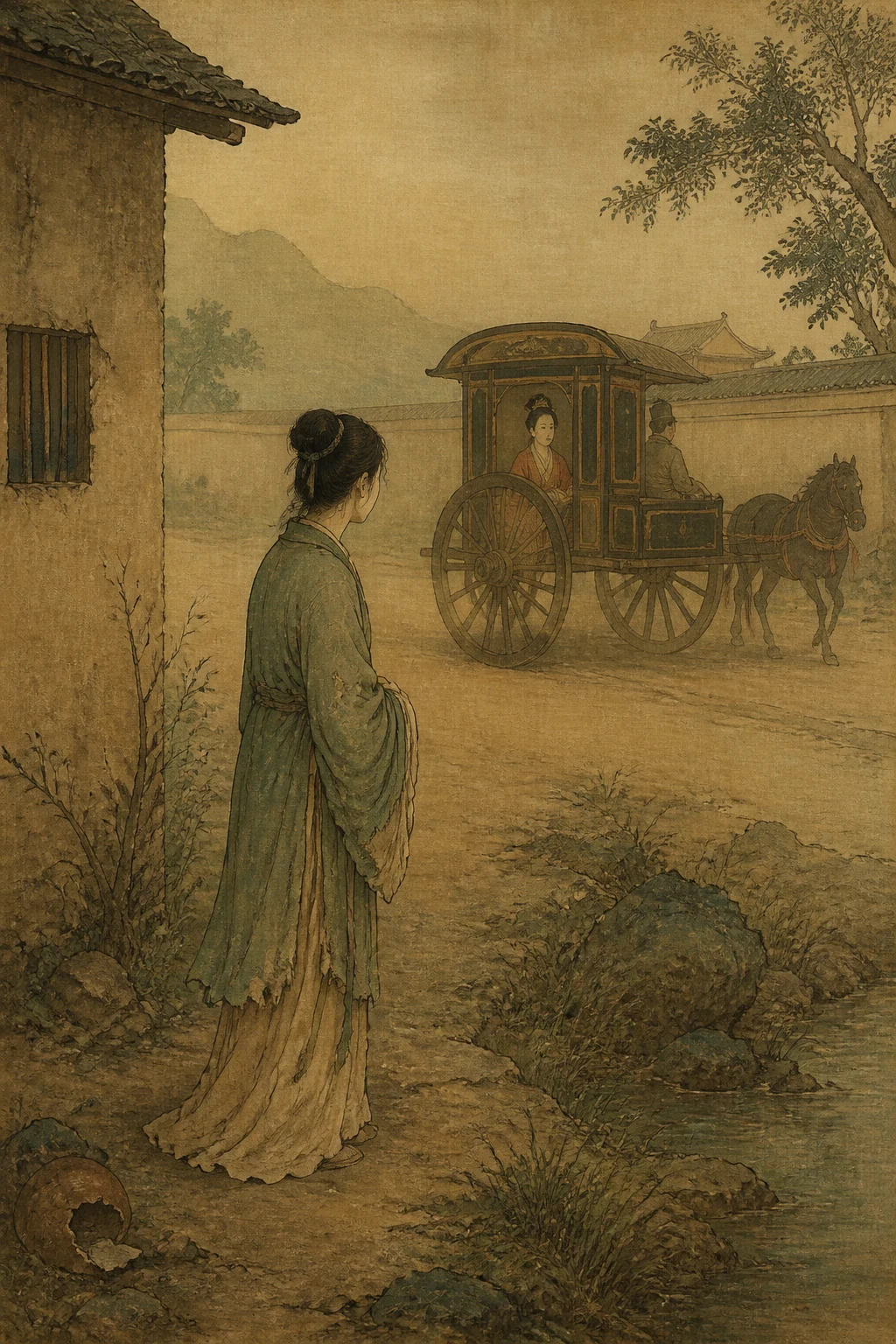
She rode in a calf cart, she went on foot, and she reached the count’s castle. It was as grand and splendid as ever, and from outside the garden looked just as it had before; but all the servants in the house were strangers. Not one of them knew anything about Anne Lisbeth; they did not know what she had once meant here. The countess would surely tell them, and so would her own boy! How she longed for him.
Now Anne Lisbeth was here; she had to wait a long time, and time spent waiting is long indeed! Before the family went in to dinner, she was summoned to the countess and spoken to very kindly. She should see her sweet boy after dinner; then she would be called in again!
How big he had grown, tall and thin, but he still had those lovely eyes and that angel’s mouth! He looked at her, but did not say a word. Surely he did not recognize her. He turned away and was about to leave again, but then she took his hand and pressed it to her lips! “There, that will do!” he said, and walked out of the room—he, the object of all her loving thoughts, he whom she had loved and still loved above all others, he, her earthly pride.
Anne Lisbeth went out beyond the castle onto the open highway, and she was so sad. He had treated her like such a stranger, had not had a thought or a word for her—he whom she had once carried night and day, and always carried in her thoughts.
A great black raven flew down onto the road before her, croaked, and croaked again. “Oh!” she said. “What a bird of ill omen you are!” She passed the ditch-digger’s house, where his wife stood in the doorway, and they fell into conversation.
“You look well enough!” said the ditch-digger’s wife. “You’re plump and fat! Life treats you well!” “Indeed it does!” said Anne Lisbeth. “Well, the vessel they were in has gone down!” said the ditch-digger’s wife. “Lars the skipper and the boy were both drowned. That’s the end of them now. I did think the boy might have helped me with a penny or two one day. He won’t cost you anything more now, Anne Lisbeth!”
“Have they drowned?” said Anne Lisbeth, and they spoke no more of the matter. Anne Lisbeth was so grieved because her little count had not cared to speak to her—she who loved him and had come all that way to be here. It had cost money, too, and she had had little pleasure for it; but she said not a word of that here. She would not ease her heart by speaking of it to the ditch-digger’s wife, who might then think she was no longer held in esteem at the count’s. Just then the raven croaked above her again.
“That black nuisance,” said Anne Lisbeth, “seems determined to frighten me today!” She had brought coffee beans and chicory with her; it would be a kindness to the ditch-digger’s wife to give them to her to make a pot of coffee, and Anne Lisbeth could have a cup herself. The ditch-digger’s wife went to make it, and Anne Lisbeth sat down on a chair and fell asleep. Then she dreamed of someone she had never dreamed of before; it was strange indeed: she dreamed of her own child, who had starved and wailed in this house, left to fend for himself, and now lay in the deep sea, our Lord alone knew where. She dreamed that she was sitting just where she sat, and that the ditch-digger’s wife was out making coffee; she could smell the beans. And there in the doorway stood such a lovely child, just as beautiful as the count’s little boy, and the little one said:
“Now the world is coming to an end! Hold fast to me, for you are my mother after all! You have an angel in the kingdom of heaven! Hold fast to me!” And he reached for her, but there came such a crash—it must be the world breaking apart—and the angel rose into the air, holding her firmly by the sleeve of her shift, so firmly, she thought, that she was lifted from the earth. But something hung so heavily about her legs and lay across her back; it was as though a hundred women were clinging to her, and they said, “If you are to be saved, so must we! Hold on! Hold on!” And they all clung to her. It was too much. “Rip, tear!” went the sleeve, and Anne Lisbeth fell so terribly that she woke with a start—and very nearly toppled over with the chair she was sitting on. Her head was so bewildered that she could not remember at all what she had dreamed, but it had been something dreadful.
Then they drank the coffee, then they talked, and then Anne Lisbeth went to the nearest town, where she was to meet the carrier and travel home with him that evening and through the night. But when she reached the carrier, he said they could not set off until the following evening. She thought over what it would cost her to stay, considered the length of the journey, and reflected that if she went along the shore instead of by the road, it would be nearly two Danish miles shorter. The weather was fine, and surely there was a full moon, so Anne Lisbeth decided to walk; she could be home the next day. The sun had set, and the evening bells were still ringing—no, they were not bells, but Peder Oxe’s frogs croaking in the marshes. Now they fell silent. Everything was still; not a bird could be heard, all had gone to roost, and the owl was evidently not at home. There was not a sound by wood or shore where she walked; she heard her own footsteps in the sand. The sea did not lap against the land; out in the deep water all was silent. They were all mute down there, the living and the dead.
Anne Lisbeth walked along thinking of nothing, as people say. She was far away from her thoughts, but her thoughts were not far away from her; they are never far away from us. They merely lie dormant, both the thoughts that have once awakened and lain down again, and those that have not yet stirred. But thoughts will come forth; they may stir in our hearts, stir in our heads, or descend upon us!
“A good deed bears the fruit of blessing!” it is written; “In sin is death!” it is also written. Much is written, much is said, that one does not know or does not remember; so it was with Anne Lisbeth. But understanding may dawn upon us; it may come!
All vices, all virtues lie in our hearts! In yours, in mine! They lie like little invisible seeds; then from outside comes a sunbeam, the touch of an evil hand; you turn a corner, to the right or to the left—yes, that may decide it—and the little seed is shaken, swells, bursts, and pours its juices into all your blood, and then you are swept along. These are troubling thoughts; one does not have them when walking in a daze, but they are stirring nonetheless. Anne Lisbeth walked in a daze, and her thoughts were stirring! From Candlemas to Candlemas the heart has much upon its reckoning board; it has a year’s accounts, and much is forgotten: sins in word and thought against God, our neighbour, and our own conscience. We do not think of these things, nor did Anne Lisbeth. She had done nothing wrong in the eyes of the law; she was well respected, decent and honourable, as she knew. And as she walked along the shore—what was that lying there? She stopped; what had washed ashore? An old man’s hat lay there. Where could it have gone overboard? She went closer, stopped, and looked at it.—Oh! What lay there? She was quite frightened; but there was nothing to be frightened of, only seaweed and reeds twisted over a large, oblong stone. It looked like an entire human body; it was only reeds and seaweed, but frightened she was. As she walked on, she remembered so much she had heard as a child, all the superstitions about the “shore-wraith,” the ghost of an unburied person washed up on the lonely beach. The drowned body itself did nothing, but its ghost, the shore-wraith, followed the solitary traveller, clung fast, and demanded to be carried to the churchyard and buried in Christian earth. “Hold on! Hold on!” it said; and as Anne Lisbeth repeated these words to herself, her whole dream suddenly came back to her, as vivid as life: how the mothers had clung to her with that cry, “Hold on! Hold on!” How the world had sunk, her sleeve had torn, and she had fallen away from her child, who would have held her up at the hour of judgment. Her child, her own flesh and blood, whom she had never loved, indeed had scarcely even thought of—this child now lay at the bottom of the sea. He might come as a shore-wraith and cry, “Hold on! Hold on! Carry me to Christian earth!” And as she thought it, dread pricked at her heels, so that she walked faster. Fear came like a cold, clammy hand and laid itself upon the pit of her heart, until she felt almost faint; and as she looked out over the sea, the air grew thicker and denser. A heavy mist came rolling in, settling about bushes and trees and giving them a strange appearance. She turned to look for the moon behind her; it was like a pale, rayless disc. It was as though something had settled heavily upon all her limbs. Hold on! Hold on! she thought; and when she turned and looked at the moon again, its white face seemed close beside her, and the mist hung like a linen cloth over her shoulders. “Hold on! Carry me to Christian earth!” she expected to hear, and she did hear a sound, so hollow, so strange. It did not come from the frogs in the marsh, nor from ravens or crows, for she could see none. “Bury me! Bury me!” rang out distinctly. Yes, it was the shore-wraith of her child, who lay at the bottom of the sea; he could find no peace until he was carried to the churchyard and his grave dug in Christian earth. There she would go, there she would dig. She walked toward the church, and then the burden seemed to grow lighter; it vanished. She thought she would turn back and take the shortest way home, but then it pressed upon her again: Hold on! Hold on!—It sounded like the croaking of frogs, it sounded like a whimpering bird, it sounded unmistakably like “Bury me! Bury me!”
The mist was cold and clammy, and her hands and face were cold and clammy with terror! All around her something pressed close, while within her an infinite space opened for thoughts she had never known before.
In a single spring night here in the North, the beech forest may burst into leaf and stand in all its fresh, bright splendour in the morning sunshine. In a single second there may rise and unfold within us the seeds of sin in thought, word, and deed sown during our earlier lives; they rise and unfold in a single second when conscience wakes. And our Lord awakens it when we least expect it. Then there is no excuse to be made; the deed stands witness, thoughts find words, and the words ring aloud throughout the world. We are appalled by what we have harboured within us and have not stifled, appalled by what we have scattered abroad in arrogance and thoughtlessness. The heart holds all virtues in its keeping, but all vices too, and they can flourish even in the most barren soil.
Anne Lisbeth held in her thoughts all that we have put here into words. She was overwhelmed by it; she sank to the ground and crawled some way along it. “Bury me! Bury me!” the voice said, and she would gladly have buried herself, if the grave meant eternal oblivion of everything.—It was the solemn hour of awakening, full of horror and dread. Superstition ran hot and cold through her blood; so much she had never cared to speak of came into her mind. Soundless as the shadow of a cloud in the clear moonlight, a vision swept past her; she had heard of it before. Close beside her raced four snorting horses, fire shining from their eyes and nostrils, drawing a glowing carriage. In it sat the wicked lord who had tyrannized over these parts more than a hundred years before. Every midnight, people said, he drove into his courtyard and turned straight back again. He was not white, as the dead are said to be; no, he was black as coal, a burnt-out coal. He nodded to Anne Lisbeth and beckoned: “Hold on! Hold on! Then you can ride in a count’s carriage again and forget your child!”
She hurried on all the faster and reached the churchyard; but the black crosses and the black ravens blurred together before her eyes. The ravens cried as the raven had cried earlier that day, but now she understood what it said. “I am a raven-mother! I am a raven-mother!” each of them said, and Anne Lisbeth knew that the name meant a heartless mother and belonged to her as well. Perhaps she would be changed into just such a black bird and be forced to cry forever as it cried, unless she finished digging the grave.
And she flung herself upon the ground and dug a grave with her hands in the hard earth, until blood sprang from her fingers. “Bury me! Bury me!” sounded without ceasing. She dreaded the cock’s crow and the first red streak in the east, for if they came before her work was done, she was lost. And the cock crowed, and light shone in the east.—The grave was only half dug; an icy hand glided over her head and face and down to her heart. “Only half a grave!” sighed the voice, and drifted away, down to the bottom of the sea. Yes, it was the shore-wraith. Anne Lisbeth sank to the earth, overwhelmed and senseless; she had neither thought nor feeling.
It was broad daylight when she came to herself, and two men were lifting her up. She was not in the churchyard, but down on the beach, where she had dug a deep hole in the sand before her and cut her fingers until they bled on a broken glass whose sharp stem was set in a blue-painted wooden foot. Anne Lisbeth was ill. Conscience had shuffled the cards of superstition, laid them out, and read in them that she now had only half a soul; her child had taken the other half down with him to the bottom of the sea. Never could she soar toward the grace of heaven until she regained that other half, held fast in the deep water. Anne Lisbeth came home, but she was no longer the person she had been. Her thoughts were tangled like a skein of knotted yarn; only one thread lay clear: she must carry the shore-wraith to the churchyard, dig him a grave, and so win back her whole soul.
Many a night she was missed from her home, and each time she was found by the shore, waiting for the shore-wraith. A whole year passed in this way; then one night she vanished again, but could not be found. The whole of the following day was spent searching in vain.
Toward evening, when the parish clerk came into the church to ring the sunset bell, he saw Anne Lisbeth lying before the altar. She had been there since early morning. Her strength was almost gone, but her eyes shone and her face had a rosy glow. The last rays of sunlight fell upon her and streamed across the altar onto the bright clasps of the Bible, which lay open at the words of the prophet Joel: “Rend your hearts, and not your garments, and turn unto the Lord!”—“It was merely a coincidence!” people said, as so many things are coincidences!
In Anne Lisbeth’s face, lit by the sun, one could read peace and grace. She was so well, she said. Now she had overcome her suffering! Last night the shore-wraith, her own child, had come to her and said, “You dug only half a grave for me, but for a year and a day you have buried me wholly in your heart, and that is where a mother keeps her child best!” And then he had given her back the lost half of her soul and led her here into the church.
“Now I am in God’s house!” she said, “and here one is blessed!” When the sun had sunk all the way down, Anne Lisbeth’s soul had risen all the way up, where there is no fear once the struggle here is over; and Anne Lisbeth’s struggle was over.