O besedilu
Ahilova jeza
- Vir
- Iliada
- Avtor
- Homer
- Jezik branja
- English
- Jezik izvirnika
- Ancient Greek
- Čas branja
- 31 min branja
- Obseg
- 25 strani
- Naslov izvirnika
- The Wrath of Achilles
O izvirniku
Iliada
Junaški svet Troje, jeze, časti in vojne, razrezan v velike epizode za branje. Bralni jezik je English, izvirnik pa prihaja iz vira Iliada v jeziku Ancient Greek.
Besedilo
Ahilova jeza
Sing, goddess, of the wrath of Achilles, son of Peleus, the ruinous wrath that brought the Achaeans countless sorrows, hurled many mighty souls of heroes down to Hades, and left their bodies as spoil for dogs and every bird of prey. So the will of Zeus was fulfilled, from the day when first they quarreled and parted, the son of Atreus, lord of men, and glorious Achilles.
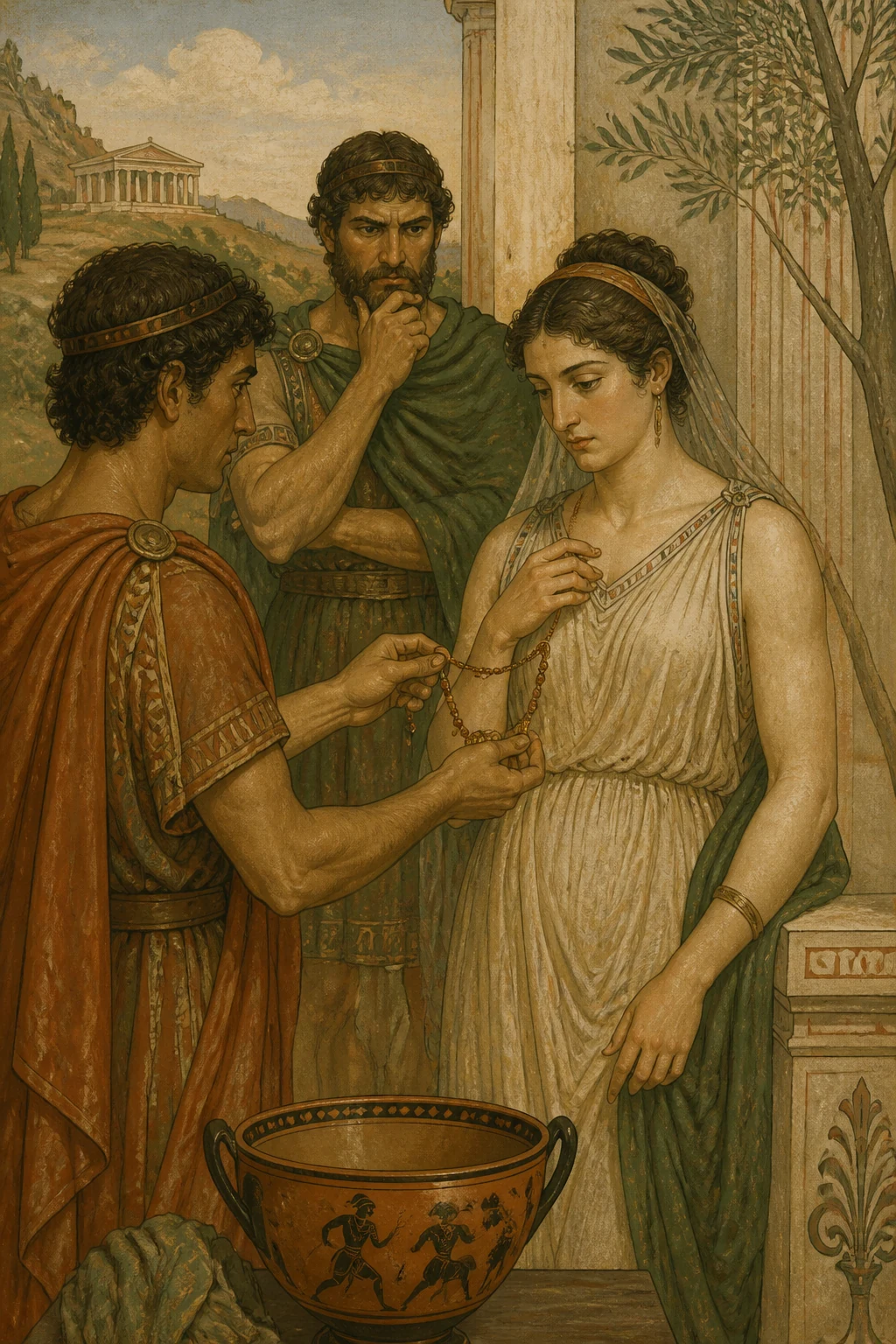
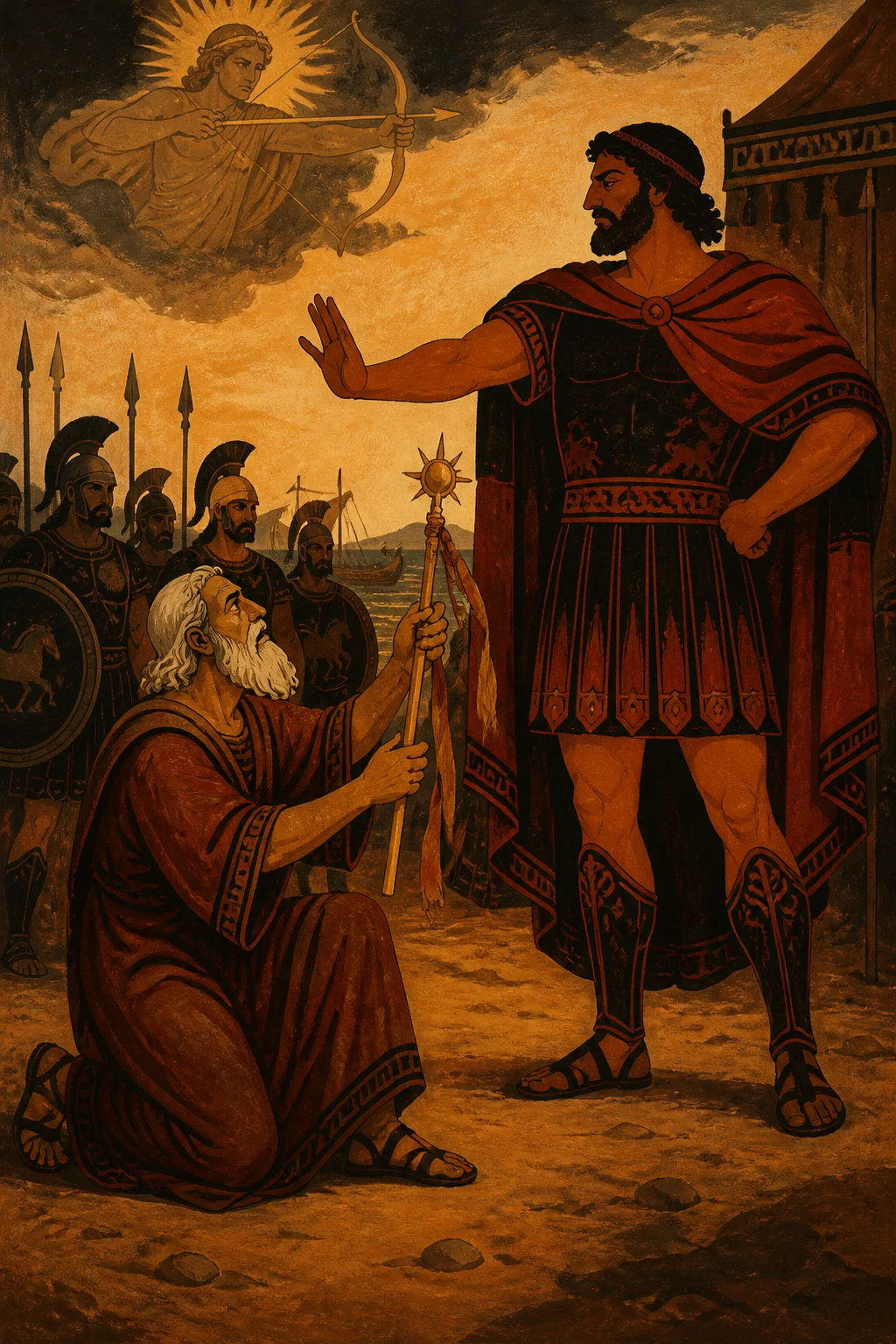
Which of the gods set these two at one another’s throats? The son of Leto and Zeus. Angered by the king, he sent a deadly plague through the army, and the people perished, because the son of Atreus had dishonored Chryses, his priest. Chryses had come to the swift ships of the Achaeans to ransom his daughter, bringing boundless treasure. In his hands he held the sacred ribbons of Apollo the Far-shooter upon a golden staff, and he begged all the Achaeans, but above all the two sons of Atreus, marshals of the host: “Sons of Atreus, and you other well-greaved Achaeans, may the gods who dwell on Olympus grant you the sack of Priam’s city and a safe return to your homes. But give me back my beloved child and accept this ransom, revering the son of Zeus, Apollo the Far-shooter.”
Then all the other Achaeans shouted their assent: honor the priest and accept the splendid ransom. But this did not please the heart of Agamemnon, son of Atreus. He drove the old man roughly away and laid a harsh command upon him: “Let me never find you by the hollow ships, old man, either lingering here now or coming back again, or that staff and the god’s sacred ribbons may prove no help to you. I will not release her. Old age will come upon her first, in my house in Argos, far from her own country, tending the loom and sharing my bed. Go, and do not provoke me, if you want to get away alive.”
So he spoke, and the old man was afraid and obeyed. In silence he walked along the shore of the loud-roaring sea. When he had gone some distance away, he prayed earnestly to lord Apollo, whom lovely-haired Leto bore: “Hear me, lord of the silver bow, who guard Chryse and holy Cilla and rule mightily over Tenedos, Smintheus! If ever I roofed a pleasing shrine for you, or burned for you the fat thighbones of bulls and goats, fulfill this wish of mine: let the Danaans pay for my tears with your arrows.”
So he prayed, and Phoebus Apollo heard him. Down from the peaks of Olympus he strode, his heart burning with anger, his bow and covered quiver upon his shoulders. The arrows rattled on the shoulders of the angry god as he moved, and he came like night.
He sat down apart from the ships and let an arrow fly. Terrible was the twang of his silver bow. First he struck the mules and the swift dogs; then he turned his piercing shafts upon the men themselves, and struck them down. The many pyres of the dead burned without ceasing.
For nine days the god’s arrows swept through the army. On the tenth, Achilles called the people to assembly, for the white-armed goddess Hera had put the thought into his heart. She grieved for the Danaans when she saw them dying.
When they had gathered and were all assembled, swift-footed Achilles rose and spoke among them: “Son of Atreus, I think we shall be driven back and wander home again—if indeed we escape death—when war and plague together are crushing the Achaeans. Come, let us consult a seer, a priest, or even an interpreter of dreams, for dreams too come from Zeus. Let him tell us why Phoebus Apollo is so angry: whether he finds fault with some unfulfilled vow or sacrifice, and whether, accepting the savor of lambs and unblemished goats, he might be willing to turn this devastation from us.”
So he spoke and sat down. Then Calchas, son of Thestor, rose among them, by far the best interpreter of birds, who knew what was, what would be, and what had been. He had guided the Achaeans’ ships to Ilium through the gift of prophecy that Phoebus Apollo had bestowed upon him. With goodwill toward them, he addressed the assembly: “Achilles, dear to Zeus, you ask me to explain the wrath of lord Apollo, who strikes from afar. I will tell you. But take this to heart and swear to me that you will readily defend me with your words and with your hands. For I believe I shall anger a man who rules mightily over all the Argives, whom the Achaeans obey. A king is stronger when he grows angry with a lesser man. Even if he swallows his anger for the day, he nurses resentment afterward within his breast until he brings it to fulfillment. Consider, then, whether you will keep me safe.”
Swift-footed Achilles answered him: “Take courage, and speak whatever prophecy you know. For by Apollo, dear to Zeus, to whom you pray, Calchas, when you reveal the gods’ decrees to the Danaans, no man among all the Danaans shall lay a heavy hand upon you beside the hollow ships while I live and look upon the earth—not even if you mean Agamemnon, who now claims to be by far the greatest of the Achaeans.”
Then the blameless seer took courage and spoke: “It is not for a vow or a sacrifice that he finds fault, but for the priest whom Agamemnon dishonored, refusing to release his daughter or accept the ransom. That is why the Far-shooter has sent us suffering, and will send still more. He will not turn this shameful devastation from the Danaans until we give the bright-eyed girl back to her beloved father, freely, without ransom, and take a sacred hecatomb to Chryse. Then perhaps we may appease and persuade him.”
So he spoke and sat down. Then the hero, son of Atreus, wide-ruling Agamemnon, rose among them in anguish. His dark heart brimmed with fury, and his eyes were like blazing fire. First he turned a baleful look on Calchas and said: “Prophet of evil, never yet have you told me anything welcome. Always your heart delights in prophesying disaster; never have you spoken a good word or brought one to fulfillment. And now you declare among the Danaans, as the gods’ interpreter, that the Far-shooter brings them suffering because I would not accept the splendid ransom for the girl Chryseis. Indeed, I much prefer to keep her in my own house. I prize her even above Clytemnestra, my wedded wife, for she is no less than her in beauty or stature, in mind or skill.
“Yet even so, I am willing to give her back, if that is best. I would rather see the people safe than perishing. But prepare another prize for me at once, so that I alone among the Argives may not go without one. That would be unfitting. You all see that my prize is going elsewhere.”
Then glorious, swift-footed Achilles answered him: “Most glorious son of Atreus, greediest of all men, how shall the great-hearted Achaeans give you a prize? We know of no rich common store laid by. Whatever we took from the cities we sacked has been divided, and it is not fitting to gather it back again from the people.
“For now, surrender this girl to the god. We Achaeans will repay you threefold and fourfold, if ever Zeus grants us the sack of Troy’s strong walls.” Lord Agamemnon answered him: “Godlike Achilles, brave though you are, do not try to cheat me with your cunning. You will neither outwit nor persuade me.
“Do you want to keep your own prize while I sit here empty-handed, and is that why you tell me to give her back? If the great-hearted Achaeans give me a prize suited to my wishes, of equal value, well and good. But if they do not, I will come myself and take your prize, or Ajax’s, or Odysseus’—I will seize her and lead her away. And angry he will be, the man I visit.
“But we can consider these matters again later. Come now, let us launch a black ship upon the sacred sea, gather a suitable crew of rowers, put a hecatomb aboard, and embark fair-cheeked Chryseis herself. Let one of our counselors command it: Ajax, Idomeneus, glorious Odysseus, or you, son of Peleus, most formidable of all men, so that you may offer sacrifice and appease the Far-shooter for us.”
Swift-footed Achilles looked darkly at him and said: “Ah, you clothed in shamelessness, your mind bent on gain! How can any Achaean willingly obey your orders, whether to go on a journey or to fight men with all his strength?
“I did not come here to fight because of the Trojan spearmen. They have done me no wrong. Never have they driven off my cattle or my horses, never have they laid waste the crops in deep-soiled Phthia, nurse of men, for many shadowy mountains and the roaring sea lie between us. No, we followed you, you shameless brute, to please you, to win recompense from the Trojans for Menelaus and for you, dog-face! You give no thought to that, and care nothing for it. And now you threaten to take away my prize yourself, the prize for which I labored hard, which the sons of the Achaeans gave me.
“Never do I receive a prize equal to yours when the Achaeans sack some populous Trojan town. My hands bear the greater burden of the tumultuous fighting, but when the division comes, your prize is far greater, while I return to the ships with something small but dear to me, worn out with battle.
“Now I am going home to Phthia. Far better to sail home in my curved ships. I have no mind to stay here dishonored, piling up riches and wealth for you.” Then Agamemnon, lord of men, answered him: “Run away, by all means, if your heart urges you. I shall not beg you to stay for my sake. There are others beside me who will honor me, and above all Zeus, lord of counsel.
“Of all the kings nurtured by Zeus, you are the one I hate most. Always you delight in strife, wars, and battles. If you are very strong, it was a god who gave you that strength. Go home with your ships and your companions and rule over your Myrmidons. I care nothing for you, and your anger means nothing to me. But I give you this warning: since Phoebus Apollo is taking Chryseis from me, I will send her away in my own ship with my own companions. But I will come to your hut myself and take fair-cheeked Briseis, your prize, and lead her away, so that you may know how far above you I stand, and another man may shrink from claiming to be my equal and confronting me face to face.”
So he spoke, and anguish seized the son of Peleus. Within his shaggy breast his heart was torn between two courses: should he draw the sharp sword from his thigh, scatter the men before him, and kill the son of Atreus, or master his anger and restrain his spirit?
While he pondered this in his mind and heart, drawing his great sword from its sheath, Athena came from heaven. The white-armed goddess Hera had sent her, for in her heart she loved and cared for both men alike. She stood behind him and caught the son of Peleus by his golden hair, appearing to him alone; none of the others saw her. Achilles was astonished and turned around. At once he knew Pallas Athena, and her eyes shone terribly. He addressed her with winged words: “Why have you come now, child of Zeus who bears the aegis?
“Is it to witness the insolence of Agamemnon, son of Atreus? I tell you, and I think it will come to pass: his arrogance may soon cost him his life.” Then the bright-eyed goddess Athena answered him: “I have come down from heaven to check your fury, if you will listen. The white-armed goddess Hera sent me, for in her heart she loves and cares for you both alike. Come, cease this quarrel, and do not draw your sword. Rebuke him with words instead, telling him how it will be. For I tell you this, and it shall be fulfilled: one day you will receive three times as many splendid gifts because of this outrage. Restrain yourself, and obey us.”
Swift-footed Achilles answered her: “Goddess, I must heed the word of you both, however fiercely anger burns within my heart. That is the better way. Whoever obeys the gods, they readily hear his prayers.”
He spoke, and stayed his heavy hand upon the silver hilt, thrusting the great sword back into its sheath. He did not disobey Athena’s words. She returned to Olympus, to the house of aegis-bearing Zeus, among the other gods.
But the son of Peleus once more addressed the son of Atreus with bitter words, and did not yet let go his anger: “Sodden with wine, with the eyes of a dog and the heart of a deer! Never have you dared in your heart to arm for battle with the host, or go on an ambush with the best of the Achaeans. That looks like death to you.
“Far better, surely, to range through the broad Achaean camp and rob whoever speaks against you of his gifts. A king who devours his people—and you rule over worthless men! Otherwise, son of Atreus, this outrage would have been your last.
“But I tell you this, and swear a mighty oath upon it: by this staff, which will never again put forth leaves or branches now that it has left its stump in the mountains, nor ever bloom again, since bronze has stripped away its leaves and bark; now the sons of the Achaeans carry it in their hands when they give judgment, guarding the laws entrusted to them by Zeus. This shall be a mighty oath for you: one day a longing for Achilles will come upon every son of the Achaeans. Then, for all your grief, you will have no power to save them when many fall dying before man-slaying Hector. And you will tear your heart within you in anger that you did not honor the best of the Achaeans.”
So spoke the son of Peleus, and flung to the ground the staff studded with golden nails, then sat down. Across from him the son of Atreus raged. Then Nestor sprang up between them, sweet of speech, the clear-voiced orator of Pylos, from whose tongue flowed words sweeter than honey. Already two generations of mortal men had passed away, men born and reared with him long ago in holy Pylos, and he ruled among the third. With goodwill toward them, he addressed the assembly: “Alas, great sorrow has come upon the land of Achaea! How Priam and Priam’s sons would rejoice, and all the other Trojans would be glad at heart, if they heard the whole tale of this quarrel between you, who surpass the Danaans in counsel and in battle.
“But listen to me. Both of you are younger than I am. In days gone by I kept company with better men than you, and never did they slight me. Never have I seen such men, nor shall I see their like again: Peirithous and Dryas, shepherd of the people, Caeneus, Exadius, and godlike Polyphemus, and Theseus, son of Aegeus, the equal of the immortals. These were the strongest men ever reared upon the earth; strongest themselves, they fought the strongest, the mountain-dwelling beast-men, and utterly destroyed them.
“I joined their company, coming from Pylos, far away in a distant land, for they themselves had summoned me. I fought on my own account, and against those men no mortal living now upon the earth could stand in battle. Yet they listened to my counsel and obeyed my words. You too should listen, for it is better to obey. Strong though you are, do not take this man’s girl away, but leave him the prize the sons of the Achaeans first gave him. Nor should you, son of Peleus, seek to contend openly with a king, for the honor allotted to a scepter-bearing king, to whom Zeus has given glory, is never equal to another man’s.
“Though you are strong, and a goddess was your mother, he is greater in power, for he rules over more men. Son of Atreus, put aside your anger. I beg you to let go your wrath against Achilles, who is a mighty bulwark for all the Achaeans against the misery of war.”
Lord Agamemnon answered him: “Yes, old man, all that you have said is right and fitting. But this man wishes to be above all others. He wants to master everyone, to rule everyone, to give orders to everyone—and there is one man, I think, who will not obey. If the everlasting gods have made him a warrior, does that give him leave to hurl insults?”
Glorious Achilles broke in and answered him: “A coward and a worthless man I should be called if I yielded to you in everything, whatever you might say. Give those orders to others, but do not command me. I have no mind to obey you any longer.
“And I will tell you something else; take it to heart. I will not fight you with my hands over the girl, neither you nor any other man, since you who gave her are taking her away. But of all the other things I own beside my swift black ship, you shall not carry off a single thing against my will. Come, try it, if you dare, so that these men too may know: at once your dark blood will gush around my spear.”
So, after battling with hostile words, the two rose and broke up the assembly beside the Achaean ships. The son of Peleus went back to his huts and his well-balanced ships with the son of Menoetius and his companions. The son of Atreus launched a swift ship upon the sea, chose twenty rowers, put aboard a hecatomb for the god, and brought fair-cheeked Chryseis to her seat. Resourceful Odysseus went aboard as their commander.
They embarked and sailed the watery paths, while the son of Atreus ordered the people to purify themselves. They cleansed themselves and cast the defilements into the sea, then offered Apollo unblemished hecatombs of bulls and goats along the shore of the barren sea. The savor rose to heaven, curling about the smoke.
So they busied themselves throughout the camp. But Agamemnon did not abandon the quarrel with which he had first threatened Achilles. He spoke to Talthybius and Eurybates, his heralds and faithful attendants: “Go to the hut of Achilles, son of Peleus. Take fair-cheeked Briseis by the hand and bring her here. If he will not give her up, I shall come myself with more men and take her, and that will be all the worse for him.”
With these words he sent them off, laying a harsh command upon them. Unwillingly the two walked along the shore of the barren sea, until they came to the huts and ships of the Myrmidons. They found Achilles sitting beside his hut and black ship, and he took no pleasure in the sight of them.
Afraid and awed before the king, they stood still, neither speaking to him nor asking him anything. But in his heart he understood, and said: “Welcome, heralds, messengers of Zeus and of men. Come closer. You are not to blame in my eyes, but Agamemnon, who sent you here for the girl Briseis.
“Come, Zeus-born Patroclus, bring the girl out and give her to these two to lead away. But let them themselves be witnesses before the blessed gods, before mortal men, and before that ruthless king, if ever again there is need of me to ward off shameful destruction from the others. For he rages with a mind bent on ruin, and cannot look both backward and forward, to see how the Achaeans may fight safely beside their ships.”
So he spoke, and Patroclus obeyed his dear companion. He brought fair-cheeked Briseis out of the hut and gave her to them to lead away. The two went back along the Achaean ships, and the woman went unwillingly with them. But Achilles burst into tears and withdrew at once from his companions. He sat on the shore of the gray sea, gazing out over the boundless deep, and stretching out his hands, prayed earnestly to his beloved mother: “Mother, since you bore me to so brief a life, surely Olympian Zeus, who thunders on high, should have granted me honor. But now he has not honored me at all. For the son of Atreus, wide-ruling Agamemnon, has dishonored me: he has seized my prize himself and keeps it.”
So he spoke through his tears, and his lady mother heard him as she sat in the depths of the sea beside her aged father. Swiftly she rose from the gray sea like a mist and sat before him as he wept. She stroked him with her hand and spoke to him: “My child, why are you weeping? What sorrow has entered your heart?
“Tell me; do not hide it in your mind, so that we both may know.” With a deep groan, swift-footed Achilles answered her: “You know. Why should I tell you all these things when you know them? We went to Thebe, the sacred city of Eetion, sacked it, and brought all the spoil here. The sons of the Achaeans divided it fairly among themselves, and chose fair-cheeked Chryseis for the son of Atreus.
“Then Chryses, priest of Apollo who strikes from afar, came to the swift ships of the bronze-clad Achaeans to ransom his daughter, bringing boundless treasure. In his hands he held the sacred ribbons of Apollo the Far-shooter upon a golden staff, and he begged all the Achaeans, but above all the two sons of Atreus, marshals of the host.
“Then all the other Achaeans shouted their assent: honor the priest and accept the splendid ransom. But this did not please the heart of Agamemnon, son of Atreus. He drove the old man roughly away and laid a harsh command upon him. The old man went back in anger, and Apollo heard his prayer, for he was very dear to him. He sent a deadly shaft against the Argives, and the people died one after another, while the god’s arrows ranged everywhere through the broad Achaean camp. Then a seer who knew the truth declared to us the decrees of the Far-shooter.
“At once I was the first to urge that we appease the god. But anger seized the son of Atreus, and he sprang up and uttered a threat that is now fulfilled. The bright-eyed Achaeans are sending the girl to Chryse in a swift ship, taking gifts for the lord Apollo. But just now the heralds came and led from my hut the daughter of Briseus, whom the sons of the Achaeans gave me.
“But you, if you have the power, stand by your son. Go to Olympus and plead with Zeus, if ever by word or deed you brought comfort to his heart. For often in my father’s halls I heard you boast that you alone among the immortals warded off shameful ruin from the son of Cronus, lord of the dark clouds, when the other Olympians wished to bind him—Hera, Poseidon, and Pallas Athena. You came, goddess, and freed him from his bonds, swiftly summoning to high Olympus the hundred-handed one, whom the gods call Briareus, but all men Aegaeon, for he is stronger even than his father. He sat beside the son of Cronus, exulting in his glory, and the blessed gods were afraid of him and bound Zeus no more.
“Remind him of this now, sit beside him, and clasp his knees. Perhaps he will be willing to help the Trojans and drive the Achaeans back to the sterns of their ships and the edge of the sea, slaughtering them, so that all may reap the benefit of their king, and the son of Atreus, wide-ruling Agamemnon, may recognize his folly in giving no honor to the best of the Achaeans.”
Then Thetis answered him, shedding tears: “Ah, my child, why did I rear you, after bearing you to such sorrow? If only you could sit beside your ships without tears or suffering, since your allotted life is brief, not long at all. But now you are both short-lived and wretched beyond all men. To an evil fate I bore you in my halls.
“I myself will go to snow-covered Olympus and speak these words to Zeus who delights in thunder, to see whether he will listen. But you must sit now beside your swift ships and keep your wrath against the Achaeans, withdrawing altogether from the war. For yesterday Zeus went to Ocean to feast among the blameless Ethiopians, and all the gods went with him. On the twelfth day he will return to Olympus. Then I will go for your sake to the bronze-floored house of Zeus, clasp his knees, and I believe I shall persuade him.”
With these words she departed, leaving him there, his heart still angry over the gracefully girdled woman whom they had taken by force against his will. Meanwhile Odysseus reached Chryse, bringing the sacred hecatomb.
When they entered the deep harbor, they furled the sails and stowed them in the black ship. Slacking the forestays, they quickly lowered the mast into its cradle, then rowed the ship to her mooring.
They cast out the anchor stones and made fast the stern cables, then stepped ashore where the sea broke. They landed the hecatomb for Apollo the Far-shooter, and Chryseis stepped down from the seagoing ship.
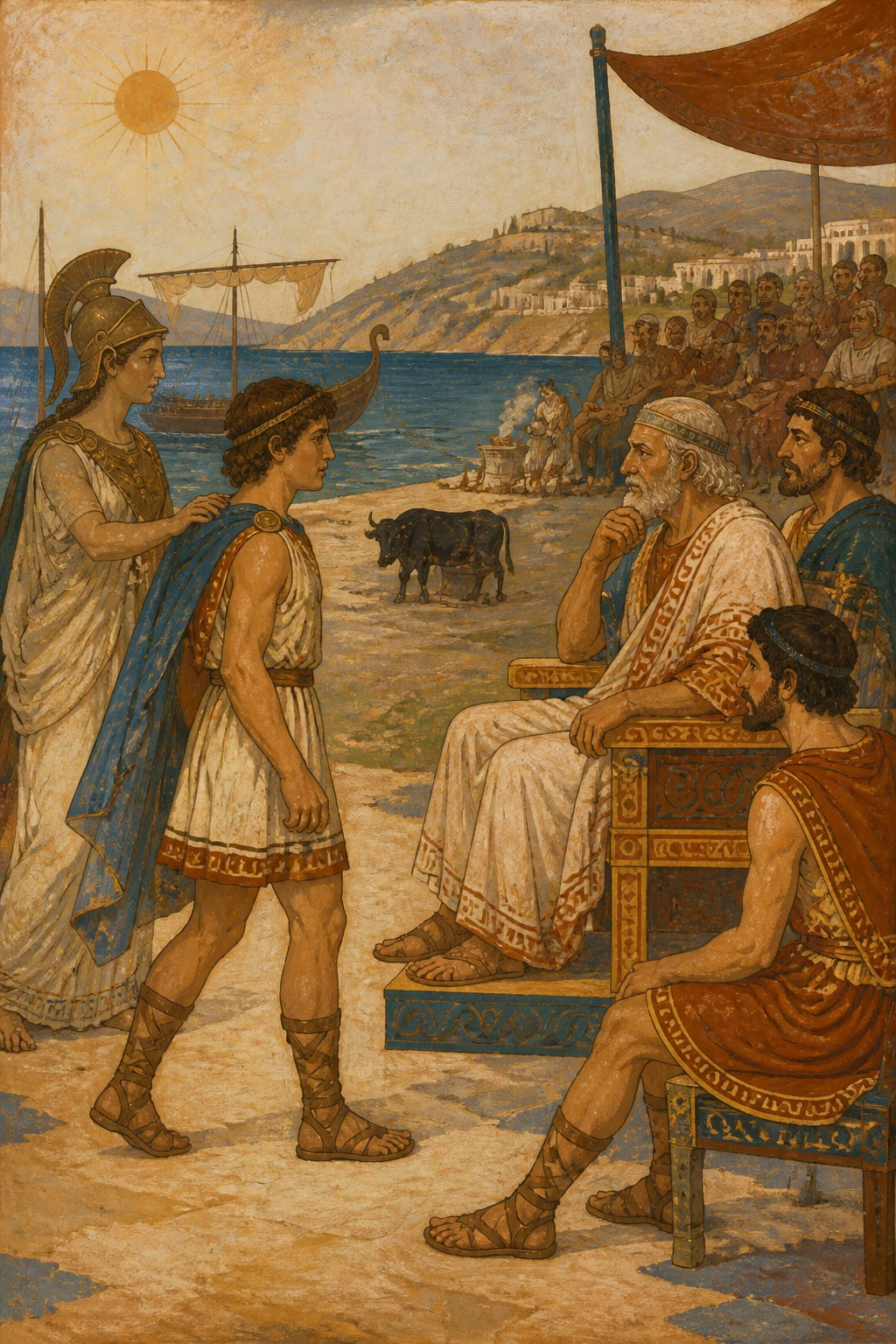
Resourceful Odysseus led her to the altar and placed her in her beloved father’s arms, saying: “Chryses, Agamemnon, lord of men, has sent me to bring your child to you and offer a sacred hecatomb to Phoebus on behalf of the Danaans, so that we may appease the lord who has now sent grief and lamentation upon the Argives.”
So he spoke and placed her in his arms, and her father joyfully received his beloved child. Then they quickly arranged the sacred hecatomb for the god in order around the well-built altar. They washed their hands and took up the barley grains.
Chryses raised his hands and prayed aloud for them: “Hear me, lord of the silver bow, who guard Chryse and holy Cilla and rule mightily over Tenedos. Once before you heard my prayer, honored me, and struck the Achaean people hard. Now once again fulfill this wish of mine: turn this shameful devastation from the Danaans.”
So he prayed, and Phoebus Apollo heard him. When they had prayed and scattered the barley grains, they first drew back the victims’ heads, cut their throats, and flayed them. They cut out the thighbones and wrapped them in a double layer of fat, laying raw pieces of meat upon them. The old man burned them on split wood and poured gleaming wine over them, while the young men stood beside him holding five-pronged forks.
When the thighbones were burned and they had tasted the inner parts, they cut the rest into pieces and threaded them on spits, roasted them carefully, and drew them all off. When their work was done and the feast prepared, they ate, and no one’s appetite lacked a fair share of the feast.
When they had satisfied their desire for food and drink, the young men filled the mixing bowls to the brim and served everyone, first pouring a portion into each cup. All day long the young Achaeans sought to appease the god with song, singing a beautiful paean in praise of the Far-shooter, and he listened with delight.
When the sun went down and darkness came on, they lay down to sleep beside the ship’s stern cables. But when early-born, rosy-fingered Dawn appeared, they put to sea for the broad Achaean camp. Apollo the Far-shooter sent them a favorable wind. They raised the mast and spread the white sails. The wind filled the belly of the sail, and as the ship sped on, the dark wave roared loudly about her stem. She raced across the waves, making her way.
When they reached the broad Achaean camp, they hauled the black ship high onto the sand and set long props beneath her. Then they scattered among the huts and ships.
But the Zeus-born son of Peleus, swift-footed Achilles, sat beside his swift ships and nursed his wrath. He no longer went to the assembly where men win glory, nor ever to battle. He stayed there, wasting his own heart, longing for the battle cry and war.
But when the twelfth dawn had come since then, the everlasting gods all returned together to Olympus, with Zeus at their head. Thetis did not forget her son’s entreaties, but rose from the sea’s waves.
At early morning she ascended to the great sky and Olympus. She found the far-seeing son of Cronus sitting apart from the others on the highest peak of many-ridged Olympus. She sat down before him, clasped his knees with her left hand, and with her right took him beneath the chin, and pleaded with lord Zeus, son of Cronus: “Father Zeus, if ever among the immortals I helped you by word or deed, fulfill this wish of mine. Honor my son, whose life is doomed to be shorter than that of other men. For now Agamemnon, lord of men, has dishonored him: he has seized his prize himself and keeps it.
“But do you at least honor him, Olympian Zeus, lord of counsel. Give strength to the Trojans until the Achaeans honor my son and make good his loss of honor.” So she spoke, but Zeus the cloud-gatherer gave her no answer. For a long while he sat in silence. Thetis held fast to his knees, clinging where she had first laid hold, and asked him a second time: “Promise me truly and bow your head in assent, or else refuse me, for you have nothing to fear, so that I may know full well how far I am the least honored of all the gods.”
Deeply troubled, Zeus the cloud-gatherer answered her: “This will bring trouble indeed, if you set me at odds with Hera when she provokes me with her taunts. Even as it is, she is always quarreling with me among the immortal gods, and says that I help the Trojans in battle.
“But now go back again, before Hera notices anything. I will see to these matters and bring them to fulfillment. Come, I will bow my head to you, so that you may trust me. For among the immortals this is the surest pledge I can give: whatever I confirm with a nod of my head cannot be taken back, cannot deceive, and cannot go unfulfilled.”
So spoke the son of Cronus, and bowed his dark brows in assent. The lord’s ambrosial locks streamed from his immortal head, and he shook mighty Olympus. Their plans thus laid, the two parted: she leaped from radiant Olympus into the deep sea, while Zeus went to his own palace. All the gods rose together from their seats before their father; none dared remain seated as he approached, but all stood to meet him.
There he seated himself upon his throne. But Hera, seeing him, knew well that silver-footed Thetis, daughter of the Old Man of the Sea, had taken counsel with him. At once she addressed Zeus, the son of Cronus, with taunting words: “Which of the gods has been plotting with you now, you schemer?
“You always delight in keeping apart from me, brooding over secret plans and giving your decisions. Never yet have you willingly told me what you have in mind.” Then the father of gods and men answered her: “Hera, do not expect to know all my counsels. They would be hard for you to fathom, wife of mine though you are. Whatever it is fitting for you to hear, no god or mortal shall know before you. But whatever I choose to ponder apart from the gods, do not question me about it or pry into every detail.”
Then ox-eyed, queenly Hera answered him: “Dread son of Cronus, what a thing to say! Never before have I questioned you or pried into your affairs; you plan whatever you please quite undisturbed.
“But now I am sorely afraid that silver-footed Thetis, daughter of the Old Man of the Sea, has talked you round. At dawn she sat beside you and clasped your knees. I believe you gave her your solemn nod, promising to honor Achilles and destroy many men beside the Achaean ships.”
Cloud-gathering Zeus answered her: “Strange creature, you are always suspecting something; I can hide nothing from you. Yet you will accomplish nothing by it, except to estrange me still further—and that will be worse for you.
“If things are as you say, then such must be my pleasure. Sit in silence and obey my word, lest all the gods on Olympus prove powerless to help you when I come near and lay my irresistible hands upon you.”
So he spoke, and ox-eyed, queenly Hera was afraid. She sat in silence, forcing her heart to yield. Throughout the hall of Zeus the heavenly gods were troubled. Then Hephaestus, famed for his craft, began to speak, seeking to comfort his dear mother, white-armed Hera: “This will be a dreadful business, unbearable indeed, if you two quarrel like this over mortals and stir up strife among the gods. There will be no pleasure in our splendid feast if discord prevails.
“I advise my mother, though she knows it well herself, to be gracious to our dear father Zeus, lest he scold us again and spoil our feast. For if the Olympian lord of lightning should choose to hurl us from our seats—he is far mightier than us all.
“But speak to him gently, and at once the Olympian will be kind to us.” With that he sprang up and placed a two-handled cup in his dear mother’s hand, saying: “Bear up, mother, and endure, though your heart is sore. Dear as you are to me, I may have to see you beaten before my very eyes, and then, for all my grief, I shall be powerless to help. It is hard to stand against the Olympian. Once before, when I tried to defend you, he seized me by the foot and flung me from the heavenly threshold. All day long I fell, and as the sun went down I landed on Lemnos, with scarcely any life left in me. There the Sintian men took me in and tended me after my fall.”
So he spoke, and the white-armed goddess Hera smiled. Smiling, she took the cup from her son’s hand. Then he poured sweet nectar for all the other gods in turn, from left to right, drawing it from the mixing bowl. And unquenchable laughter rose among the blessed gods as they watched Hephaestus bustling through the hall.
So all that day until the sun went down they feasted, and no heart lacked its fair share of the banquet, nor the music of the lovely lyre Apollo held, nor the Muses’ singing as they answered one another in their beautiful voices.
But when the sun’s bright light had set, each god went home to rest, to the house that the famed craftsman Hephaestus, lame in both legs, had made for each with his skill and cunning. And Zeus, the Olympian lord of lightning, went to his own bed, where he had always lain whenever sweet sleep came upon him. There he climbed into bed and slept, with Hera of the golden throne beside him.
Izvirnik
The Wrath of Achilles
Naslednje strani prikazujejo izvirno besedilo za primerjavo.
μῆνιν ἄειδε θεὰ Πηληϊάδεω Ἀχιλῆος οὐλομένην, ἣ μυρίʼ Ἀχαιοῖς ἄλγεʼ ἔθηκε, πολλὰς δʼ ἰφθίμους ψυχὰς Ἄϊδι προΐαψεν ἡρώων, αὐτοὺς δὲ ἑλώρια τεῦχε κύνεσσιν οἰωνοῖσί τε πᾶσι, Διὸς δʼ ἐτελείετο βουλή, ἐξ οὗ δὴ τὰ πρῶτα διαστήτην ἐρίσαντε Ἀτρεΐδης τε ἄναξ ἀνδρῶν καὶ δῖος Ἀχιλλεύς. τίς τʼ ἄρ σφωε θεῶν ἔριδι ξυνέηκε μάχεσθαι; Λητοῦς καὶ Διὸς υἱός· ὃ γὰρ βασιλῆϊ χολωθεὶς νοῦσον ἀνὰ στρατὸν ὄρσε κακήν, ὀλέκοντο δὲ λαοί, οὕνεκα τὸν Χρύσην ἠτίμασεν ἀρητῆρα Ἀτρεΐδης· ὃ γὰρ ἦλθε θοὰς ἐπὶ νῆας Ἀχαιῶν
λυσόμενός τε θύγατρα φέρων τʼ ἀπερείσιʼ ἄποινα, στέμματʼ ἔχων ἐν χερσὶν ἑκηβόλου Ἀπόλλωνος χρυσέῳ ἀνὰ σκήπτρῳ, καὶ λίσσετο πάντας Ἀχαιούς, Ἀτρεΐδα δὲ μάλιστα δύω, κοσμήτορε λαῶν· Ἀτρεΐδαι τε καὶ ἄλλοι ἐϋκνήμιδες Ἀχαιοί, ὑμῖν μὲν θεοὶ δοῖεν Ὀλύμπια δώματʼ ἔχοντες ἐκπέρσαι Πριάμοιο πόλιν, εὖ δʼ οἴκαδʼ ἱκέσθαι· παῖδα δʼ ἐμοὶ λύσαιτε φίλην, τὰ δʼ ἄποινα δέχεσθαι, ἁζόμενοι Διὸς υἱὸν ἑκηβόλον Ἀπόλλωνα.
ἔνθʼ ἄλλοι μὲν πάντες ἐπευφήμησαν Ἀχαιοὶ αἰδεῖσθαί θʼ ἱερῆα καὶ ἀγλαὰ δέχθαι ἄποινα· ἀλλʼ οὐκ Ἀτρεΐδῃ Ἀγαμέμνονι ἥνδανε θυμῷ, ἀλλὰ κακῶς ἀφίει, κρατερὸν δʼ ἐπὶ μῦθον ἔτελλε· μή σε γέρον κοίλῃσιν ἐγὼ παρὰ νηυσὶ κιχείω ἢ νῦν δηθύνοντʼ ἢ ὕστερον αὖτις ἰόντα, μή νύ τοι οὐ χραίσμῃ σκῆπτρον καὶ στέμμα θεοῖο· τὴν δʼ ἐγὼ οὐ λύσω· πρίν μιν καὶ γῆρας ἔπεισιν ἡμετέρῳ ἐνὶ οἴκῳ ἐν Ἄργεϊ τηλόθι πάτρης ἱστὸν ἐποιχομένην καὶ ἐμὸν λέχος ἀντιόωσαν· ἀλλʼ ἴθι μή μʼ ἐρέθιζε σαώτερος ὥς κε νέηαι.
ὣς ἔφατʼ, ἔδεισεν δʼ ὃ γέρων καὶ ἐπείθετο μύθῳ· βῆ δʼ ἀκέων παρὰ θῖνα πολυφλοίσβοιο θαλάσσης· πολλὰ δʼ ἔπειτʼ ἀπάνευθε κιὼν ἠρᾶθʼ ὁ γεραιὸς Ἀπόλλωνι ἄνακτι, τὸν ἠΰκομος τέκε Λητώ· κλῦθί μευ ἀργυρότοξʼ, ὃς Χρύσην ἀμφιβέβηκας Κίλλαν τε ζαθέην Τενέδοιό τε ἶφι ἀνάσσεις, Σμινθεῦ εἴ ποτέ τοι χαρίεντʼ ἐπὶ νηὸν ἔρεψα, ἢ εἰ δή ποτέ τοι κατὰ πίονα μηρίʼ ἔκηα ταύρων ἠδʼ αἰγῶν, τὸ δέ μοι κρήηνον ἐέλδωρ· τίσειαν Δαναοὶ ἐμὰ δάκρυα σοῖσι βέλεσσιν.
ὣς ἔφατʼ εὐχόμενος, τοῦ δʼ ἔκλυε Φοῖβος Ἀπόλλων, βῆ δὲ κατʼ Οὐλύμποιο καρήνων χωόμενος κῆρ, τόξʼ ὤμοισιν ἔχων ἀμφηρεφέα τε φαρέτρην· ἔκλαγξαν δʼ ἄρʼ ὀϊστοὶ ἐπʼ ὤμων χωομένοιο, αὐτοῦ κινηθέντος· ὃ δʼ ἤϊε νυκτὶ ἐοικώς. ἕζετʼ ἔπειτʼ ἀπάνευθε νεῶν, μετὰ δʼ ἰὸν ἕηκε· δεινὴ δὲ κλαγγὴ γένετʼ ἀργυρέοιο βιοῖο· οὐρῆας μὲν πρῶτον ἐπῴχετο καὶ κύνας ἀργούς, αὐτὰρ ἔπειτʼ αὐτοῖσι βέλος ἐχεπευκὲς ἐφιεὶς βάλλʼ· αἰεὶ δὲ πυραὶ νεκύων καίοντο θαμειαί.
ἐννῆμαρ μὲν ἀνὰ στρατὸν ᾤχετο κῆλα θεοῖο, τῇ δεκάτῃ δʼ ἀγορὴν δὲ καλέσσατο λαὸν Ἀχιλλεύς· τῷ γὰρ ἐπὶ φρεσὶ θῆκε θεὰ λευκώλενος Ἥρη· κήδετο γὰρ Δαναῶν, ὅτι ῥα θνήσκοντας ὁρᾶτο. οἳ δʼ ἐπεὶ οὖν ἤγερθεν ὁμηγερέες τε γένοντο, τοῖσι δʼ ἀνιστάμενος μετέφη πόδας ὠκὺς Ἀχιλλεύς· Ἀτρεΐδη νῦν ἄμμε παλιμπλαγχθέντας ὀΐω ἂψ ἀπονοστήσειν, εἴ κεν θάνατόν γε φύγοιμεν, εἰ δὴ ὁμοῦ πόλεμός τε δαμᾷ καὶ λοιμὸς Ἀχαιούς· ἀλλʼ ἄγε δή τινα μάντιν ἐρείομεν ἢ ἱερῆα ἢ καὶ ὀνειροπόλον, καὶ γάρ τʼ ὄναρ ἐκ Διός ἐστιν, ὅς κʼ εἴποι ὅ τι τόσσον ἐχώσατο Φοῖβος Ἀπόλλων,
εἴτʼ ἄρʼ ὅ γʼ εὐχωλῆς ἐπιμέμφεται ἠδʼ ἑκατόμβης, αἴ κέν πως ἀρνῶν κνίσης αἰγῶν τε τελείων βούλεται ἀντιάσας ἡμῖν ἀπὸ λοιγὸν ἀμῦναι. ἤτοι ὅ γʼ ὣς εἰπὼν κατʼ ἄρʼ ἕζετο· τοῖσι δʼ ἀνέστη Κάλχας Θεστορίδης οἰωνοπόλων ὄχʼ ἄριστος, ὃς ᾔδη τά τʼ ἐόντα τά τʼ ἐσσόμενα πρό τʼ ἐόντα, καὶ νήεσσʼ ἡγήσατʼ Ἀχαιῶν Ἴλιον εἴσω ἣν διὰ μαντοσύνην, τήν οἱ πόρε Φοῖβος Ἀπόλλων· ὅ σφιν ἐὺ φρονέων ἀγορήσατο καὶ μετέειπεν· ὦ Ἀχιλεῦ κέλεαί με Διῒ φίλε μυθήσασθαι μῆνιν Ἀπόλλωνος ἑκατηβελέταο ἄνακτος· τοὶ γὰρ ἐγὼν ἐρέω· σὺ δὲ σύνθεο καί μοι ὄμοσσον
ἦ μέν μοι πρόφρων ἔπεσιν καὶ χερσὶν ἀρήξειν· ἦ γὰρ ὀΐομαι ἄνδρα χολωσέμεν, ὃς μέγα πάντων Ἀργείων κρατέει καί οἱ πείθονται Ἀχαιοί· κρείσσων γὰρ βασιλεὺς ὅτε χώσεται ἀνδρὶ χέρηϊ· εἴ περ γάρ τε χόλον γε καὶ αὐτῆμαρ καταπέψῃ, ἀλλά τε καὶ μετόπισθεν ἔχει κότον, ὄφρα τελέσσῃ, ἐν στήθεσσιν ἑοῖσι· σὺ δὲ φράσαι εἴ με σαώσεις. τὸν δʼ ἀπαμειβόμενος προσέφη πόδας ὠκὺς Ἀχιλλεύς· θαρσήσας μάλα εἰπὲ θεοπρόπιον ὅ τι οἶσθα· οὐ μὰ γὰρ Ἀπόλλωνα Διῒ φίλον, ᾧ τε σὺ Κάλχαν εὐχόμενος Δαναοῖσι θεοπροπίας ἀναφαίνεις, οὔ τις ἐμεῦ ζῶντος καὶ ἐπὶ χθονὶ δερκομένοιο
σοὶ κοίλῃς παρὰ νηυσί βαρείας χεῖρας ἐποίσει συμπάντων Δαναῶν, οὐδʼ ἢν Ἀγαμέμνονα εἴπῃς, ὃς νῦν πολλὸν ἄριστος Ἀχαιῶν εὔχεται εἶναι. καὶ τότε δὴ θάρσησε καὶ ηὔδα μάντις ἀμύμων· οὔ τʼ ἄρ ὅ γʼ εὐχωλῆς ἐπιμέμφεται οὐδʼ ἑκατόμβης, ἀλλʼ ἕνεκʼ ἀρητῆρος ὃν ἠτίμησʼ Ἀγαμέμνων, οὐδʼ ἀπέλυσε θύγατρα καὶ οὐκ ἀπεδέξατʼ ἄποινα, τοὔνεκʼ ἄρʼ ἄλγεʼ ἔδωκεν ἑκηβόλος ἠδʼ ἔτι δώσει· οὐδʼ ὅ γε πρὶν Δαναοῖσιν ἀεικέα λοιγὸν ἀπώσει πρίν γʼ ἀπὸ πατρὶ φίλῳ δόμεναι ἑλικώπιδα κούρην ἀπριάτην ἀνάποινον, ἄγειν θʼ ἱερὴν ἑκατόμβην ἐς Χρύσην· τότε κέν μιν ἱλασσάμενοι πεπίθοιμεν.
ἤτοι ὅ γʼ ὣς εἰπὼν κατʼ ἄρʼ ἕζετο· τοῖσι δʼ ἀνέστη ἥρως Ἀτρεΐδης εὐρὺ κρείων Ἀγαμέμνων ἀχνύμενος· μένεος δὲ μέγα φρένες ἀμφιμέλαιναι πίμπλαντʼ, ὄσσε δέ οἱ πυρὶ λαμπετόωντι ἐΐκτην· Κάλχαντα πρώτιστα κάκʼ ὀσσόμενος προσέειπε· μάντι κακῶν οὐ πώ ποτέ μοι τὸ κρήγυον εἶπας· αἰεί τοι τὰ κάκʼ ἐστὶ φίλα φρεσὶ μαντεύεσθαι, ἐσθλὸν δʼ οὔτέ τί πω εἶπας ἔπος οὔτʼ ἐτέλεσσας· καὶ νῦν ἐν Δαναοῖσι θεοπροπέων ἀγορεύεις ὡς δὴ τοῦδʼ ἕνεκά σφιν ἑκηβόλος ἄλγεα τεύχει, οὕνεκʼ ἐγὼ κούρης Χρυσηΐδος ἀγλάʼ ἄποινα οὐκ ἔθελον δέξασθαι, ἐπεὶ πολὺ βούλομαι αὐτὴν
οἴκοι ἔχειν· καὶ γάρ ῥα Κλυταιμνήστρης προβέβουλα κουριδίης ἀλόχου, ἐπεὶ οὔ ἑθέν ἐστι χερείων, οὐ δέμας οὐδὲ φυήν, οὔτʼ ἂρ φρένας οὔτέ τι ἔργα. ἀλλὰ καὶ ὧς ἐθέλω δόμεναι πάλιν εἰ τό γʼ ἄμεινον· βούλομʼ ἐγὼ λαὸν σῶν ἔμμεναι ἢ ἀπολέσθαι· αὐτὰρ ἐμοὶ γέρας αὐτίχʼ ἑτοιμάσατʼ ὄφρα μὴ οἶος Ἀργείων ἀγέραστος ἔω, ἐπεὶ οὐδὲ ἔοικε· λεύσσετε γὰρ τό γε πάντες ὅ μοι γέρας ἔρχεται ἄλλῃ.
τὸν δʼ ἠμείβετʼ ἔπειτα ποδάρκης δῖος Ἀχιλλεύς· Ἀτρεΐδη κύδιστε φιλοκτεανώτατε πάντων, πῶς γάρ τοι δώσουσι γέρας μεγάθυμοι Ἀχαιοί; οὐδέ τί που ἴδμεν ξυνήϊα κείμενα πολλά· ἀλλὰ τὰ μὲν πολίων ἐξεπράθομεν, τὰ δέδασται, λαοὺς δʼ οὐκ ἐπέοικε παλίλλογα ταῦτʼ ἐπαγείρειν. ἀλλὰ σὺ μὲν νῦν τήνδε θεῷ πρόες· αὐτὰρ Ἀχαιοὶ τριπλῇ τετραπλῇ τʼ ἀποτείσομεν, αἴ κέ ποθι Ζεὺς δῷσι πόλιν Τροίην εὐτείχεον ἐξαλαπάξαι.
τὸν δʼ ἀπαμειβόμενος προσέφη κρείων Ἀγαμέμνων· μὴ δʼ οὕτως ἀγαθός περ ἐὼν θεοείκελʼ Ἀχιλλεῦ κλέπτε νόῳ, ἐπεὶ οὐ παρελεύσεαι οὐδέ με πείσεις. ἦ ἐθέλεις ὄφρʼ αὐτὸς ἔχῃς γέρας, αὐτὰρ ἔμʼ αὔτως ἧσθαι δευόμενον, κέλεαι δέ με τήνδʼ ἀποδοῦναι; ἀλλʼ εἰ μὲν δώσουσι γέρας μεγάθυμοι Ἀχαιοὶ ἄρσαντες κατὰ θυμὸν ὅπως ἀντάξιον ἔσται· εἰ δέ κε μὴ δώωσιν ἐγὼ δέ κεν αὐτὸς ἕλωμαι ἢ τεὸν ἢ Αἴαντος ἰὼν γέρας, ἢ Ὀδυσῆος ἄξω ἑλών· ὃ δέ κεν κεχολώσεται ὅν κεν ἵκωμαι.
ἀλλʼ ἤτοι μὲν ταῦτα μεταφρασόμεσθα καὶ αὖτις, νῦν δʼ ἄγε νῆα μέλαιναν ἐρύσσομεν εἰς ἅλα δῖαν, ἐν δʼ ἐρέτας ἐπιτηδὲς ἀγείρομεν, ἐς δʼ ἑκατόμβην θείομεν, ἂν δʼ αὐτὴν Χρυσηΐδα καλλιπάρῃον βήσομεν· εἷς δέ τις ἀρχὸς ἀνὴρ βουληφόρος ἔστω, ἢ Αἴας ἢ Ἰδομενεὺς ἢ δῖος Ὀδυσσεὺς ἠὲ σὺ Πηλεΐδη πάντων ἐκπαγλότατʼ ἀνδρῶν, ὄφρʼ ἥμιν ἑκάεργον ἱλάσσεαι ἱερὰ ῥέξας. τὸν δʼ ἄρʼ ὑπόδρα ἰδὼν προσέφη πόδας ὠκὺς Ἀχιλλεύς· ὤ μοι ἀναιδείην ἐπιειμένε κερδαλεόφρον πῶς τίς τοι πρόφρων ἔπεσιν πείθηται Ἀχαιῶν ἢ ὁδὸν ἐλθέμεναι ἢ ἀνδράσιν ἶφι μάχεσθαι;
οὐ γὰρ ἐγὼ Τρώων ἕνεκʼ ἤλυθον αἰχμητάων δεῦρο μαχησόμενος, ἐπεὶ οὔ τί μοι αἴτιοί εἰσιν· οὐ γὰρ πώποτʼ ἐμὰς βοῦς ἤλασαν οὐδὲ μὲν ἵππους, οὐδέ ποτʼ ἐν Φθίῃ ἐριβώλακι βωτιανείρῃ καρπὸν ἐδηλήσαντʼ, ἐπεὶ ἦ μάλα πολλὰ μεταξὺ οὔρεά τε σκιόεντα θάλασσά τε ἠχήεσσα· ἀλλὰ σοὶ ὦ μέγʼ ἀναιδὲς ἅμʼ ἑσπόμεθʼ ὄφρα σὺ χαίρῃς, τιμὴν ἀρνύμενοι Μενελάῳ σοί τε κυνῶπα πρὸς Τρώων· τῶν οὔ τι μετατρέπῃ οὐδʼ ἀλεγίζεις· καὶ δή μοι γέρας αὐτὸς ἀφαιρήσεσθαι ἀπειλεῖς, ᾧ ἔπι πολλὰ μόγησα, δόσαν δέ μοι υἷες Ἀχαιῶν.
οὐ μὲν σοί ποτε ἶσον ἔχω γέρας ὁππότʼ Ἀχαιοὶ Τρώων ἐκπέρσωσʼ εὖ ναιόμενον πτολίεθρον· ἀλλὰ τὸ μὲν πλεῖον πολυάϊκος πολέμοιο χεῖρες ἐμαὶ διέπουσʼ· ἀτὰρ ἤν ποτε δασμὸς ἵκηται, σοὶ τὸ γέρας πολὺ μεῖζον, ἐγὼ δʼ ὀλίγον τε φίλον τε ἔρχομʼ ἔχων ἐπὶ νῆας, ἐπεί κε κάμω πολεμίζων. νῦν δʼ εἶμι Φθίην δʼ, ἐπεὶ ἦ πολὺ φέρτερόν ἐστιν οἴκαδʼ ἴμεν σὺν νηυσὶ κορωνίσιν, οὐδέ σʼ ὀΐω ἐνθάδʼ ἄτιμος ἐὼν ἄφενος καὶ πλοῦτον ἀφύξειν.
τὸν δʼ ἠμείβετʼ ἔπειτα ἄναξ ἀνδρῶν Ἀγαμέμνων· φεῦγε μάλʼ εἴ τοι θυμὸς ἐπέσσυται, οὐδέ σʼ ἔγωγε λίσσομαι εἵνεκʼ ἐμεῖο μένειν· πάρʼ ἔμοιγε καὶ ἄλλοι οἵ κέ με τιμήσουσι, μάλιστα δὲ μητίετα Ζεύς. ἔχθιστος δέ μοί ἐσσι διοτρεφέων βασιλήων· αἰεὶ γάρ τοι ἔρις τε φίλη πόλεμοί τε μάχαι τε· εἰ μάλα καρτερός ἐσσι, θεός που σοὶ τό γʼ ἔδωκεν· οἴκαδʼ ἰὼν σὺν νηυσί τε σῇς καὶ σοῖς ἑτάροισι Μυρμιδόνεσσιν ἄνασσε, σέθεν δʼ ἐγὼ οὐκ ἀλεγίζω, οὐδʼ ὄθομαι κοτέοντος· ἀπειλήσω δέ τοι ὧδε· ὡς ἔμʼ ἀφαιρεῖται Χρυσηΐδα Φοῖβος Ἀπόλλων, τὴν μὲν ἐγὼ σὺν νηΐ τʼ ἐμῇ καὶ ἐμοῖς ἑτάροισι
πέμψω, ἐγὼ δέ κʼ ἄγω Βρισηΐδα καλλιπάρῃον αὐτὸς ἰὼν κλισίην δὲ τὸ σὸν γέρας ὄφρʼ ἐῢ εἰδῇς ὅσσον φέρτερός εἰμι σέθεν, στυγέῃ δὲ καὶ ἄλλος ἶσον ἐμοὶ φάσθαι καὶ ὁμοιωθήμεναι ἄντην. ὣς φάτο· Πηλεΐωνι δʼ ἄχος γένετʼ, ἐν δέ οἱ ἦτορ στήθεσσιν λασίοισι διάνδιχα μερμήριξεν, ἢ ὅ γε φάσγανον ὀξὺ ἐρυσσάμενος παρὰ μηροῦ τοὺς μὲν ἀναστήσειεν, ὃ δʼ Ἀτρεΐδην ἐναρίζοι, ἦε χόλον παύσειεν ἐρητύσειέ τε θυμόν.
ἧος ὃ ταῦθʼ ὥρμαινε κατὰ φρένα καὶ κατὰ θυμόν, ἕλκετο δʼ ἐκ κολεοῖο μέγα ξίφος, ἦλθε δʼ Ἀθήνη οὐρανόθεν· πρὸ γὰρ ἧκε θεὰ λευκώλενος Ἥρη ἄμφω ὁμῶς θυμῷ φιλέουσά τε κηδομένη τε· στῆ δʼ ὄπιθεν, ξανθῆς δὲ κόμης ἕλε Πηλεΐωνα οἴῳ φαινομένη· τῶν δʼ ἄλλων οὔ τις ὁρᾶτο· θάμβησεν δʼ Ἀχιλεύς, μετὰ δʼ ἐτράπετʼ, αὐτίκα δʼ ἔγνω Παλλάδʼ Ἀθηναίην· δεινὼ δέ οἱ ὄσσε φάανθεν· καί μιν φωνήσας ἔπεα πτερόεντα προσηύδα· τίπτʼ αὖτʼ αἰγιόχοιο Διὸς τέκος εἰλήλουθας; ἦ ἵνα ὕβριν ἴδῃ Ἀγαμέμνονος Ἀτρεΐδαο; ἀλλʼ ἔκ τοι ἐρέω, τὸ δὲ καὶ τελέεσθαι ὀΐω·
ᾗς ὑπεροπλίῃσι τάχʼ ἄν ποτε θυμὸν ὀλέσσῃ. τὸν δʼ αὖτε προσέειπε θεὰ γλαυκῶπις Ἀθήνη· ἦλθον ἐγὼ παύσουσα τὸ σὸν μένος, αἴ κε πίθηαι, οὐρανόθεν· πρὸ δέ μʼ ἧκε θεὰ λευκώλενος Ἥρη ἄμφω ὁμῶς θυμῷ φιλέουσά τε κηδομένη τε· ἀλλʼ ἄγε λῆγʼ ἔριδος, μηδὲ ξίφος ἕλκεο χειρί· ἀλλʼ ἤτοι ἔπεσιν μὲν ὀνείδισον ὡς ἔσεταί περ· ὧδε γὰρ ἐξερέω, τὸ δὲ καὶ τετελεσμένον ἔσται· καί ποτέ τοι τρὶς τόσσα παρέσσεται ἀγλαὰ δῶρα ὕβριος εἵνεκα τῆσδε· σὺ δʼ ἴσχεο, πείθεο δʼ ἡμῖν.
τὴν δʼ ἀπαμειβόμενος προσέφη πόδας ὠκὺς Ἀχιλλεύς· χρὴ μὲν σφωΐτερόν γε θεὰ ἔπος εἰρύσσασθαι καὶ μάλα περ θυμῷ κεχολωμένον· ὧς γὰρ ἄμεινον· ὅς κε θεοῖς ἐπιπείθηται μάλα τʼ ἔκλυον αὐτοῦ. ἦ καὶ ἐπʼ ἀργυρέῃ κώπῃ σχέθε χεῖρα βαρεῖαν, ἂψ δʼ ἐς κουλεὸν ὦσε μέγα ξίφος, οὐδʼ ἀπίθησε μύθῳ Ἀθηναίης· ἣ δʼ Οὔλυμπον δὲ βεβήκει δώματʼ ἐς αἰγιόχοιο Διὸς μετὰ δαίμονας ἄλλους. Πηλεΐδης δʼ ἐξαῦτις ἀταρτηροῖς ἐπέεσσιν Ἀτρεΐδην προσέειπε, καὶ οὔ πω λῆγε χόλοιο· οἰνοβαρές, κυνὸς ὄμματʼ ἔχων, κραδίην δʼ ἐλάφοιο, οὔτέ ποτʼ ἐς πόλεμον ἅμα λαῷ θωρηχθῆναι
οὔτε λόχον δʼ ἰέναι σὺν ἀριστήεσσιν Ἀχαιῶν τέτληκας θυμῷ· τὸ δέ τοι κὴρ εἴδεται εἶναι. ἦ πολὺ λώϊόν ἐστι κατὰ στρατὸν εὐρὺν Ἀχαιῶν δῶρʼ ἀποαιρεῖσθαι ὅς τις σέθεν ἀντίον εἴπῃ· δημοβόρος βασιλεὺς ἐπεὶ οὐτιδανοῖσιν ἀνάσσεις· ἦ γὰρ ἂν Ἀτρεΐδη νῦν ὕστατα λωβήσαιο. ἀλλʼ ἔκ τοι ἐρέω καὶ ἐπὶ μέγαν ὅρκον ὀμοῦμαι· ναὶ μὰ τόδε σκῆπτρον, τὸ μὲν οὔ ποτε φύλλα καὶ ὄζους φύσει, ἐπεὶ δὴ πρῶτα τομὴν ἐν ὄρεσσι λέλοιπεν, οὐδʼ ἀναθηλήσει· περὶ γάρ ῥά ἑ χαλκὸς ἔλεψε φύλλά τε καὶ φλοιόν· νῦν αὖτέ μιν υἷες Ἀχαιῶν ἐν παλάμῃς φορέουσι δικασπόλοι, οἵ τε θέμιστας
πρὸς Διὸς εἰρύαται· ὃ δέ τοι μέγας ἔσσεται ὅρκος· ἦ ποτʼ Ἀχιλλῆος ποθὴ ἵξεται υἷας Ἀχαιῶν σύμπαντας· τότε δʼ οὔ τι δυνήσεαι ἀχνύμενός περ χραισμεῖν, εὖτʼ ἂν πολλοὶ ὑφʼ Ἕκτορος ἀνδροφόνοιο θνήσκοντες πίπτωσι· σὺ δʼ ἔνδοθι θυμὸν ἀμύξεις χωόμενος ὅ τʼ ἄριστον Ἀχαιῶν οὐδὲν ἔτισας. ὣς φάτο Πηλεΐδης, ποτὶ δὲ σκῆπτρον βάλε γαίῃ χρυσείοις ἥλοισι πεπαρμένον, ἕζετο δʼ αὐτός· Ἀτρεΐδης δʼ ἑτέρωθεν ἐμήνιε· τοῖσι δὲ Νέστωρ ἡδυεπὴς ἀνόρουσε λιγὺς Πυλίων ἀγορητής, τοῦ καὶ ἀπὸ γλώσσης μέλιτος γλυκίων ῥέεν αὐδή· τῷ δʼ ἤδη δύο μὲν γενεαὶ μερόπων ἀνθρώπων
ἐφθίαθʼ, οἵ οἱ πρόσθεν ἅμα τράφεν ἠδʼ ἐγένοντο ἐν Πύλῳ ἠγαθέῃ, μετὰ δὲ τριτάτοισιν ἄνασσεν· ὅ σφιν ἐὺ φρονέων ἀγορήσατο καὶ μετέειπεν· ὦ πόποι ἦ μέγα πένθος Ἀχαιΐδα γαῖαν ἱκάνει· ἦ κεν γηθήσαι Πρίαμος Πριάμοιό τε παῖδες ἄλλοι τε Τρῶες μέγα κεν κεχαροίατο θυμῷ εἰ σφῶϊν τάδε πάντα πυθοίατο μαρναμένοιϊν, οἳ περὶ μὲν βουλὴν Δαναῶν, περὶ δʼ ἐστὲ μάχεσθαι. ἀλλὰ πίθεσθʼ· ἄμφω δὲ νεωτέρω ἐστὸν ἐμεῖο· ἤδη γάρ ποτʼ ἐγὼ καὶ ἀρείοσιν ἠέ περ ὑμῖν ἀνδράσιν ὡμίλησα, καὶ οὔ ποτέ μʼ οἵ γʼ ἀθέριζον.
οὐ γάρ πω τοίους ἴδον ἀνέρας οὐδὲ ἴδωμαι, οἷον Πειρίθοόν τε Δρύαντά τε ποιμένα λαῶν Καινέα τʼ Ἐξάδιόν τε καὶ ἀντίθεον Πολύφημον Θησέα τʼ Αἰγεΐδην, ἐπιείκελον ἀθανάτοισιν· κάρτιστοι δὴ κεῖνοι ἐπιχθονίων τράφεν ἀνδρῶν· κάρτιστοι μὲν ἔσαν καὶ καρτίστοις ἐμάχοντο φηρσὶν ὀρεσκῴοισι καὶ ἐκπάγλως ἀπόλεσσαν. καὶ μὲν τοῖσιν ἐγὼ μεθομίλεον ἐκ Πύλου ἐλθὼν τηλόθεν ἐξ ἀπίης γαίης· καλέσαντο γὰρ αὐτοί· καὶ μαχόμην κατʼ ἔμʼ αὐτὸν ἐγώ· κείνοισι δʼ ἂν οὔ τις τῶν οἳ νῦν βροτοί εἰσιν ἐπιχθόνιοι μαχέοιτο· καὶ μέν μευ βουλέων ξύνιεν πείθοντό τε μύθῳ·
ἀλλὰ πίθεσθε καὶ ὔμμες, ἐπεὶ πείθεσθαι ἄμεινον· μήτε σὺ τόνδʼ ἀγαθός περ ἐὼν ἀποαίρεο κούρην, ἀλλʼ ἔα ὥς οἱ πρῶτα δόσαν γέρας υἷες Ἀχαιῶν· μήτε σὺ Πηλείδη ἔθελʼ ἐριζέμεναι βασιλῆϊ ἀντιβίην, ἐπεὶ οὔ ποθʼ ὁμοίης ἔμμορε τιμῆς σκηπτοῦχος βασιλεύς, ᾧ τε Ζεὺς κῦδος ἔδωκεν. εἰ δὲ σὺ καρτερός ἐσσι θεὰ δέ σε γείνατο μήτηρ, ἀλλʼ ὅ γε φέρτερός ἐστιν ἐπεὶ πλεόνεσσιν ἀνάσσει. Ἀτρεΐδη σὺ δὲ παῦε τεὸν μένος· αὐτὰρ ἔγωγε λίσσομʼ Ἀχιλλῆϊ μεθέμεν χόλον, ὃς μέγα πᾶσιν ἕρκος Ἀχαιοῖσιν πέλεται πολέμοιο κακοῖο.
τὸν δʼ ἀπαμειβόμενος προσέφη κρείων Ἀγαμέμνων· ναὶ δὴ ταῦτά γε πάντα γέρον κατὰ μοῖραν ἔειπες· ἀλλʼ ὅδʼ ἀνὴρ ἐθέλει περὶ πάντων ἔμμεναι ἄλλων, πάντων μὲν κρατέειν ἐθέλει, πάντεσσι δʼ ἀνάσσειν, πᾶσι δὲ σημαίνειν, ἅ τινʼ οὐ πείσεσθαι ὀΐω· εἰ δέ μιν αἰχμητὴν ἔθεσαν θεοὶ αἰὲν ἐόντες τοὔνεκά οἱ προθέουσιν ὀνείδεα μυθήσασθαι; τὸν δʼ ἄρʼ ὑποβλήδην ἠμείβετο δῖος Ἀχιλλεύς· ἦ γάρ κεν δειλός τε καὶ οὐτιδανὸς καλεοίμην εἰ δὴ σοὶ πᾶν ἔργον ὑπείξομαι ὅττί κεν εἴπῃς· ἄλλοισιν δὴ ταῦτʼ ἐπιτέλλεο, μὴ γὰρ ἔμοιγε σήμαινʼ· οὐ γὰρ ἔγωγʼ ἔτι σοὶ πείσεσθαι ὀΐω.
ἄλλο δέ τοι ἐρέω, σὺ δʼ ἐνὶ φρεσὶ βάλλεο σῇσι· χερσὶ μὲν οὔ τοι ἔγωγε μαχήσομαι εἵνεκα κούρης οὔτε σοὶ οὔτέ τῳ ἄλλῳ, ἐπεί μʼ ἀφέλεσθέ γε δόντες· τῶν δʼ ἄλλων ἅ μοί ἐστι θοῇ παρὰ νηῒ μελαίνῃ τῶν οὐκ ἄν τι φέροις ἀνελὼν ἀέκοντος ἐμεῖο· εἰ δʼ ἄγε μὴν πείρησαι ἵνα γνώωσι καὶ οἵδε· αἶψά τοι αἷμα κελαινὸν ἐρωήσει περὶ δουρί. ὣς τώ γʼ ἀντιβίοισι μαχεσσαμένω ἐπέεσσιν ἀνστήτην, λῦσαν δʼ ἀγορὴν παρὰ νηυσὶν Ἀχαιῶν· Πηλεΐδης μὲν ἐπὶ κλισίας καὶ νῆας ἐΐσας ἤϊε σύν τε Μενοιτιάδῃ καὶ οἷς ἑτάροισιν· Ἀτρεΐδης δʼ ἄρα νῆα θοὴν ἅλα δὲ προέρυσσεν,
ἐν δʼ ἐρέτας ἔκρινεν ἐείκοσιν, ἐς δʼ ἑκατόμβην βῆσε θεῷ, ἀνὰ δὲ Χρυσηΐδα καλλιπάρῃον εἷσεν ἄγων· ἐν δʼ ἀρχὸς ἔβη πολύμητις Ὀδυσσεύς. οἳ μὲν ἔπειτʼ ἀναβάντες ἐπέπλεον ὑγρὰ κέλευθα, λαοὺς δʼ Ἀτρεΐδης ἀπολυμαίνεσθαι ἄνωγεν· οἳ δʼ ἀπελυμαίνοντο καὶ εἰς ἅλα λύματα βάλλον, ἕρδον δʼ Ἀπόλλωνι τεληέσσας ἑκατόμβας ταύρων ἠδʼ αἰγῶν παρὰ θῖνʼ ἁλὸς ἀτρυγέτοιο· κνίση δʼ οὐρανὸν ἷκεν ἑλισσομένη περὶ καπνῷ.
ὣς οἳ μὲν τὰ πένοντο κατὰ στρατόν· οὐδʼ Ἀγαμέμνων λῆγʼ ἔριδος τὴν πρῶτον ἐπηπείλησʼ Ἀχιλῆϊ, ἀλλʼ ὅ γε Ταλθύβιόν τε καὶ Εὐρυβάτην προσέειπε, τώ οἱ ἔσαν κήρυκε καὶ ὀτρηρὼ θεράποντε· ἔρχεσθον κλισίην Πηληϊάδεω Ἀχιλῆος· χειρὸς ἑλόντʼ ἀγέμεν Βρισηΐδα καλλιπάρῃον· εἰ δέ κε μὴ δώῃσιν ἐγὼ δέ κεν αὐτὸς ἕλωμαι ἐλθὼν σὺν πλεόνεσσι· τό οἱ καὶ ῥίγιον ἔσται. ὣς εἰπὼν προΐει, κρατερὸν δʼ ἐπὶ μῦθον ἔτελλε· τὼ δʼ ἀέκοντε βάτην παρὰ θῖνʼ ἁλὸς ἀτρυγέτοιο, Μυρμιδόνων δʼ ἐπί τε κλισίας καὶ νῆας ἱκέσθην, τὸν δʼ εὗρον παρά τε κλισίῃ καὶ νηῒ μελαίνῃ
ἥμενον· οὐδʼ ἄρα τώ γε ἰδὼν γήθησεν Ἀχιλλεύς. τὼ μὲν ταρβήσαντε καὶ αἰδομένω βασιλῆα στήτην, οὐδέ τί μιν προσεφώνεον οὐδʼ ἐρέοντο· αὐτὰρ ὃ ἔγνω ᾗσιν ἐνὶ φρεσὶ φώνησέν τε· χαίρετε κήρυκες Διὸς ἄγγελοι ἠδὲ καὶ ἀνδρῶν, ἆσσον ἴτʼ· οὔ τί μοι ὔμμες ἐπαίτιοι ἀλλʼ Ἀγαμέμνων, ὃ σφῶϊ προΐει Βρισηΐδος εἵνεκα κούρης. ἀλλʼ ἄγε διογενὲς Πατρόκλεες ἔξαγε κούρην καί σφωϊν δὸς ἄγειν· τὼ δʼ αὐτὼ μάρτυροι ἔστων πρός τε θεῶν μακάρων πρός τε θνητῶν ἀνθρώπων καὶ πρὸς τοῦ βασιλῆος ἀπηνέος εἴ ποτε δʼ αὖτε χρειὼ ἐμεῖο γένηται ἀεικέα λοιγὸν ἀμῦναι
τοῖς ἄλλοις· ἦ γὰρ ὅ γʼ ὀλοιῇσι φρεσὶ θύει, οὐδέ τι οἶδε νοῆσαι ἅμα πρόσσω καὶ ὀπίσσω, ὅππως οἱ παρὰ νηυσὶ σόοι μαχέοιντο Ἀχαιοί. ὣς φάτο, Πάτροκλος δὲ φίλῳ ἐπεπείθεθʼ ἑταίρῳ, ἐκ δʼ ἄγαγε κλισίης Βρισηΐδα καλλιπάρῃον, δῶκε δʼ ἄγειν· τὼ δʼ αὖτις ἴτην παρὰ νῆας Ἀχαιῶν· ἣ δʼ ἀέκουσʼ ἅμα τοῖσι γυνὴ κίεν· αὐτὰρ Ἀχιλλεὺς δακρύσας ἑτάρων ἄφαρ ἕζετο νόσφι λιασθείς, θῖνʼ ἔφʼ ἁλὸς πολιῆς, ὁρόων ἐπʼ ἀπείρονα πόντον· πολλὰ δὲ μητρὶ φίλῃ ἠρήσατο χεῖρας ὀρεγνύς· μῆτερ ἐπεί μʼ ἔτεκές γε μινυνθάδιόν περ ἐόντα, τιμήν πέρ μοι ὄφελλεν Ὀλύμπιος ἐγγυαλίξαι
Ζεὺς ὑψιβρεμέτης· νῦν δʼ οὐδέ με τυτθὸν ἔτισεν· ἦ γάρ μʼ Ἀτρεΐδης εὐρὺ κρείων Ἀγαμέμνων ἠτίμησεν· ἑλὼν γὰρ ἔχει γέρας αὐτὸς ἀπούρας. ὣς φάτο δάκρυ χέων, τοῦ δʼ ἔκλυε πότνια μήτηρ ἡμένη ἐν βένθεσσιν ἁλὸς παρὰ πατρὶ γέροντι· καρπαλίμως δʼ ἀνέδυ πολιῆς ἁλὸς ἠΰτʼ ὀμίχλη, καί ῥα πάροιθʼ αὐτοῖο καθέζετο δάκρυ χέοντος, χειρί τέ μιν κατέρεξεν ἔπος τʼ ἔφατʼ ἔκ τʼ ὀνόμαζε· τέκνον τί κλαίεις; τί δέ σε φρένας ἵκετο πένθος; ἐξαύδα, μὴ κεῦθε νόῳ, ἵνα εἴδομεν ἄμφω.
τὴν δὲ βαρὺ στενάχων προσέφη πόδας ὠκὺς Ἀχιλλεύς· οἶσθα· τί ἤ τοι ταῦτα ἰδυίῃ πάντʼ ἀγορεύω; ᾠχόμεθʼ ἐς Θήβην ἱερὴν πόλιν Ἠετίωνος, τὴν δὲ διεπράθομέν τε καὶ ἤγομεν ἐνθάδε πάντα· καὶ τὰ μὲν εὖ δάσσαντο μετὰ σφίσιν υἷες Ἀχαιῶν, ἐκ δʼ ἕλον Ἀτρεΐδῃ Χρυσηΐδα καλλιπάρῃον. Χρύσης δʼ αὖθʼ ἱερεὺς ἑκατηβόλου Ἀπόλλωνος ἦλθε θοὰς ἐπὶ νῆας Ἀχαιῶν χαλκοχιτώνων λυσόμενός τε θύγατρα φέρων τʼ ἀπερείσιʼ ἄποινα, στέμματʼ ἔχων ἐν χερσὶν ἑκηβόλου Ἀπόλλωνος χρυσέῳ ἀνὰ σκήπτρῳ, καὶ λίσσετο πάντας Ἀχαιούς, Ἀτρεΐδα δὲ μάλιστα δύω κοσμήτορε λαῶν.
ἔνθʼ ἄλλοι μὲν πάντες ἐπευφήμησαν Ἀχαιοὶ αἰδεῖσθαί θʼ ἱερῆα καὶ ἀγλαὰ δέχθαι ἄποινα· ἀλλʼ οὐκ Ἀτρεΐδῃ Ἀγαμέμνονι ἥνδανε θυμῷ, ἀλλὰ κακῶς ἀφίει, κρατερὸν δʼ ἐπὶ μῦθον ἔτελλε· χωόμενος δʼ ὁ γέρων πάλιν ᾤχετο· τοῖο δʼ Ἀπόλλων εὐξαμένου ἤκουσεν, ἐπεὶ μάλα οἱ φίλος ἦεν, ἧκε δʼ ἐπʼ Ἀργείοισι κακὸν βέλος· οἳ δέ νυ λαοὶ θνῇσκον ἐπασσύτεροι, τὰ δʼ ἐπῴχετο κῆλα θεοῖο πάντῃ ἀνὰ στρατὸν εὐρὺν Ἀχαιῶν· ἄμμι δὲ μάντις εὖ εἰδὼς ἀγόρευε θεοπροπίας ἑκάτοιο.
αὐτίκʼ ἐγὼ πρῶτος κελόμην θεὸν ἱλάσκεσθαι· Ἀτρεΐωνα δʼ ἔπειτα χόλος λάβεν, αἶψα δʼ ἀναστὰς ἠπείλησεν μῦθον ὃ δὴ τετελεσμένος ἐστί· τὴν μὲν γὰρ σὺν νηῒ θοῇ ἑλίκωπες Ἀχαιοὶ ἐς Χρύσην πέμπουσιν, ἄγουσι δὲ δῶρα ἄνακτι· τὴν δὲ νέον κλισίηθεν ἔβαν κήρυκες ἄγοντες κούρην Βρισῆος τήν μοι δόσαν υἷες Ἀχαιῶν. ἀλλὰ σὺ εἰ δύνασαί γε περίσχεο παιδὸς ἑῆος· ἐλθοῦσʼ Οὔλυμπον δὲ Δία λίσαι, εἴ ποτε δή τι ἢ ἔπει ὤνησας κραδίην Διὸς ἠὲ καὶ ἔργῳ.
πολλάκι γάρ σεο πατρὸς ἐνὶ μεγάροισιν ἄκουσα εὐχομένης ὅτʼ ἔφησθα κελαινεφέϊ Κρονίωνι οἴη ἐν ἀθανάτοισιν ἀεικέα λοιγὸν ἀμῦναι, ὁππότε μιν ξυνδῆσαι Ὀλύμπιοι ἤθελον ἄλλοι Ἥρη τʼ ἠδὲ Ποσειδάων καὶ Παλλὰς Ἀθήνη· ἀλλὰ σὺ τόν γʼ ἐλθοῦσα θεὰ ὑπελύσαο δεσμῶν, ὦχʼ ἑκατόγχειρον καλέσασʼ ἐς μακρὸν Ὄλυμπον, ὃν Βριάρεων καλέουσι θεοί, ἄνδρες δέ τε πάντες Αἰγαίωνʼ, ὃ γὰρ αὖτε βίην οὗ πατρὸς ἀμείνων· ὅς ῥα παρὰ Κρονίωνι καθέζετο κύδεϊ γαίων· τὸν καὶ ὑπέδεισαν μάκαρες θεοὶ οὐδʼ ἔτʼ ἔδησαν.
τῶν νῦν μιν μνήσασα παρέζεο καὶ λαβὲ γούνων αἴ κέν πως ἐθέλῃσιν ἐπὶ Τρώεσσιν ἀρῆξαι, τοὺς δὲ κατὰ πρύμνας τε καὶ ἀμφʼ ἅλα ἔλσαι Ἀχαιοὺς κτεινομένους, ἵνα πάντες ἐπαύρωνται βασιλῆος, γνῷ δὲ καὶ Ἀτρεΐδης εὐρὺ κρείων Ἀγαμέμνων ἣν ἄτην ὅ τʼ ἄριστον Ἀχαιῶν οὐδὲν ἔτισεν. τὸν δʼ ἠμείβετʼ ἔπειτα Θέτις κατὰ δάκρυ χέουσα· ὤ μοι τέκνον ἐμόν, τί νύ σʼ ἔτρεφον αἰνὰ τεκοῦσα; αἴθʼ ὄφελες παρὰ νηυσὶν ἀδάκρυτος καὶ ἀπήμων ἧσθαι, ἐπεί νύ τοι αἶσα μίνυνθά περ οὔ τι μάλα δήν· νῦν δʼ ἅμα τʼ ὠκύμορος καὶ ὀϊζυρὸς περὶ πάντων ἔπλεο· τώ σε κακῇ αἴσῃ τέκον ἐν μεγάροισι.
τοῦτο δέ τοι ἐρέουσα ἔπος Διὶ τερπικεραύνῳ εἶμʼ αὐτὴ πρὸς Ὄλυμπον ἀγάννιφον αἴ κε πίθηται. ἀλλὰ σὺ μὲν νῦν νηυσὶ παρήμενος ὠκυπόροισι μήνιʼ Ἀχαιοῖσιν, πολέμου δʼ ἀποπαύεο πάμπαν· Ζεὺς γὰρ ἐς Ὠκεανὸν μετʼ ἀμύμονας Αἰθιοπῆας χθιζὸς ἔβη κατὰ δαῖτα, θεοὶ δʼ ἅμα πάντες ἕποντο· δωδεκάτῃ δέ τοι αὖτις ἐλεύσεται Οὔλυμπον δέ, καὶ τότʼ ἔπειτά τοι εἶμι Διὸς ποτὶ χαλκοβατὲς δῶ, καί μιν γουνάσομαι καί μιν πείσεσθαι ὀΐω.
ὣς ἄρα φωνήσασʼ ἀπεβήσετο, τὸν δὲ λίπʼ αὐτοῦ χωόμενον κατὰ θυμὸν ἐϋζώνοιο γυναικὸς τήν ῥα βίῃ ἀέκοντος ἀπηύρων· αὐτὰρ Ὀδυσσεὺς ἐς Χρύσην ἵκανεν ἄγων ἱερὴν ἑκατόμβην. οἳ δʼ ὅτε δὴ λιμένος πολυβενθέος ἐντὸς ἵκοντο ἱστία μὲν στείλαντο, θέσαν δʼ ἐν νηῒ μελαίνῃ, ἱστὸν δʼ ἱστοδόκῃ πέλασαν προτόνοισιν ὑφέντες καρπαλίμως, τὴν δʼ εἰς ὅρμον προέρεσσαν ἐρετμοῖς. ἐκ δʼ εὐνὰς ἔβαλον, κατὰ δὲ πρυμνήσιʼ ἔδησαν· ἐκ δὲ καὶ αὐτοὶ βαῖνον ἐπὶ ῥηγμῖνι θαλάσσης, ἐκ δʼ ἑκατόμβην βῆσαν ἑκηβόλῳ Ἀπόλλωνι· ἐκ δὲ Χρυσηῒς νηὸς βῆ ποντοπόροιο.
τὴν μὲν ἔπειτʼ ἐπὶ βωμὸν ἄγων πολύμητις Ὀδυσσεὺς πατρὶ φίλῳ ἐν χερσὶ τίθει καί μιν προσέειπεν· ὦ Χρύση, πρό μʼ ἔπεμψεν ἄναξ ἀνδρῶν Ἀγαμέμνων παῖδά τε σοὶ ἀγέμεν, Φοίβῳ θʼ ἱερὴν ἑκατόμβην ῥέξαι ὑπὲρ Δαναῶν ὄφρʼ ἱλασόμεσθα ἄνακτα, ὃς νῦν Ἀργείοισι πολύστονα κήδεʼ ἐφῆκεν. ὣς εἰπὼν ἐν χερσὶ τίθει, ὃ δὲ δέξατο χαίρων παῖδα φίλην· τοὶ δʼ ὦκα θεῷ ἱερὴν ἑκατόμβην ἑξείης ἔστησαν ἐΰδμητον περὶ βωμόν, χερνίψαντο δʼ ἔπειτα καὶ οὐλοχύτας ἀνέλοντο.
τοῖσιν δὲ Χρύσης μεγάλʼ εὔχετο χεῖρας ἀνασχών· κλῦθί μευ ἀργυρότοξʼ, ὃς Χρύσην ἀμφιβέβηκας Κίλλαν τε ζαθέην Τενέδοιό τε ἶφι ἀνάσσεις· ἦ μὲν δή ποτʼ ἐμεῦ πάρος ἔκλυες εὐξαμένοιο, τίμησας μὲν ἐμέ, μέγα δʼ ἴψαο λαὸν Ἀχαιῶν· ἠδʼ ἔτι καὶ νῦν μοι τόδʼ ἐπικρήηνον ἐέλδωρ· ἤδη νῦν Δαναοῖσιν ἀεικέα λοιγὸν ἄμυνον. ὣς ἔφατʼ εὐχόμενος, τοῦ δʼ ἔκλυε Φοῖβος Ἀπόλλων. αὐτὰρ ἐπεί ῥʼ εὔξαντο καὶ οὐλοχύτας προβάλοντο, αὐέρυσαν μὲν πρῶτα καὶ ἔσφαξαν καὶ ἔδειραν, μηρούς τʼ ἐξέταμον κατά τε κνίσῃ ἐκάλυψαν δίπτυχα ποιήσαντες, ἐπʼ αὐτῶν δʼ ὠμοθέτησαν·
καῖε δʼ ἐπὶ σχίζῃς ὁ γέρων, ἐπὶ δʼ αἴθοπα οἶνον λεῖβε· νέοι δὲ παρʼ αὐτὸν ἔχον πεμπώβολα χερσίν. αὐτὰρ ἐπεὶ κατὰ μῆρε κάη καὶ σπλάγχνα πάσαντο, μίστυλλόν τʼ ἄρα τἆλλα καὶ ἀμφʼ ὀβελοῖσιν ἔπειραν, ὤπτησάν τε περιφραδέως, ἐρύσαντό τε πάντα. αὐτὰρ ἐπεὶ παύσαντο πόνου τετύκοντό τε δαῖτα δαίνυντʼ, οὐδέ τι θυμὸς ἐδεύετο δαιτὸς ἐΐσης. αὐτὰρ ἐπεὶ πόσιος καὶ ἐδητύος ἐξ ἔρον ἕντο, κοῦροι μὲν κρητῆρας ἐπεστέψαντο ποτοῖο, νώμησαν δʼ ἄρα πᾶσιν ἐπαρξάμενοι δεπάεσσιν· οἳ δὲ πανημέριοι μολπῇ θεὸν ἱλάσκοντο καλὸν ἀείδοντες παιήονα κοῦροι Ἀχαιῶν
μέλποντες ἑκάεργον· ὃ δὲ φρένα τέρπετʼ ἀκούων. ἦμος δʼ ἠέλιος κατέδυ καὶ ἐπὶ κνέφας ἦλθε, δὴ τότε κοιμήσαντο παρὰ πρυμνήσια νηός· ἦμος δʼ ἠριγένεια φάνη ῥοδοδάκτυλος Ἠώς, καὶ τότʼ ἔπειτʼ ἀνάγοντο μετὰ στρατὸν εὐρὺν Ἀχαιῶν· τοῖσιν δʼ ἴκμενον οὖρον ἵει ἑκάεργος Ἀπόλλων· οἳ δʼ ἱστὸν στήσαντʼ ἀνά θʼ ἱστία λευκὰ πέτασσαν, ἐν δʼ ἄνεμος πρῆσεν μέσον ἱστίον, ἀμφὶ δὲ κῦμα στείρῃ πορφύρεον μεγάλʼ ἴαχε νηὸς ἰούσης· ἣ δʼ ἔθεεν κατὰ κῦμα διαπρήσσουσα κέλευθον.
αὐτὰρ ἐπεί ῥʼ ἵκοντο κατὰ στρατὸν εὐρὺν Ἀχαιῶν, νῆα μὲν οἵ γε μέλαιναν ἐπʼ ἠπείροιο ἔρυσσαν ὑψοῦ ἐπὶ ψαμάθοις, ὑπὸ δʼ ἕρματα μακρὰ τάνυσσαν· αὐτοὶ δʼ ἐσκίδναντο κατὰ κλισίας τε νέας τε. αὐτὰρ ὃ μήνιε νηυσὶ παρήμενος ὠκυπόροισι διογενὴς Πηλῆος υἱὸς πόδας ὠκὺς Ἀχιλλεύς· οὔτέ ποτʼ εἰς ἀγορὴν πωλέσκετο κυδιάνειραν οὔτέ ποτʼ ἐς πόλεμον, ἀλλὰ φθινύθεσκε φίλον κῆρ αὖθι μένων, ποθέεσκε δʼ ἀϋτήν τε πτόλεμόν τε.
ἀλλʼ ὅτε δή ῥʼ ἐκ τοῖο δυωδεκάτη γένετʼ ἠώς, καὶ τότε δὴ πρὸς Ὄλυμπον ἴσαν θεοὶ αἰὲν ἐόντες πάντες ἅμα, Ζεὺς δʼ ἦρχε· Θέτις δʼ οὐ λήθετʼ ἐφετμέων παιδὸς ἑοῦ, ἀλλʼ ἥ γʼ ἀνεδύσετο κῦμα θαλάσσης. ἠερίη δʼ ἀνέβη μέγαν οὐρανὸν Οὔλυμπόν τε. εὗρεν δʼ εὐρύοπα Κρονίδην ἄτερ ἥμενον ἄλλων ἀκροτάτῃ κορυφῇ πολυδειράδος Οὐλύμποιο· καί ῥα πάροιθʼ αὐτοῖο καθέζετο, καὶ λάβε γούνων σκαιῇ, δεξιτερῇ δʼ ἄρʼ ὑπʼ ἀνθερεῶνος ἑλοῦσα λισσομένη προσέειπε Δία Κρονίωνα ἄνακτα· Ζεῦ πάτερ εἴ ποτε δή σε μετʼ ἀθανάτοισιν ὄνησα ἢ ἔπει ἢ ἔργῳ, τόδε μοι κρήηνον ἐέλδωρ·
τίμησόν μοι υἱὸν ὃς ὠκυμορώτατος ἄλλων ἔπλετʼ· ἀτάρ μιν νῦν γε ἄναξ ἀνδρῶν Ἀγαμέμνων ἠτίμησεν· ἑλὼν γὰρ ἔχει γέρας αὐτὸς ἀπούρας. ἀλλὰ σύ πέρ μιν τῖσον Ὀλύμπιε μητίετα Ζεῦ· τόφρα δʼ ἐπὶ Τρώεσσι τίθει κράτος ὄφρʼ ἂν Ἀχαιοὶ υἱὸν ἐμὸν τίσωσιν ὀφέλλωσίν τέ ἑ τιμῇ. ὣς φάτο· τὴν δʼ οὔ τι προσέφη νεφεληγερέτα Ζεύς, ἀλλʼ ἀκέων δὴν ἧστο· Θέτις δʼ ὡς ἥψατο γούνων ὣς ἔχετʼ ἐμπεφυυῖα, καὶ εἴρετο δεύτερον αὖτις· νημερτὲς μὲν δή μοι ὑπόσχεο καὶ κατάνευσον ἢ ἀπόειπʼ, ἐπεὶ οὔ τοι ἔπι δέος, ὄφρʼ ἐῢ εἰδέω ὅσσον ἐγὼ μετὰ πᾶσιν ἀτιμοτάτη θεός εἰμι.
τὴν δὲ μέγʼ ὀχθήσας προσέφη νεφεληγερέτα Ζεύς· ἦ δὴ λοίγια ἔργʼ ὅ τέ μʼ ἐχθοδοπῆσαι ἐφήσεις Ἥρῃ ὅτʼ ἄν μʼ ἐρέθῃσιν ὀνειδείοις ἐπέεσσιν· ἣ δὲ καὶ αὔτως μʼ αἰεὶ ἐν ἀθανάτοισι θεοῖσι νεικεῖ, καί τέ μέ φησι μάχῃ Τρώεσσιν ἀρήγειν. ἀλλὰ σὺ μὲν νῦν αὖτις ἀπόστιχε μή τι νοήσῃ Ἥρη· ἐμοὶ δέ κε ταῦτα μελήσεται ὄφρα τελέσσω· εἰ δʼ ἄγε τοι κεφαλῇ κατανεύσομαι ὄφρα πεποίθῃς· τοῦτο γὰρ ἐξ ἐμέθεν γε μετʼ ἀθανάτοισι μέγιστον τέκμωρ· οὐ γὰρ ἐμὸν παλινάγρετον οὐδʼ ἀπατηλὸν οὐδʼ ἀτελεύτητον ὅ τί κεν κεφαλῇ κατανεύσω.
ἦ καὶ κυανέῃσιν ἐπʼ ὀφρύσι νεῦσε Κρονίων· ἀμβρόσιαι δʼ ἄρα χαῖται ἐπερρώσαντο ἄνακτος κρατὸς ἀπʼ ἀθανάτοιο· μέγαν δʼ ἐλέλιξεν Ὄλυμπον. τώ γʼ ὣς βουλεύσαντε διέτμαγεν· ἣ μὲν ἔπειτα εἰς ἅλα ἆλτο βαθεῖαν ἀπʼ αἰγλήεντος Ὀλύμπου, Ζεὺς δὲ ἑὸν πρὸς δῶμα· θεοὶ δʼ ἅμα πάντες ἀνέσταν ἐξ ἑδέων σφοῦ πατρὸς ἐναντίον· οὐδέ τις ἔτλη μεῖναι ἐπερχόμενον, ἀλλʼ ἀντίοι ἔσταν ἅπαντες. ὣς ὃ μὲν ἔνθα καθέζετʼ ἐπὶ θρόνου· οὐδέ μιν Ἥρη ἠγνοίησεν ἰδοῦσʼ ὅτι οἱ συμφράσσατο βουλὰς ἀργυρόπεζα Θέτις θυγάτηρ ἁλίοιο γέροντος.
αὐτίκα κερτομίοισι Δία Κρονίωνα προσηύδα· τίς δʼ αὖ τοι δολομῆτα θεῶν συμφράσσατο βουλάς; αἰεί τοι φίλον ἐστὶν ἐμεῦ ἀπὸ νόσφιν ἐόντα κρυπτάδια φρονέοντα δικαζέμεν· οὐδέ τί πώ μοι πρόφρων τέτληκας εἰπεῖν ἔπος ὅττι νοήσῃς. τὴν δʼ ἠμείβετʼ ἔπειτα πατὴρ ἀνδρῶν τε θεῶν τε· Ἥρη μὴ δὴ πάντας ἐμοὺς ἐπιέλπεο μύθους εἰδήσειν· χαλεποί τοι ἔσοντʼ ἀλόχῳ περ ἐούσῃ· ἀλλʼ ὃν μέν κʼ ἐπιεικὲς ἀκουέμεν οὔ τις ἔπειτα οὔτε θεῶν πρότερος τὸν εἴσεται οὔτʼ ἀνθρώπων· ὃν δέ κʼ ἐγὼν ἀπάνευθε θεῶν ἐθέλωμι νοῆσαι μή τι σὺ ταῦτα ἕκαστα διείρεο μηδὲ μετάλλα.
τὸν δʼ ἠμείβετʼ ἔπειτα βοῶπις πότνια Ἥρη· αἰνότατε Κρονίδη ποῖον τὸν μῦθον ἔειπες; καὶ λίην σε πάρος γʼ οὔτʼ εἴρομαι οὔτε μεταλλῶ, ἀλλὰ μάλʼ εὔκηλος τὰ φράζεαι ἅσσʼ ἐθέλῃσθα. νῦν δʼ αἰνῶς δείδοικα κατὰ φρένα μή σε παρείπῃ ἀργυρόπεζα Θέτις θυγάτηρ ἁλίοιο γέροντος· ἠερίη γὰρ σοί γε παρέζετο καὶ λάβε γούνων· τῇ σʼ ὀΐω κατανεῦσαι ἐτήτυμον ὡς Ἀχιλῆα τιμήσῃς, ὀλέσῃς δὲ πολέας ἐπὶ νηυσὶν Ἀχαιῶν.
τὴν δʼ ἀπαμειβόμενος προσέφη νεφεληγερέτα Ζεύς· δαιμονίη αἰεὶ μὲν ὀΐεαι οὐδέ σε λήθω· πρῆξαι δʼ ἔμπης οὔ τι δυνήσεαι, ἀλλʼ ἀπὸ θυμοῦ μᾶλλον ἐμοὶ ἔσεαι· τὸ δέ τοι καὶ ῥίγιον ἔσται. εἰ δʼ οὕτω τοῦτʼ ἐστὶν ἐμοὶ μέλλει φίλον εἶναι· ἀλλʼ ἀκέουσα κάθησο, ἐμῷ δʼ ἐπιπείθεο μύθῳ, μή νύ τοι οὐ χραίσμωσιν ὅσοι θεοί εἰσʼ ἐν Ὀλύμπῳ ἆσσον ἰόνθʼ, ὅτε κέν τοι ἀάπτους χεῖρας ἐφείω.
ὣς ἔφατʼ ἔδεισεν δὲ βοῶπις πότνια Ἥρη, καί ῥʼ ἀκέουσα καθῆστο ἐπιγνάμψασα φίλον κῆρ· ὄχθησαν δʼ ἀνὰ δῶμα Διὸς θεοὶ Οὐρανίωνες· τοῖσιν δʼ Ἥφαιστος κλυτοτέχνης ἦρχʼ ἀγορεύειν μητρὶ φίλῃ ἐπίηρα φέρων λευκωλένῳ Ἥρῃ· ἦ δὴ λοίγια ἔργα τάδʼ ἔσσεται οὐδʼ ἔτʼ ἀνεκτά, εἰ δὴ σφὼ ἕνεκα θνητῶν ἐριδαίνετον ὧδε, ἐν δὲ θεοῖσι κολῳὸν ἐλαύνετον· οὐδέ τι δαιτὸς ἐσθλῆς ἔσσεται ἦδος, ἐπεὶ τὰ χερείονα νικᾷ.
μητρὶ δʼ ἐγὼ παράφημι καὶ αὐτῇ περ νοεούσῃ πατρὶ φίλῳ ἐπίηρα φέρειν Διί, ὄφρα μὴ αὖτε νεικείῃσι πατήρ, σὺν δʼ ἡμῖν δαῖτα ταράξῃ. εἴ περ γάρ κʼ ἐθέλῃσιν Ὀλύμπιος ἀστεροπητὴς ἐξ ἑδέων στυφελίξαι· ὃ γὰρ πολὺ φέρτατός ἐστιν. ἀλλὰ σὺ τὸν ἐπέεσσι καθάπτεσθαι μαλακοῖσιν· αὐτίκʼ ἔπειθʼ ἵλαος Ὀλύμπιος ἔσσεται ἡμῖν. ὣς ἄρʼ ἔφη καὶ ἀναΐξας δέπας ἀμφικύπελλον μητρὶ φίλῃ ἐν χειρὶ τίθει καί μιν προσέειπε· τέτλαθι μῆτερ ἐμή, καὶ ἀνάσχεο κηδομένη περ, μή σε φίλην περ ἐοῦσαν ἐν ὀφθαλμοῖσιν ἴδωμαι θεινομένην, τότε δʼ οὔ τι δυνήσομαι ἀχνύμενός περ
χραισμεῖν· ἀργαλέος γὰρ Ὀλύμπιος ἀντιφέρεσθαι· ἤδη γάρ με καὶ ἄλλοτʼ ἀλεξέμεναι μεμαῶτα ῥῖψε ποδὸς τεταγὼν ἀπὸ βηλοῦ θεσπεσίοιο, πᾶν δʼ ἦμαρ φερόμην, ἅμα δʼ ἠελίῳ καταδύντι κάππεσον ἐν Λήμνῳ, ὀλίγος δʼ ἔτι θυμὸς ἐνῆεν· ἔνθά με Σίντιες ἄνδρες ἄφαρ κομίσαντο πεσόντα. ὣς φάτο, μείδησεν δὲ θεὰ λευκώλενος Ἥρη, μειδήσασα δὲ παιδὸς ἐδέξατο χειρὶ κύπελλον· αὐτὰρ ὃ τοῖς ἄλλοισι θεοῖς ἐνδέξια πᾶσιν οἰνοχόει γλυκὺ νέκταρ ἀπὸ κρητῆρος ἀφύσσων· ἄσβεστος δʼ ἄρʼ ἐνῶρτο γέλως μακάρεσσι θεοῖσιν ὡς ἴδον Ἥφαιστον διὰ δώματα ποιπνύοντα.
ὣς τότε μὲν πρόπαν ἦμαρ ἐς ἠέλιον καταδύντα δαίνυντʼ, οὐδέ τι θυμὸς ἐδεύετο δαιτὸς ἐΐσης, οὐ μὲν φόρμιγγος περικαλλέος ἣν ἔχʼ Ἀπόλλων, Μουσάων θʼ αἳ ἄειδον ἀμειβόμεναι ὀπὶ καλῇ. αὐτὰρ ἐπεὶ κατέδυ λαμπρὸν φάος ἠελίοιο, οἳ μὲν κακκείοντες ἔβαν οἶκον δὲ ἕκαστος, ἧχι ἑκάστῳ δῶμα περικλυτὸς ἀμφιγυήεις Ἥφαιστος ποίησεν ἰδυίῃσι πραπίδεσσι· Ζεὺς δὲ πρὸς ὃν λέχος ἤϊʼ Ὀλύμπιος ἀστεροπητής, ἔνθα πάρος κοιμᾶθʼ ὅτε μιν γλυκὺς ὕπνος ἱκάνοι· ἔνθα καθεῦδʼ ἀναβάς, παρὰ δὲ χρυσόθρονος Ἥρη.
Nadaljuj z branjem