Prevod
As the Sibyl told these things along the upward path, from the Stygian realms into the Euboean city Trojan Aeneas emerged, and, having duly offered sacrifice, made for the shore that did not yet bear his nurse’s name. Here too, worn out by long and weary hardships, Macareus of Neritus, companion of much-tried Ulysses, had settled; he recognized Achaemenides, once abandoned among the crags of Etna, and, amazed to find him unexpectedly alive, said, “What chance or god has saved you, Achaemenides? Why does a foreign ship carry a Greek? What land is your vessel bound for?”
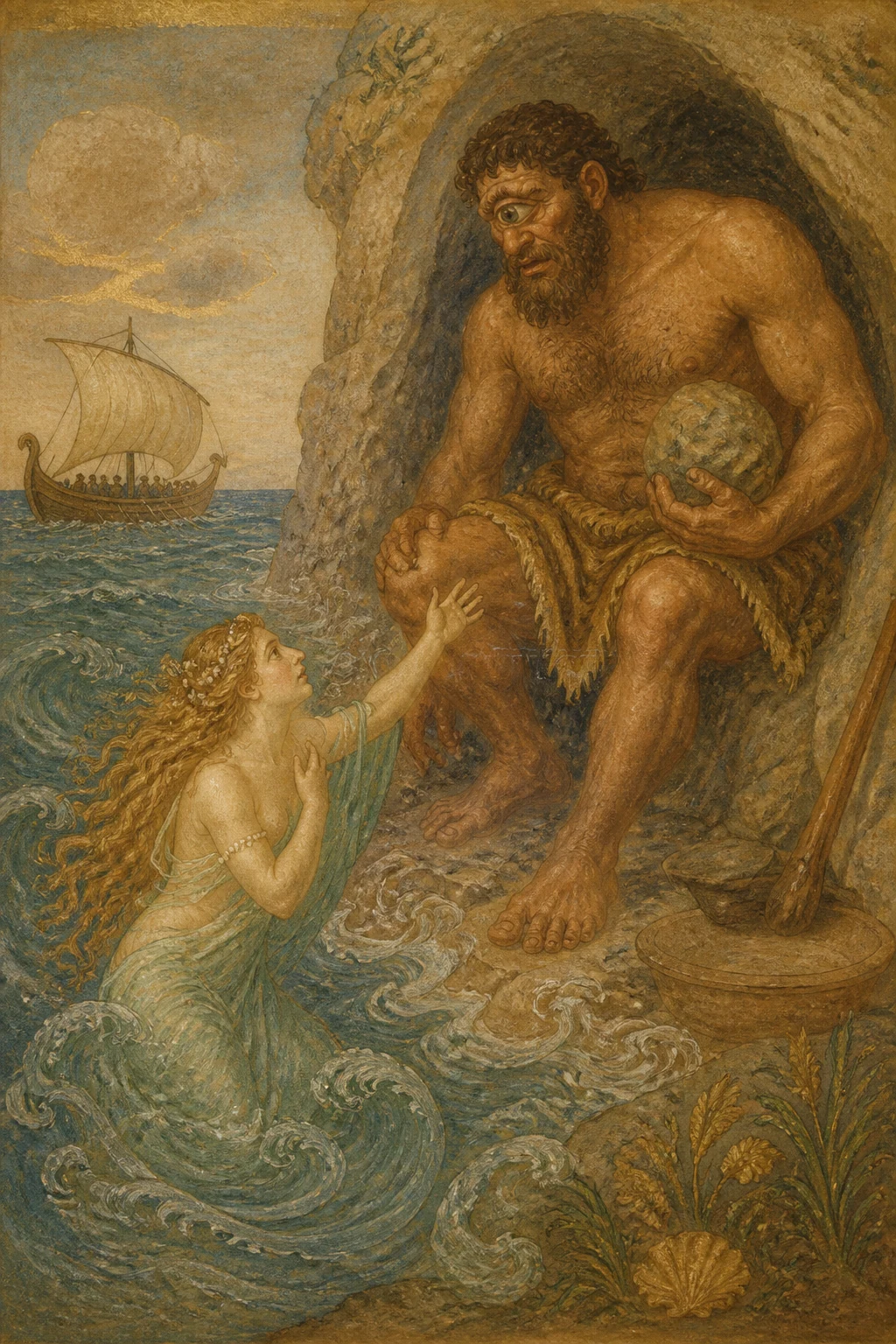
To these questions Achaemenides, no longer clad in shaggy rags, himself again, his clothing no longer fastened with thorns, replied: “May I see Polyphemus once again, and those jaws streaming with human blood, if I prefer my home or the Ithacan’s ship to this one, if I revere Aeneas less than my own father! Never, though I give all I have, can I be grateful enough.
That I speak and breathe, that I look upon the sky and the sunlight—could I forget that debt and be so impious? It is his gift that this life did not pass into the Cyclops’ jaws; and even if I leave the light of life this very moment, I shall lie in a grave, or at least not in that belly. What were my feelings then—unless fear had robbed me of all feeling and thought—when, left behind, I saw you making for the open sea? I wanted to shout, but feared betraying myself to the enemy: Ulysses’ shouting, too, almost destroyed your ship. I saw him tear from the mountain an enormous crag and hurl it into the midst of the waves; again I saw him, as though driven by an engine’s force,
launch huge rocks with his gigantic arm, and I was terrified that waves or wind might sink the ship, forgetting now that I was no longer aboard her. But when your flight had snatched you from certain death, he wandered groaning all over Etna, groping through the woods, and, robbed of sight, stumbled against the rocks; stretching his gore-stained arms toward the sea, he cursed the Greek race and cried: ‘Oh, if only some chance would bring Ulysses back, or one of his companions, on whom my rage could fall, whose entrails I could eat, whose living limbs I could tear apart with my own hands, whose blood would flood
my throat, whose mangled joints would quiver beneath my teeth! How little, or how nothing, the loss of my sight would seem!’ This and more the savage cried; a sickening horror seized me as I gazed at his face, still wet with slaughter, his cruel hands, the hollow socket of his eye, his limbs, and his beard clotted with human blood. Death stood before my eyes, yet death itself was the least of my anguish: I thought he would seize me at any moment, and plunge my entrails into his own; and in my mind clung the image of that time when I saw him seize two of my companions and dash their bodies three or four times against the ground, then, sprawling over them like a shaggy lion,
cram their entrails and flesh, their bones with the white marrow, and their still-quivering limbs into his ravenous belly. I was seized with trembling; I stood there bloodless and appalled. Watching him chew and spew his bloody feast from his mouth, vomiting chunks thick with wine, I imagined that such a fate awaited wretched me. For many days I hid, trembling at every sound, afraid of death yet longing to die, staving off hunger with acorns, grass, and leaves, alone, destitute, hopeless, abandoned to torment and death.
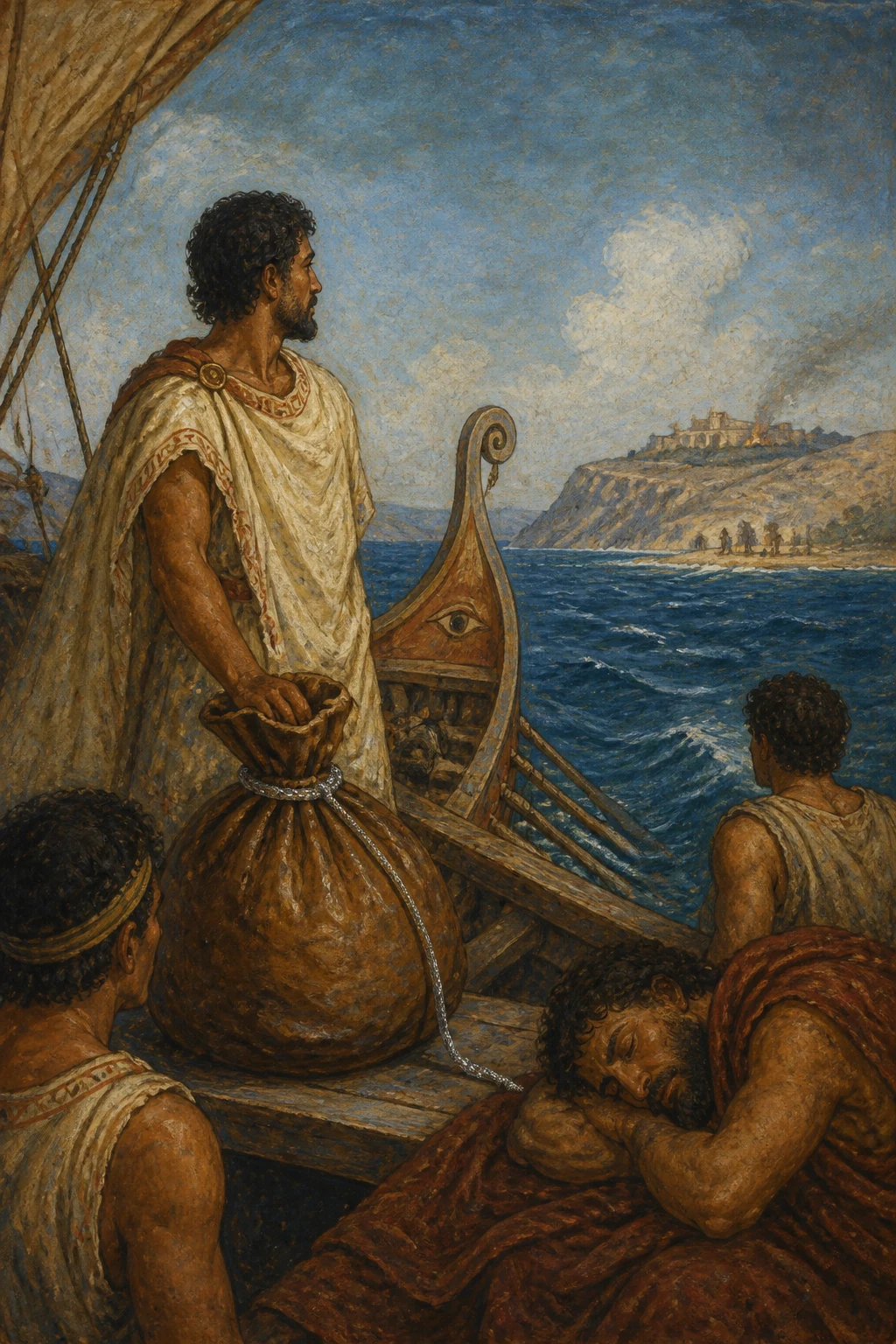
At last, after a long time, I saw this ship far off and ran down to the shore, pleading by gestures to be rescued— and moved their hearts. A Trojan ship took in a Greek! Now you too, dearest of companions, tell me your adventures, and those of your leader and the men who sailed with you.” Macareus told how Aeolus ruled over the Tuscan deep, Aeolus, son of Hippotes, who kept the winds imprisoned; how the Dulichian leader received them, shut inside an oxhide—a wondrous gift—and with a favoring breeze sailed for nine days and came in sight of the land he sought; how, when the dawn after the ninth day began to rise, his companions, overcome by envy and greed for plunder,
thought the bag held gold and untied the winds’ bonds; and how the winds bore him back across the waters he had just sailed, and his ship returned to the harbor of King Aeolus. “From there,” he said, “we came to the ancient city of Lamus the Laestrygonian. Antiphates ruled that land. I was sent to him with two companions, and one companion and I barely escaped with our lives: the third of us stained the Laestrygonian’s impious mouth with his blood. Antiphates pursued us as we fled and roused his host. They gathered and hurled rocks and beams, sinking men and ships alike.
Yet one ship, which carried us and Ulysses himself, escaped. Mourning the loss of so many companions and bitterly lamenting, we drifted to the land you see far off from here—believe me, that island is best seen from afar: I have seen it close! And you, most righteous of Trojans, goddess-born—for now the war is over, you must not be called an enemy, Aeneas—I warn you: shun Circe’s shores.
We too, when our ship was moored on Circe’s coast, remembered Antiphates and the savage Cyclops, and refused to go and enter an unknown house; we drew lots, and the lot sent me, faithful Polites, Eurylochus, Elpenor, too fond of wine, and eighteen companions to Circe’s dwelling. As soon as we reached it and stood upon the threshold, a thousand wolves, with bears and lionesses among them, rushed to meet us and filled us with fear; yet none was fearsome, and none would wound our bodies.
Instead, they wagged their tails gently in the air and fawned upon us, following our steps until serving women welcomed us and led us through marble-paved halls to their mistress. She sat in a beautiful recess, on a stately throne, wearing a gleaming gown with a gold-embroidered mantle draped over it. Around her were Nereids and nymphs, whose busy fingers neither teased out wool nor drew the trailing thread: they arranged plants and sorted flowers strewn at random into baskets, and herbs of different colors.
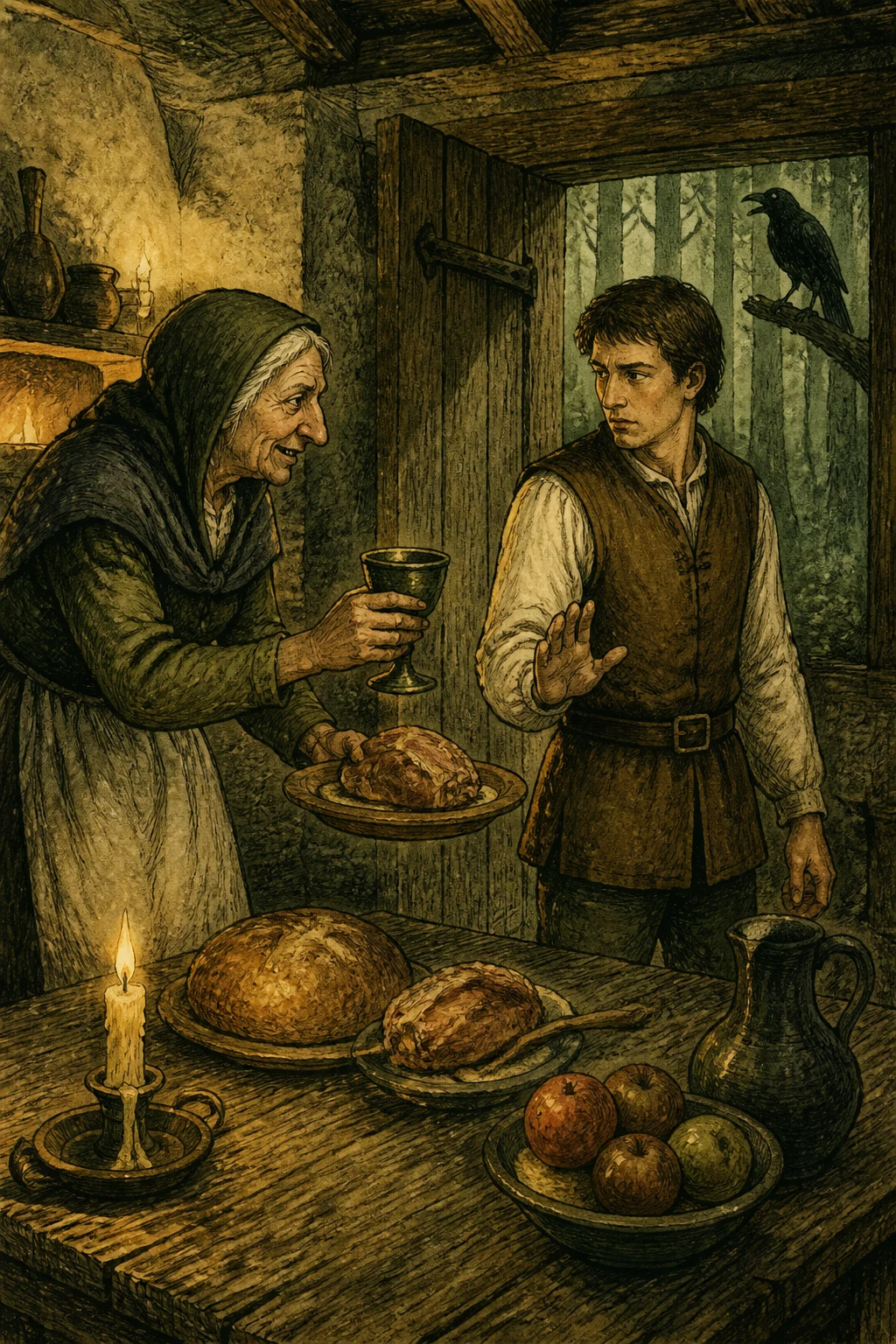
She herself oversaw their work; she herself knew the virtue of every leaf, and which ingredients blended well, and carefully examined the herbs they weighed. When she saw us, and greetings had been exchanged, her face brightened, and she spoke words of welcome. At once she ordered roasted barley to be mixed with honey, strong wine, curdled milk, and raisin wine, and added juices whose presence that sweetness would secretly conceal. We took the cups her sacred hand offered.
As soon as our thirsty mouths had drained them, and the dread goddess touched the tops of our heads with her wand, I began—though I blush to tell it—to bristle with coarse hair; I could no longer speak, but uttered hoarse grunts instead of words, and fell face downward to the ground. I felt my mouth harden into a curving snout, my neck swell into thick folds, and the hands with which I had just taken the cup became my feet.
With the others who had suffered the same—such is the power of potions!— I was shut in a sty. Eurylochus alone, we saw, had escaped a pig’s shape: he alone had refused the offered cup. Had he not avoided it, I would still be one of that bristling herd, nor would Ulysses, learning of our great calamity from him, have come to Circe to avenge us. The peace-bearing god of Cyllene had given him a white flower, which the gods call moly; it grows from a black root.
Protected by this, and by the god’s instructions, he entered Circe’s house; when invited to drink the treacherous cup, he thrust her back as she tried to stroke his hair with her wand, and terrified her with his drawn sword. Then pledges were exchanged and hands were clasped; welcomed to her bed, he demanded his companions’ bodies as his marriage gift. We were sprinkled with the better juices of an unknown herb, our heads were struck with her wand reversed, and words were spoken that undid the words spoken before.
The longer she chanted, the higher we rose and straightened from the earth; our bristles fell away, the clefts vanished from our cloven feet, our shoulders returned, and we had arms and hands once more. Weeping, we embraced our weeping leader and clung about his neck, and the first words we spoke were words of gratitude.