Prevod
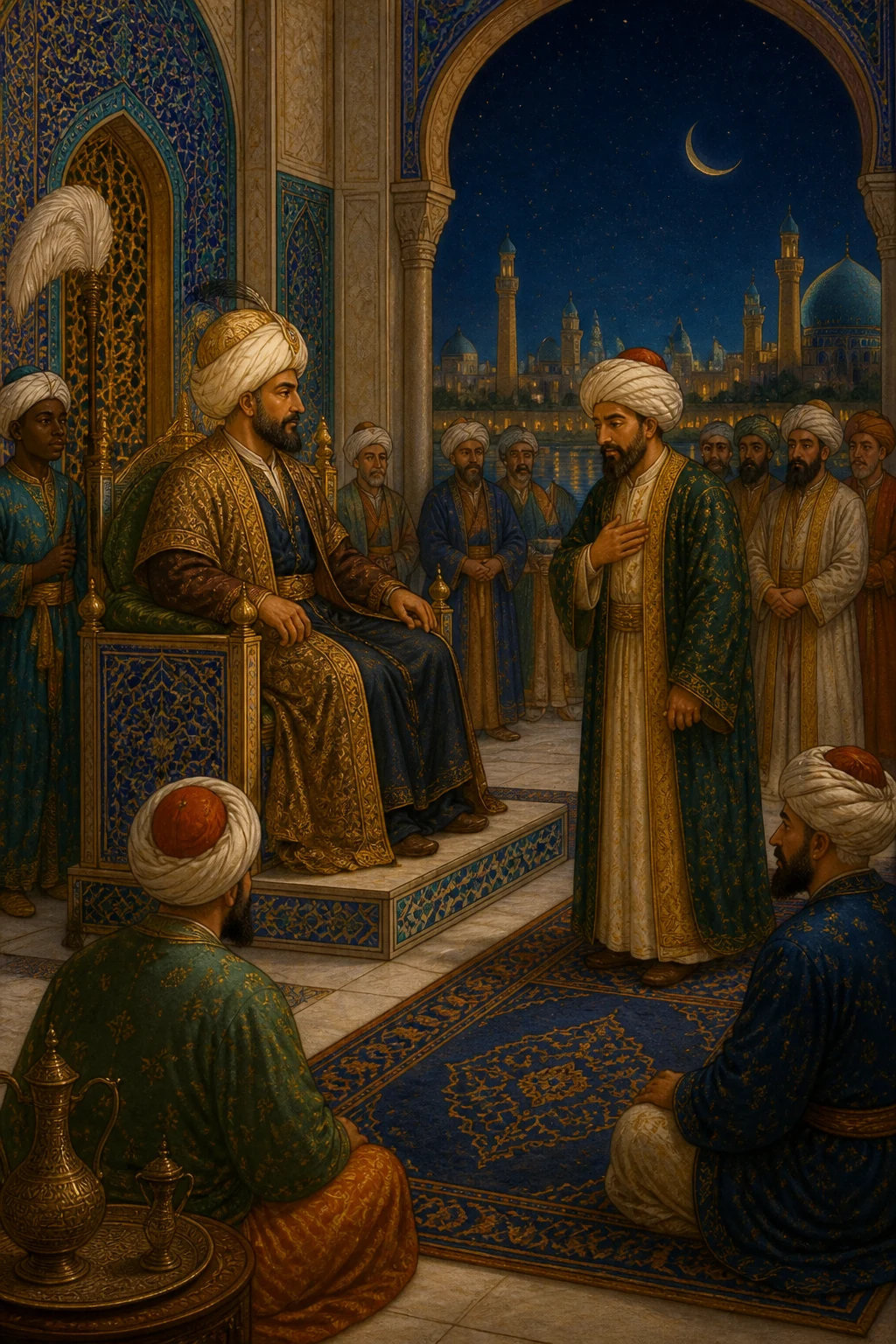
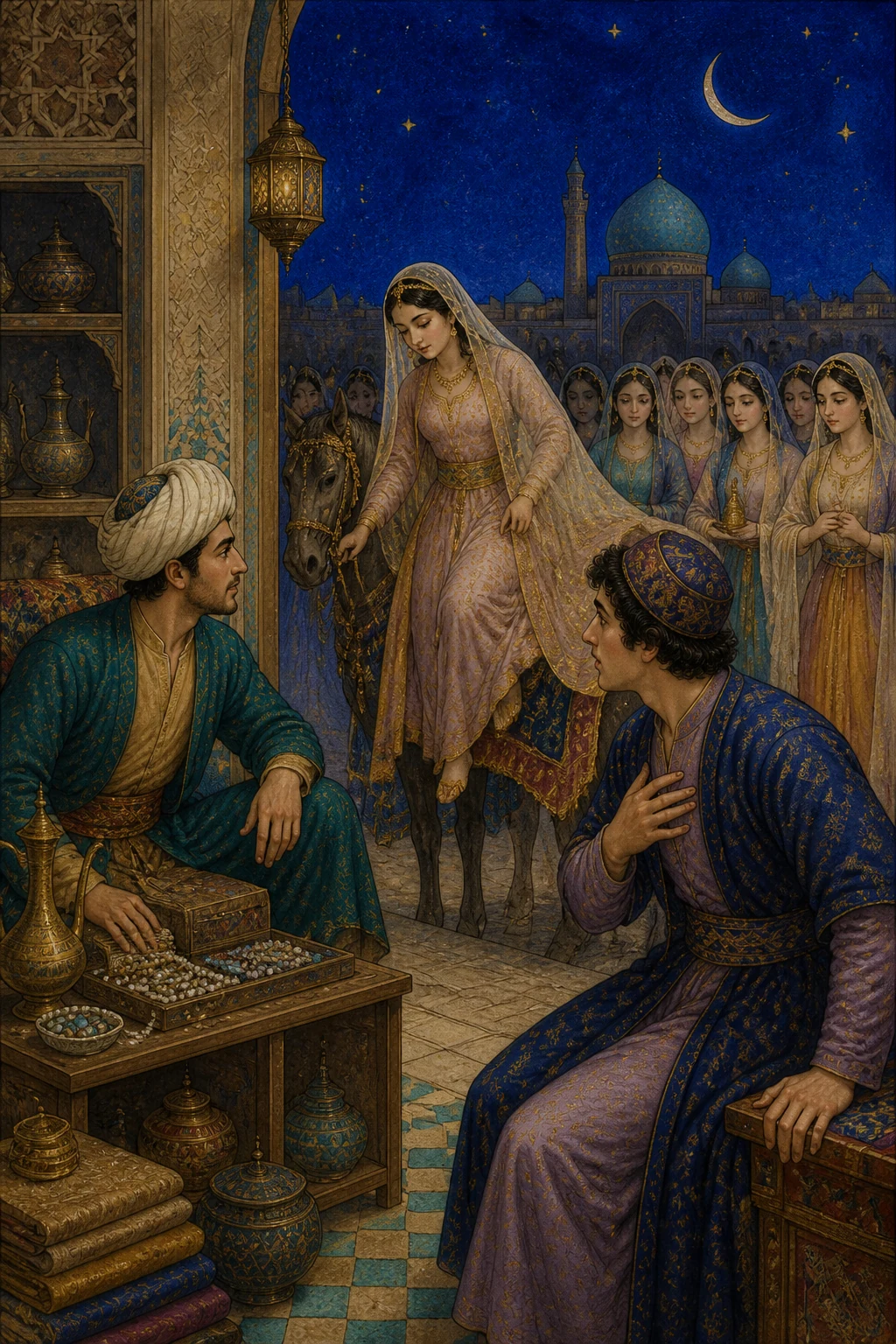
It is told that a man of Basra once bought a slave girl and gave her a fine education, cultivating her manners and accomplishments. He loved her dearly and spent all his wealth on the pleasures they shared, until he had nothing left and dire poverty brought him to distress. The girl said to him, “My master, sell me, for you need the money I would bring. My heart aches to see you in such poverty. If you sold me and lived on the proceeds, it would be better for you than keeping me here. Perhaps Almighty God will then grant you greater abundance.” His straitened circumstances led him to agree. He took her down to the market, where the broker presented her to the governor of Basra, whose name was Abd Allah ibn Ma‘mar al-Taymi. The governor admired her and bought her for five hundred dinars, which he paid to her master. When her master had taken the money and was about to leave, the girl wept and recited these two verses:
“May you enjoy the wealth you have gained; nothing remains to me but grief and brooding. I tell my soul, in the depths of its anguish: ‘Grieve less, now that your beloved has gone—or grieve still more.’” When her master heard her, he heaved deep sighs and recited these verses:
“If you can find no way out of this plight, and see no refuge but death, forgive me. Morning and evening I go my way, with memories for company, communing with a heart weighed down by thought. Peace be upon you: we shall have no visits, no reunion, unless Ibn Ma‘mar wills it.” When Abd Allah ibn Ma‘mar heard their verses and saw their sorrow, he said, “By God, I have helped to part you, yet now I see that you love one another. Take both the money and the girl, my good man, and may God bless you in them, for parting is bitter to two lovers.” They both kissed his hand and departed, and they remained together until death divided them. Glory be to Him who never passes away.