Waltey
Želva in vodna ptica
Tisoč in ena noč · arabska pripovedna tradicijaO besedilu
Želva in vodna ptica
- Vir
- Tisoč in ena noč
- Avtor
- arabska pripovedna tradicija
- Jezik branja
- English
- Jezik izvirnika
- Arabic
- Čas branja
- 6 min branja
- Obseg
- 5 strani
- Naslov izvirnika
- حكاية السلحفاة وطائر الماء - الليلة ١٤٨
O izvirniku
Tisoč in ena noč
Zgodbe v zgodbah, polne trgovcev, dvorov, preoblek in nočnih zapletov. Bralni jezik je English, izvirnik pa prihaja iz vira Tisoč in ena noč v jeziku Arabic.
Besedilo
Želva in vodna ptica
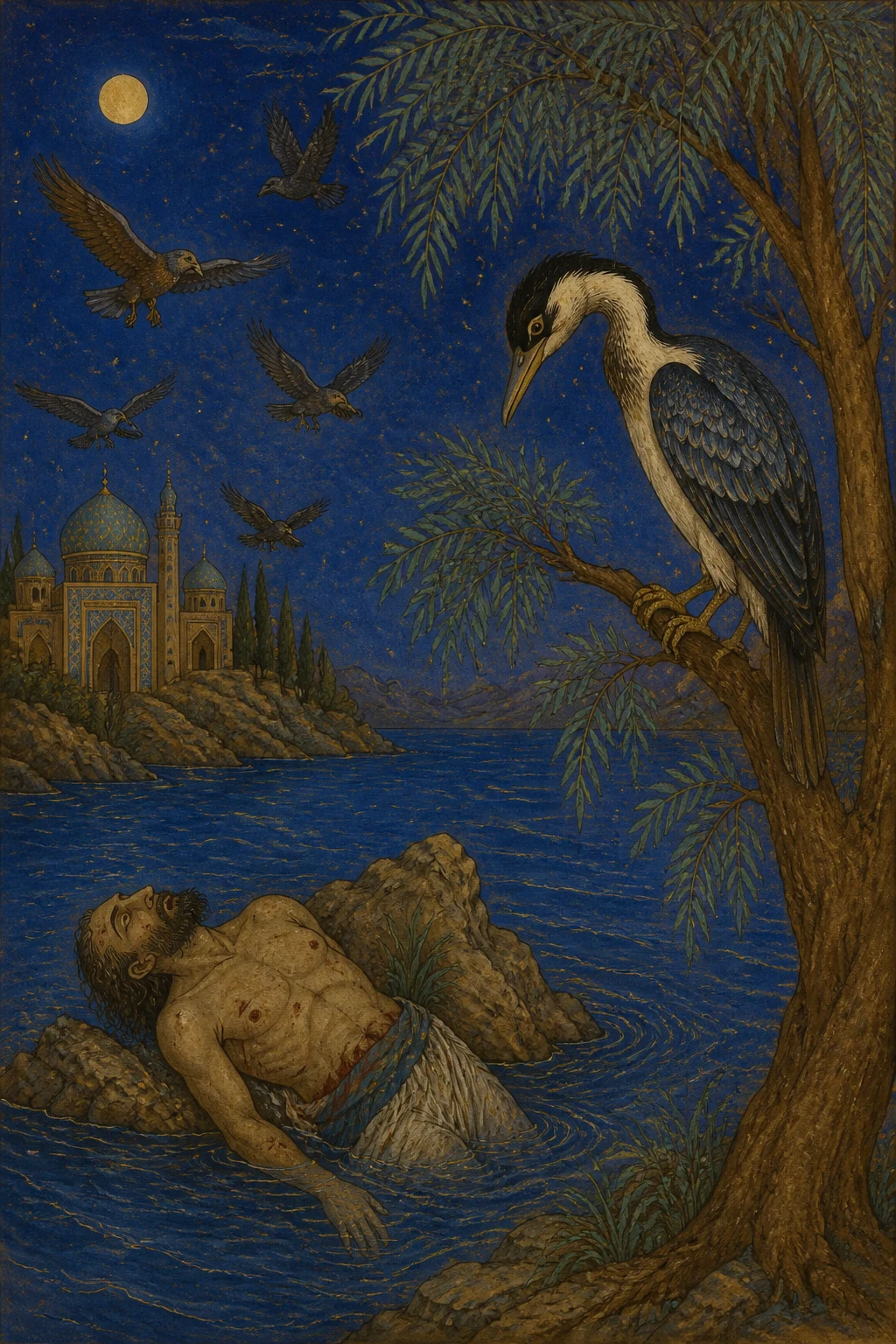
They say, O King, that a waterbird once took wing and soared into the sky, then swooped down upon a rock in the midst of a flowing stream. As it stood there, the current swept a human corpse against the rock, where it lodged, buoyed up by its own bloating. The waterbird drew near and examined it, and saw that it was the body of a son of Adam, bearing the marks of sword cuts and spear thrusts. It said to itself, “This dead man must have been wicked, and a band of men fell upon him and killed him, ridding themselves of him and his evil.” The waterbird was still marvelling at the corpse when it saw vultures and eagles gathering about it on every side. At this, it grew terribly frightened and said, “I cannot bear to remain in this place.” So it flew off in search of somewhere to shelter until the corpse had been devoured and the birds of prey had departed. It flew on until it found a river with a tree growing in its midst, and alighted upon it, sorrowful and dejected at being so far from home. It said to itself, “Sorrows never cease to pursue me. I had felt at ease when I saw that corpse, and rejoiced greatly over it, saying, ‘Here is sustenance that God has sent me.’ But my joy turned to grief, and my delight to sorrow and care. The birds of prey snatched it from me and came between me and it. How, then, can I hope to be safe in this world, or put my trust in it? As the proverb says, ‘This world is the home of those who have no home. Only the witless are beguiled by it, taking comfort in their wealth and children, their people and their kin.’ The man it beguiles goes on trusting in it, strutting upon the earth until he lies beneath it, and those dearest and nearest to him heap the dust upon him. A man can do no better than bear its hardships patiently. Yet here I have left my dwelling and my homeland, though I hated to part from my brothers and companions.” While it was lost in these thoughts, a male turtle came swimming downstream, drew near the waterbird, greeted it, and said, “My lord, what has driven you from your dwelling?” “Enemies have settled there,” replied the bird, “and a wise creature cannot endure living beside an enemy. How well the poet said:
‘When an unwelcome guest settles in a people’s land, those who dwell there have no choice but to depart.’ The turtle said, “If matters are as you describe, and your plight is as you say, I shall remain at your side and never leave you, attending to your needs and serving you faithfully. For it is said, ‘There is no loneliness greater than that of a stranger cut off from his family and homeland.’ It is also said that no calamity equals parting from the virtuous. Among the ways a wise man may console himself are to seek companionship in exile and to bear affliction and distress with patience. I hope you will find my company pleasing, and that I may be your servant and helper.” When the waterbird heard the turtle’s words, it said, “You have spoken truly. By my life, I have known the pain and grief of separation throughout my absence from my dwelling, parted from my brothers and dear friends. For in separation there is a lesson for those who will learn, and food for thought for those who will reflect. When a man finds no friend to comfort him, happiness deserts him forever, and misery stays with him always. In every circumstance, the wise can only seek relief from care in the company of friends and hold fast to patience and fortitude. These are two praiseworthy qualities that help us bear the blows of fate and ward off fear and anguish in every trial.” The turtle said, “Beware of despair, for it will spoil your life and rob you of your dignity.” They continued talking together until the waterbird said, “I have always feared the calamities of time and the sudden blows of fate.” Hearing this, the turtle drew close, kissed it between the eyes, and said, “The birds have always found sound counsel in you. How, then, can you let worry and distress weigh upon you?” He went on soothing the waterbird’s fears until it was reassured. Then the waterbird flew back to the place where the corpse had lain. When it arrived, it found none of the birds of prey, and nothing remained of the corpse but bones. So it returned to tell the turtle that the enemy had left its dwelling. On reaching him, it related what it had seen and said, “I wish to return home and enjoy the company of my dear friends, for no wise creature can bear to be parted from its homeland.” The turtle went with it to that place, and they found nothing there to fear. The waterbird’s heart was at peace, and it recited these two verses:
“Many a calamity leaves a man helpless, yet with God lies the way of escape. Its grip grew tight, but when its coils were firmly drawn, relief came, though I had thought it never would.” Then the two settled on that island. But while the waterbird was living in safety and happiness, joy and delight, fate brought a hungry hawk upon it. The hawk struck it once with its talons and killed it. Caution availed it nothing when its appointed hour had come, and the cause of its death was its neglect of praising God. It is said that its hymn of praise had been: “Glory be to our Lord in all He ordains and disposes! Glory be to our Lord in all He bestows of wealth and poverty!”
Such was the tale of the birds. The king said, “O Shahrazad, your story has given me further counsel and food for reflection. Have you any tales of wild beasts?”
Izvirnik
حكاية السلحفاة وطائر الماء - الليلة ١٤٨
Naslednje strani prikazujejo izvirno besedilo za primerjavo.
فلما كانت الليلة ١٤٨
زعموا أيها الملك أن طائرًا طار وعلا إلى الجو، ثم انقضَّ على صخرة في وسط الماء، وكان الماء جاريًا، فبينما الطائر واقف على الصخرة، وإذا برمة إنسان جرَّها الماء حتى أسندها إلى الصخرة، ووقفَتْ تلك الجيفة في جانب الصخرة، وارتفعت لانتفاخها؛ فدَنَا منها طير الماء وتأمَّلَها فرآها رمة ابن آدم، وظهر له فيها ضرب السيف وطعن الرماح، فقال في نفسه: إن هذا المقتول كان شريرًا، فاجتمع عليه جماعة وقتلوه، واستراحوا منه ومن شرِّه. ولم يزل طير الماء يكثر التعجُّب من تلك الرمة حتى رأى نسورًا وعقبانًا أحاطوا بتلك الجيفة من جميع جوانبها، فلما رأى ذلك طير الماء جزع جزعًا شديدًا وقال: لا صبر لي على الإقامة في هذا المكان. ثم طار منه يفتش على موضع يأويه إلى حين نفاد تلك الجيفة، وزوال سباع الطير عنها، ولم يزل طائرًا حتى وجد نهرًا في وسطه شجرة، فنزل عليها كئيبًا حزينًا على بُعده عن وطنه، وقال في نفسه: لم تزل الأحزان تتبعني، وكنت قد استرحت لما رأيت تلك الجيفة، وفرحتُ بها فرحًا شديدًا، وقلت: هذا رزق ساقه الله إليَّ. فصار فرحي غمًّا، وسروري حزنًا وهمًّا، وافترستها سباع الطير مني، وحالوا بينها وبيني، فكيف أرجو أن أكون سالمًا في هذه الدنيا وأطمئن إليها؟ وقد قيل في المثل: الدنيا دارُ مَن لا دارَ له يغترُّ بها مَن لا عقلَ له، ويطمئن إليها بماله وولده، وقومه وعشيرته، ولم يزل المغتر بها راكنًا إليها يختال فوق الأرض حتى يصير تحتها، ويحثو عليه الترابَ أعزُّ الناس عليه، وأقربهم إليه، وما للفتى خير من الصبر على مكارهها، وقد فارقت مكاني ووطني وكنت كارهًا لفرقة إخواني وأصحابي. فبينما هو في فكرته، وإذا بذكر من السلاحف أقبل منحدرًا في الماء، ودنا من طير الماء وسلَّم عليه، وقال: يا سيدي، ما الذي أبعدك عن موضعك؟ قال: حلول الأعداء فيه، ولا صبر للعاقل على مجاورة عدوه، وما أحسن قول بعض الشعراء:
إِذَا حَلَّ الثَّقِيلُ بِأَرْضِ قَوْمٍ فَمَا لِلسَّاكِنِينَ سِوَى الرَّحِيلِ
فقال له السلحف: إذا كان الأمر كما وصفته، والحال مثل ما ذكرتها، فأنا لا أزال بين يديك، ولا أفارقك لأقضي حاجتك، وأَفِي بخدمتك، فإنه يقال: لا وحشة أشد من وحشة الغريب المنقطع عن أهله ووطنه، وقد قيل: إن فرقة الصالحين لا يعدلها شيء من المصائب، ومما يسلِّي به العاقل نفسه الاستئناس في الغربة، والصبر على الرزية والكربة، وأرجو أن تحمد صحبتي لك، وأكون لك خادمًا ومُعينًا. فلما سمع طير الماء مقالة السلحف قال له: لقد صدقتَ في قولك، ولعمري إني وجدت للفراق ألمًا وغمًّا مدة بعدي عن مكاني، وفراقي لإخواني وخلَّاني؛ لأن في الفراق عبرةً لمَن اعتبر، وفكرة لمَن تفكَّر، وإذا لم يجد الفتى مَن يسلِّيه من الأصحاب، ينقطع عنه الخير أبدًا، ويثبت له الشر سرمدًا، وليس للعاقل إلا التسلِّي بالإخوان عن الهموم في جميع الأحوال، وملازمة الصبر والتجلُّد، فإنهما خصلتان محمودتان يعينان على نوائب الدهر، ويدفعان الفزع والجزع في كل أمر. قال له السلحف: إياك والجزع، فإنه يفسد عليك عيشك، ويُذهِب مروءتك. وما زالا يتحدثان مع بعضهما إلى أن قال طير الماء للسلحف: أنا لم أزل أخشى نوائب الزمان، وطوارق الحدثان. فلما سمع السلحف مقالة طير الماء، أقبل عليه وقبَّله بين عينيه، وقال له: لم تزل جماعة الطير تعرف في مشورتك الخير، فكيف تحمل الهم والضَّير؟ ولم يزل يُسكِّن روع طير الماء حتى اطمأن، ثم إن طير الماء طار إلى مكان الجيفة، فلما وصل إليه لم يرَ من سباع الطير شيئًا، ولا من تلك الجيفة إلا عظامًا، فرجع يخبر السلحف بزوال العدو من مكانه، فلما وصل إلى السلحف أخبره بما رأى، وقال له: إني أحِبُّ الرجوع إلى مكاني، وأتملى بخلَّاني؛ لأنه لا صبرَ للعاقل عن وطنه. فذهب معه إلى ذلك المكان فلم يجد أشياء مما يخافان منه، فصار طير الماء قرير العين، وأنشد هذين البيتين:
وَلَرُبَّ نَازِلَةٍ يِضِيقُ لَهَا الْفَتَى ذَرْعًا وَعِنْدَ اللهِ مِنْهَا الْمَخْرَجُ
ضَاقَتْ فَلَمَّا اسْتَمْكَنَتْ حَلَقَاتُهَا فُرِجَتْ وَكُنْتُ أَظُنُّهَا لَا تُفْرَجُ
ثم سكنا في تلك الجزيرة، فبينما طير الماء في أمن وسرور، وفرح وحبور؛ إذ ساق القضاء إليه بازًا جائعًا، فضربه بمخلبه ضربة فقتله، ولم يُغنِ عنه الحذر عند فراغ الأجل، وسبب قتله غفلته عن التسبيح، قيل إنه كان يقول في تسبيحه: سبحان ربنا فيما قدَّر ودبَّر، سبحان ربنا فيما أغنى وأفقر.
هذا ما كان من حديث الطير. فقال الملك: يا شهرزاد، لقد زدتِني بحكايتك مواعظَ واعتبارًا، فهل عندك شيء من حكايات الوحوش؟
Nadaljuj z branjem