Waltey
Žabji princ
017 The Frog Prince
Mother's Nursery Tales · Katharine PyleO besedilu
Žabji princ
- Vir
- Mother's Nursery Tales
- Avtor
- Katharine Pyle
- Jezik branja
- Slovenščina
- Jezik izvirnika
- English
- Čas branja
- 6 min branja
- Obseg
- 5 strani
- Naslov izvirnika
- 017 The Frog Prince
O izvirniku
Mother's Nursery Tales
Štiriintrideset zgodovinskih literarnih priredb starejših pravljic, ki jih je Pyle tudi ilustrirala. Bralni jezik je Slovenščina, izvirnik pa prihaja iz vira Mother's Nursery Tales v jeziku English.
Besedilo
Žabji princ
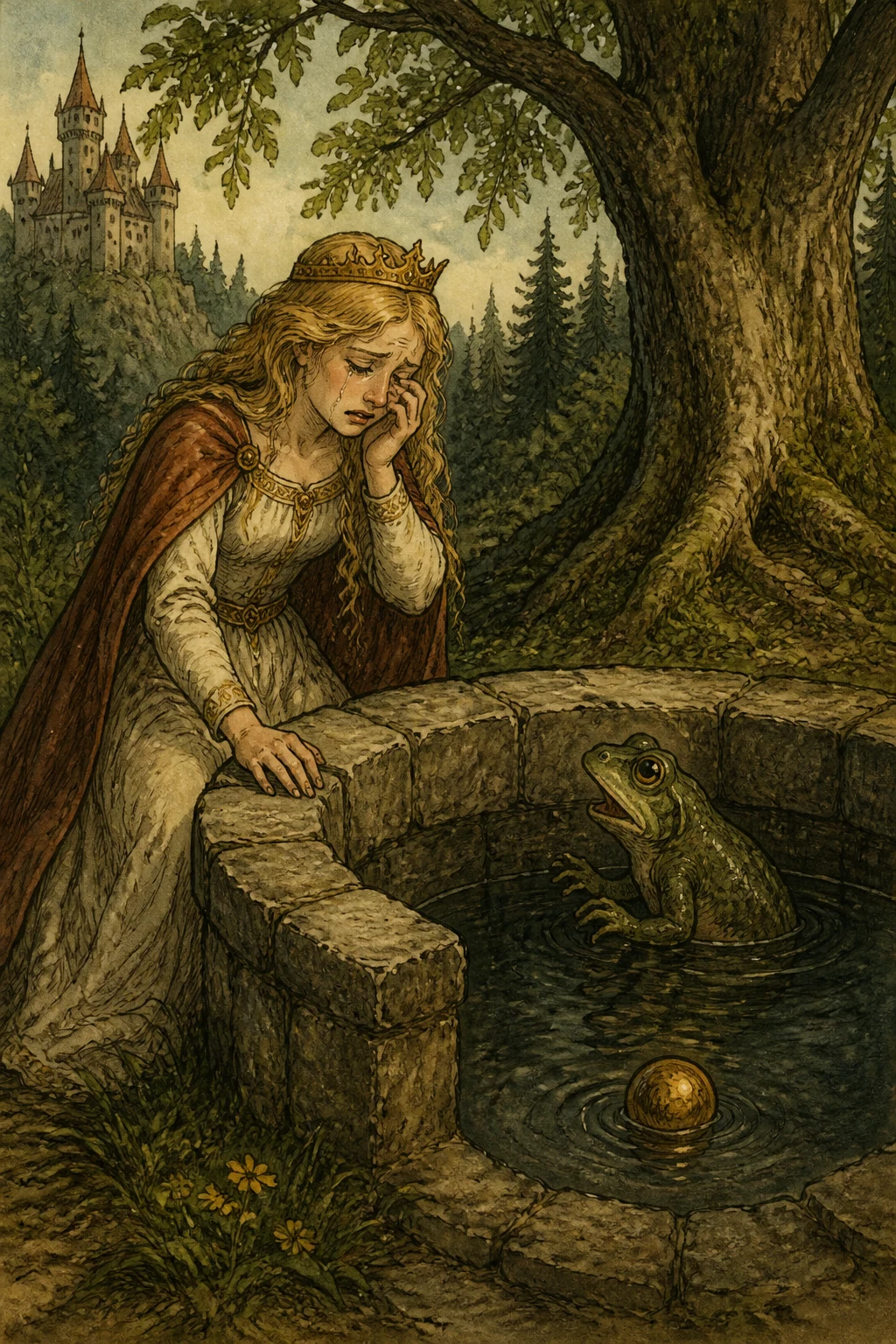
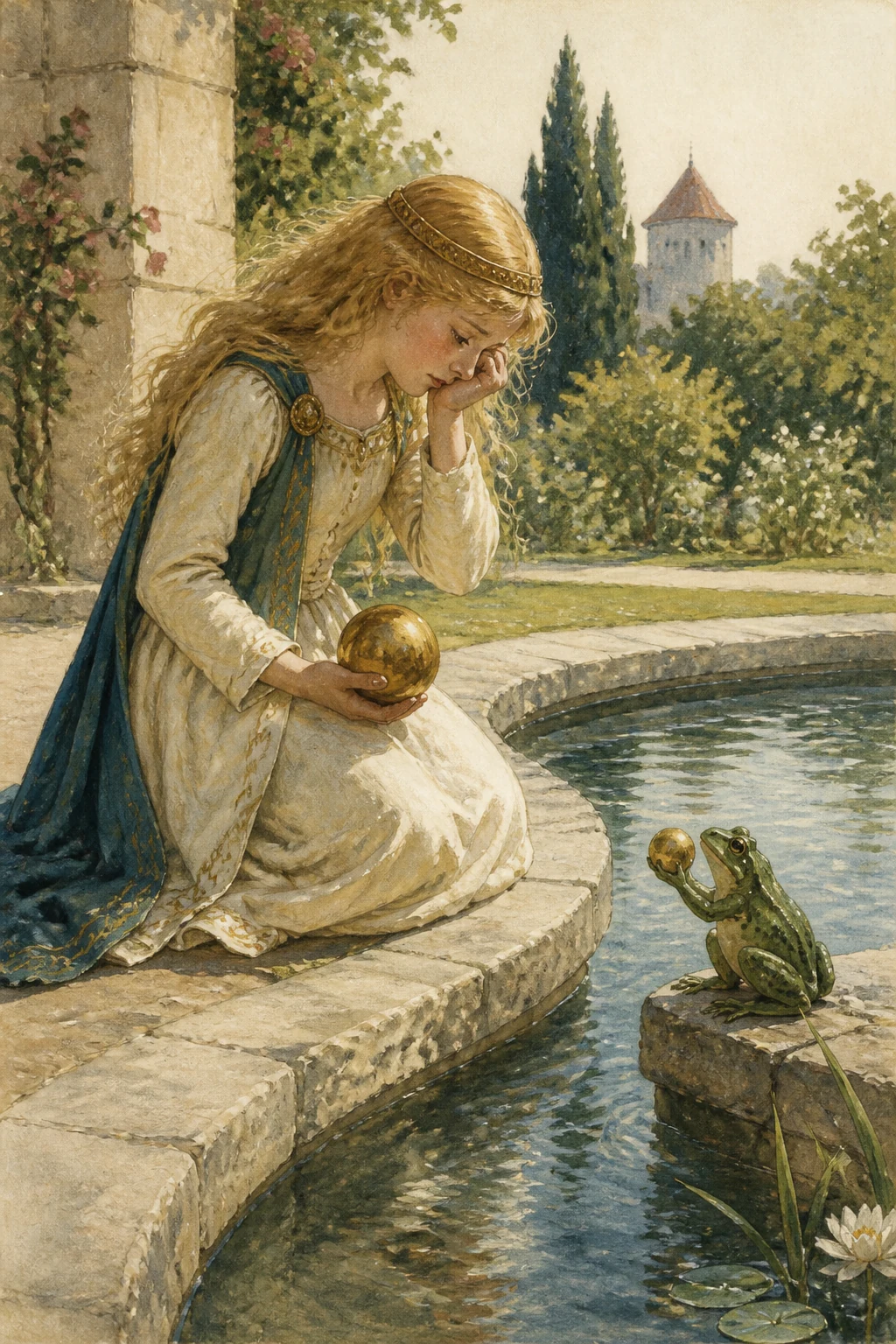
Nekoč je živel kralj, ki je imel eno samo hčer in jo je ljubil kakor punčico svojega očesa. Nekega dne je princeska sedela ob vodnjaku na vrtu in se igrala z zlato žogo. Metala jo je v zrak in jo spet lovila, žoga pa se je v soncu tako bleščala in lesketala, da se je princeska od veselja na glas smejala. A ko jo je hotela spet ujeti, ji je ušla, se zakotalila po travi in padla v vodnjak. Tam je potonila na dno. Princeska jo je na vse pretege skušala doseči, a ni mogla. Tedaj je začela jokati in njene solze so kapljale v vodnjak.
»Princeska, princeska, zakaj jokaš?« je vprašal hripav glas. Princeska se je ozrla okoli sebe in na robu vodnjaka zagledala velikega, čokatega zelenega žabca.
»Jokam, žabček, ker mi je žoga padla v vodo in je ne morem dobiti nazaj,« je odgovorila princeska. »In kaj mi boš dala, če ti jo prinesem?«
»Kar koli na svetu, dragi žabec, le žoge ne.« »Ničesar mi ni treba dati, princeska,« je rekel žabec. »Toda če ti prinesem žogo, mi boš dovolila, da se igram s teboj? Mi boš dovolila sedeti za tvojo mizo, jesti s tvojega krožnika, piti iz tvoje skodelice in spati v tvoji posteljici?«
»Da, da!« je vzkliknila princeska. Prav rada je obljubila, saj ni verjela, da bi žabec sploh lahko zapustil vodnjak ali se povzpel po stopnicah v palačo.
»Prav, torej si obljubila,« je rekel žabec in se takoj potopil v vodnjak ter princeski v naročju prinesel žogo.
Deklica je vzela žogo in z njo stekla proč, ne da bi se ustavila in se mu zahvalila. Tistega večera je sedela pri večerji z očetom, jedla z zlatega krožnika in pila iz zlate skodelice, na žabca v vodnjaku pa se ni niti spomnila.
Kmalu je nekdo potrkal na vrata, a tako tiho, da ga ni slišal nihče razen princeske. Nato se je trkanje ponovilo in hripav glas je zaklical: »Kraljeva hči, kraljeva hči, spusti me noter. Si pozabila, kaj si mi obljubila pri vodnjaku?«
Princeska se je prestrašila. Zdrsnila je s stola, stekla k vratom, jih odprla in pogledala ven. Na najvišji stopnici je sedel veliki zeleni žabec.
Ko ga je princeska zagledala, je hitro zaprla vrata in se vrnila k mizi, vsa bleda. »Kdo je bil pri vratih?« je vprašal kralj.
»Nihče,« je odgovorila princeska. »A prav gotovo je bil nekdo tam,« je rekel kralj. »Samo velik zelen žabec iz vodnjaka,« je rekla princeska. Nato je očetu povedala, kako ji je žoga padla v vodnjak, kako ji jo je žabec prinesel nazaj in kaj mu je obljubila.
»Kar si obljubila, moraš izpolniti,« je rekel kralj. »Odpri vrata, hči moja, in ga spusti noter.« Deklica se je zelo nerada vrnila k vratom in jih odprla; žabec je priskakljal v sobo. Ko se je vrnila k mizi, ji je skakljal tik za petami.
Sedla je in začela jesti. »Kraljeva hči, kraljeva hči, postavi me na mizo, da bom tudi jaz jedel s tvojega zlatega krožnika,« je rekel žabec.
Princeska bi ga najraje zavrnila, a si zaradi očetovih besed ni upala. Dvignila je žabca na mizo in tam je jedel z njenega krožnika, sama pa ni mogla zaužiti niti grižljaja.
»Žejen sem,« je rekel žabec. »Nagni svojo zlato skodelico, da bom lahko pil iz nje.« Princeska je storila, kar ji je velel, a ob tem si ni mogla kaj, da ne bi jokala, in solze so ji tekle v mleko.
Ko je bilo večerje konec, je princeska hotela pohiteti v svojo sobo, a žabec ji je zaklical: »Kraljeva hči, kraljeva hči, vzemi me s seboj. Si pozabila, da naj bi spal v tvoji beli posteljici?«
»Tega pa ne boš!« je jezno vzkliknila princeska. »Vrni se med kamne vodnjaka, kamor spadaš.« »Kar si rekla, moraš storiti,« je rekel kralj. »Vzemi žabca s seboj.«
Princeska se je zdrznila, a si ni upala ugovarjati. Odnesla je žabca v svojo sobo in ga odložila v najtemnejši kot, da ga ne bi videla. Nato se je slekla in legla v posteljo. A komaj je položila glavo na blazino, je zaslišala, kako jo žabec kliče.
»Kraljeva hči, kraljeva hči! Tako držiš svojo obljubo? Dvigni me na posteljo, saj so tla mrzla in trda.« Princeska je skočila iz postelje in zgrabila žabca z obema rokama. »Žabec zoprni,« je vzkliknila, »ne boš me takole mučil!« S temi besedami ga je z vso močjo vrgla ob steno.
A komaj se je žabec dotaknil stene, se je spremenil v čednega mladega princa, oblečenega vsega v zeleno, z zlato krono na glavi in smaragdno ogrlico okoli vratu.
Princ je stopil k njej in jo prijel za roko. »Draga princeska,« je rekel, »razbila si urok, ki me je držal v oblasti. Zlobna vila se je razjezila na mojega očeta, zato me je spremenila v žabca in me pustila v vodnjaku. Zdaj pa, ko je urok razbit, se lahko zares igrava skupaj, in ko boš dovolj stara, boš postala moja žena.«
Princeska ni rekla ne. Veselila se je že ob misli, da bo imela tako čednega prijatelja za igro. Tudi temu, da bi se pozneje poročila z njim, je bila povsem naklonjena.
Tako je princ ostal v palači in kralj je bil zelo vesel, da ga bo dobil za zeta. Ko sta se princ in princeska poročila, so po vsem kraljestvu prirejali velika slavja in gostije.
Toda princ ni hotel biti nič dlje zdoma, proč od svojega kraljestva. Rekel je, da se mora vrniti in obiskati ostarelega očeta. Nekega dne se je pred vrata pripeljala lepa zlata kočija, v katero je bilo vpreženih osem belih konj. Poslal jo je prinčev oče, da bi sina pripeljala domov. Na kozlu je sedel zvesti služabnik, ki je skrbel za princa, ko je bil še otrok.
Ko je vila odnesla princa, je ta zvesti služabnik tako bridko žaloval, da se je bal, da mu bo počilo srce. Da bi to preprečil, si je okoli telesa namestil tri velike železne obroče.
Princ in princeska sta stopila v kočijo in konji so oddirjali. Nista pa se peljala še daleč, ko se je zaslišal glasen pok. »Kaj je bilo to?« je vzkliknila princeska. »Prav gotovo se je nekaj zlomilo.«
»Da, gospodarica,« je odgovoril zvesti služabnik, »obroč je moje srce oklepal, od radosti zdaj je razpadel.« Peljali so se še malo naprej, nato pa se je zaslišal nov pok, še glasnejši od prvega.
»Prav gotovo kočija razpada,« je vzkliknil princ. »Ne, gospodar,« je odgovoril zvesti služabnik, »le radost je razlomila drugi obroč, ki je srce mi stiskal.«
Malo zatem se je zaslišal pok, glasnejši od vseh prejšnjih. »Zdaj pa se je gotovo nekaj zlomilo,« sta v en glas vzkliknila princ in princeska. »Zadnji obroč je srce mi oklepal, zdaj od radosti je še ta razpadel,«
je odgovoril služabnik. Nato so se mirno peljali naprej, dokler niso prispeli v domačo deželo. Tam sta princ in princeska srečno živela do konca svojih dni, zvesti služabnik pa z njima.
Izvirnik
017 The Frog Prince
Naslednje strani prikazujejo izvirno besedilo za primerjavo.
There was once a king who had one only daughter, and her he loved as he loved the apple of his eye.
One day the Princess sat beside a fountain in the gardens, and played with a golden ball. She threw it up into the air and caught it again, and the ball shone and glittered in the sunshine so that she laughed aloud with pleasure. But presently as she caught at the ball she missed it, and it rolled across the grass and fell into the fountain. There it sank to the bottom. The Princess tried and tried to reach it, but she could not. Then she began to weep, and her tears dripped down into the fountain.
“Princess, Princess, why are you weeping?” asked a hoarse voice.
The Princess looked about her, and there was a great squat green frog sitting on the edge of the fountain.
“I am weeping, Froggie, because I have dropped my ball into the water and I cannot get it again,” answered the Princess.
“And what will you give me if I get it for you?”
“Anything in the world, dear Frog, except the ball itself.”
“I wish you to give me nothing, Princess,” said the frog. “But if I bring back your ball to you will you let me be your little playmate? Will you let me sit at your table, and eat from your plate, and drink from your mug, and sleep in your little bed?”
“Yes, yes,” cried the Princess. She was very willing to promise, for she did not believe the frog could ever leave the fountain, or come up the palace steps.
“Very well, then that is a promise,” said the frog, and at once he plunged into the fountain and brought back the ball to the Princess in his arms.
The little girl took the ball and ran away with it without even stopping to thank him.
That evening the child sat at supper with her father, and she ate from her golden plate, and drank from her golden mug, and she did not even give a thought to the frog down in the fountain.
Presently there came a knocking at the door, but it was so soft that no one heard it but the Princess. Then the knocking came again, and a hoarse voice cried, “King’s daughter, King’s daughter, let me in. Have you forgotten the promise you made me by the fountain?”
The Princess was frightened. She slipped down from her chair, and ran to the door, and opened it and looked out. There on the top-most step sat the great green frog.
When the Princess saw him she shut the door quickly, and came back to the table, and she was very pale.
“Who was that at the door?” asked the King.
“It was no one,” answered the Princess.
“But there was surely someone there,” said the King.
“It was only a great green frog from the fountain,” said the Princess. And then she told her father how she had dropped her ball into the fountain, and how the frog had brought it back to her, and of what she had promised him.
“What you have promised that you must perform,” said the King. “Open the door, my daughter, and let him in.”
Very unwillingly the child went back to the door and opened it; the frog hopped into the room. When she returned to the table, the frog hopped along close at her heels.
She sat down and began to eat. “King’s daughter, King’s daughter, set me upon the table that I too may eat from your golden plate,” said the frog.
The Princess would have refused, but she dared not because of what her father had said. She lifted the frog to the table, and there he ate from her plate, but she herself could touch nothing.
“I am thirsty,” said the frog. “Tilt your golden mug that I may drink from it.”
The Princess did as he bade her, but as she did so she could not help weeping so that her tears ran down into the milk.
When supper was ended the Princess was about to hurry away to her room, but the frog called to her, “King’s daughter, King’s daughter, take me along. Have you forgotten that I was to sleep in your little white bed?”
“That you shall not,” cried the Princess in a passion. “Go back to the stones of the fountain, where you belong.”
“What you have said that you must do,” said the King. “Take the frog with you.”
The Princess shuddered, but she dared not refuse.
She took the frog with her up to her room, and put him down in the darkest corner, where she would not see him. Then she undressed and went to bed. But scarcely had her head touched the pillow when she heard the frog calling her.
“King’s daughter, King’s daughter! Is this the way you keep your promise? Lift me up to the bed, for the floor is cold and hard.”
The Princess sprang from the bed and seized the frog in her hands. “Miserable frog,” she cried, “you shall not torment me in this way.” So saying she threw the frog against the wall with all her force.
But no sooner did the frog touch the wall than it turned into a handsome young prince, all dressed in green, with a golden crown upon his head, and a chain of emeralds about his neck.
The Prince came to her, and took her by the hand.
“Dear Princess,” said he, “you have broken the enchantment that held me. A cruel fairy was angry with my father, and so she changed me into a frog, and put me there in the fountain. But now that the enchantment is broken we can really be playmates, and when you are old enough you shall be my wife.”
The Princess did not say no. She was delighted at the thought of having such a handsome playmate. And as for marrying him later on, she was quite willing for that, too.
So the Prince stayed there in the palace, and the King was very glad to think he was to have him for a son-in-law, and when he and the Princess were married, there was great rejoicing and feasting through all the kingdom.
The Prince, however, was not willing to stay away from his own kingdom any longer. He said he must return to see his old father.
One day a handsome golden coach drawn by eight white horses drove up to the door. It had been sent by the Prince’s father to fetch him home again. Upon the box rode the faithful servant who had cared for the Prince when he was a child.
When the Prince had been carried away by the fairy this faithful servant had grieved so bitterly he had feared his heart would break. To keep this from happening he had put three great iron bands around his body.
The Prince and the Princess entered the coach, and away went the horses. They had not driven far, however, when a loud crack was heard.
“What is that?” cried the Princess. “Surely something has broken.”
“Yes, mistress,” answered the faithful servant,
“It was a band that bound my heart. My joy hath broken it apart.”
They drove a little farther, and then there came another crack, even louder than the first.
“Surely the coach is breaking down,” cried the Prince.
“Nay, master,” answered the faithful servant,
“’Tis but my joy that rives apart The second band that held my heart.”
A little farther on there came a crack that was louder than any.
“Now surely something has broken,” cried the Prince and Princess together.
“’Tis the last band that held my heart, And joy has riven all apart,”
answered the servant.
After that they drove on quietly until they reached their own country. There the Prince and Princess lived in happiness to the end of their lives, and the faithful servant with them.
Nadaljuj z branjem