Waltey
Ličinke postanejo komarji
086 THE WIGGLERS BECOME MOSQUITOES
Živalske zgodbe Clare Dillingham Pierson · Clara Dillingham PiersonO besedilu
Ličinke postanejo komarji
- Vir
- Živalske zgodbe Clare Dillingham Pierson
- Avtor
- Clara Dillingham Pierson
- Jezik branja
- Slovenščina
- Jezik izvirnika
- English
- Čas branja
- 11 min branja
- Obseg
- 9 strani
- Naslov izvirnika
- 086 THE WIGGLERS BECOME MOSQUITOES
O izvirniku
Živalske zgodbe Clare Dillingham Pierson
Devetindevetdeset avtorskih zgodb o živalih na kmetiji, travniku, v gozdu, ob ribniku in ponoči. Bralni jezik je Slovenščina, izvirnik pa prihaja iz vira Živalske zgodbe Clare Dillingham Pierson v jeziku English.
Besedilo
Ličinke postanejo komarji
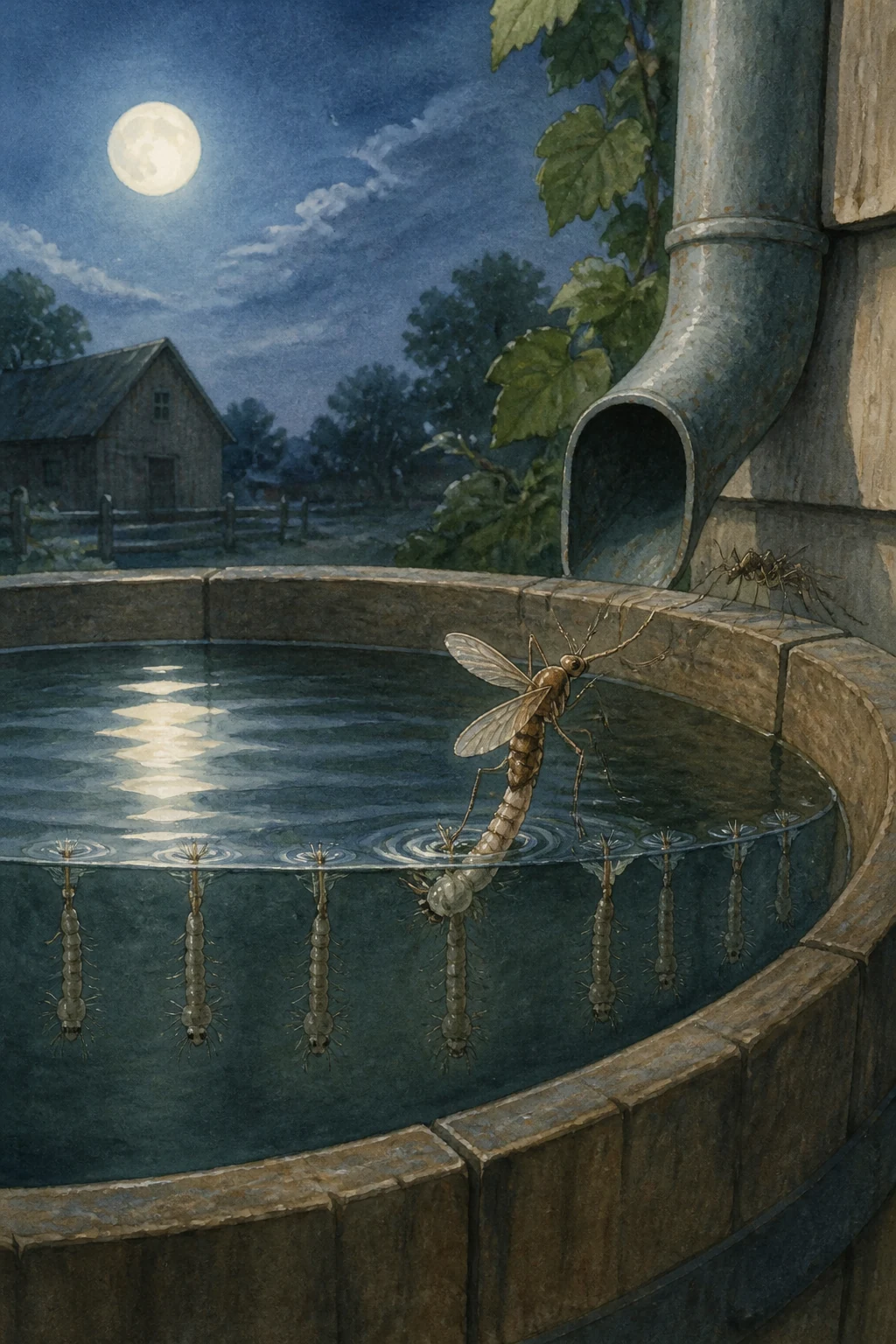
Bila je svetla mesečna noč, ko so se najstarejši Migetavčki v sodu za deževnico odločili, da bodo zapustili vodo. Od nekdaj so bili nemirni in nezadovoljni otroci, vendar za to niso bili povsem sami krivi. Kako naj bi človek pričakoval, da bo žuželka s takšnim imenom mirno plavala? Ko so Mame Komarke v sod za deževnico odložile svoja dolga, vitka jajčeca, so jih povezale v skupke, podobne čolničkom, in ti so plavali tam, dokler niso bili Migetavčki dovolj močni, da so prebili spodnje konce jajčec in se spustili v vodo. Le nekaj dni je minilo, preden so bili pripravljeni na to.
Nato je minilo še nekaj dni in noči, ko so drobceni Migetavčki viseli v vodi z glavami navzdol, in če si pogledal čez sod, si lahko videl le konice njihovih dihalnih cevk. Kadar so se prestrašili, je kak mlad Migetavček včasih pozabil nase in se za hip obrnil z glavo navzgor, toda vselej ga je bilo sram, če se mu je to pripetilo, in si je izmišljal najrazličnejše izgovore. Lepo vzgojeni mali Migetavčki so se trudili, da bi imeli glave vedno spodaj, Komarji, ki so se ustavljali pri njih na obisku in jim delili dobre nasvete, pa so jim govorili takšne reči: »Migetavčku, ki drži glavo pokonci, morda nikoli ne zrastejo krila,« in: »Repke gor in oči dol, pa boš zdrav, lepo vzgojen in moder bolj!«
Ko so bili še čisto majhni, so držali glave globoko pod vodo in dihali skozi cevko, ki je izraščala blizu zadnjega konca njihovega telesa. Na sami konici cevke je bil šopek drobnih, krilcem podobnih izrastkov, ki so jo držali na vodni gladini. Nobenega dela niso imeli, zato so samo jedli hrano, ki so jo našli v vodi, migetali in se lovili, kadar pa so se količkaj prestrašili, so se potopili na dno in ostali tam, dokler jim ni zmanjkalo sape. To nikoli ni trajalo prav dolgo.
Marsikaj jih je lahko prestrašilo. Včasih se je pri sodu ustavil kak Konj, ki je zašel tja, in pil, včasih je na rob sedla Taščica, da bi naredila nekaj požirkov, tu in tam pa je iz sosednjega ribnika priletel na obisk Kačji Pastir. Ni jih vedno najbolj prestrašil največji obiskovalec. Konji so se trudili, da se Migetavčkov ne bi dotaknili, Taščica pa je bila še kako vesela, če ji je z vodo v kljun zašel tudi kateri od njih. Najhujši so bili Kačji Pastirji, saj so bili najbolj lačni, in ker so bili toliko manjši, jih Migetavčki včasih sploh niso opazili, ko so se približevali. Včasih so tudi mislili, da Kačji Pastir odhaja v drugo smer, pa so nekateri ostali blizu gladine in šele prepozno ugotovili, da se Kačji Pastir lahko pomika vzvratno ali vstran, ne da bi se obrnil.
Ko so bili Migetavčki stari nekaj dni, so začeli menjavati kožo. To so počeli tako, da so se izmigetali iz stare in oblekli novo, ki jim je medtem zrasla pod njo. Zaradi tega so se počutili silno pomembne in nekateri so postali prav sramotno nečimrni. Neki Migetavček se ni hotel potopiti, dokler ni bil prepričan, da je neka Taščica videla njegovo novo obleko. Prav zaradi te nečimrnosti nikoli ni dočakal dneva, ko bi postal Komar.
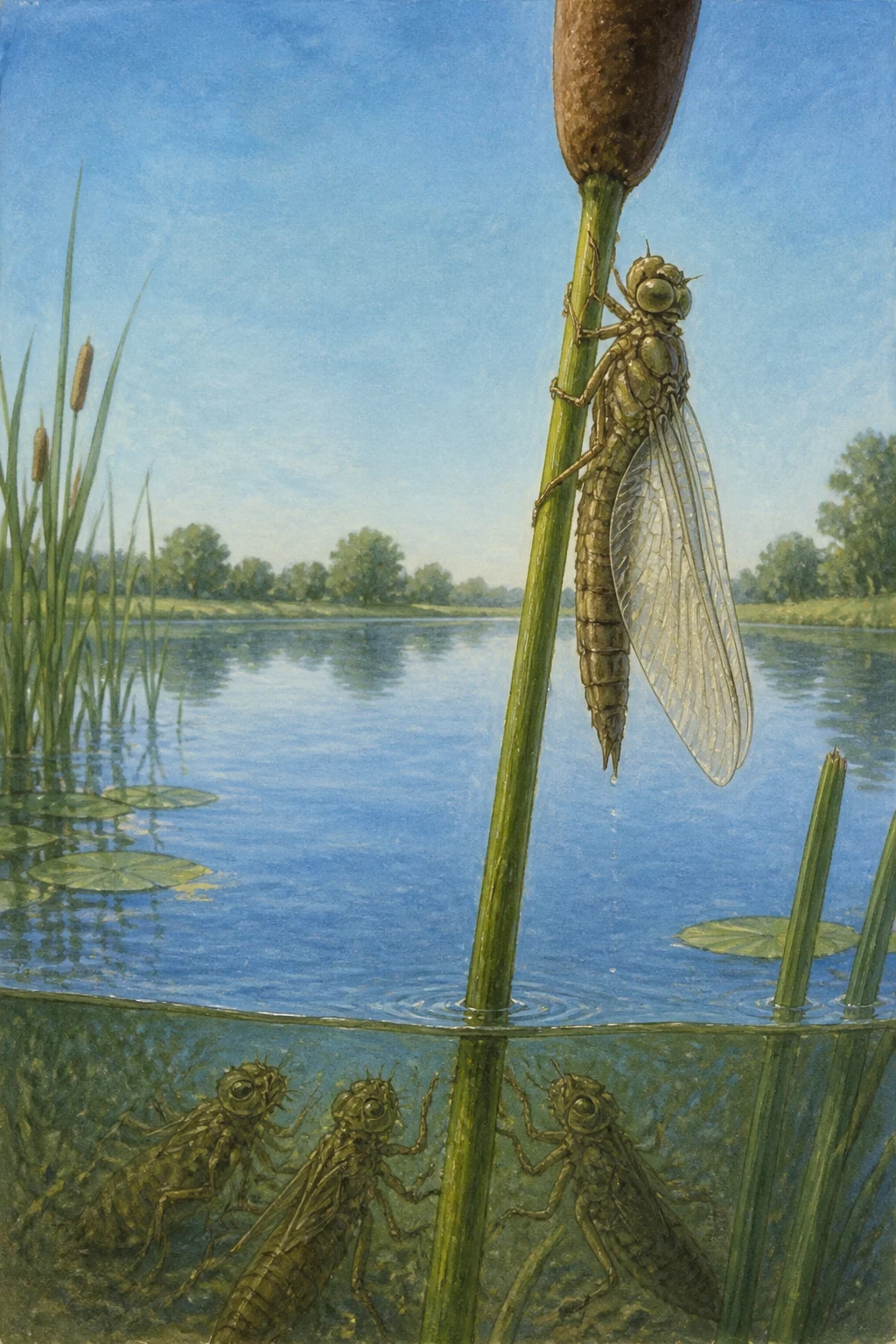
Ko so nekajkrat zamenjali kožo, so namesto ene dobili po dve dihalni cevki, ki sta izraščali blizu glave. Pa tudi glave so imeli precej večje. Na zadnjem koncu telesa je imel zdaj vsak Migetavček dva lističem podobna izrastka, s katerima je plaval po vodi. Ker so uporabljali drugačne dihalne cevke, so tisti Migetavčki, ki so se že večkrat levili oziroma odvrgli kožo, zdaj plavali z glavo tik pod gladino in z repom navzdol. Ko je Migetavček dovolj star za to, mu pravimo Buba ali napol odrasel komar.
V istem sodu so pogosto komarji otroci vseh starosti — jajčeca, Migetavčki in Bube, vsi skupaj. Prostora in hrane je na pretek, ker pa nimajo nobenega dela, jim ostaja veliko časa za prepire in opravljanje.
Tisto leto se je Najstarejši Brat tako prevzetno obnašal, da to nikomur ni bilo niti malo všeč, in več Migetavčkov so slišali reči, da ga še videti ne morejo. Tako rad je govoril: »Ko sem bil še mlad Migetavček in sem moral držati glavo navzdol,« ali pa ponavljal: »Repke gor in oči dol, pa boš zdrav, lepo vzgojen in moder bolj!« Neki mali Migetavček mu je prekrižal tipalnici in pravijo, da je to prav tako grdo, kakor če bi se komu pačil. Poleg tega je še toliko lažje — če imaš tipalnici, ki ju lahko prekrižaš.
Zdaj so se Najstarejši Brat in tisti njegovi bratje in sestre, ki so se izlegli iz istega skupka jajčec, pogovarjali o tem, da bodo za vselej zapustili sod za deževnico. Bila je svetla mesečna noč in hrepeneli so po tem, da bi razkrili in posušili svoja krila, saj bi potem postali odrasli Komarji, ki večino dneva počivajo, ponoči pa se imenitno zabavajo.
Najstarejši Brat se je sunkovito pomikal po vodi, kakor hitro je mogel, in svoje členasto telo naglo upogibal zdaj v eno, zdaj v drugo smer. Kadar je srečal koga skoraj svojih let, mu je rekel: »Pridi z menoj in odvrzi kožo. Krasen večer je za levitev.«
Včasih so odgovorili: »Prav,« in se sunkovito pomikali, migetali ali plavali ob njem, včasih pa je kaka Buba odvrnila: »Bojim se, da še nisem dovolj stara, da bi zlahka zdrsnila iz svoje kože.«
Tedaj je Najstarejši Brat odgovoril: »Naj te to ne ustavi. Ko bomo začeli, boš že starejša.« To je bilo seveda res in vsi člani komarjih družin se zelo hitro starajo. Tako se je zgodilo, da je takrat, ko je luna pokukala iznad kmečke hiše in pokazala svoj svetli obraz med obema dimnikoma, triindvajset Bub plavalo tesno druga ob drugi in se pripravljalo, da bodo še zadnjič zamenjale kožo.
Bilo je silno razburljivo. Vsi mladi Migetavčki so se zbrali naokrog, da bi videli, kaj se dogaja, in se odrivali, da bi si priborili najboljša mesta. Najstarejši Brat se je zelo bal, da se bo kdo drug začel leviti, še preden bo sam pripravljen, vsi bratje pa so sestram dopovedovali, naj pazijo, da jim koža poči na pravem mestu vzdolž hrbta. Sestre so jim odgovarjale, da o levitvi vedo prav toliko kakor njihovi bratje. Vsake toliko je Najstarejši Brat rekel: »Zdaj pa počakajte! Naj nihče ne razpre stare kože, dokler jaz ne rečem.«
Tedaj so dva ali trije njegovi bratje postali nestrpni, saj jim je bila zunanja koža vsako minuto tesnejša, in so vprašali: »Zakaj pa ne?« ter godrnjali, ker so morali čakati. V resnici Najstarejšemu Bratu nikakor ni uspelo pripraviti kože do tega, da bi počila, čeprav se je sunkovito zvijal in migetal ter zelo globoko dihal. In ni hotel, da bi ga kdo prehitel. Naposled se je le začela odpirati in ravno je drugim naročil, naj se začnejo leviti, ko se je pri sodu ustavila Mama Komarka, da bi vanj odložila nekaj jajčec.
»Ljubi bog!« je rekla. »Saj se menda ne boste levili nocoj?« »Pa se bomo,« je odgovoril Najstarejši Brat in se zmigal tako, da mu je koža še malo bolj počila. »Še pred jutrom bomo pikali ljudi.«
»Ti?« je rekla Mama Komarka s čudnim nasmeškom. »Na tvojem mestu na to ne bi računala. Toda vi mladi se utegnete znajti v težavah, če se levite zdaj, kajti kaže na dež.«
Med govorjenjem je pomahala s tipalnicama navzgor in opazili so, da se na nebu kopičijo težki črni oblaki. Še ko so gledali, je luna izginila za njimi in veter je začel premikati drevesne veje. »Deževalo bo,« je rekla, »potem pa bo voda s strehe tekla v ta sod, in če boste ravnokar odvrgli kožo in še ne boste mogli leteti, boste utonili.«
»Pha!« je odgovoril Najstarejši Brat. »Menda že znamo poskrbeti zase. Malo vode me pa res ne straši.« Nato se je poskusil izvleči iz stare kože.
Mama Komarka je ostala, dokler ni odložila vseh jajčec, ki jih je nameravala, potem pa je odletela. Nobena od Bub je ni hotela poslušati, čeprav bi jo nekatere sestre morda poslušale, ko se jim bratje ne bi posmehovali.
Naposled je triindvajset mehkih in utrujenih mladih Komarjev stalo na svojih odvrženih bubjih kožah in čakalo, da se jim krila utrdijo. Nikoli se ni lahko izvleči iz svoje kože, zadnja levitev pa je najtežja od vseh. Prav tedaj, ko niso mogli drugega kakor čakati, je mlade Komarje začel obhajati strah. Noč je bila zdaj temna in vetrovna, včasih pa je nenaden sunek vetra odpihnil njihove plavajoče bubje kože proti eni strani soda. Morali so se jih trdno oklepati, saj so se nenadoma spomnili, da bi lahko utonili, če bi padli v vodo. Najstarejši si je zaželel, da bi bil spet Migetavček. »Migetavčki nikoli ne utonejo,« je pomislil.
»Koga boš najprej pičil?« ga je vprašal eden od bratov. Prav osorno je odgovoril: »Ne vem in vseeno mi je. Nisem lačen. Ali ne znaš misliti na nič drugega kakor na hrano?«
»Kaj pa je še takega, o čemer bi lahko razmišljali?« so vzkliknili vsi plavajoči Komarji. »No, letenje, recimo,« je rekel. »Hm! Ne vem, čemu bi nam letenje koristilo, razen da nas pripelje do hrane,« je rekla neka Komarjeva Sestra. Pozneje je ugotovila, da je koristno tudi iz drugih razlogov.
Po tem se niso več poskušali pogovarjati z Najstarejšim Bratom. Pogovarjali so se med seboj, preizkušali svoje noge in si želeli, da bi bilo dovolj svetlo, da bi si lahko ogledali krila. Komarji imajo, veste, zelo zanimiva krila, tanka in prosojna kakor tančica, z nežnimi resicami ob robovih in vzdolž vsake žilice. Sestre so bile ponosne tudi na žepke pod krili in so komaj čakale, da se jim krila utrdijo, da bodo lahko zaprhutale z njimi in zaslišale čudovito petje, ki nastaja, ko zrak zadeva ob te žepke. Vedele so, da njihovi bratje nikoli ne bodo mogli peti, in vesele so bile ob misli, da jih bodo vsaj enkrat prekosile. Niso bile prav zares same krive, da so tako čutile, kajti bratje so se pogosto šopirili in se jim smejali.
Nato je nebo razsvetlil veličasten blisk in dolgo je zagrmelo. Drevesa so zamahovala s svojimi lepimi vejami sem in tja, medtem ko so debele dežne kaplje bobnale po strehi nad njimi, se razprševale, poskakovale in se stekale proti robu, pod katerim je stal sod za deževnico.
»Letite!« je zavpil Najstarejši Brat in dvignil krila, kolikor jih je mogel. »Ne moremo. Kam pa?« so zavpili drugi. »Kakor koli, kamor koli, samo letite!« je zakričal Najstarejši Brat in na neki čudežen način je vseh triindvajset s prhutanjem, plazenjem in kobacanjem prilezlo na steno hiše, kjer so dežne kaplje padale mimo njih, ne da bi jih zadele. Tam so našli starejše Komarje, ki so čakali, da ploha mine. Celo Najstarejši Brat se je tako prestrašil, da se je tresel, in ko je zagledal prav tisto Mamo Komarko, ki mu je svetovala, naj odloži menjavo kože, se je skril za dva druga mlada Komarja in ostal čisto pri miru. Morda ga je videla, saj je bilo takrat svetleje kakor prej. Ni bilo videti, da bi ga opazila, vendar jo je slišal govoriti s prijatelji. »Rekla sem mu,« je dejala, »da bi bilo bolje, če bi levitev odložil, pa mi je odgovoril, da zna poskrbeti zase in da bo še pred jutrom pikal ljudi.«
»Je res to rekel?« so vzkliknili drugi stari Komarji. »Res,« je odgovorila. Nato so se vsi smejali in smejali in spet smejali, mladi Komar pa je izvedel, zakaj. Zato, ker morajo komarji bratje jesti med, le sestre pa lahko pikajo ljudi in jim sesajo kri. Tolikokrat si je predstavljal, kako bo pel okoli koga, dokler ne najde najlepšega, najbolj sočnega mesta, potem pa bo narahlo sedel nanj, pičil in sesal, dokler ne bo njegovo vitko telesce debelo, okroglo in rdeče od trebuščka, polnega krvi. In to se nikoli ne bo zgodilo! Nikoli ne bo mogel peti in posedati bo moral s trebuhom, polnim medu, gledati svojih enajst sester, napitih krvi, in jih poslušati, kako sladko pojejo med letom. Če bi Očetje Komarji kdaj prihajali k sodu, bi to morda izvedel, vendar jih nikoli ni bilo tja. Sam se je odkradel proč, dokler ni srečal zgodnje ptice, in potem — no, saj veste, tudi ptice morajo kaj jesti, Komar pa je bil ravno tam. Seveda so njegovi bratje in sestre po tem lahko počeli, kar so hoteli, in enajst sester je že naslednjo noč pičilo trinajst ljudi ter se zabavalo tako imenitno, kakor se znajo le Komarji.
Izvirnik
086 THE WIGGLERS BECOME MOSQUITOES
Naslednje strani prikazujejo izvirno besedilo za primerjavo.
It was a bright moonlight night when the oldest Wigglers in the rain-barrel made up their mind to leave the water. They had always been restless and discontented children, but it was not altogether their fault. How could one expect any insect with such a name to float quietly? When the Mosquito Mothers laid their long and slender eggs in the rain-barrel, they had fastened them together in boat-shaped masses, and there they had floated until the Wigglers were strong enough to break through the lower ends of the eggs into the water. It had been only a few days before they were ready to do this.
Then there had been a few more days and nights when the tiny Wigglers hung head downward in the water, and all one could see by looking across the barrel was the tips of their breathing tubes. Sometimes, if they were frightened, a young Wiggler would forget and get head uppermost for a minute, but he was always ashamed to have this happen, and made all sorts of excuses for himself when it did. Well-bred little Wigglers tried to always have their heads down, and Mosquitoes who stopped to visit with them and give good advice told them such things as these: "The Wiggler who keeps his head up may never have wings," and, "Up with your tails and down with your eyes, if you would be mannerly, healthy, and wise."
When they were very young they kept their heads way down and breathed through a tube that ran out near the tail-end of their bodies. This tube had a cluster of tiny wing-like things on the very tip, which kept it floating on the top of the water. They had no work to do, so they just ate food which they found in the water, and wiggled, and played tag, and whenever they were at all frightened they dived to the bottom and stayed there until they were out of breath. That was never very long.
There were many things to frighten them. Sometimes a stray Horse stopped by the barrel to drink, sometimes a Robin perched on the edge for a few mouthfuls of water, and once in a while a Dragon-Fly came over to visit from the neighboring pond. It was not always the biggest visitor who scared them the worst. The Horses tried not to touch the Wigglers, while a Robin was only too glad if he happened to get one into his bill with the water. The Dragon-Flies were the worst, for they were the hungriest, and they were so much smaller that sometimes the Wigglers didn't see them coming. Sometimes, too, when they thought that a Dragon-Fly was going the other way, some of them stayed near the top of the water, only to find when it was too late that a Dragon-Fly can go backward or sidewise without turning around.
When they were a few days old the Wigglers began to change their skins. This they did by wiggling out of their old ones and wearing the new ones which had been growing underneath. This made them feel exceedingly important, and some of them became disgracefully vain. One Wiggler would not dive until he was sure a certain Robin had seen his new suit. It was because of that vanity he never lived to be a Mosquito.
After they had changed their skins a few times, they had two breathing-tubes apiece instead of one, and these two grew out near their heads. And their heads were much larger. At the tail-end of his body each Wiggler now had two leaf-like things with which he swam through the water. Because they used different breathing-tubes, those Wigglers who had moulted or cast their skins several times now floated in the water with their heads just below the surface and their tails down. When a Wiggler is old enough for this, he is called a Pupa, or half-grown one.
There are often young Mosquito children of all ages in the same barrel--eggs, Wigglers, and Pupae all together. There is plenty of room and plenty of food, but because they have no work to do there is much time for quarrelling and talking about each other.
This year the Oldest Brother had put on so many airs that nobody liked it at all, and several of the Wigglers had been heard to say that they couldn't bear the sight of him. He had such a way of saying, "When I was a young Wiggler and had to keep my head down," or repeating, "Up with your tails and down with your eyes, if you would be mannerly, healthy, and wise." One little Wiggler crossed his feelers at him, and they say that it is just as bad to do that as to make faces. Besides, it is so much easier--if you have the feelers to cross.
Now the Oldest Brother and those of his brothers and sisters who had hatched from the same egg-mass were talking of leaving the rain-barrel forever. It was a bright moonlight night and they longed to get their wings uncovered and dried, for then they would be full-grown Mosquitoes, resting most of the day and having glorious times at night.
The Oldest Brother was jerking himself through the water as fast as he could, giving his jointed body sudden bends, first this way and then that, and when he met anyone nearly his own age he said, "Come with me and cast your skin. It is a fine evening for moulting."
Sometimes they answered, "All right," and jerked or wiggled or swam along with him, and sometimes a Pupa would answer, "I'm afraid I'm not old enough to slip out of my skin easily."
Then the Oldest Brother would reply, "Don't stop for that. You'll be older by the time we begin." That was true, of course, and all members of Mosquito families grow old very fast. So it happened that when the moon peeped over the farmhouse, showing her bright face between the two chimneys, twenty-three Pupae were floating close to each other and making ready to change their skins for the last time.
It was very exciting. All the young Wigglers hung around to see what was going on, and pushed each other aside to get the best places. The Oldest Brother was much afraid that somebody else would begin to moult before he was ready, and all the brothers were telling their sisters to be careful to split their skins in the right place down the back, and the sisters were telling them that they knew just as much about moulting as their brothers did. Every little while the Oldest Brother would say, "Now wait! Don't one of you fellows split his old skin until I say so."
Then two or three of his brothers would become impatient, because their outer skins were growing tighter every minute, and would say, "Why not?" and would grumble because they had to wait. The truth was that the Oldest Brother could not get his skin to crack, although he jerked and wiggled and took very deep breaths. And he didn't want any one else to get ahead of him. At last it did begin to open, and he had just told the others to commence moulting, when a Mosquito Mother stopped to lay a few eggs in the barrel.
"Dear me!" said she. "You are not going to moult to-night, are you?"
"Yes, we are," answered the Oldest Brother, giving a wiggle that split his skin a little farther. "We'll be biting people before morning."
"You?" said the Mosquito Mother, with a queer little smile. "I wouldn't count on doing that. But you young people may get into trouble if you moult now, for it looks like rain."
She waved her feelers upward as she spoke, and they noticed that heavy black clouds were piling up in the sky. Even as they looked the moon was hidden and the wind began to stir the branches of the trees. "It will rain," she said, "and then the water will run off the roof into this barrel, and if you have just moulted and cannot fly, you will be drowned."
"Pooh!" answered the Oldest Brother. "Guess we can take care of ourselves. I'm not afraid of a little water." Then he tried to crawl out of his old skin.
The Mosquito Mother stayed until she had laid all the eggs she wanted to, and then flew away. Not one of the Pupae had been willing to listen to her, although some of the sisters might have done so if their brothers had not made fun of them.
At last, twenty-three soft and tired young Mosquitoes stood on their cast-off pupa-skins, waiting for their wings to harden. It is never easy work to crawl out of one's skin, and the last moulting is the hardest of all. It was then, when they could do nothing but wait, that these young Mosquitoes began to feel afraid. The night was now dark and windy, and sometimes a sudden gust blew their floating pupa skins toward one side of the barrel. They had to cling tightly to them, for they suddenly remembered that if they fell into the water they might drown. The oldest one found himself wishing to be a Wiggler again. "Wigglers are never drowned," thought he.
"Who are you going to bite first?" asked one of his brothers.
He answered very crossly: "I don't know and I don't care. I'm not hungry. Can't you think of anything but eating?"
"Why, what else is there to think about?" cried all the floating Mosquitoes.
"Well, there is flying," said he.
"Humph! I don't see what use flying would be except to carry us to our food," said one Mosquito Sister. She afterward found out that it was good for other reasons.
After that they didn't try to talk with their Oldest Brother. They talked with each other and tried their legs, and wished it were light enough for them to see their wings. Mosquitoes have such interesting wings, you know, thin and gauzy, and with delicate fringes around the edges and along the line of each vein. The sisters, too, were proud of the pockets under their wings, and were in a hurry to have their wings harden, so that they could flutter them and hear the beautiful singing sound made by the air striking these pockets. They knew that their brothers could never sing, and they were glad to think that they were ahead of them for once. It was not really their fault that they felt so, for the brothers had often put on airs and laughed at them.
Then came a wonderful flash of lightning and a long roll of thunder, and the trees tossed their beautiful branches to and fro, while big rain-drops pattered down on to the roof overhead and spattered and bounded and rolled toward the edge under which the rain-barrel stood.
"Fly!" cried the Oldest Brother, raising his wings as well as he could.
"We can't. Where to?" cried the rest.
"Fly any way, anywhere!" screamed the Oldest Brother, and in some wonderful way the whole twenty-three managed to flutter and crawl and sprawl up the side of the building, where the rain-drops fell past but did not touch them. There they found older Mosquitoes waiting for the shower to stop. Even the Oldest Brother was so scared that he shook, and when he saw that same Mosquito Mother who had told him to put off changing his skin, he got behind two other young Mosquitoes and kept very still. Perhaps she saw him, for it was lighter then than it had been. She did not seem to see him, but he heard her talking to her friends. "I told him," she said, "that he might better put off moulting, but he answered that he could take care of himself, and that he would be out biting people before morning."
"Did he say that?" cried the other old Mosquitoes.
"He did," she replied.
Then they all laughed and laughed and laughed again, and the young Mosquito found out why. It was because Mosquito brothers have to eat honey, and only the sisters may bite people and suck their blood. He had thought so often how he would sing around somebody until he found the nicest, juiciest spot, and then settle lightly down and bite and suck until his slender little body was fat and round and red with its stomachful of blood. And that could never be! He could never sing, and he would have to sit around with his stomach full of honey and see his eleven sisters gorged with blood and hear them singing sweetly as they flew. If Mosquito Fathers had ever come to the barrel he might have found this out, but they never did. He sneaked off by himself until he met an early bird and then--well, you know birds must eat something, and the Mosquito was right there. Of course, after that, his brothers and sisters had a chance to do as they wanted to, and the eleven sisters bit thirteen people the very next night and had the loveliest kind of Mosquito time.
Nadaljuj z branjem