Prevod
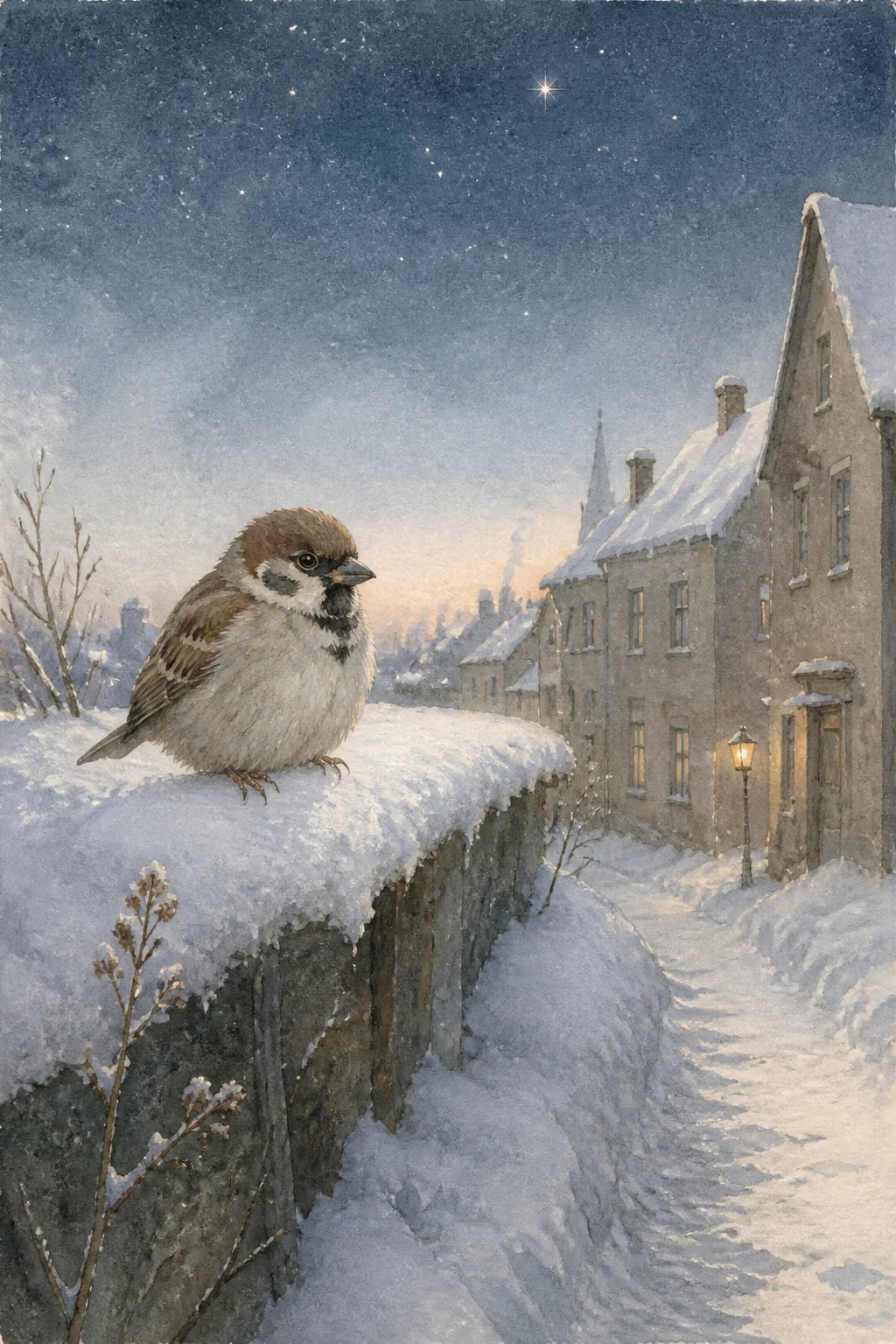
It was wintertime; the air was cold and the wind keen, but indoors all was snug and warm. Indoors lay the flower, tucked in its bulb beneath the earth and snow. One day rain fell; the drops seeped through the snow into the earth, touched the flower bulb, and brought word of the world of light above. Soon a sunbeam, fine and piercing, made its way through the snow down to the bulb and tapped on it.
“Come in!” said the flower. “I cannot!” said the sunbeam. “I am not strong enough to open the door! I shall be strong in summer.” “When will it be summer?” asked the flower, and repeated the question whenever a new sunbeam found its way down. But summer was still far off; the snow still lay on the ground, and every single night the water froze over.
“How long it takes! How long it takes!” said the flower. “I feel such a tingling and stirring; I must reach up, I must stretch, I must open, I must come out and nod good morning to summer. What a blessed time that will be!”
And the flower reached and stretched inside, pressing against the thin skin that the water outside had softened, the snow and earth had warmed, and the sunbeam had pierced. It pushed up beneath the snow, a greenish-white bud upon its green stalk, with narrow, thick leaves that seemed intent on sheltering it. The snow was cold, but light shone through it, and it was so easy to break through; and here came the sunbeam, stronger than before.
“Welcome! Welcome!” sang and rang every ray, and the flower rose above the snow into the world of light. The sunbeams stroked and kissed it until it opened wide, white as the snow and adorned with green stripes. It bowed its head in joy and humility.
“Lovely flower!” sang the sunbeams. “How fresh and pure you are! You are the first, you are the only one! You are our love! You ring in summer, lovely summer, over town and country! All the snow shall melt! The cold winds shall be driven away! We shall reign! Everything will turn green! And then you shall have company: lilacs and laburnums, and at last the roses. But you are the first, so delicate and pure!”
What a delight it was! It was as though the air were singing and ringing, as though the rays of light were entering its leaves and stem. There it stood, so delicate and easily broken, yet so strong in its youthful loveliness; it stood in a white gown with green ribbons and sang summer’s praises. But summer was still far off; clouds hid the sun, and keen winds blew upon it.
“You have come a little too early!” said wind and weather. “We still hold sway! You shall feel that, and put up with it! You should have stayed indoors instead of running out to show off your finery. It is not time yet!”
It was bitterly cold! The days that followed brought not a single sunbeam. It was weather to freeze such a frail little flower to pieces. But there was more strength in it than it knew; it was strong in its joy and faith in the summer that must come. Its deep longing had foretold that summer, and the warm sunlight had confirmed it. And so it stood trustingly in its white dress amid the white snow, bowing its head when the snowflakes fell thick and heavy, while the icy winds swept over it.
“You will snap in two!” they said. “Wither and freeze! What did you want out here? Why did you let yourself be tempted? The sunbeam has fooled you! Now enjoy yourself, you snowdrop !”
“Snowdrop!” it repeated in the cold morning air. “Snowdrop!” cried some children joyfully as they came down into the garden. “There is one, so sweet, so lovely, the first, the only one!”
And those words did the flower such good; they were words like warm sunbeams. In its joy the flower did not even notice that it was being picked. It lay in a child’s hand, was kissed by a child’s lips, was carried into the warm room, gazed at by kindly eyes, and set in water—so strengthening, so reviving! The flower thought it had suddenly come straight into summer.
The daughter of the house was a sweet young girl who had been confirmed. She had a dear young sweetheart, and he too had been confirmed and was studying for his future livelihood. “He shall be my summer fool!” she said. Then she took the delicate flower and laid it in a scented sheet of paper on which verses had been written, verses about the flower that began with “snowdrop” and ended with “snowdrop”: “Little sweetheart, be winter’s fool!” She had teased him with the promise of summer. Yes, it was all there in the verse, and the paper was folded into a letter with the flower inside, and darkness closed about it, darkness like that within the bulb. The flower went on a journey, lay in a mailbag, and was squeezed and crushed; it was not at all pleasant, but that too came to an end.
The journey was over; the letter was opened and read by the dear sweetheart. He was so pleased; he kissed the flower, and with its verse wrapped about it, it was laid in a drawer where there were several lovely letters, though none of them held a flower. It was the first, the only one, as the sunbeams had called it, and that was a delightful thought.
It was given plenty of time to think about it, too. It thought while summer passed, and the long winter passed, and summer came again; then it was brought out once more. But now the young man was not at all happy. He handled the papers so roughly and flung the verse aside so that the flower fell to the floor. It had grown flat and withered, but that was no reason to throw it on the floor. Still, it was better off there than in the fire, where the verses and letters were blazing. What had happened? What happens so often. The flower had fooled him; that was a joke. The young lady had fooled him; that was no joke. She had chosen another sweetheart in the height of summer.
In the morning the sun shone upon the little flattened snowdrop, which looked as though it had been painted on the floor. The maid who was sweeping picked it up and laid it in one of the books on the table, thinking it had fallen out while she was tidying and putting things in order. And once again the flower lay among verses, printed verses, which are grander than written ones—at least, more money has been spent on them.
Years passed, and the book stood on the shelf. Then it was taken down, opened, and read. It was a good book: Poems and Songs by the Danish poet Ambrosius Stub, who is well worth knowing. And the man reading the book turned the page. “Why, here is a flower!” he said. “A snowdrop! Surely it was put here for a reason. Poor Ambrosius Stub! He too was a summer fool, a poet-fool! He came too early for his time, and so he met with sleet and bitter winds, passed from one manor house to another among the gentry of Funen, like a flower in a glass of water, a flower in a rhyming letter! Summer fool, winter’s dupe, a butt for jokes and pranks, and yet the first, the only one, the Danish poet with all the freshness of youth. Yes, lie here as a bookmark, little snowdrop! You have been put here for a reason.”
And so the snowdrop was laid in the book again, and felt both honoured and pleased to know that it was a bookmark in that lovely book of songs, and that the man who had first sung and written of it had also been a summer fool, made a fool of in winter. The flower understood it in its own way, just as we understand everything in ours.
That was the story of the snowdrop!