Waltey
Zmaj in cesarjev sin
Srpske narodne pripovijetke · Vuk Stefanović KaradžićO besedilu
Zmaj in cesarjev sin
- Vir
- Srpske narodne pripovijetke
- Avtor
- Vuk Stefanović Karadžić
- Jezik branja
- English
- Jezik izvirnika
- Српски
- Čas branja
- 14 min branja
- Obseg
- 11 strani
- Naslov izvirnika
- 008 Аждаја и царев син
O izvirniku
Srpske narodne pripovijetke
Srbske ljudske pripovedi o junakih, čudežnih bitjih, preizkušnjah in ljudski modrosti. Bralni jezik je English, izvirnik pa prihaja iz vira Srpske narodne pripovijetke v jeziku Српски.
Besedilo
Zmaj in cesarjev sin
There was once a tsar who had three sons. One day the eldest son went hunting. No sooner had he left the city than a hare sprang from behind a bush, and he gave chase, this way and that, until the hare fled into a watermill. The tsar’s son followed it inside, but there he found that it was no hare at all, but a dragon, who lay in wait for him and devoured him. Several days passed, and when the tsar’s son did not come home, everyone began to wonder what could have happened to him. Then the middle son went hunting. No sooner had he left the city than a hare sprang from behind a bush, and the tsar’s son gave chase, this way and that, until the hare fled into the same watermill. The tsar’s son followed it inside, but there he found that it was no hare at all, but a dragon, who lay in wait for him and devoured him. Several more days passed, and when neither of the tsar’s sons returned, the whole court grew anxious.
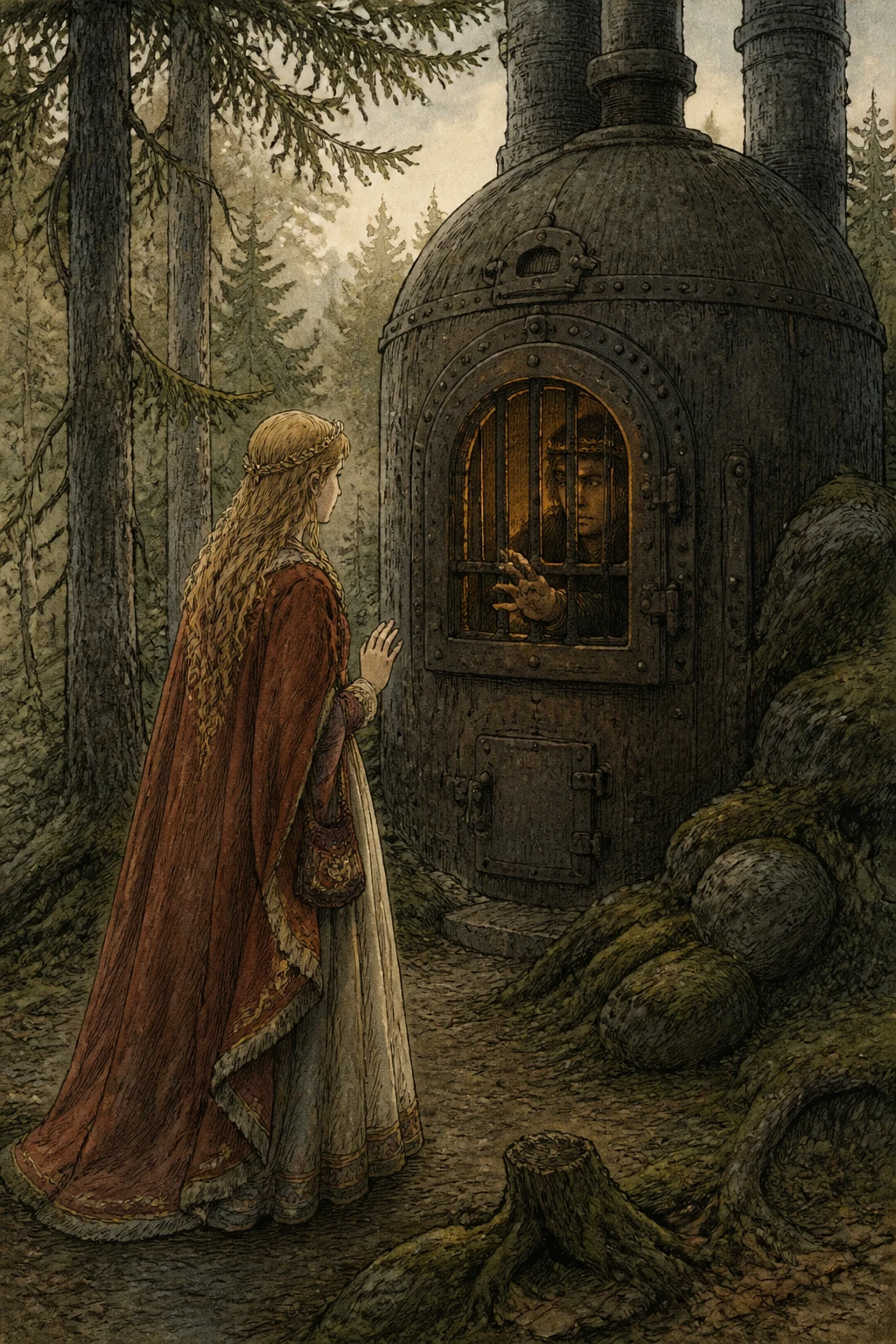
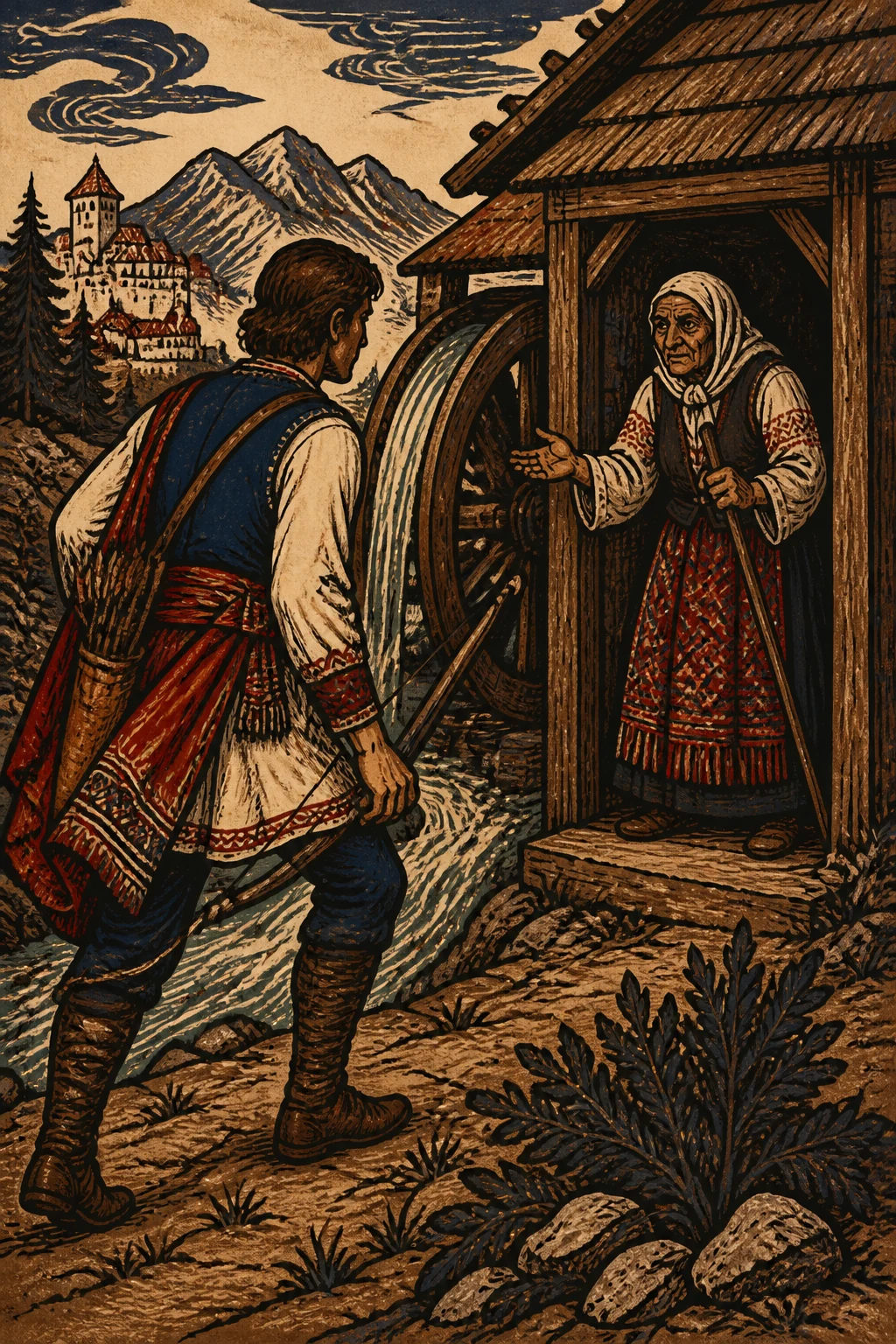
Then the third son went hunting too, hoping to find his brothers as well. No sooner had he left the city than the hare again sprang from behind a bush, and the tsar’s son gave chase, this way and that, until the hare fled into the watermill. But the tsar’s son would not follow it inside. Instead, he went off in search of other game, saying to himself, “I shall find you when I come back.” He wandered a long while through the mountains but found nothing, so he returned to the watermill. When he went inside, he found an old woman there. The tsar’s son greeted her: “God be with you, Granny!” And the old woman replied, “And may God help you, my son!” Then the tsar’s son asked her, “Where is my hare, Granny?” She answered, “My son, that is no hare, but a dragon. She has killed and swallowed up so many people.” On hearing this, the tsar’s son grew troubled and said to the old woman, “What are we to do now? My two brothers must have perished here as well.” The old woman answered, “Indeed they have; but there is no help for it. Go home, my son, before you follow them.” Then he said to her, “Granny, do you know what? I am sure you too would be glad to be rid of this scourge.” The old woman broke in: “Oh, my son, how could I not! She caught me in just the same way, and now there is no escape.” Then he went on, “Listen carefully to what I tell you. When the dragon comes, ask her where she goes and where her strength lies. Then keep kissing whatever place she tells you holds her strength, as though out of affection, until you have drawn the truth out of her. You can tell me when I return.”
After this, the tsar’s son went back to the palace, and the old woman remained in the watermill. When the dragon came, the old woman began asking her, “Wherever have you been, for heaven’s sake? Where do you go, so far away? You never will tell me where you go.” The dragon answered, “Ah, Granny, I go a long way.” Then the old woman began to coax her: “But why do you go so far? Tell me where your strength lies. If I knew where your strength lay, I should be beside myself with affection; I should kiss that place over and over.” At this the dragon laughed and said, “My strength is there, in that hearth.” Then the old woman began embracing and kissing the hearth, and when the dragon saw this, she burst out laughing and said, “Foolish woman, my strength is not there. My strength is in that tree in front of the house.” Then the old woman began embracing and kissing the tree instead, and the dragon laughed again and said, “Leave off, foolish woman, my strength is not there.” Then the old woman asked, “Where is it, then?” And the dragon began to tell her: “My strength is far away; you cannot go there. Far off in another kingdom, near the tsar’s city, there is a lake. In that lake there is a dragon, and in the dragon a boar, and in the boar a hare, and in the hare a pigeon, and in the pigeon a sparrow. In that sparrow lies my strength.” When the old woman heard this, she said to the dragon, “That is far away indeed. I cannot kiss that.”
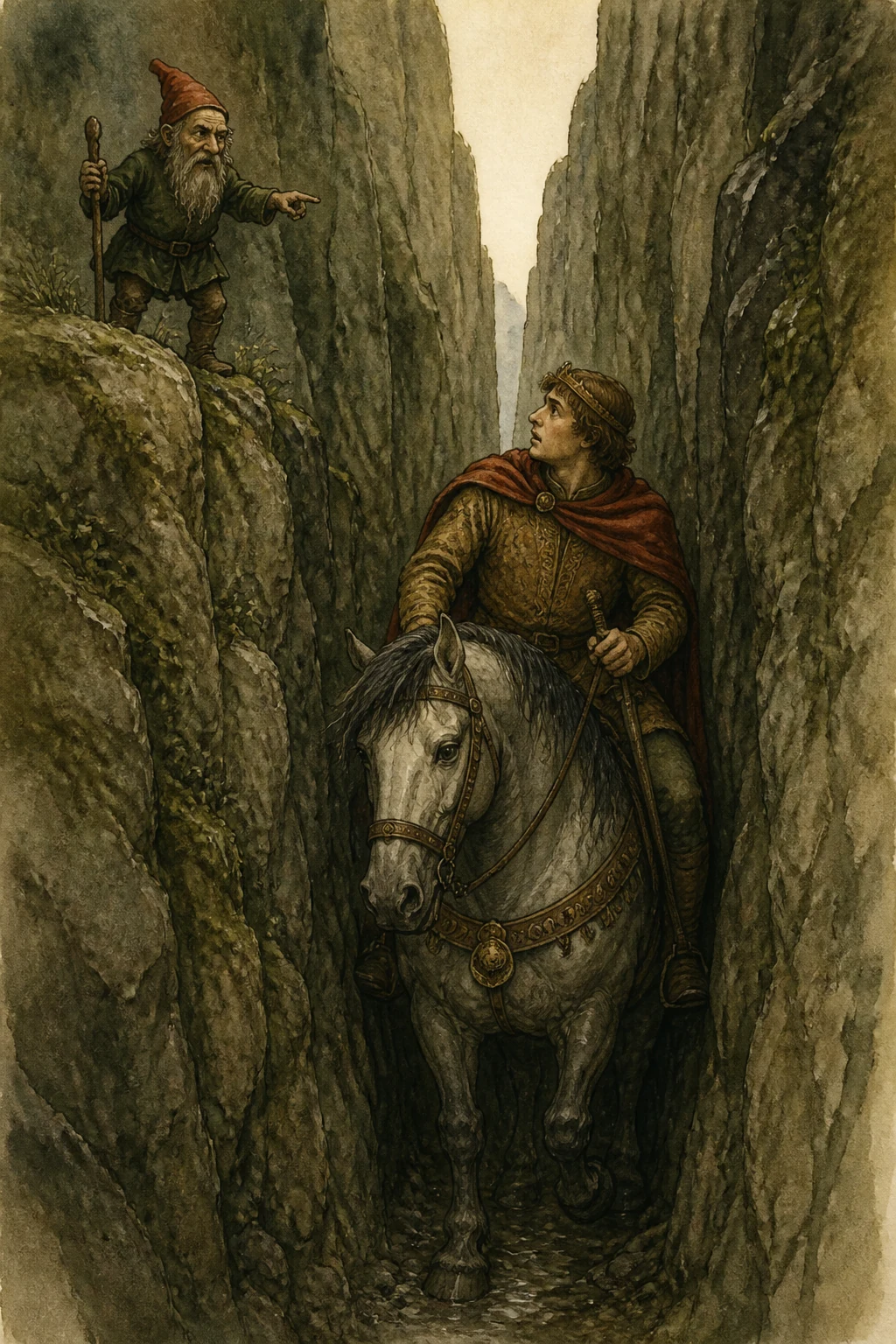
The next day, when the dragon had gone out of the watermill, the tsar’s son came to the old woman, and she told him everything she had heard from the dragon. Then he went home and disguised himself: he put on a shepherd’s clothes and took a shepherd’s staff in his hand, and so, dressed as a shepherd, he set out into the world. Travelling from village to village and from city to city, he at last reached the other kingdom and the tsar’s city, below which lay the lake where the dragon lived. When he arrived in the city, he began asking who needed a shepherd. The townspeople told him that the tsar did. So he went straight to the tsar. After he had been announced, the tsar admitted him and asked, “Will you tend sheep?” He answered, “I will, Your Majesty!” Then the tsar took him into his service and began advising and instructing him: “There is a lake here, and beside it very fine pasture. As soon as you drive the sheep out, they make straight for it and scatter along its shores. But every shepherd who goes there never returns. So I am warning you, my son: do not let the sheep go wherever they please, but keep them where you want them.” The tsar’s son thanked the tsar, made ready, and drove out the sheep. He also took with him two greyhounds that could catch a hare in the open field, a falcon that could catch any bird, and a set of bagpipes. As soon as he had driven out the sheep, he let them go towards the lake. When the sheep reached it, they scattered along its shores, while the tsar’s son set the falcon on a log and left the greyhounds and bagpipes beneath it. Then he rolled up his trousers and sleeves, waded into the lake, and began shouting, “O dragon, O dragon, come out and face me today, and let us try our strength, unless you are a woman!” The dragon called back, “I am coming, tsar’s son, I am coming.” A little later, there was the dragon: huge, terrible, hideous! As soon as she came out, they seized each other about the waist and wrestled through the summer morning until noon. When the midday heat grew fierce, the dragon said, “Let me go, tsar’s son, so I may dip this wretched head of mine in the lake, and then I shall fling you high into the heavens.” The tsar’s son answered, “Come now, dragon, do not talk nonsense! If only the tsar’s daughter were here to kiss my forehead, I would fling you higher still.” At once the dragon released him and went back into the lake. Towards evening, he washed and made himself tidy, set the falcon on his shoulder, gathered the greyhounds beside him, tucked the bagpipes under his arm, and drove the sheep back towards the city, playing as he went. When he reached the city, all the townspeople flocked to see the marvel of his return, for no shepherd before him had ever come back from that lake.
The next day the tsar’s son made ready again and went with the sheep straight to the lake. But the tsar sent two horsemen after him to follow in secret and see what he did. They climbed a high mountain from which they would have a good view. As soon as the shepherd arrived, he left the greyhounds and bagpipes beneath the same log and set the falcon on it. Then he rolled up his trousers and sleeves, waded into the lake, and shouted, “O dragon, O dragon, come out and face me, and let us try our strength again, unless you are a woman!” The dragon called back, “I am coming, tsar’s son, I am coming.” A little later, there was the dragon: huge, terrible, hideous! They seized each other about the waist and wrestled through the summer morning until noon. When the midday heat grew fierce, the dragon said, “Let me go, tsar’s son, so I may dip this wretched head of mine in the lake, and then I shall fling you high into the heavens.” The tsar’s son answered, “Come now, dragon, do not talk nonsense! If only the tsar’s daughter were here to kiss my forehead, I would fling you higher still.” At once the dragon released him and went back into the lake. As night drew near, the tsar’s son gathered the sheep as before and set off home, playing his bagpipes. When he entered the city, the whole place was astir, and everyone marvelled that the shepherd came home every evening, something no other shepherd had ever done. The two horsemen had reached the palace before the tsar’s son and told the tsar everything they had heard and seen, just as it had happened. Now, when the tsar saw that the shepherd had come home, he immediately summoned his daughter and told her the whole story. “So,” he said, “tomorrow you must go with the shepherd to the lake and kiss him on the forehead.” When she heard this, she burst into tears and began pleading with her father: “You have no one in the world but me, your only child, and yet you do not care if I perish.” Her father began to reassure her and give her courage: “Do not be afraid, my daughter. You see, we have had so many shepherds, and not one who went to the lake ever returned. Yet this one has fought the dragon for two days now, and she has done him no harm. I trust in God that he can overcome her. Only go with him tomorrow, so that he may rid us of this scourge that has killed so many people.”
When the bright day dawned next morning, when day dawned and the sun rose, the shepherd got up, and the maiden got up too, and they began making ready to go to the lake. The shepherd was cheerful, more cheerful than ever, but the tsar’s daughter was sorrowful and shed tears, so the shepherd comforted her: “My lady, dear sister, I beg you not to cry. Only do as I say: when the time comes, run up and kiss me, and have no fear.” When they set off, driving the sheep before them, the shepherd was cheerful all the way and played merrily on his bagpipes, while the maiden walked beside him, weeping all the while. Now and then he took the pipe from his lips and turned to her: “Do not cry, my dear, there is nothing to fear.” When they reached the lake, the sheep at once scattered along its shores, and the tsar’s son set the falcon on the log and left the greyhounds and bagpipes beneath it. Then he rolled up his trousers and sleeves, waded into the water, and shouted, “O dragon, O dragon, come out and face me, and let us try our strength again, unless you are a woman!” The dragon called back, “I am coming, tsar’s son, I am coming.” A little later, there was the dragon: huge, terrible, hideous! As soon as she came out, they seized each other about the waist and wrestled through the summer morning until noon. When the midday heat grew fierce, the dragon spoke: “Let me go, tsar’s son, so I may dip this wretched head of mine in the lake, and then I shall fling you high into the heavens.” The tsar’s son answered, “Come now, dragon, do not talk nonsense! If only the tsar’s daughter were here to kiss my forehead, I would fling you higher still.” No sooner had he said this than the tsar’s daughter ran up and kissed him on the cheek, on the eye, and on the forehead. Then he swung the dragon up and flung her high into the heavens. When she fell to the earth, she shattered into pieces, and as she shattered, a wild boar sprang out of her and took to its heels. The tsar’s son shouted to the sheepdogs, “Catch him! Do not let him go!” The dogs sprang after the boar, caught him, and tore him apart at once. But a hare sprang out of the boar and fled across the field, and the tsar’s son loosed the greyhounds: “Catch him! Do not let him go!” The greyhounds raced after the hare, caught it, and tore it apart at once. But a pigeon flew out of the hare, and the tsar’s son loosed the falcon, which caught the pigeon and brought it into his hands. The tsar’s son took the pigeon and cut it open, and there inside it was a sparrow, which he seized. When he had caught the sparrow, he said to it, “Now you must tell me where my brothers are.” The sparrow answered, “I will, only do not hurt me. Just outside your father’s city there is a watermill, and in that watermill there are three shoots. Cut down those three shoots and strike the roots with them. At once the iron doors of a great cellar will open. In that cellar there are so many people, old and young, rich and poor, small and great, women and maidens, that you could populate a whole kingdom with them. Your brothers are there too.” When the sparrow had told him all this, the tsar’s son seized it by the neck and strangled it. The tsar himself had come out and climbed the mountain from which the horsemen had watched the shepherd, and he too had seen everything that happened. By the time the shepherd had put an end to the dragon, dusk was beginning to fall. He washed and made himself tidy, set the falcon on his shoulder, gathered the greyhounds beside him, tucked the bagpipes under his arm, and drove the sheep towards the tsar’s palace, playing as he went, with the maiden still trembling beside him. When they reached the city, all the townspeople flocked to see the marvel. The tsar, who had watched all his feats of valour from the mountain, summoned him and gave him his daughter. They went straight to the church, where they were married, and the celebrations lasted a week. Afterwards, the tsar’s son revealed who he was and where he came from, and the tsar and the whole city rejoiced all the more. Then, as the tsar’s son was eager to return home, the tsar gave him a great retinue and sent him on his way.
When they reached the watermill, the tsar’s son made all his attendants halt and went inside. He cut down the three shoots and struck the roots with them, and the iron doors opened at once. There in the cellar was a great throng of people. Then the tsar’s son ordered them all to come out one by one and go wherever they pleased, while he stood at the door. As they came out one after another, there at last were his brothers, and he embraced and kissed them. When all the people had come out, they thanked him for setting them free and saving them, and each went home. And he went home to his father with his brothers and his bride, and there he lived and reigned for the rest of his days.
Izvirnik
008 Аждаја и царев син
Naslednje strani prikazujejo izvirno besedilo za primerjavo.
Био један цар па имао три сина. Једном најстарији син пође у лов, па како изиђе иза града, скочи зец иза грма а он за њим, те овамо те онамо док утече зец у једну рекавицу (воденицу), а царев син за њим, кад тамо, а то не био зец него аждаја, па дочека царева сина те га прождере. Кад после тога прође неколико дана а царев син не долази куhи, стану се чудити шта би то било да га нема. Онда пође средњи син у лов, па како изиђе иза града, а зец скочи иза грма а царев син за њим, те овамо те онамо док утече зец у ону рекавицу, а царев син за њим, кад тамо, а то не био зец него аждаја, па га дочека те прождере. Кад после тога прође неколико дана а цареви синови не долазе натраг ниједан, забрине се сав двор.
Онда и трећи син пође у лов, не би ли и браћу нашао. Како изиђе иза града, опет скочи зец иза грма, а царев син за њим, те овамо те онамо док утече зец у ону рекавицу. А царев син не хтедне ићи за њим, него пође да тражи другога лова говорећи у себи: "Кад се вратим, наћи ћу ја тебе." Потом ходајући дуго по планини, не нађе ништа, па се онда врати у ону рекавицу, кад тамо, али у рекавици једна баба. Царев син јој назове Бога: "Помози бог, бако!" А баба му прихвати: "Бог ти помогао, синко!" Онда је запита царев син: "Где је, бако, мој зец?" А она му одговори: "Мој синко, није оно зец, него је оно аждаја. Толики свет помори и затоми." Чујући то царев син, мало се забрине, па рече баби: "Шта ћемо сад? Ту су ваљда и моја два брата пропала." Баба му одговори: "Јесу богме; али није фајде, него, синко, иди кући, док ниси и ти за њима." Онда јој он рече: "Бако, знаш ли шта је? Ја знам да си и ти рада да се опростиш те напасти." А бабаму се утече у реч: "О, мој синко, како не бих! И мене је тако ухватила, али сад се нема куд." Онда он настави: "Слушај добро што ћу ти казати. Кад дође аждаја, питај је куда иде и где је њезина снага, па све љуби оно место где ти каже да јој је снага, као од милине, докле је искушаш, па ћеш ми после казати кад дођем."
После царев син отиде у двор, а баба остане у рекавици. Кад дође аждаја, стане је баба питати: "Та где си забога? Куда тако далеко идеш? Никад нећеш да ми кажеш куда идеш." А аждаја јој одговори: "Е, моја бако, далеко ја идем." Онда јој се баба стане умиљавати: "А зашто тако далеко идеш? Кажи ми где је твоја снага. Ја да знам где је твоја снага, ја не знам шта бих радила од милине, све бих оно место љубила." На то се аждаја насмеје па јој рече: "Онде је моја снага у оном огњишту." Онда баба притисне грлити и лубити огњиште, а аждаја кад то види, удари у смех па јој рече: "Луда жено, није ту моја снага. Моја је снага у оном дрвету пред кућом." Онда баба опет притисне грлити и љубити дрво, а аждаја опет у смех па јој рече: "Прођи се, луда жено, није ту моја снага." Онда баба запита: "Да где је?" А аждаја стане казивати: "Моја је снага далеко, не можеш ти тамо отићи. Чак у другоме царству код царева града има једно језеро, у оном језеру има једна аждаја, а у аждаји вепар, а у вепру зец, а у зецу голуб, а у голубу врабац, у ономе је врапцу моја снага." Баба кад то чује, рече аждаји: "То је богме далеко, то ја не могу љубити."
Сутрадан кад аждаја отиде из рекавице, царев син дође к баби, па му баба каже све што је чула од аждаје. Онда он отиде кући, па се преруши: обуче пастирске хаљине и узме пастирски штап у руке, те се начини пастир па пође у свет. Идући тако од села до села и од града до града најпосле дође у друго царство и у царев град, под којим је у језеру била аждаја. Дошавши у онај град стане распитивати коме треба пастир. Грађани му кажу да треба цару. Онда он управо к цару. Пошто га пријаве, пусти га цар преда се, па га запита: "Хоћеш ли чувати овце?" А он одговори: ",Хoћу, светла круно!" Онда га цар прими и стане га световати и учити: "Има овде једно језеро, и покрај језера врло лепа паша, па како изјавиш овце, оне одмах иду онамо те се развале око језера, али који год чобан тамо отиде, онај се више не враћа натраг; зато, синко, кажем ти, недај овцама на вољу куд оне хоће, него држи куда ти хоћеш." Царев син захвали цару, па се оправи и изјави овце, и узме са собом још два хрта што могу зеца у пољу стићи, и једнога сокола што може сваку тицу ухватити, и понесе гајде. Како он изјави овце, одмах их пусти к језеру, а овце како дођу на језеро, одмах се развале око језера, а царев син метне сокола на једну кладу а хрте и гајде под кладу, па засуче гаће и рукаве те загази у језеро па стане викати: "О, аждајо, о, аждајо, та изиђи ми данас на мејдан да се огледамо, ако жена ниси!" Аждаја се одзове: "Сад ћу, царев сине, сад." Малочас, ето ти аждаје: велика је, страшна је, гадна је! Како аждаја изиђе, ухвати се с њим попојаске, па се понеси летни дан до подне. А кад подне пригреје, онда рече аждаја: "Та пусти ме, царев сине, да замочим своју пусту главу у језеро, па да те бацим у небеске висине." А царев јој син одговори: "Бре, аждајо, не копај трица; да је мени царева девојка да ме пољуби у чело, још бих те више бацио." Аждаја се на то одмах отпусти од њега и отиде у језеро. Кад буде пред вече, он се лепо умије и оправи, сокола метне на раме а хрте уза се а гајде под пазухо па крене овце и пође у град свирајућиу гајде. Кад дође у град, сав се град слегне као на чудо где он дође а пре ниједан чобан није могао доћи с онога језера.
Сутрадан царев син оправи се опет, и пође с овцама управо к језеру. А цар пошље за њим два коњаника да иду крадом да виде шта он ради, те се они попну на једну високу планину откуда ће добро видети. А чобан како дође, метне хрте и гајде под кладу ону, а сокола на њу, па засуче гaћe и рукаве те загази у језеро па повиче: "О, аждајо, о, аждајо, изиђи ми на мејдан да се још огледамо, ако жена ниси." Аждаја му се одзове: "Сад ћу, царев сине, сад." Малочас, ето ти аждаје: велика је, страшна је, гадна је! Па се ухвате попојаске те се понеси летни дан до подне. А кад подне пригреје, онда рече аждаја: "Та пусти ме, царев сине, да замочим своју пусту главу у језеро, па да те бацим у небеске висине." А царев јој син одговори: "Бре, аждајо, не копај трица; да је мени царева девојка да ме пољуби у чело, још бих те више бацио." Аждаја се на то одмах отпусти од њега и отиде у језеро. Кад буде пред ноћ, царев син крене овце као и пре, па кући свирајући у гајде. Кад уђе у град, сав се град усколеба и стане се чудити где чобан долази кући свако вече, што пре ниједан није могао. Она два коњика још су пре од царевога сина била дошла у двор и приповедила цару све по реду шта су чули и видели. Сад кад цар виде чобана где се врати кући, одмах дозове к себи своју кћер и каже јој све шта је и како је. "Него," вели, "сутра да идеш с чобанином на језеро, да га пољубиш у чело." Она кад то чује, бризне плакати и стане се молити оцу: "Нигде никога немаш до мене једину па и за мене не мариш да погинем." Тада је отац узме слободити и храбрити: "Не бој се, кћери моја, видиш, ми променисмо толике чобане, па који год изиђе на језеро, ни један се не врати, а он ево два дана како се с аждајом бори, па му ништа не науди. Ја се уздам у бога да он може ту аждају свладати, само иди сутра с њиме, е да би нас опростио те напасти што толики свет помори."
Кад ујутру бео дан освану, дан освану и сунце ограну, уста чобан, уста и девојка, па се сташе опремати на језеро. Чобанин је весео, веселији него игда, а девојка царева тужна, сузе пролива, па је чобан теши: "Госпођо секо, ја те молим немој плакати, само учини што речем, кад буде време, ти притрчи и мене пољуби па се не бој." Кад пођоше и кретоше овце, чобан путем једнако весео, свирау гајде весело, а девојка иде покрај њега па једнако плаче, а он ка што пусти дулац па се окрене њојзи: "Не плачи, зато, не бој се ништа." Кад дођу на језеро, овце се одмах развале око језера, а царев син метне сокола на кладу а хрте и гајде пода њу, па засуче гаће и рукаве па загази у воду и повиче: "О, аждајо, о, аждајо, изиђи ми на мејдан да се још огледамо, ако жена ниси!" Аждаја се одзове: "Сад ћу, царев сине, сад." Малочас, ето ти аждаје, велика је, страшна је, гадна је! Како изиђе, ухвате се попојаске па се понеси летни дан до подне. А кад подне пригреје, тада беседи аждаја: "Та пусти ме, царев сине, да замочим своју пусту главу у језеро, па да те бацим у небеске висине." А царев јој син одговори: "Бре, аждајо, не копај трица; да је мени царева девојка да ме пољуби у чело, још бих те више бацио." Како он то рече, а царева девојка притрчи и пољуби га у образ, у око и у чело. Онда он махне аждајом и баци је у небеске висине, те аждаја кад падне на земљу сва се на комаде разбије, а како се она на комаде разбије, скочи из ње дивљи вепар, па нагне бегати, а царев син викне на чобанске псе: "Држи! Не дај!" А пси скоче те за њим, па га стигну, и одмах га растргну, али из вепра скочи зец, па нагне преко поља, а царев син пусти хрте: "Држи! Не дај!" А хрти за зецом те га ухвате и одмах растргну, али из зеца полети голуб, а царев син пусти сокола те соко ухвати голуба и донесе царевоме сину у руке. Царев син узме голуба те га распори, а то у голубу врабац, а он држ врапца. Кад ухвати врапца, рече му: "Сад да ми кажеш где су моја браћа." А врабац му одговори: "Хоћу, само ми немој ништа учинити. Одмах иза града твојега оца има једна рекавица, и у оној рекавици имају три шибљике; подсеци оне три шибљике, па удри њима по корену; одмах ћe cе отворити гвоздена врата од великога подрума, у ономе подруму има толико људи и старих и младих, и богатих и сиромаха, и малих и великих, и жена и девојака, да можеш населити читаво царство; онде су и твоја браћа." Кад врабац то све искаже, царев га син одмах за врат те удави. Цар главом бијаше изишао и попео се на ону планину откуда су они коњаници гледали чобана, те и он гледао све што је било. Пошто чобан тако дође главе аждаји, почне се и сутон хватати, и он се лепо умије, узме сокола на раме а хрте уза се, а гајде под пазухо, па свирајући крене овце и пође двору цареву, а девојка поред њега још у страху. Кад дођу у град, сав се град слегне као на чудо. Цар који је све његово јунаштво гледао с планине, дозове га преда се па му да своју кћер, те с места у цркву па их венчају и учине весеље за недељу дана. Потом се царев син каже ко је он и откуд је, а цар се онда и сав град још већма обрадује, па пошто царев син навали да иде својој кући, цар му да многе пратиоце и оправи га на пут.
Кад буду код оне рекавице, царев син заустави све пратиоце па уђе унутра те подсече оне три шибљике, и удари њима по корену, а гвоздена се врата одмах отворе, кад тамо, а то у подруму свет божји. Онда царев син заповеди да сви излазе један по један и да иду куд је коме драго, а он стане на врата. Излазећи тако један за другим, ето ти и браће његове; он се с њима загрли и ижљуби. Кад већ сав народ изиђе, захвале му што их је попуштао и избавио и отиду сваки својој кући. А он са својом браћом и младом отиде кући своме оцу, и онде је живео и царовао до свога века.
Nadaljuj z branjem