Waltey
Zgodba prve mladenke Zubejde
Tisoč in ena noč · arabska pripovedna tradicijaO besedilu
Zgodba prve mladenke Zubejde
- Vir
- Tisoč in ena noč
- Avtor
- arabska pripovedna tradicija
- Jezik branja
- English
- Jezik izvirnika
- Arabic
- Čas branja
- 15 min branja
- Obseg
- 12 strani
- Naslov izvirnika
- حكاية البنت الأولى زبيدة - الليالي ١٦ إلى ١٧
O izvirniku
Tisoč in ena noč
Zgodbe v zgodbah, polne trgovcev, dvorov, preoblek in nočnih zapletov. Bralni jezik je English, izvirnik pa prihaja iz vira Tisoč in ena noč v jeziku Arabic.
Besedilo
Zgodba prve mladenke Zubejde
She said: It has reached me, O fortunate King, that when the eldest of the young women came forward before the Commander of the Faithful, she said, “I have a strange tale to tell. These two girls are my sisters by the same father, though not by the same mother. Our father died and left five thousand dinars, and I was the youngest of the three. My sisters each made preparations for marriage and took a husband. They lived with their husbands for a time; then each man fitted himself out for a trading journey, took a thousand dinars from his wife, and set off with the other, leaving the two women behind. They were away four years, during which they squandered the money and lost everything. My sisters went to them, but their husbands abandoned them in foreign lands, and they came back to me looking like beggars. When I saw them, I was so astonished by their appearance that I did not recognize them. Once I knew who they were, I asked, ‘What has brought you to this?’ They answered, ‘Sister, words are of no use now. The pen has written what God decreed.’ I sent them to the bathhouse, dressed each of them in a fine suit of clothes, and said, ‘My sisters, you are the elder and I am the younger, and you stand in the place of my father and mother. God has blessed the share of the inheritance that fell to me, so live on what it yields. I am well provided for, and you and I shall be equals.’ I treated them with the utmost kindness, and they stayed with me for a whole year, until they had acquired money of their own from mine. Then they said, ‘Marriage would be better for us. We cannot bear to do without it.’ I told them, ‘My sisters, you have found no happiness in marriage. Good men are scarce in these days, and you have already tried it.’ But they would not listen, and married against my wishes. Still, I paid for their weddings from my own money and provided all they needed to preserve their good name. They went away with their husbands, but after only a short time the men deceived them, took everything they had, and went off, leaving them behind. They came back to me with scarcely a rag to cover them, apologizing and saying, ‘Do not blame us. You are younger than we are, but far wiser. We shall never speak of marriage again.’ I answered, ‘Welcome, my sisters. Nothing I possess is dearer to me than you.’ I kissed them and showed them greater kindness than before.
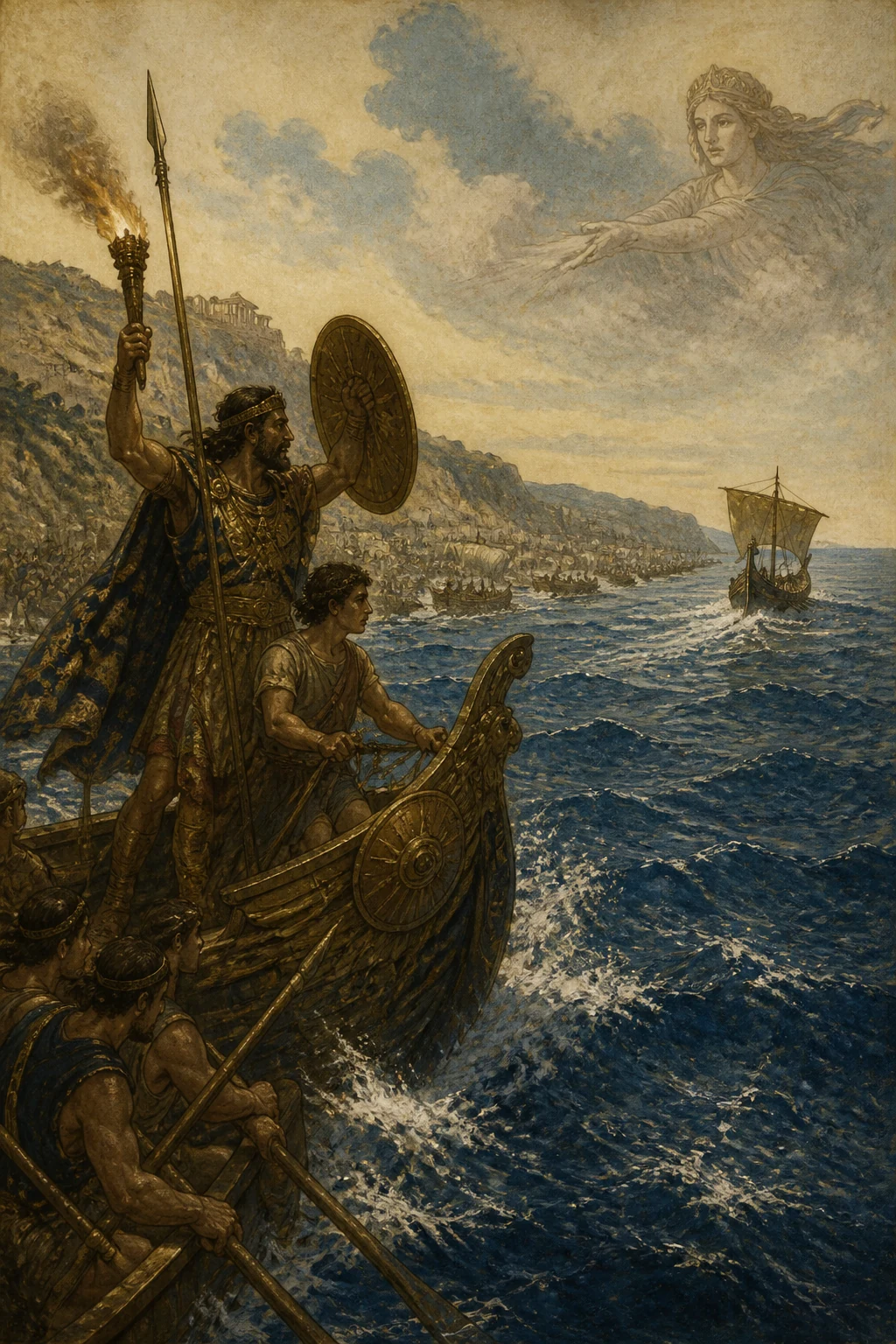
“We lived in this way for another whole year. Then I decided to fit out a ship for a voyage to Basra. I equipped a large vessel and loaded it with goods and merchandise, together with everything I would need aboard. I said, ‘My sisters, would you rather stay at home until I return, or travel with me?’ They answered, ‘We will travel with you, for we cannot bear to be parted from you.’ So I took them with me and we set sail. I had divided my wealth in half, taking one half with me and hiding the other, for I thought, ‘Something may happen to the ship, and we may yet have years to live. If we return, we shall find something to sustain us.’ We sailed for days and nights, but the ship lost its way. The captain failed to keep to his course, and we entered a sea other than the one we intended, without knowing it for some time. A fair wind carried us along for ten days, until a city appeared in the distance. We asked the captain, ‘What is the name of this city before us?’ He answered, ‘By God, I do not know. I have never seen it, nor have I sailed this sea in all my life. Still, we have come through safely. Now you need only enter the city and unload your merchandise. If you find buyers, sell your goods and conduct your business; if not, we shall rest for two days, take on provisions, and sail again.’ We reached the city, and the captain went ashore. After an hour he returned and said, ‘Go into the city, marvel at what God has done to His creatures, and seek refuge from His wrath.’ We went ashore and found that everyone in the city had been turned to black stone. We were astounded. Walking through the markets, we found the merchandise untouched, with all the gold and silver still in its place. We rejoiced and said, ‘There must be some strange story behind this.’ Then we scattered through the streets, each forgetting the others in his eagerness for the money and rich fabrics to be found there.
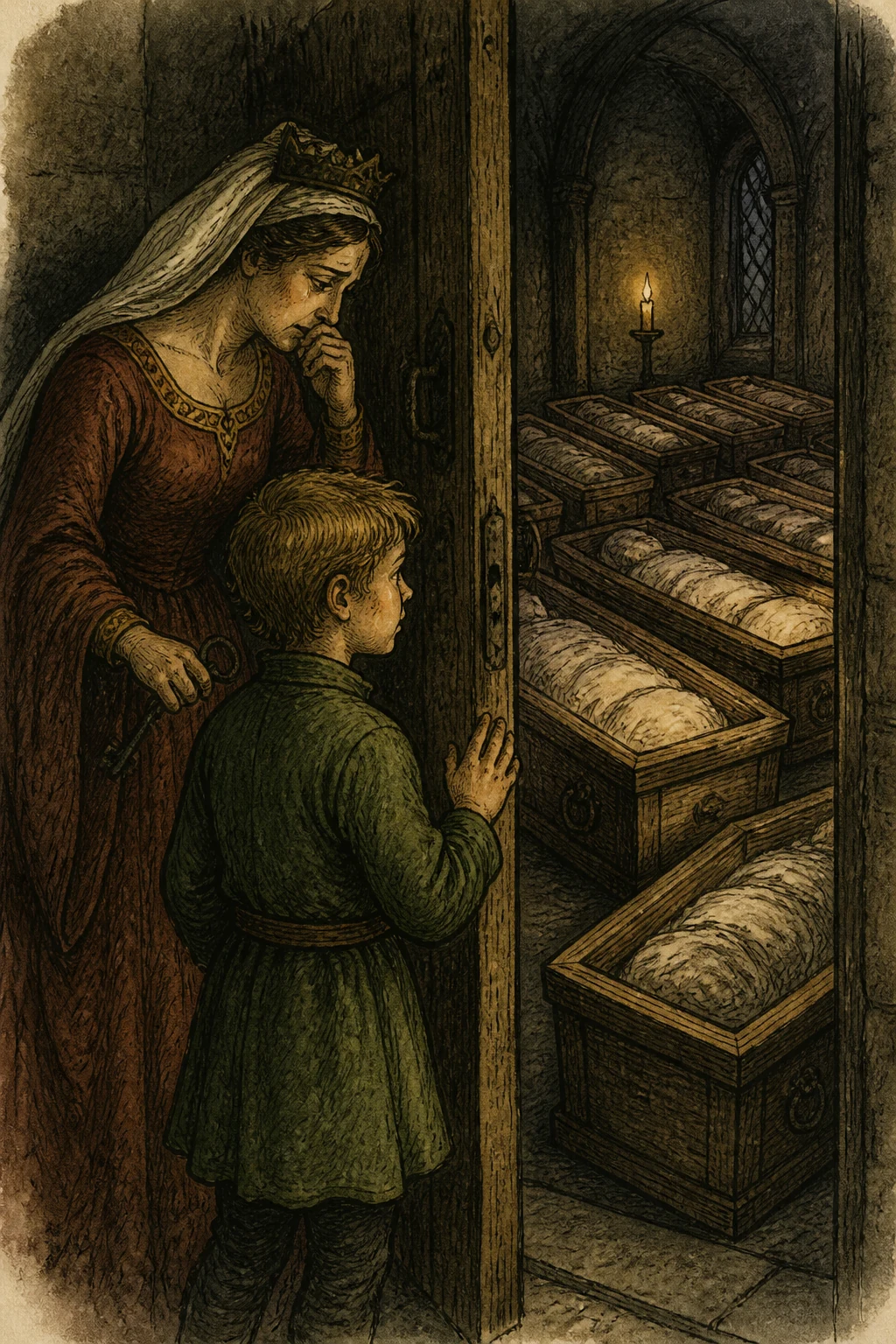
“As for me, I climbed to the citadel and found it strongly fortified. I entered the king’s palace, where all the vessels were of gold and silver. Then I saw the king seated among his chamberlains, deputies, and ministers, dressed in garments of unimaginable splendour. Drawing closer, I found him sitting on a throne studded with pearls and precious stones, every pearl shining like a star. He wore a robe embroidered with gold, and around him stood fifty mamluks dressed in silks of every kind, with drawn swords in their hands. The sight left me bewildered. I went on into the women’s quarters, where silk hangings covered the walls. There I found the queen, wearing a robe embroidered with lustrous pearls, a crown set with all manner of jewels upon her head, and necklaces and chains about her neck. All her clothing and ornaments remained unchanged, but she herself had been turned to black stone. Finding an open door, I entered and came to a stairway of seven steps. I climbed it and found a marble-paved chamber spread with gold-woven carpets. In it stood an alabaster couch inlaid with pearls and precious stones. I noticed a brilliant light to one side and went towards it. There, on a little stand, lay a shining jewel the size of an ostrich egg, glowing like a candle and filling the room with radiance. The couch was spread with silks so splendid that they dazzled the eye. I marvelled at all I saw. There were also lighted candles in the chamber, and I said to myself, ‘Someone must have lit these candles.’
“I went on into another room and began searching through the chambers. So lost was I in wonder at all these marvels that I forgot myself, and night fell while my thoughts were still absorbed in them. I wished to leave, but could not find the door and lost my way. So I returned to the chamber with the lighted candles, sat upon the couch, and, after reciting some verses of the Quran, covered myself with a quilt. I tried to sleep, but could not, for uneasiness had taken hold of me. At midnight I heard the Quran being recited in a sweet, gentle voice. Turning towards an inner chamber, I saw that its door was open. I went through it and found myself in a place of prayer, with lighted lamps hanging overhead and a handsome young man seated on a prayer rug. I wondered how he alone had escaped the fate of the people of the city. I entered and greeted him. He raised his eyes and returned my greeting, and I said, ‘By the holy book of God that you are reciting, I beg you to answer my question.’ He smiled and said, ‘First tell me what brought you to this place, and then I shall answer whatever you ask.’ I told him my story, and he marvelled at it. Then I asked him about the city, and he said, ‘Give me a moment.’ He closed the Quran, put it into a satin bag, and seated me beside him. I looked at him and saw that he was like the full moon: lovely in every feature, graceful in movement, radiant in appearance, slender of figure, smooth-cheeked and glowing, as though these verses had been composed for him:
“The astrologer kept watch by night, and there appeared before his eyes a beauty’s form, swaying within his robes. Saturn bestowed the blackness of his flowing locks, and musk set beauty’s seal upon his cheeks. From Mars his cheeks received their rosy hue; the Archer shot his arrows from his eyelids. Mercury endowed him with surpassing wit, while Suha denied informers any sight of him. Bewildered stood the watcher at the marvel he beheld, and the full moon kissed the earth before his feet. I gave him one look, and it left me with a thousand pangs of longing and kindled every ember in my heart. ‘My lord,’ I said, ‘tell me what I asked you.’ He answered, ‘Gladly and willingly. Know that this city belonged to my father, together with all his household and people. He is the king you saw seated on the throne, turned to stone, and the queen you saw is my mother. They were Magians, worshippers of fire rather than the Almighty King. They swore by fire and light, by shade and burning heat, and by the circling heavens. My father had no child until I was granted to him in his old age, and he brought me up until I grew to boyhood. But happiness had already been ordained for me. In our household was a very old woman, a Muslim who secretly believed in God and His Messenger, though outwardly she conformed to my family’s faith. My father esteemed her for her honesty and chastity, and treated her with ever-increasing honour, believing that she shared his religion. When I was older, he entrusted me to her, saying, “Take him and bring him up. Teach him the ways of our religion, rear him well, and attend to his needs.”
“‘The old woman took me and taught me the religion of Islam: ritual purity, the duties of ablution and prayer, and the Quran, which she made me learn by heart. When I had mastered all this, she said, “My son, keep this secret from your father. Do not let him know, lest he kill you.” So I concealed it from him, and continued to do so until the old woman died a few days later. The people of the city grew ever more unbelieving, rebellious, and astray. While they persisted in their ways, they heard a voice crying aloud like crashing thunder, audible far and near: “People of this city, turn away from the worship of fire and worship the Almighty King!” Terror seized them, and they gathered before my father, the king of the city, saying, “What is this dreadful voice we have heard, whose terrible sound has struck us senseless?” He told them, “Do not let the voice alarm or frighten you, or turn you from your religion.” Their hearts inclined to my father’s words, and they remained devoted to the worship of fire. They persisted in their defiance for a year, until the anniversary of the first warning, when the voice sounded again. They heard it three times in three years, once each year, yet still they clung to their old ways. Then, one morning after dawn, divine wrath and indignation descended upon them from heaven, and they were turned to black stone, together with their beasts of burden and their livestock. Of all the people of this city, I alone was spared. Since that day I have lived as you find me, praying, fasting, and reciting the Quran. But I have grown weary of solitude, with no one to keep me company.’
“Then I said to him, ‘Young man, would you come with me to the city of Baghdad? There you could meet scholars and jurists and increase your knowledge and understanding of the faith. I would be your handmaid, though I am the leading woman of my people, with men, servants, and slave-boys under my command. I have a ship laden with merchandise. Fate cast us upon this city so that we might discover these wonders, and it was destined that we should meet.’ I kept urging him to come until he agreed.” But morning overtook Shahrazad, and she fell silent, leaving her tale untold.
When it was the seventeenth night
She said: It has reached me, O fortunate King, that the young woman continued to persuade the young man to accompany her until sleep overcame her, and she spent that night sleeping at his feet, scarcely able to believe her good fortune. Then she continued: “When morning came, we rose and went into the treasuries, where we took whatever was light to carry and precious in value. We descended from the citadel into the city and met the slaves and the captain, who were searching for me. They were delighted to see me and asked why I had been away. I told them what I had seen, related the young man’s story, and explained why the people of the city had been turned to stone and what had befallen them. They marvelled at it all. But when my sisters saw me with the young man, they envied me on his account, and their hearts filled with anger as they secretly plotted against me. We went aboard the ship, and I was overjoyed, above all at having the young man with me. We waited until the wind was favourable, then spread our sails and set off. My sisters sat with us and began to talk. ‘Sister,’ they asked, ‘what do you intend to do with this handsome young man?’ I answered, ‘I mean to take him as my husband.’ Then I turned towards him and said, ‘My lord, I wish to ask something of you. Do not refuse me.’ He answered, ‘Gladly and willingly.’ I turned back to my sisters and said, ‘This young man is enough for me. All these riches may be yours.’ They said, ‘You have chosen well,’ but secretly they meant me harm. We sailed on with a steady wind until we had left the sea of danger and entered the sea of safety. A few days later we drew near Basra, and its buildings came into view as evening fell. When we were asleep, my sisters rose, lifted the young man and me up in our bedding, and threw us into the sea. The young man could not swim, so he drowned, and God numbered him among the martyrs. As for me, I was destined to survive.
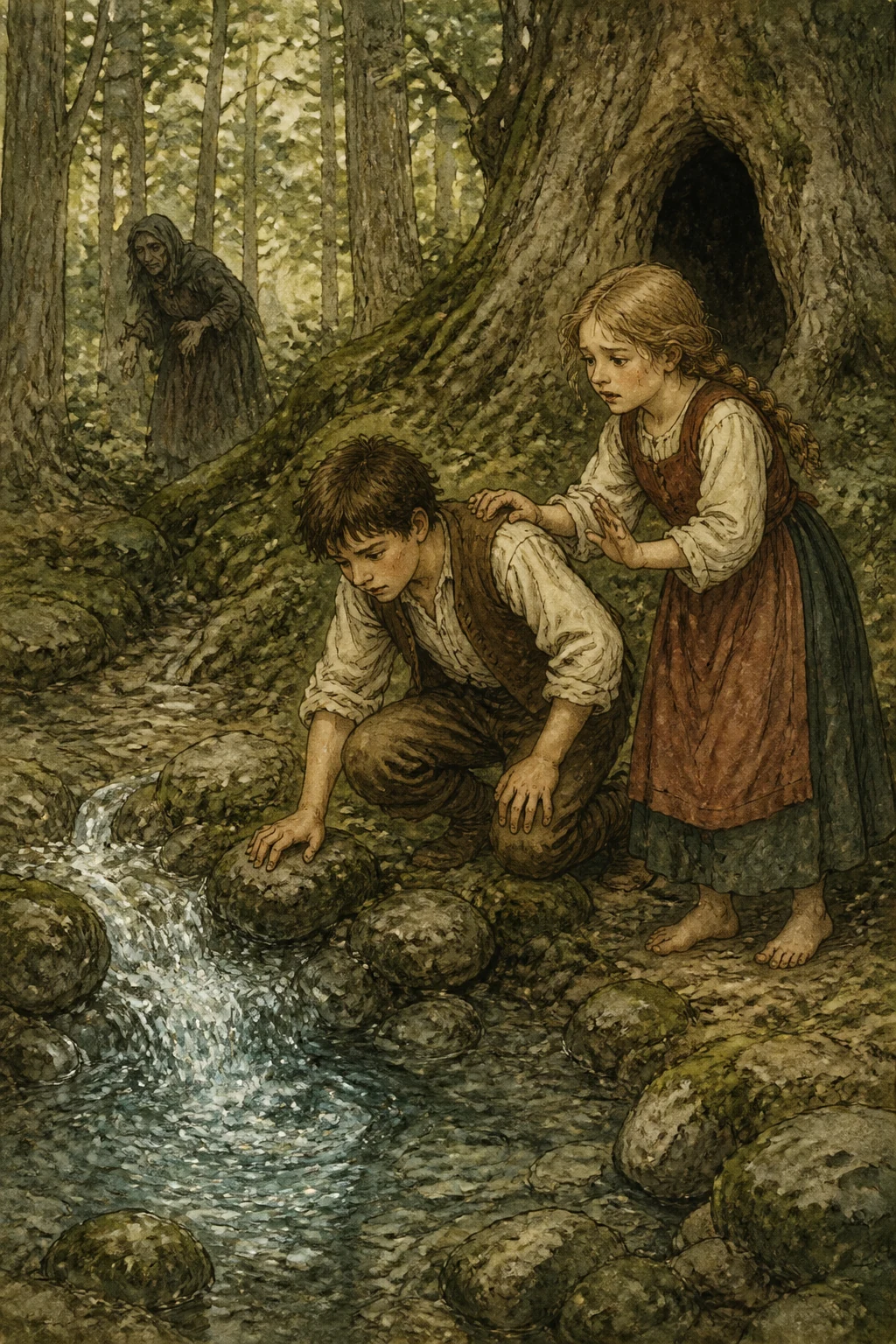
“When I fell into the sea, God sent me a piece of wood. I clung to it, and the waves tossed me about until they cast me ashore on an island. I walked about the island for the rest of the night. When morning came, I saw a path marked with human footprints, leading from the island to the mainland. The sun had risen, so I dried my clothes in its warmth and set off along the path. I walked on until I was close to the mainland where the city stood. Suddenly a snake came towards me, pursued by a great serpent that was bent on killing her. Her tongue hung out from exhaustion, and I was moved to pity. I picked up a stone and hurled it at the serpent’s head, killing it on the spot. The snake then spread a pair of wings and flew into the air. I marvelled at the sight. Being weary, I lay down where I was and slept for a while. When I woke, I found a young woman at my feet, massaging them. I sat up, embarrassed, and asked, ‘Who are you, and what brings you here?’ She answered, ‘How quickly you have forgotten me! It was you who did me a kindness and killed my enemy. I am the snake you rescued from the serpent. I am a jinniyah, and that serpent was a jinn, an enemy of mine. No one but you could have saved me from him. When you rescued me, I flew through the air to the ship from which your sisters had thrown you, carried everything aboard it to your house, and sank it. As for your sisters, I changed them by enchantment into two black dogs, for I learned all that had passed between you and them. But the young man was drowned.’
“Then she carried me and the two dogs away and set us down on the roof of my house. Inside I found all the wealth that had been aboard the ship, with nothing missing. Then the snake said to me, ‘By the inscription upon Solomon’s seal, unless you give each of them three hundred lashes every day, I shall come and turn you into a dog like them.’ I answered, ‘I hear and obey.’ And ever since, O Commander of the Faithful, I have beaten them in this way, though my heart aches with pity for them.” The caliph marvelled at her story. Then he turned to the second young woman and asked, “And you—what caused the marks of beating on your body?”
Izvirnik
حكاية البنت الأولى زبيدة - الليالي ١٦ إلى ١٧
Naslednje strani prikazujejo izvirno besedilo za primerjavo.
فلما كانت الليلة ١٦
قالت: بلغني أيها الملك السعيد أن كبيرة الصبايا لما تقدَّمت بين يدي أمير المؤمنين قالت: إن لي حديثًا عجيبًا، وهو أن هاتين الصبيتين أختاي من أبي من غير أمي، فمات والدنا، وخلف خمسة آلاف دينار، وكنت أنا أصغرهن سنًّا، فتجهَّزَتْ أختاي وتزوَّجت كل واحدة برجل ومكثتا مدة، ثم إن كل واحد من أزواجهما هيَّأ متجرًا وأخذ من زوجته ألف دينار، وسافرا مع بعضهما وتركاهما، فغابَا أربع سنين، وضيَّع زوجاهما المالَ وخسرَا، وتركاهما في بلاد الناس، فجاءتاني في هيئة الشحاذين، فلما رأيتهما ذُهِلت عنهما ولم أعرفهما، ثم إني لما عرفتهما قلت لهما: ما هذه الحال؟ فقالتا: يا أختنا، إن الكلام لا يفيد الآن، وقد جرى القلم بما حكم الله. فأرسلتهما إلى الحمام، وألبست كل واحدة حُلَّةً، وقلت لهما: يا أختَيَّ، أنتما الكبيرتان وأنا الصغيرة، وأنتما عوض عن أبي وأمي، والإرث الذي نابني معكما قد جعل الله فيه البركة، فكُلَا من زكاته، وأحوالي جليلة، وأنا وأنتما سواء. وأحسنتُ إليهما غاية الإحسان، فمكثتا عندي مدة سنة كاملة، وصار لهما مال من مالي، فقالتا: إن الزواج خير لنا، وليس لنا صبر عنه. فقلت لهما: يا أختَيَّ، لم تَرَيَا في الزواج خيرًا، فإن الرجل الجيد قليل في هذا الزمان، وقد جرَّبتما الزواج. فلم يقبلَا كلامي وتزوَّجَا بغير رضاي، فزوجتهما من مالي وسترتهما، ومضتا مع زوجَيْهما، فأقاموا مدة يسيرة، ولعب عليهما زوجاهما، وأخذَا ما كان معهما، وسافرَا وتركاهما، فجاءتا عندي وهما عريانتان واعتذرتا، وقالتَا: لا تؤاخذينا، فأنت أصغر منَّا سنًّا وأكمل عقلًا، وما بقينا نذكر الزواج أبدًا. فقلت: مرحبًا بكما يا أختَيَّ، ما عندي أعز منكما. وقبَّلتهما، وزِدتهما إكرامًا.
ولم نَزَلْ على هذه الحالة سنة كاملة، فأردت أن أجهِّز لي مركبًا إلى البصرة، فجهزت مركبًا كبيرة، وحملت فيها البضائع والمتاجر، وما أحتاج إليه في المركب، وقلت: يا أختَيَّ، هل لكما أن تقعدا في المنزل حتى أسافر وأرجع، أو تسافرَا معي؟ فقالتا: نسافر معك، فإنَّا لا نطيق فراقك. فأخذتهما وسافرنا، وكنتُ قسمت مالي نصفين، فأخذتُ النصف، وخبَّأتُ النصفَ الثاني، وقلت: ربما يصيب المركب شيء، ويكون في العمر مدة، فإذا رجعنا نجد شيئًا ينفعنا. ولم نزل مسافرين أيامًا وليالي، فتاهت بنا المركب، وغفل الريس عن الطريق، ودخلت المركب بحرًا غير البحر الذي نريده، ولم نعلم بذلك مدة، وطاب لنا الريح عشرة أيام، فلاحت لنا مدينة على بُعْدٍ، فقلنا للريس: ما اسم هذه المدينة التي أشرفنا عليها؟ فقال: والله لا أعلم، ولا رأيتها قط، ولا سلكت عمري هذا البحر، ولكن جاء الأمر بسلامة، فما بقي إلا أن تدخلوا هذه المدينة وتُخرِجوا بضائعكم، فإن حصل لكم بيع فبيعوا وتصرَّفوا فيها، وإن لم يحصل لكم بيع، نرتاح يومين ونتزوَّد ونسافر. فدخلنا المدينة وطلع الريس إليها، وغاب ساعةً ثم جاءنا، وقال: قوموا إلى المدينة، وتعجَّبوا من صنع الله في خلقه، واستعيذوا من سخطه. فطلعنا المدينة فوجدنا كلَّ مَن فيها ممسخوًا حجارة سودًا، فاندهشنا من ذلك، ومشينا في الأسواق فوجدنا البضائع باقية، والذهب والفضة باقيين على حالهما، ففرحنا وقلنا: لعل هذا يكون له أمر عجيب، وتفرقنا في شوارع المدينة، وكل واحد اشتغل عن رفيقه بما فيها من المال والقماش.
وأما أنا فطلعت إلى القلعة فوجدتها محكمة، فدخلت قصر الملك فوجدت جميع الأواني من الذهب والفضة، ثم رأيت الملك جالسًا وعنده حجابه، ونوابه، ووزراؤه، وعليه من الملابس شيء يتحير فيه الفكر، فلمَّا قربت من الملك وجدته جالسًا على كرسي مرصَّع بالدر والجوهر، فيه كل درة تضيء كالنجمة، وعليه حلة مزركشة بالذهب، وواقفًا حوله خمسون مملوكًا لابسين أنواع الحرير، وفي أيديهم السيوف مجردة، فلما نظرت لذلك دهش عقلي، ثم مشيت ودخلت قاعة الحريم، فوجدت في حيطانها ستائر من الحرير، ووجدت الملكة عليها حلة مزركشة باللؤلؤ الرطب، وعلى رأسها تاج مكلل بأنواع الجواهر، وفي عنقها قلائد وعقود، وجميع ما عليها من الملبوس والمصاغ باقٍ على حاله، وهي ممسوخة حجرًا أسودَ، ووجدت بابًا مفتوحًا فدخلته، ووجدت فيه سلمًا بسبع درجات فصعدته، فرأيت مكانًا مرخمًا مفروشًا بالبسط المذهبة، ووجدت فيه سريرًا من المرمر مرصعًا بالدر والجوهر، ونظرت نورًا لامعًا في جهةٍ فقصدتها فوجدت فيها جوهرة مضيئة قدر بيضة النعامة على كرسي صغير وهو يضيء كالشمعة، ونورهما ساطع، ومفروش على ذلك السرير من أنواع الحرير ما يحيِّر الناظر، فلما نظرت إلى ذلك تعجبت، ورأيت في ذلك المكان شموعًا موقدةً، فقلت في نفسي: لا بد أن أحدًا أوقد هذه الشموع.
ثم إني مشيت حتى دخلت موضعًا غيره، وصرت أفتش في الأماكن، ونسيت نفسي ممَّا أدهشني من التعجُّب من تلك الأحوال، واستغرق فكري إلى أن دخل الليل، فأردت الخروج فلم أعرف الباب، وتهت عنه، فعدت إلى الجهة التي فيها الشموع الموقدة، وجلست على السرير، وتغطيت بلحاف بعد أن قرأت شيئًا من القرآن، وأردت النوم فلم أستطع، ولحقني القلق، فلما انتصف الليل سمعت تلاوة القرآن بصوت حسن رقيق، فالتفتُّ إلى مخدعٍ فرأيت بابه مفتوحًا، فدخلت الباب ونظرت المكان فإذا هو معبد، وفيه قناديل معلقة موقدة، وفيه سجادة مفروشة جالس عليها شاب حسن المنظر، فتعجبت كيف هو سالم دون أهل المدينة، فدخلت وسلَّمت عليه، فرفع بصره ورد عليَّ السلام، فقلت له: أسألك بحق ما تتلوه من كتاب الله أن تجيبني عن سؤالي. فتبسَّم وقال: أخبريني أنتِ عن سبب دخولك هذا المكان، وأنا أخبرك بجواب ما تسألينني عنه. فأخبرته بخبري، فتعجَّب من ذلك، ثم إنني سألته عن هذه المدينة، فقال: أمهليني. ثم طبق المصحف، وأدخله في كيس من الأطلس، وأجلسني بجنبه، فنظرت إليه فإذا هو كالبدر حسن الأوصاف، لين الأعطاف، بهي المنظر، رشيق القد، أسيل الخدر، زهي الوجنات كأنه المقصود من هذه الأبيات:
رَصَدَ المُنَجِّمُ لَيْلَه فَبَدَا لَهُ قَدُّ الْمَلِيحِ يَمِيسُ فِي بُرْدَيْهِ
وَأَمَدَّهُ زُحَلٌ سَوَادَ ذَوَائِبٍ وَالْمِسْكُ هَادِي الْخَالِ فِي خَدَّيْهِ
وَغَدَتْ مِنَ الْمَرِّيخِ حُمْرَةُ خَدِّهِ وَالْقَوْسُ يَرْمِي النَّبْلَ مِنْ جَفْنَيْهِ
وَعُطَارِدُ أَعْطَاهُ فَرْطَ ذَكَائِهِ وَأَبَى السُّهَا نَظَرَ الْوُشَاةِ إِلَيْهِ
فَغَدَا الْمُنَجِّمُ حَائِرًا مِمَّا رَأَى وَالْبَدْرُ بَاسَ الْأَرْضَ بَيْنَ يَدَيْهِ
فنظرتُ إليه نظرةً أعقبتني ألف حسرة، وأوقدَتْ بقلبي كلَّ جمرة، فقلت له: يا مولاي، أخبرني عمَّا سألتك. فقال: سمعًا وطاعةً، اعلمي أن هذه المدينة مدينة والدي وجميع أهله وقومه، وهو الملك الذي رأيتِه على الكرسي ممسوخًا حجرًا، وأما الملكة التي رأيتِها فهي أمي، وقد كانوا مجوسًا يعبدون النار دون الملك الجبار، وكانوا يقسمون بالنار والنور، والظل والحرور، والفلك الذي يدور، وكان أبي ليس له ولد فرُزِقَ بي في آخِر عمره، فربَّاني حتى نشأت، وقد سبقت لي السعادة، وكان عندنا عجوز طاعنة في السن مسلمة تؤمن بالله ورسوله في الباطن، وتُوافق أهلي في الظاهر، وكان أبي يقدرها لاتصافها بالأمانة والعفة، وكان يكرمها ويزيد في إكرامها، وكان يعتقد أنها على دينه، فلما كبرتُ سلَّمني أبي إليها، وقال: خذيه وربِّيه، وعلِّميه أحوالَ ديننا، وأحسني تربيته، وقومي بخدمته.
فأخذتني العجوز، وعلَّمتني دينَ الإسلام من الطهارة وفرائض الوضوء والصلاة، وحفَّظتني القرآن، فلما أتممتُ ذلك قالت لي: يا ولدي، اكتم هذا الأمر عن أبيك، ولا تُعلِمه به لئلا يقتلك. فكتمته عنه، ولم أزل كاتمًا عن أبي الخبر حتى ماتت تلك العجوز بعد أيام قلائل، فازداد أهل المدينة كفرًا وعتوًّا وضلالًا، فبينما هم على ما هم فيه إذ سمعوا مناديًا ينادي بصوت عالٍ شبيه بصوت الرعد القاصف، سمعه القريب والبعيد يقول: يا أهل هذه المدينة، ارجعوا عن عبادة النار، واعبدوا الملك الجبار. فحصل عند أهل المدينة فزع، واجتمعوا عند أبي وهو ملك المدينة، وقالوا له: ما هذا الصوت المزعج الذي سمعناه فاندهشنا من شدَّة هوله؟ فقال لهم: لا يهولنكم الصوت، ولا يفزعكم، ولا يردكم عن دينكم. فمالت قلوبهم إلى قول أبي، ولم يزالوا منكبين على عبادة النار، واستمروا على طغيانهم مدة سنة، حتى جاء ميعاد ما سمعوا الصوت الأول فظهر لهم ثانيًا، فسمعوه ثلاث مرات على ثلاث سنين في كل سنة مرة، فلم يزالوا عاكفين على ما هم عليه حتى نزل عليهم المقت والسخط من السماء بعد طلوع الفجر، فمُسِخوا حجارة سودًا، وكذلك دوابهم وأنعامهم، ولم يسلم من أهل هذه المدينة غيري، ومن يوم جرَتْ هذه الحادثةُ وأنا على هذه الحالة في صلاة وصيام وتلاوة قرآن، وقد سئمت من الوحدة، وما عندي مَن يؤانسني.
فعند ذلك قلت له: أيها الشاب، هل لك أن تروح معي إلى مدينة بغداد، وتنظر إلى العلماء، وإلى الفقهاء، فتزداد علمًا وفقهًا، وأكون أنا جاريتك مع أني سيدة قومي، وحاكمة على رجال وخدم وغلمان، وعندي مركب مشحونة بالمتجر، وقد رمتنا المقادير على هذه المدينة حتى كان ذلك سببًا في اطِّلَاعنا على هذه الأمور، وكان النصيب في اجتماعنا. ولم أزل أرغِّبه في التوجُّه حتى أجابني إليه. وأدرك شهرزاد الصباح، فسكتَتْ عن الكلام المباح.
فلما كانت الليلة ١٧
قالت: بلغني أيها الملك السعيد أن الصبية ما زالت تحسِّن للشاب التوجُّه معها حتى غلب عليها النوم، فنامت تلك الليلة تحت رجليه، وهي لا تصدق بما هي فيه من الفرح، ثم قالت: فلما أصبح الصباح قمنا ودخلنا إلى الخزائن، وأخذنا ما خفَّ حمله وغلا ثمنه، ونزلنا من القلعة إلى المدينة، فقابلنا العبيد والريس وهم يفتشون عليَّ، فلما رأوني فرحوا بي، وسألوني عن سبب غيابي، فأخبرتهم بما رأيت، وحكيت لهم قصة الشاب، وسبب مسخ أهل هذه المدينة، وما جرى لهم؛ فتعجبوا من ذلك، فلما رأتني أختاي ومعي ذلك الشاب حسدتاني عليه، وصارتا في غيظ، وأضمرتا المكر لي، ثم نزلنا المركب وأنا بغاية الفرح، وأكثر فرحي بصحبة هذا الشاب، وأقمنا ننتظر الريح حتى طاب لنا الريح، فنشرنا القلوع وسافرنا، فقعدت أختاي عندنا وصارتا تتحدثان، فقالتا لي: يا أختنا، ما تصنعين بهذا الشاب الحسن؟ فقلتُ لهما: قصدي أن أتخذه بعلًا. ثم التفتُّ إليه وأقبلتُ عليه، وقلت: يا سيدي، قصدي أن أقول لك شيئًا فلا تخالفني فيه. فقال: سمعًا وطاعةً. ثم التفتُّ إلى أختيَّ وقلت لهما: يكفيني هذا الشاب، وجميع هذه الأموال لكما. فقالتَا: نِعْمَ ما فعلتِ. ولكنهما أضمرتا لي الشرَّ، ولم نزل سائرين مع اعتدال الريح حتى خرجنا من بحر الخوف، ودخلنا بحر الأمان، وسافرنا أيامًا قلائل إلى أن قربنا من مدينة البصرة، ولاحت لنا أبنيتها فأدركنا المساء، فلما أخَذَنا النومُ قامَتْ أختاي وحملتاني أنا والغلام بفرشنا ورمتانا في البحر، فأما الشاب فإنه كان لا يحسن العومَ فغرق، وكتبه الله من الشهداء، وأما أنا فكُتِبت من السالمين.
فلما سقطتُ في البحر رزقني الله بقطعة خشب فركبتها، وضربتني الأمواج إلى أن رمتني على ساحل جزيرة، فلم أزل أمشي في الجزيرة باقي ليلتي، فلما أصبح الصباح رأيت طريقًا فيه أثر مشي على قدر قدم ابن آدم، وتلك الطريق متصلة من الجزيرة إلى البر، وقد طلعت الشمس، فنشفت ثيابي فيها وسرت في الطريق، ولم أزل سائرة إلى أن قربت من البر الذي فيه المدينة، وإذا أنا بحية تقصدني، وخلفها ثعبان يريد هلاكها، وقد تدلَّى لسانها من شدة التعب، فأخذتني الشفقة عليها، فعمدتُ إلى حجرٍ وألقيتُه على رأس الثعبان، فمات من وقته، فنشرت الحية جناحين وطارت في الجو، فتعجَّبْتُ من ذلك، وقد تعبت فنمت في موضعي ساعة، فلما أفقت وجدت تحت رجلي جارية وهي تكبس رجلي، فجلست واستحَيْتُ منها، وقلت لها: مَن أنت، وما شأنك؟ فقالت: ما أسرع ما نسيتِني! أنتِ التي فعلتِ معي الجميل، وقتلتِ عدوي، فأنا الحية التي خلصتِني من الثعبان، فإني جنية، وهذا الثعبان جني، وهو عدوي، وما نجاني منه إلا أنت، فلما نجيتِني منه طرت في الريح، وذهبت إلى المركب التي رماك منها أختاك، ونقلتُ جميعَ ما فيها إلى بيتك وأغرقتها، وأما أختاكِ فإني سحرتهما كلبتين من الكلاب السود، فإني عرفتُ جميعَ ما جرى لك معهما، وأما الشاب فإنه غرق.
ثم حَمَلَتْنِي أنا والكلبتين، وألقتنا فوق سطح داري؛ فرأيتُ جميعَ ما كان في المركب من الأموال في وسط بيتي، ولم يَضِعْ منه شيء، ثم إن الحية قالت لي: وحق النقش الذي على خاتم سليمان، إذا لم تضربي كلَّ واحدة منهما في كل يوم ثلاثمائة سوط، لَجئتُ وجعلتُكِ مثلهما. فقلت: سمعًا وطاعةً. فلم أزل يا أمير المؤمنين أضربهما ذلك الضرب، وأشفق عليهما. فتعجَّبَ الخليفة من ذلك، ثم قال للصبية الثانية: وأنتِ ما سبب الضرب الذي على جسدك؟
Nadaljuj z branjem