Prevod
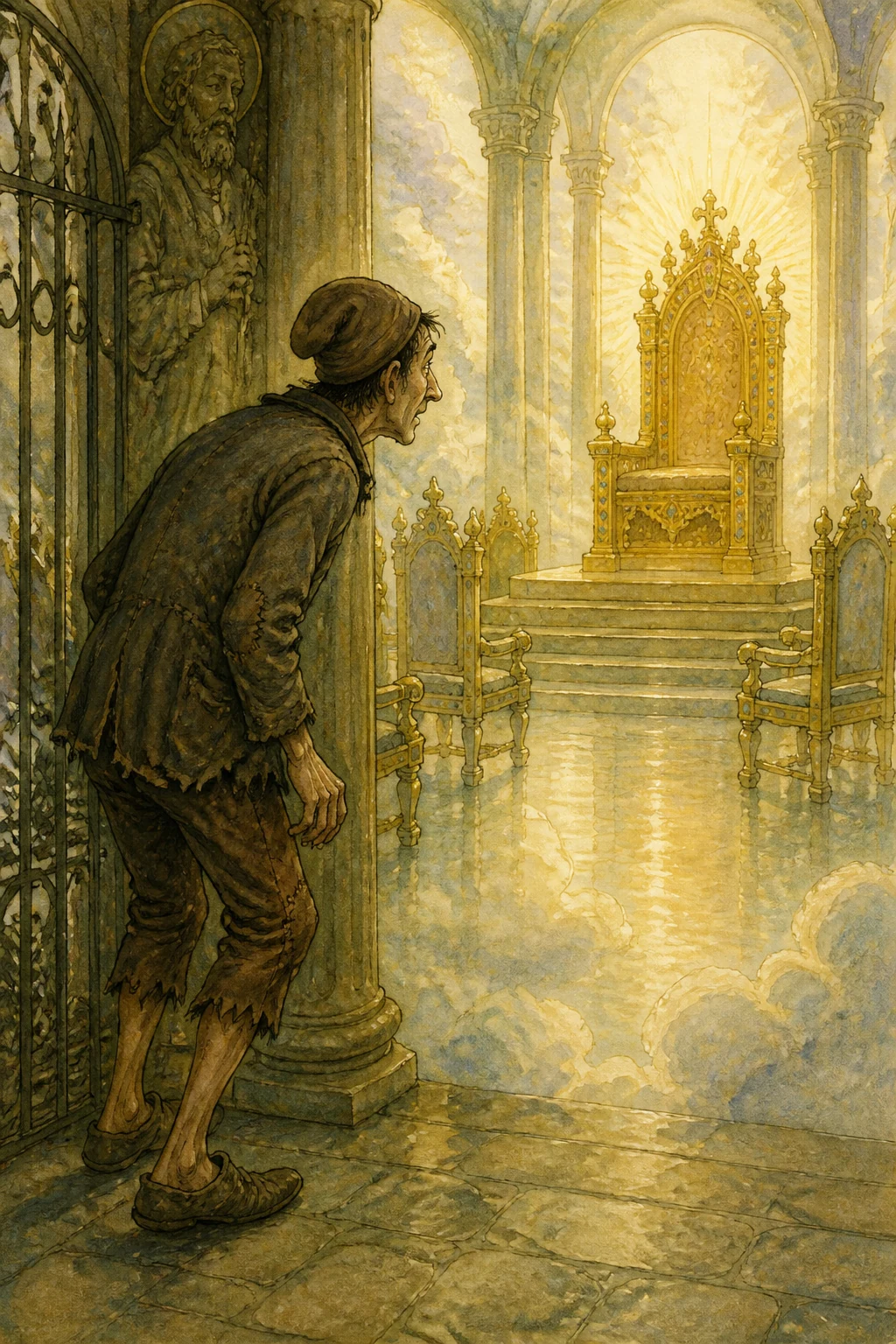
As for my third brother, his name is Baqbaq. Fate and destiny led him to a large house, where he knocked at the door, hoping that its owner would speak to him and give him a chance to ask for alms. “Who is at the door?” the master of the house called. No one answered, and my brother heard him call out more loudly, “Who is there?” Still my brother said nothing. He heard the man’s footsteps approaching, until he reached the door and opened it. “What do you want?” he asked. “Something for the sake of God Most High,” my brother replied. “Are you blind?” the man asked. “Yes,” said my brother. “Give me your hand.” My brother held out his hand, and the man led him into the house, then up one flight of stairs after another until they reached the highest roof. All the while my brother supposed that he meant to give him something to eat, or some other gift. When they had reached the very top, the man said, “What do you want, blind man?” “I want something for the sake of God Most High.” “May God provide for you,” the man replied. “My good man,” said my brother, “could you not have told me that while I was still downstairs?” “You lowest of the low!” the man retorted. “Why did you not ask me for something for God’s sake when you first heard me speak, while you were knocking at the door?” “And now what do you mean to do with me?” my brother asked. “I have nothing to give you.” “Then take me down the stairs.” “The way is before you,” the man replied. My brother rose and felt his way toward the stairs. He kept descending until only twenty steps lay between him and the door, when his foot slipped and he fell, tumbling down the stairs until his head was split open. He went out, not knowing where to turn, and some of his blind companions came upon him. “What has happened to you today?” they asked. He told them what had befallen him, then said, “Brothers, I want to take some of the money we have left and spend it on my needs.”
The master of the house had followed him to learn more about him and heard what he said. My brother had no idea that the man was following him, and when he entered his lodgings, the man slipped in behind him unnoticed. My brother sat down to wait for his companions. When they came in, he said, “Shut the door and search the house, lest some stranger should have followed us.” On hearing this, the man rose and clung to a rope hanging from the ceiling. They went all through the house but found no one, then returned and sat beside my brother. They brought out their money and counted it: there were ten thousand dirhams. They set this sum in a corner of the house, and each took what he needed from the surplus. Then they buried the ten thousand dirhams in the earth, set some food before them, and sat down to eat. My brother heard an unfamiliar sound nearby and said to his companions, “Is there a stranger among us?” He reached out, and his hand caught the hand of the master of the house. “Here is a stranger!” he shouted to his companions. They fell upon the man and beat him. After this had gone on for some time, they cried, “Muslims, help! A thief has broken in to steal our money!” A great crowd gathered around them. The stranger, the master of the house whom they had accused of theft, now pretended to be blind. He shut his eyes and made such a show of blindness that no one could doubt him, crying, “Muslims! I appeal to God and the Sultan! I appeal to God and the governor! I appeal to God and the emir, for I have something to reveal to the emir!” Before they knew it, the governor’s men had surrounded them, seized them, my brother among them, and brought them before him. “What is your story?” the governor asked. The man replied, “Hear me, Governor. You will never discover the truth about us except by punishment. If you wish, begin with me before my companions.” “Throw this man down and whip him,” the governor ordered. They threw him down and beat him. When the blows began to hurt, he opened one eye; when they beat him harder, he opened the other. “What is this trickery, you scoundrel?” the governor demanded. “Grant me immunity, and I will tell you.” The governor granted it, and the man said, “The four of us pretend to be blind. We go about among people and enter their houses, where we look at their women and scheme to corrupt them and get money from them. In this way we have amassed a great profit: ten thousand dirhams. I said to my companions, ‘Give me my share, two thousand five hundred.’ But they set upon me, beat me, and took my money. I seek refuge in God and in you, and you have a better right to my share than my companions do. If you wish to know whether I speak the truth, have each of them beaten harder than I was, and he will open his eyes.”
At this the governor ordered them to be punished, beginning with my brother. They went on beating him until he was nearly dead. Then the governor said, “You wicked men! Do you deny God’s blessing and claim to be blind?” “For God’s sake, for God’s sake, for God’s sake!” my brother cried. “Not one of us can see!” They threw him down for another beating and struck him until he fainted. “Leave him until he comes to,” said the governor, “then beat him a third time.” He ordered that each of his companions should receive more than three hundred strokes of the cane, while the sighted man kept telling them, “Open your eyes, or they will begin beating you again.” Then he said to the governor, “Send someone with me to bring you the money. These men will not open their eyes for fear of being disgraced before the people.” The governor sent a man with him, who brought back the money. The governor took it and, despite their protests, gave the man two thousand five hundred dirhams as his share, then banished my brother and the other three from the city. So I went out, Commander of the Faithful, and caught up with my brother. I asked him what had happened, and he told me the story I have just related to you. I brought him secretly back into the city and made provision for his food and drink for the rest of his life.
The Caliph laughed at my tale and said, “Give him a reward and let him go.” But I said, “By God, I will take nothing until I have told the Commander of the Faithful what happened to the rest of my brothers, and made it plain to him that I am a man of few words.” “Then split our ears with your fabulous tales,” said the Caliph, “and give us more of your woes and troubles.”