Waltey
Zgodba o nosaču in dekletih
Tisoč in ena noč · arabska pripovedna tradicijaO besedilu
Zgodba o nosaču in dekletih
- Vir
- Tisoč in ena noč
- Avtor
- arabska pripovedna tradicija
- Jezik branja
- English
- Jezik izvirnika
- Arabic
- Čas branja
- 26 min branja
- Obseg
- 21 strani
- Naslov izvirnika
- حكاية الحمَّال مع البنات - الليالي ٩ إلى ١١
O izvirniku
Tisoč in ena noč
Zgodbe v zgodbah, polne trgovcev, dvorov, preoblek in nočnih zapletov. Bralni jezik je English, izvirnik pa prihaja iz vira Tisoč in ena noč v jeziku Arabic.
Besedilo
Zgodba o nosaču in dekletih
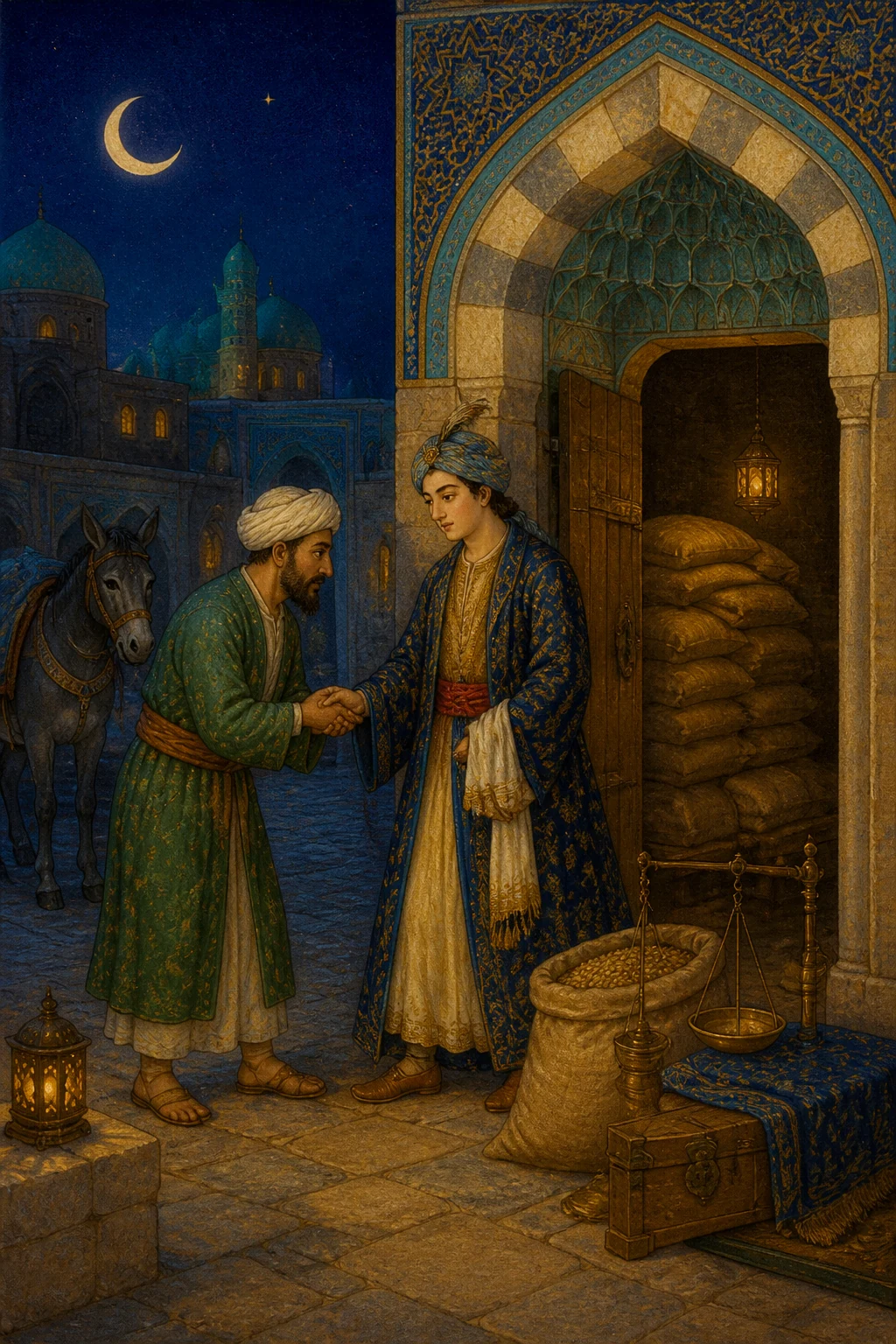
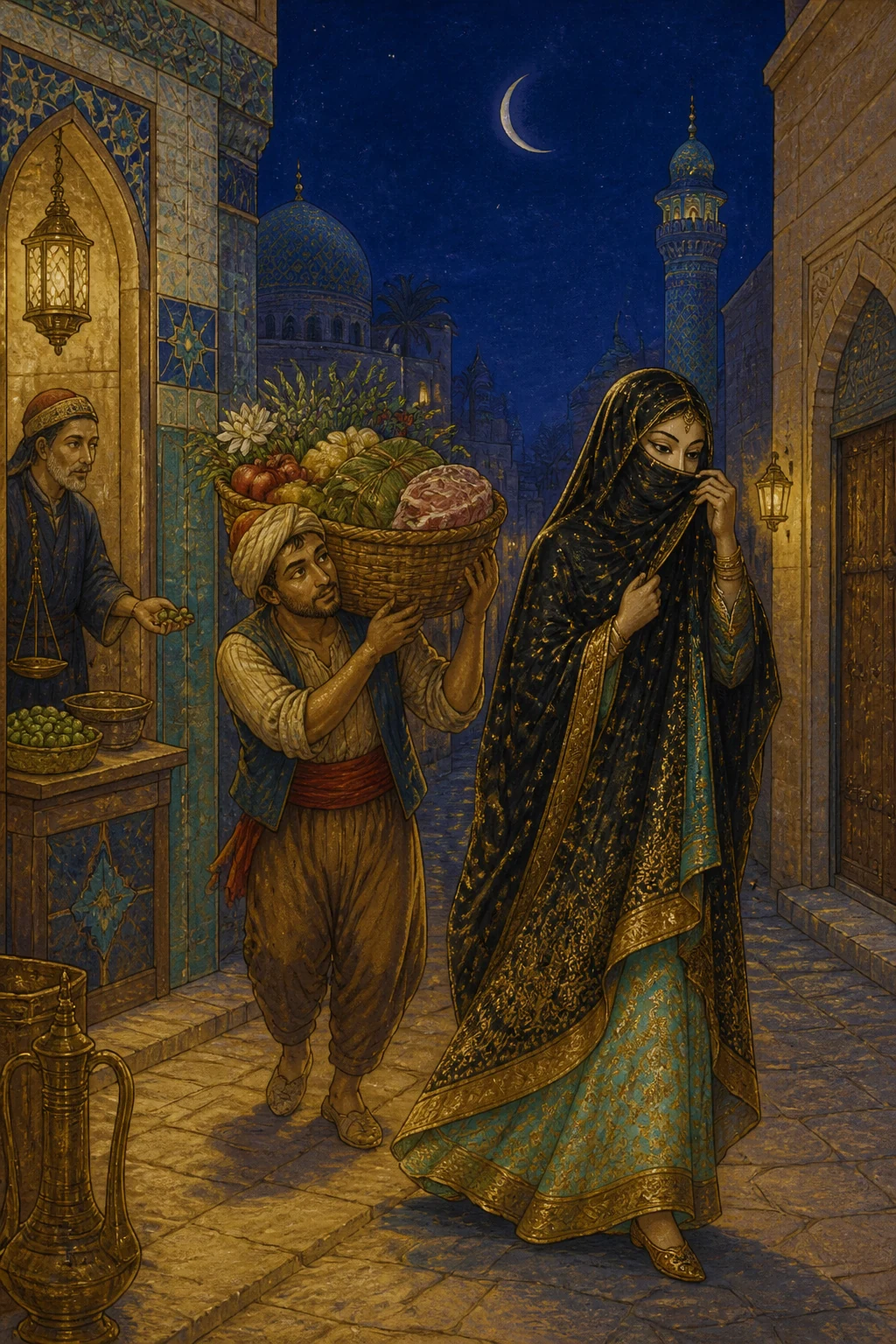
Yet this is no more wondrous than what befell the porter. He was a man of Baghdad, a bachelor who earned his living carrying loads. One day, as he stood in the market leaning against his basket, a woman stopped before him, wrapped in a mantle of Mosul silk embroidered with gold and edged on either side with gold brocade. She raised her veil, revealing dark eyes fringed with lovely lashes. Her limbs were delicate, her beauty flawless, and she said in a sweet voice, “Take up your basket and follow me.” The porter could scarcely believe his good fortune. He took his basket and followed her until she stopped at the door of a house and knocked. A Christian came down to her, and she gave him a dinar and took a quantity of olives, which she put in the basket. “Carry it and follow me,” she said. “By God,” said the porter, “this is a blessed day!” He shouldered the basket and followed her to a fruit seller’s stall, where she bought Syrian apples, Ottoman quinces, Omani peaches, Aleppine jasmine, Damascene water lilies, Nile cucumbers, Egyptian lemons, royal citrons, fragrant myrtle, henna blossoms, chamomile, anemones, violets, pomegranate blossoms, and wild roses. She put them all in the porter’s basket and said, “Carry it.” He lifted it and followed her until she stopped at a butcher’s and said, “Cut me ten pounds of meat.” He cut it for her, and she wrapped it in banana leaves, put it in the basket, and said, “Carry it, porter.” He lifted it and followed her. Next she stopped at a seller of nuts and dried fruits and took something of every kind, then told the porter, “Carry it and follow me.” He shouldered the basket and followed her to a confectioner’s shop, where she bought a platter and filled it with every sweet he had: latticed fritters, musk-scented stuffed pancakes, sabuniyya, lemon cakes, maymuniyya, comb-shaped pastries, finger pastries, and the little fried dumplings called “the judge’s morsels.” She piled all these varieties of sweets on the platter and put it in the basket. The porter said, “If you had told me, I would have brought a mule to carry all these things.” She smiled, then stopped at a perfumer’s shop, where she bought ten kinds of scented water, including rosewater, orange-blossom water, and willow water. She also took some sugar, a sprinkler of musk-scented rosewater, grains of frankincense, aloeswood, ambergris, musk, and Alexandrian candles. She put everything into the basket and said, “Take up your basket and follow me.”
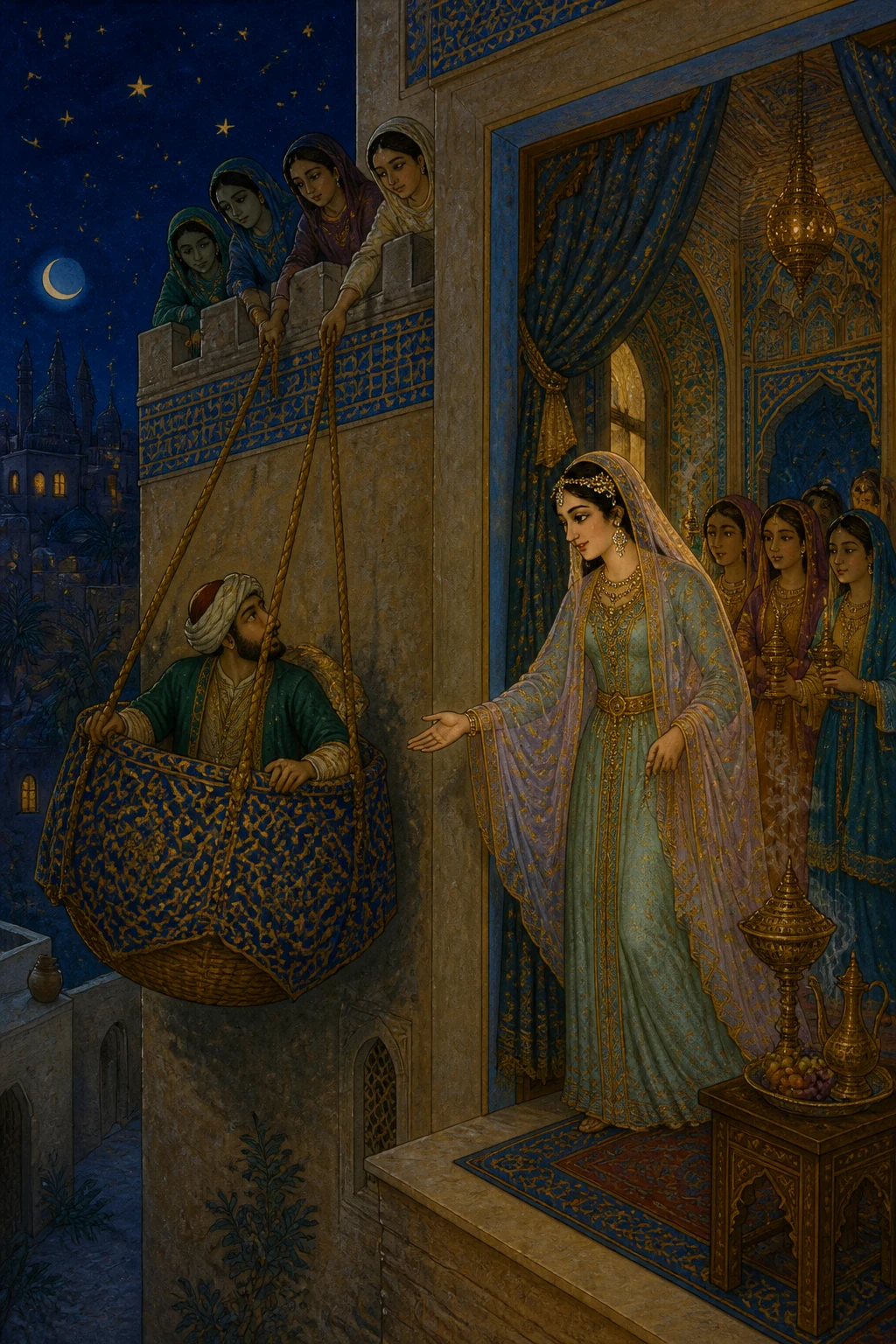
He carried the basket after her until she reached a handsome house with a spacious courtyard before it, lofty walls, and firmly built foundations. Its double doors were of ebony plated with red gold. The young woman stopped and knocked gently, and both leaves of the door swung open. The porter looked at the woman who had opened it and saw a slender girl with firm, rounded breasts, lovely in face and form. Her forehead shone like the crescent moon, her eyes were a gazelle’s, her brows like the crescent of Ramadan, her cheeks like anemones, her mouth like Solomon’s seal, and her face as radiant as the full moon. Her breasts were a matching pair of pomegranates, and beneath her clothes her belly was folded as a scroll is folded over its writing. The sight of her robbed the porter of his senses, and the basket almost fell from his head. “Never in my life,” he said, “have I known a more blessed day.” From within the doorway, the young gatekeeper welcomed the shopper and the porter. They went on into a spacious and beautifully decorated hall, with alcoves, fountains, raised seats, curtained recesses, and cupboards screened by hanging draperies. In the middle stood a marble couch inlaid with pearls and jewels, over which hung a canopy of red satin. Within it sat a young woman with eyes that held the sorcery of Babylon, a figure straight as the letter alif, and a face that put the shining sun to shame. She seemed a radiant star or a noble Arabian lady, as the poet said of her:
“Whoever compares your figure to a tender bough makes that comparison a falsehood and a slander. A bough is fairest clothed in leaves, but you are fairest naked.” The third young woman rose from the couch and walked gracefully into the middle of the hall to join her sisters. “Why are you standing there?” she said. “Take the load from this poor porter’s head.” The shopper went before him and the gatekeeper behind, while the third helped them lower his burden. They emptied the basket, put everything in its proper place, gave the porter two dinars, and said, “Go your way, porter.” He looked at the girls, their beauty and their gracious ways, and thought he had never seen their equal. Yet there were no men with them. He looked at their wine, fruit, flowers, and all the rest, and was utterly astonished. He lingered instead of leaving. “Why don’t you go?” the young woman asked. “Do you think your wages too little?” She turned to her sister. “Give him another dinar.” “By God, my ladies,” said the porter, “my wage is only two half-dirhams. I am not dissatisfied with my pay. It is you who have captured my heart and my thoughts. How can you be here alone, without any men to keep you company? You know a minaret will stand only on four supports, and you have no fourth. Women’s pleasure is not complete without men, as the poet says:
“‘Look at the four things gathered here with me: a harp, a lute, a zither, and a flute.’ You are three, and you need a fourth: a man of wit and skill who knows how to keep a secret.” They replied, “We are young women, and we fear to entrust our secrets to someone who cannot keep them. We have read these verses in old accounts:
“‘Guard your secret from others; entrust it to no one. Whoever entrusts a secret has already lost it.’” When the porter heard this, he said, “By your lives, I am a sensible, trustworthy man. I have read books and studied histories. I reveal what is good and conceal what is shameful, and I follow the poet’s words:
“‘Only a trustworthy man can keep a secret; with the best of men a secret stays concealed. My secret is in a house secured with locks: its keys are lost, its door is sealed.’” When the girls heard his verses and his fine speech, they said, “You know we have spent a great deal of money on this gathering. Have you anything to contribute? We shall not let you sit with us unless you pay as much as we have, since you wish to join us, become our drinking companion, and gaze upon our fair and lovely faces.” The mistress of the house said, “Love without money is not worth a grain.” The gatekeeper said, “If you have nothing, go away with nothing.” But the shopper said, “Sisters, let us leave him be. By God, he has served us well today. Another man would never have been so patient with us. Whatever his share comes to, I shall pay it for him.” The porter was delighted. “By God,” he said, “the first money I earned today came from you.” “Sit down,” they told him. “You are most welcome.” The shopper rose, tucked up her clothes at the waist, arranged the bottles, strained the wine, and laid out the party beside the pool. She brought everything they needed, then served the wine and sat down with her sister. The porter sat among them, thinking himself in a dream. Then she brought forward the wine bowl, filled the first cup, and drank it, and did the same with the second and the third. She filled another and handed it to her other sister, then filled one for the porter. He took the cup from her and recited:
“Drink wine and win good health, for this drink is a cure for every ill.” He added this verse: “None drinks wine but one whose heart is glad, whom drunkenness raises to a higher joy.” After these verses he kissed their hands and drank with them. Then he moved beside the mistress of the house and said, “My lady, I am your slave, your servant, and your bondsman,” and recited:
“At your door stands one of your slaves, mindful of your generosity and kindness, and grateful.” She said, “Drink with pleasure, and may it flow through you in health.” He took the cup, kissed her hand, and sang the poet’s words:
“I offered her wine sparkling like her cheeks, red, with a glow like the light of a firebrand. I kissed her, and she said, laughing, ‘How can you give people’s cheeks to people to drink?’
“I said, ‘Drink, for it is made of my tears; its redness is my blood, and my breath is mingled with it in the cup.’” The young woman took the cup, drank, and moved beside her sister. They continued dancing and singing, enjoying the fragrant flowers, with the porter among them. He embraced and kissed them, while one spoke to him, another drew him towards her, and another playfully struck him with a bunch of flowers, until the wine began to work upon their senses. When drink had mastered them, the gatekeeper rose, stripped herself naked, and threw herself into the pool. She played in the water, filled her mouth, and squirted it at the porter. Then she washed her limbs and the place between her thighs, came out of the water, and flung herself into his lap. “My darling,” she said, pointing to her sex, “what is this called?” “Your womb—God have mercy on you,” said the porter. “Oh, oh! Have you no shame?” she cried. She caught him by the neck and began slapping him. “Your vulva,” he said. “Something else.” “Your cunt.” “Something else.” “Your hornet.” She went on slapping him until his neck and the back of his head were sore. At last he said, “Then what is it called?” “Basil of the bridges,” she told him. “Thank God we are safe at last, O basil of the bridges!” said the porter.
Then they passed the cups and bowls around, and the second woman rose, took off her clothes, and threw herself into the pool. She did as the first had done, then came out and flung herself into the porter’s lap. Pointing to her sex, she said, “Light of my eyes, what is this called?” “Your vulva,” he said. “Aren’t you ashamed to say such a thing?” she cried, and gave him a slap that rang through the hall. “Basil of the bridges,” he said. “No,” she answered, raining blows and slaps on the back of his neck. “Then what is it called?” he asked. “Hulled sesame,” she said.
Then the third rose, took off her clothes, and went into the pool. She did as the others had done, then dressed and threw herself into the porter’s lap. Pointing to her sex, she too asked, “What is this called?” He offered one name after another, until at last, as she struck him, he asked, “Then what is it called?” “Abu Mansur’s inn,” she replied. “Thank God we are safe at last, O Abu Mansur’s inn!” he said.
After a while the porter rose, stripped off his clothes, and went down into the pool, his cock floating in the water. He washed as they had washed, then came out and threw himself into the mistress’s lap, laying his arms in the gatekeeper’s lap and his legs in the shopper’s. He pointed to his prick and said, “My lady, what is this called?” They all laughed at his words until they fell onto their backs. “Your cock,” they said. “No.” And he took a bite from each of them. “Your prick,” they said. “No.” And he took an embrace from each. But dawn overtook Shahrazad, and she fell silent, leaving her permitted tale untold.
When it was the tenth night
Her sister Dunyazad said, “Sister, finish your story for us.” “With love and pleasure,” she replied. “It has reached me, O fortunate king, that they went on saying, ‘Your cock, your prick,’ while he kissed, bit, and embraced them, and they laughed together. At last they asked, ‘Then what is it called?’ He said, ‘It is called the bold mule, which grazes on basil of the bridges, feeds on hulled sesame, and spends the night at Abu Mansur’s inn.’ They laughed until they fell onto their backs, then returned to their drinking. They continued thus until night fell, when they said to the porter, ‘Off with you now, and let us see the breadth of your shoulders.’ ‘By God,’ he said, ‘it would be easier for my soul to leave my body than for me to leave you. Let us join night to day, and then each of us can go our own way.’ The shopper said, ‘By my life, let him sleep here with us, so we can laugh at him. He is a charming rogue.’ They told him, ‘You may stay the night on condition that you submit to our rule: whatever you see, you must not ask about it or its cause.’ ‘Agreed,’ he said. ‘Get up, then,’ they said, ‘and read what is written on the door.’ He went to the door and found written upon it in gold: ‘Do not speak of what does not concern you, lest you hear what does not please you.’ The porter said, ‘Bear witness that I shall not speak of what does not concern me.’
“Then the shopper rose and prepared food, and they ate. They lit candles and burned aloeswood, and sat eating and drinking. Presently they heard a knock at the door, but it did not disturb their merriment. One of the women went to the door, then returned and said, ‘Our pleasure tonight is now complete. At the door I found three foreigners with shaven beards, all three blind in the left eye—what an extraordinary coincidence! They are strangers newly arrived from the land of Rum, and each has a comical appearance. If they come in, we shall have some fun with them.’ She continued coaxing her two companions until they said, ‘Let them in, but make it a condition that they do not speak of what does not concern them, lest they hear what does not please them.’ Delighted, she went out and returned with the three one-eyed men. Their beards were shaven and their moustaches twisted into fine points; they were wandering dervishes. They greeted the company and stood back, but the girls rose to receive them and offered them seats. The three men looked at the porter and saw that he was drunk. Taking him for one of their own, they said, ‘He is a dervish like us; he will keep us company.’ When the porter heard this, he rose, rolled his eyes, and said, ‘Sit down and mind your own business. Haven’t you read what is on the door?’ The girls laughed and said to one another, ‘What fun we shall have between the dervishes and the porter!’
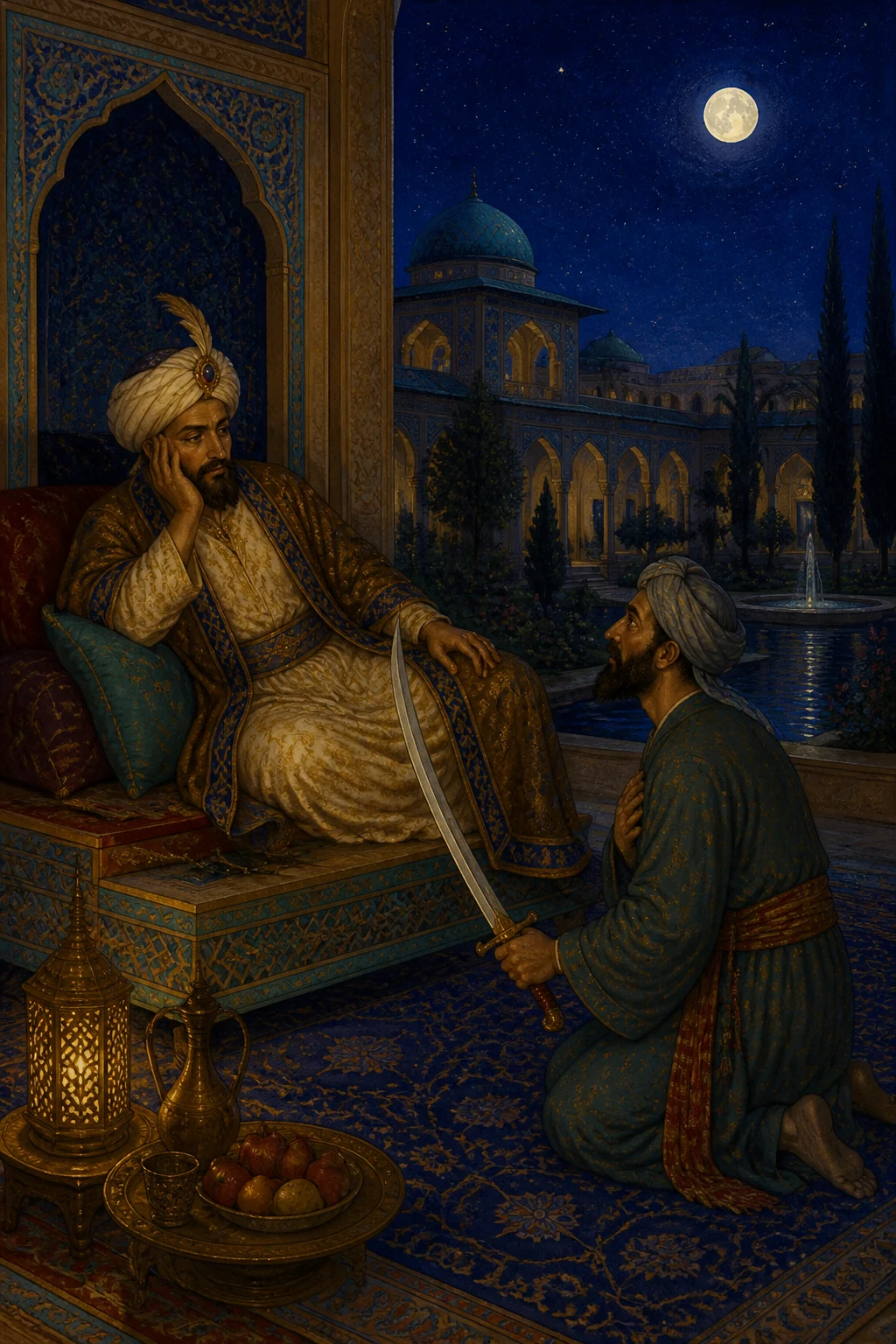
“They set food before the dervishes, who ate and then sat drinking with the others, while the gatekeeper served them. When the cup had gone round, the porter said, ‘Brothers, have you a story or an amusing tale to entertain us?’ As their spirits warmed, they asked for musical instruments. The gatekeeper brought them a Mosul tambourine, an Iraqi lute, and a Persian harp. The dervishes stood up, one taking the tambourine, another the lute, and the third the harp. They played while the girls sang, and the sound rose loud. As they were enjoying themselves, someone knocked at the door, and the gatekeeper rose to see who was there. The reason for this knocking was that the caliph Harun al-Rashid had gone out that night to see and hear what news there was, accompanied by his vizier Ja‘far and Masrur, the executioner who carried out his wrath. It was his custom to disguise himself as a merchant. As they walked through the city that night, their way brought them past the house, and they heard the music. The caliph said to Ja‘far, ‘I wish to enter this house and see who is making these sounds.’ Ja‘far replied, ‘These people are drunk, and I fear some harm may come to us from them.’ ‘We must go in,’ said the caliph. ‘I want you to devise some means of gaining us entrance.’ ‘I hear and obey,’ said Ja‘far. He went forward and knocked. When the gatekeeper opened the door, he said, ‘My lady, we are merchants from Tiberias. We have been in Baghdad for ten days with our merchandise and are lodging at the merchants’ inn. This evening a merchant invited us to his house. He served us food, and we ate, then spent an hour drinking with him before he gave us leave to depart. We went out into the night, but as we are strangers, we lost our way to the inn where we are staying. We beg your kindness to admit us for the night and let us sleep here. May you be rewarded for it.’
“The gatekeeper looked at them and saw that they had the appearance of merchants and bore themselves with dignity. She went in and consulted her companions, who said, ‘Let them in.’ She returned and opened the door. ‘May we enter with your permission?’ they asked. ‘Come in,’ she said. The caliph, Ja‘far, and Masrur entered, and the girls rose to receive and attend to them. ‘A warm welcome to our guests,’ they said. ‘We have one condition: you must not speak of what does not concern you, lest you hear what does not please you.’ They agreed, then sat down to drink and converse. The caliph looked at the three dervishes and saw that all were blind in the left eye, which astonished him. Then he looked at the girls and was bewildered by their loveliness and beauty. They continued drinking and talking, and wine was brought to the caliph, but he said, ‘I have made the pilgrimage,’ and sat apart from the others. The gatekeeper rose and set an ornamented table before him, placing on it a porcelain bowl. Into this she poured willow water, dropped a piece of ice, and mixed in sugar. The caliph thanked her, thinking, ‘Tomorrow I must reward her for this kindness.’
“They went on with their drinking, and when the wine had mastered them, the mistress of the house rose and attended to them. Then she took the shopper by the hand and said, ‘Sister, rise, and let us discharge our debt.’ ‘Yes,’ she replied. The gatekeeper rose, cleared the middle of the hall, and moved the dervishes back beyond the doorways facing them. Then the women called to the porter. ‘How little affection you show us! You are no stranger now, but one of the household.’ He rose, tucked up his clothes at the waist, and asked, ‘What do you want?’ ‘Stay where you are,’ she said. Then the shopper rose and said to him, ‘Help me.’ He saw two black bitches with chains around their necks. He took them and brought them into the middle of the hall. The mistress of the house rose, bared her forearms, took a whip, and told him, ‘Bring one of them forward.’ He drew her forward by the chain. The bitch wept and shook her head at the young woman, who began striking her on the head. The bitch howled, but she went on beating her until her arms grew weary. Then she threw down the whip, clasped the bitch to her breast, wiped away her tears, and kissed her head. ‘Take her back and bring the other,’ she told the porter. He brought the second, and she treated her as she had the first. At this the caliph’s heart was troubled and his breast tightened. He signalled to Ja‘far to question her, but Ja‘far motioned to him to remain silent.
“Then the mistress of the house turned to the gatekeeper and said, ‘Rise and discharge what you owe.’ ‘Yes,’ she replied. The mistress mounted a marble couch plated with gold and silver and said to the gatekeeper and the shopper, ‘Bring what you have.’ The gatekeeper seated herself on a couch beside her, while the shopper went into a chamber and brought out a satin bag with green fringes. Standing before the mistress of the house, she shook out the bag and took a lute from it. She tuned its strings and sang these verses:
“‘Restore to my eyelids the sleep that was stolen, and tell me where my reason has gone. When I chose love for my dwelling, I knew sleep had taken offence at my eyes. They said, “We knew you as a man of good sense. What led you astray?” I said, “Seek the cause in his glance.” I beg his pardon for my spilled blood, saying, “I have put him to the trouble of shedding it.” He cast the sun of his beauty into the mirror of my thoughts, and its reflection kindled fire within me. God fashioned him from the water of life, and let what remained run cool and sweet between his teeth. What do you think of a lover who, whenever you are named, complains or weeps, yearns or rejoices? When he would drink, he sees your image in the clear water and is refreshed before he has drunk.’ She also sang:
“‘I am drunk with his glance, not his wine; my eyes droop in sleep at his swaying grace. It is not the wine that consoles me, but his cheeks; not the vintage that steals my senses, but his charms. The curls twisted at his temples have twisted my resolve, and what his robes conceal has carried off my reason.’ When the young woman heard this, she said, ‘May God gladden you!’ Then she tore her clothes and fell to the floor unconscious. As her body was exposed, the caliph saw the marks of rods and whips upon it and was utterly astonished. The gatekeeper rose, sprinkled water on her face, brought her a fresh robe, and dressed her in it. The caliph said to Ja‘far, ‘Do you not see this woman and the marks of beating upon her? I cannot keep silent about this. I shall have no peace until I learn the truth of this girl’s story and the story of those two bitches.’ Ja‘far replied, ‘My lord, they imposed a condition upon us: we must not speak of what does not concern us, lest we hear what does not please us.’ Then the shopper rose, took the lute, rested it against her breast, touched the strings with her fingertips, and sang:
“‘If we complain of love, what will you say? If we perish of longing, what remedy is there? If we send messengers to speak for us, no messenger can convey a lover’s grief. If we endure, little life remains to us after the loss of those we love. There is nothing but regret, then sorrow, and tears flowing down our cheeks. You who are absent from my sight still dwell within my heart. Have you kept faith, in absence, with a lover who will never turn from you? Or, in your distance, have you forgotten one whom grief for you has wasted and made thin? When resurrection gathers us together, I shall ask our Lord to make the reckoning long.’ When the second woman heard the shopper’s song, she tore her clothes as the first had done, screamed, and threw herself to the floor unconscious. The shopper rose, sprinkled water on her face, and dressed her in another robe. Then the third woman rose, sat on a couch, and said to the shopper, ‘Sing to me, so that I too may discharge my debt. Only this song remains.’ The shopper tuned the lute and sang these verses:
“‘How long must this coldness and estrangement last? Enough tears have flowed from my eyes. How long you have deliberately kept me far from you! If you meant to please my envier, he is well satisfied. If treacherous time were ever fair to lovers, it would never favour those who blame them. To whom shall I reveal my longing, O you who slay me? How hopeless the complaint when faithfulness is gone! My passion for you only deepens into yearning; when have you ever made a promise that I have not seen you break? O Muslims, avenge a lover whose eyes have grown accustomed to wakefulness and never sleep! Is it lawful in the faith of love that I should be abased while another is honoured with union? I have delighted in the burden of loving you, while my reprover labours to condemn my love.’ When the third woman heard the poem, she screamed, tore her clothes, and fell to the floor unconscious. As her body was exposed, the same marks of beating with rods appeared upon it as on the woman before her. The dervishes said, ‘Would that we had never entered this house and had spent the night on the rubbish heaps instead! Our night here has been spoiled by something that breaks the back.’ The caliph turned to them. ‘Why is that?’ he asked. ‘Our minds are troubled by this affair,’ they said. ‘Are you not members of this household?’ asked the caliph. ‘No,’ they replied. ‘We thought this place belonged to the man beside you.’ The porter said, ‘By God, I never saw this place before tonight. Would that I had slept on the rubbish heaps rather than here!’ They all said, ‘We are seven men, and they are only three women, with no fourth to help them. Let us question them about their circumstances. If they will not answer willingly, they shall answer by force.’ They agreed on this, but Ja‘far said, ‘This is no wise plan. Leave them alone. We are their guests, and they imposed a condition which we should honour. Little of the night remains; then each of us can go his own way.’ He signalled to the caliph and said, ‘Only an hour remains. Tomorrow you can summon them before you and question them about their story.’ But the caliph refused. ‘I can wait no longer to learn their story,’ he said. Much talk and argument passed among them. Then they asked, ‘Who shall question them?’ Someone said, ‘The porter.’ The women asked, ‘What are you all talking about?’ The porter rose and said to the mistress of the house, ‘My lady, I ask you by God, and adjure you in His name, to tell us about the two bitches. Why do you punish them, then weep over them and kiss them? And tell us why your sister has been beaten with rods. That is our question, and no more.’
“The mistress of the house said to the company, ‘Is what he says truly your wish?’ They all answered yes, except Ja‘far, who remained silent. When the young woman heard their answer, she said, ‘By God, our guests, you have grievously wronged us. We warned you beforehand that whoever spoke of what did not concern him would hear what did not please him. Was it not enough that we admitted you to our house and fed you with our food? Yet the fault is not yours, but hers who brought you to us.’ Then she bared her forearms, struck the floor three times, and cried, ‘Quickly!’ A cupboard door opened, and seven slaves emerged with drawn swords in their hands. ‘Bind these chatterers’ arms behind their backs,’ she said, ‘and tie them to one another.’ They did so, then said, ‘Lady, give us leave to strike off their heads.’ ‘Grant them a little time,’ she replied, ‘so that I may ask about their circumstances before you strike off their heads.’ The porter said, ‘For God’s sake, my lady, do not kill me for another’s offence. All of them did wrong and shared in the sin except me. By God, ours would have been a pleasant night had we been spared these dervishes, who would lay a flourishing city waste if they entered it.’ Then he recited:
“‘How fair is pardon from one who has power, especially for one who has no defender! By the affection that lies between us, do not kill the first for the last.’” When the porter finished speaking, the young woman laughed. But dawn overtook Shahrazad, and she fell silent, leaving her permitted tale untold.
When it was the eleventh night
She said, “It has reached me, O fortunate king, that when the young woman laughed after her anger, she turned to the company and said, ‘Tell me your stories, for you have only an hour left to live. If you were not men of rank, leaders of your people, or rulers, I would have hastened your punishment.’ The caliph said, ‘Confound you, Ja‘far! Tell her who we are, or she will kill us.’ ‘It is only part of what we deserve,’ Ja‘far replied. ‘This is no time for jesting,’ said the caliph. ‘Jest and earnest each have their proper time.’ Then the young woman turned to the dervishes and asked, ‘Are you brothers?’ ‘No, by God,’ they said. ‘We are merely poor men who have fallen into the barber’s hands.’ She asked one of them, ‘Were you born blind in one eye?’ ‘No, by God,’ he replied. ‘An extraordinary thing befell me when I lost my eye. Its story, if written with needles upon the inner corners of the eyes, would be a lesson to all who take heed.’ She questioned the second and the third, and they gave the same answer as the first. Then they said, ‘Each of us comes from a different country, and our tales are wondrous and our adventures strange.’ The young woman turned to them and said, ‘Let each of you tell his story and explain what brought him to our house. Then he may stroke his head and go his way.’ The first to come forward was the porter. ‘My lady,’ he said, ‘I am a porter. This shopper hired me to carry her purchases and brought me here. What happened between us happened, and that is my story, no more.’ ‘Stroke your head and go,’ she told him. ‘By God,’ he said, ‘I shall not leave until I have heard my companions’ stories.’”
Izvirnik
حكاية الحمَّال مع البنات - الليالي ٩ إلى ١١
Naslednje strani prikazujejo izvirno besedilo za primerjavo.
فلما كانت الليلة ٩
وما هذا بأعجب ممَّا جرى للحمَّال؛ فإنه كان إنسانًا من مدينة بغداد، وكان أعزب، وكان حمَّالًا، فبينما هو في السوق يومًا من الأيام متكئًا على قفصه، إذ وقفَتْ عليه امرأة ملتفَّة بإزار موصلي من حرير مزركش بالذهب، وحاشيتاه من قصب، فرفعت قناعها، فبان من تحته عيون سود بأهداب وأجفان، وهي ناعمة الأطراف، كاملة الأوصاف، وبعد ذلك قالت بحلاوة لفظها: هاتِ قفصك واتبعني. فما صدق الحمَّال بذلك، وأخذ القفص وتبعها إلى أن وقفت على باب دار، فطرقت الباب فنزل لها رجل نصراني، فأعطته دينارًا، وأخذت منه مقدارًا من الزيتون، ووضعته في القفص، وقالت له: احمله واتبعني. فقال الحمَّال: هذا واللهِ نهارٌ مبارك. ثم حمل القفص وتبعها، فوقفت على دكان فكهاني، واشترت منه تفاحًا شاميًّا، وسفرجلًا عثمانيًّا، وخوخًا عمانيًّا، وياسمينًا حلبيًّا، ونينوفرًا دمشقيًّا وخيارًا نيليًّا، وليمونًا مصريًّا، وأترجًّا سلطانيًّا، ومرسينًا ريحانيًّا، وتمر حنا، وأقحوانًا، وشقائق النعمان، وبنفسجًا، وجلنارًا، ونسرينًا، ووضعت الجميع في قفص الحمَّال، وقالت له: احمل. فحمل وتبعها حتى وقفت على جزار، وقالت له: اقطع عشرة أرطال لحمًا. فقطع لها، ولفَّت اللحم في ورق موز، ووضعته في القفص، وقالت له: احمل يا حمَّال. فحمل وتبعها، ثم وقفت على النقلي، وأخذت من سائر النقل، وقالت للحمَّال: احمل واتبعني. فحمل القفص وتبعها إلى أن وقفت على دكان الحلواني، واشترت طبقًا، وملأته من جميع ما عنده من مشبك، وقطائف بالمسك محشية، وصابونية، وأقراص ليمونية، وميمونية، وأمشاط، وأصابع، ولقيمات القاضي، ووضعت جميع أنواع الحلاوة في الطبق، ووضعته في القفص، فقال الحمال: لو أعلمتِني لجئتُ معي ببغل نحمل عليه هذه الأمور. فتبسَّمَتْ ثم وقفت على العطَّار، واشترت منه عشرة مياه من ماء ورد، وماء زهر، وماء خلاف، وغير ذلك، وأخذت قدرًا من السكر، وأخذت مرش ماء ورد ممسك، وحصى لبان ذكر، وعودًا وعنبرًا ومسكًا، وأخذت شمعًا إسكندرانيًّا، وضعت الجميع في القفص، وقالت: احمل قفصك واتبعني.
فحمل القفص وتبعها به إلى أن أتت دارًا مليحة، وقدامها رحبة فسيحة، وهي عالية البنيان، مشيدة الأركان، بابها بشقتين من الأبنوس، مصفَّح بصفائح الذهب الأحمر، فوقفت الصبية على الباب ودقَّتْ دقًّا لطيفًا، وإذا بالباب انفتح بشقتيه، فنظر الحمَّال إلى مَن فتح لها الباب، فوجدها صبية رشيقة القد، قاعدة النهد، ذات حسن وجمال، وقَدٍّ واعتدال، وجبين كغرة الهلال، وعيون كعيون الغزلان، وحواجب كهلال رمضان، وخدود مثل شقائق النعمان، وفم كخاتم سليمان، ووجه كالبدر في الإشراق، ونهدَيْن كرمانيتين باتفاق، وبطن مطوي تحت الثياب كطيِّ السجل للكتاب؛ فلما نظر الحمال إليها سلبت عقله، وكاد القفص أن يقع من فوق رأسه، ثم قال: ما رأيت عمري أبرك من هذا النهار. فقالت الصبية البوابة للدلالة والحمَّال: مرحبًا. وهي من داخل الباب، ومشوا حتى انتهوا إلى قاعة فسيحة مزركشة مليحة، ذات تراكيب وشازروانات ومصاطب، وسدلات وخزائن عليها الستور مرخيَّات، وفي وسط القاعة سرير من المرمر مرصَّع بالدر والجوهر، منصوب عليه ناموسية من الأطلس الأحمر، ومن داخله صبية بعيون بابلية، وقامة ألفية، ووجه يُخجِل الشمسَ المضيَّة، فكأنها بعض الكواكب الدرية، أو عقيلة عربية، كما قال فيها الشاعر:
مَنْ قَاسَ قَدَّكَ بِالْغُصْنِ الرَّطِيبِ فَقَدْ أَضْحَى الْقِيَاسُ بِهِ زُورًا وَبُهْتَانَا
الْغُصْنُ أَحْسَنُ مَا نَلْقَاهُ مُكْتَسِيًا وَأَنْتَ أَحْسَنُ مَا نَلْقَاكَ عُرْيَانَا
فنهضت الصبية الثالثة من فوق السرير، وخطرت قليلًا إلى أن صارت في وسط القاعة عند أختَيْها، وقالت: ما وقوفكم؟ حطوا عن رأس هذا الحمال المسكين. فجاءت الدلالة من قدامه، والبوابة من خلفه، وساعدتهما الثالثة، وحططن عن الحمَّال، وفرَّغن ما في القفص، وصفوا كل شيء في محله، وأعطين الحمَّال دينارين، وقلن له: توجَّهْ يا حمَّال. فنظر إلى البنات، وما هن فيه من الحسن والطبائع الحسان، فلم يَرَ أحسن منهن، ولكن ليس عندهن رجال، ونظر ما عندهن من الشراب والفواكه والمشمومات، وغير ذلك؛ فتعجب غاية العجب، ووقف عن الخروج، فقالت له الصبية: ما لك لا تروح؟! هل أنت استقلَلْتَ الأجرة؟ والتفتت إلى أختها وقالت لها: أعطيه دينارًا آخر. فقال الحمال: والله يا سيداتي إن أجرتي نصفان، وما استقلَلْتُ الأجرة، وإنما اشتغل قلبي وسري بكن، وكيف حالكن وأنتن وحدكن، وما عندكن رجال، ولا أحد يؤانسكن؟ وأنتن تعرفن أن المنارة لا تثبت إلا على أربعة، وليس لكنَّ رابع، وما يكمل حظ النساء إلا بالرجال كما قال الشاعر:
انْظُرْ إِلَى أَرْبَعٍ عِنْدِي قَدِ اجْتَمَعَتْ جُنْكٌ وَعُودٌ وَقَانُونٌ وَمِزْمَارُ
أنتن ثلاثة فتفتقرن إلى رابع يكون رجلًا لبيبًا حاذقًا وللأسرار كاتمًا، فقلن له: نحن بنات، ونخاف أن نودع السِّرَّ عند مَن لا يحفظه، وقد قرأنا في الأخبار شعرًا:
صُنْ عَنْ سِوَاكَ السِّرَّ لَا تُودِعْهُ مَنْ أَوْدَعَ السِّرَّ فَقَدْ ضَيَّعَهُ
فلما سمع الحمال كلامهن قال: وحياتكن إني رجل عاقل أمين، قرأت الكتب، وطالعت التواريخ، أُظهِر الجميلَ، وأُخفِي القبيح، وأعمل بقول الشاعر:
لَا يَكْتُمُ السِّرَّ إِلَّا كُلُّ ذِي ثِقَةٍ وَالسِّرُّ عِنْدَ خِيَارِ النَّاسِ مَكْتُومُ
السِّرُّ عِنْدِيَ فِي بَيْتٍ لَهُ عَلَقٌ ضَاعَتْ مَفَاتِحُهُ وَالْبَابُ مَخْتُومُ
فلما سمعت البنات الشعرَ وما أبداه من الكلام، قلن له: أنت تعلم أننا غرمنا على هذا المقام جملة من المال، فهل معك شيء تجازينا به؟ فنحن لا ندعك تجلس عندنا حتى تغرم مبلغنا من المال؛ لأن خاطرك أن تجلس عندنا، وتصير نديمنا، وتطلع على وجوهنا الصِّباح الملاح. فقالت صاحبة الدار: إذا كانت بغير المال محبة فلا تساوي وزن حبة. وقالت البوابة: إن لم يكن معك شيء رُحْ بلا شيء. فقالت الدلالة: يا أختي، نكفُّ عنه، فواللهِ ما قصَّرَ اليومَ معنا، ولو كان غيره ما طوَّل روحه علينا، ومهما جاء عليه أغرمه عنه. ففرح الحمَّال، وقال: والله ما استفتحت بالدراهم إلا منكِ. فقلن له: اجلس على الرأس والعين. وقامت الدلالة وشدَّتْ وسطها، وصفت القناني، وروقت المدام، وعملت الحضرة على جانب البحر، وأحضرت ما يحتاجون إليه، ثم قدمت المُدام، وجلست هي وأختها، وجلس الحمال بينهن، وهو يظن أنه في المنام؛ ثم قدمت باطية المدام، وملأت أول قدح وشربته والثاني والثالث، ثم ملأت وناولت أختها الأخرى، ثم ملأت وناولت الحمَّال، فأخذ الحمَّال منها الكأس وأنشد هذا الشعر:
اشْرَبِ الرَّاحَ فَائِزًا بِالْعَوَافِي إِنَّ هَذَا الشَّرَابَ لِلدَّاءِ شَافِ
وقال أيضًا هذا البيت:
لَا يَشْرَبُ الرَّاحَ إِلَّا مَنْ بِهِ طَرَبٌ يَكُونُ بِالسُّكْرِ فِي أَفْرَاحِهِ رَاقِي
وبعد هذا الشعر قبَّل أيديهن وشرب معهن، ثم نزل عند صاحبة المحل وقال: يا سيدتي، أنا عبدك ومملوكك وخَدَّامك، وأنشد يقول:
عَلَى الْبَابِ عَبْدٌ مِنْ عَبِيدِكِ وَاقِفٌ بِجُودِكِ وَالْإِحْسَانِ وَالشُّكْرِ عَارِفُ
فقالت: اشرب هنيئًا وعافية في مجاري الصحة. فأخذ الكأس وقبَّلَ يدها وترنَّمَ بقول الشاعر:
نَاوَلْتُهَا شِبْهَ خَدَّيْهَا مُشَعْشَعَةً حَمْرَاءَ يَحْكِي سَنَاهَا ضَوْءَ مِقْبَاسِ
فَقَبَّلْتُهَا وَقَالَتْ وَهْيَ ضَاحِكَةٌ: فَكَيْفَ تَسْقِي خُدُودَ النَّاسِ لِلنَّاسِ؟
قُلْتُ: اشْرَبِي فَهْيَ مِنْ دَمْعِي وَحُمْرَتُهَا دَمِي وَمَازَجَهَا فِي الْكَأْسِ أَنْفَاسِي
فأخذت الصبية القدح وشربته ونزلت عند أختها، ولا زلن والحمَّال بينهن في رقص وغناء ومشمومات، ولم يزل الحمال معهن في عناق وتقبيل، وهذه تكلمه وهذه تجذبه، وهذه بالمشموم تضربه، وهو معهنَّ حتى لعبت الخمرة بعقولهم، فلما تحكَّمَ الشرابُ معهم قامت البوابة، وتجرَّدت من ثيابها وصارت عريانة، ثم رمت نفسها في تلك البحيرة، ولعبت في الماء، وأخذت الماء في فمها وبخت الحمَّال، ثم غسلت أعضاءها وما بين فخذيها، ثم طلعت من الماء ورمت نفسها في حجر الحمَّال، وقالت له: يا حبيبي، ما اسم هذا؟ وأشارت إلى فرجها، فقال الحمَّال: رحمك الله. فقالت: يوه يوه، أما تستحي! ومسكته من رقبته، وصارت تصكه، فقال: فرجك. فقالت: غيره. فقال: كسك. فقالت: غيره. فقال: زنبورك. فلم تزل تصكه حتى ذاب قفاه ورقبته من الصك، ثم قال لها: وما اسمه؟ فقالت له: حبق الجسور. فقال الحمال: الحمد لله على السلامة يا حبق الجسور.
ثم إنهم أداروا الكأس والطاس، فقامت الثانية وخلعت ثيابها، ورمت نفسها في تلك البحيرة، وعملت مثل الأولى، وطلعت ورمت نفسها في حجر الحمَّال، وأشارت إلى فرجها وقالت: يا نور عيني، ما اسم هذا؟ قال: فرجك. قالت: أَمَا يقبح عليك هذا الكلام! وصكته كفًّا طَنَّ له سائر ما في القاعة، فقال: حبق الجسور. فقالت: لا. والضرب والصك على قفاه، فقال لها: وما اسمه؟ فقالت له: السمسم المقشور.
ثم قامت الثالثة وخلعت ثيابها، ونزلت تلك البحيرة، وفعلت مثل مَن قبلها، ثم لبست ثيابها، وألقت نفسها في حجر الحمَّال، وقالت له أيضًا: ما اسم هذا؟ وأشارت الى فرجها، فصار يقول لها كذا وكذا، إلى أن قال لها وهي تضربه: وما اسمه؟ فقالت: خان أبي منصور. فقال: الحمد لله على السلامة يا خان أبي منصور.
ثم بعد ساعة قام الحمَّال ونزع ثيابه ونزل في البحيرة، وذكره يسبح في الماء، وغسل مثل ما غسلن، ثم طلع ورمى نفسه في حجر سيدتهن، ورمى ذراعَيْه في حجر البوابة، ورمى رجلَيْه في حجر الدلَّالة، ثم أشار إلى أيره، وقال: يا سيدتي، ما اسم هذا؟ فضحك الكل على كلامه حتى انقلبن على ظهورهن، وقلن: زبك. قال: لا. وأخذ من كل واحدة عضة، قلن: أيرك. قال: لا. وأخذ من كل واحدة حضنًا. وأدرك شهرزاد الصباح فسكتَتْ عن الكلام المباح.
فلما كانت الليلة ١٠
قالت لها أختها دنيازاد: يا أختي، أتممي لنا حديثك. قالت: حبًّا وكرامة. قد بلغني أيها الملك السعيد أنهن لم يزلن يقلن زبك أيرك، وهو يقبِّل ويعضُّ ويعانق، وهن يتضاحكن، إلى أنْ قلنَ له: وما اسمه؟ قال: اسمه البغل الجسور، الذي يرعى حبق الجسور، ويعلق بالسمسم المقشور، ويبيت في خان أبي منصور. فضحكن حتى استلقين على ظهورهن، ثم عادوا إلى منادمتهم، ولم يزالوا كذلك إلى أن أقبل الليل عليهم، فقلن للحمال: توجَّهْ وأرِنَا عرْضَ أكتافك. فقال الحمال: واللهِ خروج الروح أهون من الخروج من عندكن، دعونا نصل الليل بالنهار، وكلٌّ منَّا يروح إلى حال سبيله. فقالت الدلالة: بحياتي عندكن تدعنه ينام عندنا نضحك عليه؛ فإنه خليع ظريف. فقلن له: تبيت عندنا بشرط أن تدخل تحت الحكم، ومهما رأيته لا تسأل عنه، ولا عن سببه. فقال: نعم. فقلن: قُمْ، واقرأ ما على الباب مكتوبًا. فقام إلى الباب فوجد مكتوبًا عليه بماء الذهب: لا تتكلَّمْ فيما لا يعنيك، تسمع ما لا يرضيك. فقال الحمَّال: اشهدوا أني لا أتكلم فيما لا يعنيني.
ثم قامت الدلالة جهَّزَتْ لهم مأكولًا فأكلوا، ثم أوقدوا الشمع والعود، وقعدوا في أكل وشرب، وإذا هم سمعوا دقَّ الباب، فلم يختل نظامهم، فقامت واحدة منهن إلى الباب، ثم عادت وقالت: قد كمل صفانا في هذه الليلة؛ لأني وجدت بالباب ثلاثةَ أعاجم ذقونهم محلوقة، وهم الثلاثة عور بالعين الشمال، وهذا من أعجب الاتفاق، وهم ناس غرباء قد حضروا من أرض الروم، ولكل واحد منهم شكل وصورة مضحكة، فإن دخلوا نضحك عليهم. ولم تزل تتلطَّف بصاحبتَيْها حتى قالتَا لها: دعيهم يدخلون، واشرطي عليهم ألَّا يتكلموا فيما لا يعنيهم، فيسمعوا ما لا يرضيهم. ففرحت وراحت، ثم عادت ومعها الثلاثة العور، ذقونهم محلوقة، وشواربهم مبرومة ممشوقة، وهم صعاليك، فسلَّموا وتأخَّروا، فقامت لهم البنات وأقعدوهم، فنظر الثلاثة رجال إلى الحمَّال فوجدوه سكران، فلما عاينوه ظنوا أنه منهم، وقالوا: هو صعلوك مثلنا يؤانسنا. فلما سمع الحمال هذا الكلام قام وقلب عينيه، وقال لهم: اقعدوا بلا فضول، أما قرأتم ما على الباب؟ فضحك البنات وقلن لبعضهن: إننا نضحك بين الصعاليك والحمال.
ثم وضعن الأكل للصعاليك، فأكلوا ثم جلسوا يتنادمون، والبوابة تسقيهم، ولما دار الكأس بينهم قال الحمال للصعاليك: يا إخوتنا، هل معكم حكاية أو نادرة تسلوننا بها؟ فدبَّتْ فيهم الحرارة، وطلبوا آلات اللهو، فأحضرت لهم البوابة دفًّا موصليًّا، وعودًا عراقيًّا، وجنكًا عجميًّا، فقام الصعاليك واقفين، وأخذ واحدٌ منهم الدفَّ، وأخذ واحدٌ العودَ، وأخذ واحدٌ الجنكَ، وضربوا بها، وغنَّت البنات، وصار لهم صوت عالٍ، فبينما هم كذلك وإذا بطارق يطرق الباب، فقامت البوابة لتنظر مَن بالباب، وكان السبب في دقِّ الباب أن في تلك الليلة نزل الخليفة هارون الرشيد لينظر ويسمع ما يتجدَّد من الأخبار هو وجعفر وزيره، ومسرور سيَّاف نقمته، وكان من عادته أن يتنكَّرَ في صفة التجَّار، فلما نزل تلك الليلة ومشى في المدينة، جاءت طريقهم على تلك الدار فسمعوا آلات الملاهي، فقال الخليفة لجعفر: إني أريد أن ندخل هذه الدار، ونشاهد صاحب هذه الأصوات. فقال جعفر: هؤلاء قوم قد دخل السُّكْر فيهم، ونخشى أن يصيبنا منهم شر. فقال: لا بد من دخولنا، وأريد أن تتحيَّل حتى ندخل عليهم. فقال جعفر: سمعًا وطاعة. ثم تقدَّمَ جعفر وطرق الباب، فخرجت البوابة وفتحت الباب، فقال لها: يا سيدتي، نحن تجار من طبرية، ولنا في بغداد عشرة أيام، ومعنا تجارة ونحن نازلون في خان التجار، وعزم علينا تاجر في هذه الليلة فدخلنا عنده، وقدَّمَ لنا طعامًا فأكلنا، ثم تنادمنا عنده ساعة، ثم أذن لنا بالانصراف، فخرجنا بالليل ونحن غرباء، فتهنا عن الخان الذي نحن فيه، فنرجو من مكارمكم أن تدخلونا هذه الليلة نبيت عندكم، ولكم الثواب.
فنظرت البوابة إليهم فوجدتهم بهيئة التجار، وعليهم الوقار، فدخلت لصاحبتيها وشاورتهما، فقالتا لها: أدخليهم. فرجعت وفتحت لهم الباب، فقالوا: أندخل بإذنك؟ قالت: ادخلوا. فدخل الخليفة وجعفر ومسرور، فلما رأتهم البنات قمن لهم وخدمنهم، وقلنا: مرحبًا وأهلًا وسهلًا بأضيافنا، ولنا عليكم شرط ألَّا تتكلموا فيما لا يعنيكم، فتسمعوا ما لا يرضيكم. قالوا: نعم. وبعد ذلك جلسوا للشراب والمنادمة، فنظر الخليفة إلى الثلاثة الصعاليك، فوجدهم عور بالعين الشمال، فتعجَّبَ منهم، ونظر إلى البنات وما هم فيه من الحُسْن والجمال فتحيَّر وتعجَّب، واستمروا في المنادمة والحديث، وأتين للخليفة بشراب، فقال: أنا حاج. وانعزل عنهم، فقامت البوابة وقدَّمت له صفرة مزركشة، ووضعت عليها باطية من الصيني، وسكبت فيها ماء الخلاف، وأرخت فيه قطعة من الثلج، ومزجته بسكر، فشكرها الخليفة، وقال في نفسه: لا بد أن أجازيها في غَدٍ على فعلها من صنيع الخير.
ثم اشتغلوا بمنادمتهم، فلما تحكَّمَ الشراب قامت صاحبة البيت وخدمتهم، ثم أخذت بيد الدلالة وقالت: يا أختي، قومي لنقضي دَيننا. فقالت لها: نعم. فعند ذلك قامت البوابة، وأطلعت الصعاليك خلف الأبواب قدامهن، وذلك بعد أن أخلت وسط القاعة، ونادَيْنَ الحمَّالَ وقلن له: ما أقل مودتك! ما أنت غريب، بل أنت من أهل الدار. فقام الحمال وشدَّ وسطه وقال: ما تريدين؟ فقالت: قف مكانك. ثم قامت الدلالة وقالت للحمال: ساعدني. فرأى كلبتين من الكلاب السود في رقبتيهما جنازير. فأخذهما الحمَّال ودخل بهما إلى وسط القاعة، فقامت صاحبة المنزل، وشمَّرت عن معصمها، وأخذت سوطًا وقالت للحمال: قدِّمْ كلبةً منهما. فجرَّها في الجنزير وقدَّمَها، والكلبة تبكي وتحرِّك رأسها إلى الصبية، فنزلت الصبية عليها بالضرب على رأسها والكلبة تصرخ، ولا زالت تضربها حتى كلَّتْ سواعدها، فرمت السوط من يدها، ثم ضمَّت الكلبة إلى صدرها، ومسحت دموعها، وقبَّلَتْ رأسها، ثم قالت للحمَّال: رُدَّها وهات الثانية. فجاء بها، وفعلت بها مثل ما فعلت بالأولى، فعند ذلك اشتغل قلب الخليفة، وضاق صدره، وغمز جعفر أن يسألها، فقال له بالإشارة: اسكت.
ثم التفتت صاحبة البيت للبوابة، وقالت لها: قومي لقضاء ما عليك. قالت: نعم. ثم إن صاحبة البيت صعدت على سرير من المرمر مصفَّح بالذهب والفضة، وقالت للبوابة والدلالة: ائتيَا بما عندكما. فأما البوابة فإنها صعدت على سريرٍ بجانبها، وأما الدلالة فإنها دخلت مخدعًا، وأخرجت منه كيسًا من الأطلس بأهداب خضر، ووقفت قدام الصبية صاحبة المنزل، ونفضت الكيس، وأخرجت منه عودًا، وأصلحت أوتاره، وأنشدت هذه الأبيات:
رُدَّا عَلَى جَفْنِيَ النَّوْمَ الَّذِي سُلِبَا وَخَبِّرَانِي بِعَقْلِي أَيَّةً ذَهَبَا
عَلِمْتُ لَمَّا رَضِيتُ الْحُبَّ مَنْزِلَةً أَنَّ الْمَنَامَ عَلَى جَفْنَيَّ قَدْ غَضِبَا
قَالُوا عَهِدْنَاكَ مِنْ أَهْلِ الرَّشَادِ فَمَا أَغْوَاكَ؟ قُلْتُ اطْلُبُوا مِنْ لَحْظِهِ السَّبَبَا
إِنِّي لَهُ عَنْ دَمِ الْمَسْفُوكِ مُعْتَذِرٌ أَقُولُ حَمَّلْتُهُ فِي سَفْكِهِ تَعَبَا
أَلْقَى بِمِرْآةِ فِكْرِي شَمْسَ صُورَتِهِ فعَكْسُهَا شَبَّ فِي أَحْشَائِيَ اللَّهَبَا
مَنْ صَاغَهُ اللهُ مِنْ مَاءِ الْحَيَاةِ وَقَدْ أَجْرَى بَقِيَّتَهُ فِي ثَغْرِه شَنَبَا
مَاذَا تَرَى فِي مُحِبٍّ مَا ذُكِرْتَ لَهُ إلَّا شَكَا أَوْ بَكَى أَوْ حَنَّ أَوْ طَرِبَا
يَرَى خَيَالَكَ فِي الْمَاءِ الزُّلَالِ إِذَا رَامَ الشَّرَابَ فَيُرْوَى وَهْوَ مَا شَرِبَا
وأنشدت أيضًا:
سَكِرْتُ مِنْ لَحْظِهِ لَا مِنْ مُدَامَتِهِ وَمَالَ بِالنَّوْمِ عَيْنِي عَنْ تَمَايُلِهِ
فَمَا السُّلَافُ سَلَتْني بَلْ سَوَالِفُهُ وَمَا الشَّمُولُ شَلَتْنِي بَلْ شَمَائِلُهُ
لَوَى بِعَزْمِي أَصْدَاغٌ لَوَيْنَ لَهُ وَغَالَ عَقْلِي بِمَا تَحْوِي غَلَائِلُهُ
فلما سمعت الصبية ذلك قالت: طيَّبَكِ الله. ثم شقَّتْ ثيابها، ووقعت على الأرض مغشيًّا عليها، فلما انكشف جسدها رأى الخليفة أثر ضرب المقارع والسياط، فتعجَّبَ من ذلك غاية العجب، فقامت البوابة ورشَّتِ الماءَ على وجهها، وأتَتْ إليها بحلة وألبستها إيَّاها، فقال الخليفة لجعفر: أَمَا تنظر إلى هذه المرأة، وما عليها من أثر الضرب، فأنا لا أقدر أن أسكت على هذا، ولا أستريح إلا إن وقفتُ على حقيقة خبر هذه الصبية، وحقيقة خبر هاتين الكلبتين. فقال جعفر: يا مولانا، قد شرطوا علينا شرطًا وهو ألَّا نتكلَّم فيما لا يعنينا، فنسمع ما لا يرضينا. ثم قامت الدلالة فأخذت العود، وأسندته إلى نهدها، وغمزته بأناملها، وأنشدت تقول:
إِنْ شَكَوْنا الْهَوَى فَمَاذَا تَقُولُ أَوْ تَلِفْنَا شَوْقًا فَمَاذَا السَّبِيلُ
أَوْ بَعَثْنَا رُسْلًا تُتَرْجِمُ عَنَّا مَا يُؤَدِّي شَكْوَى الْمُحِبِّ رَسُولُ
أَوْ صَبَرْنَا فَمَا لَنَا مِنْ بَقَاءٍ بَعْدَ فَقْدِ الْأَحْبَابِ إِلَّا قَلِيلُ
لَيْسَ إِلَّا تَأَسُّفًا ثُمَّ حُزْنًا وَدُمُوعًا عَلَى الْخُدُودِ تَسِيلُ
أَيُّهَا الْغَائِبُونَ عَنْ لَمْحِ عَيْنِي أَنْتُمُ فِي الْفُؤَادِ مِنِّي حُلُولُ
هَلْ حَفَظْتُمْ فِي الْغَيْبِ عَهْدًا لِصَبٍّ لَيْسَ عَنْهُ مَدَى الزَّمَانِ يَحُولُ
أَمْ نَسِيتُمْ عَلَى التَّبَاعُدِ صَبًّا شَفَّهُ فِيكُمُ الضَّنَى وَالنُّحُولُ
وَإِذَا الْحَشْرُ ضَمَّنَا أَتَمَنَّى مِنْ لَدُنْ رَبِّنَا حِسَابًا يَطُولُ
فلمَّا سمعتِ المرأةُ الثانية شِعرَ الدلالة، شقَّتْ ثيابها كما فعلت الأولى وصرخت، ثم ألقت نفسها على الأرض مغشيًّا عليها، فقامت الدلالة وألبستها حلة ثانية بعد أن رشَّت الماء على وجهها، ثم قامت المرأة الثالثة وجلست على سريرٍ، وقالت للدلالة: غنِّي لي لأوفي ديني، فما بقي غير هذا الصوت. فأصلحت الدلالةُ العودَ، وأنشدَتْ هذه الأبيات:
فَإِلَى مَتَى هَذَا الصُّدُودُ وَذَا الْجَفَا فَلَقَدْ جَرَى مِنْ أَدْمُعِي مَا قَدْ كَفَى
كَمْ قَدْ أَطَلْتَ الْهَجْرَ لِي مُتَعَمِّدًا إنْ كَانَ قَصْدُكَ حَاسِدِي فَقَدِ اشْتَفَى
لَوْ أَنْصَفَ الدَّهْرُ الْخَئُونُ لِعَاشِقٍ مَا كَانَ يَوْمًا لِلْعَوَاذِلِ مُنْصِفَا
فَلِمَنْ أَبُوحُ بِصَبْوَتِي يَا قَاتِلِي يَا خَيْبَةَ الشَّاكِي إِذَا فَقَدَ الْوَفَا
وَيَزِيدُ وَجْدِي فِي هَوَاكَ تَلَهُّفًا فَمَتَى وَعَدْتَ وَلَا رَأَيْتُكَ مُخْلِفَا
يَا مُسْلِمُونَ خُذُوا بِثَأْرِ مُتَيَّمٍ أَلِفَ السُّهَادَ لَدَيْهِ طَرْفٌ مَا غَفَا
أَيُحِلُّ فِي شَرْعِ الْغَرَامِ تَذَلُّلِي وَيَكُونُ غَيْرِي بِالْوِصَالِ مُشَرَّفَا
وَلَقَدْ كَلِفْتُ بِحُبِّكُمْ مُتَلَذِّذًا وَغَدَا عَذُوِلي فِي الهَوَى مُتَكَلِّفَا
فلما سمعَتِ المرأة الثالثة قصيدتها، صرخت وشقَّت ثيابها، وألقت نفسها على الأرض مغشيًّا عليها، فلما انكشف جسدها ظهر فيه ضرب المقارع مثل مَن قبلها، فقال الصعاليك: ليتنا ما دخلنا هذه الدار، وكُنَّا بِتْنَا على الكيمان؛ فقد تكدَّرَ مبيتنا هنا بشيء يقطع الصلب. فالتفت الخليفة إليهم وقال لهم: لِمَ ذلك؟ قالوا: قد اشتغل سرُّنا بهذا الأمر. فقال الخليفة: أَمَا أنتم من هذا البيت؟ قالوا: لا، ولا ظننا هذا الموضع إلا للرجل الذي عندكم. فقال الحمَّال: واللهِ ما رأيتُ هذا الموضع إلا هذه الليلة، وليتني بِتُّ على الكيمان، ولم أبت فيه. فقال الجميع: نحن سبعة رجال، وهن ثلاث نسوة، وليس لهن رابعة، فنسألهن عن حالهن، فإن لم يُجِبْنَنَا طوعًا أجبننا كرهًا. واتفق الجميع على ذلك، فقال جعفر: ما هذا رأي سديد، دعوهن فنحن ضيوف عندهن، وقد شرطن علينا شرطًا فنوفي به، ولم يَبْقَ من الليل إلا القليل، وكلٌّ منَّا يمضي إلى حال سبيله. ثم إنه غمز الخليفة وقال: ما بقي غير ساعة، وفي غدٍ تحضرهن بين يدَيْكَ فتسألهن عن قصتهن. فأبى الخليفة وقال: لم يَبْقَ لي صبر عن خبرهن، وقد كثر بينهن القيل والقال. ثم قالوا: ومَن يسألهن؟ فقال بعضهم: الحمَّال. ثم قال لهم النساء: يا جماعة، في أي شيء تتكلمون؟ فقام الحمال لصاحبة البيت، وقال لها: يا سيدتي، سألتك بالله، وأقسم عليك به أن تخبرينا عن حال الكلبتين، وأي سبب تعاقبينهما، ثم تعودين تبكين وتقبِّلينهما، وأن تخبرينا عن سبب ضرب أختك بالمقارع، وهذا سؤالنا والسلام.
فقالت صاحبة المكان للجماعة: أصحيح ما يقوله عندكم؟! فقال الجميع: نعم. إلا جعفر فإنه سكت، فلما سمعت الصبية كلامهم، قالت: واللهِ لقد آذيتمونا يا ضيوفنا الأذيةَ البالغة، وتقدَّمَ لنا أننا شرطنا عليكم أن مَن تكلَّمَ فيما لا يعنيه سمع ما لا يرضيه، أَمَا كفى أننا أدخلناكم منزلنا، وأطعمناكم زادنا، ولكن لا ذنب لكم، وإنما الذنب لمَن أوصلكم إلينا. ثم شمَّرت عن معصمها، وضربت الأرض ثلاثَ ضربات، وقالت: عجِّلوا. وإذا بباب خزانة قد فُتِح، وخرج منه سبعة عبيد، وبأيديهم سيوف مسلولة، فقالت: كتِّفوا هؤلاء الكثير كلامهم، واربطوا بعضهم ببعض. ففعلوا، وقالوا: أيتها المخدرة، ائذني لنا في ضرب رقابهم. فقالت: أمهلوهم ساعةً حتى أسألهم عن حالهم قبل ضرب رقابهم. فقال الحمال: بالله يا سيدتي لا تقتليني بذنب الغير، فإن الجميع أخطئوا، ودخلوا في الذنب إلا أنا، واللهِ لقد كانت ليلتنا طيبة لو سلمنا من هؤلاء الصعاليك الذين لو دخلوا مدينةً عامرةً لأخربوها، ثم أنشد يقول:
مَا أَحْسَنَ الْعَفْوَ عَنِ الْقَادِرِ لَا سِيَّمَا عَنْ غَيْرِ ذِي نَاصِرِ
بِحُرْمَةِ الْوُدِّ الَّذِي بَيْنَنَا لَا تَقْتُلِ الْأَوَّلَ بِالْآخِرِ
فلما فرغ الحمال من كلامه، ضحكت الصبية. وأدرك شهرزاد الصباح فسكتَتْ عن الكلام المباح.
فلما كانت الليلة ١١
قالت: بلغني أيها الملك السعيد أن الصبية لما ضحكت بعد غيظها، أقبلت على الجماعة وقالت: أخبروني بخبركم، فما بقي من عمركم إلا ساعة، ولولا أنتم أعزاء وأكابر قومكم أو حكَّام لَعجَّلْتُ جزاءَكم. فقال الخليفة: ويلك يا جعفر، عرِّفها بنا وإلا تقتلنا. فقال جعفر: من بعض ما نستحق. فقال له الخليفة: لا ينبغي الهزل في وقت الجد، كلٌّ منهما له وقت. ثم إن الصبية أقبلت على الصعاليك، وقالت لهم: هل أنتم إخوة؟ فقالوا لها: لا والله، ما نحن إلا فقراء الحجام. فقالت لواحد منهم: هل أنت وُلِدت أعور؟ فقال: لا والله، وإنما قد جرى لي أمر عجيب حين تَلِفَتْ عيني، ولهذا الأمر حكاية لو كُتِبَتْ بالإبر على آماق البصر لَكانت عبرةً لمَن اعتبر. فسألت الثاني والثالث فقالا لها مثل الأول، ثم قالوا: إنَّ كلَّ واحد مِنَّا من بلد وإن حديثنا عجيب، وأمرنا غريب. فالتفتَتِ الصبية لهم، وقالت: كل واحد منكم يحكي حكايته، وما سبب مجيئه إلى مكاننا، ثم يملِّس على رأسه، ويروح إلى حال سبيله. فأوَّلُ مَن تقدَّمَ الحمَّالُ، فقال: يا سيدتي، أنا رجل حمَّال حملتني هذه الدلَّالة، وأتت بي إلى هنا، وجرى لي معكن ما جرى، وهذا حديثي والسلام. فقالت له: مَلِّسْ على رأسك ورُحْ. فقال: واللهِ ما أروح حتى أسمع حديث رفقائي.
Nadaljuj z branjem