Waltey
Zgodba o menihu, ki je sprejel islam
Tisoč in ena noč · arabska pripovedna tradicijaO besedilu
Zgodba o menihu, ki je sprejel islam
- Vir
- Tisoč in ena noč
- Avtor
- arabska pripovedna tradicija
- Jezik branja
- English
- Jezik izvirnika
- Arabic
- Čas branja
- 9 min branja
- Obseg
- 7 strani
- Naslov izvirnika
- حكاية إسلام الراهب - الليالي ٤١٢ إلى ٤١٤
O izvirniku
Tisoč in ena noč
Zgodbe v zgodbah, polne trgovcev, dvorov, preoblek in nočnih zapletov. Bralni jezik je English, izvirnik pa prihaja iz vira Tisoč in ena noč v jeziku Arabic.
Besedilo
Zgodba o menihu, ki je sprejel islam
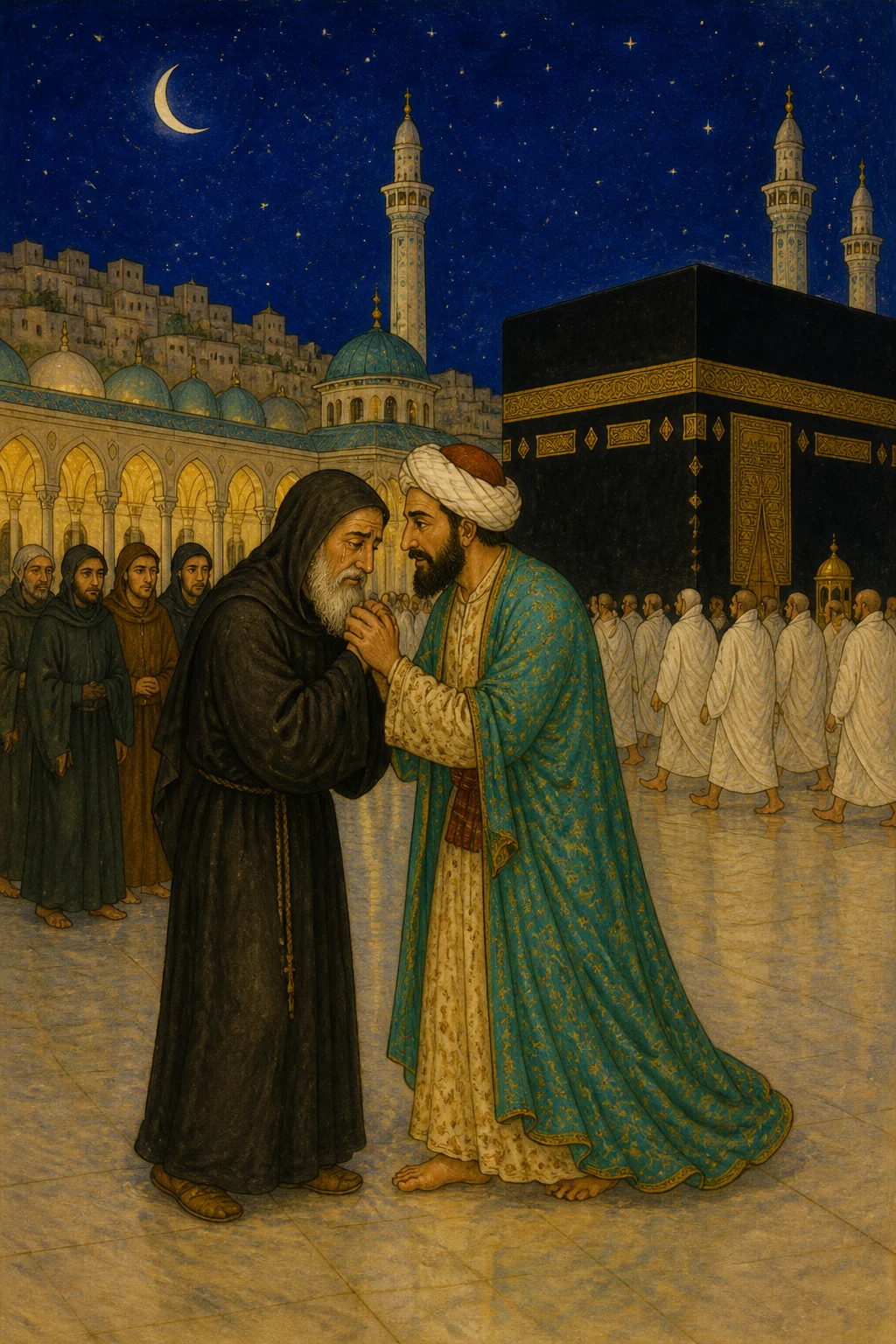
Among the tales that are told is this: Abu Bakr ibn Muhammad al-Anbari said, “On one of my journeys, I set out from al-Anbar for Amorium, in the land of the Byzantines. Along the way I stopped at the Monastery of Lights, in a village near Amorium. The abbot, who presided over the monks and whose name was Abd al-Masih, came out to meet me and took me into the monastery, where I found forty monks. They received me with generous hospitality that night, and I left them the following morning, having witnessed such devotion and diligence in worship as I had never seen elsewhere. I accomplished my business in Amorium and returned to al-Anbar. The following year I made the pilgrimage to Mecca, and as I was circling the Holy House, I saw Abd al-Masih the monk circling it too, accompanied by five of his fellow monks. When I was certain it was he, I went up to him and said, ‘Are you Abd al-Masih, the monk?’ He replied, ‘No, I am Abd Allah, the seeker.’ I began to kiss his gray beard and weep, then took him by the hand and drew him aside to a quiet part of the sanctuary. ‘Tell me,’ I said, ‘what brought about your conversion to Islam.’ He replied, ‘It is one of the most wondrous of wonders. A company of Muslim ascetics passed through the village where our monastery stands, and they sent a young man to buy them food. In the market he saw a Christian girl selling bread, one of the fairest women in appearance. At the sight of her he was so captivated that he fell upon his face in a swoon. When he recovered, he returned to his companions and told them what had befallen him, saying, “Go about your business, for I shall not be going with you.” They reproached and admonished him, but he paid them no heed, so they went away and left him. He entered the village and sat at the door of the woman’s shop. She asked him what he wanted, and he told her that he was in love with her, but she turned away from him. He remained there for three days without tasting food, doing nothing but gazing at her face. When she saw that he would not leave her, she went to her family and told them about him. They set the boys upon him, and they pelted him with stones until they battered his ribs and gashed his head; yet still he would not go away. The villagers then resolved to kill him. One of them came to me and told me of his plight, so I went out and found him lying on the ground. I wiped the blood from his face, carried him to the monastery, and tended his wounds. He stayed with me for fourteen days, and when he was able to walk, he left the monastery.’” But morning overtook Shahrazad, and she fell silent, leaving her permitted tale untold.
When it was the four hundred and thirteenth night,
She said, “I have heard, O fortunate King, that the monk Abd Allah said, ‘I carried him to the monastery and tended his wounds. He stayed with me for fourteen days, and when he was able to walk, he left the monastery and went to the door of the girl’s shop, where he sat gazing at her. When she saw him, she came up to him and said, “By God, I have come to pity you. Will you embrace my faith, so that I may marry you?” He replied, “God forbid that I should cast off the faith of the One God and embrace a faith that associates others with Him.” She said, “Then rise and come into my house, satisfy your desire with me, and go your way in peace.” He replied, “No. I would not squander twelve years of worship for a single moment’s pleasure.” “Then leave me,” she said. “My heart will not let me,” he answered. She turned her face away from him, and the boys noticed him and came running to pelt him with stones. He fell upon his face, saying, “My protector is God, who sent down the Book, and He protects the righteous.” I came out of the monastery, drove the boys away, and lifted his head from the ground. I heard him say, “O God, unite me with her in Paradise.” I carried him toward the monastery, but he died before I could reach it. So I took him outside the village, dug a grave for him, and buried him. When night had fallen and half of it had passed, the woman gave a cry as she lay in bed. The villagers gathered around her and asked what had happened. She said, “While I was asleep, that Muslim man came to me, took me by the hand, and led me to Paradise. When he brought me to its gate, its keeper barred me from entering and said, ‘It is forbidden to unbelievers.’ So I embraced Islam at his hands and entered with him. There I saw palaces and trees such as I cannot describe to you. Then he took me to a palace made of jewels and said, ‘This palace is for you and me, and I shall not enter it without you. In five nights you will be with me here, if God Most High wills.’ Then he reached out to a tree at the palace gate, picked two apples, and gave them to me, saying, ‘Eat this one, and keep the other hidden until the monks can see it.’ I ate one, and never have I tasted anything more delicious.”’” But morning overtook Shahrazad, and she fell silent, leaving her permitted tale untold.
When it was the four hundred and fourteenth night,
She said, “I have heard, O fortunate King, that the girl said, ‘When he had picked the two apples, he gave them to me and said, “Eat this one, and keep the other hidden until the monks can see it.” I ate one, and never have I tasted anything more delicious. Then he took me by the hand and led me out, bringing me all the way home. When I awoke from my dream, I found the taste of the apple still in my mouth, and the second apple beside me.’ Then she brought out the apple, and it shone in the darkness of the night like a radiant star. They brought the woman to the monastery with the apple, and she told us her dream and showed it to us. Among all the fruits of this world, we had never seen anything like it. I took a knife and cut it into as many pieces as there were companions with me, and we had never tasted anything more delicious or smelled anything more fragrant. Yet we said, ‘Perhaps this was a devil who appeared to her in his likeness, to lead her astray from her faith.’ Her family took her away, but thereafter she refused all food and drink. On the fifth night she rose from her bed, left her house, and went to the Muslim’s grave, where she threw herself upon it and died, without her family knowing. In the morning, two elderly Muslim men in haircloth garments came to the village, accompanied by two women dressed in the same fashion. They said, ‘People of this village, here among you is one of God Most High’s holy women, who has died a Muslim. It is for us, not you, to take charge of her.’ The villagers searched for the woman and found her lying dead upon the grave. They said, ‘This woman is one of us. She died in our faith, and we shall take charge of her.’ But the two old men said, ‘She died a Muslim, and we shall take charge of her.’ The quarrel and dispute between them grew fierce, until one of the old men said, ‘Here is how her faith in Islam may be proved: let the forty monks of the monastery gather and draw her away from the grave. If they can lift her from the ground, she is a Christian. But if they cannot, let one of us come forward and draw her away. If she comes with him, she is a Muslim.’ The villagers agreed to this. The forty monks gathered and, lending one another their strength, went to lift her, but could not. We fastened a stout rope around her waist and pulled, but the rope snapped and she did not move. Then the villagers came forward and tried the same, but she did not stir from her place. When every means of lifting her had failed us, we said to one of the old men, ‘Come forward yourself and carry her.’ One of them approached her, wrapped her in his cloak, and said, ‘In the name of God, the Compassionate, the Merciful, and in the faith of the Messenger of God, may God bless him and grant him peace.’ Then he lifted her in his arms, and the Muslims carried her to a cave nearby and laid her there. The two women came and washed and shrouded her. Then the two old men carried her out, prayed over her, and buried her beside his grave before departing. We watched all this. When we were alone together, we said, ‘The truth has the greatest claim to be followed. It has been made plain to us by what we have witnessed with our own eyes, and no proof of the truth of Islam could be clearer to us than what we have seen.’ Then I embraced Islam, as did all the monks of the monastery and all the villagers. We sent to the people of al-Jazira, asking them to send us a learned jurist who could teach us the laws of Islam and the ordinances of the faith. A righteous and learned man came to us and taught us how to worship and observe the laws of Islam. Today we enjoy abundant blessings, and to God belong all praise and gratitude.”
Izvirnik
حكاية إسلام الراهب - الليالي ٤١٢ إلى ٤١٤
Naslednje strani prikazujejo izvirno besedilo za primerjavo.
فلما كانت الليلة ٤١٢
ومما يُحكَى أن أبا بكر بن محمد الأنباري قال: خرجتُ من الأنبار في بعض الأسفار إلى عمورية من بلاد الروم، فنزلتُ في أثناء الطريق بدير الأنوار في قرية قريبة من عمورية، فخرج إليَّ صاحب الدير الرئيس على الرهبان، وكان اسمه عبد المسيح، فأدخلني الدير فوجدتُ فيه أربعين راهبًا، فأكرموني في تلك الليلة بضيافة حسنة، ثم رحلت عنهم في الغد، وقد رأيت من كثرة اجتهادهم وعبادتهم ما لم أرَهُ من غيرهم، فقضيتُ أربى من عمورية ثم رجعت إلى الأنبار. فلما كان في العام المقبل حججتُ إلى مكة، فبينما أنا أطوف حول البيت إذ رأيتُ عبد المسيح الراهب يطوف أيضًا، ومعه خمسة نفر من أصحابه الرهبان، فلما تحقَّقتُ معرفتَه تقدَّمْتُ إليه وقلتُ له: هل أنت عبد المسيح الراهب؟ قال: بل أنا عبد الله الراغب. فجعلتُ أقبِّلُ شيبته وأبكي، ثم أخذت بيده ومِلت إلى جانب الحرم، وقلت له: أخبرني عن سبب إسلامك. فقال: إنه من أعجب العجائب، وذلك أن جماعة من زهَّاد المسلمين مرُّوا بالقرية التي فيها ديرنا، فأرسلوا شابًّا يشتري لهم طعامًا، فرأى في السوق جارية نصرانية تبيع الخبز، وهي من أحسن النساء صورةً، فلما نظر إليها افتتن بها وسقط على وجهه مغشيًّا عليه، فلما أفاق رجع إلى أصحابه وأخبرهم بما أصابه، وقال: امضوا إلى شأنكم، فلست بذاهب معكم. فعذلوه ووعظوه، فلم يلتفت إليهم، فانصرفوا عنه، ودخل القرية وجلس عند باب حانوت تلك المرأة، فسألته عن حاجته فأخبرها أنه عاشق لها، فأعرضت عنه، فمكث في موضعه ثلاثة أيام لم يطعم طعامًا، بل صار شاخصًا إلى وجهها، فلما رأته لا ينصرف عنها ذهبَتْ إلى أهلها وأخبرتهم بخبره؛ فسلَّطوا عليه الصبيان، فرموه بالحجارة حتى رضُّوا أضلاعه وشجُّوا رأسه، وهو مع ذلك لا ينصرف، فعزم أهل القرية على قتله، فجاءني رجل منهم وأخبرني بحاله، فخرجتُ إليه فرأيته طريحًا، فمسحتُ الدمَ عن وجهه وحملتُه إلى الدير وداويتُ جراحه، وأقام عندي أربعة عشر يومًا، فلما قدر على المشي خرج من الدير. وأدرك شهرزاد الصباح فسكتَتْ عن الكلام المباح.
فلما كانت الليلة ٤١٣
قالت: بلغني أيها الملك السعيد، أن الراهب عبد الله قال: فحملته إلى الدير وداويت جراحه، وأقام عندي أربعة عشر يومًا، فلما قدر على المشي خرج من الدير إلى باب حانوت الجارية، وجلس ينظر إليها، فلما أبصرته قامت إليه وقالت له: والله لقد رحمتك، فهل لك أن تدخل في ديني، وأنا أتزوَّجك؟ فقال: معاذ الله أن أنسلخ من دين التوحيد، وأدخل في دين الشرك. فقالت: قُمْ وادخل معي داري واقضِ مني أربك وانصرف راشدًا. فقال: لا، ما كنتُ لأُذهِب عبادة اثنتي عشرة سنة بشهوة لحظة واحدة. فقالت: انصرف عني حينئذٍ. قال: لا يطاوعني قلبي. فأعرضَتْ عنه بوجهها، ثم فطن به الصبيان فأقبلوا عليه يرمونه بالحجارة، فسقط على وجهه وهو يقول: إِنَّ وَلِيِّيَ اللهُ الَّذِي نَزَّلَ الْكِتَابَ وَهُوَ يَتَوَلَّى الصَّالِحِينَ . فخرجت من الدير وطردت عنه الصبيان، ورفعت رأسه عن الأرض، فسمعته يقول: اللهم اجمع بيني وبينها في الجنة. فحملتُه إلى الدير فمات قبل أن أصل به إليه، فخرجت به عن القرية وحفرتُ له قبرًا ودفنته. فلما دخل الليل وذهب نصفه، صرخت تلك المرأة وهي في فراشها صرخةً، فاجتمع إليها أهل القرية وسألوها عن قصتها، فقالت: بينما أنا نائمة إذ دخل عليَّ هذا الرجل المسلم، فأخذ بيدي وانطلق بي إلى الجنة، فلما صار بي إلى بابها منعني خازنها من دخولها، وقال: إنها محرمة على الكافرين. فأسلمْتُ على يديه ودخلتُ معه، فرأيتُ فيها من القصور والأشجار ما لا يمكن أن أصفه لكم، ثم إنه أخذني إلى قصر من الجوهر، وقال لي: إن هذا القصر لي ولك، وأنا لا أدخله إلا بكِ، وبعد خمس ليالٍ تكونين عندي فيه إن شاء الله تعالى. ثم مدَّ يده إلى شجرة على باب ذلك القصر فقطف منها تفاحتين وأعطانيهما، وقال: كلي هذه، وأخفي الأخرى حتى يراها الرهبان. فأكلتُ واحدة فما رأيتُ أطيب منها. وأدرك شهرزاد الصباح فسكتَتْ عن الكلام المباح.
فلما كانت الليلة ٤١٤
قالت: بلغني أيها الملك السعيد، أن الجارية قالت: لما قطف التفاحتين أعطانيهما وقال: كلي هذه، وأخفي الأخرى حتى يراها الرهبان. فأكلتُ واحدة فما رأيت أطيب منها، ثم إنه أخذ بيدي، وخرج بي حتى أوصلني إلى داري، فلما استيقظتُ من منامي وجدتُ طعْمَ التفاح في فمي، والتفاحة الثانية عندي. ثم أخرجَتِ التفاحةَ فأشرقت في ظلام الليل كأنها كوكب دري، فجاءوا بالمرأة إلى الدير ومعها التفاحة؛ فقصَّتْ علينا الرؤيا وأخرجت لنا التفاحة، فلم نَرَ شيئًا مثلها في سائر فواكه الدنيا، فأخذتُ سكينًا وشقَّقتها على عدد أصحابي، فما رأينا ألذَّ من طعمها، ولا أطيب من ريحها. فقلنا: لعل هذا شيطان تمثَّلَ إليها ليغويها عن دينها. فأخذها أهلها وانصرفوا، ثم إنها امتنعت عن الأكل والشرب، فلما كانت الليلة الخامسة قامت من فراشها، وخرجت من بيتها، وتوجَّهت إلى قبر ذلك المسلم، وألقَتْ نفسها عليه وماتت، ولم يعلم بها أهلها. فلما كان وقت الصباح أقبل على القرية شيخان مسلمان عليهما ثياب من الشعر، ومعهما امرأتان كذلك، فقالا: يا أهل القرية، إن لله تعالى عندكم ولية من أوليائه قد ماتت مسلمة، ونحن نتولاها دونكم. فطلب أهل القرية تلك المرأة فوجدوها على القبر ميتة، فقالوا: هذه صاحبتنا قد ماتت على ديننا ونحن نتولاها. وقال الشيخان: إنها ماتت مسلمة، ونحن نتولاها. واشتدَّ الخصام والنزاع بينهم، فقال أحد الشيخين: إن علامة إسلامها أن يجتمع رهبان الدير الأربعون ويجذبوها عن القبر، فإن قدروا على حملها من الأرض فهي نصرانية، وإن لم يقدروا على ذلك يتقدَّم واحدٌ منَّا ويجذبها، فإن جاءت معه فهي مسلمة. فرضي أهل القرية بذلك، واجتمع الأربعون راهبًا، وقوَّى بعضهم بعضًا، وأتوها ليحملوها فلم يقدروا على ذلك، فربطنا في وسطها حبلًا عظيمًا، وجذبناها فانقطع الحبل ولم تتحرك، فتقدَّم أهل القرية وفعلوا كذلك فلم تتحرك من موضعها، فلما عجزنا عن حملها بكل حيلة قلنا لأحد الشيخين: تقدَّمْ أنت واحملها. فتقدَّمْ إليها أحدهما، ولفَّها في ردائه وقال: بسم الله الرحمن الرحيم، وعلى ملة رسول الله ﷺ . ثم حملها في حضنه، وانصرف بها المسلمون إلى غار هناك فوضعوها فيه، وجاءت المرأتان فغسَّلَتَاها، وكفنتاها، ثم حملها الشيخان وصلَّيَا عليها، ودفناها إلى جانب قبره وانصرفا، ونحن نشاهد هذا كله. فلما خلا بعضنا ببعض قلنا: إن الحق أحقُّ أن يُتَّبَع، وقد وضح الحق لنا بالمشاهدة والعيان، ولا برهان لنا على صحة الإسلام أوضح لنا مما رأيناه بأعيننا. ثم أسلمتُ وأسلَمَ رهبان الدير جميعهم، وكذلك أهل القرية. ثم إنا بعثنا إلى أهل الجزيرة نستدعي فقيهًا يعلِّمنا شرائع الإسلام وأحكام الدين؛ فجاءنا رجل فقيه صالح، فعلَّمَنا العبادةَ وأحكامَ الإسلام، ونحن اليوم على خير كثير، ولله الحمد والمنَّة.
Nadaljuj z branjem