Waltey
Zgodba o Izraelcu in oblaku
Tisoč in ena noč · arabska pripovedna tradicijaO besedilu
Zgodba o Izraelcu in oblaku
- Vir
- Tisoč in ena noč
- Avtor
- arabska pripovedna tradicija
- Jezik branja
- English
- Jezik izvirnika
- Arabic
- Čas branja
- 7 min branja
- Obseg
- 6 strani
- Naslov izvirnika
- حكاية رجل إسرائيلي وسحابة - الليالي ٤٧٣ إلى ٤٧٤
O izvirniku
Tisoč in ena noč
Zgodbe v zgodbah, polne trgovcev, dvorov, preoblek in nočnih zapletov. Bralni jezik je English, izvirnik pa prihaja iz vira Tisoč in ena noč v jeziku Arabic.
Besedilo
Zgodba o Izraelcu in oblaku
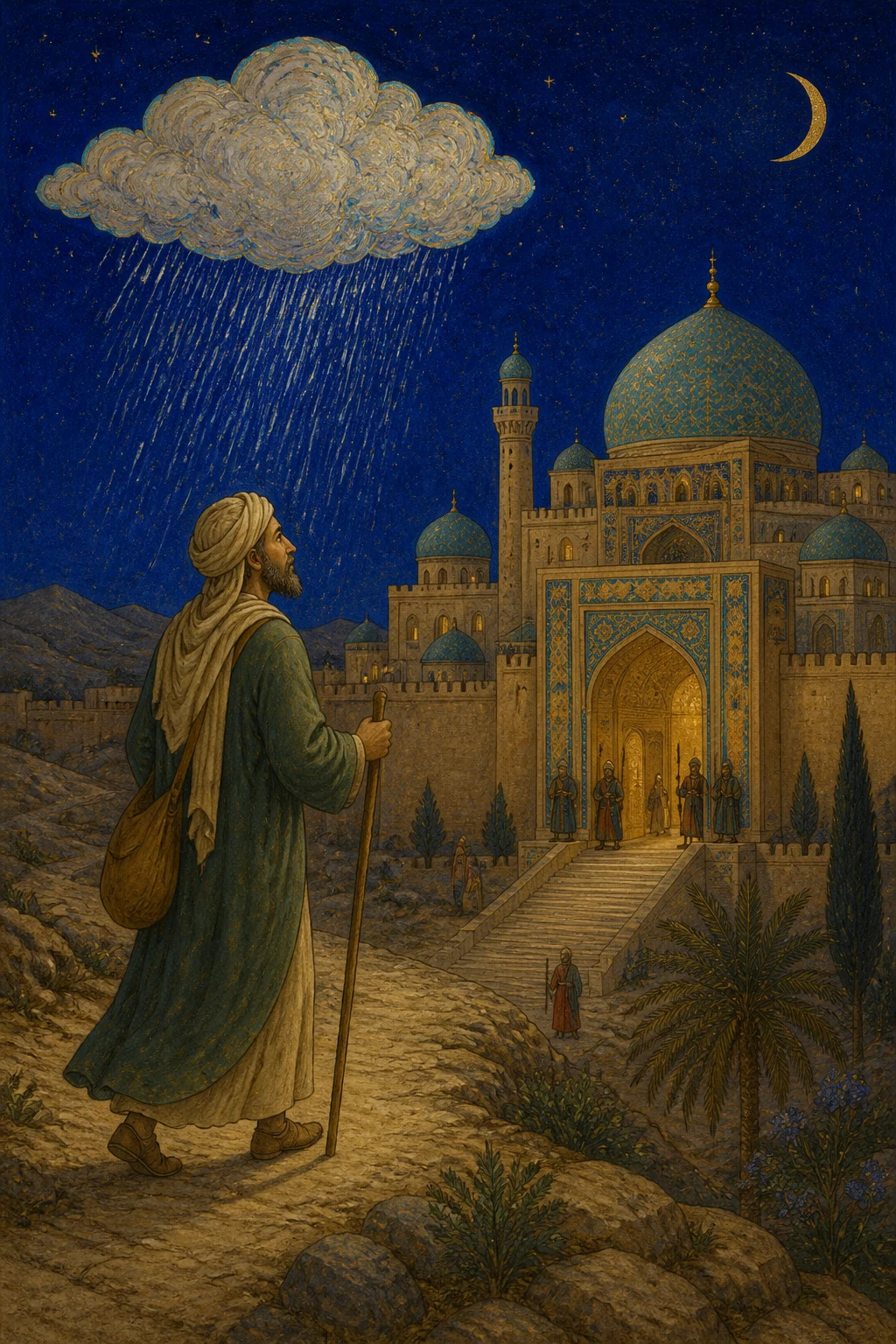
It is related that among the Children of Israel there was a man renowned for his devotion, preserved from sin, and celebrated for his ascetic life. Whenever he called upon his Lord, He answered him, and whenever he asked, He granted his request and fulfilled his desire. He wandered among the mountains and spent his nights in prayer. God, glorified and exalted be He, had placed a cloud at his service, which followed him wherever he went and poured down abundant water for him to drink and use for his ablutions. He continued thus until, at times, his devotion began to flag. Then God took away his cloud and withheld His answers to his prayers. His grief grew great and his sorrow endured, and he longed continually for the days when that gracious favor had been bestowed upon him, lamenting and yearning for their return. One night, as he slept, a voice said to him in a dream, “If you wish God to restore your cloud, go to such-and-such a king in such-and-such a city, and ask him to pray for you. Through the blessing of his righteous prayers, God, glorified and exalted be He, will restore it and send it back to you.” And the voice recited these verses:
Seek out the righteous prince in this great trouble that has befallen you; for if he calls upon God, the abundant, pouring rain you ask for shall come. Exalted is his rank among kings, and among them he is without peer. With him you shall find what promises gladness and delight. Cross the deserts and the trackless wastes to reach him, and press on, journey after journey. The man therefore set out and traveled across the land until he entered the city named to him in his dream. He asked for the king and was directed to him, then went to his palace. There, at the palace gate, sat a young servant on a great chair, dressed in magnificent clothes. The man stopped and greeted him. The servant returned his greeting and asked, “What do you need?” He replied, “I am a man who has suffered a wrong, and I have come to lay my case before the king.” The servant said, “You cannot gain admittance to him today, for he has appointed one day each week on which petitioners may come before him. It is such-and-such a day. Go your way in peace until then.” The man disapproved of the king’s seclusion from his people and said to himself, “How can he be one of the saints of God, mighty and glorious, when he lives in such a fashion?”
He went away to await the day he had been told of. “When the day named by the gatekeeper came,” he said, “I returned and found people at the gate waiting for permission to enter. I stood with them until a vizier came out in splendid robes, with servants and slaves preceding him, and said, ‘Let the petitioners enter.’ They went in, and I entered among them. There sat the king, with the dignitaries of his realm before him, each according to his standing and rank. The vizier stood and brought the petitioners forward one by one, until my turn came. When he brought me forward, the king looked at me and said, ‘Welcome, master of the cloud! Sit down until I am free to attend to you.’ I was astonished at his words and acknowledged his spiritual rank and excellence. When he had judged between the people and finished attending to them, he rose, and the vizier and dignitaries rose with him. Then the king took me by the hand and led me into his palace. At its entrance I found a black slave in magnificent clothes, with weapons hanging above his head and shields and bows to his right and left. He rose to meet the king and hastened to obey his commands and attend to his needs. Then he opened the palace door, and the king entered, still holding my hand. Before him was a low door, which he opened himself, and he passed into a ruined place and a vast building. Then he entered a room containing nothing but a prayer rug, a vessel for ablutions, and some palm leaves. He took off the clothes he was wearing and put on a coarse robe of white wool and a felt cap. Then he sat down, seated me beside him, and called to his wife by name. ‘Here I am,’ she answered. He said, ‘Do you know who our guest is today?’ She replied, ‘Yes, he is the master of the cloud.’ He said, ‘Come out; you need have no concern on his account.’ And there she was, a woman as slender as a wraith, her face shining like the crescent moon, wearing a woolen robe and a veil.” But morning overtook Shahrazad, and she fell silent, leaving off her permitted tale.
When it was the four hundred and seventy-fourth night
She said: It has reached me, O fortunate king, that when the king called his wife, she came out, her face shining like the crescent moon, wearing a coarse woolen robe and a veil. The king said, “My brother, would you like to hear our story, or shall we pray for you and let you go?” He replied, “Rather, I wish to hear your story, for that is what I most desire.” The king said to him, “My fathers and forefathers held this kingdom in succession, inheriting it generation after generation, until they died and the rule passed to me. But God made it hateful to me, and I wished to wander the earth and leave the people to manage their own affairs. Then I feared that strife would break out among them, that the sacred laws would be neglected, and that the unity of the faith would be torn apart. So I left matters as they were, assigned each of their leaders a fitting allowance, put on royal robes, and stationed slaves at the gates, to strike fear into evildoers, defend the virtuous, and uphold the prescribed punishments. When I have finished all this, I enter my home, take off these clothes, and put on what you see. This woman is my cousin, my father’s brother’s daughter. She has joined me in renouncing the world and helps me in my devotions. By day we weave these palm leaves to earn the food with which we break our fast at night. We have lived in this manner for some forty years. Stay with us, God have mercy on you, until we sell our palm-leaf work; then break your fast with us and spend the night here. Afterward you shall depart with your wish fulfilled, if God Most High wills.” The man said, “Toward the end of the day, a servant boy, five spans tall, came in, took what they had woven from the palm leaves, and carried it to the market. He sold it for a qirat, bought bread and beans with the money, and brought them back. I broke my fast with the couple and spent the night with them. At midnight they rose to pray and weep. When the hour before dawn came, the king said, ‘O God, this servant of Yours asks You to restore his cloud, and You have power to do so. O God, show him that his prayer is answered, and restore his cloud to him.’ His wife said, ‘Amen,’ and at once the cloud formed in the sky. The king said to me, ‘Good tidings!’ I bade them farewell and departed, with the cloud following me as before. Ever since then, I have asked nothing of God Most High, invoking the honor in which He holds them, without His granting it.” And I composed these verses:
My Lord has chosen ones among His servants, whose hearts roam through the gardens of His wisdom. Their bodies are stilled by the pure mystery lodged within their breasts. You see them silent, humble before their Lord, beholding through the unseen what is hidden as clearly as what is revealed.
Izvirnik
حكاية رجل إسرائيلي وسحابة - الليالي ٤٧٣ إلى ٤٧٤
Naslednje strani prikazujejo izvirno besedilo za primerjavo.
فلما كانت الليلة ٤٧٣
وحُكِي أنه كان في بني إسرائيل رجل من العباد المشهورين بالعبادة المعصومين الموصوفين بالزهادة، وكان إذا دعا ربه أجابه، وإذا سأل أعطاه وآتاه مُنَاه، وكان سيَّاحًا في الجبال قوَّام الليل، وكان الله سبحانه وتعالى قد سخر له سحابة تسير معه حيث يسير، وتسكب عليه ماء منهمرًا فيتوضأ منه ويشرب؛ فما زال على ذلك إلى أن اعتراه فتور في بعض الأوقات، فأزال الله عنه سحابته وحجب عنه إجابته؛ فكثر لذلك حزنه وطال كمده، وما زال يشتاق إلى زمن الكرامة الممنون بها عليه، ويتحسَّر ويتأسَّف ويتلهَّف؛ فنام ليلة من الليالي، فقيل له في نومه: إنْ شئتَ أن يردَّ الله عليك سحابتك، فاقصد الملك الفلاني في بلد كذا أو كذا، واسأله أن يدعو لك فإن الله سبحانه وتعالى يردُّها عليك ويسوقها إليك ببركة دعواته الصالحات. وأنشد يقول هذه الأبيات:
أَقْصِدْ إِلَى الصَّالِحِ الْأَمِيرِ فِي خَطْبِكَ الْوَاقِعِ الْكَبِيرِ
فَإِنْ دَعَا اللهُ جَاءَ مَا قَدْ سَأَلْتَ مِنْ وَابِلٍ هَمِيرِ
لَقَدْ سَمَا فِي الْمُلُوكِ قَدْرًا وَجَلَّ فِيهِمْ عَنِ النَّظِيرِ
وَسَوْفَ تَلْقَى لَدَيْهِ أَمْرًا يُؤْذِنُ بِالْبِشْرِ وَالسُّرُورِ
فَاقْطَعْ لَهُ الْبِيدَ وَالْفَيَافِي وَوَاصِلِ السَّيْرَ بِالْمَسِيرِ
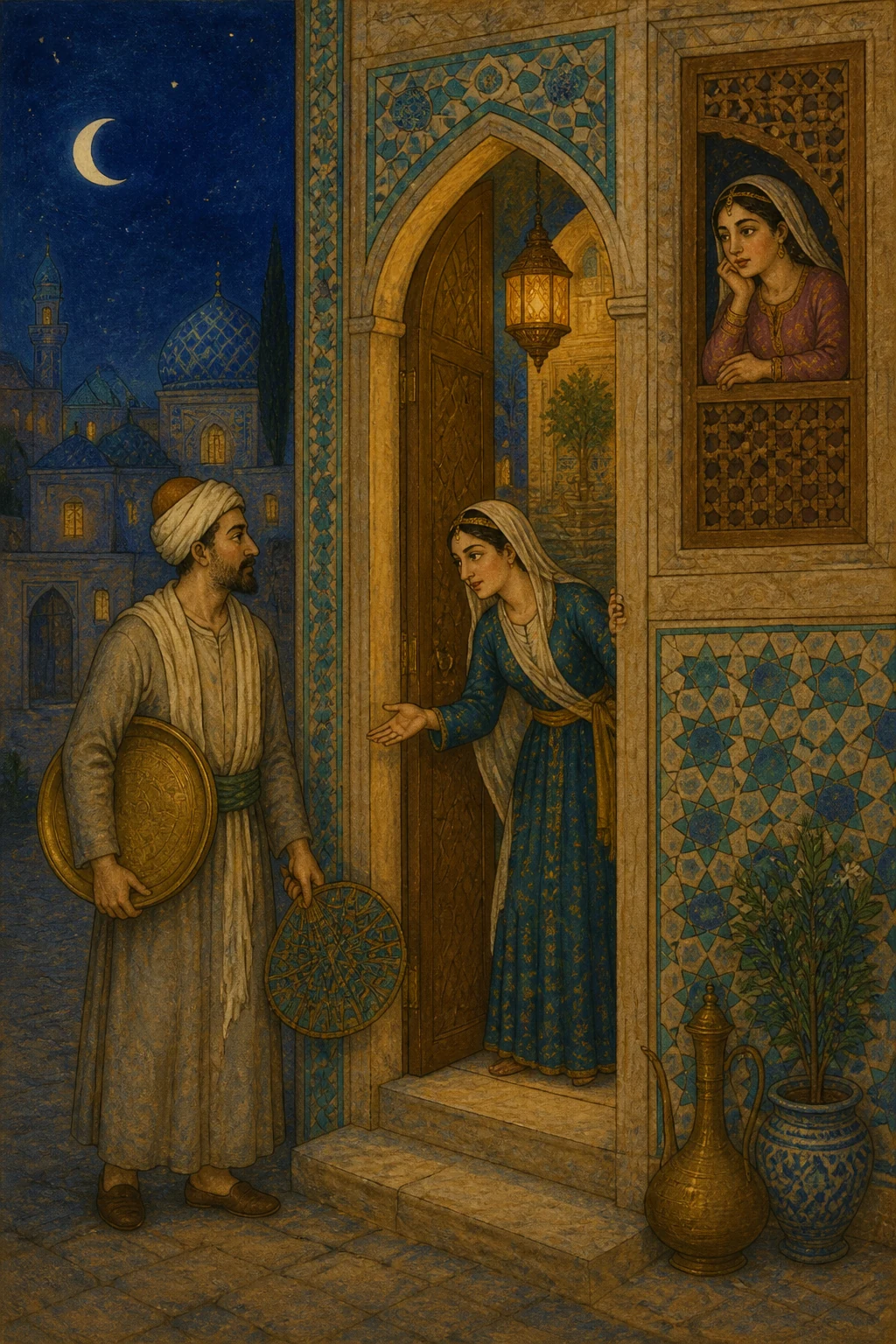
قال: فسار الرجل يقطع الأرض حتى دخل البلدة التي ذُكِرت له في المنام، فسأل عن الملك فدُلَّ عليه، فسار إلى قصره، فإذا عند باب القصر غلام قاعِد على كرسي عظيم، وعليه كسوة هائلة، فوقف الرجل وسلَّمَ، فردَّ عليه السلام وقال: ما حاجتك؟ قال: أنا رجل مظلوم وقد جئتُ الملكَ أرفع قصتي إليه. قال: لا سبيل لك اليوم عليه؛ لأنه قد جعل لأهل المسائل في الأسبوع يومًا يدخلون عليه فيه، وهو يوم كذا أو كذا، فسِرْ راشدًا حتى يأتي ذلك اليوم. فأنكر الرجل عليه تحجُّبَه عن الناس وقال: كيف يكون هذا وليًّا من أولياء الله عزَّ وجلَّ، وهو على مثل هذا الحال؟
وذهب ينتظر اليوم الذي قيل له عليه، فلما كان ذلك اليوم الذي ذكره البوَّاب دخلت، فوجدت عند الباب أناسًا ينتظرون الإذن لهم في الدخول؛ فوقفت معهم إلى أن خرج وزير عليه ثياب هائلة، وبين يديه خدم وعبيد فقال: ليدخل أرباب المسائل. فدخلوا ودخلت في الجملة، فإذا الملك قاعد وبين يديه أرباب مملكته على قدر مقاديرهم ومراتبهم؛ فوقف الوزير وجعل يقدِّم واحدًا بعد واحد حتى وصلَتِ النوبة إليَّ، فلما قدَّمني الوزير نظر الملك إليَّ وقال: مرحبًا بصاحب السحابة، أقعد حتى أفرع لك. فتحيَّرْتُ من قوله واعترفتُ بمرتبته وفضله. فلما قضى بين الناس وفرغ منهم قام وقام الوزير وأرباب المملكة، ثم أخذ الملك بيدي وأدخلني إلى قصره، فوجدت عند باب القصر عبدًا أسود وعليه ثياب هائلة، وفوق رأسه أسلحة، وعن يمينه وشماله دروع وقسي؛ فقام إلى الملك وسارَعَ لأمره وقضاء حوائجه، ثم فتح باب القصر فدخل الملك ويدي في يده، فإذا بين يدَيْه باب قصير ففتحه الملك بنفسه ودخل إلى خربة وبناء هائل، ثم دخل إلى بيت ليس فيه إلا سجادة وقدح للوضوء وشيء من الخوص؛ ثم جرَّدَ ثيابه التي كانت عليه، ولبس جبة خشنة من الصوف الأبيض، وجعل على رأسه قلنسوة من لبد، ثم قعد وأقعدني ونادى أن يا فلانة لزوجته، فقالت له: لبيك. قال لها: أتدرين مَن ضيفنا في هذا اليوم؟ قالت: نعم، هو صاحب السحابة. فقال لها: اخرجي لا عليك منه. قال: فإذا هي امرأة كأنها الخيال، ووجهها يتلألأ كالهلال، وعليها جبة صوف وقناع. وأدرك شهرزاد الصباح فسكتَتْ عن الكلام المباح.
فلما كانت الليلة ٤٧٤
قالت: بلغني أيها الملك السعيد، أن الملك لما نادَى زوجته، خرجَتْ ووجهها يتلألأ كالهلال، وعليها جبة خشنة من صوف وقناع، فقال الملك: يا أخي، أتريد أن تعرف خبرنا أم ندعو لك وتنصرف؟ قال: بل أريد أن أسمع خبركما فإنه الأشوق إليَّ. فقال له: إنه كان آبائي وأجدادي يتداولون المملكة ويتوارثونها كابرًا عن كابر، إلى أن ماتوا ووصل الأمر إليَّ، فبغض الله ذلك لي؛ فأردت أن أسيح في الأرض وأترك أمر الناس لأنفسهم، ثم إني خفتُ عليهم من دخول الفتنة وتضييع الشرائع وتشتيت شمل الدين، فتركت الأمر على ما كان عليه، وجعلت لكل رأس منهم جراية بالمعروف، ولبست ثياب الملك وأقعدت العبيد على الأبواب إرهابًا لأهل الشر وذابًّا عن أهل الخير وإقامة للحدود؛ فإذا فرغتُ من ذلك كله دخلتُ منزلي وأزلتُ هذه الثياب ولبست ما ترى، وهذه ابنة عمي وافقَتْني على الزهادة وساعدتني على العبادة؛ فنعمل من هذا الخوص بالنهار ما نفطر به عند الليل، وقد مضى علينا ونحن على هذه الحالة نحو أربعين سنة، فأَقِمْ معنا يرحمك الله حتى نبيع خوصنا وتفطر معنا وتبيت عندنا ثم تنصرف بحاجتك إن شاء الله تعالى. قال: فلما كان آخِر النهار، أتى غلام خماسي ودخل، فأخذ ما عملاه من الخوص وسار به إلى السوق، فباعه بقيراط واشترى به خبزًا وفولًا وأتى بهما، فأفطرت معهما ونمت عندهما؛ فقاما من نصف الليل يصليان ويبكيان، فلما كان السحر قال الملك: اللهم إن هذا عبدك يطلب منك أن ترد سحابته عليه، وأنت على ذلك قدير، اللهم أَرِه إجابته وارددْ عليه سحابته. قال: وأمَّنَتِ المرأة، فإذا السحابة قد نشأت في السماء. فقال لي: البشارة. فودَّعْتُهما وانصرفتُ، والسحابة تسير معي كما كانت. فأنا بعد ذلك لا أسأل الله تعالى بحرمتهما شيئًا إلا أجابني، وأنشأت أقول هذه الأبيات:
وَإِنَّ لِرَبِّي صَفْوَةً مِنْ عَبِيدِهِ قُلُوبُهُمُو فِي رَوْضِ حِكْمَتِهِ تَجْرِي
وَأَبْدَانُهُمْ قَدْ أُسْكِنَتْ حَرَكَاتُهَا لِمَا فِي صُدُورِ الْقَوْمِ مِنْ خَالِصِ السِّرِّ
تَرَاهُمْ صُمُوتًا خَاشِعِينَ لِرَبِّهِمْ بِحَيْثُ يَرَوْنَ الْغَيْبَ بِالْغَيْبِ كَالْجَهْرِ
Nadaljuj z branjem