Waltey
Zgodba o drugem dekletu Amini
Tisoč in ena noč · arabska pripovedna tradicijaO besedilu
Zgodba o drugem dekletu Amini
- Vir
- Tisoč in ena noč
- Avtor
- arabska pripovedna tradicija
- Jezik branja
- English
- Jezik izvirnika
- Arabic
- Čas branja
- 16 min branja
- Obseg
- 13 strani
- Naslov izvirnika
- حكاية البنت الثانية أمينة - الليالي ١٧ إلى ١٨
O izvirniku
Tisoč in ena noč
Zgodbe v zgodbah, polne trgovcev, dvorov, preoblek in nočnih zapletov. Bralni jezik je English, izvirnik pa prihaja iz vira Tisoč in ena noč v jeziku Arabic.
Besedilo
Zgodba o drugem dekletu Amini
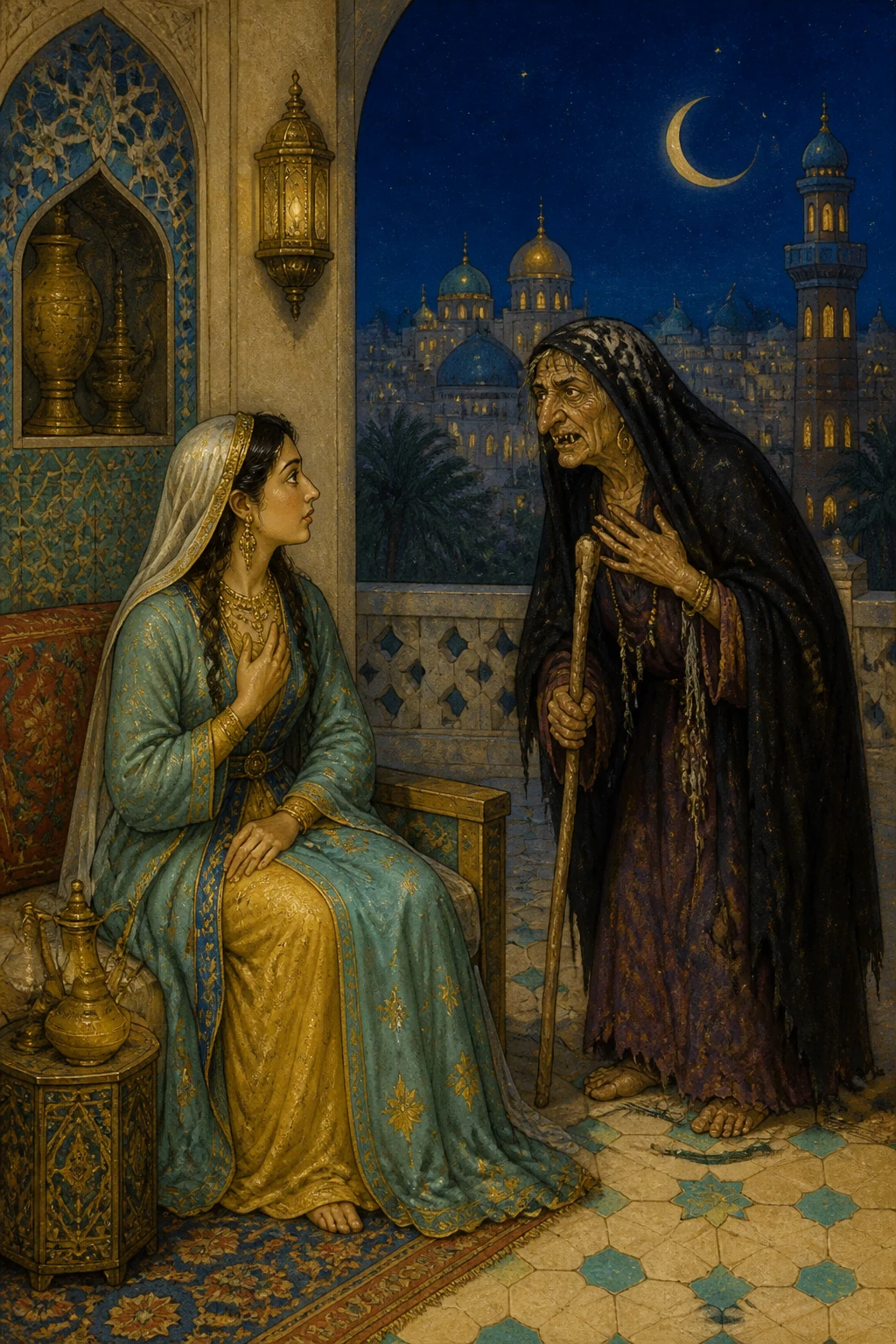
She said, “Commander of the Faithful, my father died and left a great fortune. A short time after his death, I married one of the most fortunate men of his day. I lived with him for a full year, and then he too died, leaving me eighty thousand dinars as my allotted share under the sacred law. I had ten outfits made, each costing a thousand dinars. One day, as I was sitting at home, an old woman came in. Her face was battered, her eyebrows plucked bare, her eyes bulging, her teeth broken, her nose running, and her neck crooked. As the poet said of her:
“An ill-starred crone whom Iblis, at a glance, would learn deceit from, though she spoke no word. So cunningly could she contrive to lead a thousand bolting mules with a spider’s thread. And as another poet said:
“An old woman, witchcraft in her very nature, who made permissible the most forbidden things: fingered as a child, sodomized as a maiden, a whore in middle age, a bawd when old. When the old woman entered, she greeted me and said, ‘I have an orphan girl in my care, and tonight I am holding her wedding feast. I have come to offer you a chance to earn merit and reward: attend her wedding, for she is brokenhearted and has no one but Almighty God.’ Then she wept and kissed my feet. Pity and compassion moved me, and I said, ‘Gladly.’ She said, ‘Make yourself ready. I shall come at nightfall and take you there.’ She kissed my hands and left. I rose and dressed and made my preparations. Presently the old woman returned and said, ‘My lady, the ladies of the city have arrived. I told them you were coming, and they were delighted. They are waiting for you.’ I got up, made myself ready, and took my slave girls with me. We walked until we reached a pleasant lane where a gentle breeze was blowing. There we saw a vaulted gateway crowned with a marble dome, solidly built, and beyond it a palace rising from the dust to hang among the clouds. When we reached the door, the old woman knocked. It was opened, and we went in. We found a passage spread with carpets, hung with burning lamps and shining candles, and adorned with jewels and precious metals. We walked along it until we entered a hall without equal, furnished with silken couches and lit with lamps and candles. At its far end stood a marble couch inlaid with pearls and gems, beneath a canopy of satin. A young woman, lovely as the moon, emerged from the canopy and said to me, ‘Welcome, a thousand welcomes, my sister! You have cheered me with your company and comforted my heart.’ Then she recited:
“‘Had this house known who had come to visit, it would have rejoiced, welcomed you, and kissed the ground beneath your feet. Its very being would have cried aloud: Welcome to the generous and noble!’ Then she sat down and said, ‘My sister, I have a brother who saw you at a wedding feast. He is a young man, handsomer than I am, and his heart has fallen deeply in love with you. He gave this old woman money to go to you, and she devised this trick so that I might meet you. My brother wishes to marry you according to the law of God and His Messenger, and there is no shame in what is lawful.’ When I heard her words and realized that I was secluded in the house, I said to the young woman, ‘Gladly.’ She rejoiced and clapped her hands. A door opened, and through it came a young man as lovely as the moon, just as the poet said:
“‘His beauty has grown greater—blessed be God! Exalted be He who fashioned and perfected him! He alone possesses all beauty; all mankind wanders bewildered by his loveliness. Beauty has written upon his cheek: I bear witness that none is fair but he.’ When I looked at him, my heart inclined toward him. He came and sat down, and then the judge entered with four witnesses. They greeted us and took their seats, drew up my marriage contract with the young man, and departed. The young man turned to me and said, ‘Blessed be our night!’ Then he said, ‘My lady, I have one condition to impose upon you.’ ‘My lord,’ I asked, ‘what is it?’ He rose, brought me a copy of the Qur’an, and said, ‘Swear to me that you will never choose another man over me or incline toward him.’ I swore to him, and he was overjoyed and embraced me. Love for him took complete possession of my heart. They brought us a meal, and we ate and drank our fill. When night fell, he took me to bed, and we lay in each other’s arms until morning. We continued in this way for a month, in happiness and delight. At the end of the month, I asked his leave to go to the market and buy some cloth, and he gave me permission. I dressed, took the old woman with me, and went down to the market. There I sat in the shop of a young merchant whom the old woman knew. She said to me, ‘This is a young fellow whose father died and left him a great fortune.’ Then she said to him, ‘Bring out your finest cloth for this young lady.’ ‘Gladly,’ he replied. The old woman began praising him, but I said, ‘We have no need of your praises. We only want to buy what we need from him and return home.’ He brought out what we asked for, and we offered him the money, but he refused to take anything. ‘Let this be my welcome to you today,’ he said. I told the old woman, ‘If he will not take the money, give him back his cloth.’ He said, ‘By God, I will take nothing from you. It is all a gift in return for a single kiss, which would be worth more to me than everything in my shop.’ The old woman said, ‘What good would a kiss do you?’ Then she turned to me and said, ‘My daughter, you have heard what this young man says. No harm will come to you if he takes a kiss, and you will get whatever you wish.’ ‘Do you not know that I have sworn an oath?’ I asked her. ‘Let him kiss you while you remain silent,’ she said. ‘You will have done nothing wrong, and you can keep the money.’ She kept making the matter seem harmless until she had drawn me into her snare and I agreed. I covered my eyes and screened myself from the people with the edge of my outer wrap. He slipped his mouth beneath it and pressed it to my cheek, but as he kissed me he bit so hard that he tore a piece of flesh from my cheek. I fainted, and the old woman caught me in her arms. When I came to, I found the shop closed and the old woman making a show of grief. ‘God has spared you something worse,’ she said. Then she added, ‘Come, let us go home. Pretend you are ill, and I shall bring you a medicine to treat the bite. It will heal quickly.’ An hour later I rose, distraught and terribly frightened, and walked home, where I made a show of being ill. My husband came in and said, ‘What happened to you on this outing, my lady?’ ‘I am unwell,’ I replied. He looked at me and asked, ‘What is this wound on your cheek, in such a tender place?’ I said, ‘When I went out today with your permission to buy cloth, a camel loaded with firewood pushed against me. It tore my veil and wounded my cheek, as you see, for the streets of this city are narrow.’ ‘Tomorrow,’ he said, ‘I shall go to the governor and complain, and he will hang every firewood seller in the city.’ ‘For God’s sake,’ I said, ‘do not take upon yourself the guilt of harming anyone! I was riding a donkey, and it bolted and threw me to the ground. I struck a piece of wood, which scratched and wounded my cheek.’ He said, ‘Tomorrow I shall go to Ja‘far al-Barmaki and tell him the story, and he will put every donkey driver in this city to death.’ ‘Will you kill everyone on my account?’ I asked. ‘What happened to me was by God’s will and decree!’ ‘It must be done,’ he said. He pressed me fiercely, then sprang to his feet and gave a tremendous shout. A door opened, and seven black slaves came out. They dragged me from my bed and flung me into the middle of the courtyard. He ordered one of them to hold me by the shoulders and sit on my head, and another to sit on my knees and hold my feet. A third came forward with a sword in his hand and said, ‘My lord, shall I strike her with the sword and cut her in two? Then each of us can take a piece and throw it into the Tigris for the fish to eat.’ ‘Such is the reward of one who betrays her oaths and her love,’ said my husband, and he recited:
“‘If another shares the one I love, I shall deny my soul its love and let longing destroy me. I shall say to it: O soul, die with honor, for there is no good in a love shared with a rival.’ Then he said to the slave, ‘Strike her, Sa‘d!’ The slave drew his sword and said, ‘Pronounce the profession of faith. Remember any last wishes you may have and make your will, for your life is at an end.’ I said to him, ‘Good slave, grant me a little time to declare my faith and make my last wishes known.’ Then I raised my head and considered my plight, and how I had fallen from honor into humiliation. My tears flowed, and I wept and recited these verses:
“‘You brought about our parting, then sat at ease; you kept my wounded eyes awake while you slept. Your dwelling is between my heart and eyes: my heart cannot forget you, nor can my tears be hidden. You pledged that you would remain faithful, but once you possessed my heart, you betrayed me. You had no pity for my longing and my anguish. Do you think yourselves safe from the blows of fate? I beg you by God, if I die, write upon my gravestone: Here lies one enslaved by love. Perhaps some sorrowing soul who knows love’s burning pain will pass the lover’s grave and take pity.’ When I had finished my verses, I wept. But when he heard the poetry and saw my tears, his anger only increased, and he recited these two lines:
“‘I left my heart’s beloved, not from weariness, but for a fault that called for us to part. My love desired another partner in our bond, but the faith within my heart admits no partners.’ When he had finished, I wept and pleaded for his mercy. I thought to myself, ‘I shall humble myself before him and speak gently. Perhaps he will spare my life, even if he takes everything I own.’ Then I told him of my suffering and recited these verses:
“‘By all you mean to me, were you just, you would not kill me; but in the judgment of separation there is no justice. You have burdened me with the weight of love, though I am too frail and weak to bear even my shirt. It is no wonder that my soul should perish; I wonder only how my body can endure without you.’ When I had finished my verses, I wept. He looked at me, rebuked and cursed me, then recited:
“‘You have neglected us for others’ company and openly forsaken us: this was not our way. We shall leave you, since you have abandoned what we sought, and bear your absence as you have borne ours. We shall love others, since you have turned elsewhere, and let the severing of our bond come from you, not us.’ When he had finished, he shouted to the slave, ‘Cut her in two! She is of no use to us.’ As the slave approached, I knew death was certain. I gave up all hope of life and entrusted myself to Almighty God. Just then the old woman came in, flung herself at the young man’s feet, and kissed them. ‘My son,’ she said, ‘by the care I gave you as I raised you, forgive this young woman. She has committed no sin deserving such a punishment. You are still young, and I fear the power of her prayers against you.’ The old woman wept and pleaded with him until he said, ‘I have pardoned her, but I must leave a mark upon her that will show for the rest of her life.’ He ordered the slaves to strip off my clothes, brought a rod of quince wood, and began beating my body. He went on striking my back and sides until I lost consciousness from the blows and despaired of my life. Then he ordered the slaves, when night fell, to carry me away, taking the old woman with them, and throw me into the house where I had lived before. They did as their master commanded and cast me into my house. I tended myself and treated my wounds, but when I recovered, my ribs were still marked as though they had been beaten with whips, as you can see. I continued treating myself for four months until I was healed. Then I went to the house where all this had happened, but found it in ruins. The lane had been demolished from end to end, and where the house had stood were heaps of rubble. I did not know why this had been done. So I came to this sister of mine, who shares my father, and found these two dogs with her. I greeted her and told her my story and everything that had happened to me. She said, ‘Who is safe from the calamities of time? Praise be to God, who brought you safely through!’ Then she told me her own story and all that had happened between her and her two sisters. She and I settled down together and never let the word marriage pass our lips. Later this young woman, the market shopper, joined us, and every day she goes out to buy whatever provisions we need. We lived in this way until last night, when our sister went out as usual to buy our supplies. Then came the porter and the mendicants, and you yourselves arrived in the guise of merchants. Today, before we knew it, we found ourselves standing before you. Such is our story.” The caliph marveled at this tale and had it recorded and deposited in his treasury. Dawn overtook Shahrazad, and she fell silent, leaving her tale untold.
When the eighteenth night came
She said, “I have heard, O fortunate King, that the caliph ordered the story to be entered in the records and placed in the royal treasury. Then he said to the first young woman, ‘Do you know anything of the female ifrit who enchanted your sisters?’ ‘Commander of the Faithful,’ she replied, ‘she gave me some of her hair and said, “Whenever you wish me to appear, burn a little of this hair, and I shall come to you at once, even if I am beyond Mount Qaf.”’ The caliph said, ‘Bring me the hair.’ The young woman brought it, and the caliph took it and burned a little. As its scent rose, the palace shook, and they heard a roaring and a clanging. Then the jinni appeared. She was a Muslim, and she said, ‘Peace be upon you, Caliph of God.’ ‘And upon you be peace, and God’s mercy and blessings,’ he replied. She said, ‘Know that this young woman has done me a kindness I can never repay. She saved me from death and killed my enemy. When I saw what her sisters had done to her, I could think only of avenging her upon them. I turned them into two dogs, though at first I had intended to kill them, but feared that their deaths would grieve her. If you wish to free them, Commander of the Faithful, I shall do so out of respect for you and for her, for I am a Muslim.’ He said, ‘Set them free. After that we shall take up the matter of the young woman who was beaten and investigate her case. If I find she has spoken the truth, I shall avenge her upon the man who wronged her.’ The ifrit said, ‘Commander of the Faithful, I shall tell you who did this to the young woman, wronging her and taking her property. He is one of those closest to you.’ Then the ifrit took a bowl of water, pronounced an incantation over it, and sprinkled the dogs’ faces, saying, ‘Return to your former human shapes.’ They became two young women again—glory be to their Creator! Then she said, ‘Commander of the Faithful, the man who beat the young woman was your son al-Amin. He had heard of her beauty and loveliness.’ The ifrit told him everything that had happened to the young woman. He marveled and said, ‘Praise be to God, who has brought about the deliverance of these two dogs through me!’ Then the caliph summoned his son al-Amin and questioned him about the young woman’s story, and he told him the truth. The caliph sent for the judges, the witnesses, and the three mendicants. He also summoned the first young woman and her two sisters, who had been enchanted in the shape of dogs, and married the three women to the three mendicants, who had told them they had once been kings. He made the men his chamberlains, gave them everything they needed, and lodged them in the palace at Baghdad. He restored the beaten young woman to his son al-Amin, gave her a great deal of money, and ordered that her house be rebuilt more splendidly than before. Then the caliph married the young woman who did the shopping and slept with her that night. In the morning he assigned her a separate residence, with slave girls to serve her, granted her an allowance, and had a palace built for her.”
Izvirnik
حكاية البنت الثانية أمينة - الليالي ١٧ إلى ١٨
Naslednje strani prikazujejo izvirno besedilo za primerjavo.
فلما كانت الليلة ١٧
فقالت: يا أمير المؤمنين، إني كان لي والد فمات وخلف مالًا كثيرًا، فأقمتُ بعده مدة يسيرة، وتزوَّجْتُ برجل أسعد أهل زمانه، فأقمتُ معه سنة كاملة ومات، فورثت منه ثمانين ألف دينار بمقتضى ما خصني بالفريضة الشرعية، فعملت عشر بدلات، كل بدلة بألف دينار، فبينما أنا جالسة في يوم من الأيام إذ دخلت عليَّ عجوز بوجه مسعوط وحاجب ممعوط، وعيونها مفجرة وأسنانها مكسرة، ومخاطها سائل وعنقها مائل، كما قال فيها الشاعر:
عَجُوزُ النَّحْسِ إِبْلِيسٌ يَرَاهَا تُعَلِّمُهُ الْخَدِيعَةَ مِنْ سُكُوتِ
تَقُودُ مِنَ السِّيَاسَةِ أَلْفَ بَغْلٍ إِذَا نَفَرُوا بِخَيْطِ الْعَنْكَبُوتِ
وكما قال الآخَر:
وَعَجُوزٌ لَهَا الْكَهَانَةُ طَبْعٌ حَلَّلَتْ فِي الْحَرَامِ مَا لَا يَجُوزُ
بُعْبِصَتْ طِفْلَةً وَلِيطَتْ فَتَاةً وَزَنَتْ كَهْلَةً وَقَادَتْ عَجُوْزُ
فلما دخلت العجوز سلَّمت علي، وقالت: إن عندي بنتًا يتيمة، والليلة عملت عرسها، وأنا قصدي لك الأجر والثواب، فاحضري عرسها؛ فإنها مكسورة الخاطر، ليس لها إلا الله تعالى. ثم بكت وقبَّلَتْ رجلي، فأخذتني الرحمة والرأفة، فقلت: سمعًا وطاعةً. فقالت: جهِّزي نفسك، فإني وقت العشاء أجيء وآخذك. ثم قبَّلَتْ يديَّ وذهبت، فقمت وهيَّأت نفسي وجهزت حالي، وإذا بالعجوز قد أقبلت وقالت: يا سيدتي، إن سيدات البلد قد حضرن، وأخبرتهن بحضورك؛ ففرحن وهن في انتظارك. فقمتُ وتهيَّأْتُ، وأخذت جواري معي، وسرت حتى أتينا إلى زقاق هبَّ فيه النسيم ورَاقَ، فرأينا بوابة مقنطرة بقبة من الرخام مشيدة البنيان، وفي داخلها قصر قد قام من التراب وتعلَّقَ بالسحاب، فلما وصلنا إلى الباب طرقته العجوز ففُتِح لنا ودخلنا، فوجدنا دهليزًا مفروشًا بالبسط، معلقًا فيه قناديل موقدة وشموع مضيئة، وفيه الجواهر والمعادن معلقة، فمشينا في الدهليز إلى أن دخلنا قاعة لا يوجد لها نظير، مفروشة بالفراش الحرير، معلَّقًا فيها القناديل الموقدة والشموع المضيئة، وفي صدر القاعة سرير من المرمر مرصَّع بالدر والجواهر، وعليه ناموسية من الأطلس، وإذا بصبية خرجت من الناموسية مثل القمر، فقالت لي: مرحبًا وأهلًا وسهلًا يا أختي، آنستِني وجبرتِ خاطري، وأنشدت تقول:
لَوْ تَعْلَمُ الدَّارُ مَنْ قَدْ زَارَهَا فَرِحَتْ وَاسْتَبَشْرَتْ ثُمَّ بَاسَتْ مَوْضِعَ القَدَمِ
وَأَعْلَنَتْ بِلِسَانِ الْحَالِ قَائِلَةً أَهْلًا وَسَهْلًا بِأَهْلِ الْجُودِ وَالْكَرَمِ
ثم جلست وقالت: يا أختي، إن لي أخًا، وقد رآك في بعض الأفراح، وهو شاب أحسن مني، وقد أحَبَّكِ قلبُه حبًّا شديدًا، وأعطى هذه العجوز دراهم حتى أتَتْكِ، وعملت هذه الحيلة لأجل اجتماعي بك، ويريد أخي أن يتزوَّجَكِ بسنة الله ورسوله، وما في الحلال من عيب. فلما سمعت كلامها، ورأيت نفسي قد انحزت في الدار، قلتُ للصبية: سمعًا وطاعةً. ففرحت وصفَّقَتْ بيدَيْها، وفتحت بابًا فخرج منه شاب مثل القمر كما قال الشاعر:
قَدْ زَادَ حُسْنًا تَبَارَكَ اللهُ جَلَّ الَّذِي صَاغَهُ وَسَوَّاهُ
قَدْ حَازَ كُلَّ الْجَمَالِ مُنْفَرِدًا كُلُّ الْوَرَى فِي جَمَالِهِ تَاهُوا
قَدْ كَتَبَ الْحُسْنُ فَوْقَ وُجْنَتِهِ أَشْهَدُ أَنَّ لَا مَلِيحَ إِلَّا هُو
فلما نظرتُ إليه مالَ قلبي له، ثم جاء وجلس، وإذا بالقاضي قد دخل ومعه أربعة شهود، فسلَّموا وجلسوا، ثم إنهم كتبوا كتابي على ذلك الشاب وانصرفوا، فالتفَتَ الشاب إليَّ، وقال: ليلتنا مباركة. ثم قال: يا سيدتي، إني أشرط عليك شرطًا. فقلتُ: يا سيدي، وما الشرط؟ فقام وأحضر لي مصحفًا وقال: احلفي لي أنك لا تختارين أحدًا غيري ولا تميلين إليه. فحلفتُ له على ذلك، ففرح فرحًا شديدًا وعانقني، فأخذت محبته بمجامع قلبي، وقدَّموا لنا السماط، فأكلنا وشربنا حتى اكتفينا، ودخل علينا الليل، فأخذني ونام معي على الفراش، وبتنا في عناق إلى الصباح، ولم نزل على هذه الحالة مدة شهر، ونحن في هناء وسرور، وبعد الشهر استأذنته في أني أسير إلى السوق، وأشتري بعض قماش، فأذن لي في الرواح، فلبست ثيابي وأخذت العجوز معي، ونزلت إلى السوق، فجلست في دكان شاب تاجر تعرفه العجوز، وقالت لي: هذا ولد صغير مات أبوه، وخلف له مالًا كثيرًا. ثم قالت له: هاتِ أعزَّ ما عندك من القماش لهذه الصبية. فقال لها: سمعًا وطاعةً. فصارت العجوز تثني عليه، فقلتُ: ما لنا حاجة بثنائك عليه؛ لأن مرادنا أن نأخذ حاجتنا منه ونعود إلى منزلنا. فأخرج لنا ما طلبناه وأعطيناه الدراهم، فأبى أن يأخذ شيئًا وقال: هذه ضيافتكم اليومَ عندي. فقلت للعجوز: إن لم يأخذ الدراهم أعطيه قماشه. فقال: والله لا آخذ منك شيئًا، والجميع هدية من عندي في قبلة واحدة، فإنها عندي أحسن من جميع ما في دكاني. فقالت العجوز: ما الذي يفيدك من القبلة؟ ثم قالت: يا بنتي، قد سمعتِ هذا هذا الشاب، وما يصيبك شيء إذا أخذ منك قبلة، وتأخذين ما تطلبينه. فقلتُ لها: أَمَا تعرفين أني حالفة؟! فقالت: خليه يقبِّلك، وأنت ساكتة، ولا عليك شيء، وتأخذين هذه الدراهم. ولا زالت تُحَسِّنُ لي الأمر حتى أدخلت رأسي في الجراب ورضيت بذلك، ثم إني غطيت عيني، وداريت بطرف إزاري من الناس، وحط فمه تحت إزاري على خدي، فلمَّا قبَّلني عضَّني عضةً قوية حتى قطع اللحم من خدي، فغُشِي عليَّ، ثم أخذتني العجوز في حضنها، فلما أفقتُ وجدتُ الدكان مقفولة، والعجوز تُظهِر لي الحزن، وتقول: ما دفع الله كان أعظم. ثم قالت لي: قومي بنا إلى البيت، واعملي نفسك ضعيفة، وأنا أجيء إليك بدواء تداوين به هذه العضة فتبرأ سريعًا. فبعد ساعة قمتُ من مكاني وأنا في غاية الفكر، واشتد بي الخوف، فمشيت حتى وصلتُ إلى البيت، وأظهرتُ حالةَ المرض، وإذا بزوجي داخل، وقال: ما الذي أصابك يا سيدتي في هذا الخروج؟ فقلت له: ما أنا طيبة. فنظر إليَّ وقال لي: ما هذا الجرح الذي بخدك، وهو في المكان الناعم؟ فقلت: إني لما استأذنتك وخرجت في هذا النهار لأشتري القماش، زاحمني جمل حامل حطبًا، فشرمط نقابي، وجرح خدي كما ترى، فإن الطريق ضيق في هذه المدينة. فقال: غدًا أروح للحاكم، وأشكو له فيشنق كلَّ حطابٍ في المدينة. فقلت: بالله عليك لا تتحمَّل خطيئةَ أحد؛ فإني ركبت حمارًا نفر بي فوقعت على الأرض، فصادفني عود فخدش خدي وجرحني. فقال: غدًا أطلع لجعفر البرمكي، وأحكي له الحكاية، فيقتل كلَّ حمَّار في هذه المدينة. فقلت: هل أنت تقتل الناس كلهم بسببي، وهذا الذي جرى لي بقضاء الله وقدره! فقال: لا بد من ذلك. وشدَّدَ عليَّ ونهض قائمًا، وصاح صيحة عظيمة، فانفتح الباب وطلع منه سبعة عبيد سود، فسحبوني من فراشي ورموني في وسط الدار، ثم أمر عبدًا منهم أن يمسكني من أكتافي ويجلس على رأسي، وأمر الثاني أن يجلس على ركبتي ويمسك رجلي، وجاء الثالث وفي يده سيف فقال: يا سيدي، أأضربها بالسيف فأقسمها نصفين، وكل واحد يأخذ قطعة يرميها في بحر الدجلة فيأكلها السمك؟ وهذا جزاء مَن يخون الأيمان والمودة، وأنشد هذا الشعر:
إِذَا كَانَ لِي فِيمَنْ أُحِبُّ مُشَارِكٌ مَنَعْتُ الْهَوَى رُوحِي لِيُتْلِفَنِي وَجْدِي
وَقُلْتُ لَهَا يَا نَفْسُ مُوتِي كَرِيمَةً فَلَا خَيْرَ فِي حُبٍّ يَكُونُ مَعَ الضِّدِّ
ثم قال للعبد: اضربها يا سعد. فجرَّدَ السيف وقال: اذكري الشهادة، وتذكَّرِي ما كان لك من الحوائج وأوصي، فإن هذا آخِر حياتك. فقلتُ له: يا عبدَ الخير، تمهَّلْ عليَّ قليلًا حتى أتشهَّد وأوصي. ثم رفعتُ رأسي ونظرتُ إلى حالي، وكيف صرتُ في الذلِّ بعد العزِّ؛ فجرَتْ عَبرتي وبكيتُ، وأنشدت هذه الأبيات:
أَقَمْتُمْ فِرَاقِي فِي الْهَوَى وَقَعَدْتُمْ وَأَسْهَرْتُمْ جَفْنِي الْقَرِيحَ وَنِمْتُمُ
وَمَنْزِلُكُمْ بَيْنَ الْفُؤَادِ وَنَاظِرِي فَلَا الْقَلْبُ يَسْلَاكُمْ وَلَا الدَّمْعُ يُكْتَمُ
وَعَاهَدْتُمُونِي أَنْ تُقِيمُوا عَلَى الْوَفَا فَلَمَّا تَمَلَّكْتُمْ فُؤَادِي غَدَرْتُمُ
وَلَمْ تَرْحَمُوا وَجْدِي بِكُمْ وَتَلَهُّفِي أَأَنْتُمْ صُدُوفَ الْحَادِثَاتِ أَمِنْتُمُ
سَأَلْتُكُمُ بِاللهِ إِنْ مُتُّ فَاكْتُبُوا عَلَى لَوْحِ قَبْرِي إِنَّ هَذَا مُتَيَّمُ
لَعَلَّ شَجِيًّا عَارِفًا لَوْعَةَ الْهَوَى يَمُرُّ عَلَى قَبْرِ الْمُحِبِّ فَيَرْحَمُ
فلما فرغتُ من شعري بكيتُ، فلما سمع الشعر ونظر إلى بكائي، ازداد غيظًا على غيظه، وأنشد هذين البيتين:
تَرَكْتُ حَبِيبَ الْقَلْبِ لَا عَنْ مَلَالَةٍ وَلَكِنْ جَنَى ذَنْبًا يُؤَدِّي إِلَى التَّرْكِ
أَرَادَ شَرِيكًا فِي الْمَحَبَّةِ بَيْنَنَا وَإِيمَانُ قَلْبِي لَا يَمِيلُ إِلَى الشِّرْكِ
فلما فرغ من شعره بكيت واستعطفته، وقلت في نفسي: أتواضع له وألين له الكلام؛ لعله يعفو عني من القتل، ولو كان يأخذ جميعَ ما أملك، ثم شكوتُ إليه ما أجده، وأنشدته هذه الأبيات:
وَحَقِّكَ لَوْ أَنْصَفْتَنِي مَا قَتَلْتَنِي وَلَكِنَّ حُكْمَ الْبَيْنِ مَا فِيهِ مُنْصِفُ
وَحَمَّلْتَنِي ثِقْلَ الْغَرَامِ وَإِنَّنِي لَأَعْجَزُ عَنْ حَمْلِ الْقَمِيصِ وَأَضْعُفُ
وَمَا عَجَبٌ إِتَلَافُ رُوحِي وَإِنَّمَا عَجِبْتُ لِجِسْمِي بَعْدَكُمْ كَيْفَ يَصْرِفُ
فلما فرغتُ من شعري بكيتُ، فنظرني ونهرني وشتمني، وأنشد هذه الأبيات:
تَشَاغَلْتُمُ عَنَّا بِصُحْبَةِ غَيْرِنَا وَأَظْهَرْتُمُ الْهِجَرَانَ مَا هَكَذَا كُنَّا
سَنَتْرُكُكُمْ لَمَّا تَرَكْتُمْ مَرَامَنَا وَنَصْبِرُ عَنْكُمْ مِثْلَ صَبْرِكُمُ عَنَّا
وَنَهْوَى سِوَاكُمْ مُذْ جَنَحْتُمْ لِغَيْرِنَا وَنَجْعَلُ قَطْعَ الْوَصْلِ مِنْكُمْ وَلَا مِنَّا
فلما فرغ من شعره صرخ على العبد، وقال له: اشطرها نصفين، فليس لنا فيها فائدة. فلما تقدَّمَ العبد إليَّ، أيقنتُ بالموت ويئست من الحياة، وسلمت أمري لله تعالى، وإذا بالعجوز قد دخلت ورمت نفسها على أقدام الشاب وقبَّلتها، وقالت: يا ولدي، بحق تربيتي لك تعفو عن هذه الصبية، فإنها ما فعلَتْ ذنبًا يوجب ذلك، وأنت شاب صغير فأخاف عليك من دعائها. ثم بكت العجوز، ولم تزل تلحُّ عليه حتى قال: قد عفوت عنها، ولكن لا بد أن أعمل فيها أثرًا يظهر عليها بقية عمرها، ثم أمر العبيد فجذبوني من ثيابي، وأحضر قضيبًا من سفرجل، ونزل به على جسدي بالضرب، ولم يزل يضربني ذلك الشاب على ظهري وجنبيَّ حتى غبتُ عن الدنيا من شدة الضرب، وقد يئست من حياتي، ثم أمَرَ العبيدَ أنه إذا دخل الليل يحملونني ويأخذون العجوز معهم، ويرمونني في بيتي الذي كنتُ فيه سابقًا، ففعلوا ما أمرهم به سيدهم، ورموني في بيتي، فتعاهدت نفسي وداويت جسمي، فلما شفيت بقيت أضلاعي كأنها مضروبة بالمقارع كما ترى، فاستمررت في مداواة نفسي أربعة أشهر حتى شُفِيت، ثم جئتُ إلى الدار التي جرى لي فيها ذلك الأمر، فوجدتُها خربة، ووجدت الزقاق مهدومًا من أوله إلى آخِره، ووجدت في موضع الدار كيمانًا، ولم أعلم سبب ذلك، فجئت إلى أختي هذه التي من أبي، فوجدتُ عندها هاتين الكلبتين، فسلَّمت عليها وأخبرتها بخبري، وبجميع ما جرى لي، فقالت لي: مَن ذا الذي من نكبات الزمان سليم؟ الحمد لله الذي جعل الأمر بالسلامة. ثم أخبرتني بخبرها، وبجميع ما جرى لها مع أختَيْها، وقعدتُ أنا وهي لا نذكر خبر الزواج على ألسنتنا، ثم صاحبتنا هذه الصبية الدلَّالة، وفي كل يومٍ تخرج فتشتري لنا ما نحتاج إليه من المصالح، واستمررنا على هذه الحالة إلى هذه الليلة التي مضت، فخرجَتْ أختنا تشتري لنا ما نحتاج إليه من المصالح على جري عادتها، فوقع لنا ما وقع من مجيء الحمال والصعاليك، ومن مجيئكم في صفة تجار، فلما صرنا في هذا اليوم لم نشعر إلا ونحن بين يدَيْك، وهذه حكايتنا. فتعجَّبَ الخليفة من هذه الحكاية، وجعلها تاريخًا مثبتًا في خزانته. وأدرك شهرزاد الصباح، فسكتَتْ عن الكلام المباح.
فلما كانت الليلة ١٨
قالت: بلغني أيها الملك السعيد أن الخليفة أمر أن تُكتَب هذه القصة في الدواوين، ويجعلوها في خزانة الملك، ثم إنه قال للصبية الأولى: هل عندكم خبرٌ بالعفريتة التي سحرت أختَيْك؟ قالت: يا أمير المؤمنين، إنها أعطتني شيئًا من شعرها، وقالت: متى أردتِ حضوري فأحرقي من هذا الشعر شيئًا، فأحضر إليك عاجلًا، ولو كنتُ خلفَ جبل قاف. فقال الخليفة: أحضري لي الشعر. فأحضرته الصبية فأخذه الخليفة، وأحرق منه شيئًا، فلما فاحت رائحته اهتز القصر، وسمعوا دويًّا وصلصلة، وإذا بالجنية حضرت وكانت مسلمةً، فقالت: السلام عليك يا خليفة الله. فقال: وعليكم السلام ورحمة الله وبركاته. فقالت: اعلم أن هذه الصبية زرعت معي جميلًا ولا أقدر أن أكافِئَها عليه؛ فهي أنقذتني من الموت، وقتلت عدوي، ورأيت ما فعله معها أختاها، فما رأيت إلا أني أنتقم منهما فسحرتهما كلبتين بعد أن أردتُ قتلهما، فخشيت أن يصعبَا عليها، وإنْ أردتَ خلاصهما يا أمير المؤمنين أخلِّصهما كرامةً لك ولها، فإني من المسلمين. فقال لها: خلِّصيهما، وبعد ذلك نشرع في أمر الصبية المضروبة، ونفحص عن حالها، فإذا ظهر لي صدقها أخذت ثأرها ممَّن ظلمها. فقالت العفريتة: يا أمير المؤمنين، أنا أدلك على مَن فعل بهذه الصبية هذا الفعل وظلمها وأخذ مالها، وهو أقرب الناس إليك. ثم إن العفريتة أخذت طاسة من الماء وعزمت عليها، ورشَّت وجه الكلبتين، وقالت لهما: عودَا إلى صورتكما الأولى البشرية. فعادتا صبيتين سبحان خالقهما، ثم قالت: يا أمير المؤمنين، إن الذي ضرب الصبية ولدك الأمين، فإنه كان يسمع بحسنها وجمالها. وحكت له العفريتة جميع ما جرى للصبية، فتعجب وقال: الحمد لله على خلاص هاتين الكلبتين على يدي. ثم إن الخليفة أحضر ولده الأمين بين يديه، وسأله عن قصة الصبية الأولى، فأخبره على وجه الحق، فأحضر الخليفة القضاة والشهود، والصعاليك الثلاثة، وأحضر الصبية الأولى وأختيها اللتين كانتا مسحورتين في صورة كلبتين، وزوَّجَ الثلاث للثلاثة الصعاليك الذين أخبروهم أنهم كانوا ملوكًا، وعملهم حجابًا عنده، وأعطاهم ما يحتاجون إليه، وأنزلهم في قصر بغداد، وردَّ الصبيةَ المضروبة لولده الأمين، وأعطاها مالًا كثيرًا، وأمر أن تُبنَى الدار أحسن ما كانت، ثم إن الخليفة تزوَّجَ بالدلالة، ورقد في تلك الليلة معها، فلما أصبح أفرد لها بيتًا وجواري يخدمنها، ورتَّبَ لها راتبًا، وشيَّد لها قصرًا.
Nadaljuj z branjem