Waltey
Trgovčev sin in čudovita hiša
Tisoč in ena noč · arabska pripovedna tradicijaO besedilu
Trgovčev sin in čudovita hiša
- Vir
- Tisoč in ena noč
- Avtor
- arabska pripovedna tradicija
- Jezik branja
- English
- Jezik izvirnika
- Arabic
- Čas branja
- 19 min branja
- Obseg
- 15 strani
- Naslov izvirnika
- حكاية ابن التاجر والدار الحسن المليح - الليالي ٥٩٨ إلى ٦٠٢
O izvirniku
Tisoč in ena noč
Zgodbe v zgodbah, polne trgovcev, dvorov, preoblek in nočnih zapletov. Bralni jezik je English, izvirnik pa prihaja iz vira Tisoč in ena noč v jeziku Arabic.
Besedilo
Trgovčev sin in čudovita hiša
The vizier said to him, “It has reached me, O King, that there was once a merchant of great wealth who had a son dearly beloved by him. One day the boy said to his father, ‘Father, I have a wish, and I ask you to grant it and set my heart at ease.’ His father replied, ‘What is it, my son? Tell me, and I shall grant it. Even if it cost me the light of my eyes, I would see your wish fulfilled.’ The boy said, ‘I wish you to give me some money so that I may travel with the merchants to Baghdad, see the city, and look upon the palaces of the caliphs. The merchants’ sons have described them to me, and I long to see them.’ His father said, ‘My son, how could I bear your absence?’ But the boy answered, ‘I have told you what I desire, and I must go there, with your consent or without it. A longing has taken hold of me that nothing but reaching the city can satisfy.’ And dawn overtook Shahrazad, and she fell silent, leaving her tale untold.
When it was the five hundred and ninety-ninth night
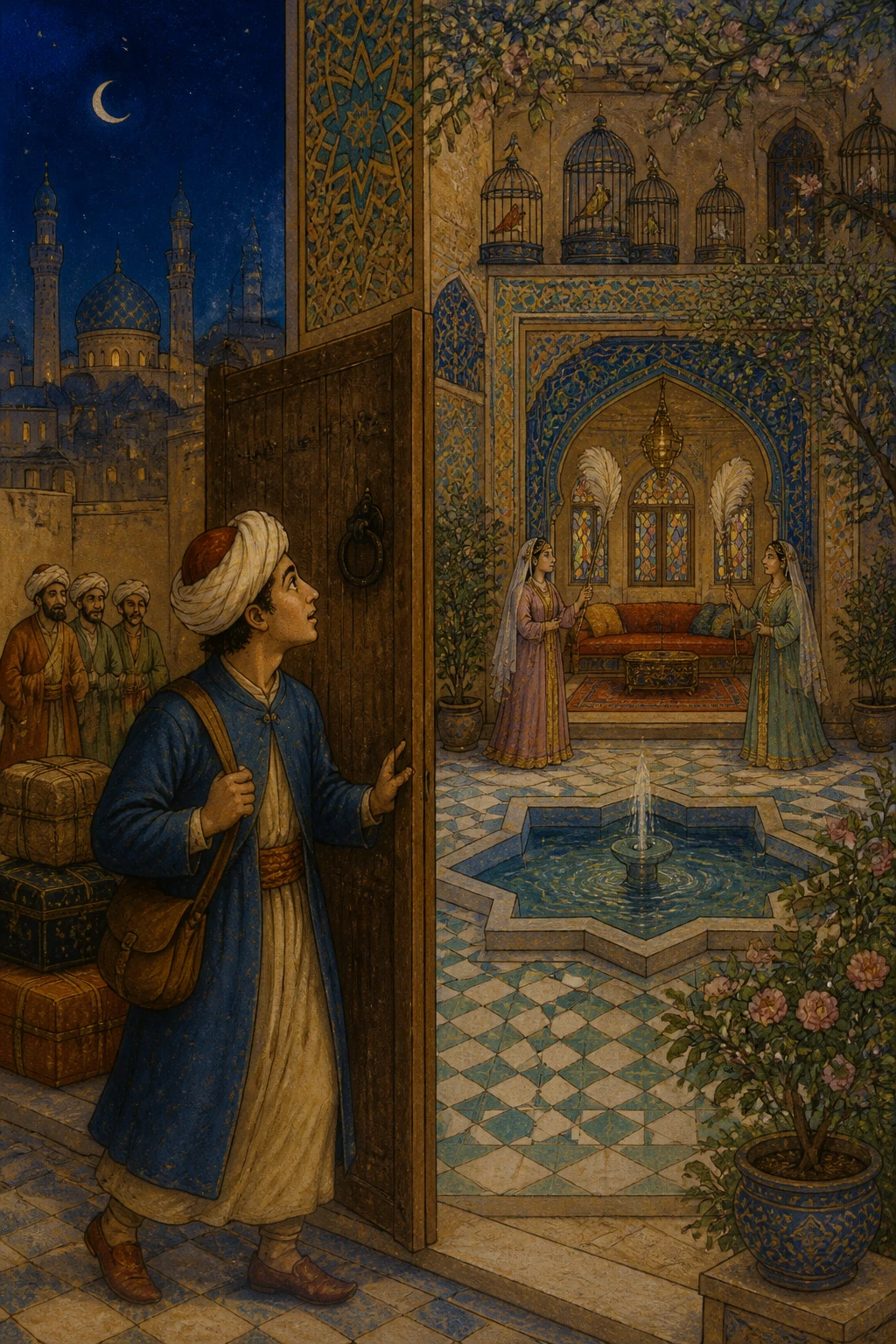
She said, “It has reached me, O fortunate King, that the king’s son said to his father, ‘I must travel to Baghdad and reach it.’ When his father saw how firmly he was resolved, he furnished him with merchandise worth thirty thousand dinars and sent him off with merchants he trusted, commending his son to their care. Then his father bade him farewell and returned home. The boy continued on his journey with his merchant companions until they reached Baghdad, the Abode of Peace. Upon their arrival, he went into the market and rented a beautiful house whose loveliness bewildered his mind and dazzled his eyes. Birds sang there, its reception rooms faced one another, its floors were paved with colored marble, and its ceilings were adorned with gold and mineral lapis lazuli. He asked the doorkeeper how much the rent was each month. ‘Ten dinars,’ he replied. The boy said, ‘Are you speaking the truth, or are you mocking me?’ The doorkeeper answered, ‘By Allah, I speak nothing but the truth. Everyone who takes this house stays no more than a week or two.’ ‘And why is that?’ asked the boy. He replied, ‘My son, no one who lives here leaves it except sick or dead. The house is notorious for this among all the people, so no one ventures to live in it, and that is why its rent has fallen so low.’
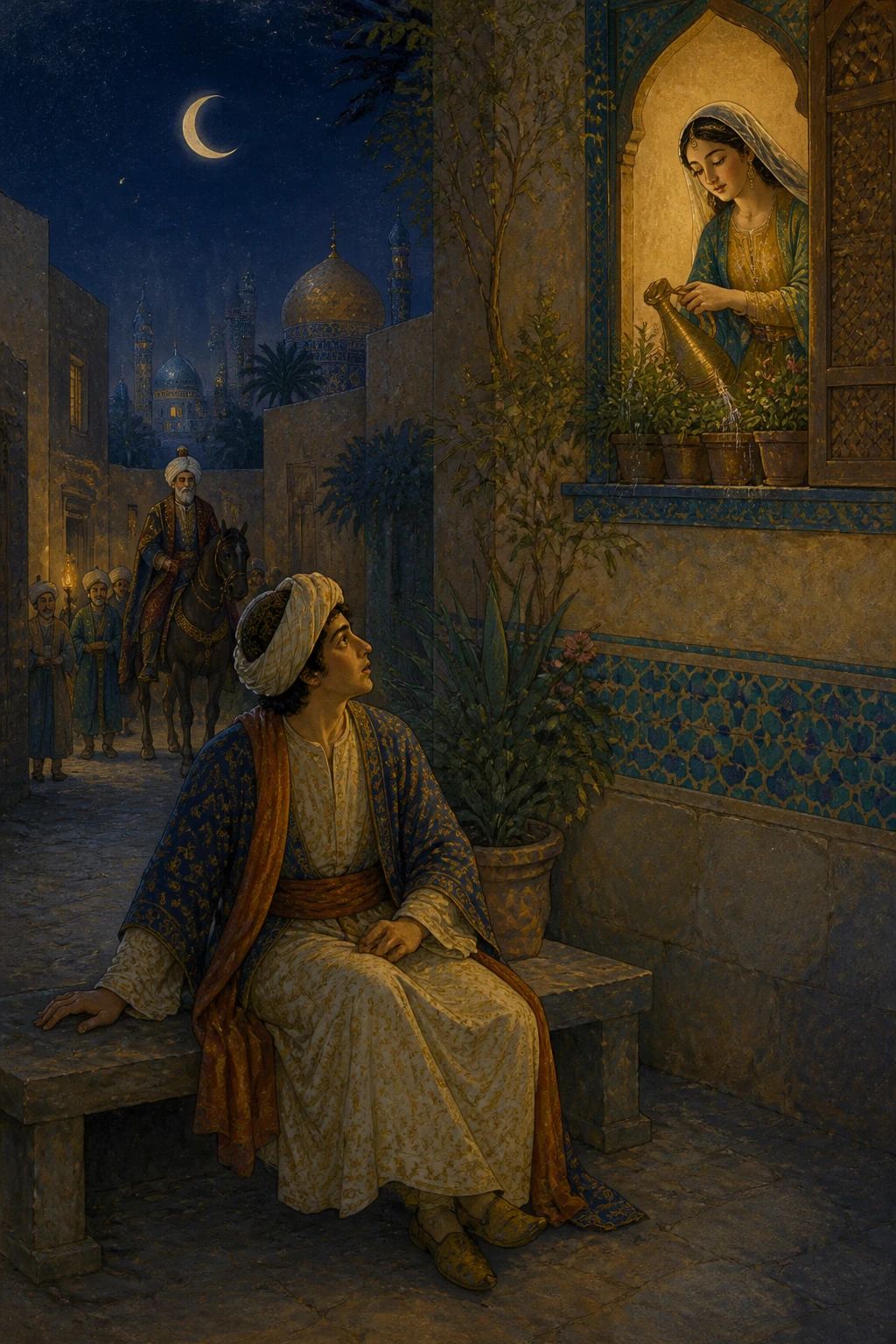
When the boy heard this, he marveled greatly and said, ‘There must be some cause within this house for such sickness and death.’ Then he reflected, sought refuge in Allah from Satan the accursed, banished these misgivings from his mind, and settled there, buying and selling. Some days passed while he lived in the house, and none of the things the doorkeeper had spoken of befell him. One day, as he sat at the door, a gray-haired old woman passed by, looking like a spotted serpent. She was ceaselessly praising and glorifying Allah, and removing stones and other harmful things from the road. Seeing the boy seated at the door, she stared at him in astonishment. He said to her, ‘Woman, do you know me, or have you mistaken me for someone else?’ At his words she hurried over, greeted him, and asked, ‘How long have you lived in this house?’ ‘Two months, mother,’ he replied. She said, ‘That is what astonished me. I do not know you, my son, nor do you know me, and I have not mistaken you for anyone. I was only amazed, for everyone but you who has lived here has left it dead or sick. I have no doubt, my son, that you are risking your young life. Have you not gone up to the top of the house or looked out from its belvedere?’ Then the old woman went on her way. After she had left him, the boy pondered her words and said to himself, ‘I have never gone to the top of the house, nor did I know it had a belvedere.’ He went inside at once and searched through the house until, in one corner among the trees, he found a little door hung with cobwebs. Seeing it, he said to himself, ‘Perhaps the spiders have spun their webs across this door only because death lies within.’ But he took courage from the words of Allah Most High: ‘Say: Nothing shall befall us save what Allah has ordained for us.’ Then he opened the door and climbed a narrow stairway to the top, where he found a belvedere. He sat down to rest and enjoy the view, and saw a lovely, well-kept place surmounted by a lofty pavilion overlooking all Baghdad. In that pavilion was a young woman like a houri. She seized his heart and robbed him of his reason and senses, bequeathing him the patience of Job and the sorrow of Jacob. When he had gazed at her and taken in her beauty, he said to himself, ‘Perhaps it is because of this young woman that people say no one lives in this house without falling sick or dying. If only I knew how I might escape! My reason has deserted me.’
Then he came down from the top of the house, brooding over his plight, and sat indoors. But he could find no rest, so he went out and sat at the door, bewildered and distressed. Just then the old woman came along the road, repeating her prayers and praises. When the boy saw her, he rose to his feet and greeted her first, saying, ‘Mother, I was well and sound until you prompted me to open that door. I found the belvedere, opened it, and looked out from above, and there I saw what overwhelmed me. Now I fear I am doomed, and I know that no one but you can cure me.’ Hearing this, she laughed and said, ‘No harm shall come to you, if Allah Most High wills.’ At these words the boy went into the house and came back with a hundred dinars in his sleeve. ‘Take these, mother,’ he said, ‘and deal with me as a master deals with his servant. Come quickly to my aid, for if I die, you will answer for my blood on the Day of Resurrection.’ The old woman replied, ‘Gladly and with all my heart. I ask only that you give me a little help, my son, and through it you shall attain your desire.’ ‘What do you want, mother?’ he asked. She said, ‘I want you to help me by going to the silk market and asking for the shop of Abu al-Fath ibn Qaydam. When they direct you to it, sit down at his shop, greet him, and say, “Show me the veil you have with the design in gold.” There is nothing finer in his shop. Buy it from him, my son, however high the price, and keep it with you until I come tomorrow, if Allah Most High wills.’
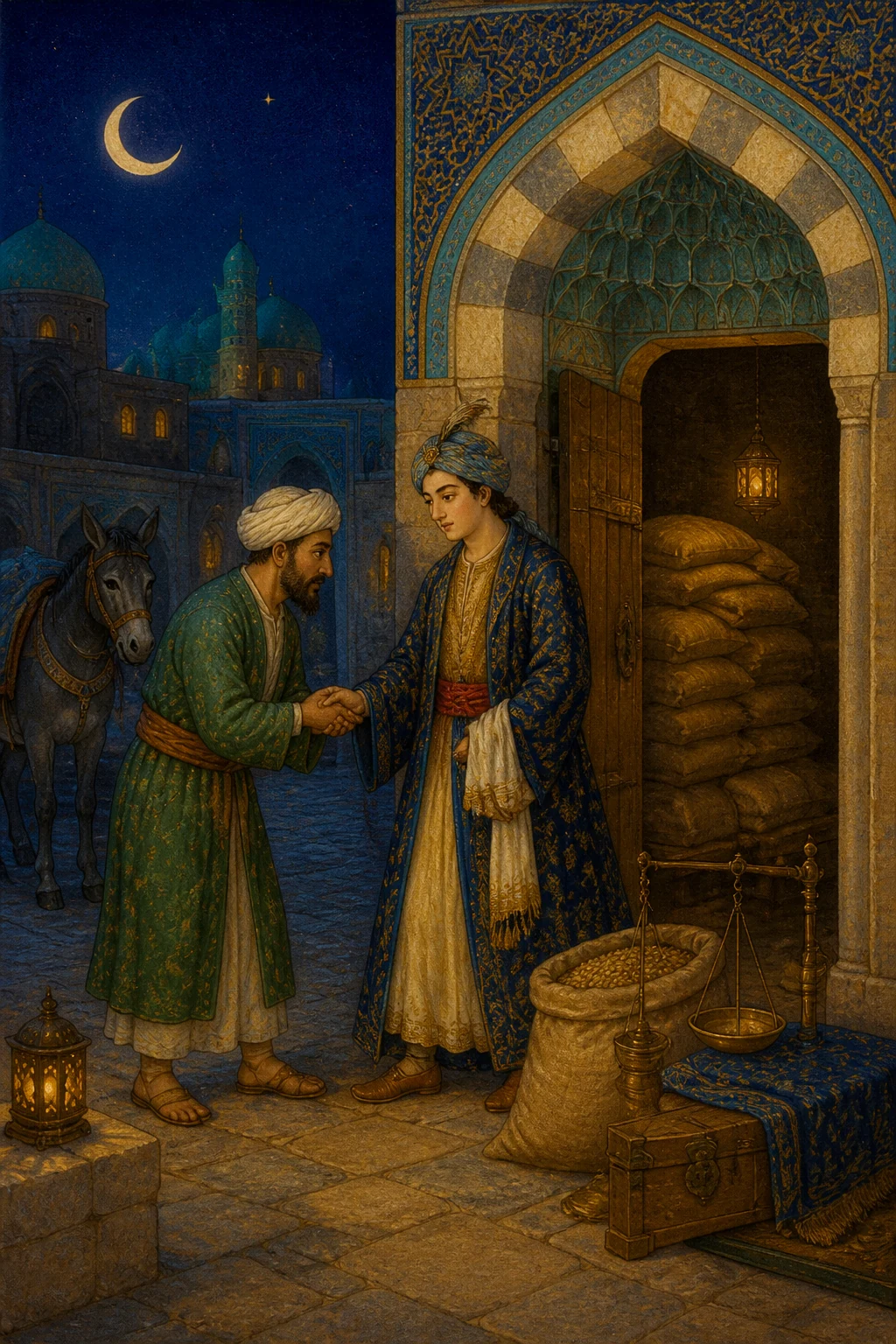
Then the old woman departed, and the boy spent that night tossing as though upon the glowing coals of the ghada tree. When morning came, he put a thousand dinars in his pocket and went to the silk market, where he asked for Abu al-Fath’s shop. One of the merchants directed him to it. When he arrived, he saw pages, servants, and attendants standing before the merchant, who was a man of dignity and great wealth. To crown his blessings, he possessed that young woman, whose equal was not to be found even among the sons of kings. The boy greeted him, and the merchant returned his greeting and invited him to sit. When he had seated himself beside him, the boy said, ‘Merchant, I would like to see such-and-such a veil.’ The merchant ordered a slave to bring him a bundle of silk from the back of the shop. The slave brought it, and he opened it and took out several veils whose beauty left the boy astonished. Among them he was shown the very veil he sought. He bought it from the merchant for fifty dinars and returned home delighted. And dawn overtook Shahrazad, and she fell silent, leaving her tale untold.
When it was the six hundredth night
She said, “It has reached me, O fortunate King, that when the boy had bought the veil from the merchant, he took it home. Just then the old woman arrived. When he saw her, he rose to his feet and gave her the veil. She said, ‘Bring me a glowing coal.’ He brought it, and she held the edge of the veil close to the coal and scorched it. Then she folded it as before, took it, and went to Abu al-Fath’s house. When she arrived, she knocked at the door. Hearing her voice, the young woman rose and opened it. The old woman was a friend of her mother’s, and the young woman knew her through that friendship. She asked, ‘What do you need, mother? My mother has left me and gone home.’ The old woman replied, ‘My daughter, I know your mother is not here. I have just been with her at her house. I have come only because I fear the hour of prayer will pass, and I wish to perform my ablutions here, for I know you are clean and your house is pure.’ The young woman gave her leave to enter. Once inside, the old woman greeted her and invoked blessings upon her, then took the ewer and went into the privy. She performed her ablutions and said her prayers in a place nearby. Afterward she rose and said to the young woman, ‘My daughter, I fear the servants have walked over the place where I prayed and that it is unclean. Find me another place to pray, for the prayers I have just offered are invalid.’ The young woman took her by the hand and said, ‘Come, mother, and pray upon the couch where my husband sits.’ When she had led her to the couch, the old woman began to pray, supplicate, and bow. Then, when the young woman was not looking, she slipped the veil under the cushion unseen. When she had finished her prayers, she invoked blessings upon her hostess, rose, and left.
At the end of the day the merchant, her husband, came home and sat upon the couch. She brought him food, and he ate his fill and washed his hands. Then he leaned back against the cushion and saw the edge of the veil protruding from beneath it. He drew it out, and when he saw it he recognized it and suspected his wife of adultery. He called her and said, ‘Where did you get this veil?’ She swore solemn oaths and said, ‘No one but you has come to me.’ The merchant kept silent for fear of scandal, saying to himself, ‘If I open this door, I shall be disgraced throughout Baghdad,’ for he was one of the caliph’s companions. He could do nothing but hold his tongue, and spoke not another word to his wife. The young woman’s name was Mahziyya. He called her and said, ‘I have heard that your mother is lying ill with a pain in her heart, and all the women are gathered about her, weeping over her. I bid you go to her.’ The young woman went to her mother, but when she entered the house she found her in good health. She had been sitting with her for a little while when porters arrived, bringing her belongings from the merchant’s house. They carried over all her furnishings and possessions. At the sight, her mother said, ‘My daughter, what has happened to you?’ But she could give her no explanation. Then her mother wept and grieved over her daughter’s separation from that man.
Some days later the old woman came to the young woman at her mother’s house. She greeted her with great affection and said, ‘What is the matter, my dear daughter? You have troubled my thoughts.’ Then she went in to the girl’s mother and said, ‘Sister, what has happened? What is the story between the girl and her husband? I have heard he has divorced her. What fault has she committed to deserve all this?’ The mother answered, ‘Perhaps, through your blessing, her husband may take her back. Pray for her, sister, for you fast by day and spend your nights in prayer.’ When the girl, her mother, and the old woman were together in the house, talking among themselves, the old woman said, ‘My daughter, do not grieve. If Allah Most High wills, I shall reunite you with your husband within a few days.’ Then she went to the boy and said, ‘Prepare a fine gathering for us, for I shall bring her to you tonight.’ The boy rose and provided all the food and drink they would need, then sat waiting for them. Meanwhile the old woman went to the girl’s mother and said, ‘Sister, we have a wedding celebration. Send the girl with me so that she may enjoy herself and be rid of her sorrow and distress. Then I shall bring her back to you just as I took her.’ Her mother rose, dressed her in her finest clothes, and adorned her with her loveliest jewels and garments. The girl went out with the old woman, and her mother accompanied them to the door, charging the old woman, ‘Take care that no one in all Allah’s creation sees her, for you know her husband’s standing with the caliph. Do not linger, but bring her back as soon as you can.’ The old woman took her away and led her to the boy’s house, while the girl supposed it was the house where the wedding was being held. When she entered the house and reached the reception hall … And dawn overtook Shahrazad, and she fell silent, leaving her tale untold.
When it was the six hundred and first night
She said, “It has reached me, O fortunate King, that when the young woman entered the house and reached the reception hall, the boy sprang toward her, embraced her, and kissed her hands and feet. She was dazzled by his beauty and imagined that the place, with all its perfumes, food, and drink, must be a dream. Seeing her bewilderment, the old woman said, ‘Allah’s name be upon you, my daughter! Do not be afraid. I am staying here and shall not leave you for a single moment. You are well suited to him, and he to you.’ The young woman sat down, overcome with shyness. The boy kept teasing her, making her laugh, and entertaining her with poems and stories until her heart opened and she grew at ease. She ate and drank, and when the wine had warmed her, she took up the lute and sang, inclining with tender longing toward the handsome boy. When he saw this, he grew drunk without wine and would gladly have given his life for her. The old woman withdrew, then returned in the morning and wished them good day. She asked the young woman, ‘How was your night, my lady?’ ‘It was delightful,’ she replied, ‘thanks to your great kindness and your good offices.’ Then the old woman said, ‘Come, let us go to your mother.’ When the boy heard her words, he brought out a hundred dinars and said, ‘Leave her with me tonight.’ The old woman left them and went to the girl’s mother, saying, ‘Your daughter sends you greetings. The bride’s mother has made her swear to spend tonight with her.’ Her mother replied, ‘Sister, give them both my greetings. If the girl is happy there, there is no harm in her staying the night so that she may enjoy herself and return at her leisure. My only fear for her is the grief her husband has caused her.’
The old woman continued to put off the girl’s mother with one excuse after another until the girl had stayed seven days, and every day she took a hundred dinars from the boy. When those days had passed, the mother said to her, ‘Bring me my daughter this very moment. My heart is troubled over her. She has been away too long, and I have begun to fear something is amiss.’ The old woman left, angry at her words, then went to the girl, took her by the hand, and led her away from the boy, who lay asleep on his bed, drunk with wine. They returned to the girl’s mother, who greeted her with a cheerful face and was overjoyed to see her. She said, ‘My daughter, I have been so anxious about you that I spoke harshly to my sister and hurt her feelings.’ The girl replied, ‘Rise and kiss her hands and feet, for she waited on my every need like a servant. If you do not do as I ask, I am no daughter of yours, and you are no mother of mine.’ Her mother rose at once and made peace with the old woman. Meanwhile the boy awoke from his drunken sleep and did not find the girl, but he rejoiced in all he had enjoyed, for his desire had been fulfilled.
Then the old woman went to the boy, greeted him, and asked, ‘What do you think of what I have done?’ He replied, ‘Your judgment and management were excellent.’ She said, ‘Come, let us mend what we have spoiled and return this young woman to her husband, for we were the cause of their separation.’ ‘What shall I do?’ he asked. She answered, ‘Go to the merchant’s shop, sit with him, and greet him. I shall pass by the shop, and when you see me, get up quickly, seize me, pull me by my clothes, abuse me, threaten me, and demand the veil. Say to the merchant, “My lord, do you remember the veil I bought from you for fifty dinars? It happened, sir, that my slave girl wore it and scorched a little of its edge. She gave it to this old woman to take to someone who could darn it, but the old woman took it and went away, and I have not seen her from that day to this.”’ The boy replied, ‘Gladly and with all my heart.’ He went straight to the merchant’s shop and sat with him for a while. Presently the old woman passed, carrying a string of prayer beads and telling them as she went. When he saw her, he sprang up from the shop, caught her by her clothes, and began to curse and revile her. She answered him gently, saying, ‘My son, you have every right.’ The people of the market gathered around her and asked, ‘What is the matter?’ He said, ‘Good people, I bought a veil from this merchant for fifty dinars. My slave girl wore it for a single hour, then sat down to perfume it with incense. A spark flew up and scorched its edge, so we gave it to this old woman to take to someone who could darn it and then bring it back to us. Since that moment we have never seen her.’ The old woman said, ‘This young man speaks the truth. Yes, I took it, and then entered one of the houses I am accustomed to visit. I forgot it in one of those places and did not know where I had left it. I am a poor woman and was afraid of its owner, so I did not dare face him.’ All this while the merchant, the young woman’s husband, was listening to her words. And dawn overtook Shahrazad, and she fell silent, leaving her tale untold.
When it was the six hundred and second night
She said, “It has reached me, O fortunate King, that when the boy seized the old woman and spoke to her about the veil as she had instructed him, the merchant, the young woman’s husband, heard everything from beginning to end. When he learned the story that the cunning old woman had contrived with the boy, he rose to his feet and said, ‘Allah is most great! I ask Almighty Allah to forgive my sins and the suspicions that entered my heart.’ He praised Allah for revealing the truth to him, then turned to the old woman and asked, ‘Do you visit our house?’ She replied, ‘My son, I visit your house and other houses seeking alms, but since that day no one has given me any news of the veil.’ The merchant asked, ‘Did you ask anyone about it at our house?’ She answered, ‘My lord, I went to the house and inquired, but they told me the merchant had divorced its mistress. So I went away and have asked no one else from that day to this.’ The merchant turned to the boy and said, ‘Let this old woman go, for the veil is with me.’ He brought it out of the shop and gave it to a darner before all those present. Afterward he went to his wife, gave her some money, and took her back, offering the most earnest apologies and asking Allah’s forgiveness, all unaware of what the old woman had done. Such, O King, is one example of women’s wiles.”
Izvirnik
حكاية ابن التاجر والدار الحسن المليح - الليالي ٥٩٨ إلى ٦٠٢
Naslednje strani prikazujejo izvirno besedilo za primerjavo.
فلما كانت الليلة ٥٩٨
فقال له الوزير: بلغني أيها الملك أن تاجرًا كان كثير المال، وكان له ولد يعزُّ عليه، فقال الولد لوالده يومًا من الأيام: يا والدي، أتمنى عليك أمنية تفرج عني بها. فقال له أبوه: وما هي يا ولدي حتى أعطيكها؟ ولو كانت نور عيني لأبلغك به مقصودك. فقال له الولد: أتمنى عليك أن تعطيني شيئًا من المال أسافر به مع التجار إلى بلاد بغداد لأتفرج عليها، وأنظر قصور الخلفاء؛ لأن أولاد التجار وصفوا لي ذلك، وقد اشتقت أن أنظر إليها. فقال له والده: يا بني، مَن له صبر على غيبتك؟ فقال له الولد: أنا قلت لك هذه الكلمة، ولا بد من السير إليها برضاء أو بغير رضاء، فقد وقع في نفسي وَجْد لا يزول إلا بالوصول إليها. وأدرك شهرزاد الصباح فسكتَتْ عن الكلام المباح.
فلما كانت الليلة ٥٩٩
قالت: بلغني أيها الملك السعيد، أن ابن الملك قال لأبيه: لا بد من السفر والوصول إلى بغداد. فلما تحقَّقَ منه ذلك جهَّزَ له متجرًا بثلاثين ألف دينار، وسفَّرَه مع التجار الذين يثق بهم، ووصَّى عليه التجار. ثم إن والده ودَّعه ورجع إلى منزله، وما زال الولد مسافرًا مع رفقائه التجار إلى أن وصلوا إلى مدينة بغداد دار السلام، فلما بلغوها دخل الولد سوقها واكترى له دارًا حسنة مليحة أذهلت عقله، وأدهشت ناظره، فيها الطيور تغرد، والمجالس يقابل بعضها بعضًا، وأرضها مرخمة بالرخام الملون، وسقوفها مذهَّبة باللازورد المعدني، فسأل البواب عن مقدار أجرتها كم في الشهر؟ فقال له: عشرة دنانير. فقال له الولد: هل أنت تقول حقًّا أو تهزأ بي؟ فقال له البواب: والله لا أقول إلا حقًّا، فإن كل مَن سكن هذه الدار لا يسكنها إلا جمعة أو جمعتين. فقال له الولد: وما السبب في ذلك؟ فقال له: يا ولدي، كلُّ مَن سكنها لا يخرج منها إلى مريضًا أو ميتًا، وقد اشتهرت هذه الدار بهذه الأشياء عند جميع الناس، فلم يقدم أحد على سكناها، وقد قلَّتْ أجرتها لهذا القدر.
فلما سمع الولد ذلك تعجَّبَ منه غاية العجب وقال: لا بد أن يكون لهذه الدار سببٌ من الأسباب حتى يحصل فيها ذلك المرض أو الموت. ثم تفكَّرَ الولد في نفسه واستعاذ بالله من الشيطان الرجيم، وأزال ذلك الوهم من خاطره، وسكنها وباع واشترى، ومضى عليه مدة أيام وهو مقيم في الدار ولم يُصِبْه شيء مما قاله ذلك البواب. فبينما هو جالس يومًا من الأيام على باب الدار، إذ مرت عليه عجوز شمطاء كأنها الحية الرقطاء، وهي تُكثِر من التسبيح والتقديس، وتزيل الحجارة والأذى من الطريق، فرأت الولد جالسًا على الباب، فنظرت إليه وتعجبت من أمره، فقال لها الولد: يا امرأة، هل تعرفينني أو تشبِّهين عليَّ؟ فلما سمعت كلامه هرولت إليه وسلَّمَتْ عليه، وقالت له: كم لك ساكنًا في هذه الدار؟ فقال لها: يا أمي مدة شهرين. فقالت: من هذا تعجَّبْتُ، وأنا يا ولدي لا أعرفك ولا تعرفني ولا شبَّهْتُ عليك، بل إني تعجبت من أنه لا أحد غيرك يسكنها إلا ويخرج منها ميتًا أو مريضًا، وما أشك في أنك يا ولدي مُخاطِرٌ بشبابك، هل لا طلعت القصر ولا نظرت من المنظرة التي فيه؟ ثم إن العجوز مضت إلى حال سبيلها، فلما فارقته العجوز صار الولد متفكرًا في كلامها، وقال في نفسه: أنا ما طلعتُ أعلى القصر ولا أعلم أن به منظرة. ثم دخل من وقته وساعته وجعل يطوف في أركان البيت حتى رأى في ركن منها بابًا لطيفًا معشِّشًا عليه العنكبوت بين الأشجار، فلما رآه الولد قال في نفسه: لعل العنكبوت ما عشَّشَ على هذا الباب إلا لأن المنية داخله. فتمسَّكَ بقول الله تعالى: قُلْ لَنْ يُصِيبَنَا إِلَّا مَا كَتَبَ اللَّهُ لَنَا ، ثم فتح ذلك الباب وطلع في سلم لطيف حتى وصل إلى أعلاه، فرأى منظرة، فجلس فيها يستريح ويتفرج، فنظر إلى موضع لطيف نظيف بأعلاه مقعد منيف يشرف على جميع بغداد، وفي ذلك المقعد جارية كأنها حورية، فأخذت بمجامع قلبه، وذهبت بعقله ولبه، وأورثته صبر أيوب وحزن يعقوب، فلما نظرها الولد وتأمَّلَها بالتحقيق قال في نفسه: لعل الناس يذكرون أنه لا يسكن هذه الدار واحد إلا مات أو مرض بسبب هذه الجارية، فيا ليت شعري كيف يكون خلاصي؟ فقد ذهب عقلي.
ثم نزل من أعلى القصر متفكرًا في أمره، فجلس في الدار فلم يستقر له قرار حتى خرج وجلس على الباب متحيرًا في أمره، وإذا بالعجوز ماشية وهي تذكر وتسبِّح في الطريق، فلما رآها الولد قام واقفًا على قدميه، وبدأها بالسلام والتحية، وقال لها: يا أمي، كنتُ بخير وعافية حتى أشرتِ عليَّ بفتح الباب، فرأيت المنظرة وفتحتها ونظرت من أعلاها فرأيت ما أدهشني، والآن أظن أني هالك، وأنا أعلم أنه ليس لي طبيب غيرك. فلما سمعته ضحكت وقالت له: لا بأس عليك إن شاء الله تعالى. فلما كلمته بذلك الكلام قام الولد ودخل الدار وخرج لها وفي كمه مائة دينار، وقال لها: خذيها يا أمي وعامليني معاملة السادات للعبيد، وبالعجل أدركيني، وإذا مت فأنت المطالبة بدمي يوم القيامة. فقالت له العجوز: حبًّا وكرامةً، وإنما أريد منك يا ولدي أن تساعدني بمعونة لطيفة فيها تبلغ مرادك. فقال لها: وما تريدين يا أمي؟ فقالت: أريد منك أن تعينني وتروح إلى سوق الحرير، وتسأل عن دكان أبي الفتح بن قيدام، فإذا دلوك عليه فاقعد على دكانه وسلِّم عليه، وقل له: أعطني القناع الذي عندك مرسومًا بالذهب. فإنه ما عنده في دكانه أحسن منه، فاشتَرِه منه يا ولدي بأغلى ثمن، واجعله عندك حتى أحضر إليك في غدٍ إن شاء الله تعالى.
ثم إن العجوز انصرفت وبات الولد تلك الليلة يتقلَّب على جمر الغضا، فلما أصبح الصباح أخذ الولد في جيبه ألف دينار وذهب بها إلى سوق الحرير وسأل عن دكان أبي الفتح، فأخبره به رجل من التجار، فلما وصل إليه رأى بين يديه غلمانًا وخدمًا وحشمًا، ورأى عليه وقارًا وهو في سعة مال، ومن تمام نعمته تلك الجارية التي ما مثلها عند أبناء الملوك. ثم إن الولد لما نظره سلَّمَ عليه، فردَّ عليه السلام، ثم أمره بالجلوس فجلس عنده، فقال له الولد: يا أيها التاجر، أريد منك القناع الفلاني لأنظره. فأمر التاجر العبد أن يأتيه بربطة من الحرير من صدر الدكان، فأتاه بها ففتحها، وأخرج منها عدة قناعات، فتحيَّرَ الولد من حُسْنها وأرى ذلك القناع بعينه، فاشتراه من التاجر بخمسين دينارًا، وانصرف به مسرورًا إلى داره. وأدرك شهرزاد الصباح فسكتَتْ عن الكلام المباح.
فلما كانت الليلة ٦٠٠
قالت: بلغني أيها الملك السعيد أن الولد لما اشترى القناع من التاجر أخذه وانصرف به إلى داره، وإذا هو بالعجوز قد أقبلَتْ، فلما رآها قام لها على قدميه وأعطاها ذلك القناع، ثم قالت له: أحضر لي جمرة نار. فأحضر الولد النار، فقربت طرف القناع من الجمرة فأحرقت طرفه، ثم طوته كما كان وأخذته وانصرفت به إلى بيت أبي الفتح، فلما وصلت طرقت الباب، فلما سمعت الجارية صوتها قامت وفتحت لها الباب، وكان للعجوز صحبة بأم الجارية وهي تعرفها؛ وذلك بسبب أنها رفيقة أمها، فقالت لها الجارية: وما حاجتك يا أمي؟ إن والدتي خرجت من عندي إلى منزلها. فقالت لها العجوز: يا بنتي أنا عارفة أن أمك ليست عندك، وأنا كنت عندها في الدار، وما جئت إليك إلا خوف فوات وقت الصلاة، فأريد الوضوء عندك، فإني أعلم منك أنك نظيفة ومنزلك طاهر. فأذنت لها الجارية بالدخول عندها، فلما دخلت سلمت عليها ودعت لها، ثم أخذت الإبريق ودخلت بيت الخلاء، ثم توضأت وصلت في موضع، وقامت بعد ذلك للجارية وقالت لها: يا بنتي، أظن أن هذا الموضع الذي صليت فيه مشى فيه الخدم وأنه نجس، فانظري لي موضعًا آخَر لأصلي فيه، فإني أبطلت الصلاة التي صليتها. فأخذتها الجارية من يدها وقالت لها: يا أمي تعالي صلي على فرشي الذي يجلس عليه زوجي. فلما أوقفتها على الفراش قامت تصلي وتدعو وتركع، ثم غافلت الجارية وجعلت ذلك القناع تحت المخدة من غير أن تنظرها، ولما فرغت من الصلاة دعت لها وقامت فخرجت من عندها.
فلما كان آخِر النهار، دخل التاجر زوجها فجلس على الفراش، فأتته بطعام فأكل منه كفايته وغسل يديه، ثم اتكأ على الوسادة وإذا بطرف القناع خارج من تحت المخدة، فأخرجه من تحتها، فلما نظره عرفه، فظنَّ بالجارية الفحشاء، فناداها وقال لها: من أين لك هذا القناع؟ فحلفت له أيمانًا وقالت له: إنه لم يأتني أحدٌ غيرك. فسكت التاجر خوفًا من الفضيحة، وقال في نفسه: متى فتحَتْ هذا الباب افتضحتُ في بغداد؛ لأن ذلك التاجر كان جليس الخليفة. فلم يسعه إلا السكوت، ولم يخاطب زوجته بكلمة واحدة، وكان اسم الجارية محظية، فناداها وقال لها: قد بلغني أن أمك راقدة ضعيفة من وجع قلبها، وجميع النساء عندها يتباكين عليها، وقد أمرتك أن تخرجي إليها. فمضت الجارية إلى أمها، فلما دخلت الدار وجدت أمها طيبة، فجلست ساعة وإذا بالحمَّالين قد أقبلوا عليها بنقل حوائجها من دار التاجر، فنقلوا جميع ما في الدار من الأمتعة، فلما رأت ذلك أمها قالت: يا بنتي، أي شيء جرى لكِ؟ فأنكرت منها ذلك، ثم بكت أمها وحزنت على فراق بنتها من ذلك الرجل.
ثم إن العجوز بعد مدة من الأيام جاءت إلى الجارية وهي في المنزل، فسلمت عليها باشتياق وقالت لها: ما لك يا بنتي يا حبيبتي قد شوشتِ فكري؟ ودخلت على أم الجارية فقالت لها: يا أختي، ما الخبر؟ وما حكاية البنت مع زوجها؟ فإنه قد بلغني أنه طلَّقَها، فأي شيء لها من الذنب يوجب هذا كله؟ فقالت لها أم الجارية: لعل زوجها يرجع إليها ببركتك، فادعي لها يا أختي، فإنك صوَّامة قوَّامة طول ليلك. ثم إن البنت لما اجتمعت هي وأمها والعجوز في البيت وتحدثن مع بعضهن، قالت لها العجوز: يا ابنتي، لا تحملي همًّا، إن شاء الله تعالى أجمع بينك وبين زوجك في هذه الأيام. ثم خرجت إلى الولد وقالت له: هيِّئ لنا مجلسًا مليحًا، فإني آتيك بها في هذه الليلة. فنهض الولد وأحضر ما يحتجن إليه من الأكل والشرب، وقعد في انتظارهما، فجاءت العجوز إلى أم الجارية وقالت لها: يا أختي، عندنا فرح فأرسلي البنت معي لتتفرج ويزول ما بها من الهم والغم، ثم أرجع بها إليك مثل ما أخذتها من عندك. فقامت أم الجارية وألبستها أفخر ملبوسها وزينتها بأحسن الزينة من الحلي والحلل، وخرجت مع العجوز وذهبت أمها معها إلى الباب، وصارت توصي العجوز وتقول لها: احذري أن ينظرها أحد من خلق الله تعالى، فإنك تعلمين منزلةَ زوجها عند الخليفة، ولا تتعوقي وارجعي بها في أسرع وقت. فأخذتها العجوز إلى أن وصلت بها إلى منزل الولد، والجارية تظن أنه منزل العرس، فلما دخلت الدار ووصلت إلى قاعة الجلوس … وأدرك شهرزاد الصباح فسكتَتْ عن الكلام المباح.
فلما كانت الليلة ٦٠١
قالت: بلغني أيها الملك السعيد، أن الجارية لما دخلت الدار ووصلت إلى قاعة الجلوس، وثب الولد إليها وعانقها وقبَّلَ يديها ورجليها، فاندهشت الجارية من حُسْن الولد، وتخيلت أن ذلك المكان، وجميع ما فيه من مشموم ومأكول ومشروب منام، فلما نظرت العجوز اندهاشها قالت لها: اسم الله عليك يا بنتي، فلا تخافي، وأنا قاعدة ولا أفارقك ساعة واحدة، وأنت تصلحين له وهو يصلح لك. فقعدت الجارية وهي في شدة الخجل، فلم يزل الولد يلاعبها ويضاحكها ويؤانسها بالأشعار والحكايات حتى انشرح صدرها وانبسطت، فأكلت وشربت، ولما طاب لها الشراب أخذت العود وغنَّتْ، ولحُسْن الولد مالت وحنَّتْ، فلما رأى الولد منها ذلك سكر من غير مدام، وهانت عليه روحه، وخرجت العجوز من عندهما، ثم أتتهما في الصباح وصبحت عليهما، ثم قالت للجارية: كيف كانت ليلتك يا سيدتي؟ فقالت لها: كانت طيبة بطول أياديكِ وحُسْن تعرُّضك. ثم قالت لها: قومي نروح إلى أمك. فلما سمع الولد كلام العجوز أخرج لها مائة دينار وقال لها: خليها عندي هذه الليلة. فخرجت العجوز من عندهما، ثم ذهبت إلى والدة الجارية وقالت لها: بنتك تسلِّم عليك، وأم العروسة قد حلفت عليها أنها تبيت عندها هذه الليلة. فقالت لها أمها: يا أختي، سلِّمي عليهما، وإذا كانت الجارية منشرحة لذلك فلا بأسَ ببياتها حتى تنبسط وتجيء على مهلها، فإني ما أخاف عليها إلا من القهر من جهة زوجها.
وما زالت العجوز تعمل لأم الجارية حيلة بعد حيلة إلى أن مكثت سبعة أيام، وكل يوم تأخذ من الولد مائة دينار، فلما مضت هذه الأيام قالت أم الجارية للعجوز: هات لي بنتي في هذه الساعة، فإن قلبي مشغول عليها، وقد طالت مدة غيبتها وتوهمت من ذلك. فخرجت العجوز من عندها غضبانة من كلامها، ثم جاءت إلى الجارية ووضعت يدها في يدها، ثم خرجتا من عند الولد وهو نائم على فراشه من سكر المدام إلى أن وصلتا إلى أم الجارية، فالتفتت أمها إليها ببسط وانشراح، وفرحت بها غاية الفرح، وقالت لها: يا بنتي، إن قلبي مشغول بكِ، ووقعت في حق أختي بكلام أوجعتها به. فقالت لها: قومي وقبلي يديها ورجليها، فإنها كانت لي كالخادم في قضاء حاجتي، وإن لم تفعلي ما أمرتك به فما أنا بنتك ولا أنت أمي. فقامت من وقتها وصالحتها. ثم إن الولد قام من سكره فلم يجد الجارية؛ لكنه استبشر بما ناله لما بلغ مقصوده.
ثم إن العجوز ذهبت إلى الولد وسلمت عليه، وقالت له: ماذا رأيتَ من فعالي؟ فقال لها: نِعْمَ ما فعلتِه من الرأي والتدبير. ثم قالت له: تعالَ لنصلح ما أفسدنا، ونرد هذه الجارية إلى زوجها، فإننا كنا سبب الفراق بينهما. فقال لها: وكيف أفعل؟ قالت: تذهب إلى دكان التاجر وتقعد عنده وتسلم عليه، وأنا أفوت على الدكان، فلما تنظرني قم إليَّ من الدكان بسرعة واقبض عليَّ واجذبني من ثيابي واشتمني، وخوِّفني وطالبني بالقناع، وقل للتاجر: أنت يا مولاي ما تعرف القناع الذي اشتريته منك بخمسين دينارًا؟ فقد حصل يا سيدي أن جاريتي لبسته فاحترق منها موضع من طرفه، فأعطته جاريتي لهذه العجوز تعطيه لأحد يرفوه لها، فأخذته ومضت ولم أرها من ذلك اليوم. فقال لها الولد: حبًّا وكرامة. ثم إن الولد تمشى من وقته وساعته إلى دكان التاجر وجلس عنده ساعة، وإذا بالعجوز جائزة على الدكان، وبيدها سبحة تسبح بها، فلما رآها قام على رجليه من الدكان وجذبها من ثيابها وصار يشتمها ويسبها، وهي تكلمه بلطافة وتقول له: يا ولدي، أنت معذور. فاجتمع أهل السوق عليها وقالوا: ما الخبر؟ فقال: يا قوم، إنني اشتريت من هذا التاجر قناعًا بخمسين دينارًا، ولبسته الجارية ساعة واحدة، فقعدت تبخره فطارت شرارة فأحرقت طرفه، فدفعناه إلى هذه العجوز على أنها تعطيه لمَن يرفوه وترده لنا، فمن ذلك الوقت ما رأيناها أبدًا. فقالت العجوز: صدق هذا الولد، نعم إني أخذته ودخلت به بيتًا من البيوت التي أدخلها على عادتي، فنسيته في موضع من تلك الأماكن، ولم أدرِ في أي موضع هو، وأنا امرأة فقيرة وخفت من صاحبه، فلم أواجهه. كل هذا والتاجر زوج المرأة يسمع كلامها. وأدرك شهرزاد الصباح فسكتَتْ عن الكلام المباح.
فلما كانت الليلة ٦٠٢
قالت: بلغني أيها الملك السعيد، أن الولد لما قبض على العجوز وكلمها من قبل القناع كما علَّمته، كان التاجر زوج المرأة يسمع الكلام من أوله إلى آخره، فلما اطلع التاجر على الخبر الذي دبَّرته هذه العجوز الماكرة مع الولد، قام التاجر على قدميه، ثم قال: الله أكبر، إني أستغفر الله العظيم من ذنوبي، وما توهمه خاطري. وحمد الله الذي كشف له عن الحقيقة، ثم أقبل التاجر وقال لها: هل تدخلين عندنا؟ فقالت له: يا ولدي، أنا أدخل عندك وعند غيرك لأجل الحسنة، ومن ذلك اليوم لم يعطني أحد خبر ذلك القناع. فقال لها التاجر: هل سألتِ أحدًا عنه في بيتنا؟ فقالت له: يا سيدي، إنني رحت البيت وسألت فقالوا لي إن أهل البيت قد طلَّقَها التاجر، فرجعت ولم أسأل أحدًا بعد ذلك إلى هذا اليوم. فالتفت التاجر إلى الولد وقال له: أطلِقْ سبيلَ هذه العجوز، فإن القناع عندي. وأخرجه من الدكان، وأعطاه للرفاه قدام الحاضرين، ثم بعد ذلك ذهب إلى زوجته، وأعطاها شيئًا من المال، وراجعها إلى نفسه بعد أن بالغ في الاعتذار إليها، واستغفر الله وهو لا يدري بما فعلت العجوز. فهذا من جملة كيد النساء أيها الملك.
Nadaljuj z branjem