Waltey
Taira no Sadabumi in dvorna dama Hon’in no Jijū
Uji Shūi Monogatari · anonimna srednjeveška zbirkaO besedilu
Taira no Sadabumi in dvorna dama Hon’in no Jijū
- Vir
- Uji Shūi Monogatari
- Avtor
- anonimna srednjeveška zbirka
- Jezik branja
- English
- Jezik izvirnika
- 日本語
- Čas branja
- 5 min branja
- Obseg
- 4 strani
- Naslov izvirnika
- 050 平貞文本院侍従事
O izvirniku
Uji Shūi Monogatari
Srednjeveške japonske pripovedi o menihih, duhovih, čudežih, prevarah in vsakdanjih presenečenjih. Bralni jezik je English, izvirnik pa prihaja iz vira Uji Shūi Monogatari v jeziku 日本語.
Besedilo
Taira no Sadabumi in dvorna dama Hon’in no Jijū
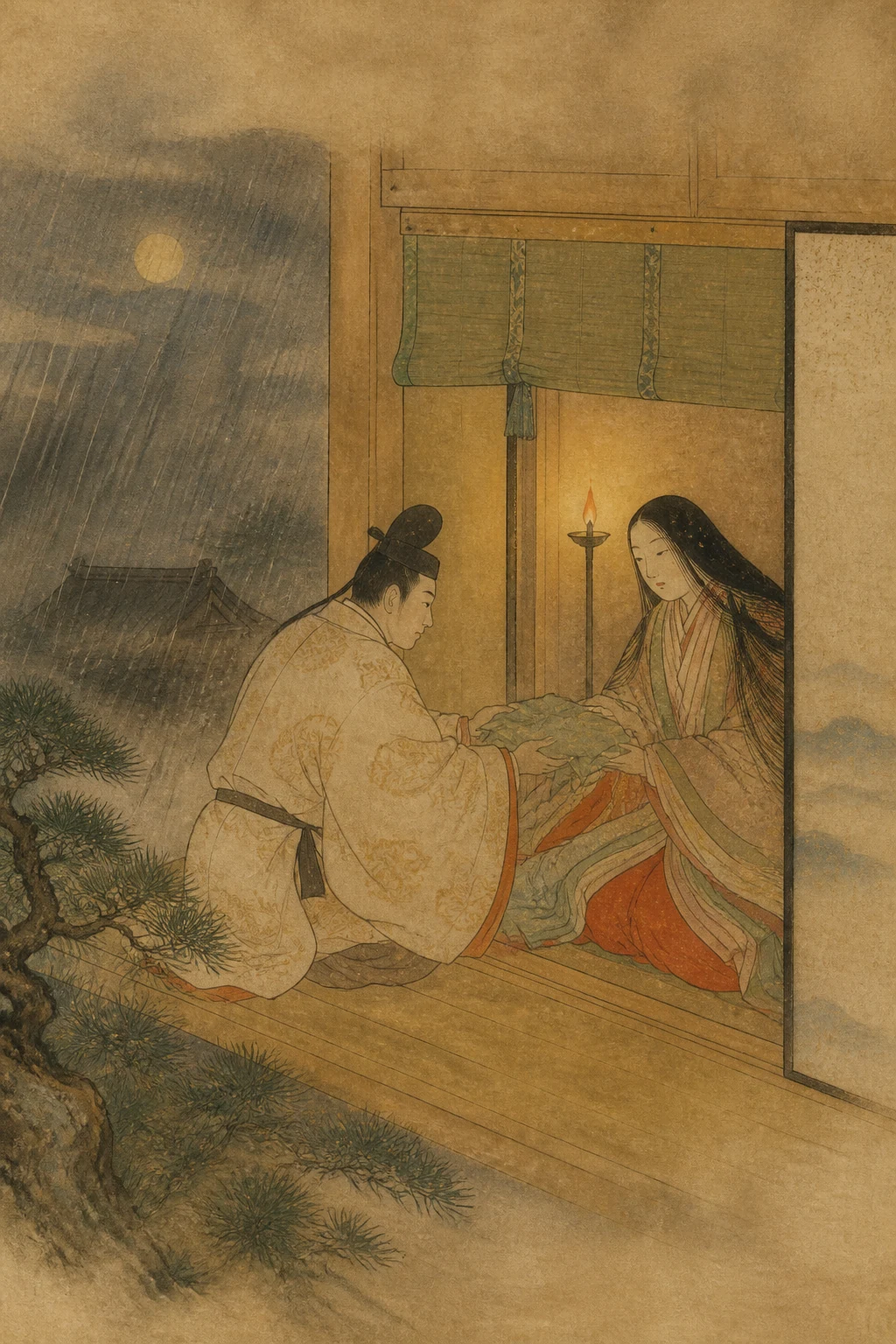
There was no woman he courted with letters who failed to yield to him. But there was a lady called Hon’in no Jijū, an attendant to Emperor Murakami’s mother, who was herself much given to affairs of the heart. When he wrote to her, she sent pleasant enough replies, but she would not grant him a meeting alone. He thought that this could last only so long, and that surely she would yield in the end. Choosing an hour when the evening sky was full of tender melancholy, or a night when the moon shone brightly—some moment whose beauty was certain to catch the eye—he would visit her. She understood his intentions and exchanged affectionate words with him, but never gave him her heart. Remaining aloof, she answered him without giving offense, and would converse with him where others were present and there could be no impropriety; yet she always contrived to escape him beautifully, never letting down her guard. The man, unaware of this, grew impatient as the days passed in this fashion. He called more often than ever, and sent word that he would come to see her. When she returned her usual courteous answer, he set out toward the end of the fourth month, on a night when the rain fell with a fearsome roar and everything seemed ominous. “If I go to her at such a time,” he thought, “surely she will feel for me.” All along the road, through the almost unbearable rain, he reassured himself: “Once I have made my way there in this weather, surely she cannot send me back without receiving me.” When he reached her rooms, a servant came out and said, “She is upstairs. I shall announce you.” The servant admitted him to a place near the veranda and went away. Looking about, he saw a faint lamplight behind a screen. A robe that seemed intended for nightwear had been spread over a fumigating frame, and the incense with which it was being scented gave off an extraordinary fragrance. The exquisite refinement of it stirred him to the depths of his being. Then the servant returned and said, “She is coming down at once.” His delight knew no bounds. Presently she appeared. “How could you come through such rain?” she asked. “If a little rain could keep me away, my feelings would be shallow indeed,” he replied. They exchanged such words, and he drew close and touched her hair. It was cool as though ice had been laid upon it, and everything about her was lovely beyond measure. They talked of this and that, saying all manner of things too intimate to repeat, and he felt certain now that his hopes would be fulfilled. Then she said, “Oh dear! I came away and forgot to close the sliding door. In the morning there will be such a fuss: ‘Who went out and left this open?’ I shall only run back and shut it. It will take no time at all.” He thought this reasonable. Since she had already become so intimate with him, he felt quite at ease and did not detain her by her robe, but let her go. He did indeed hear the sound of a sliding door being closed, and waited for her to return. Instead, without another sound, she withdrew into the inner rooms. He waited in growing anxiety and dismay, utterly beside himself, almost ready to crawl in after her; but there was nothing he could do. Bitterly as he regretted having let her go, regret was useless, and near dawn he left in tears. Once home, he lay thinking until daylight, then wrote her a long account of his misery at having been deceived. But she replied, “Why should I deceive you? When I was about to go back, I was summoned. Another time, perhaps.” From this and other such answers, he began to see that there was little likelihood of ever becoming truly intimate with her. “Now I should like to see something ugly and repellent about her,” he thought, “so that I can turn my heart against her. Must I go on wearing myself out with longing like this forever?” He summoned one of his attendants and said, “When the maid who empties her chamber pot carries out the leather case, snatch it from her and bring it to me.” For days the attendant followed the maid and watched for his chance. At last, after some difficulty, he chased her as she tried to flee, seized the case, and brought it to his master. Delighted, Heichū took it somewhere private and examined it. It was wrapped in three layers of gauzy silk of this sort, and its fragrance was beyond compare. As he untied the wrapping and opened it, the scent was beyond all description. Looking inside, he found that a strong decoction of aloeswood and cloves had been poured into it. Many pellets of blended incense had also been rolled and put inside. One may imagine how fragrant it was. At the sight, he thought, “I had hoped that, if I found something truly disgusting in it, the sight would sicken me and give my heart some peace. But what is this? Can anyone possess such refinement? She hardly seems an ordinary mortal at all!” His longing grew so much stronger that he felt he might die, but there was nothing to be done. “She could never have expected that I would see this,” he thought. And after this glimpse of her sensibility, he became more hopelessly besotted than ever; yet in the end she never yielded to him. “Even though it was my own doing, I felt terribly ashamed before her, and bitterly frustrated,” Heichū is said to have confided to someone in secret.
Izvirnik
050 平貞文本院侍従事
Naslednje strani prikazujejo izvirno besedilo za primerjavo.
今は昔兵衛佐平貞文をはへいちうといふ色このみにて宮つかへ人はさらなり人のむすめなとしのひてみぬはなかりけり思ひ
かけて文やる程の人のなひかぬはなかりけるに本院侍従と云は村上の御母后の女房也世の色このみにてありけるに文やるににくからす返ことはしなからあふ事はなかりけりしはしこそあらめつゐにはさりともと思てもののあはれなる夕くれの空又月のあかき夜なとえんに人の目ととめつへき程をはからひつつをとつれけれは女もみしりてなさけはかはしなから心をはゆるさすつれなくてはしたなからぬほとにいらへつつ人ゐましりくるしかるましき所にては物いひなとはしなからめてたくのかれつつ心もゆるさぬを男はさもしらてかくのみすくる心もとなくてつねよりもしけくをとつれてまいらんといひをこせたりけるにれいのはしたなからすいらへたれは四月のつこもり比に雨おとろおとろしく降て物おそろしけなるにかかるおりにゆきたらはこそあはれとも思はめとおもひていてぬ道すからたへかたき雨をこれにいきたらんにあはて
返す事よもとたのもしく思てつほねにゆきたれは人いてきてうへになれはあんない申さんとてはしのかたにいれていぬみれは物のうしろに火ほのかにともしてとのゐ物とおほしき衣ふせこにかけてたき物しめたるにほひなへてならすいと心にくくて身にしみていみしとおもふに人帰てたたいまおりさせ給といふうれしさかきりなしすなはちおりたりかかる雨にはいかになといへはこれにさはらんはむけにあさき事にこそなといひかはしてちかくよりてかみをさくれはこほりをのしかけたらんやうにひややかにてあたりめてたき事かきりなしなにやかやとえもいはぬ事ともいひかはしてうたかひなくおもふにあはれやり戸をあけなからわすれてきにけるつとめてたれかあけなからは出にけるそなとわつらはしき事になりなんすたてて帰らんほともあるましといへはさることと思てかはかりうちとけにたれは心やすくてきぬをととめ
てまいらせぬまことにやりとたつるをとしてこなたへくらんと待ほとにをともせておくさまへ入りぬそれに心もとなくあさましくうつし心もうせはててはひもいりぬへけれとすへき方もなくてやりつるくやしさを思へとかひなけれはなくなくあか月ちかくいてぬ家に行きておもひあかしてすかしをきつる心うさかきつつけてやりたれと何しにかすかさん帰らんとせしにめししかは後にもなといひてすこしつ大かたまちかき事はあるましきなめり今はさはこの人のわろくうとましからんことをみておもひうとまはやかくのみ心つくしに思はてありなんと思てすいしんをよひてそのひとのひすましのかはこもていかんはいとりて我にみせよといひけれは日ころそひてうかかひてからうしてにけけるををひてはいとりてしうにとらせつへいちう悦てかくれにもてゆきてみれはかうなるうす物の三重かさねなるにつつみたりかうはしき事たくひ
なしひきときてあくるにかうはしさたとへんかたなしみれはちん丁子をこくせんしていれたりまたたきものをおほくまろかしつつあまたいれたりさるままにかうはしきをしはかるへしみるにいとあさましゆゆしけにをきたらはそれにみあきてこころもやなくさむとこそおもひつれこはいかなる事そかく心ある人やはあるたた人ともおほえぬありさまかなといととしぬ斗おもへとかいなしわかみんとしもやは思へきにとかかるこころはせをみてのちはいよいよほけほけしくおもひけれとつゐにあはてやみけり我か身なからもかれによにはちかましくねたくおほえしとへいちうみそかに人としのひてかたりけるとそ
Nadaljuj z branjem