Prevod
In one of the little market towns, in the home of a man who owned his own house and courtyard, the whole family sat gathered in a circle one evening, at that time of year when people say, “The evenings are drawing in.” It was still mild and warm; the lamp was lit, and the long curtains hung over the windows, where flowerpots stood. Outside there was glorious moonlight; but that was not what they were talking about. They were talking about a large old stone that lay down in the courtyard, close to the kitchen door, where the maids often set out the scoured copperware to dry in the sun, and where the children liked to play—it was really an old gravestone.
“Yes,” said the master of the house, “I believe it came from the old abbey church that was pulled down. They sold off the pulpit, the memorial tablets, and the gravestones! My late father bought several of them; they were broken up for paving, but this stone was left over, and it has lain in the courtyard ever since.”
“You can easily see that it’s a gravestone,” said the eldest of the children. “There’s still an hourglass on it, and part of an angel, but the inscription is almost completely worn away, except for the name Preben and a big ‘S’ just after it, and a little farther down, ‘Marthe.’ But you can’t make out anything else, and even that only shows clearly when it has rained or we’ve washed it.”
“Good heavens, it’s the gravestone of Preben Svane and his wife!” said an old man in the room, who was old enough to have been grandfather to everyone there. “Yes, they were among the last to be buried in the old abbey churchyard! They were a good, honourable old couple when I was a boy. Everyone knew them, and everyone loved them; they were the king and queen of the old folk in this town! People said they had a barrelful of gold, yet they dressed simply, in the coarsest clothes, though their linen was dazzling white. They were a lovely old couple, Preben and Marthe! When they sat on the bench at the top of the high stone steps outside their house, with the branches of the old lime tree bending over them, and nodded so kindly and gently, it did your heart good to see them. They were wonderfully kind to the poor! They fed them and clothed them, and there was good sense and true Christianity in all their charity. The wife died first. I remember that day so well! I was a little boy, and I was with my father at old Preben’s just after she had passed away; the old man was so overcome that he wept like a child. Her body still lay in the bedchamber, close to where we were sitting. He spoke to my father and a couple of neighbours about how lonely he would be now, what a blessing she had been, how many years they had lived together, and how they had first met and come to love each other. As I said, I was little, and stood there listening, but I was strangely moved to hear the old man and see how he grew more and more lively, his cheeks flushing as he spoke of their courting days—how lovely she had been, how many little innocent roundabout ways he had taken just to meet her. And he spoke of their wedding day, his eyes shining at the thought; it was as though he were living once more in that happy time. Yet there she lay dead in the next room, an old woman, and he was an old man speaking of the days of hope! Ah, yes, that is how it goes! Then I was only a child, and now I am old, as old as Preben Svane. Time passes, and everything changes! I remember her funeral day so well; old Preben walked just behind the coffin. A couple of years earlier they had had their gravestone carved with the inscription and their names, leaving only the years of their deaths blank. That evening the stone was brought by cart and laid upon the grave—and the following year it was lifted again, and old Preben was laid beside his wife. They did not leave behind the wealth that people had imagined and talked about; what there was went to distant relatives no one had ever heard of before. The half-timbered house, with its bench on the high stone steps beneath the lime tree, was pulled down by the town authorities, for it was too dilapidated for them to dare leave it standing. Later, when the same fate befell the abbey church and the churchyard was cleared away, Preben and Marthe’s gravestone, like everything else from there, went to whoever would buy it. And now, as chance would have it, it has not been broken up and put to use, but still lies in the courtyard, a place for the little ones to play and a shelf for the maid’s scoured kitchenware. The paved street now runs over the resting place of old Preben and his wife; no one remembers them any more!”
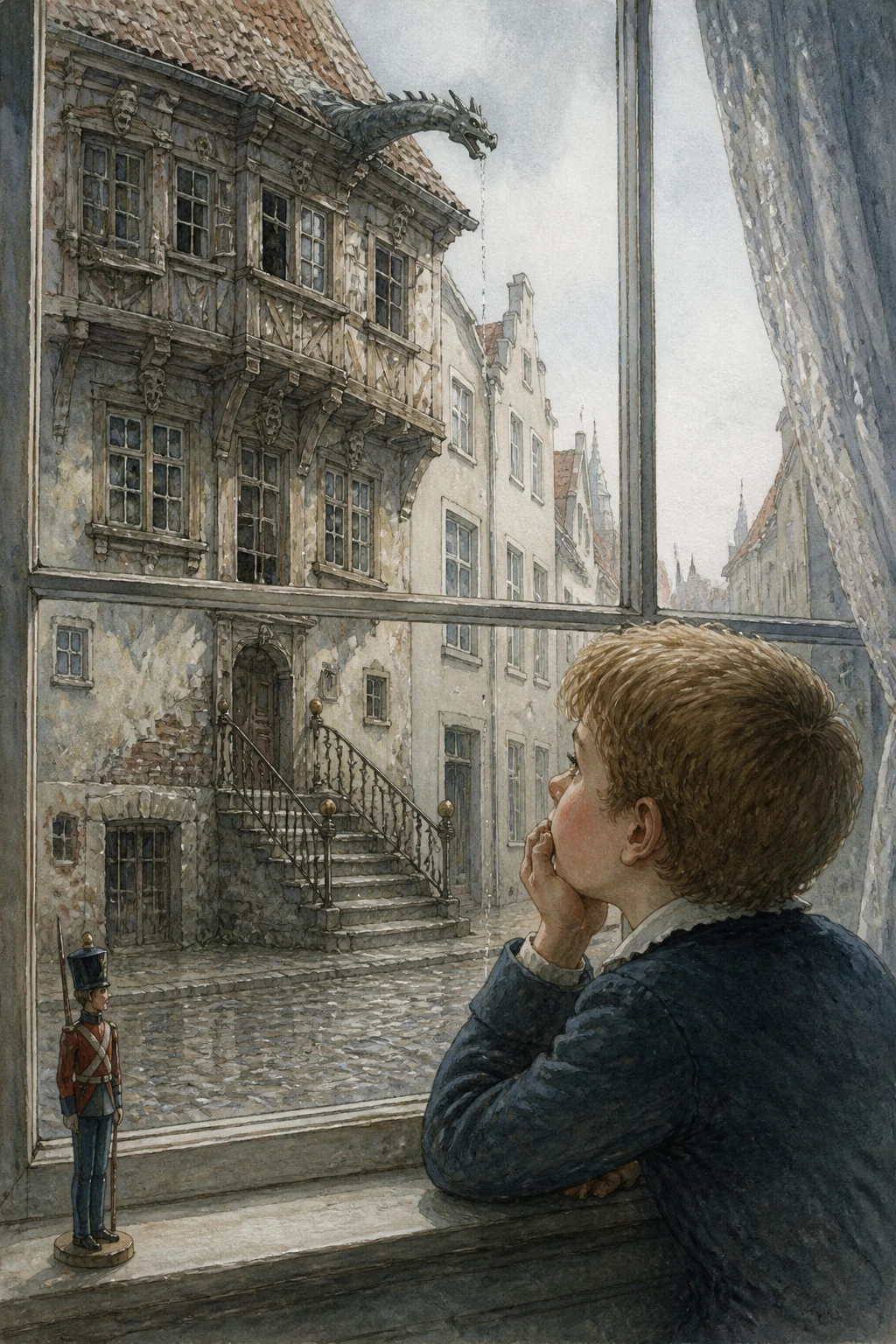
And the old man who had told all this shook his head sadly. “Forgotten! Everything will be forgotten!” he said. Then the people in the room began talking of other things; but the youngest boy, a child with large, solemn eyes, climbed onto the chair behind the curtains and looked down into the courtyard, where the moon shone brightly on the great stone. Before, it had always seemed blank and flat to him, but now it lay there like a whole great page from a history book. Everything the boy had heard about Preben and his wife was held within that stone; and he looked at it, then up at the clear, bright moon in the pure air high above, and it was like the face of God shining over the earth.
“Forgotten! Everything will be forgotten!” came the words from within the room, and at that moment an unseen angel kissed the boy’s breast and brow and whispered softly, “Keep safe the seed you have been given; keep it until the time is ripe! Through you, child, the faded inscription, the crumbling gravestone, shall stand in bright golden letters for generations to come! The old couple shall once again walk arm in arm through the old streets, and sit smiling, with fresh, rosy cheeks, on the stone steps beneath the lime tree, nodding to rich and poor alike. The seed of this hour shall grow through the years into a flowering work of poetry. The good and the beautiful are not forgotten; they live on in tales and songs.”